SocratesBiblio.com

640 results
1754ref. 168571754. Vernet Jacques. Dialogues Socratiques Ou Instructions Sur Divers Sujets De Morale 1754 first edition presenting Enlightenment era moral philosophy through the Socratic dialogue form composed for the education of the hereditary prince of Saxe Gotha. The work situates classical philosophical method within eighteenth century pedagogical practice using structured dialogue to examine ethical questions and cultivate reasoning in a princely educational context. Produced within a German court known for intellectual activity the text contributes to the study of Enlightenment education moral philosophy and the adaptation of classical forms for modern instruction. Vernet Jacques. Dialogues Socratiques Ou Instructions Sur Divers Sujets De Morale. 1754. First edition. Duodecimo volume presenting a series of dialogues structured around moral and philosophical inquiry following the classical model associated with Socratic teaching. The text frames ethical problems through exchanges between speakers combining literary form with didactic purpose. Contemporary and later ownership is evidenced by multiple nineteenth century ex libris inscriptions on the final page indicating continued circulation and readership. Issued during the mid eighteenth century the work reflects broader Enlightenment efforts to systematize moral education and integrate classical philosophical traditions into modern intellectual life. Courts such as Saxe Gotha functioned as centers of learning where pedagogical texts were commissioned for elite instruction and Vernet's dialogues align with this context of princely education and intellectual exchange. Shelfwear with bumping to corners dampstaining to several pages and a small tear to the final leaf; inscriptions present; overall good. A documented example of Enlightenment moral instruction in dialogue form. unknown
1754ref. 168571754. Vernet Jacques. Dialogues Socratiques Ou Instructions Sur Divers Sujets De Morale 1754 first edition presenting Enlightenment era moral philosophy through the Socratic dialogue form composed for the education of the hereditary prince of Saxe Gotha. The work situates classical philosophical method within eighteenth century pedagogical practice using structured dialogue to examine ethical questions and cultivate reasoning in a princely educational context. Produced within a German court known for intellectual activity the text contributes to the study of Enlightenment education moral philosophy and the adaptation of classical forms for modern instruction. Vernet Jacques. Dialogues Socratiques Ou Instructions Sur Divers Sujets De Morale. 1754. First edition. Duodecimo volume presenting a series of dialogues structured around moral and philosophical inquiry following the classical model associated with Socratic teaching. The text frames ethical problems through exchanges between speakers combining literary form with didactic purpose. Contemporary and later ownership is evidenced by multiple nineteenth century ex libris inscriptions on the final page indicating continued circulation and readership. Issued during the mid eighteenth century the work reflects broader Enlightenment efforts to systematize moral education and integrate classical philosophical traditions into modern intellectual life. Courts such as Saxe Gotha functioned as centers of learning where pedagogical texts were commissioned for elite instruction and Vernet's dialogues align with this context of princely education and intellectual exchange. Shelfwear with bumping to corners dampstaining to several pages and a small tear to the final leaf; inscriptions present; overall good. A documented example of Enlightenment moral instruction in dialogue form. unknown books
ref. 24908060-nnew. unknown
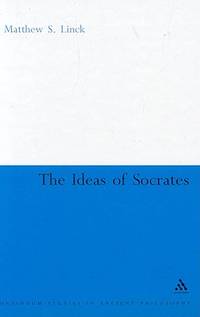
2007ref. 91628Continuum. New. Hardcover. FREE UPGRADE to Courier/Priority Shipping Upon Request - IN STOCK AND IMMEDIATELY AVAILABLE FOR SHIPMENT - Flawless copy brand new pristine never opened -- 160 pages. Description: " 'The Ideas of Socrates' offers a unique interpretation of the ideas forms eide in Plato’s writings. In this concise and accessible study Matthew S. Linck makes four major claims. Firstly the ideas as Socrates discusses them in the 'Phaedo' 'Parmenides' and 'Symposium' are shown to be integral to the person of Socrates as presented in Plato’s dialogues. Secondly Linck argues that if we take Plato’s dialogues as an integrated set of writings then we must acknowledge that the mature Socrates is perfectly aware of the difficulties entailed in the positing of ideas. Thirdly the book shows that Socrates’ recourse to the ideas is not simply an epistemological issue but one of self-transformation. And finally Linck examines how Socrates relates to the ideas in two ways one practical the other speculative. As the only group of Plato’s narrated dialogues that are not narrated by Socrates the 'Phaedo' 'Parmenides' and 'Symposium' constitute a unique collection. These three dialogues also contain accounts of Socrates as a young man and all of these accounts explicitly discuss the ideas. 'The Ideas of Socrates' serves as a commentary on the relevant passages of these dialogues and goes on to build up an explicit series of arguments about the ideas that will transform the way in which we approach these key texts. This important new book will be of interest to anyone involved in the study of Ancient Philosophy." -- with a bonus offer--; "The Ideas of Socrates" offers a unique interpretation of the ideas forms eide in Plato's writings. In this concise and accessible study Matthew S. Linck makes four major claims. Firstly the ideas as Socrates discusses them in the "Phaedo" "Parmenides" and "Symposium" are shown to be integral to the person of Socrates as presented in Plato's dialogues. Secondly Linck argues that if we take Plato's dialogues as an integrated set of writings then we must acknowledge that the mature Socrates is perfectly aware of the difficulties entailed in the positing of ideas. Thirdly the book shows that Socrates' recourse to the ideas is not simply an epistemological issue but one of self-transformation. And finally Linck examines how Socrates relates to the ideas in two ways one practical the other speculative. As the only group of Plato's narrated dialogues that are not narrated by Socrates the "Phaedo" "Parmenides" and "Symposium" constitute a unique collection. These three dialogues also contain accounts of Socrates as a young man and all of these accounts explicitly discuss the ideas. "The Ideas of Socrates" serves as a commentary on the relevant passages of these dialogues and goes on to build up an explicit series of arguments about the ideas that will transform the way in which we approach these key texts. This important new book will be of interest to anyone involved in the study of Ancient Philosophy. . 2007. 082649451X . Continuum hardcover
1938ref. 51733Oxford England: The Clarendon Press. As New. Hardcover. FREE UPGRADE to Courier/Priority Shipping Upon Request – – IN STOCK AND IMMEDIATELY AVAILABLE FOR SHIPMENT - Tight to spine - frontispiece photoportrait of the Munich head bust of Socrates. -- with a bonus offer-- . 1938. The Clarendon Press hardcover
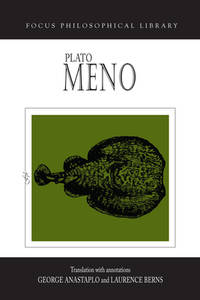
2003ref. 30231Newburyport Massachusetts U.S.A.: Focus Pub R Pullins & Co. New. Paperback. FREE UPGRADE to Courier/Priority Shipping Upon Request - IN STOCK AND IMMEDIATELY AVAILABLE FOR SHIPMENT - FLAWLESS COPY PRISTINE NEVER OPENED -- 140 pages; clean and crisp tight and bright pages with no writing or markings to the text. -- DESCRIPTION: This new translation provides a careful introduction to one of Plato’s most widely studied dialogues. -- -- IMPORTANT / UNIQUE FEATURE: Included is a unique series of illustrations graphically describing step by step the geometrical argument central to understanding the Meno. Extensive endnotes provide guidance to understanding the structure and content of the dialogue. -- The endnotes annotating the text of the dialogue are keyed to our new Speech numbers along with the old Stephanus numbers but without reference to those notes in the text itself to distract the reader of the dialogue. Many readers once it is understood who is talking and perhaps where and when should be able to go through this dialogue without consulting any notes except perhaps for the geometrical illustrations provided in the note for Speech 356 86E-87B and Appendix B of this volume. Thus an attempt has been made by us to permit the reader of English to come to our text much as the reader of Greek might come to Plato’s original text. Some of the endnotes provide elementary information about now-obscure references in the text other of them are about implications of Greek words and wordplay that no translation can convey; still others are designed to help the reader address some of the more difficult questions raised by the dialogue. The endnotes also include references to other Platonic dialogues and to some ancient and modern texts where various questions touched upon in the Meno are treated in much greater detail than it is useful to do here. More than one-fourth of the Speeches in the Meno have at least one endnote provided for them in this volume. -- AUTHORS: George Anastaplo is a Professor of Law at Loyola University of Chicago. He has published numerous wide ranging works in law philosophy and humanities. Laurence Berns is a faculty member of St John’s College Annapolis where he has enjoyed a long and distinguished career. -- with a bonus offer--; 520-Anast; PLATO SOCRATES ; Anastaplo George; Berns Laurence transl. intro Plato's MENO ; PLATO ; SOCRATES PHILOSOPHY This new translation provides a careful introduction to one of Plato’s most widely studied dialogues. -- -- IMPORTANT / UNIQUE FEAT . 2003. 0941051714 . Focus Pub R Pullins & Co paperback
2003ref. 35325Newburyport Massachusetts U.S.A.: Focus Pub R Pullins & Co. New. Paperback. FREE UPGRADE to Courier/Priority Shipping Upon Request – – IN STOCK AND IMMEDIATELY AVAILABLE FOR SHIPMENT - FLAWLESS COPY PRISTINE NEVER OPENED -- 140 pages; clean and crisp tight and bright pages with no writing or markings to the text. -- DESCRIPTION: This new translation provides a careful introduction to one of Plato’s most widely studied dialogues. -- -- IMPORTANT & UNIQUE FEATURE: Included is a unique series of illustrations graphically describing step by step the geometrical argument central to understanding the Meno. Extensive endnotes provide guidance to understanding the structure and content of the dialogue. -- The endnotes annotating the text of the dialogue are keyed to our new Speech numbers along with the old Stephanus numbers but without reference to those notes in the text itself to distract the reader of the dialogue. Many readers once it is understood who is talking and perhaps where and when should be able to go through this dialogue without consulting any notes except perhaps for the geometrical illustrations provided in the note for Speech 356 86E-87B and Appendix B of this volume. Thus an attempt has been made by us to permit the reader of English to come to our text much as the reader of Greek might come to Plato’s original text. Some of the endnotes provide elementary information about now-obscure references in the text other of them are about implications of Greek words and wordplay that no translation can convey; still others are designed to help the reader address some of the more difficult questions raised by the dialogue. The endnotes also include references to other Platonic dialogues and to some ancient and modern texts where various questions touched upon in the Meno are treated in much greater detail than it is useful to do here. More than one-fourth of the Speeches in the Meno have at least one endnote provided for them in this volume. -- AUTHORS: George Anastaplo is a Professor of Law at Loyola University of Chicago. He has published numerous wide ranging works in law philosophy and humanities. Laurence Berns is a faculty member of St John’s College Annapolis where he has enjoyed a long and distinguished career. -- with a bonus offer--; 520-Anast2; Plato; SOCRATES ; Anastaplo George; Berns Laurence transl. intro Plato's MENO ; PLATO ; SOCRATES PHILOSOPHY This new translation provides a careful introduction to one of Plato’s most widely studied dialogues. -- -- IMPORTANT / UNIQUE FEA . 2003. 0941051714 . Focus Pub R Pullins & Co paperback
1999ref. 34503Newburyport Massachusetts U.S.A.: Focus Pub R Pullins & Co. New. Paperback. FREE UPGRADE to Courier/Priority Shipping Upon Request - IN STOCK AND IMMEDIATELY AVAILABLE FOR SHIPMENT - FLAWLESS COPY PRISTINE NEVER OPENED -- 60 pages; clean and crisp tight and bright pages with no writing or markings to the text. -- DESCRIPTION: Translation of Plato’s Menexenus and Pericles’ Funeral Oration. -- AUTHORS: Susan Collins is a political theorist holding a joint appointment iat the University of Houston n political science and the Honors College. She teaches the history of political thought and her research focuses on classical thought the intersection of ethics and politics contemporary efforts to use Aristotle's thought in understanding and evaluating the problems of liberalism and the classical alternatives to modern theories of justice. - Devin Stauffer is presently assistant professor of political science at Kenyon College teaching courses in politics in literature and political theory. -- with a bonus offer--; 520-Colls; PLATO SOCRATES PERICLES ; Collins Susan ; Devin Stauffer transl. intro Empire and the Ends of Politics: Plato’s Menexenus and Pericles’ Funeral Oration PLATO SOCRATES PERICLES PHILOSOPHY Translation of Plato’s Menexenus and Pericles’ Funeral . 1999. 0941051706 . Focus Pub R Pullins & Co paperback
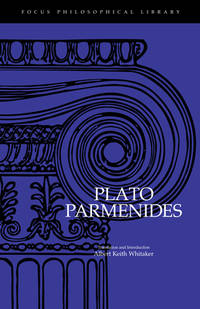
1996ref. 34504Newburyport Massachusetts U.S.A.: Focus Pub R Pullins & Co. New. Paperback. FREE UPGRADE to Courier/Priority Shipping Upon Request - IN STOCK AND IMMEDIATELY AVAILABLE FOR SHIPMENT - FLAWLESS COPY PRISTINE NEVER OPENED -- 96pages; clean and crisp tight and bright pages with no writing or markings to the text. -- DESCRIPTION: A model of readability and clarity. Translation in English including an introduction and a brief glossary. This dialogue is among Plato’s most difficult. Whitaker provides a clear entry to Plato and Platonic thinking and a succinct translation of the work itself. -- AUTHOR transl. intro: K. Whitaker is ADJunct Assistant Professor of Philosophy at Boston College. He is the series editor for the Focus Classical Library. -- with a bonus offer--; 520-Whiak; PLATO SOCRATES ; Whitaker Albert K. transl. intro Plato's Parmenides PLATO SOCRATES PHILOSOPHY ANCIENT HISTORY SURVEYS CLASSICAL A model of readability and clarity. Translation in English including an introduction and a brief glossary. This dialo . 1996. 094105196X . Focus Pub R Pullins & Co paperback
2003ref. 34505Newburyport Massachusetts U.S.A.: Focus Pub R Pullins & Co. New. Paperback. FREE UPGRADE to Courier/Priority Shipping Upon Request - IN STOCK AND IMMEDIATELY AVAILABLE FOR SHIPMENT - FLAWLESS COPY PRISTINE NEVER OPENED -- 140 pages; clean and crisp tight and bright pages with no writing or markings to the text. -- DESCRIPTION: A modern translation of Plato's Phaedrus. With notes a complete introduction and interpretative essay. -- AUTHOR intro notes: Stephen Scully is an Associate Professor of Classical Studies at Boston University. He is the author of Homer and the Sacred City as well as numerous essays and articles on Homer Attic Tragedy and Virgil. He is currently writing a book on Hesiod’s Theogony its sources and its influences upon later Greek literature. -- REVIEW: "This is a fine translation both fluent and accurate. It captures the range of tonalities of the original in elegant English that is neither stiffly formal nor cheaply colloquial…. The supplementary matter is appropriate and useful. The introduction is crisp and clear the interpretive essay illuminating…Scully has done a sound and serious job of translating and annotating for the general reader. Above all his translation is excellent in respect to style and clarity: really a pleasure to read." -David Konstan Brown University -- with a bonus offer--; 520-Scull; PLATO SOCRATES ; Scully Stephen transl. intro Plato's Phaedrus: A Translation With Notes Glossary Appendices Interpretive Essay and Introduction PLATO SOCRATES PHILOSOPHY POLITICAL SCIENCE A modern translation of Plato's Phaedrus. With notes a . 2003. 0941051544 . Focus Pub R Pullins & Co paperback
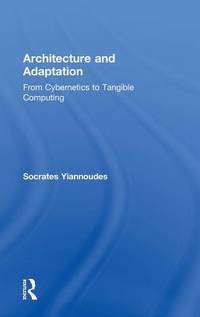
2016ref. 122264JOVIS. New. Paperback. FREE UPGRADE to Courier/Priority Shipping Upon Request - IN STOCK AND IMMEDIATELY AVAILABLE FOR SHIPMENT - Flawless copy brand new pristine never opened – with a bonus offer-- . 2016. 3868594205 . JOVIS paperback
2016ref. 115939Routledge. New. Paperback. FREE UPGRADE to Courier/Priority Shipping Upon Request - IN STOCK AND IMMEDIATELY AVAILABLE FOR SHIPMENT - IN STOCK AND IMMEDIATELY AVAILABLE FOR SHIPMENT - Flawless copy brand new pristine never opened - -- with a bonus offer-- . 2016. 1138843164 . Routledge paperback
2016ref. 115938Routledge. New. Hardcover. FREE UPGRADE to Courier/Priority Shipping Upon Request - IN STOCK AND IMMEDIATELY AVAILABLE FOR SHIPMENT - IN STOCK AND IMMEDIATELY AVAILABLE FOR SHIPMENT - Flawless copy brand new pristine never opened - -- with a bonus offer-- . 2016. 1138843156 . Routledge hardcover
1972ref. cj2p3c43xbvkKiev, 1972. Titlesheet, 22 graphic sheets, few coloured; printer's device. - Loose in typographic designed publisher's cloth-box; large Folio (ca. 46 x 39 x 2cm; ca. 2 kg.).
1686ref. 42201686 traduite par MR Cousin , A Paris chez Damien FOUCAULT , A Paris, 1686, Tome I de la traduction par Louis Cousin d'une "Histoire de l'Eglise" réunissant les textes d'Eusebe de Cesarée (t. I), Socrate le Scholastique (t. II), Hermias Sozomene (t. III), Théodoret de Cyr (t. IV) et Evagre le Scholastique (t. 5).Sig. A-X12 (f. A1 bl. mais inclus dans la pagination). Front. gr. s. c. par R. De Hooghe. Bandeau gr. s. c. en tete du texte. Marque a la sphère au titre, 5 tomes en six volumes, in-12 basane blonde , reliure signée R. Niedrée , dos à nerfs caissons largement décorés pièce de titre et auteur, datés en bas du dos ainsi que le non du relieur en tout petit , plats décorés de filets, intérieurs des plats décorés de dentelles , toutes tranches dorées