806 Ergebnisse
Best.-Nr. 0442821808.Ghardcover. Good. Access codes and supplements are not guaranteed with used items. May be an ex-library book. hardcover
Best.-Nr. 1168677858.Ghardcover. Good. Access codes and supplements are not guaranteed with used items. May be an ex-library book. hardcover
Best.-Nr. 1094057339.GaudioCD. Good. Access codes and supplements are not guaranteed with used items. May be an ex-library book. unknown
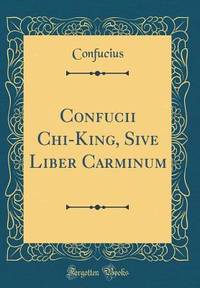
Best.-Nr. B9781163218945Hardback. New. hardcover
Best.-Nr. 8416540608.Gpaperback. Good. Access codes and supplements are not guaranteed with used items. May be an ex-library book. paperback
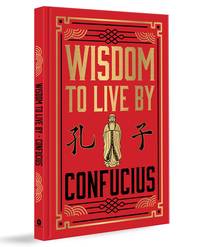
Best.-Nr. 9789362141705Fingerprint Publishing. New. New Fingerprint Publishing unknown
Best.-Nr. 0880291028.Ghardcover. Good. Access codes and supplements are not guaranteed with used items. May be an ex-library book. hardcover
Best.-Nr. 45149141like new. unknown
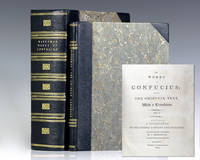
1809Best.-Nr. 131224Serampore: Printed at the Mission Press 1809. First English translation of the Analects of Confucius complete with the rare Dissertation on the Chinese Language and Character here bound in a separate volume. Quarto two volumes bound in three quarter morocco over marbled boards with gilt titles and tooling to the spine in six compartments within raised gilt bands illustrated with 2 folding charts on Chinese characters 4 further tables on 2 folding leaves postscript at rear. In fine condition. Exceptionally rare particularly with Marshman's separately printed dissertation present including the tables and charts. The first English translation of the Analects Lunyu of Confucius Baptist missionary Joshua Marshman's translation contains the first five of a projected series of twenty books and was printed at Serampore the first major center of English printing in Chinese. The first complete translation by James Legge was published decades later in 1861. A collection of sayings attributed to Confucius the Analects was one of the primary texts underpinning the Confucian system which held sway over China for two millennia. Confucius believed that the welfare of a country depended on the moral cultivation of its people beginning from the nation's leadership and taught that a ruler's sense of virtue was his primary prerequisite for leadership. His primary goal in educating his students was to produce ethically well-cultivated men who would carry themselves with gravity speak correctly and demonstrate consummate integrity in all things. Joshua Marshman William Carey and William Ward established a Baptist mission and press at Danish-controlled Serampore in 1800 beyond the control of the East India Company. The Company discouraged missionary activity and maintained a policy of press censorship within its territories. Marshman and his fellow missionaries had ambitious plans for proselytizing across Asia and he had studied Arabic Greek Hebrew Latin and Syriac before he even reached India. In India he first learned Bangali and Sanskrit. Next he turned to Chinese which he studied intensively under the guidance of Johannes Lassar scion of a wealthy Armenian trading family in Macao and assisted by several Chinese tutors. This book dates from the first phase of Chinese language printing in Serampore with Chinese characters printed using woodblocks carved by Bengali textile workers employed to print patterns onto calico. The Chinese publications for the Mission Press were principally evangelical; Lassar and Marshman translated large sections of the Old and New Testaments into Chinese and saw Serampore as an ideal position from which to spread the Chinese gospel free from imperial Chinese censorship. The East India Company too was increasingly interested in the study of Chinese for political reasons. Their Indian territories abutted the Chinese forts in Tibet and the memory of Macartney's diplomatic failure in 1792 remained fresh. Another diplomatic mission would require translators and the Company had no competent Chinese interpreters in India at the turn of the century. Marshman dedicated this work to the Governor-General of Bengal Lord Minto who subsidized the cost of printing in Chinese at Serampore despite his personal hostility to missionary activity with British India. Printed at the Mission Press hardcover
Best.-Nr. 1436623057.Ghardcover. Good. Access codes and supplements are not guaranteed with used items. May be an ex-library book. hardcover
1687Best.-Nr. 1691791687. CONFUCIUS. Confucius Sinarum Sive Scientia Sinensis Latine Exposita. cxxiv 108 160 xx 20 8 2 23-108 2 pp. Illustrated with engraved portrait of Confucius and a map of China engraved by François de Louvemont from a drawing by the Belgian missionary Philippe Couplet. Folio 335 x 225 mm bound in contemporary mottled calf spine gilt. Paris: Daniel Horthemels 1687. First western edition of the Latin Translation of Confucius's body of work a collective enterprise of a group of European Missionaries. With a dedication to Louis XIV preceded only by fragmentary translations. An early translation of Ta hsueh Chung yung and Lun yu three of the four Confucian texts chosen by the neo-Confucian philosopher Chu Hsi in 1190 to be included in the collection known as the SAshu 'Four Books'. The fourth book the works of Mencius and the reason for not printing it are discussed in a note printed on p. 159 at the end of book three. The translation was done under special license from Louis XIV by members of the Jesuit Society. In addition to the first three books of Confucius the work includes his biography valuable essays on Chinese history and culture and much factual information. Some text leaves toned overall a tall very good copy in a contemporary binding. Brunet II 2221. Cordier Sinica I 1389-1393. Lust 724. Morrison 438-439. Pei-tang 1358. Pfister 326-327. unknown
Best.-Nr. 1346102937.Ghardcover. Good. Access codes and supplements are not guaranteed with used items. May be an ex-library book. hardcover
Best.-Nr. 50511088like new. unknown
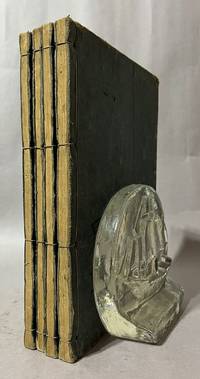
1800Best.-Nr. 007240Japan 1800. Wraps. Very Good. Quarto. Japan Kyoto or Osaka late Edo period circa 1800-1835. Eight surviving fascicles from an original ten-volume woodblock edition in traditional fukuo-toji stab-sewn binding with original blue paper wrappers. Large format: approximately 11 x 7.5 inches 28 x 19 cm. A substantial and visually striking Japanese scholarly edition of the Analects of Confucius Rongo in Japanese; Lunyu in Chinese printed from finely cut woodblocks and issued in ten fascicles with the authoritative Neo-Confucian commentary of Zhu Xi 1130-1200 whose Collected Commentaries Shuchu/Jizhu formed the orthodox basis of Confucian education throughout Tokugawa Japan. The present survival comprises eight fascicles in four books from the original ten-volume set including volumes I II III V VI VII VIII and X with fascicles IV and IX lacking. Terminal leaves confirm the original structure through the imprint "End of Volume Ten." The edition was clearly intended for advanced scholastic use and is distinguished by extensive contemporary or near-contemporary red manuscript kundoku annotations throughout every page. These glosses written in kana and auxiliary notation supplied Japanese grammatical order and pronunciation for reading classical Chinese texts and constitute exceptionally rich evidence of actual Edo-period pedagogical practice. Printed in bold elegant Chinese characters within ruled borders on durable handmade washi paper the edition exhibits all the hallmarks of late Edo Confucian educational printing; right to left reading orientation fukuro-toji binding thick fibrous paper stock and systematic reading marks for Japanese students. The generous format is larger and more imposing than the small commercial school editions commonly encountered and suggests production for serious scholarly or academy use possibly in Kyoto or Osaka the principal centers of educational publishing during the late Tokugawa era. Although the publisher's colophon is not present the typography layout and manuscript annotation style strongly support a date circa 1800-1835. During the Edo period Neo-Cunfucian learning remained central to samurai and bureaucratic education. Condition: eight surviving fascicles from an original ten-volume set. Original blue paper wrappers lightly worn and rubbed with scattered edge wear. Thread bindings intact and sound. Internally remarkably well preserved overall with strong dark impressions and extensive red manuscript annotations throughout. Some light wear as expected from sustained scholarly use. An authentic and highly evocative survival of Tokugawa-period classroom culture. paperback
Best.-Nr. 1396513485.Ghardcover. Good. Access codes and supplements are not guaranteed with used items. May be an ex-library book. hardcover
Best.-Nr. S00OS-01928Culture Book Co. Used - Good. Good condition. English and Chinese. Stamped on front pastedown. Confucianism China Ethics Politics Culture Book Co. unknown
Best.-Nr. 1391493273.Ghardcover. Good. Access codes and supplements are not guaranteed with used items. May be an ex-library book. hardcover
Best.-Nr. 1391534018.Gpaperback. Good. Access codes and supplements are not guaranteed with used items. May be an ex-library book. paperback
Best.-Nr. 0368184196.Gpaperback. Good. Access codes and supplements are not guaranteed with used items. May be an ex-library book. paperback
Best.-Nr. 1391079817.Ghardcover. Good. Access codes and supplements are not guaranteed with used items. May be an ex-library book. hardcover
Best.-Nr. 1391039270.Gpaperback. Good. Access codes and supplements are not guaranteed with used items. May be an ex-library book. paperback
Best.-Nr. 1391024834.Gpaperback. Good. Access codes and supplements are not guaranteed with used items. May be an ex-library book. paperback
Best.-Nr. 1391169883.Gpaperback. Good. Access codes and supplements are not guaranteed with used items. May be an ex-library book. paperback
Best.-Nr. 1391139518.Gpaperback. Good. Access codes and supplements are not guaranteed with used items. May be an ex-library book. paperback
Best.-Nr. 0364083166.Ghardcover. Good. Access codes and supplements are not guaranteed with used items. May be an ex-library book. hardcover