1 771 résultats
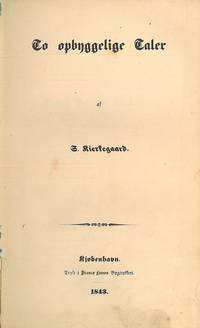
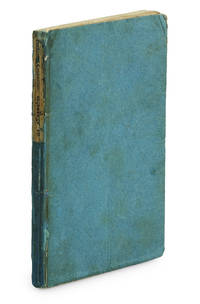
1843K., 1843. Pænt samt. hshirtbd. en smule slidt ved øvre kapitæl. Lidt brunplettet. 157 pp.
1962réf. L3 box811 b1Soeren Kierkegaard: Diario - Diario di Kierkegaard. I 1834-1849; II 1849-1885. Seconda edizione riveduta. a cura di Cornelio Fabro. Morcelliana 1962 I 1963 II. Hardcover two volumes total 2012 pp: 1040 pp I 972 pp II. Morcelliana hardcover
1995réf. RARIGRE00kwEaston 1995. Fine. Aristotle. The Great Philosophers. 12 vols. Plato; Kant Immanuel; Locke John; Descartes Rene; Kierkegaard Soren; de Spinoza Benedict; Nietzsche Friedrich; Hume David; Berkeley George; Mill John Stuart; Hegel Georg W. F. Norwalk: Easton 1995. 8vo. Book condition: Near fine. Easton Press Published expressly for the personal library of bookplate sticker laid in each vol. Easton unknown
1841réf. 891Kjøbenhavn: P.G. Philipsens Forlag 1841. First Edition. Hardcover. Very good. KIERKEGAARD Soren. Om Begrebet Ironi med stadigt Hensyn til Socrates On the Concept of Irony with Constant References to Socrates P.G. Philipsens Forlag Kjøbenhavn 1841. TP 1 leaf = Indhold half-title 3-350 small Octavo. First Edition Second trade Issue Himmelstrup 8 The trade issue. "Kierkegaard's second book his dissertation in theology presented at the University of Copenhagen. In this work Kierkegaard invidiously contrasts the irony of Socrates with the comparatively palliated and world-weary irony of the romantics. Irony constitutes the first in that series of multivalent existential categories the exception the Extraordinary the incommensurate Angst the leap faith the absurd the 'offense' the moment deployed against the Hegelian System. Indeed irony and the figure of the ironist are central to Kierkegaard's entire 'aesthetic' corpus. Socrates was a figure to whom Kierkegaard would regularly return as an antidote to the 'speculative disease' in philosophy." Wronoski p. 9 CONDITION: Very good in contemporary half-cloth with marbled boards. Scuffing and wear to covers. Some minor fraying to head and heel of spine cloth. Spine with handscripted label. Remnants of original blue card covers to inner edge of title page. Pages browned as usual. P.G. Philipsens Forlag hardcover
1844réf. 165730Copenhagen: C. A. Reitzel 1844. First edition of the Prefaces - eight prefaces to non-existent works satirical essays and reviews aimed at Copenhagen's literary establishment particularly at the Hegelian philosopher J. L. Heiberg. As with other of Kierkegaard's works it was published under an obvious pseudonym. Octavo. Original boards printed paper label to spine. Joints discreetly repaired. A little worn and soiled. A very good copy. Himmelstrup 70; McGill p. 51. hardcover
2002réf. BN495995Gads Forlag 2002. 2002. Sören Kierkegaards Skrifter: Kommentarer til K7 bis K12 6 Bücher Sören Kierkegaards Skrifter: Kommentarer til K7 bis K12 6 Bücher Sören Kierkegaard Forskiningscenteret Gads Forlag unknown
1843réf. 58133Kjøbenhavn 1843-45. 8vo. Samtidig helshirtingbind med ryggforgylling i tidens stil. 52 62 84 59 70 111 s. . Himmelstrup 85.Mangler fellestittelbladet. Bindet slitt ved kapitélene og hjørnene støtt. unknown
réf. elala2702Copenhagen: P.G.Philipsens. 1841. First Edition Second Issue with the preliminary leaves reset and with an additional quotation on the title page of Kierkegaard's doctoral thesis on the concept of irony for which he obtained permission to write in Danish rather than the usually required Latin. The work is divided into two parts the first dealing with Socrates as an 'ironist' and the second with the concept of irony per se. ".Irony set the pattern for subsequent writings by its masterful and at times lyrical style its humour and satire. Because of its subtlety the dissertation has often been misunderstood. In particular it has commonly been viewed as a youthful Hegelian writing whereas actually it is an ironic attack on both Hegelianism and romanticism each being made to overwhelm the other. From the literary standpoint the book is rich in allusions to philosophic and general sources.". Arbaugh Kierkegaard's Authorship 1968 p. 47 Himmelstrup 8. Rand I p. 320. 8vo. pp. 2 p.l. 350 blank leaf. contemporary half roan rubbed front joint cracked some foxing to first gatherings title browned Copenhagen: P.G.Philipsens..., 1841 hardcover
réf. 46405696Rare et précieux ensemble de publications, la plupart portant un cachet avec chiffre couronné.1) Tre opbyggelige Taler. Kjobenhavn (Copenhague), Philipsen, 1843 ; 62 pages. ÉDITION ORIGINALE de Trois discours édifiants (amour, liberté, péché, repentir, etc.) Himmelstrup 57.2) Lilien paa Marken og Fuglen under Himlen. Tre gudelige Taler. Kjobenhavn, Reitzel, 1849 ; 51 pp. ÉDITION ORIGINALE de Le Lis des champs et l’oiseau du ciel, trois discours d’éducation religieuse selon l’évangile de Saint Matthieu. Himmelstrup 113.3) Til Selvprovelse, Samtiden anbefalet. Kjobenhavn, Reitzel, 1852 ; 92 pp. DEUXIÈME ÉDITION (la première est de 1851 chez le même éditeur) de Pour un examen de conscience, recommandé aux contemporains. Himmelstrup 137.4) To Taler ved Altergangen om Fredagen. Kjobenhavn, Reitzel, 1851 ; 32 pp. ÉDITION ORIGINALE de Deux discours pour la communion du vendredi. Himmelstrup 130.5) Dette skal siges ; saa vaere det da sagt. Kjobenhavn, Reitzel og Urvinger, 1855 ; 12 pp. ÉDITION ORIGINALE de Ceci doit être dit. Himmelstrup 177.6) Om min Forfatter-Virksomhed. Kjobenhavn, Reitzel, 1851 ; 20 pp. ÉDITION ORIGINALE de Point de vue explicatif de mon œuvre. Himmelstrup 132.7) Synspunktet for min Forfatter-Virksomhed. En ligefrem Meddelelse, Rapport til Historien. Kjobenhavn, Reitzel, 1859 ; (4 pp.), 114 pp., 1 f. errata (ce dernier non mentionné par Himmelstrup 292) - ÉDITION ORIGINALE posthume du texte complet de Point de vue explicatif de mon œuvre dont seulement 20 pages avaient paru de son vivant en 1851 (n° 6).8) Oieblikket (n° 1 à 9). Kjobenhavn, Reitzel, (mai à sept. 1855) ; n°1, 16 pp. - n°2, 16 pp. - n°3, 16 pp. - n°4, 23 pp. - n°5, 32 pp. - n°6, 16 pp. (incomplet des pp. 7 à 10) - n°7 manque - n°8, 30 pp. - n°9, 22 pp. ÉDITION ORIGINALE de Moments parue en 9 livraisons. C’est la dernière publication de Kierkegaard qui meurt le 11 novembre 1855. Himmelstrup 180.9) THURAH (Christian Hendrik de). Riimbrev til Johannes Forforeren alias Dr. Soren Kierkegaard. Kjobenhavn, Juersen, 1855 ; 22 pp. ÉDITION ORIGINALE. C’est une lettre en vers adressée à Jean le Séducteur alias Kierkegaard par le jeune C. H. de Thurah (1830 - 1898). À l’époque il était étudiant en théologie. Il fera carrière comme prêtre et homme politique.
1843Kjøbenhavn [Copenhagen], 1843. Restaureret orig. hollanderet bd. m. den bogtrykte titeletiket delvist bevaret. De første og sidste blade en del brunplettede. Meget lille skjold i øverste venstre hjørne på de første 15 sider - går ikke ud over teksten. 157pp.Restored orig. blue cardboard-bdg., preserving the orig. spine w. the orig. printed paper title-label partly preserved. First and last leaves brownspotted. Minor dampstain to upper corner of first 15 leaves, not affecting text. 157 pp.
1843Kjøbenhavn, C. A. Reitzel, 1843. 8vo. Indbundet i et samtidigt hldrbd. med rygforgyldning. Forgyldt rygtitel. Øverste centimer af ryggen slidt af. False slidte. Hjørner stødte. Tidligere ejeres navnetræk på forsatsbladet. Noget brunplettet.
1944réf. 140937820Princeton New Jersey: Princeton University Press 1944. First American Edition. Near Fine/Very Good. First American edition first printing. Corners a little bumped else Fine in Very Good price-clipped dust jackets with rubbing and wear along edges. A philosophical masterwork first published in Danish in 1843. Princeton University Press unknown books
1844réf. 62093Kjøbenhavn, C.A. Reitzel, 1844. 8vo. A splendid copy in contemporary full cloth with blindstamped decorations to boards and gothic gilt lettering to spine. Light damp stains to back board and a bit of wear to capitals. Internally unusually nice and clean. 110, (1) pp. With an inscription for Josephine Bidoulac (later married to Welhaven), from Emil Wedel, to front fly-leaf. Pencil annotations by Jonas Skovgaard to front free end-paper.
1844réf. 62093Kjøbenhavn C.A. Reitzel 1844. 8vo. A splendid copy in contemporary full cloth with blindstamped decorations to boards and gothic gilt lettering to spine. Light damp stains to back board and a bit of wear to capitals. Internally unusually nice and clean. 110 1 pp. With an inscription for Josephine Bidoulac later married to Welhaven from Emil Wedel to front fly-leaf. Pencil annotations by Jonas Skovgaard to front free end-paper. The uncommon first edition in a lovely copy of Kierkegaard's most humorous work. Published simultaneously with The Concept of Anxiety Prefaces can be viewed as its companion piece. It represents an altogether different genre but the two fictional authors of the works interestingly contrast each other. Although having been eclipsed by the now notoriously famous Concept of Anxiety Prefaces was in fact more popular when it appeared and sold many more copies. Written under the pseudonym of Nicolaus Notabene the “author” name indicates that despite its humorous approach Prefaces is still something serious – something to be noted. And it certainly is. It is here that we find Kierkegaard’s sarcastic roasting of the Hegelian system and of the Danish Hegelians with Johan Ludvig Heiberg as the main representant. Through Notabene he makes fun of Heiberg and Hegel who both want to explain everything and want to be mediators of understanding. Just as Hafniensis in The Concept on Anxiety poses that “how sin came into the world each man understands solely by himself. If he would learn it from another he would misunderstand it” p. 51 so Notabene in Prefaces states that “My frame my health my entire constitution do not lend themselves to mediation” p. 45. In Prefaces we also find Kierkegaard’s thoughts about the relationship between the reading public and the author and his fierce criticism of literary critics and reviewers. And in the very amusing preface to the Prefaces we are given another glimpse into Kierkegaard’s thoughts on marriage and the dilemma he found himself in with Regine – the inner struggle between he who is the husband and he who is the author; can one be both With its challenging notions on the idea of the book and the interaction of the book with its readers his little ironic masterpiece is a clear forerunner of Postmodernism Himmelstrup 7. hardcover
réf. SBBI-L-BIP00840-RAG-20250ANYK. hardcover. Good. Our good condition books are generally good for reading but not for gifting or collecting. They could have imperfections such as creasing fanning inscriptions margin notes yellowing staining on edge or cover or pages bumps scuffs etc etc sometimes multiple of these. It's a wide category that encompasses anything that isn't almost-new down to anything that is slightly better than poor. We would NOT recommend gifting Good books - these should be considered reading copies. Our books are dispatched from a Yorkshire former cotton mill. We list via barcode/ISBN so please note that the images are stock images and may not be the exact copy you receive furthermore the details about edition and year might not be accurate as many publishers reuse the same ISBN for multiple editions and as we simply scan a barcode or enter an ISBN we do not check the validity of the edition data when listing. If you're looking for an exact edition please don't order at least not without checking with us first although we don't always have time to check. We aim to dispatch prompty the service used will depend on order value and book size. We can ship to most countries see our shipping policies. Payment is via Abe only. ANYK hardcover
1841réf. 46401681Kjobenhavn, Philipsen, 1841 ; in-8, cartonnage papier bleu muet, entièrement non rogné. Titre, 1 f. de table, 350 pp., 1 f. blanc, 1 f. catalogue de l’éditeur.ÉDITION ORIGINALE de Le Concept d’ironie constamment rapporté à Socrate est la thèse de doctorat du jeune Kierkegaard. Il l’avait déposée le 16 juillet 1841 et brillamment soutenue le 29 septembre devant la Faculté de Copenhague. Il obtint le grade de Magister artium. C’est le second livre de l’auteur. La première partie est consacrée à l’ironie grecque, la seconde concerne l’ironie des romantiques allemands, les théories de Fichte, Hegel, Schlegel. Himmelstrup n°8.Exemplaire du 2e état, celui qui fut mis dans le commerce. Ces exemplaires n’ont pas la mention Soutenu pour le grade de magiser sur le titre, et le verso est blanc. Sur le titre on trouve une citation du De Republica de Platon. Ils n’ont pas non plus les 2 ff. de titre en latin et liste des thèses.Après le dernier feuillet blanc on trouve 1 f. de catalogue de l’éditeur avec des titres danois. Himmelstrup ne signale pas ce feuillet.Exemplaire à toutes marges dans un modeste cartonnage bleu de l’époque (dos renforcé par une bande de papier.) Ex-libris manuscrit sur la garde Joachim Voss.
1843réf. 46401674Kjobenhavn, Philipsen, 1843 ; in-8, cartonnage marbré, pièce de titre rouge sur le plat. (Cartonnage danois de l’époque) 62 pp., 1 f. blancÉDITON ORIGINALE. Ces Trois discours édifiants ont paru le 16 octobre 1843, le même jour que Crainte et Tremblement et que La Répétition. Himmelstrup n° 57.Exemplaire dans sa première reliure. Qq. rousseurs.
réf. Z1-L-035-01181Indiana Univ Pr. Used - Like New. Used - Like New. Book is new and unread but may have minor shelf wear. Ships from UK in 48 hours or less usually same day. Your purchase helps support Sri Lankan Children's Charity 'The Rainbow Centre'. 100% money back guarantee. We are a world class secondhand bookstore based in Hertfordshire United Kingdom and specialize in high quality textbooks across an enormous variety of subjects. We aim to provide a vast range of textbooks rare and collectible books at a great price. Our donations to The Rainbow Centre have helped provide an education and a safe haven to hundreds of children who live in appalling conditions. We provide a 100% money back guarantee and are dedicated to providing our customers with the highest standards of service in the bookselling industry. Indiana Univ Pr unknown
1838réf. 46401672Kjobenhavn, C. A. Reitzel, 1838 ; petit in-8, demi-bas brune, coins, dos orné, non rogné X pp., 1 f. n. ch., 79 pp.ÉDITION ORIGINALE DE TOUTE RARETÉ de : Papiers d’un homme encore vivant publiés malgré lui. C’est le PREMIER LIVRE DE KIRKEGAARD, un compte-rendu de Rien qu’un violoneux, le roman de Andersen. “Bien qu’il ait promis d’en faire l’éloge, il se livre à un véritable éreintement. Il reproche à Andersen de n’avoir aucune conception de la vie. Une conception de la vie est tout autre chose en effet qu’une somme d’idées abstraites ; elle ne saurait davantage se confondre avec l’expérience individuelle, qui reste toujours fragmentaire et particulière. Elle doit la sublîmer... Andersen a tort de considérer la superstition comme un succédané de la poésie véritable, et c’est une superstition insupportable de croire que l’adversité peut opprimer le génie et faire qu’un grand musicien périsse dans la peau d’un violoneux misérable Le génie n’est pas une flamme de chandelle que le vent souffle, mais un incendie que la tempête attise. Andersen répondit à ce violent réquisitoire avec une Comédie à la campagne jouée contre sa volonté. À vrai dire, il n’a pas les rieurs de son côté. Tout au contraire, on témoigne beaucoup d’intérêt à son adversaire (...) Peut-être pressent-on aussi que cet opuscule du jeune étudiant laisse prévoir l’isolement de son propre génie.” M. Grimault.Himmelstrup n°6 qui ne signale pas le f.n. chiffré après la page X et qui est un faux-titre : Om Andersen fom Romandigter... Qq. rousseurs. Le cuir de la reliure est abîmé par des griffures sur un plat.
1850réf. 46401676Kjobenhavn, C. A. Reitzel, 1850 ; in-8, cart. papier bleu, étiquette imprimée au dos, entièrement non rogné. (Cartonnage de l’époque) 2 ff., 277 pp.ÉDITION ORIGINALE de l’École du christianisme, ouvrage dirigé contre le christianisme officiel, légal et constitué. “C’est dans ce livre que se trouve plus particulièrement développé la dialectique du “choix”, ou attirance-répulsion envers la divinité. Le thème du Christ fait homme, souffrant et mouvant comme tel, rachetant la faute de l’humanité par le “scandale” de sa mort, est poussé jusqu’à l’identifier avec l’essence même de la religion. Ce thème constitue la clef de voûte de ce que l’on pourrait appeler l’apologétique kierkegaardienne (...) C’est avec Luther qu’a commencé la corruption du christianisme, par la mise en valeur de l’homme au détriment de Dieu : le christianisme devenu mondain, s’est ainsi perverti lui-même (...) De tous ses ouvrages, l’École du Christianisme est celui où le caractère paradoxal et antinomique de la religion se trouve renforcé par la chaleur même de la polémique.” Dict. des oeuvres. - Himmelstrup n°121.Exemplaire à toutes marges, dans son cartonnage d’origine. Qq. rousseurs.
2017réf. 9032835Princeton: Princeton University 2017. First. Hardcover. Fine/Fine. Translated by Kierkegaard Soren and Niels Jorgen Cappelorn Alastair Hannay David Kangas Bruce H. Kirmmse George Pattison David D. Possen Joel D. S. Rasmussen Vanessa Rumble K. Brian Soderquist Jon Stewart. Nine out of eleven volumes in a set of twelve. Bound in publisher's original blue cloth with spine stamped in gilt. Illustrated with maps and facsmiles of original pages in black and white. These volumes are the first comprehensive English translation of his unpublished journals which are here reproduced in the original two-column format of initial entries and subsequent self-commentary. These nine volumes cover the period of 1835 to August 1854. 7 1/2 by 9 3/4 inches. Princeton University hardcover
1843réf. 62218Kjøbenhavn, Reitzel, 1843. Small 8vo. 157 pp. Original blue cardboard-binding. The spine has been restored, but it has the original printed paper title-label partly preserved. Hinges are a bit weak, and there is some edgewear. Browning and brownspotting, but not more than usual. Completely uncut. Housed in a nice custom-made half lather box in pastiche style with richly gilt spine.
1843réf. 62218Kjøbenhavn Reitzel 1843. Small 8vo. 157 pp. Original blue cardboard-binding. The spine has been restored but it has the original printed paper title-label partly preserved. Hinges are a bit weak and there is some edgewear. Browning and brownspotting but not more than usual. Completely uncut. Housed in a nice custom-made half lather box in pastiche style with richly gilt spine. The first edition in the very rare original blue binding with most of the original printed title-label preserved. REPETITION – not only the title of one of his most significant books but also a key concept in the philosophy of Kierkegaard – was written during the same brief spell of feverish activity that also produced Fear and Trembling; the two books were even published on the same day. ”Say what you will this question will play a very important role in modern philosophy for repetition is a crucial expression for what “recollection” was to the Greeks. Just as they taught that all knowing is a recollecting modern philosophy will teach that all life is a repetition.” Repetition p. 3 – translation by Hong Kierkegaard states in the beginning of his treatise anticipating the importance that his concept of Repetition is to have for modern philosophy. Written in the narrative form of an experimental novel centered on two stories that are internally linked Kierkegaard lets us understand what Repetition could be and what it is in his philosophy. The first story portrays Repetition as something empty and trivial whereas the second portrays it as an ethical category that is inextricably linked to religion. Repetition is that which makes it possible for man to become and to remain present in the present. Kierkegaard’s explanation of his key concept of Repetition is exhausted in the present work but it also plays a significant role throughout his later works and is considered one of the key concepts in his philosophy. The work is centered around the story of a young man who has fallen in love with an innocent young girl to whom he has become engaged. But finding himself unable to consummate the love because of poetic stirrings inside himself he tries to understand what is going on inside him and whether or not he should break off the engagement. The elderly Constantin Constantius one of Kierkegaard’s numerous pseudonyms interferes with the emotions of our young man and begins to conduct speculative experiments with him that are meant to investigate whether a repetition of the relationship with the girl of the young man’s feelings etc. might be possible. At the end of the first part the young man flees Copenhagen and leaves the girl presumably at her wits’ end. Later she marries someone else and the young man transforms into the true poet that he could only be when unattached to the girl he loved. It does not take much of an imagination to link this story to the Kierkegaard’s own wildly famous love story and failed engagement to Regine Olsen. It all begins in 1837 when Kierkegaard meets the lovely young girl Regine Olsen at a visit to the widowed Cathrine Rørdam. Three years later in September 1840 after having corresponded frequently with her and visited her on numerous occasions Kierkegaard decides to ask for her hand in marriage. She and her family accept but the following day Kierkegaard regrets his decision and ends up finally breaking off the engagement in October 1841. Disregarding the scandal the heartbreak his own included and the numerous pleas from family members and friends alike Kierkegaard’s tortured soul still searching for God and for the meaning of faith cannot continue living with the promise of marriage. Later the same month he flees Copenhagen and the scandal surrounding the broken engagement. He leaves for Berlin the first of his four stays there clearly tortured by his decision but also intent on not being able to go through with the engagement. As is evident from his posthumously published Papers Kierkegaard’s only way out of the relationship was to play a charming but cold villain a charlatan not betraying his inner thoughts and feelings. It is during his stay in Berlin his first of four altogether right after the rupture of the engagement that he begins writing Either-Or parts of which like Repetition can be read as an almost autobiographical rendering of his failed engagement. Repetition more than any other work lets us see how Kierkegaard came to be as an author through his tumultuous inner life during his engagement and the ending of it. Like Fear and Trembling there are no presentation-copies known to exist of Repetition. Himmelstrup 53 unknown
1838réf. 13867Kjøbenhavn, 1838-49. Alle indbundet i ét lidt senere halvlæderbind m. rig rygforgyldn. False nænsomt restaureret. ""Af en endnu Levendes Papirer"" er kun en smule plettet"" ""Gjentagelsen"" også ganske pæn, de første par blade dog lidt brunplettede, og de sidste sider m. skjold"" ""Smaa = Afhandlinger"" er en del brunplettet.
1838réf. 13867Kjøbenhavn 1838-49. Alle indbundet i ét lidt senere halvlæderbind m. rig rygforgyldn. False nænsomt restaureret. "Af en endnu Levendes Papirer" er kun en smule plettet; "Gjentagelsen" også ganske pæn de første par blade dog lidt brunplettede og de sidste sider m. skjold; "Smaa = Afhandlinger" er en del brunplettet. Et nydeligt sæt af tre af Kierkegaards væsentligste værker heriblandt hans første bog indbundet næsten samtidigt. Alle tre originaludgaver. Himmelstrup 653116. unknown