1.921 resultados
1988ref. 101789ABNördlingen, Greno, 1988. 1. - 8. Tsd. 323 S. OPbd. - Die andere Bibliothek, 48. - Gutes Ex. 8
1953ref. 103980ABMünchen, Kösel, 1953. 4. A. 664 S. OLwd. - Dünndruckausgabe. - Sehr gutes Ex. 4
1995160pp., mooie staat
1994Mm 145x225 Brossura editoriale con bandelle, 271 pagine, prima edizione, esemplare in ottimo stato, pagine intonse. Testo in francese - french text. SPEDIZIONE IN 24 ORE DALLA CONFERMA DELL'ORDINE.
2002EDITORI RIUNITI 2002 A CURA DI ETTORE LOJACONO. FONDO DI MAGAZZINO, NUOVO. "La ricerca della Verità mediante il lume naturale" è il solo dialogo che Cartesio ci abbia lasciato. Pur incompleto costituisce una delle sue opere più leggibili e acute, ove evidente traspare la sua modernità: l'unica in cui, come Galileo nei suoi dialoghi, abbia posto a confronto direttamente le proprie posizioni con quelle di un rappresentante della scolastica. Dialogo eminentemente socratico, il volume evoca la figura del filosofo sotto la veste di Eudosso ed espone in forma piana, quasi pedagogica, i punti nodali della speculazione metafisica cartesiana.
1964ref. 10621München, Kösel, 1964. 8°, 293 Seiten. Orig.Pappband mit OSU.
1967173pp.avec planches, br.orig.
ref. 1918dos oxi. coin inférieur gauche abîmé. exemplaire non coupé.
ref. SLIVCN-9782844859570ALLIA EDITIONS
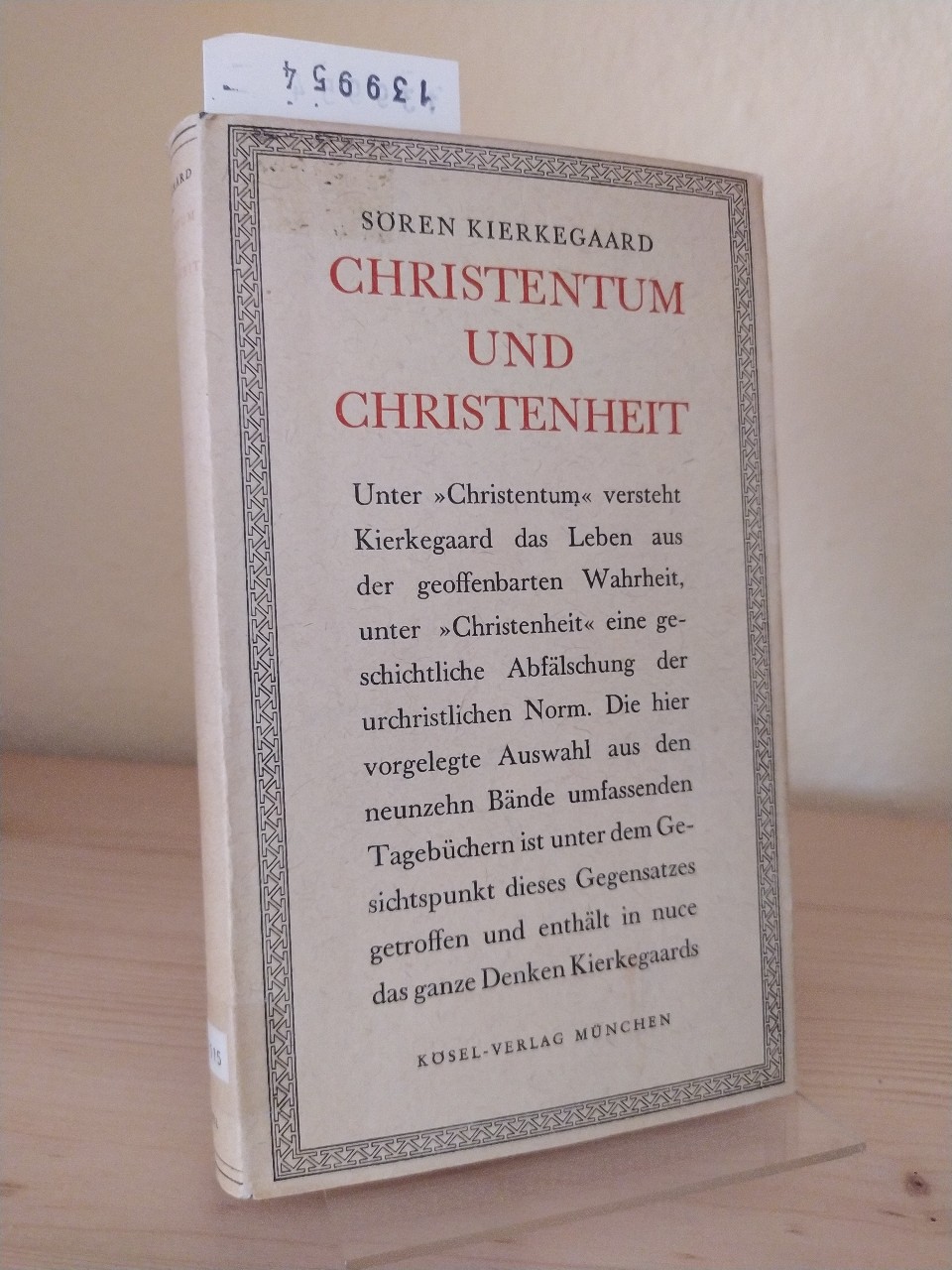
1957ref. 139954München: Kösel-Verlag 1957. 437, (1) Seiten. Kl. 8° (15-17,5 cm). Orig.-Leinenband. [Hardcover / fest gebunden]. Mit Orig.-Schutzumschlag.
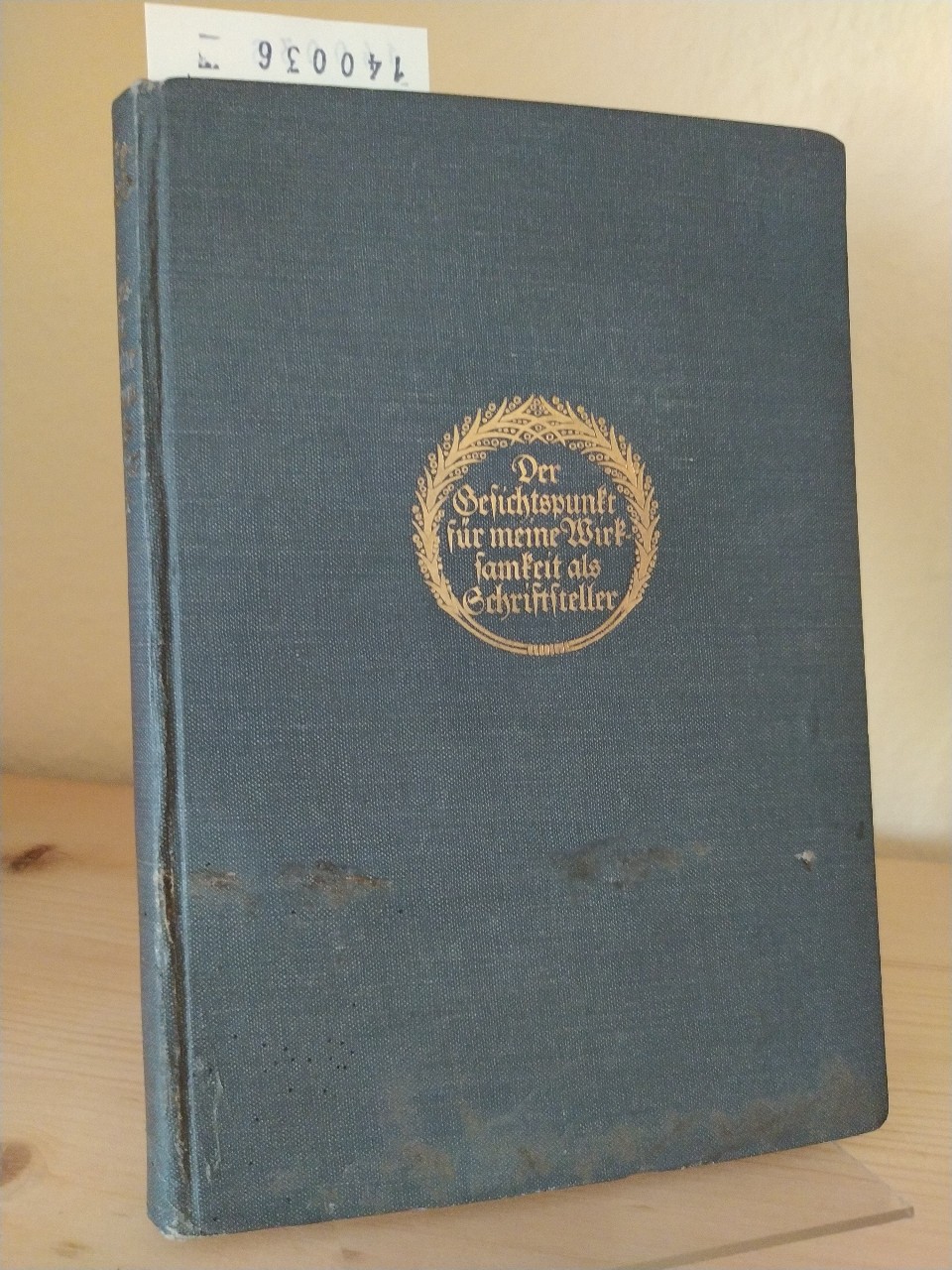
1922ref. 140036Jena: Eugen Diederichs 1922. 182, (6) Seiten. Frakturdruck. 8° (17,5-22,5 cm). Orig.-Leinenband mit goldgeprägtem Titel auf Deckel und Rücken. [Hardcover / fest gebunden].
1962ref. 2354678Princeton: Princeton University Press 1962. Second Edition. Trade Paperback. Very Good. 0x0x0. 1967 4th printing of second edition. Wrappers toned otherwise an excellent copy. Binding tight and square pages clean bright and unmarked. 1962 Trade Paperback. xcvii 260 pp. Translated into English from the original Danish and introduced by David F. Swenson with new introduction and commentary by Niels Thulstrup translation revised and commentary translated by Howard V. Hong. A Christian philosophical work written by Danish philosopher Soren Kierkegaard in 1844 the second of three works written under the pseudonym Johannes Climacus; the other two were De omnibus dubitandum est in 1841 and Concluding Unscientific Postscript to Philosophical Fragments in 1846. In Philosophical Fragments he begins with Greek Platonic philosophy exploring the implications of venturing beyond the Socratic understanding of truth acquired through recollection to the Christian experience of acquiring truth through grace. Published in 1844 and not originally planned to appear under the pseudonym Climacus the book varies in tone and substance from the other works so attributed but it is dialectically related to them as well as to the other pseudonymous writings. The central issue of Johannes Climacus is doubt. Probably written between November 1842 and April 1843 but unfinished and published only posthumously this book was described by Kierkegaard as an attack on modern speculative philosophy by "means of the melancholy irony which did not consist in any single utterance on the part of Johannes Climacus but in his whole life. . . . Johannes does what we are told to do--he actually doubts everything--he suffers through all the pain of doing that becomes cunning almost acquires a bad conscience. When he has gone as far in that direction as he can go and wants to come back he cannot do so. . . . Now he despairs his life is wasted his youth is spent in these deliberations. Life does not acquire any meaning for him and all this is the fault of philosophy." A note by Kierkegaard suggests how he might have finished the work: "Doubt is conquered not by the system but by faith just as it is faith that has brought doubt into the world!. Princeton University Press paperback books
ref. 2354684New York: Harper Torchbooks / The Cloister Library 1962. 1st Printing. Trade Paperback. Near Fine. 5x0x8. First printing. An excellent copy. Binding tight and square pages clean bright and unmarked. 1962 Trade Paperback. 108 4 pp. "Those who would know Kierkegaard the intensely religious humorist the irrepressibly witty critic of his age and ours can do no better than to begin with this book. In it we find the heart of Kierkagaard. It is not innocuous not genteel not comfortable. He does not invite the reader to relax and have a little laugh with him at the expense of other people or at his own foibles. Kierkegaard deliberately challenges the reader's whole existence. Harper Torchbooks / The Cloister Library paperback books
1961ref. 2354679New York: Galaxy / Oxford University Press 1961. 1st Printing. Trade Paperback. Very Good. 0x0x0. First printing. Spine creased wrappers lightly toned. Binding square text clean and unmarked. 1961 Trade Paperback. xviii 389 1 pp. A quartet of pieces written and arranged in contrasting styles. Parts one and three serve as a polemical overture to Kierkegaard's collision with the established order of Christendom; are reassuring affirmations of the joy and blessedness of Christian life in a world of adversity and suffering. Written in ordinary language the work combines simplicity and inwardness with reflection and presents crucial Christian concepts and presuppositions with unusual clarity. Includes: Introduction by translator Walter Lowrie; Christian Discourses: The Anxieties of the Heathen; Joyful Notes in the Strife of Suffering; Thoughts which Wound from Behind - for Edification; Discourses at the Communion on Fridays. Christian Discourses: Luke xxii. 15; Matthew xi. 28; John x. 27; I Corinthians xi. 23; 2 Timothy ii. 12-13; I John iii. 20; Luke xxiv. 51; The Lilies of the Field and the Birds of the Air; Three Discourses at the Communion on Fridays: The High Priest; The Publican; The Woman That Was a Sinner. Galaxy / Oxford University Press paperback books
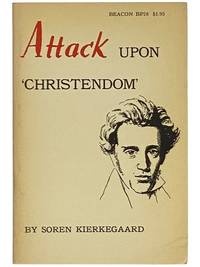
1956ref. 2354683Boston: Beacon Press 1956. 6th Printing. Trade Paperback. Very Good. 7x5x0. 1966 6th printing. Wrappers lightly toned bottom corner lightly bruised. Binding tight and square pages clean bright and unmarked. 1956 Trade Paperback. xviii 303 pp. A religious diatribe written from within the Church against the established order of things in a presumably Christian land by the Danish existential philosopher known for Either/Or The Sickness Unto Death etc. Beacon Press paperback books
1962ref. 2354677New York: Harper Torchbooks / The Cloister Library 1962. 1st Printing. Trade Paperback. Good. 7x5x0. First printing. Wrappers toned more along edges ink underlining and marginalia on 20 pages. Binding tight and square. 1962 Trade Paperback. xxiv 170 pp. Preface by Benjamin Nelson introduction by Walter Lowrie. As a spiritual autobiography Kierkegaard's The Point of View for My Work as an Author stands among such great works as Augustine's Confessions and Newman's Apologia pro Vita Sua. Yet Point of View is neither a confession nor a defense; it is an author's story of a lifetime of writing his understanding of the maze of greatly varied works that make up his oeuvre. Includes: Preface; Introduction; The Point of View for My Work as an Author; The Individual: Two 'Notes' Concerning My Work as an Author; My Activity as a Writer: The Accounting; Supplement: My Position as a Religious Writer in 'Christendom' and My Tactics; Two Fragments from Kierkegaard's Journal; Appendix: Notes by the Translator; Index. Harper Torchbooks / The Cloister Library paperback books
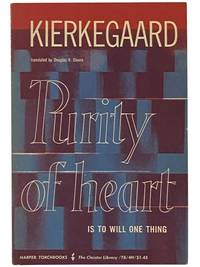
1956ref. 2354681New York: Harper Torchbooks / The Cloister Library 1956. Reprint. Trade Paperback. Near Fine. 0x0x0. 1965 10th printing. Tiny spot on top edge wrappers lightly toned. Binding tight and square text clean bright and unmarked. 1956 Trade Paperback. 220 2 pp. Originally a portion of Kierkegaard's Edifying Discourses this essay promotes self-reflection before taking the Office of Confession. Translated into English from the original Danish with an introductory essay by Douglas V. Steere. Includes: Preface; Translator's Introduction: Man and the Eternal; Remorse Repentance Confession: Eternity's Emissaries to Man; Barriers to Willing One Thing: Variety and Great Moments Are Not One Thing; Barriers to Willing One Thing: The Reward Disease; Barriers to Willing One Thing: Willing Out of Fear of Punishment; Barriers to Willing One Thing: Egocentric Service of the Good; Barriers to Willing One Thing: Commitment to a Certain Degree; The Price of Willing Our Thing: Commitment Loyalty Readiness to Suffer All; The Price of Willing One Thing: The Exposure of Evasions; The Price of Willing One Thing: An Examination of the Extreme Case of an Incurable Sufferer; The Price of Willing One Thing: The Sufferer's Use of Cleverness to Expose Evasion; What Then Must I Do The Listener's Role in a Devotional Address; What Then Must I Do Live as an "Individual"; What Then Must I Do Occupation and Vocation; Means and End; Conclusion: Man and the Eternal; Notes. Harper Torchbooks / The Cloister Library paperback books
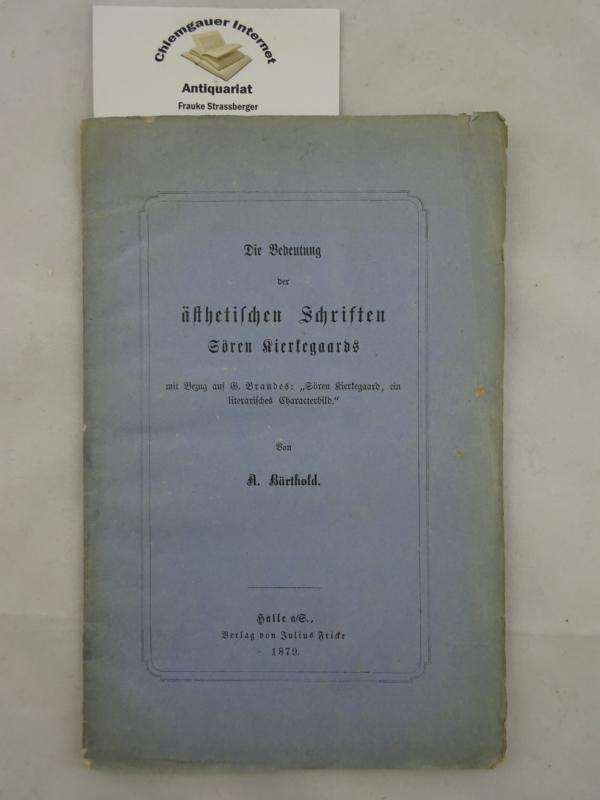
1879ref. 176980Halle, Fricke, 1879. 80 Seiten. 22 cm. Originalbroschur.
1958166pp., 24cm., linnen band (etiket verwijderd), stempeltje, tekst in goede staat, F76922
1949ref. V24783München (Hermann Rinn) 1949 (= Erste Ausgabe). 8°, Originalleinen (Hardcover) 620 S., 1
ref. 2757Ministère danois de l'Education, Copenhague, 1996. In-12, broché sous couverture illustrée en couleur, 126 pp. Le secret de Kierkegaard - L'écriture originaire lue par un génie - Chronologie - Portraits - Kierkegaard en France et dans quelques pays francophones - Notes.
1935ref. 974251Leipzig: Hegner, 1935. 232 S.; 19 cm. Originalleinen.
1974ref. 156481-1München, C. Kaiser 1974. 255 S. Original-Kartonband
2002Moretti & Vitali 2002. LIEVI SEGNI DEL TEMPO Quale spazio può essere oggi allestito dall’etica? Quali sono le condizioni per ricostituire un luogo dove il soggetto possa dimorare al di fuori di ogni pretesa di fondazione ontologica? La filosofia viene convocata con la psicoanalisi per un ripensamento delle categorie fondative, a partire dall’assunto che la centralità del linguaggio non è segno individuante il genere umano e non lo esaurisce nella sua “fisionomia” di animal rationale, limitato in un’etica puramente valoriale oppure affondato nella solitudine di un’etica tragica. Al vettore del linguistico inteso come ciò che marca la discontinuità con “il resto dell’accadere universale” (Freud) non si tratta però di contrapporre 1′”altro dal linguistico”, come risulta, per certi versi, da alcune delle posizioni filosofiche discusse in questo libro. Occorre piuttosto riprendere a percorrere, sulla scorta del lavoro teorico di Sergio Finzi e di Virginia Finzi Ghisi, “la via lunga e discensionale delle forme”, attraverso cui il soggetto si costituisce coestensivamente al resto dell’accadere universale. Da quest’angolazione, il linguaggio non ha più la funzione di differenziare “l’uomo dall’animale” ma di esplicitare “i legami che intercorrono tra i due” (V. Finzi Ghisi), e diventa punto di arrivo “di un processo silenzioso di metamorfosi della luce e del colore” (S. Finzi). Attraverso questa via lunga e discensionale si dischiude, in virtù del fondamentale e inaugurale passo costitutivo di ogni soggettività che è l’invenzione del luogo della fobia, l’etica della verità del soggetto. Per la preminenza che in tale luogo ha la dimensione rappresentativa, quest’etica si configura come un’etica della rappresentazione. Riconosciuto ed elaborato con le sue “prime invenzioni” (teorie sessuali infantili e romanzo familiare) il proprio fondo psicotico (“l’espandersi disordinato del godimento paterno da cui si nasce”), il soggetto articola il proprio esserci in continuità con quel mondo delle forme da cui discende e ritrova, per questa via, il proprio posto nella grande politela della natura.