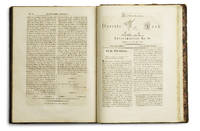
2.215 Ergebnisse
1844Best.-Nr. 62260Kjøbenhavn, Reitzel, 1844. 8vo. (8), 184 pp. Lovely contemporary brown half calf with richly gilt spine. Light wear to hinges, capitals, and corners, but overall very nice. First leaves with a bit of brownspotting, but also internally unusually nice.
1844Best.-Nr. 62260Kjøbenhavn Reitzel 1844. 8vo. 8 184 pp. Lovely contemporary brown half calf with richly gilt spine. Light wear to hinges capitals and corners but overall very nice. First leaves with a bit of brownspotting but also internally unusually nice. An absolutely lovely copy in contemporary binding of this notoriously rare first edition. It is this classic of Existentialism that introduced the notion of “Angst” anxiety in philosophy. If Kierkegaard had written nothing else The Concept of Anxiety alone would have cemented him as one of the most important thinkers since antiquity. Nowhere else can one find an account of the concept of anxiety that comes close in importance to the one Kierkegaard gives in the present work. Using the Fall in the Garden of Eden as the foundation of the analysis he succeeds in describing what no-one has been able to before or since. “Long before modern psychology had entered puberty Kierkegaard unfurled advanced psychological concepts that in many senses were Freudian before Freud was around. In his primary psychological work The Concept of Anxiety he presents his detailed analyses of the relationship of anxiety to phenomena such as freedom sexuality original sin and history.” The Søren Kierkegaard Research Centre. Being one of his most important and influential philosophical works The Concept of Anxiety is essential to all later existentialist writers. It was arguably this work that more than any other influenced Existentialism. The work bears a printed dedication to his beloved Poul Martin Møller one of the most beautiful and moving dedications in a philosophical work. Poul Martin Møller was his philosophy professor but more than that he was a moral mentor and one of a few people that Kierkegaard truly admired and cared for. Poul Martin Møller died in 1838 leaving almost no published works behind; he is the only person outside of Kierkegaard’s immediate family here including Regine who had been honoured with a printed dedication in any of his books. Apart from the title Sixteen Upbuilding Discourses the amputated Eighteen Upbuilding Discourses – without the two that were quickly sold out The Concept of Anxiety is by far the scarcest of Kierkegaard’s works – “The Concept of Anxiety was only printed in 250 copies!” Textspejle p. 58 translated from Danish which is ca half of most of the other works. It is interestingly the only one of the pseudonymous writings from the period that was reprinted despite the poor sales numbers of the first issue. In the summer of 1847 when Reitzel buys the remainders of the first issue a mere 165 copies of what is arguably now considered Kierkegaard’s most important work had been sold. The Concept of Anxiety is not only notorious for its pivotal importance in the history of philosophy and for essentially being the theoretical foundation of Existentialism; among Kierkegaard collectors and bibliophiles in general it is also notorious for its scarcity having been printed in a mere ca 250 copies. Furthermore like Fear and Trembling not a single presentation-copy of the work is known to exist. Himmelstrup 62. unknown
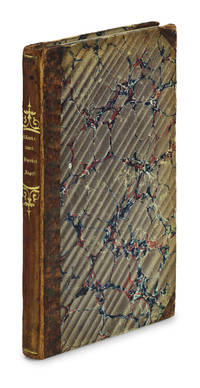
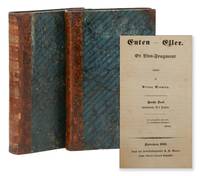
1843Best.-Nr. 1006Kierkegaard's Famous "Either-Or" Challenge to Life – PMM 314 KIERKEGAARD Sören. Enten-Eller. Et Livs-Fragment. udgivet af Victor Eremita Either-Or A Fragment of Life C.A. Reitzel Kjøbenhavn 1843. Volume 1: Half-title TP V-XX = Forord XXI = Indhold half-title 3-470 2 blank leaves; Volume 2: Half-title TP 1 leaf = Inhold half-title 1-368 1 blank leaf Octavo First Edition Himmelstrup 20. Printing and the Mind of Man 314 With the often missing half-titles present. This is one of only 525 copies printed of this work. "Kierkegaard's third published book and the first of many pseudonymous 'aesthetic' works. Generally regarded as the first major statement of his own unsystematic philosophy this 'fragment' is a literary and philosophical tour de force incorporating a stunning array of subject matter literary effects and moods including melancholy aphorisms and personal meditation elaborate musical dramatic and literary criticism lyrical effusions odd essays on unhappiness and boredom a strange 'Seducer's Diary' and in the second volume an extended treatise on marriagethe human personality and the ethical life in the form of a letter from a Judge to a younger man capped by a sermon sounding a note of radical doubt about both the aesthetic and ethical justifications for existence." Wronoski p. 11 "Enten-Eller was written before he was twenty-nine. It is a curious bundle of papers essays semi-dialogues and notes seemingly ill-assorted but in fact dialectically arranged. Adopting what he called an 'aesthetic attitude' he held that this consisted in balancing possibilities and that in matters religious and ethical it was up to the individual to make his choice. Choice as the title of his work suggests was at the root of Kierkegaard's theory. There can be no system of existence only a system of ideas. From this he develops his thesis of 'Existence" since taken up by the modern Existentialist in which human beings considered as subjects not objects are the only real existence: their reflective as opposed to active nature being focused on the 'acts' of making perpetual decisions" PMM pp. 190-91 CONDITION: Very good in original contemporary quarter cloth with marbled boards. Minimal edgewear. Handwritten spine labels light spotting to pages. Housed in protective cloth clamshell box. C.A. Reitzel hardcover
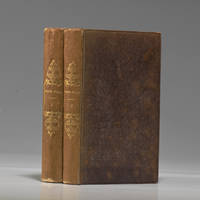
1843Best.-Nr. 1311161843. First Edition. KIERKEGAARD S¿ren. Enten-Eller. Et Livs-Fragment. Kjobenjavn Copenhagen: C.A. Reitzel 1843. Two volumes. Octavo contemporary violet ribbon-embossed cloth elaborately gilt-decorated spines. $9500.First edition of Kierkegaard's first significant work one of only 525 copies printed and published by the philosopher under the pseudonym ""Victor Eremita.""Kierkegaard's earliest major work Enten-Eller Either/Or contrasts two ways of life: the aesthetic and the ethical. The book comprises ""a curious bundle of papers essays semi-dialogues and notes seemingly ill-assorted but in fact dialectically arrangedÉ the chief advantage of this method seems to have been to give Kierkegaard the opportunity of letting different sides of his mind converse as individuals with each other in a semi-Socratic fashionÉ Choice as the title of his work suggests was at the root of Kierkegaard's theory. There can be no system of existence only a system of ideas. From this he develops his thesis of 'Existence' since taken up by the modern ExistentialistsÉ As a thinker Kierkegaard had to wait for the twentieth century to find his audience; he is now generally considered to be however eccentric one of the most important Christian philosophers"" PMM 314. With the scarce half titles. Kierkegaard's name inked in an early hand under the author line on the half title of volume I; partially removed oval stamp on title page of volume II.Contents with occasional light foxing small area of offsetting from inked author name; spines evenly toned to brown boards with spots of toning cloth slightly rubbed at corners and spine ends. A very good copy. hardcover
1843Best.-Nr. 1311161843. First Edition. KIERKEGAARD S¿ren. Enten-Eller. Et Livs-Fragment. Kjobenjavn Copenhagen: C.A. Reitzel 1843. Two volumes. Octavo contemporary violet ribbon-embossed cloth elaborately gilt-decorated spines. $9500.First edition of Kierkegaard's first significant work one of only 525 copies printed and published by the philosopher under the pseudonym ""Victor Eremita.""Kierkegaard's earliest major work Enten-Eller Either/Or contrasts two ways of life: the aesthetic and the ethical. The book comprises ""a curious bundle of papers essays semi-dialogues and notes seemingly ill-assorted but in fact dialectically arrangedÉ the chief advantage of this method seems to have been to give Kierkegaard the opportunity of letting different sides of his mind converse as individuals with each other in a semi-Socratic fashionÉ Choice as the title of his work suggests was at the root of Kierkegaard's theory. There can be no system of existence only a system of ideas. From this he develops his thesis of 'Existence' since taken up by the modern ExistentialistsÉ As a thinker Kierkegaard had to wait for the twentieth century to find his audience; he is now generally considered to be however eccentric one of the most important Christian philosophers"" PMM 314. With the scarce half titles. Kierkegaard's name inked in an early hand under the author line on the half title of volume I; partially removed oval stamp on title page of volume II.Contents with occasional light foxing small area of offsetting from inked author name; spines evenly toned to brown boards with spots of toning cloth slightly rubbed at corners and spine ends. A very good copy. hardcover books
1843Best.-Nr. 140946922Copenhagen: C. A. Reitzel 1843. First Edition. Very Good. First edition of Soren Kierkegaard's best-known work Either/Or. Octavo. Two volumes bound in contemporary half-calf over marbled boards; bound without the half-titles. Text in Danish. Very Good rubbing and wear to bindings neatly rebacked with old spines preserved. Former owner names to preliminary blacks and owner's rubber stamp to title pages. Contents tanned sporadically foxed and occasionally lightly stained. A lovely set. Either/Or Danish philosopher Søren Aabye Kierkegaard's groundbreaking first published work. Only 525 copies of this edition were published in 1843 under an editorial pseudonym "Victor Emerita" at the author's own expense. It was mostly written during his stay in Berlin where he took notes on Schelling's Philosophy of Revelation. It includes essays of literary and music criticism and a set of romantic-like-aphorisms as part of his larger theme of examining the reflective and philosophical structure of faith. He is widely considered to be the first existentialist philosopher. "As a thinker Kierkegaard had to wait for the twentieth century to find his audience; he is now generally considered to be however eccentric one of the most important Christian philosophers" write Carter and Muir in Printing and the Mind of Man. C. A. Reitzel unknown
1843Best.-Nr. 140946922Copenhagen: C. A. Reitzel 1843. First Edition. Very Good. First edition of Soren Kierkegaard's best-known work Either/Or. Octavo. Two volumes bound in contemporary half-calf over marbled boards; bound without the half-titles. Text in Danish. Very Good rubbing and wear to bindings neatly rebacked with old spines preserved. Former owner names to preliminary blacks and owner's rubber stamp to title pages. Contents tanned sporadically foxed and occasionally lightly stained. A lovely set. Either/Or Danish philosopher Søren Aabye Kierkegaard's groundbreaking first published work. Only 525 copies of this edition were published in 1843 under an editorial pseudonym "Victor Emerita" at the author's own expense. It was mostly written during his stay in Berlin where he took notes on Schelling's Philosophy of Revelation. It includes essays of literary and music criticism and a set of romantic-like-aphorisms as part of his larger theme of examining the reflective and philosophical structure of faith. He is widely considered to be the first existentialist philosopher. "As a thinker Kierkegaard had to wait for the twentieth century to find his audience; he is now generally considered to be however eccentric one of the most important Christian philosophers" write Carter and Muir in Printing and the Mind of Man. C. A. Reitzel unknown books
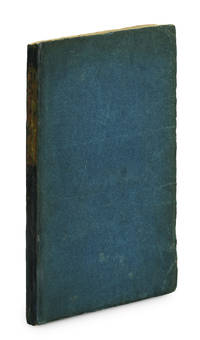
1843Best.-Nr. 62137Kjøbenhavn, Reitzel, 1843. 8vo. VIII, 135 pp. Completely uncut in the original blue cardboard binding. Spine and front hinge neatly restored, preserving part of the original printed title-label. Brownspotting as usual. Overall a very nice copy indeed. Old owners’ names to inside of front board (N. Pedersen 18/8 1879 and C. Wegener).
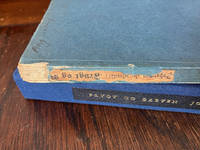
1843Best.-Nr. 62137Kjøbenhavn Reitzel 1843. 8vo. VIII 135 pp. Completely uncut in the original blue cardboard binding. Spine and front hinge neatly restored preserving part of the original printed title-label. Brownspotting as usual. Overall a very nice copy indeed. Old owners’ names to inside of front board N. Pedersen 18/8 1879 and C. Wegener. A splendid copy of one of Kierkegaard's most splendid and most sought-after works in the original binding which is extremely rare. The spines of the original Kierkegaard cardboard bindings are always just thin paper directly glued on the block making them extremely fragile and the original paper-labels are hardly every preserved. Although Fear and Trembling is evidently printed in the same number of copies as almost all the other works by Kierkegaard i.e. ca 525 this is one of the most difficult of his works to find in the first edition. Perhaps later research will show whether unsold copies were destroyed which seems unlikely however. We know that in July or August 1847 321 copies of Fear and Trembling had been sold. What we also know is that it is highly sought-after by collectors and much less frequently on the market than most of Kierkegaard’s other works. It is very odd that not a single copy on special paper or in a gift-binding presentation-copy or anything like that has been located or registered. For this title a Kierkegaard-collector will have to make do with a “normal” copy. The present copy in the original binding and completely uncut is the best copy we have come across over the last many decades. FEAR AND TREMBLING is one of Kierkegaard’s most important works. And it is also one of his most difficult. It deals – in forceful brevity – with the relationship between reason and faith and provides us with Kierkegaard’s most thorough exposition of the religious stage which he considered the most meaningful form of existence. Setting the scene in his Preface with the punchy opening lines: “Not merely in the realm of commerce but in the world of ideas as well our age is organizing a regular clearance sale. Everything is to be had at such a bargain that it is questionable whether in the end there is anybody who will want to bid.”Preface Walter Lowrie’s translation 1941 Kierkegaard begins the work with a rendering of the biblical tale of Abraham and Isak from the Old Testament using it to illustrate how religious reasons can triumph over ethical. It is here that Kierkegaard introduces the “tragic hero” and contrasts it to the “Knight of Faith” who both ignore their own wishes for a higher good. These two essential figures epitomize the ethical and the religious and pave the way for the understanding of these stages in Kierkegaard’s philosophy. It is arguably also here that the idea of the essential leap of faith is introduced for the first time. The Knight of Faith sacrifices his son at the command of God and thus sets aside an ethical demand in in order to attain a higher goal that exists beyond the ethical. This teleological suspension of the ethical requires a leap of faith that is only possible through faith in virtue of the absurd. In many ways Fear and Trembling is the most forceful of Kierkegaard’s works as is also indicated by the title. Kierkegaard himself also considered it one of his most significant productions and wrote in his posthumously published Notebooks: “Oh once I am dead Fear and Trembling alone will be enough for an imperishable name as an author. Then it will be read translated into foreign languages as well. The reader will almost shrink from the frightful pathos in the book.” NB 12:147 1849. This splendidly dense work which so magnificently weaves together existential concerns with biblical interpretation is responsible for the introduction of many of the concepts that are most fundamental to Kierkegaard’s philosophy and is essential to the understanding of his thought. Not a single presentation-copy of the work is known to exist and none has ever been registered nor identified. We know from the auction catalogue that Kierkegaard had two copies in his collection one in “dainty binding” but neither copy has been located. Himmelstrup 48 The present copy is no. 18 in Girsel's "Kierkegaard" The Catalogue which can be found here. unknown
1843Best.-Nr. 1008Spectacular First Edition of Kierkegaard's Revolutionary Existential Classic in Original Blue Boards. KIERKEGAARD Søren. Frygt og Bæven.Dialektisk Lyrik af Johannes de silentio. Fear and Trembling A Dialectical Lyric by John the Silent Copenhagen C. A. Reitzel 1843. TP III –VIII = Forord 1-135 Octavo. First Edition.Himmelstrup 48. First edition of Fear and Trembling Kierkegaard's early and magisterial integration of his philosophical perspective withScriptural exegesis built around Abraham and his 'sacrifice' of Isaac and the problem of faith.The work begins with a meditation on the faith of Abraham when he was commanded by God to sacrifice his son Isaac.Silentio gives four alternative re-tellings in which Abraham fails the test of his faith and contrasts them with his own interpretation of the story of Abraham and the faith therein demonstrated. Silentio professes to admire Abraham's faith but he is utterly incapable of comprehending it. Following the Preface and Prelude there is a Panegyric Upon Abraham and a series of three Problemata which address three specific philosophical questions that Kierkegaard sees having been raised by the story of Abraham's sacrifice: Is there a teleological suspension of the ethical That is can Abraham's intent to sacrifice Isaac be considered "good"even though ethically human sacrifice is unacceptable; Is there an absolute duty to God In other words beyond that which is ethical; Was it ethically defensible for Abraham to have concealed his purpose from Sarah Eleazar and Isaac CONDITION: Very good to near fine in original blue cardboard covers with original paper-label to spine. Moderate wear to boards and spine some loss to spine as expected. Pages uncut fully in the original condition. Housed in a custom cloth archival box. A spectacularly well-reserved copy of arguably Kierkegaard's most important work. C. A. Reitzel
1841Best.-Nr. 62111Kjøbenhavn, P.G. Philipsens Forlag, 1841. 8vo. (8), 350 pp. Gift binding of elaborately blindpatterned full cloth with single gilt line-border to boards and single gilt lines to spine. All edges gilt and printed on fine paper. The slightest touch of wear to corners and capitals, but apart from that a complete fresh, clean, bright and tight copy. It looks like it has hardly been opened and seems like it just came from the binder. No markings of any kind.
1836Best.-Nr. 62102Kjøbenhavn 1834-1836. Large 4to. Interimsblade i.e. Interim Papers 1-100 with the joint title-page and the contents leaf bound in a very nice contemporary brown half calf with gilt spine and marbled paper over boards. Spine with wear and hinges and corners bumped. Edges of boards with wear. Occasional brownspotting throughout but all in all a fine and well preserved copy. Each “Interimsblad” takes up 4 pp. Kierkegaard’s contributions: I: ab. 1 p.; II: 2 3/4 pp.; III: 4 pp.; IV: 4 pp. Very rare first printings of Kierkegaard’s first four publications including the very first publication in Kierkegaard’s own name which constitutes a true milestone in the history of Kierkegaard’s opus as does of course his very first publication. KIERKEGAARD’S VERY EARLIEST publications are the papers that he publishes in Kjøbenhavns Flyvende Post before he publishes his famous first book which is a polemic attack on Hans Christian Andersen. The first and fourth of these earliest periodical publications are arguably the most important being the very first thing Kierkegaard publishes and the very first publication in Kierkegaard’s own name respectively; but all these four earliest papers Himmelstrup 123 and 4 are significant 23 and 4 dealing with contemporary press issues primarily freedom of press. Danish politics in the 1830’es was dominated by the slow implementation of rules for election for and assembly of the Estates of the Realm. But as they were only advisory the papers and periodicals were not allowed to publish their opinions. In response to this a liberal opposition arose around the two polemic papers Kjøbenhavnsposten The Copenhagen Post and Fædrelandet The Fatherland. The first point on the agenda for the Liberals was the fight for freedom of the press and the abolishment of censorship. This fight for freedom of the press was something that found resonance with Copenhagen academics and it stirred up a lively activity in Copenhagen. In 1835 active Liberals had encouraged King Frederik VI to support freedom of press but had received an answer stating that he alone was able to evaluate what was truly the best for the people and the state. After this answer from the king the “Society for the Correct Use of the Freedom of press” was founded by moderate liberals and young liberals and at the end of the year almost 2.300 members had joined. It was in the midst of all this that the 21-year old Søren Kierkegaard then a student of theology had his debut with political-literary articles in Kjøbenhavns flyvende Post in Interimsbladende which were published separately. But as opposed to the predominantly liberal views of almost all other contributors Kierkegaard’s articles expressed distinctly conservative views. His first publication Også et Forsvar for Qvindens høie Anlæg Also a Defense of the High Abilities of the Woman constitutes an unpolished ironic apology for the liberation of women. This article is published in December 1834 and is signed “A.”. As opposed to the following next three articles this does not deal with freedom of press. Kierkegaard’s three following publications however all concern the question of freedom of press and constitute satirical polemics against the two liberal papers Kjøbenhavnsposten and Fædrelandet against Orla Lehmann the upcoming star of the liberal youth and against all liberals in general. These three articles were published in February and April 1836. The two first are signed “B.” and the third signed “S. Kierkegaard” constitutes the very first publication in his own name. As is well known the names under which Kierkegaard later publishes come to play a significant role in his authorship and represent an extremely thorough and well-thought-out construction. The foundation of this play with the reader is thus laid in the present publications in which he begins to develop the style for which he later gained worldwide renown. The “names” A and B under which he here publishes will most famously be used again in Either- Or Part one of which consists in “A.’s Papers” and Part Two in “B.’s Papers Letters to A.” Common for all four of his first publications is the attempt at polemic and satirical power at literary elegance and at a masterful and ceremonious critique of the prose of the opponent – all dominant traits in his later writings. Kjøbenhavns flyvende Post The Flying Post of Copenhagen was one of the most important and most widely read cultural and literary periodicals of the period. It was edited and run by Johan Ludvig Heiberg 1791-1860 arguably the most famous cultural person during the Danish Golden Age. He played a more significant role than any other author or thinker during this period and was the leading character of literature and philosophy in the 19th century. He introduced many German thinkers to Denmark most importantly Hegel – who Kierkegaard would later oppose – and he was part of almost all intellectual discussions of the Danish Golden Age. He was also a patron for many leading figures of the era. Interestingly several people thought that the first of the articles on the freedom of the press was written by Heiberg. This was of dubious merit to Kierkegaard himself as he was opposed to the circles around Heiberg and the Hegelian environment but it was still this article – and this miscomprehension – that gave him a claim to fame. Another paper claimed that this “priceless” article had been written by Heiberg himself who “had written many witty things but never anything as witty as this.” Also Kierkegaard’s professor of philosophy Poul Martin Møller to whom Kierkegaard was very devoted and to whom he dedicated Begrebet Angest the only person outside of his family that Kierkegaard ever wrote a printed dedication for loved the article and assumed that Heiberg had written it. “He Kierkegaard had a lifelong antipathy toward the press though he himself published reviews in various papers. His mistrust of the press as a legitimate organ of communication was based on several observations one of which was that the press was the voice of the masses rather than that of the individual. He viewed that voice with great skepticism and sarcasm in later years averring that the crowd. even if technically correct. is wrong by the very fact of being the crowd. The truth can only be stated and practiced as individuals especially as individuals before God. Admittedly Kierkegaard’s view of the masses was not well developed at this juncture.” D. Antony Storm. Himmelstrup: 1 2 3 & 4. The present copy is no. 1 in Girsel's "Kierkegaard" The Catalogue which can be found here. hardcover
1836Best.-Nr. 62102Kjøbenhavn, 1834-1836. Large 4to. Interimsblade [i.e. Interim Papers] 1-100, with the joint title-page and the contents leaf, bound in a very nice contemporary brown half calf with gilt spine and marbled paper over boards. Spine with wear and hinges and corners bumped. Edges of boards with wear. Occasional brownspotting throughout, but all in all a fine and well preserved copy. Each “Interimsblad” takes up 4 pp. Kierkegaard’s contributions: I: ab. 1 p. II: 2 3/4 pp. III: 4 pp. IV: 4 pp.
1841Best.-Nr. 62111Kjøbenhavn P.G. Philipsens Forlag 1841. 8vo. 8 350 pp. Gift binding of elaborately blindpatterned full cloth with single gilt line-border to boards and single gilt lines to spine. All edges gilt and printed on fine paper. The slightest touch of wear to corners and capitals but apart from that a complete fresh clean bright and tight copy. It looks like it has hardly been opened and seems like it just came from the binder. No markings of any kind. A truly splendid copy of the first edition of Kierkegaard's dissertation being a completely fresh copy in the daintiest of the gift-bindings presumably one of the two daintily bound copies that Kierkegaard had in his own collection nr. 2110-11 in the auction catalogue. The copy is with the Thesis and both the day and the time has been filled in by hand. Kierkegaard's dissertationconstitutes the culmination of three years’ intensive studies of Socrates and “the true point of departure for Kierkegaard’s authorship” Brandes. The work is of the utmost importance in Kierkegaard’s production not only as his first academic treatise but also because he here introduces several themes that will be addressed in his later works. Among these we find the question of defining the subject of cognition and self-knowledge of the subject. The maxim of “know thyself” will be a constant throughout his oeuvre as is the theory of knowledge acquisition that he deals with here. The dissertation is also noteworthy in referencing many of Hegel’s theses in a not negative context something that Kierkegaard himself would later note with disappointment and characterize as an early uncritical use of Hegel. Another noteworthy feature is the fact that the thesis is written in Danish which was unheard of at the time. Kierkegaard felt that Danish was a more suitable language for the thesis and hadto petition the King to be granted permission to submit it in Danish rather than Latin. This in itself poses as certain irony as the young Kierkegaard was known to express himself poorly and very long-winded in written Danish. One of Kierkegaard’s only true friends his school friend H.P. Holst recounts in 1869 how the two had a special school friendship and working relationship in which Kierkegaard wrote Latin compositions for Holst while Holst wrote Danish compositions for Kierkegaard who “expressed himself in a hopelessly Latin Danish crawling with participial phrases and extraordinarily complicatedsentences” Garff p. 139. When Kierkegaard in 1838 was ready to publish his famous piece on Hans Christian Andersen see nr. 1 & 2 above which was to appear in Heiberg’s journal Perseus Heiberg had agreed to publish the piece although he had some severe critical comments about the way and the form in which it was written – if it were to appear in Perseus Heiberg demanded at the very least the young Kierkegaard would have to submit it in a reasonably readable Danish. “Kierkegaard therefore turned to his old schoolmate H. P. Holst and asked him to do something with the language…” Garff p. 139. From their school days Holst was well aware of the problem with Kierkegaard’s Danish and he recounts that over the summer he actually “translated” Kierkegaard’s article on Andersen into proper Danish. The oral defense was conducted in Latin however. The judges all agreed that the work submitted was both intelligent and noteworthy. But they were concerned about its style which was found to be both tasteless long-winded and idiosyncratic. We already here witness Kierkegaard’s idiosyncratic approach to content and style that is so characteristic for all of his greatest works. Both stylistically and thematically Kierkegaard’s and especially a clear precursor for his magnum opus Either-Or that is to be his next publication. In many ways Either-Or is born directly out of The Concept of Irony and is the work that brings the theory of Irony to life. Part One of the dissertation concentrates on Socrates as interpreted by Xenophon Plato and Aristophanes with a word on Hegel and Hegelian categories. Part Two is a more synoptic discussion of the concept of irony in Kierkegaard’s categories with examples from other philosophers. The work constitutes Kierkegaard’s attempt at understanding the role of irony in disrupting society and with Socrates understood through Kierkegaard we witness a whole new way of interpreting the world before us. Wisdom is not necessarily fixed and we ought to use Socratic ignorance to approach the world without the inherited bias of our cultures. With irony we will be able to embrace the not knowing. We need to question the world knowing we may not find an answer. The moment we stop questioning and just accept the easy answers we succumb to ignorance. We must use irony to laugh at ourselves in order to improve ourselves and to laugh at society in order to improve the world. The work was submitted to the Philosophical Faculty at the University of Copenhagen on June 3rd 1841. Kierkegaard had asked for his dissertation to be ready from the printer’s in ample time for him to defend it before the new semester commenced. This presumably because he had already planned his sojourn to Berlin to hear the master philosopher Schelling. On September 16th the book was issued and on September 29th the defense would take place. The entire defense including a two hour long lunch break took seven hours during which ”an unusually full auditorium” would listen to the official opponents F.C. Sibbern and P.O. Brøndsted as well as the seven “ex auditorio” opponents F.C. Petersen J.L. Heiberg P.C. Kierkegaard Fr. Beck F.P.J. Dahl H .J.Thue og C.F. Christens not to mention Kierkegaard himself. The work appeared in two states – one with the four pages of “Theses” for academics of the university whereas the copies without the theses were intended for ordinary sale. These sales copies also do not have “Udgivet for Magistergraden” and “theologisk Candidat” on the title-page. The first page of the theses always contains the day “XXIX” of September written in hand and sometimes the time “hora X” is also written in hand but not always. In all 11 presentation-copies of the dissertation are known and of these only one is signed that for Holst all the others merely state the title and name of the recipient. As is evident from the auction catalogue of his collection Kierkegaard had a number of copies of his dissertation in his possession when he died. Five of them were bound and two of them were “nit. M. Guldsnit” i.e. daintily bound and with gilt edges. These two copies were obviously meant as presentation-copies that he then never gave away. The gift copies of the dissertation were given two types of bindings both brownish cloth one type patterned the other one plain and some of them have gilt edges but most of the plain ones do not. There exist two copies on thick vellum paper – one being Kierkegaard’s own copy the other being the copy for H.C. Ørsted discoverer of electromagnetism and then principle of the University of Copenhagen. “As already implied two works of the authorship stand out in the sense that Kierkegaard sent his presentation-copies to a special circle of people: The dissertation from 1841.” Posselt Textspejle p. 91 translated from Danish. Most of the copies were given to former teachers and especially to people who due to leading positions personified the university. “For this circle of initiated we can now due to registered copies confirm that Kierkegaard gave copies with handwritten dedications to the headmaster of the University H.C. Ørsted printed on thick paper Kolderup-Rosenvinge and to J.L. Heiberg. It is granted that Sibbern Madvig and F.C. Petersen were also given the dissertation as a gift. but these copies are not known yet.” Posselt Textspejle pp. 93-94 translated fromDanish. N.b. We have since handled the copy given to Petersen and can thus confirm that it exists. Only a few months after Kierkegaard died 11th of November 1855 at the beginning of April 1856 his books were put up for sale. The sale was an event which created stir among scholars all over Denmark and the event drew large crowds. Everyone wanted a piece of the recently deceased legend and bidding was lively. The average price for the single items was nearly a rix-dollar a very high price for that time. As the old Herman Lynge wrote in a letter on the 22nd of May The Royal Library Recent Letters D. to the famous collector F.S. Bang “At the sale of Dr. Søren Kierkegaard’s books everything went at very high prices especially his own works which brought 2 or 3 times the published prices”.” Rohde Auction Catalogue p. LVIJ. Many authors philosophers and scholars were present in the auction room which was completely full as was the Royal Library who bought ca 80 lots. “Many of the books not only his own were paid for with much higher prices than in the book shops” In Morgenposten no. 99 30. April 1856 written by “P.” translated from Danish. "Some books were bought by libraries where they still are today others were bought by private people who sometimes wrote their names in the front of the books and thus indirectly stated that they came from Kierkegaard’s book collection… The edition of the auction catalogue 1967 registers all books from Kierkegaard’s book collection that it has hitherto been possible to identify – either in public or in private ownership… All in all nearly a couple of hundred volumes – i.e. ca. 10 % – of the Kierkegaardian book collection is said to be rediscovered…" Rohde. Thus today books from Kierkegaard’s library are of the utmost scarcity. Only very few are still possible to acquire and they hardly ever appear on the market. Himmelstrup 8 hardcover
1849Kjøbenhavn, 1849. 8vo. A magnificent black half calf in perfect pastiche-style with richly gilt spine. Some brownspotting, but a very good copy. 51pp. Old owner's names to title-page. The book is housed in the original bubble-wrap envelope stating ""Kierkegaard Book"" and a code, in which it was kept during its travel into space. The Certficate of Authenticity (blue background with white and red) measures 21x29,5 cm. It states that ""This item was flown with Andreas Mogensen during his ESA iriss mission in September 2015 in board the International Space Station"", carries the logos os ESA (European Space Agency) and iriss and is signed by both Andreas Mogensen, ESA astronaut, and Andreas Schoen, Head of the Columbus Operations Dvision. The book and the certificate are housed together in an absolutely splendid custom-made box of grey stone veneer with a ""moon-like"" stone-surface and silver lettering (KIERKEGAARD IN SPACE) to the spine. The certficate is kept in the ""lid"" of the box, under plastic ""frame"", framed with a thin like of stone veneer with magnetic edges, so that it can be easily removed but is still safely and elegantly kept in place. The book, still in the original bubble-wrap-envelope, is kept in the other part of the box, in a hollow lined with thick structured silk.