KIERKEGAARD, SORENBiblio.com

2 322 résultats
1846réf. 63611Kjøbenhavn Reitzel 1846. 8vo. 114 pp. Completely uncut in the original blue cardboard-binding. Minimal wear to capitals and upper front hinge with a tiny tear. Tiny paper loss to capitals. Small spotting to lower front board possibly from removal of an old owner's signature. The printed title-label splendidly preserved with only tiny loss of blank paper edge. Light brownspotting due to the quality of the paper. A truly magnificent copy in completely original state – looks like it came fresh from the press. Housed in a beautiful custom-made box with grey morocco spine excellently gilt in pastiche-style and with gilt Gothic lettering. Marbled paper over boards a bit sunned at top and towards front hinge. Gilt owner's initials to front board. Box signed in gilt lettering to inside of spine by Mogens Dickow Lund Anker Kysters Eftf. and gilt by Hagel Olsen. First edition in the very rare original blue binding in truly magnificent state and with the printed title-label excellently preserved. Having finished his "first" authorship with his monumental "Unscientific Concluding Postscript" the "Literary Review of Thomasine Gyllembourg's Two Ages" invokes Kierkegaard's second authorship. The Literary Review is a classic within the conservative critique of modern society. It is here that Kierkegaard presents his most concise and significant analysis of modern society as it shows itself through the press in the relationship between public authorities and the subjects. The work was printed amidst the Corsair-Affair which was a defining event in Kierkegaard's life and work. Having been unbearably ridiculed in periodical The Corsair since January 1846 Kierkegaard uses his Literary Review of Two Ages printed March 30th 1846 to convey his thoughts on the public and the individual's relationship to it. Thomasine Gyllembourg was the mother of Johan Ludvig Heiberg and a magnificent author herself. She was one of the most productive authors of the Danish Golden Age despite having had her debut late in life at the age of 53. She was the founder of Danish feminist literature writing about the position of women in society and in the home. Her novel "Two Ages" portrays one of her eminent Madonna figures Claudine who despite her status as seduced and abandoned single mother stays true to herself her beliefs and her role as a mother. Claudine's sexual liberty of the Revolutionary age is contrasted to the gentle and modest heroine of the present age whose identity is in caring for the home. As such Two Ages opposes the ideals of freedom from the age of the French Revolution with the bourgeois ideals of the Golden Age. In his review Kierkegaard is mainly concerned with the contrast between the two ages in the novel – that of The French Revolution and that contemporary with the novel. Expressed with Kierkegaard's concepts the age of revolution is passionate and the present age dispassionate; Kierkegaard ends up attacking the conformity of the present age and the de-individualization of people into an abstract public. The inanimate beliefs and views of the present age become especially fatal in the daily press. As a reader one is no longer a passionate individual but part of an anonymous and diffuse public audience. Not until the single individual has established an ethical stance to the whole world as it is can there be any question of genuinely uniting. This is a clear reference to the ridicule Kierkegaard himself experienced due to the Corsair and a harsh verdict upon the Copenhagen audience. But it is not only Kierkegaard's characterization of mass media that has made "A Literary Review" a conservative classic within the critique of modern society so has Kierkegaard's description of how the dispassionate age has subverted all social hierarchies and put into question all the relative strength of the different powers of society. This magnificent work is one of Kierkegaard's most political and that which gives us his clearest analysis of modern society. The present copy is no. 50 in Girsel's "Kierkegaard" The Catalogue which can be found here. hardcover
1851réf. 63622Kjøbenhavn Reitzel 1851. 8vo. 20 pp. Original gift-binding of the black glitted paper with single gilt lines to spine all edges gilt and printed on fine paper. An excellent copy with just a bit of overall rubbing to boards and slightly retouched corners. Very light brownspotting and a few leaves with light pencil-underlinings. First edition - one of the extremely rare gift-copies either a presentation-copy given by Kierkegaard to one of his dedicatees or the copy he had in his possession when he died. Published on the same day day as "Two Discourses on the Communion on Fridays" "On my Work as an Author" constitutes Kirkegaard's first of three works on his authorship. It is the shortest of the three works but the only one published in his lifetime. The work begins with "The Accounting" and is dated March 1849. Added to this is a supplement dated November 1850 entitled "My Position as a Religious Writer in 'Christendom' and my Strategy". In 1846 Kierkegaard had started using a protocol as his journal. This is the first of the journals denoted NB that he continued throughout the rest of his life. These journal entries amounting to 36 volumes in all are filled with attempts at understanding himself his purpose the meaning of his writings and not least how he himself understood his authorship and wished for it to be understood in posterity. These latter considerations are the basis of the work "The Point of View for My Work as an Author" of which "On My Work as an Author" is a short resumé – the resumé that he wrote of a larger work he was afraid might be misunderstood by his contemporaries and thus could not publish. In short the present work constitutes the essence of what Kierkegaard found necessary to be said about his own authorship before he died. Kierkegaard had merely one copy of this title in his collection when he died Auction Record no. 2178. Himmelstrup 132. The present copy is no. 86 in Girsel's "Kierkegaard" The Catalogue which can be found here. hardcover
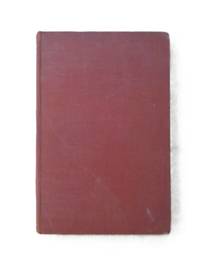
réf. 481386Humphrey Milford. Hardcover. Good. This 1936 first English edition of Søren Kierkegaard’s breakthrough work explores whether eternal truth can be found through historical knowledge contrasting the rational Socratic method with the radical "leap of faith" required by Christian revelation. Written under the pseudonym Johannes Climacus this pivotal text introduced English-speaking audiences to modern existentialism and changed the landscape of 20th-century philosophy. This exceptional UK copy features a historic April 1937 inscription by the prominent British-American theologian Daniel T. Jenkins marking it as an authentic artifact of Kierkegaard's early reception. There is no dust jacket. The boards have very minor wear Humphrey Milford hardcover
2017réf. 9032835Princeton: Princeton University 2017. First. Hardcover. Fine/Fine. Translated by Kierkegaard Soren and Niels Jorgen Cappelorn Alastair Hannay David Kangas Bruce H. Kirmmse George Pattison David D. Possen Joel D. S. Rasmussen Vanessa Rumble K. Brian Soderquist Jon Stewart. Nine out of eleven volumes in a set of twelve. Bound in publisher's original blue cloth with spine stamped in gilt. Illustrated with maps and facsmiles of original pages in black and white. These volumes are the first comprehensive English translation of his unpublished journals which are here reproduced in the original two-column format of initial entries and subsequent self-commentary. These nine volumes cover the period of 1835 to August 1854. 7 1/2 by 9 3/4 inches. Princeton University hardcover
réf. 9031998like new. unknown
réf. 1736045-nnew. unknown
réf. 22088288like new. unknown
réf. 1736045like new. unknown
réf. DADAX3638907015New unknown
réf. 55648169Brand New. unknown
réf. ANAIS-0253182433Indiana University Press. hardcover. Good. 6.5x2x9.6. Buy with confidence. Excellent Customer Service & Return policy. Indiana University Press hardcover
réf. 7535630like new. unknown
réf. ria9780521848107_inpHardcover. New. New Book; Fast Shipping from UK; Not signed; Not First Edition; In this rich and resonant work Kierkegaard reflects on the biblical story of God's command to Abraham that he sacrifice his son Isaac as a test of faith. This volume first published in 2006 presents the first new English translation hardcover
réf. DADAX019870979XNew unknown
réf. DADAX0198785224New unknown
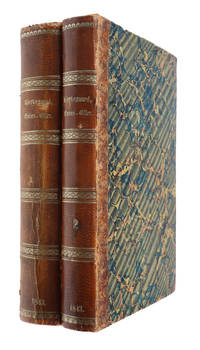
1843réf. 62091Kjøbenhavn C.A. Reitzel 1843. 8vo. Two nice slightly later ca. 1870'ies brown uniform half calf bindings with gilt spines. Corners and spines with a bit of wear and internally some brownspotting to some leaves as usual due to the quality of the paper mostly in the beginning and mostly to volume one. Volume one also a little weak in the stitching. Overall a very nice copy with the often lacking half-titles. XX 2 470; 8 368 pp. A very nice fully complete copy of the first edition of the work that founded existentialism by the greatest Scandinavian philosopher of all times who "is now generally considered to be however eccentric one of the most important Christian philosophers" PMM 314. Kierkegaard's monumental magnum opus is now not only the title of Kierkegaard’s most famous and widely read work it is also a phrase that summarizes much of the thinking for which he is best known. It is a cornerstone of what we now characterize as Existentialism and it seminally influenced later as well as contemporary philosophy. It quite simply ranks as one of the most important works of philosophy of modern times. It could be argued that Either-Or – Kierkegaard’s magnum opus the foundational work of Existentialism and an inevitable classic in the history of philosophy – needs no further introduction. Who does not know this epochal work that founded Existentialism and introduced among many other theories Kierkegaard’s stage theory It seems however a little off not to mention a few points about this groundbreaking work that has so profoundly influenced the way we view the world. Either-Or is the earliest of Kierkegaard’s major works and the work with which he begins his pseudonymous authorship. Kierkegaard’s pseudonymity is an entire subject unto its own. The various cover names he uses play a significant role in his way of communicating and are essential to the understanding of his philosophical and religious messages. And it all properly begins here with his groundbreaking magnum opus. Conjuring up two distinctive figures with diverging beliefs and modes of life – the aesthetic “A” of Part One and the ethical B note that this is the first “pseudonym” that Kierkegaard uses in his earliest articles/Judge Vilhelm of Part Two Kierkegaard presents us with the most basic reflections on the search for a meaningful existence seen from two completely different philosophical views. This masterpiece of duality explores the foundational conflict between the ethical and the aesthetical providing us along the way with the now so famous contemplations on music Mozart drama boredom pleasures virtues and probably most famously seduction and rejection – The Seducer’s Diary. It is primarily Judge Vilhelm from Part Two of Either-Or that has bestowed upon Kierkegaard the reputation as the Father of Existentialism. His emphasis on taking ownership of oneself and the importance of making choices has made him the first personification of Existentialism and the idea that one does not passively develop into the self that he or she should be or ought to become. Kierkegaard went to great lengths to ensure that the public would not know the identity of the author was of Either-Or. He even had the draft of the work done by several hands so that employees at the printer’s would also be deceived. Despite his efforts however it did not take long for the public to guess that Kierkegaard had written this astounding work. But Kierkegaard himself kept up the façade and did not accept authorship until several years later. "Either-Or" is very rarely seen in nice contemporary or near contemporary bindings and when it is it is very rarely in good condition. Himmelstrup 20 PMM 314. unknown
réf. 5837855-nnew. unknown
réf. 35576130-nnew. unknown
réf. 41543560-nnew. unknown
réf. 402036like new. unknown
réf. 41543560like new. unknown
réf. 402039like new. unknown
réf. 35576130like new. unknown
réf. 41529549-nnew. unknown