KIERKEGAARD, SorenBiblio.com

2292 risultati
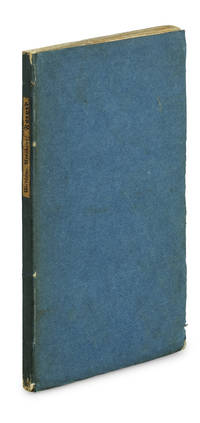
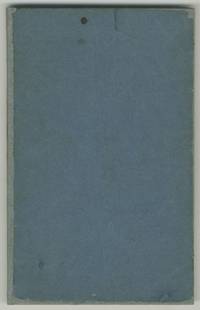
1844rif. 165730Copenhagen: C. A. Reitzel 1844. First edition of the Prefaces - eight prefaces to non-existent works satirical essays and reviews aimed at Copenhagen's literary establishment particularly at the Hegelian philosopher J. L. Heiberg. As with other of Kierkegaard's works it was published under an obvious pseudonym. Octavo. Original boards printed paper label to spine. Joints discreetly repaired. A little worn and soiled. A very good copy. Himmelstrup 70; McGill p. 51. hardcover
1844rif. 152252Copenhagen: C. A. Reitzel 1844. First edition of the Prefaces - eight prefaces to non-existent works satirical essays and reviews aimed at Copenhagen's literary establishment particularly at the Hegelian philosopher J. L. Heiberg. As with other of Kierkegaard's works it was published under an obvious pseudonym. Octavo 170 x 119 mm. Contemporary quarter sheep smooth spine lettered in gilt marbled sides light blue endpapers. Ownership signature dated 1886 to front free endpaper. Very light rubbing and wear at extremities contents a little browned and foxed as usual; a very good copy. Himmelstrup 70; McGill p. 51. unknown
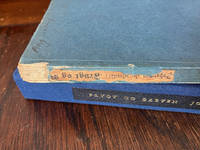
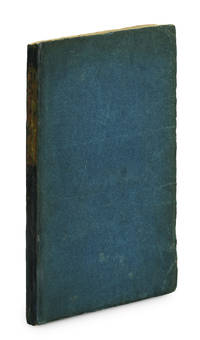
1844rif. 62263Kjøbenhavn Reitzel 1844. Small 8vo. 110 1 pp. Completely uncut in the original blue cardboard-binding. Minimal wear to capitals and hinges with a tiny tear to front upper and back hinge. Minute paper loss to capitals and minimal loss to one corner. The printed title-label preserved in its entirety. Brownspotting due to the quality of the paper.A truly magnificent copy in completely original state – almost looks like it came straight off the press. First edition of Kierkegaard's most humorous book Prefaces in the very rare original blue binding in truly magnificent state and with the printed title-label preserved in its entirety. Published simultaneously with The Concept of Anxiety Prefaces can be viewed as its companion piece. It represents an altogether different genre and is the most humorous of all of Kierkegaard’s works but the two fictional authors of the works interestingly contrast each other. Although having been eclipsed by the now notoriously famous Concept of Anxiety Prefaces was in fact more popular when it appeared and sold many more copies. Written under the pseudonym of Nicolaus Notabene the “author” name indicates that despite its humorous approach Prefaces is still something serious – something to be noted. And it certainly is. It is here that we find Kierkegaard’s sarcastic roasting of the Hegelian system and of the Danish Hegelians with Johan Ludvig Heiberg as the main representant. Through Notabene he makes fun of Heiberg and Hegel who both want to explain everything and want to be mediators of understanding. Just as Hafniensis in The Concept on Anxiety poses that “how sin came into the world each man understands solely by himself. If he would learn it from another he would misunderstand it” p. 51 so Notabene in Prefaces states that “My frame my health my entire constitution do not lend themselves to mediation” p. 45. In Prefaces we also find Kierkegaard’s thoughts about the relationship between the reading public and the author and his fierce criticism of literary critics and reviewers among these also Heiberg as well as Martensen who famously reviewed Either-Or and Repetition respectively. And in the very amusing preface to the Prefaces we are given another glimpse into Kierkegaard’s thoughts on marriage and the dilemma he found himself in with Regine – the inner struggle between he who is the husband and he who is the author; can one be both With its challenging notions on the idea of the book and the interaction of the book with its readers his little ironic masterpiece is a clear forerunner of Postmodernism. “Kierkegaard’s ‘Prefaces’ is a brief though not unimportant work. Themes he develops elsewhere at greater length here are presented with characteristic insight and wit. This richly suggestive text has never received the attention it deserves. William McDonald’s fine translation now makes it possible to assess the importance of ‘Prefaces’ for Kierkegaard’s œuvre and to appreciate its significance for philosophical literary and theological issues that are still with us.” From the review of William McDonald’s 1989 edition of Prefaces in English in the Kierkegaard and Postmodernism-series. Written under a pseudonym and without Kierkegaard’s name appearing as publisher or indeed as anything else he was unable to give away presentation-copies of the work due to his own strict set of rules for this. Thus not a single presentation copy of the work exists. A single copy of the book was in the auction catalogue of his book collection after his death. Himmelstrup 70. The present copy is no. 28 in Girsel's "Kierkegaard" The Catalogue which can be found here. unknown
1844rif. 62093Kjøbenhavn C.A. Reitzel 1844. 8vo. A splendid copy in contemporary full cloth with blindstamped decorations to boards and gothic gilt lettering to spine. Light damp stains to back board and a bit of wear to capitals. Internally unusually nice and clean. 110 1 pp. With an inscription for Josephine Bidoulac later married to Welhaven from Emil Wedel to front fly-leaf. Pencil annotations by Jonas Skovgaard to front free end-paper. The uncommon first edition in a lovely copy of Kierkegaard's most humorous work. Published simultaneously with The Concept of Anxiety Prefaces can be viewed as its companion piece. It represents an altogether different genre but the two fictional authors of the works interestingly contrast each other. Although having been eclipsed by the now notoriously famous Concept of Anxiety Prefaces was in fact more popular when it appeared and sold many more copies. Written under the pseudonym of Nicolaus Notabene the “author” name indicates that despite its humorous approach Prefaces is still something serious – something to be noted. And it certainly is. It is here that we find Kierkegaard’s sarcastic roasting of the Hegelian system and of the Danish Hegelians with Johan Ludvig Heiberg as the main representant. Through Notabene he makes fun of Heiberg and Hegel who both want to explain everything and want to be mediators of understanding. Just as Hafniensis in The Concept on Anxiety poses that “how sin came into the world each man understands solely by himself. If he would learn it from another he would misunderstand it” p. 51 so Notabene in Prefaces states that “My frame my health my entire constitution do not lend themselves to mediation” p. 45. In Prefaces we also find Kierkegaard’s thoughts about the relationship between the reading public and the author and his fierce criticism of literary critics and reviewers. And in the very amusing preface to the Prefaces we are given another glimpse into Kierkegaard’s thoughts on marriage and the dilemma he found himself in with Regine – the inner struggle between he who is the husband and he who is the author; can one be both With its challenging notions on the idea of the book and the interaction of the book with its readers his little ironic masterpiece is a clear forerunner of Postmodernism Himmelstrup 7. hardcover
1844rif. 13899Ubeskåret i orig. hollanderet bd. m. den bogtrykte titeletiket. Forperm lidt løs. Sidste 30 sider m. skjold. Noget brunplettet. Originaludgave. Himmelstrup 70. Har tilhørt Vilhelm Grønbeck. unknown
1844Kjøbenhavn, C.A. Reitzel, 1844. Ubeskåret med det forreste originale blå blanke omslag bevaret. Svag brunplet på p.43, enkelte andre mindre brunpletter. Nogle blyantsindstregninger. 110,(1) pp. Lettere brugsspor. Har tilhørt P.A. Rosenberg og bærer hans navn på titelbladet.
1844Kjøbenhavn, 1844. Nydeligt ubeskåret ekspl. i orig. hollanderet bind m. den bogtrykte titeletiket bevaret. 110pp.A very nice copy in the orig. blue cardboard-bdg. w. the printed paper title-label partly preserved.
1844Ubeskåret i orig. hollanderet bd. m. den bogtrykte titeletiket. Forperm lidt løs. Sidste 30 sider m. skjold. Noget brunplettet.
1844Kjøbenhavn, C.A. Reitzel, 1844. Ubeskåret ekspl. i orig. blåt hollanderet bind. Rygpapir fornyet 110 pp. Lidt spredte brunpletter.
1844rif. 470071Copenhagen: Reitzel Forlag 1844. Hardcover. Very Good. First edition. 12mo. 111pp. Rebound retaining original blue wrappers endpapers and printed spine label in paper-covered boards. Half-title lacking. Pages but otherwise fresh and clean very good. An early title by Soren Kierkegaard written under the pseudonym of Nicolaus Notabene. Himmelstrup 70. Reitzel Forlag hardcover
1844rif. 470071Copenhagen: Reitzel Forlag 1844. Hardcover. Very Good. First edition. 12mo. 111pp. Rebound retaining original blue wrappers endpapers and printed spine label in paper-covered boards. Half-title lacking. Pages but otherwise fresh and clean very good. An early title by Soren Kierkegaard written under the pseudonym of Nicolaus Notabene. Himmelstrup 70. Reitzel Forlag hardcover books
1849rif. 11159Kjobenhavn: Reitzels 1849. Hardcover. Very Good. Scarce.Kjobenhavn: Reitzels 1849-1852. 3 volumes in one binding. Half leather gilt decorated spine in exceptional condition. Marbled boards. Light foxing. 306 pages with title page and the 'Indhold' contents for "Forste Bind"; 218 pages for second section without title page or contents; and the "Andet Bind" 132 pages with 'Indhold'. P. C. Kierkegaard was a controversial figure due to his association with Grundtvig. In 1842 Peter Kierkegaard was appointed parish priest of Pedersborg from where he published the journal "Fortsaettelser fra Pedersborg". Note 1763 in Søren Kierkegaard's Journals and Papers: Autobiographical 1829-1848 Hong notes that the journal was begun in February 1948. The bibliographic sourcebook for 19th century Danish literature indicates a total of three volumes. Reitzels hardcover
rif. lc_97983basler, missionsbuchandlung 1943
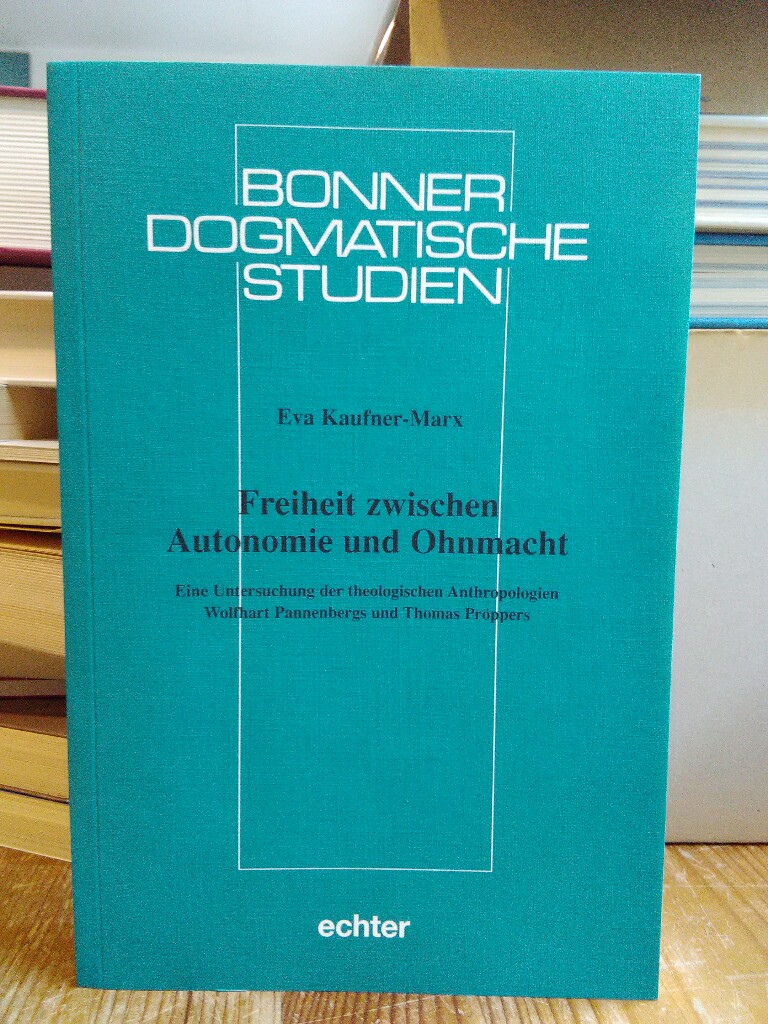
2007rif. 85954Würzburg, Echter 2007. 407 Seiten. Softcover/Paperback
1843rif. 62137Kjøbenhavn, Reitzel, 1843. 8vo. VIII, 135 pp. Completely uncut in the original blue cardboard binding. Spine and front hinge neatly restored, preserving part of the original printed title-label. Brownspotting as usual. Overall a very nice copy indeed. Old owners’ names to inside of front board (N. Pedersen 18/8 1879 and C. Wegener).
1843rif. 63627Kjøbenhavn, 1843. 8vo. Contemporary half calf with marbled boards and gilt title to spine. Spine worn, with loss of leather. Damp stain to upper part of leaves until p. 31. and again at the end. Last leaf with a marginal repair, far from affecting text. Brownspotting. Stamp to title-page, p. (1) and last page (Theoloigical Library), the one on title-page overwritten with ownership signature. VIII, 135 pp.
1843rif. 62092Kjøbenhavn, 1843. 8vo. Contemporary dark brown half cloth with gilt lettering to spine. Capitals and a bit of the front hinge worn, but overall very nice and tight. Internally a bit of brownspotting (as always due to the quality of the paper), but less than usual. Old owner's signature to title-page. VIII, 135 pp.
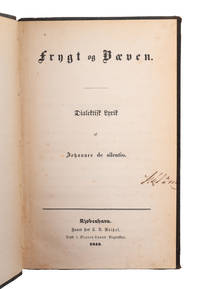
1843rif. 1008Spectacular First Edition of Kierkegaard's Revolutionary Existential Classic in Original Blue Boards. KIERKEGAARD Søren. Frygt og Bæven.Dialektisk Lyrik af Johannes de silentio. Fear and Trembling A Dialectical Lyric by John the Silent Copenhagen C. A. Reitzel 1843. TP III –VIII = Forord 1-135 Octavo. First Edition.Himmelstrup 48. First edition of Fear and Trembling Kierkegaard's early and magisterial integration of his philosophical perspective withScriptural exegesis built around Abraham and his 'sacrifice' of Isaac and the problem of faith.The work begins with a meditation on the faith of Abraham when he was commanded by God to sacrifice his son Isaac.Silentio gives four alternative re-tellings in which Abraham fails the test of his faith and contrasts them with his own interpretation of the story of Abraham and the faith therein demonstrated. Silentio professes to admire Abraham's faith but he is utterly incapable of comprehending it. Following the Preface and Prelude there is a Panegyric Upon Abraham and a series of three Problemata which address three specific philosophical questions that Kierkegaard sees having been raised by the story of Abraham's sacrifice: Is there a teleological suspension of the ethical That is can Abraham's intent to sacrifice Isaac be considered "good"even though ethically human sacrifice is unacceptable; Is there an absolute duty to God In other words beyond that which is ethical; Was it ethically defensible for Abraham to have concealed his purpose from Sarah Eleazar and Isaac CONDITION: Very good to near fine in original blue cardboard covers with original paper-label to spine. Moderate wear to boards and spine some loss to spine as expected. Pages uncut fully in the original condition. Housed in a custom cloth archival box. A spectacularly well-reserved copy of arguably Kierkegaard's most important work. C. A. Reitzel
1843rif. 63627Kjøbenhavn 1843. 8vo. Contemporary half calf with marbled boards and gilt title to spine. Spine worn with loss of leather. Damp stain to upper part of leaves until p. 31. and again at the end. Last leaf with a marginal repair far from affecting text. Brownspotting. Stamp to title-page p. 1 and last page Theoloigical Library the one on title-page overwritten with ownership signature. VIII 135 pp. Scarce first edition of one of Kierkegaard's most splendid and most sought-after works in thich the “Leap of Faith” is introduced. Although Fear and Trembling is evidently printed in the same number of copies as almost all the other works by Kierkegaard i.e. ca 525 this is one of the most difficult of his works to find in the first edition. Perhaps later research will show whether unsold copies were destroyed which seems unlikely however. We know that in July or August 1847 321 copies of Fear and Trembling had been sold. What we also know is that it is highly sought-after by collectors and much less frequently on the market than most of Kierkegaard’s other works. Fear and Trembling is one of Kierkegaard’s most important works. And it is also one of his most difficult. It deals – in forceful brevity – with the relationship between reason and faith and provides us with Kierkegaard’s most thorough exposition of the religious stage which he considered the most meaningful form of existence. Setting the scene in his Preface with the punchy opening lines: “Not merely in the realm of commerce but in the world of ideas as well our age is organizing a regular clearance sale. Everything is to be had at such a bargain that it is questionable whether in the end there is anybody who will want to bid.”Preface Walter Lowrie’s translation 1941 Kierkegaard begins the work with a rendering of the biblical tale of Abraham and Isak from the Old Testament using it to illustrate how religious reasons can triumph over ethical. It is here that Kierkegaard introduces the “tragic hero” and contrasts it to the “Knight of Faith” who both ignore their own wishes for a higher good. These two essential figures epitomize the ethical and the religious and pave the way for the understanding of these stages in Kierkegaard’s philosophy. It is arguably also here that the idea of the essential leap of faith is introduced for the first time. The Knight of Faith sacrifices his son at the command of God and thus sets aside an ethical demand in in order to attain a higher goal that exists beyond the ethical. This teleological suspension of the ethical requires a leap of faith that is only possible through faith in virtue of the absurd. In many ways Fear and Trembling is the most forceful of Kierkegaard’s works as is also indicated by the title. Kierkegaard himself also considered it one of his most significant productions and wrote in his posthumously published Notebooks: “Oh once I am dead Fear and Trembling alone will be enough for an imperishable name as an author. Then it will be read translated into foreign languages as well. The reader will almost shrink from the frightful pathos in the book.” NB 12:147 1849. This splendidly dense work which so magnificently weaves together existential concerns with biblical interpretation is responsible for the introduction of many of the concepts that are most fundamental to Kierkegaard’s philosophy and is essential to the understanding of his thought. Himmelstrup 48 hardcover
1843rif. 62137Kjøbenhavn Reitzel 1843. 8vo. VIII 135 pp. Completely uncut in the original blue cardboard binding. Spine and front hinge neatly restored preserving part of the original printed title-label. Brownspotting as usual. Overall a very nice copy indeed. Old owners’ names to inside of front board N. Pedersen 18/8 1879 and C. Wegener. A splendid copy of one of Kierkegaard's most splendid and most sought-after works in the original binding which is extremely rare. The spines of the original Kierkegaard cardboard bindings are always just thin paper directly glued on the block making them extremely fragile and the original paper-labels are hardly every preserved. Although Fear and Trembling is evidently printed in the same number of copies as almost all the other works by Kierkegaard i.e. ca 525 this is one of the most difficult of his works to find in the first edition. Perhaps later research will show whether unsold copies were destroyed which seems unlikely however. We know that in July or August 1847 321 copies of Fear and Trembling had been sold. What we also know is that it is highly sought-after by collectors and much less frequently on the market than most of Kierkegaard’s other works. It is very odd that not a single copy on special paper or in a gift-binding presentation-copy or anything like that has been located or registered. For this title a Kierkegaard-collector will have to make do with a “normal” copy. The present copy in the original binding and completely uncut is the best copy we have come across over the last many decades. FEAR AND TREMBLING is one of Kierkegaard’s most important works. And it is also one of his most difficult. It deals – in forceful brevity – with the relationship between reason and faith and provides us with Kierkegaard’s most thorough exposition of the religious stage which he considered the most meaningful form of existence. Setting the scene in his Preface with the punchy opening lines: “Not merely in the realm of commerce but in the world of ideas as well our age is organizing a regular clearance sale. Everything is to be had at such a bargain that it is questionable whether in the end there is anybody who will want to bid.”Preface Walter Lowrie’s translation 1941 Kierkegaard begins the work with a rendering of the biblical tale of Abraham and Isak from the Old Testament using it to illustrate how religious reasons can triumph over ethical. It is here that Kierkegaard introduces the “tragic hero” and contrasts it to the “Knight of Faith” who both ignore their own wishes for a higher good. These two essential figures epitomize the ethical and the religious and pave the way for the understanding of these stages in Kierkegaard’s philosophy. It is arguably also here that the idea of the essential leap of faith is introduced for the first time. The Knight of Faith sacrifices his son at the command of God and thus sets aside an ethical demand in in order to attain a higher goal that exists beyond the ethical. This teleological suspension of the ethical requires a leap of faith that is only possible through faith in virtue of the absurd. In many ways Fear and Trembling is the most forceful of Kierkegaard’s works as is also indicated by the title. Kierkegaard himself also considered it one of his most significant productions and wrote in his posthumously published Notebooks: “Oh once I am dead Fear and Trembling alone will be enough for an imperishable name as an author. Then it will be read translated into foreign languages as well. The reader will almost shrink from the frightful pathos in the book.” NB 12:147 1849. This splendidly dense work which so magnificently weaves together existential concerns with biblical interpretation is responsible for the introduction of many of the concepts that are most fundamental to Kierkegaard’s philosophy and is essential to the understanding of his thought. Not a single presentation-copy of the work is known to exist and none has ever been registered nor identified. We know from the auction catalogue that Kierkegaard had two copies in his collection one in “dainty binding” but neither copy has been located. Himmelstrup 48 The present copy is no. 18 in Girsel's "Kierkegaard" The Catalogue which can be found here. unknown
1843rif. 62092Kjøbenhavn 1843. 8vo. Contemporary dark brown half cloth with gilt lettering to spine. Capitals and a bit of the front hinge worn but overall very nice and tight. Internally a bit of brownspotting as always due to the quality of the paper but less than usual. Old owner's signature to title-page. VIII 135 pp. First edition of one of Kierkegaard's most important and sought-after works Fear and Trembling which is rather more difficult to find than most of his other works. Fear and Trembling is one of Kierkegaard’s most important works. And it is also one of his most difficult. It deals – in forceful brevity – with the relationship between reason and faith and provides us with Kierkegaard’s most thorough exposition of the religious stage which he considered the most meaningful form of existence. It is here that Kierkegaard introduces the “tragic hero” and contrasts it to the “Knight of Faith” who both ignore their own wishes for a higher good. These two essential figures epitomize the ethical and the religious and pave the way for the understanding of these stages in Kierkegaard’s philosophy. It is arguably also here that the idea of the essential leap of faith is introduced for the first time. The Knight of Faith sacrifices his son at the command of God and thus sets aside an ethical demand in in order to attain a higher goal that exists beyond the ethical. This teleological suspension of the ethical requires a leap of faith that is only possible through faith in virtue of the absurd. Himmelstrup 48. hardcover
rif. 101557789X.Ghardcover. Good. Access codes and supplements are not guaranteed with used items. May be an ex-library book. hardcover
rif. MP22265Gyldendals Ugleboger 1976 Denmark. 19x11. Tapa blanda. 177 pgs. Texto en danés. Tejuelo de biblioteca. 674376 Gyldendals Ugleboger, 1976, Denmark. unknown
1994rif. G8741888359I3N00Det danske Sprog- og Litteraturselskab Borgen 1994. Paperback. Good. Pages can have notes/highlighting. Spine may show signs of wear. ~ ThriftBooks: Read More Spend Less.Dust jacket quality is not guaranteed. Det danske Sprog- og Litteraturselskab, Borgen paperback
1843Kjøbenhavn, C. A. Reitzel, 1843. 8vo. Indbundet i et samtidigt hldrbd. med rygforgyldning. Forgyldt rygtitel. Øverste centimer af ryggen slidt af. False slidte. Hjørner stødte. Tidligere ejeres navnetræk på forsatsbladet. Noget brunplettet.