2.409 Ergebnisse
1965
1966Stato discreto, coperta in cartoncino patinato semimorbido, qualche segno d'uso, lievi bruniture, macchie, segno a penna su piatto posteriore, tagli e margini delle pagine leggermente bruniti, quello di testa con accenno di fioritura, pagine in buono stato, sporadiche sottolineature a matita. I volume della collana Biblioteca Sansoni. I.a ristampa. Numero pagine 370 USATO
Best.-Nr. 46604301-6Mercer University Press. Used - Good. Former library copy. Pages intact with minimal writing/highlighting. The binding may be loose and creased. Dust jackets/supplements are not included. Includes library markings. Stock photo provided. Product includes identifying sticker. Better World Books: Buy Books. Do Good. Mercer University Press unknown
1836Kjøbenhavn [i.e. Copenhagen], 1836. Large 4to. I: Loose, as issued, unbound. With a horizontal and a vertical crease down the middle. 4 pp. II: Loose, as issued, unbound, but inserted into a simple paper folder (small 8vo). With a horizontal and a vertical crease down the middle. 4 pp. + 4 pp. III: Loose, as issued, unbound, but inserted into a simple paper folder (small 8vo). With a horizontal and a vertical crease down the middle. 4 pp.
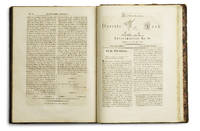
1836Best.-Nr. 62102Kjøbenhavn 1834-1836. Large 4to. Interimsblade i.e. Interim Papers 1-100 with the joint title-page and the contents leaf bound in a very nice contemporary brown half calf with gilt spine and marbled paper over boards. Spine with wear and hinges and corners bumped. Edges of boards with wear. Occasional brownspotting throughout but all in all a fine and well preserved copy. Each “Interimsblad” takes up 4 pp. Kierkegaard’s contributions: I: ab. 1 p.; II: 2 3/4 pp.; III: 4 pp.; IV: 4 pp. Very rare first printings of Kierkegaard’s first four publications including the very first publication in Kierkegaard’s own name which constitutes a true milestone in the history of Kierkegaard’s opus as does of course his very first publication. KIERKEGAARD’S VERY EARLIEST publications are the papers that he publishes in Kjøbenhavns Flyvende Post before he publishes his famous first book which is a polemic attack on Hans Christian Andersen. The first and fourth of these earliest periodical publications are arguably the most important being the very first thing Kierkegaard publishes and the very first publication in Kierkegaard’s own name respectively; but all these four earliest papers Himmelstrup 123 and 4 are significant 23 and 4 dealing with contemporary press issues primarily freedom of press. Danish politics in the 1830’es was dominated by the slow implementation of rules for election for and assembly of the Estates of the Realm. But as they were only advisory the papers and periodicals were not allowed to publish their opinions. In response to this a liberal opposition arose around the two polemic papers Kjøbenhavnsposten The Copenhagen Post and Fædrelandet The Fatherland. The first point on the agenda for the Liberals was the fight for freedom of the press and the abolishment of censorship. This fight for freedom of the press was something that found resonance with Copenhagen academics and it stirred up a lively activity in Copenhagen. In 1835 active Liberals had encouraged King Frederik VI to support freedom of press but had received an answer stating that he alone was able to evaluate what was truly the best for the people and the state. After this answer from the king the “Society for the Correct Use of the Freedom of press” was founded by moderate liberals and young liberals and at the end of the year almost 2.300 members had joined. It was in the midst of all this that the 21-year old Søren Kierkegaard then a student of theology had his debut with political-literary articles in Kjøbenhavns flyvende Post in Interimsbladende which were published separately. But as opposed to the predominantly liberal views of almost all other contributors Kierkegaard’s articles expressed distinctly conservative views. His first publication Også et Forsvar for Qvindens høie Anlæg Also a Defense of the High Abilities of the Woman constitutes an unpolished ironic apology for the liberation of women. This article is published in December 1834 and is signed “A.”. As opposed to the following next three articles this does not deal with freedom of press. Kierkegaard’s three following publications however all concern the question of freedom of press and constitute satirical polemics against the two liberal papers Kjøbenhavnsposten and Fædrelandet against Orla Lehmann the upcoming star of the liberal youth and against all liberals in general. These three articles were published in February and April 1836. The two first are signed “B.” and the third signed “S. Kierkegaard” constitutes the very first publication in his own name. As is well known the names under which Kierkegaard later publishes come to play a significant role in his authorship and represent an extremely thorough and well-thought-out construction. The foundation of this play with the reader is thus laid in the present publications in which he begins to develop the style for which he later gained worldwide renown. The “names” A and B under which he here publishes will most famously be used again in Either- Or Part one of which consists in “A.’s Papers” and Part Two in “B.’s Papers Letters to A.” Common for all four of his first publications is the attempt at polemic and satirical power at literary elegance and at a masterful and ceremonious critique of the prose of the opponent – all dominant traits in his later writings. Kjøbenhavns flyvende Post The Flying Post of Copenhagen was one of the most important and most widely read cultural and literary periodicals of the period. It was edited and run by Johan Ludvig Heiberg 1791-1860 arguably the most famous cultural person during the Danish Golden Age. He played a more significant role than any other author or thinker during this period and was the leading character of literature and philosophy in the 19th century. He introduced many German thinkers to Denmark most importantly Hegel – who Kierkegaard would later oppose – and he was part of almost all intellectual discussions of the Danish Golden Age. He was also a patron for many leading figures of the era. Interestingly several people thought that the first of the articles on the freedom of the press was written by Heiberg. This was of dubious merit to Kierkegaard himself as he was opposed to the circles around Heiberg and the Hegelian environment but it was still this article – and this miscomprehension – that gave him a claim to fame. Another paper claimed that this “priceless” article had been written by Heiberg himself who “had written many witty things but never anything as witty as this.” Also Kierkegaard’s professor of philosophy Poul Martin Møller to whom Kierkegaard was very devoted and to whom he dedicated Begrebet Angest the only person outside of his family that Kierkegaard ever wrote a printed dedication for loved the article and assumed that Heiberg had written it. “He Kierkegaard had a lifelong antipathy toward the press though he himself published reviews in various papers. His mistrust of the press as a legitimate organ of communication was based on several observations one of which was that the press was the voice of the masses rather than that of the individual. He viewed that voice with great skepticism and sarcasm in later years averring that the crowd. even if technically correct. is wrong by the very fact of being the crowd. The truth can only be stated and practiced as individuals especially as individuals before God. Admittedly Kierkegaard’s view of the masses was not well developed at this juncture.” D. Antony Storm. Himmelstrup: 1 2 3 & 4. The present copy is no. 1 in Girsel's "Kierkegaard" The Catalogue which can be found here. hardcover
1836Best.-Nr. 62102Kjøbenhavn, 1834-1836. Large 4to. Interimsblade [i.e. Interim Papers] 1-100, with the joint title-page and the contents leaf, bound in a very nice contemporary brown half calf with gilt spine and marbled paper over boards. Spine with wear and hinges and corners bumped. Edges of boards with wear. Occasional brownspotting throughout, but all in all a fine and well preserved copy. Each “Interimsblad” takes up 4 pp. Kierkegaard’s contributions: I: ab. 1 p. II: 2 3/4 pp. III: 4 pp. IV: 4 pp.
Mm 190x240 Brossura editoriale di pagine 38, estratto da Annali della Facoltà di Lettere e Filosofia dell'Università degli Studi di Perugia, Volume XXV, nuova serie XI, 1987/1988, 4 Studi FIlosofici. Opera in ottime condizioni. Spedizione in 24 ore dalla conferma dell'ordine.
In-8, broché, couverture imprimée, 268, (2) p. Edition originale. Bel envoi de la traductrice et éditrice Nelly Viallaneix à Vladimir Jankélévitch: "Pour Monsieur Jankélévitch, ce 'presque rien' qui, sans lui, n'aurait pas été publié, un témoignage d'affection et d'admiration, Nelly". Nelly Viallaneix (1923-2005) a soutenu sa thèse de doctorat " Kierkegaard et la parole de Dieu" sous la direction de Jankélévitch en 1976. Très bon exemplaire.
1970Best.-Nr. 31919Paris, Aubier Montaigne, 1970. In-8, broché, couverture imprimée, 268, (2) p.
Best.-Nr. Z33760FKNBROCHE EN BON ETAT.Hâte-toi d'écouter - quatre discours édifiants. Kierkegaard Aubier, 1970
1994Best.-Nr. 50021Mainz : Matthias-Grünewald-Verlag, 1994. Die literarische Hiob-Rezeption im 20. Jahrhundert als theologische Herausforderung 448 S. (23 cm) Broschierte Ausgabe
1968Best.-Nr. 2217München, Kösel, 1968. 8°, 334 Seiten. Orig.Leinen mit goldgeprägtem Rückenschildchen.
1968Best.-Nr. 55552München, Kösel, 1968. 333 SS., 1 Bl. 8°, Original-Leinen mit Schutzumschlag.
1968Best.-Nr. 153476München : Kösel, 1968. 333 S. ; 8 OLeinen, SU
1968Best.-Nr. 21195München : Kösel 1968. 333 S. ; 8°, , Schrift: Antiqua, ohne Schutzumschlag Lw., gebundene Ausgabe, Leinen, Exemplar in gutem Erhaltungszustand
1997Best.-Nr. 94775Freiburg i. Br., Alber 1997. 310 Seiten. Hardcover/Pappeinband
1948Best.-Nr. 3116642Köln & Krefeld: Staufen-Verlag 1948. 82 Seiten. 8° (20,5 x 14 cm). Orig.-Pappband. [Hardcover / fest gebunden].
2001ALFREDO GUIDA 2001 584 PP. FONDO DI MAGAZZINO: PERFETTO E INTONSO Negli hegeliani "Lineamenti di filosofia del diritto" l'autore del presente saggio legge la confusione della biblica "città" di Babilonia, con la sua struttura, la sua costituzione, le sue leggi, la sua religione. La "città" con Hegel esce dal suo mito, per dare ancora ospitalità a quanti sono cresciuti nella superbia di poter governare il mondo a spregio della legge e dell'amore di Dio. Il volume evidenzia le espressioni e le contraddizioni sottese all'opera di Hegel, per mettere in rilievo la conclusione filosofico-politica del discorso, che risulta in opposizione al pensiero di Agostino d'Ippona.
Best.-Nr. 8166Paris Aubier Montaigne 1970. . Broche couverture d' editeur 14x225cm 268pp. 4 discours edifiants fire opbyggelige taler 1843. Introduction traduction notes par Nelly Viallaneix. Paris, Aubier Montaigne, 1970. unknown
Best.-Nr. 8166, Paris, Aubier Montaigne, 1970., Broche, couverture d' editeur, 14x22,5cm, 268pp.
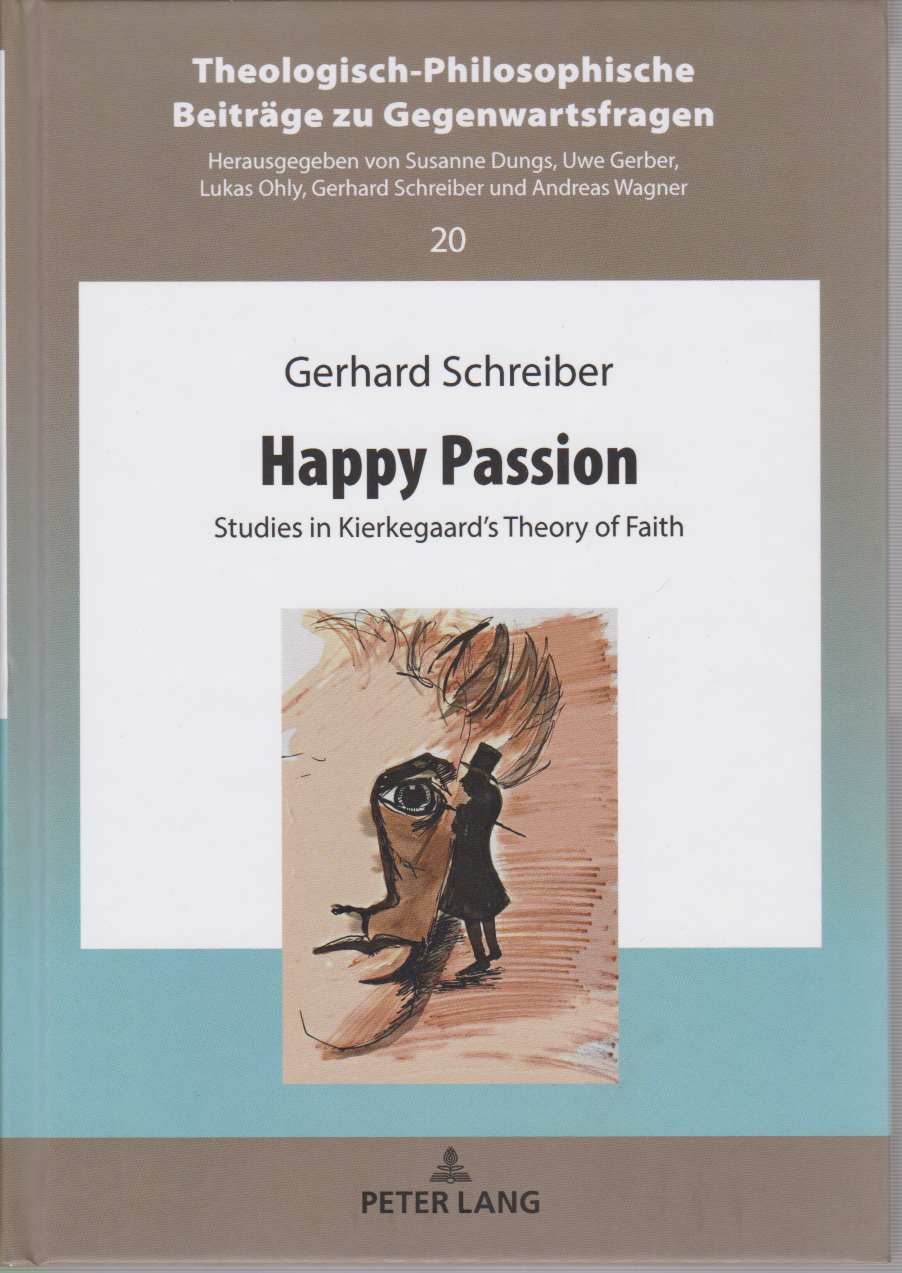
Best.-Nr. 1114089Berlin ; Bern ; Wien : Peter Lang, 2018. xxi, 275 S. Originalhardcover.
1998EDITORI RIUNITI 1998. Lievi segni del tempo, leggera ondulazione della quarta di copertina, VOLUME INTONSO, MAI SFOGLIATO.
1920Best.-Nr. 1306676Kopenhagen, Gyldendal, 1920. 1 Porträt, 32, 624 S. Hlwd m. eingebundenem OUmschl. (Vorsätze u. Schnitt etwas braunfleckig, Stempel verso Titel).
1882K., 1882. Orig. bogtrykt papbd. Ubeskåret. Lidt brunplettet, men frisk. To sider avertissement. 21, (2) pp.
1855Best.-Nr. 63625Kjøbenhavn Reitzel 1855. 8vo. 22 pp. 1 blank f. Original gift-binding of the black glitted paper with single gilt lines to spine. Spine worn slightly restored and with a bit of loss of paper. Boards with a little rubbing and wear along edges. A bit of brownspotting internally. With the exlibris of both Georg Nygaard and J.H. Groth-Andersen to inside of front board and with Georg Nygaard’s neat hand-written pencil-inscription to front fly leaf stating in Danish that “This book is one of / Søren Kierkegaard’s / complimentary copies. / Given to me by / editor Frejlif Olsen / October 1910 / Georg Nygaard”. Also a neat pencil-annotation from a later owner to inside of back board stating that this is Kierkegaard’s personal copy and the only known copy in a gift-binding referencing the auction catalogue no. 2186. There is also a laid-in note in the same hand explaining that at the auction there was merely one copy of this title and that no presentation-copies of the present work are known to exist. One of the extremely rare gift-copies either a presentation-copy given by Kierkegaard to one of his dedicatees or the copy he had in his possession when he died. It seems likely as explained by the previous owner that this will have been Kierkegaard’s own copy i.e. no. 2186 of the auction catalogue. If not it is the only presentation-copy of this work known to exist. No matter what this is arguably the best copy of the present title that one can find. “The Changelesness of God” constitutes Kierkegaard’s final separate publication and the final work of the separately published pamphlets of the Church Feud-triad. It was published on Sept. 1st 1855 between the 7th and 8th installments of “The Moment”. “The Changelessness of God” is a discourse that Kierkegaard gave as a sermon on May 18 1851 in the Citadel Church in Copenhagen but it had not previously been published. It has the Epistle text of James 1 17-21 as its basis a text that Kierkegaard had also used in his Upbuilding Discourses of 1843. It contains one of his favourite passages from the Bible: “Every good thing bestowed and every perfect gift is from above coming down from the Father of lights with whom there is no variation or shifting shadow”. In his journal from May 1851 after having given the sermon he refers to the text basis as “my first dear Jacob” and says about his sermon that he felt he preached “passably” but so weakly that he could barely be heard” NB 24:74. As most of Kierkegaard’s religious writings this too is called a discourse and for this his final separate publication Kierkegaard uses again the printed dedication that he first used in his upbuilding discourses from 1843 that for his father: “To the late Michael Pedersen Kierkegaard formerly a clothing merchant here in the city my father these discourses are dedicated.” Those who had been in doubt as to his mental health due to the publications in “The Moment” had now finally been disproven or persuaded that there was absolutely nothing wrong with his sanity. This piece constitutes a lucid and calm sermon a continuation of his upbuilding discourses which had been of pivotal importance to him since 1843. “It also served the purpose as H. Johnson notes of demonstrating that Kierkegaard’s attack was from within the church as a believer—a fact that many have failed to notice especially since his anti-ecclesiastical tracts were translated later in places where readers had not been exposed to the rest of his writings. Kierkegaard in fact always considered his upbuilding discourses to be even more important than his philosophical writings.” D. Anthony Storm. The year 1855 marks the definitive turn in Kierkegaard’s life and in his career. It is the year that he publishes his final four publications and the year that he dies. In his earlier works For Self Examination and Practice in Christianity from 1850 and 1851 respectively Kierkegaard had already addressed the topic of true Christianity as opposed to the official and institutionalized Christendom. Back then he had done so not subtly but also not as a full-blown attack. After a publishing hiatus of more than three years this was going to change. At the end of his life Kierkegaard embarked on a controversial and fierce attack upon the Danish Church that would have immense consequences for the development and comprehension of the official Church the priesthood and Christianity itself. The Danish State Church epitomized all that he found wrong with Christendom as a whole and he did not embark on his quest lightly. Throughout his writings Kierkegaard had maintained that the belief in Christ required a leap of faith and all of one’s person. The Danish Lutheran church on the other hand claimed that all Danes were born Lutheran and were thus Christians unless they actively chose not to be. The Danish Church had moved increasingly towards transforming Christianity into a profane state religion. It is still the case in Denmark today that when you are born a Dane you are also born a member of the Church. This equivalence between Church and State was extremely far from what Kierkegaard believed Christianity to be. Kierkegaard felt that the Church had betrayed the Christianity of the New Testament and he was willing to fight till his death to defend what he understood true Christianity to be. We were well beyond thoughts of reformation. It needed to be torn down and completely rebuilt. The war was waged in newspaper articles in the paper The Fatherland and in the “periodical” Kierkegaard himself founded with the sole purpose of attacking the Church “Øieblikket” i.e. The Moment. Kierkegaard’s assault on official Christendom and the Danish Church was based upon his notion that Christendom had departed too far from the Christianity of The New Testament. For the outraged Kierkegaard Bishop Mynster typified the complacent and established “official” Christianity but the relationship with Mynster was complicated. He and Kierkegaard had always been closely intertwined. Few people played as important a role in Kierkegaard’s life as Mynster who Kierkegaard would constantly relate and refer to. Kierkegaard’s “mild” attack on the Church and the established Christianity in Denmark in Training in Christianity 1851 hit Mynster harder than anyone else and the two theological giants never reconciled after the publication of that work. But Kierkegaard had saved something much worse for later. For his own enormous respect for Mynster it also meant a great deal that Mynster was the last person to talk to Kierkegaard’s father before he died and that his father had always held him in extremely high regard. In his Journal from 1853 he writes “.I have something upon my conscience as a writer. Let me indicate precisely how I feel about it. There is something quite definite I have to say and I have so much upon my conscience that as I feel I dare not die without having uttered it. For the instant I die and so leave this world so I understand it I shall in the very same second so frightfully fast it goes! in the very same second I shall be infinitely far away in a different place where still within the same second frightful speed! the question will be put to me: “Hast thou uttered the definite message quite definitely” And if I have not done so what then. There is something quite definite I have to say. But verily I am not eager to say it. On the contrary I would so infinitely prefer that another should say it— which however would not help me since as I understand it it was and remains my task. For it is not a cheerful message this definitive thing and I cannot but think that there are several persons dear to me to whom it would be unwelcome to hear it said. Above all there is a right reverend old man a consideration which has constantly held me back laid a restraint upon my tongue and upon my pen a consideration for the highest dignitary of the Church a man to whom by the memory of a deceased father I felt myself drawn with an almost melancholic affection—and I must think that to him especially it will be very unwelcome that this is said.” Pap. X 6 B: 371. This excellently sums up one the one hand the necessity Kierkegaard felt in saying what needed to be said about the state of Christianity in Denmark and on the other hand why he was reluctant to say it. He knew it would offend but most of all hurt especially Mynster for whom he still had great affection. At the same time it was also Bishop Mynster who was responsible for the approach Kierkegaard considered so dangerous to true Christianity the person who personified the weak and complacent established “official” Christianity that disregarded the true Christianity of The New Testament – the kind of tame Christianity in which the priests tell the congregation what they want to hear. What was he to do Kierkegaard’s journals and papers are full of entries that reflect the conundrum. The defining moment occurred when Mynster had died which happened on January 30th 1854. The Sunday before the funeral Professor of Theology H.L. Martensen Court Preacher at Christiansborg Slotskirke gave a commemorative sermon for Mynster in which he included him in a series of holy men going back to the apostles and called him a “witness to the truth” and a “martyr” in Danish “Blodvidne”. Kierkegaard could not take it. He finally broke his silence and protested with an article in The Fatherland where he called Mynster a “frail pleasure-seeker who was great only as an orator” and presented his own version of a “witness to the truth” namely “A witness to the truth a real witness to the truth is a man who is skinned alive abused dragged from one prison to the next and in the end … crucified beheaded burned at the stake or fried on a grill his soulless body left unburied and sprawling … in some remote place—that’s how a witness to the truth is buried!” Var Biskop Myster et ”Sandhedsvidne”… December 18 1854. And thus the crusade against the established Danish Church had begun. Kierkegaard continued his fight against Martensen against the priests against the official Christianity of Denmark and against the Church in articles in The Fatherland in “The Moment” and in his final separate publications. Although Kierkegaard’s illness and soon to follow death on November 11 ended Kierkegaard’s writing and continued attacks it did not end the storm on the Church that the epigons continued. Kierkegaard’s authorship before 1851 had made him famous in both Denmark and abroad as one of the greatest living philosophers and theologians. His attack on official Christianity however had a more direct effect upon his own kingdom but also upon the neighbouring countries Norway Sweden and Germany. Kierkegaard’s Church Feud continued for years after his death and kept affecting the Church severely. One must remember that this fierce attack came from one of the most respected thinkers of the period – of all periods – and it came from within not from an atheist. It came from a believer a more profound believer than most. Kierkegaard had a single copy of The Changelessness of God in his possession when he died Auction Catalogue # 2186 where there is no description of appearance. Himmelstrup 200 The present copy is no. 94 in Girsel's "Kierkegaard" The Catalogue which can be found here. hardcover