FRANCESCO FISTETTIMareMagnum

2354 risultati
1998EDITORI RIUNITI 1998. Lievi segni del tempo, leggera ondulazione della quarta di copertina, VOLUME INTONSO, MAI SFOGLIATO.
1920rif. 1306676Kopenhagen, Gyldendal, 1920. 1 Porträt, 32, 624 S. Hlwd m. eingebundenem OUmschl. (Vorsätze u. Schnitt etwas braunfleckig, Stempel verso Titel).
1882K., 1882. Orig. bogtrykt papbd. Ubeskåret. Lidt brunplettet, men frisk. To sider avertissement. 21, (2) pp.
1882rif. 29382K., 1882. Orig. bogtrykt papbd. Ubeskåret. Lidt brunplettet, men frisk. To sider avertissement. 21, (2) pp.
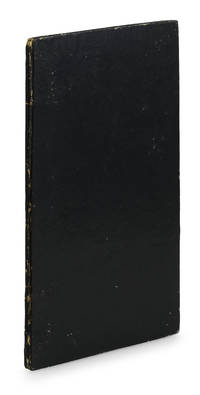
1855rif. 63625Kjøbenhavn, Reitzel, 1855. 8vo. 22 pp., (1 blank f.). Original gift-binding of the black glitted paper with single gilt lines to spine. Spine worn, slightly restored, and with a bit of loss of paper. Boards with a little rubbing and wear along edges. A bit of brownspotting internally. With the exlibris of both Georg Nygaard and J.H. Groth-Andersen to inside of front board and with Georg Nygaard’s neat hand-written pencil-inscription to front fly leaf stating, in Danish, that “This book is one of / Søren Kierkegaard’s / complimentary copies. / Given to me by / editor Frejlif Olsen / October 1910 / Georg Nygaard”. Also a neat pencil-annotation from a later owner to inside of back board stating that this is Kierkegaard’s personal copy and the only known copy in a gift-binding, referencing the auction catalogue, no. 2186. There is also a laid-in note in the same hand explaining that at the auction, there was merely one copy of this title and that no presentation-copies of the present work are known to exist.
1855rif. 63625Kjøbenhavn Reitzel 1855. 8vo. 22 pp. 1 blank f. Original gift-binding of the black glitted paper with single gilt lines to spine. Spine worn slightly restored and with a bit of loss of paper. Boards with a little rubbing and wear along edges. A bit of brownspotting internally. With the exlibris of both Georg Nygaard and J.H. Groth-Andersen to inside of front board and with Georg Nygaard’s neat hand-written pencil-inscription to front fly leaf stating in Danish that “This book is one of / Søren Kierkegaard’s / complimentary copies. / Given to me by / editor Frejlif Olsen / October 1910 / Georg Nygaard”. Also a neat pencil-annotation from a later owner to inside of back board stating that this is Kierkegaard’s personal copy and the only known copy in a gift-binding referencing the auction catalogue no. 2186. There is also a laid-in note in the same hand explaining that at the auction there was merely one copy of this title and that no presentation-copies of the present work are known to exist. One of the extremely rare gift-copies either a presentation-copy given by Kierkegaard to one of his dedicatees or the copy he had in his possession when he died. It seems likely as explained by the previous owner that this will have been Kierkegaard’s own copy i.e. no. 2186 of the auction catalogue. If not it is the only presentation-copy of this work known to exist. No matter what this is arguably the best copy of the present title that one can find. “The Changelesness of God” constitutes Kierkegaard’s final separate publication and the final work of the separately published pamphlets of the Church Feud-triad. It was published on Sept. 1st 1855 between the 7th and 8th installments of “The Moment”. “The Changelessness of God” is a discourse that Kierkegaard gave as a sermon on May 18 1851 in the Citadel Church in Copenhagen but it had not previously been published. It has the Epistle text of James 1 17-21 as its basis a text that Kierkegaard had also used in his Upbuilding Discourses of 1843. It contains one of his favourite passages from the Bible: “Every good thing bestowed and every perfect gift is from above coming down from the Father of lights with whom there is no variation or shifting shadow”. In his journal from May 1851 after having given the sermon he refers to the text basis as “my first dear Jacob” and says about his sermon that he felt he preached “passably” but so weakly that he could barely be heard” NB 24:74. As most of Kierkegaard’s religious writings this too is called a discourse and for this his final separate publication Kierkegaard uses again the printed dedication that he first used in his upbuilding discourses from 1843 that for his father: “To the late Michael Pedersen Kierkegaard formerly a clothing merchant here in the city my father these discourses are dedicated.” Those who had been in doubt as to his mental health due to the publications in “The Moment” had now finally been disproven or persuaded that there was absolutely nothing wrong with his sanity. This piece constitutes a lucid and calm sermon a continuation of his upbuilding discourses which had been of pivotal importance to him since 1843. “It also served the purpose as H. Johnson notes of demonstrating that Kierkegaard’s attack was from within the church as a believer—a fact that many have failed to notice especially since his anti-ecclesiastical tracts were translated later in places where readers had not been exposed to the rest of his writings. Kierkegaard in fact always considered his upbuilding discourses to be even more important than his philosophical writings.” D. Anthony Storm. The year 1855 marks the definitive turn in Kierkegaard’s life and in his career. It is the year that he publishes his final four publications and the year that he dies. In his earlier works For Self Examination and Practice in Christianity from 1850 and 1851 respectively Kierkegaard had already addressed the topic of true Christianity as opposed to the official and institutionalized Christendom. Back then he had done so not subtly but also not as a full-blown attack. After a publishing hiatus of more than three years this was going to change. At the end of his life Kierkegaard embarked on a controversial and fierce attack upon the Danish Church that would have immense consequences for the development and comprehension of the official Church the priesthood and Christianity itself. The Danish State Church epitomized all that he found wrong with Christendom as a whole and he did not embark on his quest lightly. Throughout his writings Kierkegaard had maintained that the belief in Christ required a leap of faith and all of one’s person. The Danish Lutheran church on the other hand claimed that all Danes were born Lutheran and were thus Christians unless they actively chose not to be. The Danish Church had moved increasingly towards transforming Christianity into a profane state religion. It is still the case in Denmark today that when you are born a Dane you are also born a member of the Church. This equivalence between Church and State was extremely far from what Kierkegaard believed Christianity to be. Kierkegaard felt that the Church had betrayed the Christianity of the New Testament and he was willing to fight till his death to defend what he understood true Christianity to be. We were well beyond thoughts of reformation. It needed to be torn down and completely rebuilt. The war was waged in newspaper articles in the paper The Fatherland and in the “periodical” Kierkegaard himself founded with the sole purpose of attacking the Church “Øieblikket” i.e. The Moment. Kierkegaard’s assault on official Christendom and the Danish Church was based upon his notion that Christendom had departed too far from the Christianity of The New Testament. For the outraged Kierkegaard Bishop Mynster typified the complacent and established “official” Christianity but the relationship with Mynster was complicated. He and Kierkegaard had always been closely intertwined. Few people played as important a role in Kierkegaard’s life as Mynster who Kierkegaard would constantly relate and refer to. Kierkegaard’s “mild” attack on the Church and the established Christianity in Denmark in Training in Christianity 1851 hit Mynster harder than anyone else and the two theological giants never reconciled after the publication of that work. But Kierkegaard had saved something much worse for later. For his own enormous respect for Mynster it also meant a great deal that Mynster was the last person to talk to Kierkegaard’s father before he died and that his father had always held him in extremely high regard. In his Journal from 1853 he writes “.I have something upon my conscience as a writer. Let me indicate precisely how I feel about it. There is something quite definite I have to say and I have so much upon my conscience that as I feel I dare not die without having uttered it. For the instant I die and so leave this world so I understand it I shall in the very same second so frightfully fast it goes! in the very same second I shall be infinitely far away in a different place where still within the same second frightful speed! the question will be put to me: “Hast thou uttered the definite message quite definitely” And if I have not done so what then. There is something quite definite I have to say. But verily I am not eager to say it. On the contrary I would so infinitely prefer that another should say it— which however would not help me since as I understand it it was and remains my task. For it is not a cheerful message this definitive thing and I cannot but think that there are several persons dear to me to whom it would be unwelcome to hear it said. Above all there is a right reverend old man a consideration which has constantly held me back laid a restraint upon my tongue and upon my pen a consideration for the highest dignitary of the Church a man to whom by the memory of a deceased father I felt myself drawn with an almost melancholic affection—and I must think that to him especially it will be very unwelcome that this is said.” Pap. X 6 B: 371. This excellently sums up one the one hand the necessity Kierkegaard felt in saying what needed to be said about the state of Christianity in Denmark and on the other hand why he was reluctant to say it. He knew it would offend but most of all hurt especially Mynster for whom he still had great affection. At the same time it was also Bishop Mynster who was responsible for the approach Kierkegaard considered so dangerous to true Christianity the person who personified the weak and complacent established “official” Christianity that disregarded the true Christianity of The New Testament – the kind of tame Christianity in which the priests tell the congregation what they want to hear. What was he to do Kierkegaard’s journals and papers are full of entries that reflect the conundrum. The defining moment occurred when Mynster had died which happened on January 30th 1854. The Sunday before the funeral Professor of Theology H.L. Martensen Court Preacher at Christiansborg Slotskirke gave a commemorative sermon for Mynster in which he included him in a series of holy men going back to the apostles and called him a “witness to the truth” and a “martyr” in Danish “Blodvidne”. Kierkegaard could not take it. He finally broke his silence and protested with an article in The Fatherland where he called Mynster a “frail pleasure-seeker who was great only as an orator” and presented his own version of a “witness to the truth” namely “A witness to the truth a real witness to the truth is a man who is skinned alive abused dragged from one prison to the next and in the end … crucified beheaded burned at the stake or fried on a grill his soulless body left unburied and sprawling … in some remote place—that’s how a witness to the truth is buried!” Var Biskop Myster et ”Sandhedsvidne”… December 18 1854. And thus the crusade against the established Danish Church had begun. Kierkegaard continued his fight against Martensen against the priests against the official Christianity of Denmark and against the Church in articles in The Fatherland in “The Moment” and in his final separate publications. Although Kierkegaard’s illness and soon to follow death on November 11 ended Kierkegaard’s writing and continued attacks it did not end the storm on the Church that the epigons continued. Kierkegaard’s authorship before 1851 had made him famous in both Denmark and abroad as one of the greatest living philosophers and theologians. His attack on official Christianity however had a more direct effect upon his own kingdom but also upon the neighbouring countries Norway Sweden and Germany. Kierkegaard’s Church Feud continued for years after his death and kept affecting the Church severely. One must remember that this fierce attack came from one of the most respected thinkers of the period – of all periods – and it came from within not from an atheist. It came from a believer a more profound believer than most. Kierkegaard had a single copy of The Changelessness of God in his possession when he died Auction Catalogue # 2186 where there is no description of appearance. Himmelstrup 200 The present copy is no. 94 in Girsel's "Kierkegaard" The Catalogue which can be found here. hardcover
2008rif. Q-0141036656Penguin UK 2008-09-23. Mass Market Paperback. New. In shrink wrap. Looks like an interesting title! Penguin UK paperback
2005rif. Q-0141023937Penguin UK 2005-11-01. Mass Market Paperback. New. In shrink wrap. Looks like an interesting title! Penguin UK paperback
rif. 62057638The Lutterworth Press . Papeback. New. pp. 15 The Lutterworth Press unknown
2000Autori: Virgilio Melchiorre.
2001GHIBLI 2001, FONDO DI MAGAZZINO ALLO STATO DI NUOVO. Il libro ha cercato uno spazio differente e insolito per la nostra scrittura. La memoria diventa il tessuto nel quale dottrine filosofiche, estetiche, casi politici, forme dell'arte appaiono nell'orizzonte dell'esperienza e della sensibilità. La pagina è dominata dalla figura del tempo: personaggi e pensieri sono visibili in un intreccio di narrativo e teorico tramite una contaminazione di generi letterari. Analisi e ricordo, critica ed emozione appartengono alla medesima pagina. L'autore è solo uno specchio dei suoi dintorni amati in tempi diversi della vita: frammenti di un'autobiografia che è sempre sottesa ma che non c'è mai. Banfi, Sereni, Segre, Musatti, Treccani, Sini e gli altri personaggi del libro appaiono tramite differenti occasioni narrative, variazioni tematiche della sinfonia di un tempo e di uno spazio della nostra cultura. Fulvio Papi, nato a Trieste, vive a Milano e a Stresa. Figura originale della 'scuola di Milano', ha interpretato i classici della filosofia (Bruno, Kant, Hegel, Marx), ha percorso le linee essenziali della filosofia contemporanea e un antico sentiero politico. Nell'ultimo decennio, in controtendenza rispetto al nichilismo filosofico attuale, ha elaborato un disegno interno al fare filosofico come scrittura che configura spazi di mondo e orizzonti di senso. I documenti più prossimi di questo tracciato sono: Il sogno filosofico della storia. Interpretazioni sull'opera di Marx, Milano 1994; Philosophia imago mundi, Comano 1994; La passione della realtà, Milano 1998; Racconti della ragione, Milano 1998; Filosofia e architettura, Como-Pavia 2000. Per i nostri tipi ha pubblicato Lezioni sulla Scienza della logica di Hegel. Dal 1965 ha insegnato filosofia teoretica, estetica ed epistemologia all'Università di Pavia. Professore visitatore al Politecnico di Milano, allo Iulm e in altre università, Presidente del Comitato scientifico della Fondazione Corrente, vice presidente della Casa della cultura, dirige la rivista filosofica "Oltrecorrente". In questo libro dialoga con le sue figure della memoria, dell'intelligenza, dell'affetto.
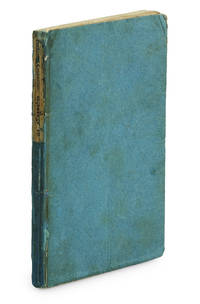
1843Kjøbenhavn [Copenhagen], 1843. Restaureret orig. hollanderet bd. m. den bogtrykte titeletiket delvist bevaret. De første og sidste blade en del brunplettede. Meget lille skjold i øverste venstre hjørne på de første 15 sider - går ikke ud over teksten. 157pp.Restored orig. blue cardboard-bdg., preserving the orig. spine w. the orig. printed paper title-label partly preserved. First and last leaves brownspotted. Minor dampstain to upper corner of first 15 leaves, not affecting text. 157 pp.
1843rif. 13871Kjøbenhavn [Copenhagen], 1843. Restaureret orig. hollanderet bd. m. den bogtrykte titeletiket delvist bevaret. De første og sidste blade en del brunplettede. Meget lille skjold i øverste venstre hjørne på de første 15 sider - går ikke ud over teksten. 157pp.Restored orig. blue cardboard-bdg., preserving the orig. spine w. the orig. printed paper title-label partly preserved. First and last leaves brownspotted. Minor dampstain to upper corner of first 15 leaves, not affecting text. 157 pp.
1843K., 1843. List senere simpelt hshirtbd. Rent ekspl. 157 pp.
1843K., 1843. Ubeskåret i et nydeligt senere mønstret mørkegrønt papirsbindd. Mangler 1/3 af skindtitlen på ryggen. Hér og dér noget plettet, revne på titelbl. restaureret.
1843K., 1843. Pænt samt. hshirtbd. en smule slidt ved øvre kapitæl. Lidt brunplettet. 157 pp.
1843Kjøbenhavn, C.A. Reitzel, 1843. Samtidigt pænt hldrbd. med enkel rygforgyldning. De første ca 30 blade med en del brunplatter i marginer, senere med svagere brunpletter. 157 pp.
1843rif. 13894K., 1843. Lidt senere simpelt hshirtbd. Rent ekspl. 157 pp.
1843rif. 13895K., 1843. Ubeskåret i et nydeligt senere mønstret mørkegrønt papirsbindd. Mangler 1/3 af skindtitlen på ryggen. Hér og dér noget plettet, revne på titelbl. restaureret.
1843rif. 62218Kjøbenhavn, Reitzel, 1843. Small 8vo. 157 pp. Original blue cardboard-binding. The spine has been restored, but it has the original printed paper title-label partly preserved. Hinges are a bit weak, and there is some edgewear. Browning and brownspotting, but not more than usual. Completely uncut. Housed in a nice custom-made half lather box in pastiche style with richly gilt spine.
rif. 82091Kjøbenhavn Reitzel 1843. 157 s. 1800-talls skinnbd. Strekdekor i gull på ryggen. Liten slitasje ved øvre kapitél. Klipp i tittelbl. ved nedre marg ikke teksttap. . unknown
1872rif. 61642Kjøbenhavn. 1872. 8vo. Samtidig skinnryggbind med svakt opphøyde ryggbånd og enkel ryggforgylling. 105 1 s. MEDBUNDET : Atten opbyggelge Taler. Af Søren Kierkegaard. Anden Udgave. Kbh. 1862. 378 s. MEDBUNDET : Tre Taler ved tænkte Leiligheder. Af S. Kierkegaard. Andet Oplag. Kbh. 1873. 98 s. C. A. Reitzels Forlag Dansk. Navn på tittelbladene. Materien noe brunet unknown
1843rif. PIEen[KI32Copenhagen: C.A.Reitzel. 1843. 1843. 8vo. pp. 157 blank leaf. modern half morocco original plain dark blue wrs. bound in some foxing throughout. First Edition of Repetition. An Essay In Experimental Psychology. Himmelstrup 53. Rand I p. 320. F. Copenhagen: C.A.Reitzel. 1843. unknown
1843rif. 942Kjøbenhavn: C.A. Reitzel 1843. First Edition. cardboard covers. Very good. First Edition of Kierkegaards Repetition KIERKEGAARD Soren. Gjentagelsen. Et forføg i den experimenterende Psychologi auf Constantin Constantius. Repetition. An Essay in Experimental Psychology. C.A. Reitzel Kjøbenhavn 1843. 1 blank leaf TP 3-157 1 blank leaf 12mo. First Edition Himmelstrup 53. "A pseudonymous aesthetic work published on the same day as Fear and Trembling. Lowrie viewed 'repetition' as the most important and most puzzling term in Kierkegaard's vocabulary. It is associated with natural repetition with the young lover's futile efforts to repeat particular experiences and with the stories of Abraham who receives his son back and of Job who receives everything back. But as Lowrie notes for Kierkegaard such physical repetition matters only insofar as it may lead to an intuition of repetition as a religious category 'a movement in virtue of the absurd' through which the individual achieves a second higher 'immediacy'". Wronoski p. 12 CONDITION: Very good in original blue card covers. Spine splitting but holding firm. An original dustwrapper is present fully covering front and partially covering rear. It seems to be slightly affixed to blue card covers. Internally bright and clean. C.A. Reitzel unknown
1843rif. 62218Kjøbenhavn Reitzel 1843. Small 8vo. 157 pp. Original blue cardboard-binding. The spine has been restored but it has the original printed paper title-label partly preserved. Hinges are a bit weak and there is some edgewear. Browning and brownspotting but not more than usual. Completely uncut. Housed in a nice custom-made half lather box in pastiche style with richly gilt spine. The first edition in the very rare original blue binding with most of the original printed title-label preserved. REPETITION – not only the title of one of his most significant books but also a key concept in the philosophy of Kierkegaard – was written during the same brief spell of feverish activity that also produced Fear and Trembling; the two books were even published on the same day. ”Say what you will this question will play a very important role in modern philosophy for repetition is a crucial expression for what “recollection” was to the Greeks. Just as they taught that all knowing is a recollecting modern philosophy will teach that all life is a repetition.” Repetition p. 3 – translation by Hong Kierkegaard states in the beginning of his treatise anticipating the importance that his concept of Repetition is to have for modern philosophy. Written in the narrative form of an experimental novel centered on two stories that are internally linked Kierkegaard lets us understand what Repetition could be and what it is in his philosophy. The first story portrays Repetition as something empty and trivial whereas the second portrays it as an ethical category that is inextricably linked to religion. Repetition is that which makes it possible for man to become and to remain present in the present. Kierkegaard’s explanation of his key concept of Repetition is exhausted in the present work but it also plays a significant role throughout his later works and is considered one of the key concepts in his philosophy. The work is centered around the story of a young man who has fallen in love with an innocent young girl to whom he has become engaged. But finding himself unable to consummate the love because of poetic stirrings inside himself he tries to understand what is going on inside him and whether or not he should break off the engagement. The elderly Constantin Constantius one of Kierkegaard’s numerous pseudonyms interferes with the emotions of our young man and begins to conduct speculative experiments with him that are meant to investigate whether a repetition of the relationship with the girl of the young man’s feelings etc. might be possible. At the end of the first part the young man flees Copenhagen and leaves the girl presumably at her wits’ end. Later she marries someone else and the young man transforms into the true poet that he could only be when unattached to the girl he loved. It does not take much of an imagination to link this story to the Kierkegaard’s own wildly famous love story and failed engagement to Regine Olsen. It all begins in 1837 when Kierkegaard meets the lovely young girl Regine Olsen at a visit to the widowed Cathrine Rørdam. Three years later in September 1840 after having corresponded frequently with her and visited her on numerous occasions Kierkegaard decides to ask for her hand in marriage. She and her family accept but the following day Kierkegaard regrets his decision and ends up finally breaking off the engagement in October 1841. Disregarding the scandal the heartbreak his own included and the numerous pleas from family members and friends alike Kierkegaard’s tortured soul still searching for God and for the meaning of faith cannot continue living with the promise of marriage. Later the same month he flees Copenhagen and the scandal surrounding the broken engagement. He leaves for Berlin the first of his four stays there clearly tortured by his decision but also intent on not being able to go through with the engagement. As is evident from his posthumously published Papers Kierkegaard’s only way out of the relationship was to play a charming but cold villain a charlatan not betraying his inner thoughts and feelings. It is during his stay in Berlin his first of four altogether right after the rupture of the engagement that he begins writing Either-Or parts of which like Repetition can be read as an almost autobiographical rendering of his failed engagement. Repetition more than any other work lets us see how Kierkegaard came to be as an author through his tumultuous inner life during his engagement and the ending of it. Like Fear and Trembling there are no presentation-copies known to exist of Repetition. Himmelstrup 53 unknown