KIERKEGAARD, SØREN.Livre Rare Book
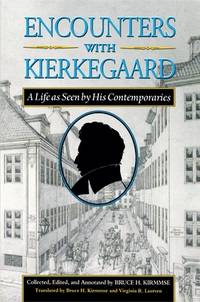
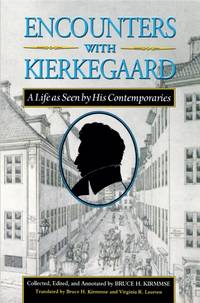
Encounters with Kierkegaard : A Life as Seen by His Contemporaries
1998rif. 365790Princeton: Princeton 1998. 3rd printing. Paperback. Very Good/Very Good. 8vo. pp. 358 Princeton paperback
2332 risultati
1849rif. 62135Kjøbenhavn, Reitzel, 1849. 8vo. XIV, (2), 320" (4), 250 pp + final blank. Both volumes in one – the original blue cardboard binding (“hollanderet bind”) with the original printed paper title-label (preserved in its entirety) to the spine. Slight loss to the paper to upper capital and to lower front hinge, but amazingly well preserved, fresh, and crisp. Completely uncut (23,5 x 14,5 cm., making it ab. 1,5 + 1 cm larger than other well margined copies). Some brownspotting (as always), mostly quite light. Old owner’s name to inside of front board. Housed in a beautiful marbled paper box with a richly gilt red Morocco spine. The gilding is in the style of Kierkegaard’s most lavishly decorated full calf bindings and with the title in gilt Gothic lettering. The box is signed “Anker Kysters Efterf. And the gilding by Hagel Olsen. Front board with the gilt super ex libris of the previous owner.
1998rif. 365790Princeton: Princeton 1998. 3rd printing. Paperback. Very Good/Very Good. 8vo. pp. 358 Princeton paperback
rif. 400732-nnew. unknown
rif. 400732like new. unknown
1996rif. Q-0691011060Princeton University Press 1996-04-29. Hardcover. New. New. In shrink wrap. Looks like an interesting title! Princeton University Press hardcover
1998rif. Q-0691058946Princeton University Press 1998-07-01. Paperback. New. In shrink wrap. Looks like an interesting title! Princeton University Press paperback
1998rif. x-0691058946Princeton Univ Pr 1998. Paperback. New. reprint edition. 380 pages. 9.50x6.50x1.00 inches. Princeton Univ Pr paperback
1996rif. DADAX0691011060Princeton University Press 1996-04-29. First Edition. hardcover. New. 6.75x1.25x10.00. Buy with confidence. Excellent Customer Service & Return policy. Princeton University Press hardcover
1998rif. DADAX0691058946Princeton University Press 1998-07-01. Reprint. paperback. New. 6.00x0.87x9.25. Buy with confidence. Excellent Customer Service & Return policy. Princeton University Press paperback
rif. ria9780691058948_inpPaperback. New. New Book; Fast Shipping from UK; Not signed; Not First Edition; A collection of known eyewitness account of the great Danish thinker Soren Kierkegaard 1813-1855. It contains accounts ranging from the writings of Meir Aron Goldschmidt editor of "The Corsair" to the recollections of Kierkegaard's paperback
rif. A9780691058948Paperback / softback. New. A collection of known eyewitness account of the great Danish thinker Soren Kierkegaard 1813-1855. It contains accounts ranging from the writings of Meir Aron Goldschmidt editor of "The Corsair" to the recollections of Kierkegaard's fiancee. paperback
19732 AGILI VOLUMI Laterza 1973 TRADUZIONE E PREFAZIONE DI BENEDETTO CROCE NOTA BIOGRAFICA GLOSSARIO E INDICE DEI NOMI CITATI A CURA DI NICOLAO MERKER. 600 PP. + INDICE. FONDO DI MAGAZZINO: SEGNI DEL TEMPO, MACCHIE DI LUCE E LIEVI FIORITURE AL DORSO E AI TAGLI, VOLUMI INTONSI, MAI SFOGLIATI.
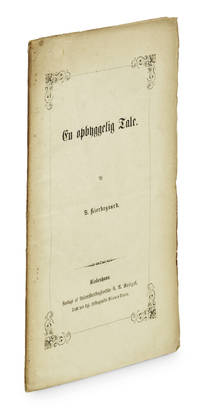
1850rif. 63620Kjøbenhavn Reitzel 1850. 8vo. 22 pp. Uncut in the original printed wrappers. The front wrapper with the text of the title-page all except the year repeated inside a border with large ornamental corner-pieces. Back-wrapper with the year inside the same frame. A bit of brownspotting towards the hinges and very light soiling and darkening towards spine but overall in magnificent condition completely unrestored. Old pencil-annotation possibly price-marking erased from front wrapper. Internally just light occasional brownspotting. Housed in beautiful marbled paper box with a red morocco spine with gilt Gothic lettering and small gilt ornamentations. Signed in Gilt lettering to inside of spine: Anker Kysters Eftf. A truly magnificent copy of the first edition in the rare original wrappers magnificently preserved and completely unrestored. This is the finest copy we have seen of this fragile pamphlet. One Upbuilding Discourse is a Christian edifying discourse bearing the title “The Sinner” and based on Luke 7 35-50 about the woman in the house of the Pharisee. For Kierkegaard the way that Christ looks upon “the woman who was a sinner” namely with love constitutes one of the pivotal moments of Scripture and Kierkegaard keeps returning to this theme. The sinful woman becomes a main figure of faith in Kierkegaard’s religious writings. She already appears in Three Upbuilding Discourses 1843 and again in “The High Priest” – “The Publican” – “The Woman who was a Sinner” in 1849 to be given a publication devoted only to her with the present An Upbuilding Discourse. Finally she then re-occurs in the Two Discourses at the Friday Communion from 1851 having however been written in 1849. “The sinful woman thus provides a point of thematic continuity between the early upbuilding discourses regarded by most commentators as reflecting a very low stage in Kierkegaardian religiousness and The Sickness unto Death regarded by most commentators as so elevated that Kierkegaard did not dare put his name to it. But the argument is not only about continuity it is also about coherence. I propose that this sinful woman offers a vantagepoint from which to see the essential unity of Kierkegaard’s religious thought the upbuilding and the radically Christian works and providing a vital perspective on how the religious works in general ‘answer’ to the challenge of the aesthetic.” George Pattison: Looks of Love: The Seducer and the Christp. 188. One Upbuilding Discourse occupies a defining position in Kierkegaard bibliophily as it constitutes the final work in which Kierkegaard wrote presentation-inscriptions. After the publication of this slim book in December 1850 none of Kierkegaard’s presentation-copies have a hand written inscription. The later presentation-copies from 1851 and onwards would be accompanied by a letter instead. Himmelstrup 128. The present copy is no. 81 in Girsel's "Kierkegaard" The Catalogue which can be found here. unknown
1846K., 1846. Ubeskåret i senere blankt omsl. Første og sidste blade noget brunplettet. 114pp.
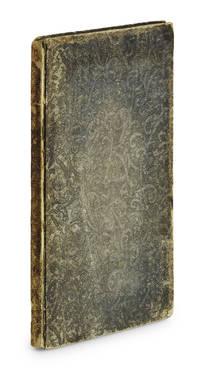
1846rif. 63610Kjøbenhavn Reitzel 1846. 8vo. 114 pp. Splendidly bound in full patterned silver-moiré gift-binding with all edges gilt. Green endpapers. A bit of brownspotting. Spine edges and corners worn and the silver dulled. But a splendid binding nonetheless. With Karl Madsen’s ex libris on which he has added in hand “Eksemplaret har tilhørt Joh. Ludv. Heiberg.” i.e. the copy has belonged to Johan Ludvig Heiberg to inside of front board. Inside of front board with previous owner’s neat pencil annotation explaining that this is the copy that Kierkegaard sent to Heiberg with the wish of having it expedited to the author of Two Ages alias Thomasine Gyllembourg. First edition magnificent copy in original silver-gift binding with all likelihood be the copy that Kierkegaard intended for Thomasine Gyllembourg mediated by Heiberg. Having finished his “first” authorship with his monumental “Unscientific Concluding Postscript” the “Literary Review of Thomasine Gyllembourg’s Two Ages” invokes Kierkegaard’s second authorship. The Literary Review is a classic within the conservative critique of modern society. It is here that Kierkegaard presents his most concise and significant analysis of modern society as it shows itself through the press in the relationship between public authorities and the subjects. The work was printed amidst the Corsair-Affair which was a defining event in Kierkegaard’s life and work. Having been unbearably ridiculed in periodical The Corsair since January 1846 Kierkegaard uses his Literary Review of Two Ages printed March 30th 1846 to convey his thoughts on the public and the individual’s relationship to it. Thomasine Gyllembourg was the mother of Johan Ludvig Heiberg and a magnificent author herself. She was one of the most productive authors of the Danish Golden Age despite having had her debut late in life at the age of 53. She was the founder of Danish feminist literature writing about the position of women in society and in the home. Her novel “Two Ages” portrays one of her eminent Madonna figures Claudine who despite her status as seduced and abandoned single mother stays true to herself her beliefs and her role as a mother. Claudine’s sexual liberty of the Revolutionary age is contrasted to the gentle and modest heroine of the present age whose identity is in caring for the home. As such Two Ages opposes the ideals of freedom from the age of the French Revolution with the bourgeois ideals of the Golden Age. In his review Kierkegaard is mainly concerned with the contrast between the two ages in the novel – that of The French Revolution and that contemporary with the novel. Expressed with Kierkegaard’s concepts the age of revolution is passionate and the present age dispassionate; Kierkegaard ends up attacking the conformity of the present age and the de-individualization of people into an abstract public. The inanimate beliefs and views of the present age become especially fatal in the daily press. As a reader one is no longer a passionate individual but part of an anonymous and diffuse public audience. Not until the single individual has established an ethical stance to the whole world as it is can there be any question of genuinely uniting. This is a clear reference to the ridicule Kierkegaard himself experienced due to the Corsair and a harsh verdict upon the Copenhagen audience. But it is not only Kierkegaard’s characterization of mass media that has made “A Literary Review” a conservative classic within the critique of modern society so has Kierkegaard’s description of how the dispassionate age has subverted all social hierarchies and put into question all the relative strength of the different powers of society. This magnificent work is one of Kierkegaard’s most political and that which gives us his clearest analysis of modern society. Two presentation-copies of the work have been registered one for Giødwad one for Madvig and Kierkegaard had one copy in his library which was sold at the auction of his books after he died. We also know that Kierkegaard gave a copy to Johan Ludvig Heiberg in his capacity of publisher of Two Ages” to pass on to the anonymous author of the work who as we know happened to be Heiberg’s mother. The provenance although it seems likely has not been definitively established. We know that the copy belonged to Karl Madsen as it has his ex libris and we know that he bought a good deal of Mrs. Heiberg’s books after she died among them quite a few gift-and presentation-copies from Kierkegaard to Heiberg see Gert Posselt’s Preface in Girsel's Kierkegaard-catalogue p. 13. It is also clear that the book is in a gift-binding and is bound exactly like Kierkegaard’s own copy of the book. See Aarbog for Bogvenner 1925 where Karl Madsen describes how he came to buy a large part of the books from Mrs. Heiberg and also mentions Kierkegaard presentation-copies. But the present copy is not mentioned specifically. The present copy is no. 50 in Girsel's "Kierkegaard" The Catalogue which can be found here. unknown
1846rif. 63611Kjøbenhavn Reitzel 1846. 8vo. 114 pp. Completely uncut in the original blue cardboard-binding. Minimal wear to capitals and upper front hinge with a tiny tear. Tiny paper loss to capitals. Small spotting to lower front board possibly from removal of an old owner's signature. The printed title-label splendidly preserved with only tiny loss of blank paper edge. Light brownspotting due to the quality of the paper. A truly magnificent copy in completely original state – looks like it came fresh from the press. Housed in a beautiful custom-made box with grey morocco spine excellently gilt in pastiche-style and with gilt Gothic lettering. Marbled paper over boards a bit sunned at top and towards front hinge. Gilt owner's initials to front board. Box signed in gilt lettering to inside of spine by Mogens Dickow Lund Anker Kysters Eftf. and gilt by Hagel Olsen. First edition in the very rare original blue binding in truly magnificent state and with the printed title-label excellently preserved. Having finished his "first" authorship with his monumental "Unscientific Concluding Postscript" the "Literary Review of Thomasine Gyllembourg's Two Ages" invokes Kierkegaard's second authorship. The Literary Review is a classic within the conservative critique of modern society. It is here that Kierkegaard presents his most concise and significant analysis of modern society as it shows itself through the press in the relationship between public authorities and the subjects. The work was printed amidst the Corsair-Affair which was a defining event in Kierkegaard's life and work. Having been unbearably ridiculed in periodical The Corsair since January 1846 Kierkegaard uses his Literary Review of Two Ages printed March 30th 1846 to convey his thoughts on the public and the individual's relationship to it. Thomasine Gyllembourg was the mother of Johan Ludvig Heiberg and a magnificent author herself. She was one of the most productive authors of the Danish Golden Age despite having had her debut late in life at the age of 53. She was the founder of Danish feminist literature writing about the position of women in society and in the home. Her novel "Two Ages" portrays one of her eminent Madonna figures Claudine who despite her status as seduced and abandoned single mother stays true to herself her beliefs and her role as a mother. Claudine's sexual liberty of the Revolutionary age is contrasted to the gentle and modest heroine of the present age whose identity is in caring for the home. As such Two Ages opposes the ideals of freedom from the age of the French Revolution with the bourgeois ideals of the Golden Age. In his review Kierkegaard is mainly concerned with the contrast between the two ages in the novel – that of The French Revolution and that contemporary with the novel. Expressed with Kierkegaard's concepts the age of revolution is passionate and the present age dispassionate; Kierkegaard ends up attacking the conformity of the present age and the de-individualization of people into an abstract public. The inanimate beliefs and views of the present age become especially fatal in the daily press. As a reader one is no longer a passionate individual but part of an anonymous and diffuse public audience. Not until the single individual has established an ethical stance to the whole world as it is can there be any question of genuinely uniting. This is a clear reference to the ridicule Kierkegaard himself experienced due to the Corsair and a harsh verdict upon the Copenhagen audience. But it is not only Kierkegaard's characterization of mass media that has made "A Literary Review" a conservative classic within the critique of modern society so has Kierkegaard's description of how the dispassionate age has subverted all social hierarchies and put into question all the relative strength of the different powers of society. This magnificent work is one of Kierkegaard's most political and that which gives us his clearest analysis of modern society. The present copy is no. 50 in Girsel's "Kierkegaard" The Catalogue which can be found here. hardcover
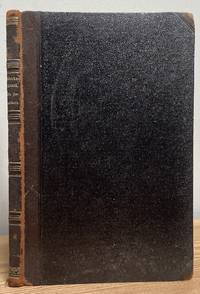
1846rif. 63628Kjøbenhavn C.A. Reitzel 1846. 8vo. Contemporary black full cloth with gilt lettering to spine. Binding somewhat faded and spotted. stamp to title-page and remains of ink numbering. Some brownspotting and a bit of damp staining. Lacking lower blank corner of title-page and upper blank corner restored. Far from affecting text. 114 pp. First edition of Kierkegaard's important review of Thomasine Gyllembourg's "Two Ages". Having finished his “first” authorship with his monumental “Unscientific Concluding Postscript” the “Literary Review of Thomasine Gyllembourg’s Two Ages” invokes Kierkegaard’s second authorship. The Literary Review is a classic within the conservative critique of modern society. It is here that Kierkegaard presents his most concise and significant analysis of modern society as it shows itself through the press in the relationship between public authorities and the subjects. The work was printed amidst the Corsair-Affair which was a defining event in Kierkegaard’s life and work. Having been unbearably ridiculed in periodical The Corsair since January 1846 Kierkegaard uses his Literary Review of Two Ages printed March 30th 1846 to convey his thoughts on the public and the individual’s relationship to it. Thomasine Gyllembourg was the mother of Johan Ludvig Heiberg and a magnificent author herself. She was one of the most productive authors of the Danish Golden Age despite having had her debut late in life at the age of 53. She was the founder of Danish feminist literature writing about the position of women in society and in the home. Her novel “Two Ages” portrays one of her eminent Madonna figures Claudine who despite her status as seduced and abandoned single mother stays true to herself her beliefs and her role as a mother. Claudine’s sexual liberty of the Revolutionary age is contrasted to the gentle and modest heroine of the present age whose identity is in caring for the home. As such Two Ages opposes the ideals of freedom from the age of the French Revolution with the bourgeois ideals of the Golden Age. In his review Kierkegaard is mainly concerned with the contrast between the two ages in the novel – that of The French Revolution and that contemporary with the novel. Expressed with Kierkegaard’s concepts the age of revolution is passionate and the present age dispassionate; Kierkegaard ends up attacking the conformity of the present age and the de-individualization of people into an abstract public. The inanimate beliefs and views of the present age become especially fatal in the daily press. As a reader one is no longer a passionate individual but part of an anonymous and diffuse public audience. Not until the single individual has established an ethical stance to the whole world as it is can there be any question of genuinely uniting. This is a clear reference to the ridicule Kierkegaard himself experienced due to the Corsair and a harsh verdict upon the Copenhagen audience. But it is not only Kierkegaard’s characterization of mass media that has made “A Literary Review” a conservative classic within the critique of modern society so has Kierkegaard’s description of how the dispassionate age has subverted all social hierarchies and put into question all the relative strength of the different powers of society. This magnificent work is one of Kierkegaard’s most political and that which gives us his clearest analysis of modern society. Himmelstrup 100. hardcover
1846rif. PARSkieELC. A. Reitzel 1846. Hardcover. Very Good/No dustjacket as issued. Quarter bound brown leather with stiff black leather backed sides gilt lettering on the spine. The binding is tight corners rubbed. Wear and rubbing on the spine. Text Danish unmarked. Previous owner name written on the first flyleaf. Small damp stain on the top edge of the text block. Endpapers show some small patches of discoloring. 12mo. 114pp. C. A. Reitzel hardcover
1846rif. 13947K. 1846. Ubeskåret i senere blankt omsl. Første og sidste blade noget brunplettet. 114pp. Originaludgave. Himmelstrup 100. unknown
1859K., 1859. Orig. bogtrykt omsl. Ubesk. Foromsl. løsgået. Rent ekspl. M. to sider avertissement. 14, (2) pp.
1859rif. 29383K. 1859. Orig. bogtrykt omsl. Ubesk. Foromsl. løsgået. Rent ekspl. M. to sider avertissement. 14 2 pp. Originaludgave. Himmelstrup 287. unknown
1859rif. 236Kjøbenhavn: C. A. Reitzels 1859. First edition. Wraps. Very Good . KIERKEGAARD Søren. En Bladartikel A Newspaper Article C. A. Reitzels Kjøbenhavn 1859. Original front wrap TP 3-16 original rear wrap small Octavo. First Edition Himmelstrup 287. Original Wrappers. "A brief work reprinting Kierkegaard's article "A Passing Comment on a Detail in Don Juan" which originally appeared in Fatherland. and had been omitted from Bladartikel in 1857. An afterthought on Mozart's great opera sublimely treated at length by Kierkegaard in Either/Or." Wronoski p. 30 CONDITION: Very good in original wrappers. Minor edgewear. CONDITION: Very good in original wrappers. Minor edgewear. PHOTOS AVAILABLE UPON REQUEST C. A. Reitzels, paperback
1846rif. 13947K., 1846. Ubeskåret i senere blankt omsl. Første og sidste blade noget brunplettet. 114pp.
1859rif. 29383K., 1859. Orig. bogtrykt omsl. Ubesk. Foromsl. løsgået. Rent ekspl. M. to sider avertissement. 14, (2) pp.
1846rif. 63628Kjøbenhavn, C.A. Reitzel, 1846. 8vo. Contemporary black full cloth with gilt lettering to spine. Binding somewhat faded and spotted. stamp to title-page and remains of ink numbering. Some brownspotting and a bit of damp staining. Lacking lower blank corner of title-page and upper blank corner restored. Far from affecting text. 114 pp.