FRIEDRICH SCHLEIERMACHERMareMagnum

2354 risultati
1995A CURA DI LUCIO D'ALESSANDRO LA CITTà DEL SOLE 1995 133 PP. DEDICA (CREDO DEL CURATORE) ALL'ANTIPORTA, SEGNI DEL TEMPO FRONTE RETRO ALLA COPERTINA COME DA FOTO, PER IL RESTO OTTIMO
1992rif. 51901Pfullingen : Neske, 1992. Aufsätze 380 S. (25 cm) Leinen / gebundene Ausgabe
1958Mm 145x215 Dedica autografa dell'autore all'occhietto. "Pubblicazioni dell'Istituto di Filosofia dell'Università di Genova" - Brossura editoriale di 191 pagine. Dorso brunito e minimi segni del tempo, nel complesso ottima copia. SPEDIZIONE IN 24 ORE DALLA CONFERMA DELL'ORDINE.
1993GUIDA 1993, 423 PP. FONDO DI MAGAZZINO: LIEVI SEGNI DEL TEMPO ALLA COPERTINA, VOLUME INTONSO, MAI SFOGLIATO. Parole e frasi comuni astratta base Cassirer complesso comprensione comune concetto concettuale concezione connessione conoscenza storica conoscitivo coscienza costituzione critica della ragione cultura definire dell'esperienza dell'individualità dell'uomo determinazionediltheyana dimensione Droysen empirica ermeneutica essenziale esso etica fenomenologia filosofia della storia fondamentale fondamento fondazione delle scienze forme simboliche Geisteswissenschaften generale gnoseologica H.G. GADAMER Hegel Historismus Humboldt humboldtiana Husserl individua individualità innanzitutto interpretazione Kant kantismo livello logica Meinecke metafisica metodo metodologica molteplicità momento mondo storico nesso nuovaoggettivazioni Ortega osserva particolare pensiero politica possibile problema problematica processo proprio psichica psicologia radicale ragione storica rapporto razionale realtà relazione ricerca Rickert ricostruzione riferimento riflessione ruolo saggio scientificascienza storica scienze dello spirito scrive Dilthey senso significa sistema sociale società soltanto spirito oggettivo spirituale storia universale storicistica storiografia struttura sviluppo tedesco teoretica teoria teorica Tessitore totalitàtrascendentale Troeltsch umana valore Verstehen vichiana Vico visione Weltanschauung Wilhelm Dilthey Wilhelm von Humboldt
1971Mm 145x225 Prima edizione - Brossura editoriale, 207 pagine. Solo piccoli strappi da scaffalatura alla sovraccoperta in prossimità del dorso, peraltro opera in ottime condizioni. SPEDIZIONE IN 24 ORE DALLA CONFERMA DELL'ORDINE.
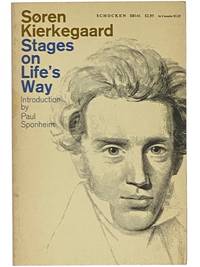
1967rif. 2354685New York: Schocken Books 1967. 1st Printing. Trade Paperback. Very Good. 7x5x1. First printing. Wrappers lightly toned spine faintly creased. Binding tight and square pages clean bright and unmarked. 1967 Trade Paperback. 472 pp. A philosophical work written as a continuation of Kierkegaard's masterpiece Either/Or. While Either/Or is about the aesthetic and ethical realms Stages continues onward to the consideration of the religious realms. Kierkegaard's "concern was to present the various stages of existence in one work if possible." His father Michael Pedersen read Christian Wolff and Soren himself was influenced by both Wolff and Kant to the point of using the structure and philosophical content of the three special metaphysics as a scheme for this book. Schocken Books paperback books
rif. 402118-nnew. unknown
rif. 402118like new. unknown
rif. 0691020493.Gpaperback. Good. Access codes and supplements are not guaranteed with used items. May be an ex-library book. paperback
1988rif. SKU0511466Princeton University Press 1988-11-01. Paperback. Good. Textbook May Have Highlights Notes and/or Underlining BOOK ONLYNO ACCESS CODE NO CD Ships with Emailed Tracking Princeton University Press paperback
1988rif. Q-0691020493Princeton University Press 1988-11-01. Paperback. New. New. In shrink wrap. Looks like an interesting title! Princeton University Press paperback
1988rif. DADAX0691020493Princeton University Press 1988-11-01. paperback. New. 5.50x1.75x8.50. Buy with confidence. Excellent Customer Service & Return policy. Princeton University Press paperback
rif. ria9780691020495_inpPaperback. New. New Book; Fast Shipping from UK; Not signed; Not First Edition; Offers a poetic example of Kierkegaard's vision of the three stages or spheres of existence: the esthetic the ethical and the religious. This book begins with a banquet scene patterned on Plato's "Symposium". Next is a discourse by paperback
1945rif. 800Princeton University Press 1945. Near Fine. 8vo burgundy cloth black topstain gilt titles 472pp. Stated second printing 1945. Boards moderately rubbed faded to corners endpapers toned. Contents clean binding firm. ‘Studies by Sundry Persons’ collected forwarded to the press and published by Hilarius Bookbinder.’ A companion and a continuation of EIther/Or exploring the dimension of the religious in which the ethical and aesthetic are resolved. In three parts written under various pen names and with an appendix printing the first of Three Discourses on Imagined Occasions published separately to accompany the Stages. Translation with notes by Walter Lowrie. A nice copy sans dust jacket. . Princeton University Press unknown
1988rif. L3 box735 a5Stages on Life's Way: Studies by Various Persons Kierkegaard's Writings Volume 11. By Søren Kierkegaard. Edited and Translated with Introduction and Notes by Howard V. Hong Edna H. Hong. 1988 by Princeton University Press. Hardcover 808 pages. hardcover
rif. 6819879Princeton University Press . Papeback. New. pp. 808 Princeton University Press unknown
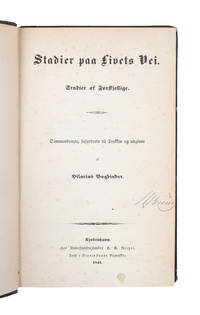
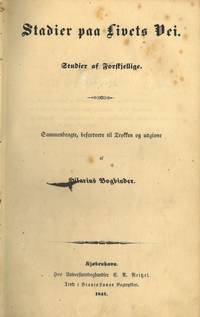
1845rif. 63626Kjøbenhavn Copenhagen 1845. Lex8vo. Later brown half calf with gilt title to spine ca. 1940'ies. Corners with ligh wear. First leaves re-hinged. Title-page dusty and professsionally restored from verso with thin Chinese paper neatly closing a tear no loss. Some leaves evenly browned and last few leaves brownspotted otherwise only lighter occasional spotting. VIII 383 pp. First edition of one of Kierkegaard's main works "Stages on Life's Way" his pivotal sequal to his main work "Either-Or" in which he had presented the first two stages the aesthetic and the ethical. In Stages on Life’s Way he continues his work on these stages and moves on to present also the religious stage which occupies approximately two thirds of the work. The religious stage is that in which man attains a personal relationship with God and that in which man only truly begins to exist the aesthetic and ethical stages being inadequate. It is in this foundational work in the religious stage that Kierkegaard first properly describes what is now known as the “Leap of Faith” in fact a “leap to faith” namely the leap that involves willing and belief instead of reason and knowledge the leap that you take in order to connect to God and which requires that which Kierkegaard calls “the suspension of the ethical”. Undoubtedly among Kierkegaard’s most brilliant literary achievements “Stages on Life’s Way” is written in the form of different viewpoints of Kierkegaard’s many pseudonymous characters. We have both Hilarius Bookbinder who by chance has come into possession of the documents presented in the work and has prepared them for printing. We have the famous banquet scene which mirrors Plato’s Symposium described by William Afham and in which the three aesthetics participate: Johannes the Seducer Victor Eremita and Constatin Constantius. We have Judge William’s discourse in praise of marriage and we have the diary discovered by Frater Taciturnus of a young man who was deeply in love but felt compelled to break off his engagement. This story in form of a diary is the closest one comes to a description of Kierkegaard’s own love story his relationship to Regine. The diary describes an engagement that has lasted for six months; it alternates between the morning notes that recall the engagement and the midnight notes that put it all in perspective. The work closes with a letter to the reader from Taciturnus on the three “existence-spheres” represented by the three parts of the book. “Stages on Life’s Way” is one of Kierkegaard’s most important works. Not only does it sum up and explain some of the most important themes of Kierkegaard’s previous works utilizing the characters and pseudonymous authors of the earlier works to do so; it goes beyond these foundational themes introduces the religious stage and points to the further development of the central themes in Kierkegaard’s philosophy most of which are only fully developed in “Concluding Unscientific Postscript”. Written under a pseudonym and without Kierkegaard’s name appearing as publisher or indeed anything else he was unable to give away presentation-copies of the work. Thus not a single presentation-copy of the work exists. Himmelstrup 78. unknown
1858rif. 56682Kbh. 1858. 8vo. Nyere skinnrygbind med opphøyde ryggbånd. 463 s. Forlagt af C. A. Reitzels Bo og Arvinger Dansk. Meget rent og fint eksemplar. unknown
1845rif. 62096Kjøbenhavn Copenhagen 1845. Lex8vo. Nice contemporary brown half cloth with gilt title to spine. Capitals worn and wear along upper front hinge. Corners worn. In spite of the wear an attractive and tight copy. First and last leaves with a bit of brownspotting otherwise only light occasional spotting. Old owner's signature to title-page. VIII 383 pp. First edition of one of Kierkegaard's main works "Stages on Life's Way" his pivotal sequal to his main work "Either-Or" in which he had presented the first two stages the aesthetic and the ethical. In "Stages on Life's Way" he continues his work on these stages and moves on to present also the religious stage which takes up ab. two thirds of the work. The religious stage is that in which man attains a personal relationship with God and that in which man only truly begins to exist as the aesthetic and ethical stages are inadequate. It is in this foundational work in the religious stage that Kierkegaard first properly describes what is now known as the "Leap of Faith" in fact a "leap to faith" namely the leap that involves willing and belief in stead of reason and knowledge the leap that you make in order to connect to God and which requires that which he calls "the suspension of the ethical". Stages on Life’s Way is one of Kierkegaard’s most important works. Not only does it sum up and explain some of the most important themes of Kierkegaard’s previous works utilizing the characters and pseudonymous authors of the earlier works to do so; it goes beyond these foundational themes introduces the religious stage and points to the further development of the central themes in Kierkegaard’s philosophy most of which are only fully developed in Concluding Unscientific Postscript. hardcover
1845rif. 59538Kjøbenhavn. 1845. 8vo. Samtidig skinnryggbind med marmorerte dekler. VIII 383 s. Hos Universitetsboghandler C. A. Reitzel Dansk. Ryggen noe slitt. Materien gulnet og pleytet. Ex libris. unknown
1909rif. 1242891Dresden; C. Ludwig Ungelenk, 1909. IV; 552 Seiten; 20,5 cm; fadengeh., illustr. Broschur.
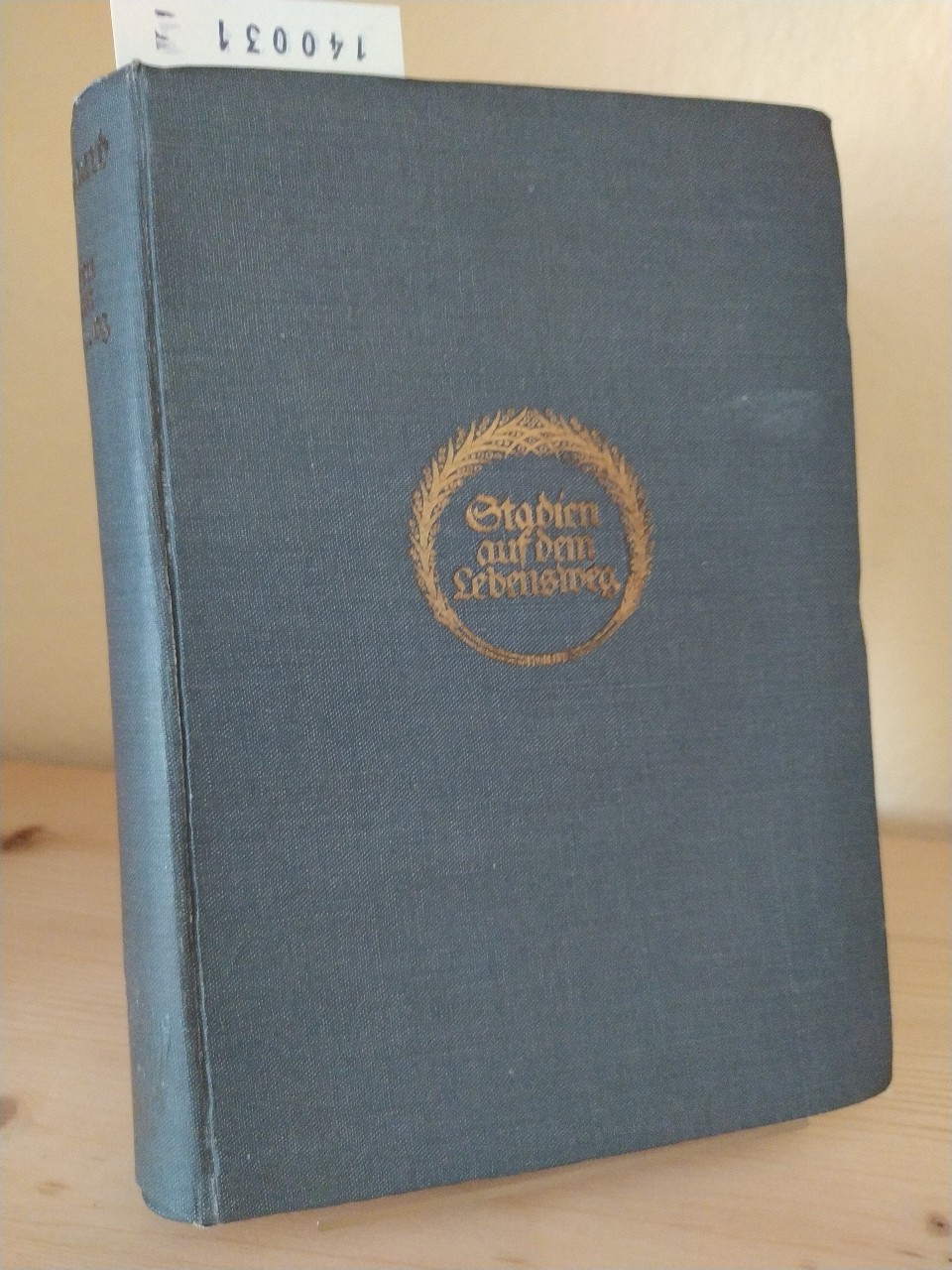
1922rif. 140031Jena: Eugen Diederichs 1922. 480, (4) Seiten. Frakturdruck. 8° (17,5-22,5 cm). Orig.-Leinenband mit goldgeprägtem Titel auf Deckel und Rücken. [Hardcover / fest gebunden].
rif. 3579006118.Gpaperback. Good. Access codes and supplements are not guaranteed with used items. May be an ex-library book. paperback
1922rif. 79994BB1922 . 3. - 5. Tsd. Jena: Diederichs 1922. 8°. 480 S. Leinen mit Kopffarbschnitt wenig Randanstreichungen; sonst altersgemäss gut erhalten =Gesammelte Werke; 4 unknown
2018rif. 2-886723238XSE 2018. Paperback. New. Italian language. 8.66x4.96x1.02 inches. SE paperback