672 resultados
2024ref. Gyan-9789367644546Facsimile Publisher 2024. Hardcover. New. 22.59 x 14.34 x 5 cm. English Facsimile Publisher hardcover
1997ref. feb12096Minerva 1997. Used. 1997; Romanian Edition of Diogenes Laertios - Despre Vietile Si Doctrinele Filosofilor 2 BPT 1470; For more details please contact me Minerva unknown
1997ref. feb12095Minerva 1997. Used. 1997; Romanian Edition of Diogenes Laertios - Despre Vietile Si Doctrinele Filosofilor 1 BPT 1469; For more details please contact me Minerva unknown
ref. Q-0674992032Harvard University Press. Hardcover. New. New. In shrink wrap. Looks like an interesting title! Harvard University Press hardcover
ref. 0266533221.Ghardcover. Good. Access codes and supplements are not guaranteed with used items. May be an ex-library book. hardcover
ref. 0282711392.Gpaperback. Good. Access codes and supplements are not guaranteed with used items. May be an ex-library book. paperback
ref. Q-0674992040Harvard University Press 1925-01-01. Hardcover. New. New. In shrink wrap. Looks like an interesting title! Harvard University Press hardcover
ref. 598638like new. unknown
1959ref. mon0003449570Harvard University Press/Heinema 1/1/1959 12:00:00 AM. hardcover. Good. . Two volume set. Ex-library book with stamps/ stickers. Harvard University Press/Heinema hardcover
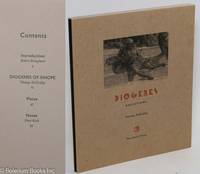
1994ref. 344741Berkeley: Peter Koch Printer 1994. Hardcover. 64 pages hand-set type on grey paperstock the paper looks pedestrian but is archival-grade like Diogenes 8x7 inch pedestrian grey boards lettered in two colors and provided with an inset black cloth backstrip that is a sub-enclosure to the text leaves. Nice copy one of only 500 exemplars square and sound clean and unmarked. Peter Koch, Printer hardcover books
1994ref. 291172Berkeley: Peter Koch for presenter McEvilley 1994. Hardcover. 64p. hand-set type on grey paperstock the paper looks pedestrian but is archival-grade like Diogenes 8x7 inch pedestrian grey boards lettered in two colors and provided with an inset black cloth backstrip that is a sub-enclosure to the text leaves. Nice copy one of only 500 exemplars square and sound clean and unmarked. Peter Koch for presenter McEvilley hardcover books
1960ref. 19622Istituto Editoriale Cisalpino. Very Good with no dust jacket. Hardcover. 1 small chip to cloth of rear board. Light browning to boards. Scholar's bookplate to inner cover Robert Brown. Scholar's blindstamp to ffep Robert Brown.; Greek Text with Italian introduction.; Testi E Documenti Per Lo Studio Dell'antichità II; 133 pages . 1960. Istituto Editoriale Cisalpino hardcover
1960ref. 10379Istituto Editoriale Cisalpino. Very Good with no dust jacket. Hardcover. Corners lightly bumped. Light browning to boards.; Greek Text with Italian introduction.; Testi E Documenti Per Lo Studio Dell'antichità II; 133 pages . 1960. Istituto Editoriale Cisalpino hardcover
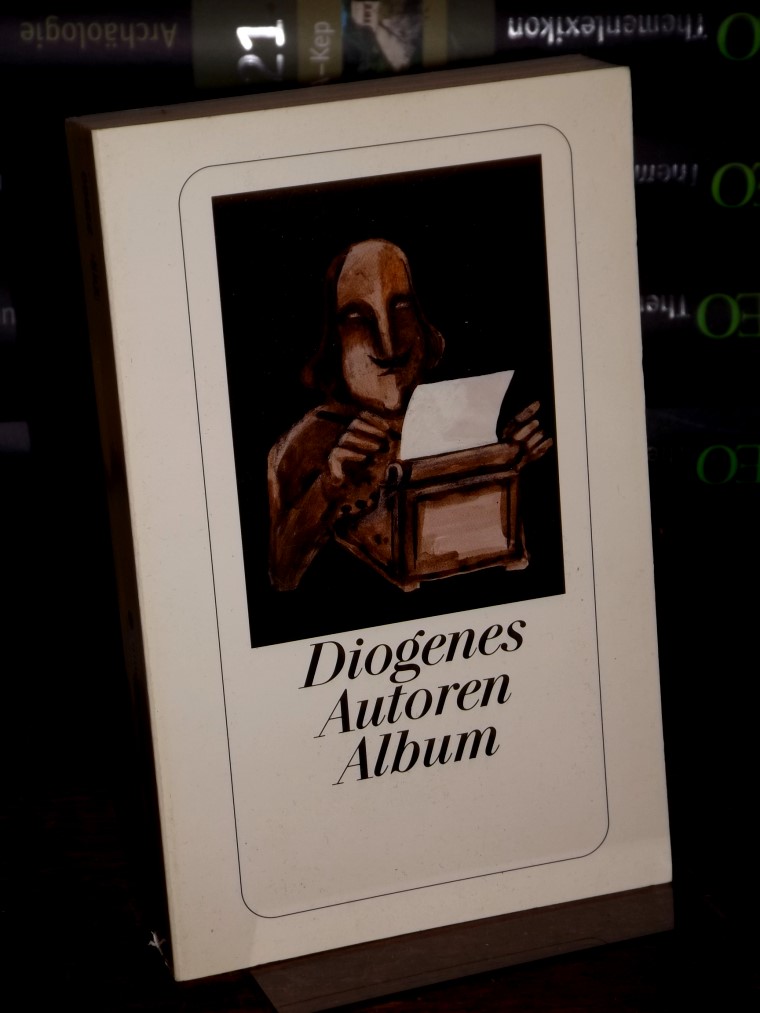
1996ref. 83203Zürich : Diogenes, 1996. 377 S. mit zahlreichen Abbildungen; 18 cm; OKart. (Taschenbuch);
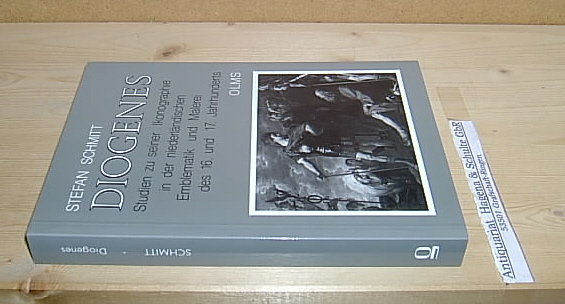
1994ref. 1228173Hildesheim ; Zürich ; New York : Olms, 1994. 373, [47] S. : Ill. Originalpappband.
2003ref. 31345Zürich : Diogenes, 2003. 987 S. : zahlr. Ill. ; 24 cm Okart.m. Schuber
1994ref. 207428Hildesheim, Olms 1994. 373 S. und 70 Abbildungen auf 47 Tafeln, 8°, Original-kartoniert,
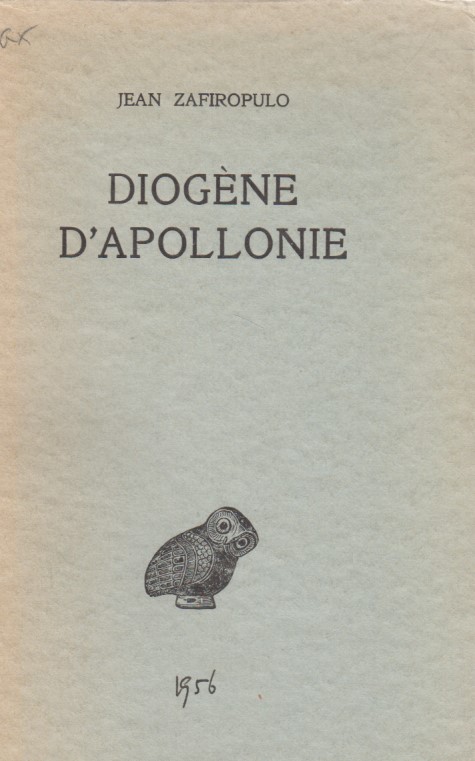
1956ref. 1203485Paris; Societe d'Edition "Les belles Lettres", 1956. 205 Seiten; graph. Darst.; 20 cm; fadengeh. Orig.-Pappband.
1956Gutes Ex.; unaufgeschnitten; Seiten minimal nachgedunkelt; kleine Anstreichungen. - Französisch; stw. griechisch. - Aus der Bibliothek von Prof. Wolfgang Haase, langjährigem Herausgeber der ANRW und des International Journal of the Classical Tradition (IJCT). - Diogenes von Apollonia (* ca. 499 v. Chr. in Apollonia Pontike; † ca. 428 v. Chr.) war ein antiker griechischer Philosoph und Arzt. Er wird als Anhänger der ionischen Naturphilosophie zu den Vorsokratikern gezählt. Diogenes war ein Zeitgenosse des Anaxagoras. Wie der frühere ionische Naturphilosoph Anaximenes hielt Diogenes die Luft für den Grundstoff der Welt, alle Dinge nur für eine unterschiedliche Konzentration der Luft. Schlamm, aus dem alle Lebewesen hervorgehen, ist also beispielsweise stark verdichtete Luft. Während alle Einzeldinge entstehen und vergehen, ist der Urstoff selbst unvergänglich. Die wichtigste Ähnlichkeit zur Lehre des Anaxagoras ist, dass Diogenes als Auslöser dieser Ver-/Entdichtung den Nous sieht, eine intelligente Kraft, die damit das Universum ordnet und beherrscht und so Denken, Seele und Leben hervorbringt. Wie auch viele andere griechische Philosophen nahm Diogenes eine unendliche Reihe von Welten an. Seine wichtigste Arbeit war eine naturphilosophische Schrift, die später unter dem Titel ... ("Über die Natur", lateinisch De natura) zitiert wurde und von der beträchtliche Fragmente erhalten sind, hauptsächlich in Simplikios' Kommentar zur Physik des Aristoteles. Es ist möglich, dass Diogenes zudem Werke mit den Titeln Gegen die Sophisten und Die Natur des Mannes schrieb. Außerdem spielt Aristophanes in seiner Komödie Die Wolken mit den Aussagen, die er dort Sokrates in den Mund legt, wohl auf Theorien des Diogenes an. … (wiki) // ... Aristophane devait beaucoup tenir a cette piece, car, non content de ses remontrances, il essaya, quelques annees plus tard, entre 421 et 417, de faire reprendre sa comedie. Mais il echoua de nouveau et il n'est meme pas certain qu'elle fut admise une seconde fois au concours. Si, comme cela parait probable, Aristophane etait nc en 444, il n'avait que 21 ans au moment de la representation des Nudes. L'on peut alors se demander pourquoi cet auteur, fertile entre tous et auquel le succes souriait deja si facilement, parait, si jeune encore, avoir attache un tel prix a cette ceuvre par-ticuliere. On ne peut evidemment, ici, avancer que des hypotheses, mais il parait raisonnable de cher-cher la reponse a notre question dans le caractere meme de la piece incriminee, vu surtout qu'il s'ecar-tait sensiblement de celui des oeuvres anterieures d'Aristophane. Le jeune auteur fut, sans doute, blesse de ne pas reussir dans un genre nouveau pour lui, genre qu'il prisait, semblerait-il, tout particulierement. Nous savons, en effet, que, sous differents pseudo-nymes, Aristophane avait deja fait representer en 427 " Les Banqueteurs ", en 426 " Les Babyloniens ", en 425 " Les Acharniens " et en 424 " Les Cavaliers ", pour la premiere fois sous son nom veritable. … (S. 6)
1987Gallimard 1987. In-8 broché de 142 pages.
In 8o, pp. da 259 a 384, br, interventi di Mc Donald D., Eliade M., Sauvy A., Brown H., Paetel K.O., minime fioriture (6426/ FILOSOFIA/ SOCIOLOGIA/ DIOGENE)
ref. 8729Gustave Sandre, Paris, 1846. In-12, broché, 119 pp.
1978ref. LFA-126723844Revue trimestrielle publiée sous les auspices du Conseil International de la Philosophie et des Sciences Humaines : 176 pages, format 165 x 250 mm, brochée, Gallimard, bon état
ref. 200917948Paris, Gallimard - revue diogene, 1976 ; in-8, 144 pp., broché. N°96 octobre décembre 76.
ref. 1244164 numéros en 64 livraisons. Est joint le rare tiré-à-part DIOGÈNE (1952-1977), bilan des cent premiers numéros, perspectives davenir. Ensemble en bon état. /// Textes de Theodor W. Adorno, Jean-Paul Aron, Raymond Aron, Emile Benvéniste, Marcel Brion, Roger Caillois, Georges Canguilhem, Noam Chomsky, Michel Collinet, Mircea Eliade, Jacques Ellul, Etiemble, Michel Foucault, Jean Fourastié, Maurice de Gandillac, Jean Hyppolite, Roman Jacobson, Karl Jaspers, Bertrand de Jouvenel, Alexandre Koyré, Claude Lévi-Strauss, François Le Lionnais, Jacques Madaule, Herbert Marcuse, Jacques Merleau-Ponty, Alfred Métraux, Georges Mounin, Roger Munier, José Ortega y Gasset, Jean Piaget, Gaëtan Picon, Léon Poliakov, Louis Renou, Alfred Sauvy, Gershom Scholem, Léopold Sédar Senghor, Jean Starobinski, Jan de Vries, Eric Weil, etc