Weil, ShragaBiblio.com

2 784 résultats
1966réf. 129889N.P.: n.p. 1966. Limited Editions Club. framed painting 34 by 28 inches. A framed painting depicting a guard at the fortress and monastic community at Qumran. Shraga Weil 1918-2009 was an Israeli artist. Born in Prague in 1918 he studied at the National School of Arts there. He served in the Hungarian resistance to the Nazis during World War II. After the war he joined the exodus to Israel. He received training in monumental and graphic techniques at the Academy of Arts in Paris in 1953. He worked as a designer and illustrator of books during the 1950s during which time he was illustrator of The Dead Sea Scrolls New York: Limited Editions Club 1966. This work was included as an illustration in that book. In the 1960s and 1970s he created several architectural designs including the copper doors for the main entrance of the Knesset building and the residence of the President of Israel in Jerusalem. source: Knesset website and Shraga Weil website. Qumran was the location of an ancient Jewish fortress and Essene monastic community where the Dead Sea Scrolls were found beginning in 1947. n.p. unknown
1997réf. 9655New York: Vincent FitzGerald & Co 1997. One of 20 copies all on Antique JB Green and Japanese Gampi paper signed and numbered by the artist in pencil on each of the 5 etchings. The names of the subject of each portrait is etched in the plate itself. The authors are: Gertrude Stein James Joyce Franz Kafka and Virginia Woolf. The artist is of course Matisse. Each etching measures 12-1/4 inches x 17 inches fine. The etchings were printed by Lothar Osterburg and Vincent FitzGerald. Susan Weil's aesthetic predecessors are portrayed in these blind-drawn etchings created around the same time as BLIND MAN'S BLUFF. She has captured the key element in the features of each. Vincent FitzGerald & Co unknown books
2006réf. 9813New York: Vincent FitzGerald & Company 2006. One of 10 copies only on J.B. Green paper each signed and numbered in pencil on the colophon by the artist Susan Weil. Page size: irregular but about 7 inches x 9 inches; 7 individual collages each hand water colored cut out and assembled by the artist Susan Weil and the publisher Vincent FitzGerald. On the reverse of each individual work of art is a "secret" hand written by the artist. Because they are secrets the reader / viewer can see words but there is no way to read the secret. Bound: loose in translucent plexi-glass box with sliding cover printed colophon in black with title in red visible through side of box new. The images created by Weil are so full of life - one is instantly drawn into the full world of this talented artist who has always included others in her life - children partners pets - all lovingly viewed through her aesthetic. The colors are vivid blues bright yellows gold and silver and the reader / viewer engages with them - knowing they will be unknowable and all the more intriguing. Vincent FitzGerald & Company unknown books
2012réf. AME_9780071792738Mcgraw Hill 2012. 11TH. Hardcover. New/New. Mcgraw Hill hardcover
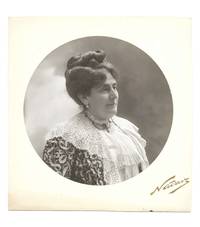
1904réf. Pro4PROUST Jeanne WEIL 1849-1905 5th December 1904 original period film print. Round photography 159 cm diameter mounted on thick paper frame in the photographer's name.Tiny spot on lower margin of the mounting small stainStamp on verso from collection Suzy Mante-Proust collection One of Jeanne Weil Proust's last portraits less than a year before her death This portrait was taken on December 5th 1904. At this time aged 56 years old Proust's mother has been a widow for a year. The translation of his son's The Bible of Amiens was published that same year. She died of nephritis a year later on September 26 1905. Nadar did process her portrait and removed the shadows and various flaws on her face. Michel Schneider notes that the narrator's mother in the Search is obviously inspired by the mother of the author himself. Jeanne Proust was born Jeanne Weil in 1849 from a Jewish family of the enlightened bourgeoisie. Much has been said about the intellectual complicity that united her with elder son. Marcel Proust who during his mother's lifetime wrote only beautifulthings in the spirit of the time Pleasures and Days will not become the novelist of the Search until after the death his mother an event that has somehow freed his creation. In the novel the grief he felt at his death is shifted to that of the grandmother and that of Albertine. In the Search Mom doesn't die she is also mentioned more than 500 times. Provenance: -Proust Family -Suzy Mante-Proust only daughter of Robert Proust by descent -Patricia Mante-Proust granddaughter of Suzy Mante-Proust by descent References: Nadar repr. p. 32 in full. Cattaui n° 59 repr. Mauriac repr. p. 10.
2002réf. 9651New York: Vincent FitzGerald & Co. 2002. One of 20 copies all on special paper handmade by Paul Wong at Dieu Donne Papermill each signed and numbered on the colophon by Susan Weil. The artist has titled signed numbered and dated each print as well at the bottom in pencil. Page size: 16 x 16 inches; 6 images plus colophon. Housed in orange silk custom-made clamshell box with inset of blueprint image by the artist of broken glasses printed in white on blue fabric box made by Priscilla Spitler at Hands on Bookbinding new. The colophon was printed by Daniel Keleher at Wild Carrot Letterpress. Vincent FitzGerald & Company did the collage work. The prints are described by the publisher as follows: 1 blueprint image on cover; 2 "Umbrella" photograph which puts the umbrella structure directly on the paper; 3 "Secrets" A collaged blueprint. These private words are layered then cut in strips and woven. The back of the strips are water colored red reflecting slightly. 4 "Grace's Lace" The lace squares are treated with chemicals for a brown print and developed with ultraviolet light. This is mounted on handmade paper which has been water colored pale gray. 5 "Catenary" This is a blueprint collage. The two blueprint hands hold a copper string. The handmade paper is water colored pale green. 6 "Woven Wineglasses" This is a photograph collage. Several direct wineglass images are simply woven into a box form making this study of water and shadows into an abstraction. 7 "Haphazard" This is a formal blue print configuration of glass rectangles. The haphazard quality comes from the unpredictability of the beautiful breaks in the glass. Susan Weil returns to a medium she used in the late 1940's and early 1950's with her then husband Robert Rauschenberg at Black Mountain College where they had studied with Josef Albers. Carla Schulz-Hoffman notes in her article on Susan Weil in the exhibition catalogue MIND'S EYE 1989 the origins of this art form. In subsequent visits to Black Mountain they began experimenting with blueprint paper. Rauschenberg writes "Sue and I experimented with light-sensitive papers partly because of their low cost.". Schulz-Hoffman writes "In 1951 their son Christopher was born and in that same year 'Life' magazine published a three page article including reproductions of their spectacular 'Blueprints'. Similar to Man Ray's rayographs the blueprints used blueprint-paper and a sunray lamp to capture life-sized silhouettes." She notes "For this reason it is not always possible to credit one particular individual with the discovery of innovations which would prove decisive in precipitating the fall of Abstract Expressionism and in shaping the course which the entire New York School would eventually take. Although many of the results of Weil's productive collaborations with Rauschenberg and Jasper Johns cannot be attributed exclusively to one or another of these artists nevertheless a typically one-sided art historical scholarship tends to ignore Weil or consign her a marginal role.". As well as blueprint images Weil began to use collage in an especially creative way. Her complete mastery of these techniques can be seen in these images. Vincent FitzGerald & Co. unknown books
1966réf. 129889N.P.: n.p. 1966. Limited Editions Club. framed painting 34 by 28 inches. A framed painting depicting a guard at the fortress and monastic community at Qumran. Shraga Weil 1918-2009 was an Israeli artist. Born in Prague in 1918 he studied at the National School of Arts there. He served in the Hungarian resistance to the Nazis during World War II. After the war he joined the exodus to Israel. He received training in monumental and graphic techniques at the Academy of Arts in Paris in 1953. He worked as a designer and illustrator of books during the 1950s during which time he was illustrator of The Dead Sea Scrolls New York: Limited Editions Club 1966. This work was included as an illustration in that book. In the 1960s and 1970s he created several architectural designs including the copper doors for the main entrance of the Knesset building and the residence of the President of Israel in Jerusalem. source: Knesset website and Shraga Weil website. Qumran was the location of an ancient Jewish fortress and Essene monastic community where the Dead Sea Scrolls were found beginning in 1947. n.p. unknown books
1966réf. 129888N.P.: n.p. 1966. Limited Editions Club. framed painting 34 by 28 inches. A framed watercolor depicting a guard at the fortress and monastic community at Qumran. Shraga Weil 1918-2009 was an Israeli artist. Born in Prague in 1918 he studied at the National School of Arts there. He served in the Hungarian resistance to the Nazis during World War II. After the war he joined the exodus to Israel. He received training in monumental and graphic techniques at the Academy of Arts in Paris in 1953. He worked as a designer and illustrator of books during the 1950s during which time he was illustrator of The Dead Sea Scrolls New York: Limited Editions Club 1966. This work was offered but not used as an illustration for that book. In the 1960s and 1970s he created several architectural designs including the copper doors for the main entrance of the Knesset building and the residence of the President of Israel in Jerusalem. source: Knesset website and Shraga Weil website. Qumran was the location of an ancient Jewish fortress and Essene monastic community where the Dead Sea Scrolls were found beginning in 1947. n.p. unknown books
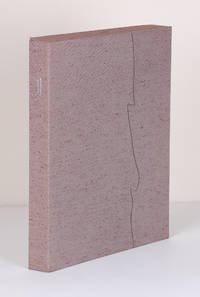
réf. 141347New York: Vincent FitzGerald 1987. Japanese style binding in purple and green Japanese cloth matching fold-over case. FitzGerald & Co. Vincent. 9 x 12 inches. Japanese style binding in purple and green Japanese cloth matching fold-over case. 40 pages. Interpreted by Susan Weil and Marjorie Van Dyke. Privately printed by Vincent FitzGerald in an edition of 65 copies signed by Susan Weil and Marjorie Van Dyke of which this is one of 50 copies available for sale. A fine copy in fine clamshell box. Text and titling printed by Daniel Keleher and Bruce Chandler at Wild Carrot Letterpress in typefaces created by Dan Carr & Julia Ferrarie at the Golgonooza Letter Foundry and printed on Moulin du Gue Japanese papers. Calligraphy by Jerry Kelly. With 62 etchings by Marjorie Van Dyke assisted by Maria Luisa Rojo at The Printmaking Workshop employing over 150 plates original watercolors collage and hand cutting printed on Moulin de Gue paper and Japanese papers. The texts of the forty epiphanies are printed in full and those selected for interpretation are assigned thematic divisions: "Planes" "Death" "Dreams" and "Games" with Weil undertaking the first two sections and Van Dyke the latter two. The thematic sectional titles to the divisions of the illustrative matter are keyed numerically to the relevant epiphanies in the text. Lithography by Rhae Burden and Collage creation by Zahra Partovi. Bound loose in hand-made box by David Bourbeau at his Thistle Bindery covered with Japanese hand-made silk with an incised line of Japanese tea paper showing a profile of Joyce. This book covering death word games / puns how a person dreams while sleeping and planes is considered a high-spot of Vincent FitzGerald & Company. Vincent FitzGerald unknown