PROUST, MarcelBiblio.com
3 575 résultats
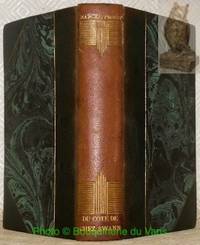
1913réf. 101754Paris : Bernard Grasset 1913. demi-basane. PROUST Marcel.Du côté de chez Swann. Paris Bernard Grasset1913 190x120mm 523 pages reliure demi-basane. Relié en demi-basane à coins. Auteur titre et ornementations filets entre-croisés dorés au dos. Plats papier marbré avec trois filets dorés. Tranche supérieure dorée. Couvertures conservées supérieure et inférieure. Reliure des années 30 avec dos légèrement insolé autrement belle reliure. Exemplaire du second état qui est l’état définitive de l’édition originale. Mention fictive de troisième édition sur la couverture supérieure daté de 1913 en chiffres romains. Page de titre blanche avec date d’édition 1914 aussi en chiffres romains. Avec la table des matière. Achevé d’imprimer le huit novembre mil neuf cent treize par Ch. Colin à Mayenne. Bel exemplaire intérieur propre. For shipments to the U.S.A. with a value exceeding 800 USD VAT is not included. Please contact us via our website if needed. Bernard Grasset unknown
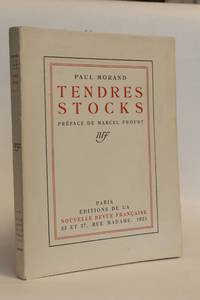
1921réf. 71725Paris: Nrf 1921. Fine. Nrf Paris 1921 16.50 x 22 cm broché First edition one of the 120 numbered copies on vergé pur fil ours unnumbered and re-imposed in quarto Tellière format deluxe copies ""tirage de tête"". Important foreword by Marcel Proust. Rare. Nrf unknown
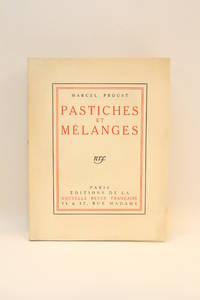
1919réf. 68101Nrf | Paris 1919 | 16.50 x 22 cm | broché
1943réf. 483281943. Fine. 1943 21 x 13 cm en feuilles Autograph manuscript by the author four and a half pages in octavo published in the issue of Journal des Débats dated 12 May 1943. Complete recto-verso manuscript in a dense hand featuring numerous deletions corrections and additions. A literary column written on the occasion of the publication of Ramon Fernandezs book À la gloire de Proust. It was to Maurice Blanchot that his friend Emmanuel Levinas owed his discovery of the work of Marcel Proust which he deeply admired despite Charles Maurrass condemnationa judgment that at first failed to turn him away from it. What Blanchot valued most in Proust was his at times fluid rhythm and his remarkable sense of the scene. Placing him within his literary pantheon alongside the Marquis de Sade and Franz Kafka Blanchot was drawn in the early 1940s to the very nature of the experience Proust conveyed in his novels: « L'uvre de Proust est sortie d'états mystérieux qui semblent ne lui avoir été proposés que pour que cette uvre fût écrite. Ils ont servi de stimulant à une extraordinaire avidité de connaître et eux qui étaient d'abord une rupture de connaissance ont fourni un aliment inépuisable à la connaissance littéraire. Cependant ce n'est pas l'aspect le moins surprenant du Temps perdu que dans le flot d'images d'événements de théories de figures dont ils ont été par abus la source ces états aient gardé la valeur d'un secret en continuant selon le pouvoir qui leur était propre à paraître toujours plus mystérieux que l'uvre elle-même pourtant toute chargée de mystères. C'est en cela que Proust n'a pas trahi la révélation qu'il a rencontrée et dont il a offert l'image à la plus étendue et la plus admirable comme pour montrer qu'elle ne l'épuisait pas. » The text later revised would become part of the opening section of Faux Pas 1943 devoted to what Blanchot regarded as the fundamental question of inner experience. A very clean manuscript reflecting Blanchots clarity of thought on Proust. unknown
1919réf. 68101Paris: Nrf 1919. Fine. Nrf Paris 1919 16.50 x 22 cm broché First edition one of 70 numbered copies on Lafuma de Voiron and reimposed in quarto Tellière format only deluxe copies ""tirage de tête"". Spine and cover slightly and marginally sunned. Nice copy. Nrf unknown
1919réf. 60976Nrf | Paris 1919 | 16.50 x 22 cm | relié
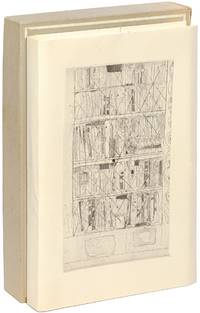
1969réf. 550239Paris: Le Livre Contemporain / Les Bibliophiles Franco-Suisses 1969. Softcover. Fine. First edition. Illustrated with engravings by Pierre Lesieur. Quarto. 82 2 pp. Text in French. Paper chemise with cover engraving and unbound bifoliums laid in as issued. Fine in irregularly sunned clamshell case with short splits at the spine ends. Briefly Inscribed by the illustrator on a front blank. Published in an edition of 180 copies this is copy XXV of 30 copies in roman numerals issued “pour les collaboratuers et le dépôt legal.” A beautifully produced edition of Proust's meditation on the delights of reading first published in slightly different form as an introduction to his French translation of his early idol John Ruskin's collection of essays Sesame and Lilies. Le Livre Contemporain / Les Bibliophiles Franco-Suisses unknown books
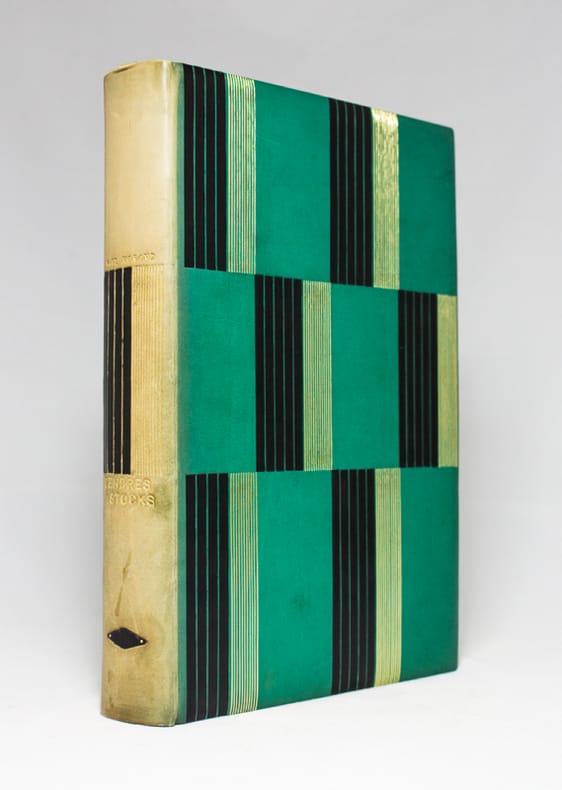
1924réf. 15944Paris, Emile-Paul frères, 1924. Grand in-8 de [6]-XX-[2]-104-[8] pages, couvertures et dos conservés, les deux suites de gravures sont reliées à la suite, avec couvertures et dos. Plein box vert orné d'une composition géométrique formée de bandes noires accolées à une succession de lignes dorées, répétée trois fois sur les plats, une fois au dos. Contreplats décorés de colonnes faites de fines lignes dorées, encadrement mosaïqué de maroquin noir, gardes de soie moirée gris souris. Etui. En haut du premier contreplat, se trouvent, dorés, les prénoms Clarisse Delphine Aurore, qui sont les titres des trois nouvelles du recueil et accessoirement les trois héroïnes. La reliure et l'étui sont signés Andrée et Jeanne Langrand.
réf. 26215Paris, Calmann-Lévy, 1896. In-4°, X-273p. (mal chiffrée 271) Reliure demi-chagrin rouge, dos à nerfs avec titre doré à froid et monogramme R.M. en pied, tête dorée, couverture et dos conservés.
1919réf. 60976Paris: Nrf 1919. Fine. Nrf Paris 1919 16.50 x 22 cm relié First edition one of 70 numbered copies on Lafuma de Voiron and re-imposed in Tellière quarto the only grand papier deluxe copies. Half morocco covers and spine preserved top edge gilt binding probably signed by Ducluzeau. Ex-libris pasted on a pastedown. A nice copy. Nrf unknown
1907réf. 55277les Cahiers de la Quinzaine | Paris 1907 | 13 x 19 cm | broché
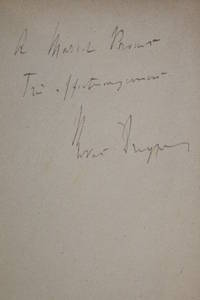
1921réf. 24712Envoi signé à Fernand Divoire Paris, Éditions de la NRF, (30 avril) 1921. 1 vol. (140 x 195 mm) de 282 p. et [1] f. Broché. Édition originale. Envoi signé : « À Monsieur Fernand Divoire, témoignage de vive sympathie, Marcel Proust ».
réf. 24712Paris Éditions de la NRF 30 avril 1921. 1 vol. 140 x 195 mm de 282 p. et 1 f. Broché. . Édition originale. Envoi signé : « À Monsieur Fernand Divoire témoignage de vive sympathie Marcel Proust ». . Ce second volume du cycle Guermantes publié un an après le premier marque un tournant : le décor mondain commence à se fissurer laissant place aux obsessions du narrateur - le deuil le désir le vertige du temps. Les salons aristocratiques deviennent les antichambres du rêve les personnages des effigies troublées. Albertine et Charlus s'installent au coeur du roman prélude aux révélations de Sodome et Gomorrhe qu'il introduit. La fameuse scène du dîner chez les Guermantes y côtoie l'épisode des souliers rouges ou encore les premières hallucinations sensuelles autour d'Albertine annonçant La Prisonnière. La parution du volume est attendue et Proust ne ménage si ses efforts ni sa plume pour faire parvenir des exemplaires à ses proches tout au long de cette fin d'année 1920 le plus souvent sur des exemplaires portant mentions d'éditions comme ici - mais l'exemplaire Divoire est bien sur un exemplaire à la bonne date du 30 avril ce que peu d'entre eux possèdent. On connaît les exemplaires suivants : À Jean Ajalbert Céleste Albaret Roger Allard Walter Berry Antoine Bibesco Jacques-Emile Blanche Léon Blum Mme George Blumenthal Jacques Boulenger Marcel Boulenger Alix Brizon Louis Brun Henry Céard Raymond Clauzel à la Duchesse de Clermont-Tonnerre à Colette Mme de Chevigné Léon Daudet Lucien Descaves Robert Dreyfus Gaston Gallimard André Gide Armand duc de Guiche duc de Gramont Bernard Grasset Reynaldo Hahn Lionel Hauser Abel Hermant Jacques de Lacretelle Valery Larbaud Berthe Lemarié Paul Lombard Charles Malexis L. Martin-Chauffier Clément de Maugny Francis de Miomandre John Middleton Murry Robert de Montesqiou Paul Morand Robert Proust Charles Régismanset Henri de Régnier Marie de Régnier Gérard d'Houville Jacques Rivière Louis de Robert Henri Rochats Jules Romains Robert de Rothschild André Salmon Sydney and Violet Schiff Jean Schlumberger Paul Seippel Paul Souday Princesse Soutzo John C. Squire Madame Straus Gustave Tronche Fernand Vandérem Jean-Louis Vaudoyer. Notre exemplaire est adressé à Fernand Divoire journaliste critique et poète qui participa activement à la vie littéraire du temps dans Comoedia Le Figaro Le Gaulois ou L'Intrinsigeant et dont la bienveillance à l'égard de Proust fut constante. Bon exemplaire cité alors comme « envoi inédit » dans le Bulletin d'informations proustiennes n° 51 2021 p. 170. Mention de 2e édition. Paris, Éditions de la NRF, (30 avril) 1921. 1 vol. (140 x 195 mm) de 282 p. et [1] f. Broché. unknown
1907réf. 55277Paris: les Cahiers de la Quinzaine 1907. Fine. les Cahiers de la Quinzaine Paris 1907 13 x 19 cm broché First edition on current paper. Small gaps in the head and foot of the back some bites and clear spots on the boards. Exceptional autograph dedication signed by Robert Dreyfus to his friend: ""Marcel Proust. Very affectionately. Childhood friends and students of Lycée Condorcet Marcel Proust and Robert Dreyfus founded the magazine Le Banquet in 1892 with some of their classmates including Daniel Halévy. Will appear eight numbers that contain the first steps in literature of one and the other. In 1907 Dreyfus when he wrote this letter to Proust imbued with deep sympathy is a noted author for his essays: The Life and the prophecies of Count Gobineau published two years earlier earned him a prize from the French Academy . Proust meanwhile is then working on the writing of his great work In Search of Lost Time but still has a modest reputation as a writer. The friendship between the two men crosses the decades as evidenced by their correspondence started in 1888 and continued until 1920. Well inspired Dreyfus will preserve preciously the letters of Proust who after the death of this one will allow him to write a precious book for the Proustians Souvenirs on Marcel Proust accompanied by unpublished letters 1926: ""Is it a consolation to think: if he had been better . he would not have written these letters where the flares of his mind still sparkle. "" Copy of Marcel Proust's library donated by his childhood friend Robert Dreyfus. les Cahiers de la Quinzaine hardcover
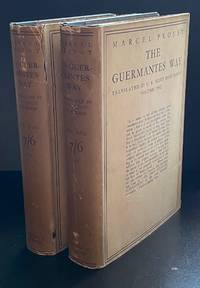
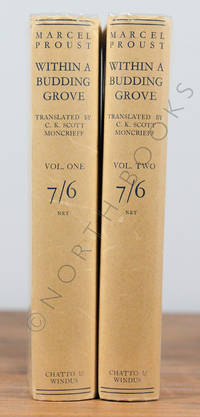
1925réf. 122334455673A 2 Vols. set : The First UK printings published by Chatto and Windus London in 1925. Translated by C.K. Scott Moncrieff. From the personal collection of literary agent David Higham with his neat penned name to the front blank end-papers of both volumes. Both BOOKS are in Very Good condition with the publisher's original cloth and top-stain still present. Gilt titling to the spines. Many pages remain unopened. Slight toning to the text-block and page edges. Some very mild spotting to the text-block. The WRAPPERS are in Very Good condition. Some toning especially to the spines folds and to the edges in both wrappers. Vol.1 wrapper has a small marginal tear to the rear lower edge and rear lower flap fold. Mild edge-wear to the spine ends. Vol.2 wrapper has a 5cm closed tear along the upper front spine fold and a much larger closed tear across the front panel. The extremities are lightly worn with a tiny area of loss to the lower front spine fold. Despite the description both copies present very well in the removable Brodart archival covers. The third title in the 'Remembrance of things past' series. Extremely scarce with the wrappers with only one such set having appeared at auction in the last 40 years. Collectible. More images available on request. Ashton Rare Books welcomes direct contact. Chatto and Windus, London hardcover
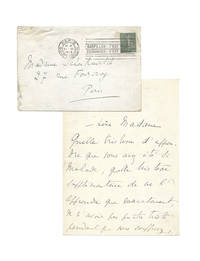
1918réf. Proust21PROUST Marcel 1871-1922 Autograph letter signed " Marcel Proust " to Marie Scheikévitch Paris 21st November 1918 4 p. in-8° With autograph envelope stamped and obliterated Clipper mark previously mounted see scans Having just been informed that Marie Scheikévitch had survived the Spanish flu Proust hastens to write to the lady who had once helped him with the publication of Swann's way " Chère Madame Quelle tristesse d'apprendre que vous avez été si malade quelle tristesse supplémentaire de ne l'apprendre que maintenant de n'avoir pu être triste pendant que vous souffriez puisque je ne savais rien. Comment ne l'ai-je pas su Probablement parce que j'ai vu si rarement la Princesse Soutzo et au milieu de tant de monde et c'est elle qui vient de me l'apprendre. C'est d'une manière rétrospective maintenant que vous êtes guérie qu'il me faut par l'imagination remonter en sens inverse de votre calvaire dormir ou plutôt ne pas dormir vos nuits de fièvre. La condition humaine est si perfidement méchante que comme si ce n'était pas assez pénible pour moi d'avoir à m'attrister sur vous avec mon amitié d'aujourd'hui le passé de votre souffrance me rend pour un moment mon amitié plus vive qu'il y a un an. C'est avec celle-là que je compatis à tous les malaises que vous avez eus ce qui me force à donner une force maximum de compassion alors que celle que dicterait le feuillet actuel du calendrier de mon amitié serait déjà assez triste ! Enfin vous êtes guérie Dieu merci. Et quelles jolies choses vous avez dû penser durant les heures délicieuses et neuves de convalescence. Votre respectueux ami Marcel Proust " An intimate of Proust who did much effort in using her network for the publication of the first volume of The Search : Marie Scheikevitch 1882-1964 was the daughter of a wealthy Russian magistrate and art collector who settled in France in 1896. George D. Painter described her as "one of the smartest and most prominent ladies of the new generation." Patron of artists and writers she frequented salons and then founded her own. She was friends with Jean Cocteau Anna de Noailles Reynaldo Hahn the Arman de Caillavet family among others. A feeling of singular quality united Marcel Proust to Marie Scheikévitch. Although they met briefly in 1905 in Mme Lemaire's salon it was in 1912 that they really get to know eachother. There followed a correspondence that lasted until 1922 the year of the writer's death. Seeing each other "almost every day" as she would later say friends writing all the less as they see each other more we know only 28 letters from Proust addressed to her. She opened to him the doors of her salon frequented by all that Paris had of illustrious personalities in literature and arts so that he paid tribute to her in Sodome et Gomorrhe under the veil of Madame Timoléon d'Amoncourt "a charming little woman of a spirit like her beauty so ravishing that only one of the two would have succeeded in pleasing ". A fervent admirer of the writer she spent a great deal at the time of the publication of the first volume of The Search trying everything to put Proust in touch with the Parisian personalities she considered most capable of helping him. It was she who recommended him to her lover Adrien Hébrard the influential director of the newspaper Le Temps to obtain the famous interview of November 12 1913 by Élie-Joseph Bois on the eve of Swann's publication: This was the first significant article published in the major press and devoted to The Search. To thank her Proust sent her a major inscription recently acquired by the BnF when Swann was published. Born Hélène Chrissoveloni Princess Soutzo 1879-1975 was introduced to Marcel Proust on March 4 1917 at the Larue restaurant through Paul Morand whom the latter would marry ten years later in 1927. The meeting between Proust and the princess remained memorable the writer having suggested that she bring together the Poulet quartet at the Ritz to perform César Franck Journal d'un attaché d'ambassade 1916-1917 1963 Gallimard 1996 p. 171-172; Journal inutile t. II p. 131. We include: An autograph carte-de-visite from Hélène Soutzo Chrissoveloni madame Paul Morand An invitation for tea time N.p.n.d 1 p. in-24° With autograph annotation: " Tea Monday 8th June between 5 and 8 " see scan The Morands lived at 3 avenue Charles Floquet in the 7th arrondissement of Paris from 1927 to 1976. Provenance: Catalogue Andrieux 12 mars 1928; n°190 Then private collection Bibliography: Lettres à Madame Scheikévitch 1928 p. 107-108 Correspondance générale t. V p. 259-260 n°XXIV Correspondance Kolb t. XVII n°203 Marcel Proust II – Biographie Jean-Yves Tadié Folio pp. 391-392
1924réf. 29520London: Chatto & Windus 1924. Hardcover. First Edition First Impression. 5 x 7.25in. 396pp.; 356pp. Publisher's cloth boards with gilt titling. Blue top-stain. Both volumes are in VERY GOOD condition in Near Fine dust jackets protected in removable archival covers. The books themselves show the slightest shelf rubbing of the extremities spines lightly tanned endpapers evenly and naturally toned former owner name neatly on each endpaper otherwise they remain Fine having been exceptionally well maintained. The rare dust jackets show the spines very lightly rubbed and very lightly tanned a small spot of discoloration on the spine of Vol. 1 topmost of the spines nominally shelf rubbed otherwise remain exceptionally bright colorful and distinct. As fine an example as one could hope to find. As pictured. Chatto & Windus hardcover
réf. L16218Mercure de France, 1906. In-12 br. " Collection d'auteurs étrangers ". Les deux conférences de John Ruskin, réunies sous le titre Sésame et les Lys, ont été publiées en 1865. La traduction, les notes et la préface : Sur la lecture sont de Proust. Année de l'E.O. Envoi autographe de Marcel Proust au Docteur Émile Gagey. Le Docteur Gagey a loué, à la grande consternation de Proust à cause du bruit, l'entresol de 102 boulevard Haussmann, Proust habitait au premier étage directement au-dessus. Dans une lettre à Mme. Catusse [Fut la plus chère amie de la mère de Proust] d'octobre 1906, Proust a écrit : " ma tante ayant eu l'idée qui n'a pas mon approbation entière de louer l'entresol (ce n'est pas fait mais cela va l'être) du 102, au Docteur Gagey (?), cet homme demande des travaux fous, et il est probable que cela va me forcer à prolonger mon charmant hivernage. De plus (ceci tou à fait entre nous) comme nous n'avons pas le droit de louer à un médecin, je suis convaincu qu le locataire du deuxième que malgré mes prières on n'a pas voulu consulter, va nous faire un procès, etc..." En février 1907 il la écrit " Les travaux du locataire sont presque achevés ".
1896réf. 22194Paris, Au Ménestrel - Heugel et Cie, 1896. 4 plaquettes reliées en un album grand in-4, demi-percaline verte, à la Bradel, pièce de titre en long, non rogné. La reliure est signée Faligant.
1907réf. 1240261907. Paris: after October 7 1907. 3 pp. sm. 8vo 4 1/2 x 7 ins. Written in ink slightly faded on paper watermarked "AU PRINTEMPS PARIS NOUVEAU PAPIER FRANCAIS". § A fine personal letter written by Proust to Marie-Marguerite Catusse née Bertin his mother's dearest friend and his own close friend and confidante especially after his mother's death. In the letter he describes reading about a recent duel in which a witness was named as M. Catusse and which he briefly and wrongly supposed to be her son Charles Catusse. Later in the letter he makes a wonderfully coy reference to Lucien Daudet: "J'ai recu directement des lettres très nobles d'un sentiment très élevé d'une extreme intelligence de Lucien Daudet. Je vous assure qu'il n'est pas du tout comme vous croyez." A certain piquancy is added to the letter when it is remembered that ten years earlier in 1897 Proust had himself fought a duel with writer Jean Lorrain after Lorrain publicly questioned the nature of Proust's relationship with Lucien Daudet. "Monomotopa" and the verse quoted are from a fable of La Fontaine. The letter was recorded by Philip Kolb in his Correspondance de Marcel Proust Vol. VII 1907 p. 291 Plon 1981: n. 163 à Mme Catusse. --- The letter reads in full: Chère Madame Tout simplement j'avais lu dans un journal qu'un M. Catusse que j'ai supposé être Charles avait été témoin d'un duel entre deux jeunes gens. Sachant que dans ce cas les mères s'alarment facilement et craignent que de témoin on ne risque de passer à celui de combattant je m'étais levé comme l'ami de Monomotapa dans La Fontaine et j'avais couru. "J'ai craint qu'il ne fût vrai je suis vite accouru. Ce maudit songe en est la cause. » Votre respectueux ami Marcel. Je n'ai jamais reçu la carte dont vous me parlez et la regrette bien. J'ai reçu directement des lettres très nobles d'un sentiment très élevé d'une extrême intelligence de Lucien Daudet. Je vous assure qu'il n'est pas du tout comme vous croyez. -----. unknown books
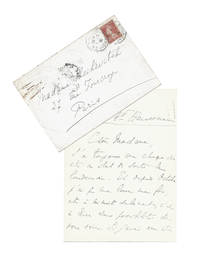
1915réf. Proust14PROUST Marcel 1871-1922 Autograph letter signed " Marcel Proust " to Marie Scheikévitch Paris 102 boulevard Haussmann 1st February 1915 post mark 4 p. in-8° in black in on laid paper With autograph envelope Paper clip marks on upper margin and envelope see scans With compunction Proust prefers to suffer in bed rather than lead an "easy life" and thinks of the soldiers mobilized at the front " Chère Madame J'ai toujours cru chaque soir être en état de sortir le lendemain. Et depuis octobre j'ai pu me lever une fois et à minuit seulement1 c'est à dire sans possibilité de vous voir. Si j'avais cru être aussi incapable de bouger je vous aurais écrit plus tôt. Mais je ne voulais pas vous répondre qu'il m'était impossible de fixer d'avance un jour mes crises étant si imprévues parce que j'espérais que cela allais devenir possible. L'expérience du passé ne m'a pas découragé d'espérer un avenir qui ne lui ressemble pas. Et même maintenant au moment où je vous écris cette lettre j'espère encore qu'une chance me permettra de vous la porter. En attendant je ne cesse de penser à vous. Je mets tout mon espoir dans votre fils2 et je pense que seule au monde sa faiblesse aura la force de vous aider à porter votre croix. Tout ce que vous me dites du frère que vous avez perdu et que je ne savais pas rend mon chagrin plus vif encore en me faisant mieux imaginer votre désespoir3. Mais la décision de votre plus jeune frère me navre4. Je l'admire. Mais j'aurais préféré que sa douleur se consacrât à la vôtre au lieu de l'accroître d'une telle angoisse. En attendant qu'on se décide à me faire passer un conseil de contre-réforme qui ne saurait je crois tarder je bénis la maladie de me faire souffrir car si cette souffrance ne sert à personne du moins elle m'évite celle plus grande que me donnerait le bien-être la vie facile pendant que souffrent et meurent tous ceux que ma pensée ne quitte pas. Quand vous aurez le temps de dicter pour moi une une ligne où vous me diriez "mon frère va bien et est moins exposé mon fils va bien j'ai du courage" vous rendrez bien heureux votre respectueux admirateur. Marcel Proust " 1 – Proust went to Madame Edwards's house that evening at midnight as he states in a letter to Lucien Daudet sent the night before. 2 – André Carolus-Duran 1902-1972 son of Marie Scheikévitch 3 – This is one of Mrs. Scheikovich's brothers Victor Scheikovich 1885-1914 a lawyer at the Court of Paris who fell a few days after being proposed as captain on 15 September 1914 at Tracy-le-Val 4 – Here is the youngest brother of Mrs. Sheikevich Valentin Sheikevich. He had left as medical officer of a battalion of cyclists attached along the way to General Lanrezac's staff and had just been sent to the front line at his request as surgeon-major of the 2nd Infantry Battalion Mangin division. He was to be cited at Neuville-Saint-Vaast. Proust and the War: This letter was a direct follow-up to the one sent to Marie Scheikovich three weeks earlier on 9 January. Proust was shocked to learn of the death of Victor Scheikévich the younger brother of his correspondent who had been killed at the front in the early hours of the war. He is sorry to know that her younger brother Valentin Sheikevich has also been mobilized. When the war came the writer was in the middle of writing the sequel to Swann's way which had been published in November 1913. He was not called to the front because of illness and followed the progress of the conflict from his Parisian apartment at 102 boulevard Haussmann. The conflict as we know had a direct impact on the course of his novel. He turned the church of Combray into a German observatory which was destroyed by the French and the English. "Proust was following closely the entire duration of the conflict in the first place to study the behavior of the society that he frequented during the war. He reads seven newspapers a day … war is a constant concern" Nathalie Mauriac Dyer An intimate of Proust who did much effort in using her network for the publication of the first volume of The Search : Marie Scheikevitch 1882-1964 was the daughter of a wealthy Russian magistrate and art collector who settled in France in 1896. George D. Painter described her as "one of the smartest and most prominent ladies of the new generation." Patron of artists and writers she frequented salons and then founded her own. She was friends with Jean Cocteau Anna de Noailles Reynaldo Hahn the Arman de Caillavet family among others. A feeling of singular quality united Marcel Proust to Marie Scheikévitch. Although they met briefly in 1905 in Mme Lemaire's salon it was in 1912 that they really get to know eachother. There followed a correspondence that lasted until 1922 the year of the writer's death. Seeing each other "almost every day" as she would later say friends writing all the less as they see each other more we know only 28 letters from Proust addressed to her. She opened to him the doors of her salon frequented by all that Paris had of illustrious personalities in literature and arts so that he paid tribute to her in Sodome et Gomorrhe under the veil of Madame Timoléon d'Amoncourt "a charming little woman of a spirit like her beauty so ravishing that only one of the two would have succeeded in pleasing ". A fervent admirer of the writer she spent a great deal at the time of the publication of the first volume of The Search trying everything to put Proust in touch with the Parisian personalities she considered most capable of helping him. It was she who recommended him to her lover Adrien Hébrard the influential director of the newspaper Le Temps to obtain the famous interview of November 12 1913 by Élie-Joseph Bois on the eve of Swann's publication: This was the first significant article published in the major press and devoted to The Search. To thank her Proust sent her a major inscription recently acquired by the BnF when Swann was published. Provenance: Catalogue Andrieux vente du 12 mars 1928 n°175 Bibliography: Lettres à Madame Scheikévitch 1928 p. 51 – 52 Correspondance Kolb t. XIV n°15 Source: Marcel Proust II – Biographie Jean-Yves Tadié Folio pp. 391-392
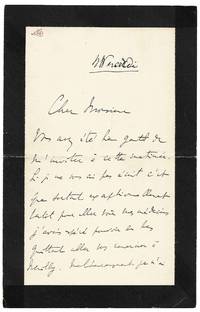
1904réf. Proust29PROUST Marcel 1871-1922 Autograph letter signed " Marcel Proust " to Robert de Montesquiou N.p September 7 1904 4 pp. in-8° mourning paper Montesquiou's stamp on top left corner Tears on folds annotation in pencil on fourth page Proust makes a scathing assessment of Italy and the preservation of its heritage in an astonishing letter to his mentor " Cher Monsieur Vous avez été bien gentil de m'inviter à cette matinée. Si je ne vous ai pas écrit c'est que sortant exceptionnellement tantôt pour aller voir mes médecins j'avais espéré pouvoir en les quittant aller vous remercier à Neuilly. Malheureusement je n'ai été libre qu'à 7 heures. J'aurai ces jours-ci par Reynaldo de beaux récits qui préciseront mes regrets d'après le compte rendu du Figaro du lendemain Hahn a ravi l'auditoire avec ses compositions. Et dire que c'est peut-être la seule fois que vous m'inviterez ! Mes rendez-vous avec ces médecins étaient pris et comme j'étais souffrant cela m'a fait de sortir beaucoup plus de mal qu'ils ne me feront jamais de bien. On m'a parlé avec la vague déformation que prennent les bruits quand ils arrivent jusqu'à ma chambre de malade des conférences que vous feriez en Italie. Malgré ce que vous m'avez dit en faveur de l'évangélisation plus efficace d'une terre inesthétique comme l'Amérique je pense que les " Conférences d'Italie " seront plus glorieuses encore. La véritable terre inesthétique n'est pas celle que l'art n'ensemença pas mais celle qui couverte de chefs-d'œuvre ne sait ni les aimer ni même les conserver et laisse les Tintoret s'effacer peu à peu sous la pluie quand elle ne les repeint pas entièrement qui détruit pièce à pièce ses plus beaux palais pour en vendre les morceaux très cher par cupidité ou pour rien par ignorance de leur valeur. La vraie terre inesthétique n'est pas la terre vierge en qui l'art habite du moins par le désir qu'elle en a mais la terre morte où l'art n'habite plus par la satiété le dégoût et l'incompréhension qu'elle en a. Et je suis sûr que votre Épitre aux Romains ne sera pas moins belle que votre Message à l'Église de Philadelphie allusion au voyage de Montesquiou aux États-Unis l'année précédente. Votre respectueux Marcel Proust " The missed meeting by Proust seems to be the morning that Montesquiou gave at the Pavillon des Muses in honor of the Italian writer Mathilde Serao on Wednesday December 7 1904. This morning was announced in Le Figaro of Tuesday December 6 1904 the report was given the day after in the same newspaper. It is not surprising that Proust here insistently expresses strong feelings about Italy and its most famous Venetian painter he whose translation of Ruskin's The Bible of Amiens had just been published at the beginning of 1904 in the Mercure de France. Touched by the work of the English author which he discovered in 1898 thanks to his friend Robert de Billy Proust undertook several "Ruskinian" pilgrimages at the same time as he was working on the translation helped by his mother Jeanne Weil. He went to the north of France to Amiens and especially to Venice. He visited the lakeside city twice in 1900 once in April and again in November. The country its history its works… Proust's fascination with Italy is not only due to the chapter he devotes to it in Le Temps retrouvé. It first emanates significantly through Ruskin's work. Had the writer been aware of Tintoretto's monumental Paradise clumsily "detached" from the Doge's Palace in 1903 when he writes an unflattering critique of the way Italy preserved the paintings of its masters Or was it an observation of his own experience during his two trips to Venice and its surroundings In any case the craze among American collectors for European paintings those of "the virgin land in which art lives" had been in full swing for many years already. Provenance: Robert de Montesquiou Robert Proust who bought all of his brother's letters after Montesquiou's death Suzy-Mante Proust's estate Bibliography: Correspondance générale t. I éd. Robert Proust et Paul Brach Plon p. 179-180 n°CLXXIV incorrect transcription on one word Correspondance t. IV éd. Philip Kolb Plon n°202
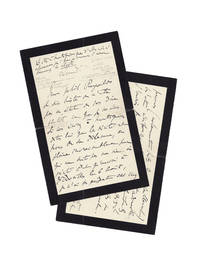
1907réf. Proust15PROUST Marcel 1971-1922 Autograph letter signed " Marcel " to Reynaldo Hahn N.p.n.d " Monday " 7th January 1907 8 p. in-8° in black in on mourning paper two bi-folios watermark " L. T. & C° " Small annotation in pencil in the upper margin of the first page period fold marks Slight discharges of ink on the first bi-folio testifying to a folding by Proust when the ink was not yet dry. A precious letter to Reynaldo Hahn his "Bunchnibuls" about his relationship with Robert de Montesquiou and the latter's late lover Gabriel de Yturri the one who inspired Proust for the character of Jupien in The Search " Mon petit Reynaldo Je suis triste de n'être pas en état de vous dire plutôt ce que je vous écris. Si vous écrivez à Montesquiou dites-lui que la vérité est hors de son dilemme en pleine invraisemblance pour qui ne sait pas ma vie. La vérité c'est qu'arrivé à Versailles le 6 Août je n'ai pas pendant ces cinq mois été une seule fois capable de sortir. Je n'ai pas été une seule fois au Château pas une seule fois à Trianon mais du reste vous savez bien tout cela pas une seule fois au cimetière des Gonards. Si je n'avais eu qu'un seul jour de bon je serais allé plutôt qu'au Château et à Trianon aux Gonards surtout M. de Montesquiou n'étant pas à Versailles ne pouvant pas y aller j'aurais eu un sentiment très doux en me disant que je le remplaçais que je venais de sa part auprès du pauvre Yturri comme lui si souvent vint de la part de M. de Montesquiou auprès de moi. Et puis je savais par vous par d'autres que c'était une tombe unique d'émotion et de beauté2. Et comme je ne pense plus guères qu'aux tombeaux j'aurais bien voulu voir ce que Montesquiou avait fait là et comment son goût avait réussi à donner plus de noblesse encore à sa douleur. Quand il sera revenu à Paris ou à Versailles je me soignerai pour tâcher de le voir un soir mais outre que c'est impossible pour tout le monde avec lui la difficulté avec lui3 grandit encore car c'est la personne du monde avec qui je me gêne le plus dans le mauvais sens du mot. Et même s'il se prête pour une fois à mes heures la possibilité d'une crise intempestive m'empêchera d'oser lui donner un rendez-vous que j'aimerais mieux mourir que rompre tandis que d'autres comprendraient. Vous pouvez lui dire que j'ai eu une grande joie à recevoir les Hortensias bleus que je n'avais jamais tant aimés4. Les pièces du début m'ont paru plus exquises qu'autrefois. Quant à l'Ancilla dont je vous ai appliqué ce fragment dernièrement5 c'est une chose admirable un magnifique pendant de La servante au grand cœur6. Il me semble mais je n'en suis pas sûr que la pièce à Yturri a été retouchée et peut'être pas améliorée. Elle reste peut'être ce qu'il a jamais écrit de mieux mais je ne me rappelle pas que la couronne fût verte la première fois et je ne sais pas si c'est mieux ainsi7. Inutile de lui dire cela d'abord parce qu'il s'en ficherait complètement ensuite parce que c'est un doute très vague et que je ne suis pas du tout sûr d'avoir raison. Avez-vous été interrogé par les Lettres au sujet de Shakespeare Tolstoï8. Je suis trop souffrant pour répondre je ne peux pas vous dire ce que rien qu'une lettre comme celle-ci m'épuise. Plusieurs personnes notamment Me G. de Caillavet m'ont écrit que votre Noël était adorable9. J'aurais bien voulu l'entendre Bunchnibuls et suis triste de n'avoir pas pu. Dites à M. de Montesquiou que je n'ai même pas pu aller à l'enterrement de mon pauvre oncle10. Tendrement à vous Marcel. Vous pouvez dire à M. de Montesquiou que je n'ai pas été une seule fois assez bien pour voir Miss Deacon qui habitait le même hôtel11. Dites à Montesquiou que d'ailleurs cela n'intéressera pas que je commence à aimer beaucoup les objets12. " 1- Letter dated "Monday"; must date either from Monday 31 December 1906 or from Monday 7 January 1907: allusion to the news that Proust had of a performance of the recipient's Christmas see infra note n°9 2- In a letter to Montesquiou dated November 18 1905 Proust apologized for not having been able to attend the inauguration of the monument in honor of Gabriel de Yturri: " I would have liked my strength to allow me to unite with the little group… ". Robert de Montesquiou died on 11 December 1921 and was buried in the same vault as his companion. 3- By slip Proust repeats "with him" 4- Les Hortensias bleus. Definitive edition with portrait of the author after a painting by Laszlo. Paris 1906. It is the first volume of the poet's definitive work published in December 1906 by Georges Richard 7 rue Cadet. The first edition of the work had appeared in 1896. 5- In a letter to the same recipient dated December 13 1906 Proust quoted some verses from Montesquiou that he had slightly modified. 6- Baudelaire Les Fleurs du Mal Tableaux parisiens vol. 1 ed. Claude Pichois Pléiade p. 100: La servante au grand cœur dont vous étiez jalouse Et qui dort son sommeil sous une humble pelouse Nous devrions pourtant lui porter quelques fleurs. … 7- An allusion to the sonnet In Memoriam which Montesquiou placed after the preface to the collection in question a piece entitled In Memory of Gabriel de Yturri. It begins: Mes sentiments pour Vous sont fiers d'être éternels; Ils ont assez duré pour avoir fait leur preuve Sérieux dans la joie et sereins sous l'épreuve Et sans jamais mentir aux pactes fraternels. Chacun de nous eut droit à sa verte couronne: La mienne je l'espère et l'attends sans émoi; La vôtre si d'avance ici je vous la donne Recevez-la sans trouble en la tenant de moi. 8- The magazine Les Lettres had asked some French writers and artists for their opinion on this judgment of Tolstoy reported by Georges Bourdon in his book Listening to Tolstoy 1904 9- Allusion to the performance given at the home of Mrs. Madeleine Lemaire on New Year's Eve. It is apparently the Pastorale de Noël a mystery in one act by Arnous Grevan adapted by Leonel de La Tourasse and Taurines with piano accompaniment by Reynaldo Hahn. 10- This is Georges Denis Weil brother of Jeanne Weil-Proust. The funeral took place on August 27 1906. It was Robert Proust Marcel's brother who went there to lead the mourning. 11- Gladys-Mary Deacon daughter of Edward Parker Deacon and Florence Baldwin 12- A play on words it seems alluding to both trinkets and Montesquiou's poem entitled Objets. Cf. Les Hortensias bleus LXXVI of the 1896 edition; LXXII of the definitive edition of 1906. We know Hahn's letter to Montesquiou now in the Montesquiou collection at the BnF sent the next day or the day after in which he forwards Proust's request: "Dear Sir I have communicated your letter to Marcel. I am sending you his reply this letter. I haven't seen him for several days. It is alas all too true that not once did he go out at Versailles … " It was at Madeleine Lemaire's house on April 13 1893 that Marcel Proust met Robert de Montesquiou. The latter portrayed as the Baron de Charlus in The Search a character of irascible character and sharp verve made a completely different impression on Proust during this first meeting. A dandy with a pure profile a fascinating look… Proust fell under the admiration of Montesquiou and a current of sympathy was established between them. . This admiration was followed by a friendship that lasted until the last days of the dandy-poet in 1921. Montesquiou is known to have had only one affair: that with his much-loved and mourned secretary Gabriel de Yturri. He died of diabetes on July 6 1905. This is a remarkable testimony of intersecting relationships each of the people mentioned here inspiring Proust for major figures in The Search. Provenance: Autographes littéraires et historiques Lettres de Marcel Proust Marie Nordlinger Drouot 15th – 17th December 1958 lot 188. After Reynaldo Hahn his cousin Marie Nordlinger who had helped Marcel Proust in his translation of Ruskin inherited it. Bibliographie : Correspondance t. VII Kolb Plon n°5 Lettres à Reynaldo Hahn éd. Philip Kolb Gallimard LXXVIII Source : Marcel Proust I – Biographie Jean-Yves Tadié Folio pp. 283-295
1904réf. 46291Mercure de France | Paris 1904 | 12 x 19 cm | relié
1919réf. 52983Nrf | Paris 1919 | 13 x 19 cm | broché sous chemise-étui