SAINTE-BEUVE (Charles-Augustin)Livre Rare Book

2 488 résultats
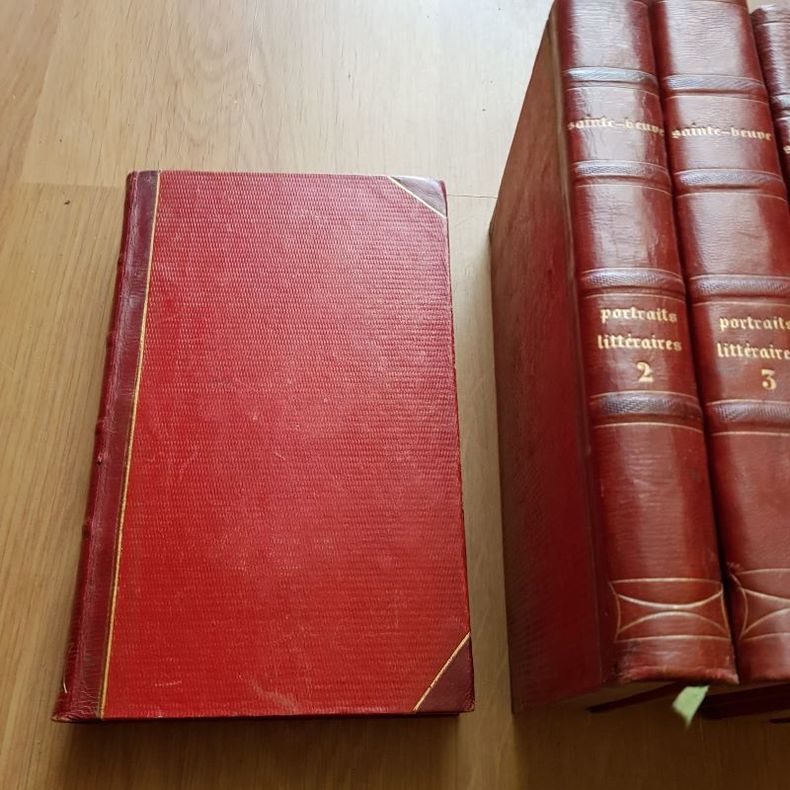
réf. 19617Paris, Urbain Canel et Levavasseur, 1830. In-12, XXXII-237 pp., demi-chagrin écrasé à coins vert, filets dorés sur les plats, dos à nerfs orné de caissons dorés, tranches dorées, couverture conservée (insolation, petites épidermures, petites rousseurs éparses).
1837réf. 21208Paris Eugne Renduel 1837 In-12, demi-maroquin prune coins, plats de papier mouchet orns de filets dors, dos nerfs; doublures et gardes de papier peigne, tte dore, non rogn.Edition originale. Exemplaire enrichi d'une lettre autographe date et signe de l'auteur.
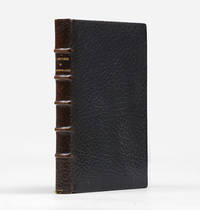
1842réf. 90713Paris: Imprimerie de H. Fournier et Cie 1842. From the library of Victorien Sardou: a rare surviving example of Sainte-Beuve's repudiated title First collected edition in a presentation binding. Charles Augustin Sainte-Beuve published his biographical portraits anonymously and for private circulation among his circle of friends. For obscure reasons he had second thoughts and destroyed most copies. It is said that he did not keep a copy for himself and that his bibliographer Paul Chéron a librarian the Bibliothèque Nationale only became aware of its existence through a bookseller who had brought a copy back from England. From the library of French playwright Victorien Sardou 1831-1908 with the bookplate from his library at Château de Marly on the front pastedown. Sardou is the author of many popular 19th-century plays including La Tosca on which Puccini based his opera. Laid in are four early 20th-century bibliographical documents and press cuttings. Octodecimo 174 x 114 mm. Fine presentation binding by S. David in black full levant morocco spine in compartments with gilt titles direct top edge gilt turn-ins gilt with foliate tools and stars at corners marbled endpapers green silk bookmark. Early 20th-century press cutting and bookplate on one initial blank. Extremities lightly rubbed binder's blanks faintly dampstained foxing throughout. An excellent copy. unknown
1857réf. 45017Garnier frères | Paris 1857 | 11.50 x 18.50 cm | 15 volumes reliés
réf. 17185Paris, Eugène-Renduel, 1836-1839. 5 vol. in-8°. t. I (1836) : (2) ff.-IV-559 pp (texte et appendice).-[1] p. de table ; t. II (1836) : (2) ff.-VIII-493 pp.-(1) f. ; t. III (1836) : (2) ff.-573 pp.-(1) f. ; t. IV (1839) : (2) ff.-II-489 pp.-(1) f. ; t. V (1839) : (2) ff.-553 pp.-(1) f. Demi cuir de Russie rouge à coins, dos à faux nerfs orné de filets dorés (rel. ép.).
1834réf. 724Paris, Renduel, 1834 ; 2 tomes en un vol. in-8 de 335 pp. ; 291 pp., demi-maroquin à long grain bordeaux à petits coins, dos à 4 nerfs orné de filets dorés, tête dorée (Bernasconi).
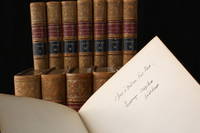
1857réf. 45017Paris: Garnier frères 1857. Fine. Garnier frères Paris 1857 11.50 x 18.50 cm 15 volumes reliés Third edition first in parts. Contemporary half caramel-colored calf over marbled paper boards spine in six compartments with gilt dots and double gilt compartments richly gilt with decorative motifs dark red morocco title pieces and dark green volume labels some headpieces slightly rubbed headpiece of volume four repaired some joints cracked and repaired gilt fillet frame to covers marbled endpapers and pastedowns some corners bumped top edge gilt. Handsome autograph inscription signed by Charles Augustin Saint-Beuve to Madame Paul Huet the wife of the noted Romantic painter and friend of Victor Hugo. Manuscript ex donos of Pierre Jean David d'Angers' grandson to start of each volume. A little spotting sometimes heavy to some leaves. Garnier frères hardcover
réf. 22283Paris, Eugène Renduel, Editeur-Libraire, rue des Grands-Augustins, 1834. 2 volumes in-8, demi-chagrin rouge à coins, à la Bradel, non rogné, dos lisse, titre, tomaison et date en lettres dorées (Reliure signée L. Pouillet). (sans les couvertures et les dos). Tome 1 : 335 pp. y compris le faux-titre et le titre (au V° errata). Tome 2 : 291 pp y compris le faux-titre et le titre (au V° errata).
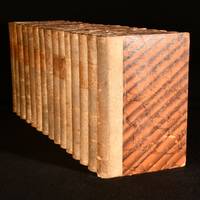
1850réf. 927T12Paris: Garnier Freres c1850-1880. Vellum. Very Good. 7" by 4.5". None. A fifteen volume set of the Causeries du Lundi or "Monday Chats" of French literary critic Charles Augustin Sainte-Beuve in the original French. French. Complete in fifteen volumes. Mixed edition with volume fifteen being a first edition volume thirteen being a second edition and all other volumes being third editions. A series of informal essays and topical columns originally published as the author's "Monday chats" in the newspaper Le Constitutionnel. This set contains critical and biographical essays on literary topics regarding French and European authors. Sainte-Beuve provided details on an author's character background appearance education religion and friendships creating a well-rounded view of the subject before beginning his critique of their work. These factors developed his style of criticism over a wide range of genres in ancient and contemporary literature. Published weekly from 1849 to 1869 the essays proved to be very popular and were collected in two sets the fifteen-volume Causeries du Lundi originally released from 1851 to 1862 and the thirteen-volume Nouveaux Lundis originally released from 1863 to 1870. Written by Charles Augustin Sainte-Beuve a French literary critic. In the original quarter paper vellum binding with marbled boards. Externally smart with rubbing and light bumping to the extremities. Fading and discolouration to the spine as is typical with ageing. The odd small mark to the boards with spine labels detached. Small cracks to the spine of volume fifteen. Internally firmly bound. Pages are very bright with the odd small spot and age toning to the endpapers. Very Good Garnier Freres hardcover
1832réf. 58440Eugène Renduel | Paris 1832-1839 | 14 x 22.50 cm | 5 volumes reliés
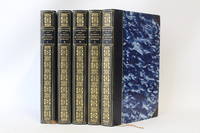
1832réf. 58440Paris: Eugène Renduel 1832. Fine. Eugène Renduel Paris 1832-1839 14 x 22.50 cm 5 volumes reliés First edition the first volume being at the right date of 1832 which is very rare according to Clouzot. Binders in half navy blue morocco navy corners smooth back decorated with cartridges decorated with golden floral friezes golden dates in tails gilt fillets on the plates of marbled paper guards and contreplats of handmade paper blankets and back preserved elegant bindings in the romantic style signed by Champs. Rare and pleasant copy set in a perfect romantic binding of Champs. Eugène Renduel unknown
1834réf. 70707Paris Renduel 1834 2 vol. relié 2 vol. in-8, demi-veau glacé framboise à coins, dos à nerfs, pièces de titre et de tomaison de veau noir, filets dorés, décor central de fleurons et arabesques à froid, couvertures et dos conservés, non rognés, étui bordé (Noulhac), 335 et 291 pp. Édition originale de l'unique roman publié par Sainte-Beuve qui, pour s'inspirer largement de sa liaison avec Adèle Foucher, lui valut la disgrâce de Victor Hugo, le surnommant "Sainte-Bave". Salué néanmoins par beaucoup de ses contemporains et notamment George Sand et Michelet, Volupté reste un classique du roman d'apprentissage en pleine période romantique. Ainsi, deux ans plus tard, Balzac n'eut aucun scrupule à s'emparer de ce matériau littéraire pour le refondre sous forme de roman épistolaire dans Le Lys dans la vallée. Notre exemplaire est enrichi d'un rare envoi de l'auteur à son ami Jean-Jacques Ampère, son collègue à la Revue des Deux Mondes, à l'Académie française et à la Bibliothèque Mazarine dont ils furent tous deux conservateurs. Très bel exemplaire à toutes marges et finement relié, avec ses fragiles couvertures et dos conservés, sans lesquels on pourrait croire l'oeuvre parue anonymement.
1834réf. 70707Paris Renduel 1834 2 vol. relié 2 vol. in-8, demi-veau glacé framboise à coins, dos à nerfs, pièces de titre et de tomaison de veau noir, filets dorés, décor central de fleurons et arabesques à froid, couvertures et dos conservés, non rognés, étui bordé (Noulhac), 335 et 291 pp. Édition originale de l'unique roman publié par Sainte-Beuve qui, pour s'inspirer largement de sa liaison avec Adèle Foucher, lui valut la disgrâce de Victor Hugo, le surnommant "Sainte-Bave". Salué néanmoins par beaucoup de ses contemporains et notamment George Sand et Michelet, Volupté reste un classique du roman d'apprentissage en pleine période romantique. Ainsi, deux ans plus tard, Balzac n'eut aucun scrupule à s'emparer de ce matériau littéraire pour le refondre sous forme de roman épistolaire dans Le Lys dans la vallée. Notre exemplaire est enrichi d'un rare envoi de l'auteur à son ami Jean-Jacques Ampère, son collègue à la Revue des Deux Mondes, à l'Académie française et à la Bibliothèque Mazarine dont ils furent tous deux conservateurs. Très bel exemplaire à toutes marges et finement relié, avec ses fragiles couvertures et dos conservés, sans lesquels on pourrait croire l'oeuvre parue anonymement.