Francois RABELAIS - Albert ROBIDABiblio.com

1,125 results
1885ref. 65556Paris: La librairie illustrée 1885. Fine. La librairie illustrée Paris 1885 - 1886 24.50 x 32 cm 2 volumes reliés Illustrated edition by Robida first printing with 49 plates 8 in color 35 in camaieu and 6 in black and numerous text illustrations approximately 600. Publisher's polychrome illustrated boards signed Souze and bound by Engel. Special gilt and blue plate on red ground. Spine similar. Rear board with a half-timbered house in a central roundel and blind angular cornerpieces. Front board of first volume very good that of the second with a 1cm diameter stain and soiling to the upper part of the black border. Lower corners bumped others rubbed. A tear to the spine of the first volume. Headcaps rubbed those at head turned in. Soiling to rear boards. Scattered and unevenly distributed foxing. Some leaves sprung. Despite flaws a handsome copy overall of this rare binding. Robida's masterpiece of illustration with genuine imaginative profusion baroque and delightfully exuberant. La librairie illustrée hardcover
ref. 20833Paris, Librairie Illustrée; Librairie M. Dreyfous, Grand in-8 de [4]-808 pages (101 livraisons), demi-maroquin cerise à coins, dos à nerfs ornés de filets et fleurons dorés, tête dorée, couvertures et dos conservés. La reliure est signée V. Champs.
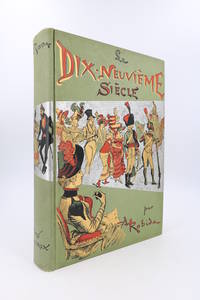
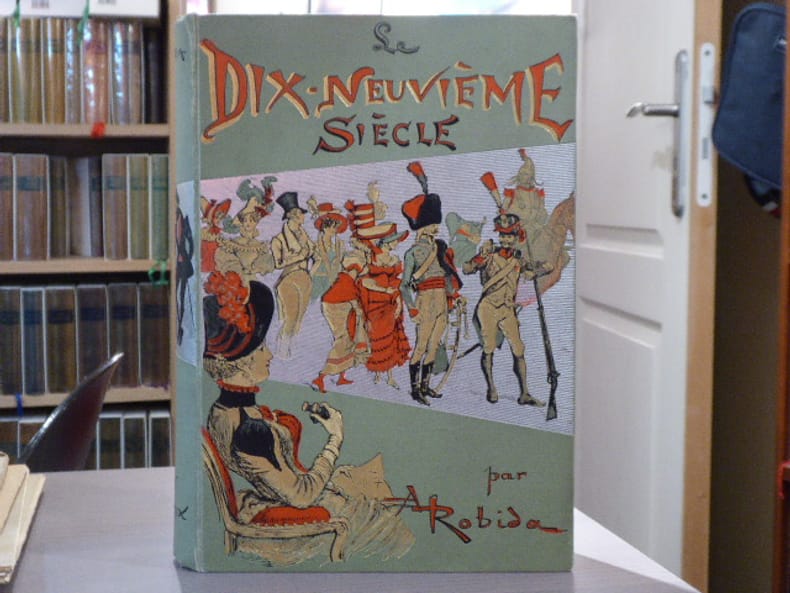
1888ref. 91170Paris: Georges Decaux 1888. Fine. Georges Decaux Paris 1888 21 x 31 cm Reliure de l'éditeur First edition illustrated with in-text and full-page black-and-white and colour drawings by Albert Robida. Publishers original illustrated cloth binding in full green percaline signed Engel smooth spine featuring a large polychrome illustration heightened with gold and palladium by Souze extending across the spine and boards; the original front cover in colour preserved; all edges gilt. ""Ceci qui va suivre sous un titre ambitieux pris simplement comme une étiquette en chiffres n'est bien entendu pas une histoire ni un tableau ni un résumé c'est une série d'esquisses de croquis à la plume et à la mine de plomb de portraits familiers de notre Siècle à différentes époques de sa vie tourmentée. . ce Siècle s'il nous a fait connaître des jours noirs a eu de bons moments et des rayons de gai soleil. Ce livre est une revue à grandes lignes des périodes sombres ou joyeuses de la pièce à grand spectacle qui s'est jouée sous nos yeux des évènements importants et des menus faits des hommes et des choses des types naissant prospérant et disparaissant des modes et des caractères un voyage en somme ou plutôt une croisière de cent années sur le fleuve éternel de la vie."" préfaceSome light foxing to the endpapers otherwise a very fine copy. Copies in the publishers original illustrated bindings are scarce and sought after. Georges Decaux hardcover
1892ref. 67819Sous chemise de papier marbré. Reliure demi-vélin blanc à la bradel et à coins, papier gaufré et doré sur les plats. Dos lisse avec titre et date écrits à la main. Couverture conservée. Non rogné. Reliure signée CARAYON.Première édition séparée, illustrée en premier tirage de 32 compositions d'Albert ROBIDA, dont deux sur la couverture et une en frontispice.Ce texte est une nouvelle d'anticipation tirée de l'ouvrage La Vie électrique paru en 1890, revue par l'auteur.
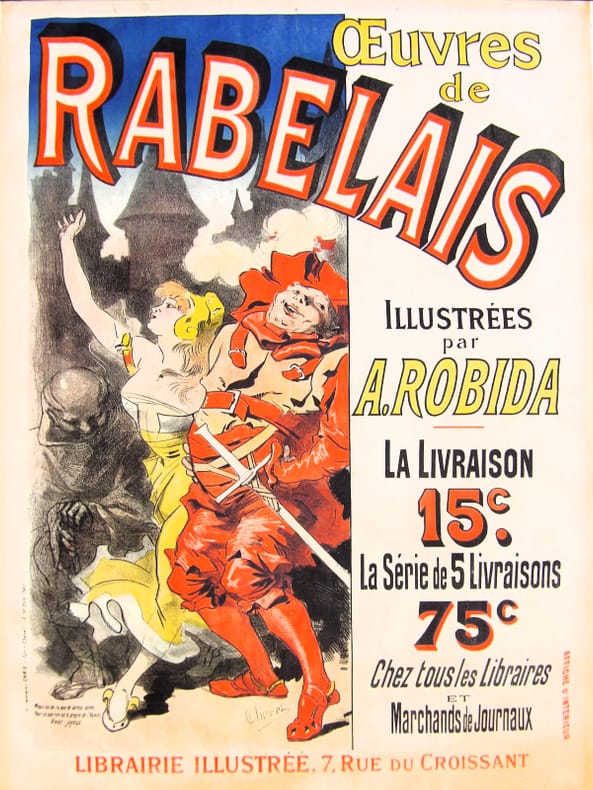
1885ref. Affiche Cheret Robida RabSuperb advertising "indoor poster" lithographed in colors for bookstores. It announces the publication of the Rabelais' Works with illustrations by Albert Robida at La Librairie Illustrée in 1885-1886. The two volumes will have 49 full page illustrations and numerous in-text drawings in the first printing. Here we recognize the lively and colorful style of Robida associated with the know-how of the printer Chéret both major artists of Art Nouveau and Paris " fin de siècle ". 2 Traces of former central folds bottom and edges slightly yellowed otherwise this poster with very bright colors and contrasting composition is in very good condition. Imprimerie Chaix (succursale Chéret)
1885ref. 2562Paris, Imprimerie Chaix (succle. Chéret), 1885. 91 x 153 cm - 60.2 X 38.2 inches. Entoilée. Superbe « affiche d’intérieur » publicitaire, lithographiée en couleurs, qui annonce la parution des Œuvres de Rabelais avec des illustrations d’Albert Robida en 1885.
ref. 77591 Ex-libris Luce et Giraudeau. Paris, A la Librairie illustrée, sd, 4 volumes gd in-4° de 331 & 336 & 336 & 332 pages reliés demi-chagrin marron, titres or sur dos à nerfs, couvertures et dos conservés, quelques rousseurs.
1885ref. 65556La librairie illustrée | Paris 1885 - 1886 | 24.50 x 32 cm | 2 volumes reliés
1888ref. 91170Georges Decaux | Paris 1888 | 21 x 31 cm | Reliure de l'éditeur
ref. 14377Paris, Librairie illustrée, 1894 et 1895. Deux ouvrages en un volume in-4, 40 pp. et (6)-28 pp., Bradel demi-maroquin tabac à coins, dos lisse ornée, tête dorée, couverture conservée (V. Champs). Coins et coiffe frottés, quelques taches sur le cuir, papier jauni.
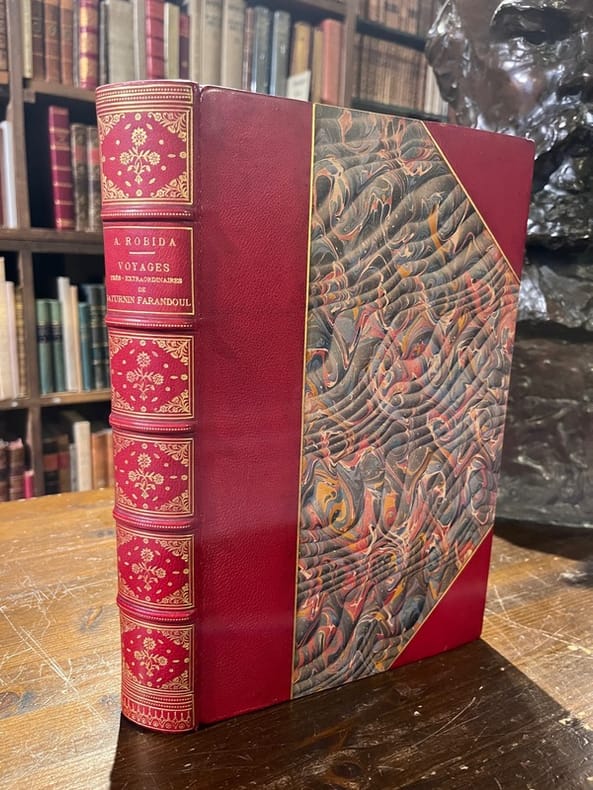
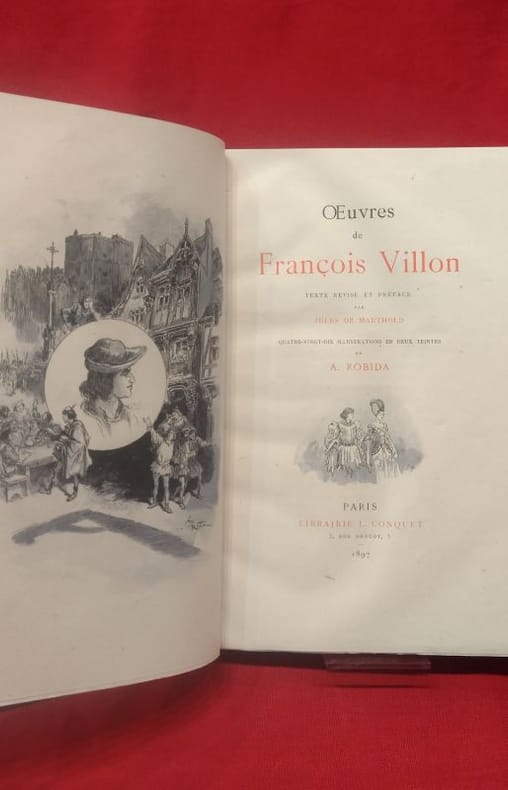
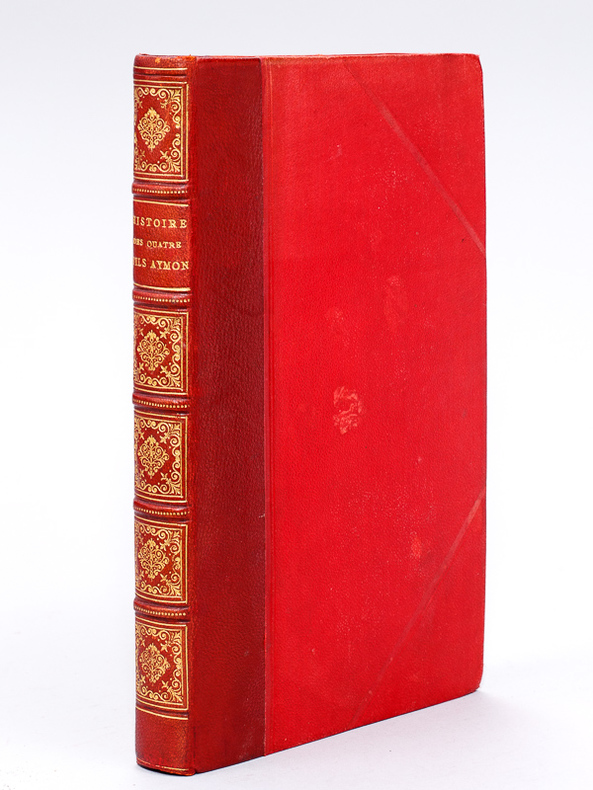
1897ref. 118494conquet 1897 stroobants Paris, Librairie L. Conquet, 1897, 1 volume petit in-4 de 160x255 mm environ, (4) ff., XXXIV, 339 pages, tirage à 350 exemplaires, un des 150 exemplaires sur papier de Chine fort. Reliure signée Stroobants, demi-maroquin rouge à coins, dos à cinq nerfs portant titres dorés et caissons richement ornés, tranche de tête dorée, gardes marbrées, couvertures conservées. Dos très légèrement décoloré, sinon très bel exemplaire, intérieur en bon état.
ref. 393120Georges Decaux Editeur Paris 1888 In-4 de III-404 pages, cartonnage de l'éditeur de percaline vert-amande, grand décor polychrome se prolongeant sur le dos et le second plat et riche ornementation à l'or et au palladium, tranches dorées. EDITION ORIGINALE et PREMIER TIRAGE des nombreuses illustrations en noir dans et hors-texte et des planches en couleurs hors-texte d'Albert ROBIDA. Très bel exemplaire, condition rare.
1897ref. 4259Paris, Lib. L. Conquet, 1897. 1 vol. in-4 de XXXIV-339-[6] pages, demi-maroquin rouge à coins, dos à nerfs orné de lyres dorées, tête dorée, doubles filets dorés ornant les plats, couverture et dos conservés. Mors très légèrement frottés, pour le reste en bien belle condition. Reliure de Gènther & Baumann.
1892ref. LIQ-5388P. Librairie Conquet 1892. In-12° plein maroquin marron, dos à nerfs, titre doré ,plats interieurs de maroquin citron bordés d'une frise florale dorée, couverture illustrée en noir conservée, tranches dorées,étui bordé.Reliure signée MAYLANDER.
1910ref. 66916Paris: Angelo Mariani 1910. Fine. Angelo Mariani Paris 1910 23.50 x 33.50 cm relié Edition decorated with original color illustrations and borders including 10 full-page by Albert Robida and printed in 100 numbered copies on handmade vellum ours one of 50 nominative copies that of Charles Meunier. Bradel binding in full paper smooth spine red morocco title label handmade paper endpapers and pastedowns original wrappers preserved binding signed P. Goy & C. Vilaine. Rare and handsome copy. Angelo Mariani hardcover
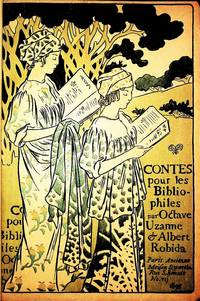
1895ref. 1298Paris: Ancienne Maison Quantin Librairies-Imprimeries Reunis 1895. First printing. LIMITED FRENCH EDITION SUMPTUOUS COLLECTION OF STORIES ILLUSTRATED WITH ORIGINAL ETCHINGS LITHOGRAPHS AND PHOTOGRAVURES INCLUDES "THE END OF BOOKS"--PREDICTING TODAY'S eBOOKS AND AUDIOBOOKS. 12 inches tall hardcover 3/4 green pebbled leather binding gilt rules marbled paper covered boards decorative gilt title to spine marbled endpapers 2x2.5 inch photographic bookplate to front free endpaper "Ex. Lib. E. C. 1895" original art deco color lithographed paper covers by Auriol bound in title page with hand colored vignette by Robida and facing limitation notice volume 467 of 1000 printed on Japanese vellum iv 230 pp colophon printed on presses of the former Quantin Paris November 27 1894. 17 plates comprising 2 original etchings by Robida and 15 photogravures or lithographs including 4 handcolored 170 figures in text. Wear to cover edges and corners binding tight light browning to pages text and plates unmarked bright and clean with tissue guards intact. Very good in custom archival mylar cover. CONTENTS: Un Almanach des Muses de 1789; L'Heritage Sigismond; Le Bibliothecaire van der Boecken de Rotterdam; Un Roman de chevalerie franco-japonais; Les Romantiques inconnus; Le Carnet de notes de Napoleon 1er; La Fin des Livres; Poudriere et bibliotheque; L'Enfer du chevalier de Kerhany; Les Estrennes du poete Scarron; Histoires de Momies recits authentiques. OCTAVE UZANNE 181-1931 was a 19th-century French bibliophile writer publisher and journalist. He founded the Société des Bibliophiles Contemporaines of which he was president. In the early 1890s Uzanne was considered to be ". the best authority that book lovers know on subjects specially interesting to book lovers". In contrast to most bibliophiles of his time Uzanne was chiefly interested in the creation of new luxurious bibliophile works collaborating closely with printers binders typographers and artists especially the Symbolists and early Art Nouveau artists. Among them were such painters as James McNeill Whistler Adolphe Lalauze and Jules Barbey d'Aurevilly. Uzanne's bibliophile activity in the early 1880s coincided with the gradual abandonment of manual methods of printing illustrations kin favour of photomechanized methods. As a journalist sometimes employing the pseudonym "la Cagoule" Uzanne wrote for L'Écho de Paris Le Gaulois and other newspapers. In addition for other French and foreign magazines like The Studio Magazine of Art and Scribner's Magazine for which he wrote in 1894 an article "The End of Books" which he thought would come because of the rise of phonography where he predicted the rise of radio and television. The original illustrated La fin des Livres is included in Contes des Bibliophiles offered here. Uzanne was fascinated by modern technology and the possibilities it offered for the reproduction and dissemination of words sounds and images which was evidenced not only in that article or in his groundbreaking work in book publishing but also in an article he wrote in 1893 for the French newspaper Le Figaro about a visit he made to US President Grover Cleveland and the inventor Thomas Edison during the EXPO Chicago 1893 where he witnessed the Kinetograph shortly before it went public. Contes Pour les Bibliophiles offered here was translated into English as Tales for bibliophiles Chicago The Caxton Club 1929. ALBERT ROBIDA 1848-1926 was a French illustrator etcher lithographer caricaturist and novelist. He edited and published La Caricature magazine for 12 years. Through the 1880s he wrote an acclaimed trilogy of futuristic novels. These works drew comparison with Jules Verne. Unlike Verne he proposed inventions integrated into everyday life not creations of mad scientists and he imagined the social developments that arose from them often with accuracy: social advancement of women mass tourism pollution etc. His La Guerre au vingtième siècle describes modern warfare with robotic missiles and poison gas. His Téléphonoscope was a flat screen television display that delivered the latest news 24-hours a day the latest plays courses and teleconferences. GEORGE AURIOL 1863-1938 was a French poet songwriter graphic designer type designer and Art Nouveau artist. He worked in many media and created illustrations for the covers of magazines books and sheet music. Ancienne Maison Quantin, Librairies-Imprimeries Reunis hardcover
1895ref. 1298Paris: Ancienne Maison Quantin Librairies-Imprimeries Reunis 1895. First printing. LIMITED FRENCH EDITION SUMPTUOUS COLLECTION OF STORIES ILLUSTRATED WITH ORIGINAL ETCHINGS LITHOGRAPHS AND PHOTOGRAVURES INCLUDES "THE END OF BOOKS"--PREDICTING TODAY'S eBOOKS AND AUDIOBOOKS. 12 inches tall hardcover 3/4 green pebbled leather binding gilt rules marbled paper covered boards decorative gilt title to spine marbled endpapers 2x2.5 inch photographic bookplate to front free endpaper "Ex. Lib. E. C. 1895" original art deco color lithographed paper covers by Auriol bound in title page with hand colored vignette by Robida and facing limitation notice volume 467 of 1000 printed on Japanese vellum iv 230 pp colophon printed on presses of the former Quantin Paris November 27 1894. 17 plates comprising 2 original etchings by Robida and 15 photogravures or lithographs including 4 handcolored 170 figures in text. Wear to cover edges and corners binding tight light browning to pages text and plates unmarked bright and clean with tissue guards intact. Very good in custom archival mylar cover. CONTENTS: Un Almanach des Muses de 1789; L'Heritage Sigismond; Le Bibliothecaire van der Boecken de Rotterdam; Un Roman de chevalerie franco-japonais; Les Romantiques inconnus; Le Carnet de notes de Napoleon 1er; La Fin des Livres; Poudriere et bibliotheque; L'Enfer du chevalier de Kerhany; Les Estrennes du poete Scarron; Histoires de Momies recits authentiques. OCTAVE UZANNE 181-1931 was a 19th-century French bibliophile writer publisher and journalist. He founded the Société des Bibliophiles Contemporaines of which he was president. In the early 1890s Uzanne was considered to be ". the best authority that book lovers know on subjects specially interesting to book lovers". In contrast to most bibliophiles of his time Uzanne was chiefly interested in the creation of new luxurious bibliophile works collaborating closely with printers binders typographers and artists especially the Symbolists and early Art Nouveau artists. Among them were such painters as James McNeill Whistler Adolphe Lalauze and Jules Barbey d'Aurevilly. Uzanne's bibliophile activity in the early 1880s coincided with the gradual abandonment of manual methods of printing illustrations kin favour of photomechanized methods. As a journalist sometimes employing the pseudonym "la Cagoule" Uzanne wrote for L'Écho de Paris Le Gaulois and other newspapers. In addition for other French and foreign magazines like The Studio Magazine of Art and Scribner's Magazine for which he wrote in 1894 an article "The End of Books" which he thought would come because of the rise of phonography where he predicted the rise of radio and television. The original illustrated La fin des Livres is included in Contes des Bibliophiles offered here. Uzanne was fascinated by modern technology and the possibilities it offered for the reproduction and dissemination of words sounds and images which was evidenced not only in that article or in his groundbreaking work in book publishing but also in an article he wrote in 1893 for the French newspaper Le Figaro about a visit he made to US President Grover Cleveland and the inventor Thomas Edison during the EXPO Chicago 1893 where he witnessed the Kinetograph shortly before it went public. Contes Pour les Bibliophiles offered here was translated into English as Tales for bibliophiles Chicago The Caxton Club 1929. ALBERT ROBIDA 1848-1926 was a French illustrator etcher lithographer caricaturist and novelist. He edited and published La Caricature magazine for 12 years. Through the 1880s he wrote an acclaimed trilogy of futuristic novels. These works drew comparison with Jules Verne. Unlike Verne he proposed inventions integrated into everyday life not creations of mad scientists and he imagined the social developments that arose from them often with accuracy: social advancement of women mass tourism pollution etc. His La Guerre au vingtième siècle describes modern warfare with robotic missiles and poison gas. His Téléphonoscope was a flat screen television display that delivered the latest news 24-hours a day the latest plays courses and teleconferences. GEORGE AURIOL 1863-1938 was a French poet songwriter graphic designer type designer and Art Nouveau artist. He worked in many media and created illustrations for the covers of magazines books and sheet music. Ancienne Maison Quantin, Librairies-Imprimeries Reunis hardcover books
1908ref. 58732Transcription nouvelle d'après l'édition de 1480 par Jean d'Albignac, illustré par Albert Robida, Etude par Pierre Sales, exemplaire sur papier vergé des Usines d'Arches, Fabriqué spécialement pour la Librairie Moderne, tirage unique à 100 exemplaires, un des 50 exemplaires d'hommages numérotés de 51 à 100 (n° 87), 1 vol. grand in-8 reliure de l'époque demi-chagrin maroquiné rouge, dos à 5 nerfs dorés orné, toutes tranches dorées, couvertures conservées, Librairie Moderne Maurice Bauche, Librairie Ancienne Lucien Dorbon, Paris, 1908, XII-246 pp. et 1 f.
1885In-4 gr. (mm. 377x267), mz. tela, tit. oro al dorso, pp. 8 cad. numero, interamente illustrato in b.n. e anche a colori nel t. Celebre rivista settimanale di carattere satirico, fondata da Decaux e di cui Robida fu il direttore dal 1880 al 1892. Offriamo l’annata completa del 1885 (con Indici): dal n. 262 (3 gennaio) al n. 313 (26 dicembre), completa dei 7 magnifici “Supplementi” a tema (ai nn. 265, 267, 272, 276, 279, 293 e 301). Sono 7 grandi tavole a colori, più volte ripieg., realizzate da: Gino “La marine au branle-bas de combat” - Draner “Costumes de Carnaval” - Robida “Un restaurant pendant la nuit de la mi-careme” - Job “Au concours hippique” - Trock “Le monde des théatres” - Sorel “Paris en noir” - Caran D’Ache “Manoeuvres d’automne de l’armée allemande”. Solo 2 tavv. restaur. per strappi, altrim. esemplare ben conservato.
1910ref. 66916Angelo Mariani | Paris 1910 | 23.50 x 33.50 cm | relié
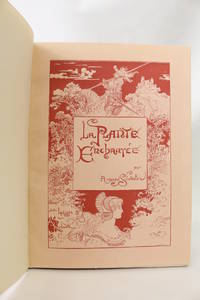
1904ref. 67831Paris: Henry Floury 1904. Fine. Henry Floury Paris 1904 25 x 32.50 cm broché First edition one of 25 numbered copies on Japan paper deluxe copy and first printing of Albert Robida's illustrations. Fine copy. Work illustrated with large compositions forming frames around each page by Albert Robida. Henry Floury unknown
1895ref. 67796Paris: Librairie illustrée 1895. Fine. Librairie illustrée Paris 1895 24 x 32.50 cm relié First edition one of 50 numbered copies on Japan paper deluxe copy and first printing of Albert Robida's illustrations. Contemporary binding in red half cloth with corners smooth spine decorated with a central gilt fleuron double gilt fillet and gilt date at foot long black morocco title label illustrated pink covers preserved binding signed Carayon. A very fine copy. Librairie illustrée hardcover
1909ref. 6544Paris: Ancienne Librairie Furne/Boivin & Cie Editeurs 1909. First Edition Thus. Hardcover. Near Fine. No DJ as Issued. First Edition Thus. Hardcover. Part of the series "Collection d'Albums Historiques". Text in French. 38 full page plates including double page. A very handsome copy. Light shelf/edge wear touch of gilt toning at spine else tight bright and unmarred. Teal cloth boards gilt and black ink lettering gilt and full color pictorial elements blue paper endpages chromolitho textblock on tabs aeg. Small fo. 80pp. Illus. color plates. Index of Plates. Ancienne Librairie Furne/Boivin & Cie, Editeurs hardcover
1909ref. 6544Paris: Ancienne Librairie Furne/Boivin & Cie Editeurs 1909. First Edition Thus. Hardcover. Near Fine. No DJ as Issued. First Edition Thus. Hardcover. Part of the series "Collection d'Albums Historiques". Text in French. 38 full page plates including double page. A very handsome copy. Light shelf/edge wear touch of gilt toning at spine else tight bright and unmarred. Teal cloth boards gilt and black ink lettering gilt and full color pictorial elements blue paper endpages chromolitho textblock on tabs aeg. Small fo. 80pp. Illus. color plates. Index of Plates. Ancienne Librairie Furne/Boivin & Cie, Editeurs hardcover books
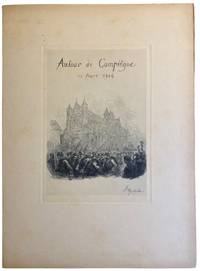
1915ref. 5304France: S.P. 1915. First edition. Hardback slipcase with engraved plates. Limited edition of only 125 this is copy #113. Each plate is signed the titles are hand written in pencil by Robida at the foot of the card: "Les Evacués italiens" "Départ des territoriaux" "Le dernier jour du Pont de Compiègne" "les Fugitifs" "Le Prisonnier" "Convoi belge échappé de Namur" "Le Premier Taube!" The cream slipcase has a pasted on title sheet with a view of soldier on a quayside looking at a destroyed bridge. A little darkening and marking to the boards and the spine of the folder is quite damaged. This has been reinforced from the inside with archival tape. Original closure ties are present. Inside the work is in a stiff card folder slightly darkened with a title showing soldiers marching past a cathedral. This is signed by Robida in pencil. The first gather is the text sheets 4 pages three of which are printed with the image from the front board replicated. This is darkened to the edges but clean. The seven plates are in lovely condition each with a tissue guard. A scarce piece of world war one illustration. Compiègne in the Oise department was Robida's home town. He could not have known when he created this work that Compiègne would play a deeply symbolic and strategic role as the site of the armistice that ended the conflict. The famous signing of the armistice was in the Forest of Compiègne. The town was close to the Western Front and saw many troop movements and bombardments. Albert Robida 1848–1926 was a French illustrator caricaturist lithographer and novelist celebrated both as an artist and as a visionary social commentator of the Belle Époque period. In 1880 Robida co-founded and edited La Caricature. Première édition. Boîtier cartonné avec des planches gravées. Édition limitée à 125 exemplaires seulement il s'agit de l'exemplaire n° 113. Chaque planche est signée les titres sont écrits à la main au crayon par Robida au pied de la carte : "Les Evacués italiens" "Départ des territoriaux" "Le dernier jour du Pont de Compiègne" "les Fugitifs" "Le Prisonnier" "Convoi belge échappé de Namur" "Le Premier Taube !". L'étui crème comporte un feuillet de titre collé avec une vue d'un soldat sur un quai regardant un pont détruit. Les planches sont légèrement assombries et marquées et le dos de la pochette est assez endommagé. Il a été renforcé à l'intérieur avec du ruban adhésif d'archivage. Les attaches d'origine sont présentes. À l'intérieur l'œuvre se trouve dans une chemise en carton rigide légèrement assombrie avec un titre montrant des soldats défilant devant une cathédrale. Elle est signée au crayon par Robida. Le premier rassemblement est constitué des feuilles de texte 4 pages dont trois sont imprimées avec l'image de la première planche reproduite. Les bords sont assombris mais l'ouvrage est propre. Les sept planches sont en très bon état chacune d'entre elles étant accompagnée d'un papier de garde. Une pièce rare d'illustration de la première guerre mondiale. Compiègne dans l'Oise était la ville natale de Robida. Il ne pouvait pas savoir lorsqu'il créa cette œuvre que Compiègne jouerait un rôle profondément symbolique et stratégique en tant que lieu de l'armistice qui mit fin au conflit. La célèbre signature de l'armistice a eu lieu dans la forêt de Compiègne. La ville était proche du front occidental et a été le théâtre de nombreux mouvements de troupes et de bombardements. Albert Robida 1848-1926 est un illustrateur caricaturiste lithographe et romancier français célèbre à la fois comme artiste et comme commentateur social visionnaire de la Belle Époque. En 1880 Robida a cofondé et publié La Caricature. S.P. hardcover