9 600 résultats
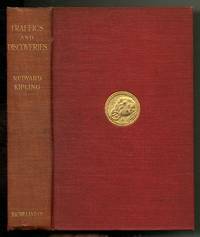
réf. 124330New York: P. F. Collier & Son Company. Very Good. Cloth. A gently shelfworn Very Good edition ; The Sahib Edition of Rudyard Kipling: Story of the Gadsbys in Black and White is a collection of short stories about the Gadsbys a white English family who move to a country estate in India. The Gadsbys are a family of misfits who are forced to adapt to life in India and must deal with issues like racism poverty and disease. Kipling explores the themes of family culture and identity in this collection of stories.; 8vo; 338 pages . P. F. Collier & Son Company hardcover books
réf. 124329New York: P. F. Collier & Son Company. Very Good. Cloth. A Very Good edition with rubbed edges and a starting spine hinge ; The Sahib Edition of Rudyard Kipling: the Light That Failed is a collection of short stories published in 1922. The stories are about the British Empire and its decline.; 8vo; 355 pages . P. F. Collier & Son Company hardcover books
réf. 124328New York: P. F. Collier & Son Company. Very Good. Cloth. An edition in Very Good condition that is soiled and bears other wear associated with age; The Sahib Edition of Rudyard Kipling: the Phantom Rickshaw is a book that tells the story of a man who is cursed with a rickshaw that never stops moving even when he is not pushing it.; 8vo; 362 pages . P. F. Collier & Son Company hardcover books
réf. 124321New York: P. F. Collier & Son Company. Very Good. Cloth. A Very Good edition that is somewhat aged and shelfworn ; A compilation of Rudyard Kipling's most famous works The Sahib Edition of Rudyard Kipling: under the Deodars American Notes by Rudyard Kipling is a great addition to any library.; 8vo; 376 pages . P. F. Collier & Son Company hardcover books
1900réf. 57213New York: D. Appleton & Co 1900. Reprint. Octavo 19.5cm. Original light grey cloth stamped in gilt top edge gilt; viii2097pp; 6-page publisher's catalogue at rear. Bookplate of James Glen Mead. A straight tight copy cloth worn and rubbed a few small stains pencil erasures to f.f.e.p. small marginal dampstain to first few leaves: Good. Decorative early reprint of Kipling's poetry collection first published in 1896. D. Appleton & Co unknown books
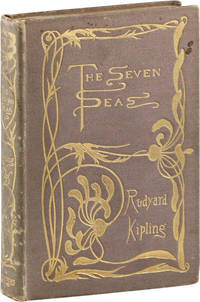
1897réf. 29544NY: Appleton 1897. First regular American edition second issue. 8vo pp. 209. Owner's name on blank. Gray cloth stamped in gilt with art nouveau design. Some foxing throughout. TEG. Cover slightly worn o/w a VG tight copy. Richards 254C. Poems. Appleton unknown books
1897réf. 29546NY: Appleton 1897. First regular American edition second issue. 8vo pp. 209. Gray cloth stamped in gilt with art nouveau design. TEG. Cover slightly worn and soiledone hinge tender o/w VG. Richards 254C. Poems. Appleton unknown books
1919réf. 323752London: Methuen and Co 1919. Hardcover. Good. First edition. Good in full leather with gold and black stamping top edge gilt spine is missing leather is worn around the edges. Methuen and Co hardcover books
1904réf. 565642London: Macmillan 1904. Hardcover. Very Good. First edition. Neat owner name on front fly. Spine sunned modest wear including a tiny rubbed spot at the upper shoulder foredge a bit spotted very good. Macmillan hardcover books
1904réf. 427683New York: Doubleday Page & Company 1904. Hardcover. Very Good. First American Edition. Green cloth boards with gilt titles and top edge. Faint dampstain on top page edges in the gutters penned price on the front fly lightly rubbed very good lacking the dustwrapper. Doubleday, Page & Company hardcover books
1904réf. 324349London: Macmillan 1904. Hardcover. Very Good. First edition. Very good with top edge gilt some fraying at the spine ends light wear to the corners a bookplate on the front pastedown lacking the dustwrapper. Macmillan hardcover books
1935réf. 12690Garden City: Doubleday Doran 1935. First edition. Hardcover. Orig. marbled boards andcloth. Near fine. 31 pages. A Christmas memento for the year 1935. Some pages roughly opened at head. Limited edition one of 950 copies. Owner inscription. Doubleday, Doran hardcover books
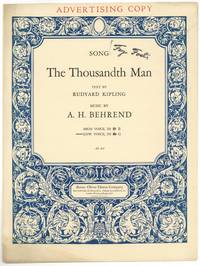
1926réf. 596826Boston: Oliver Ditson Company 1926. Softcover. Very Good. First edition stated Advertising Copy. Cover design by R.I.P. Quarto. Single bifolium with a single sheet insert. Dampstaining to the bottom of the front cover affecting throughout a small tear at the bottom of the fold of the bifolium name stamp and "Advertising Copy" stamp on the front cover and some light edgewear still a very good and complete copy. For low voice and piano. Plate number 75126 - 4. The name stamp is that of Fay Foster a prolific American composer and pianist who took first place in the American Composers Competition of 1913. OCLC locates only four holdings. Oliver Ditson Company unknown books
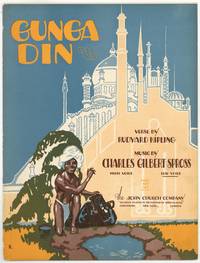
1925réf. 589673Cincinnati: The John Church Company 1925. Softcover. Very Good. Sheet music. Quarto. Three nested bifolia making 12 pages. Outer most bifolium is nearly separated along the fold a bit of separation along the bottom of the fold of the middle bifolium light edgewear and toning to the exterior still a complete and very good copy. For voice and piano. Plate number 18942 - 12. Kipling's famous poem set to music "You're a better man than I am Gunga Din! The John Church Company unknown books
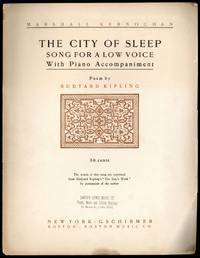
1908réf. 609322New York: G. Schirmer 1908. Softcover. Good. First edition. Folio. Two nested bifolia making eight pages. Edgewear including tearing along the fold of the outer bifolium with two tears affecting the inner bifolium music shop stamp on the front cover two small dampstains at the bottom of the front cover affecting the interior and toning a complete but good only copy. For voice and piano. Plate number 20617. OCLC locates only four holdings of this piece and it appears to be equally uncommon in the trade. G. Schirmer unknown books
1986réf. 85548Oxford: Oxford University Press 1986. First Edition. First impression. Octavo. Black cloth hardcover; dustjacket; xx497pp. Tight clean and unmarked about Fine in the original dustwrapper just lightly worn at extremities Near Fine. From the library of poet and translator Nathaniel Tarn with his printed bookplate inside front cover. Oxford University Press unknown books
1920réf. D3621Paris, L’Édition Française Illustrée, 1920 ; in-8, 304 pp., broché (couverture abimée, à faire relier). Exemplaire numéroté. Illustré de gravures sur bois de Daragnès. Bon état.
2021In very good condition. - Introduction -- Knowingness, Practical Jokes and the Use of Superior Knowledge in Kiplings Short Stories -- A useful consideration of this subjecc, one of the most unavoidable and intriguing in any examination of Kiplings work, should deai wich two tnattets. First, it is necessary to showwfiat thc existing frame of refer-ence is in which scholars and critics have discussed the topic and how current ways of understandingKipling's use of superior knowledge have taken shape. Second, it is essential to define the position and emphases of rhe present study in order to show how its approach differs from recenr and contemporary scholarship. For the lattcr purpose, it would be helpful to summarise rhe contents of the book, and to indicate its argument. -- Those who have explored Kiplings intcrest in and employment of superior knowledge have differed in the terminologies they have employed. Yet, in spite of changes down ehe years, there has been continuity in the direction, cone and attitude many critics have displayed. One of the pur-poses of the present study is to question these underlying, persistent as-sumptions and what they imply. -- The present State of the question, regarding the topic of this study, results from an unfolding of concerns present in the earliest responses to Kipling as a writer. Those who reviewed his eariiest produetions were de-lighted by the new kinds of experience they offered readers, by the pres-entation ofpreviously little-known Indian and army life. Yet, many critics were troubled or repelled by ehe tone the new author adopted when offering or commencing upon his discoveries. From the beginning, those who discussed Kipling's work Struck a note ofmoral disapproval that continued to so und. The commentators aecused the young writer of brutality, brashness and cynicism. They reproached him for his precocious worldiiness, which questioned that one so young should have had such experiences, or that he possessed a pretence of knowledge that could only be a tiresome mannerism. Given the outmoded moralistic tone and language of many of diese com-plaints, they inevitably sound naive, evcn foolish. Yet, it would be wrong to ignore diis revulsion where it oecurred, or to dismiss as merely siüy the energy with which diese writers expressed it. AJthough subsequent crities found more sophisticated and, for a while, fashionable formulae in which to show their suspicion or disgust, their complaints were often cognate widi those expressed in die 1890s and in the years immcdiately following. -- Hostile views of Kiplings tone often grew from a dislike of the pretence, or die reality of the worldly wisdom the young man displayed. It would be tempting to dismiss Robert Buchanan's notorious artack as apiece of fos-sihsed spite, or ignorant and dated polemic, if, in more restrained forms, ks complaints had not gone on sounding in Kiplingerideism. Buchanan's diatribe against thedrunken, bragging, boastful hooiiganisin1 of Kiplings fiction and his assertion that the new writer represented all that was ignorant, selfish, base and brutal [140] in human nature reappeared, in more temperate forms, in die discussions of later writers. -- Most of the early attacks on Kiplings work are pertinent to a con-sideration of his knowingness. Impiicit in die aecusations of brutal inso-lence, vulgarity or cynicism was the rage ofthose whosc liberal values, and sensitive humane attitude^s, or wha.t they wished to sec as such, Kipling dismissed as sentiment and illusion. In these critics' eyes, it compounded the offence that Kipling rejeeted dieir views and pereeptions on the ba.sis of his superior knowledge. He not only asserted, but often demonstrated, that he was better informed than diey were about the nature of die British common soldier; die inner workings and convoluted, hidden praetkes of the Imperial Administration; the society life of hill scations, and, most ob-jectionable of all, the motives of men and women, considered both apart from and in relation to cach other. After such knowledge, what forgivencss ? -- The problem posed by Kiplings superior knowledge and his knowing tone would have been less vexing for some of his critics but for an intractable fact. Where it could be chccked, his knowledge proved to be accurace and, for many rcaders, his understanding of hiiman characcer was overwhelm-ingly convincing, as well as refreshingly honest. The reviewer of Kim, in 1901, expressed a common view when he spoke of the 'patient industry, the protracted observacion, the thorough knowledge' [271] that informed ehe three pages describing die wayfarers on ehe Grand Trimk Road. The same wrirer's view that the traics and motives of the novels characters, a 'portrait-gaüery of unusual extent and intcresc' [270], were uteerly convincing commanded an equaily wide assent. The reviewer makes thepointwith the confidence ofone who knows that his readers will agree with him: 'You do not stop to inquire whether' Kipling's characcers are 'true to life. You know they are; you acetpt them all without questkm or reservation'.2 -- Given that k was not easy to dismiss the aecuraey of Kiplings in-formation or, in many areas, his understanding of motive or characters, critics who objeeted to his knowingness initially adopted moral disap-proval as their weapon of attack. However, terms like vulgarity, cynicism, brutal insolcnee and hooligan viciousness had limited long-rerm use. It was impossible, in such phrascology, to make a discriminacing point about a writer, who, like him or not, was a considerable figure, clearly talented and widely read. In any case, such abusive language soon began to seem dated. It drew its force from a politically quite understandable revulsion against [he South African War and against Kipling seen, rightly or wrongly, as die embodiment and spokesman of forces that had driven Britain into an Bgly and degrading conflict. Whether such an attitude to Kipling was fair "i not, the political hears of 1899 to 1902 which had fed it began tocool. I hose wbom, for various reasons, Kipling ofFended required orher more snphisticated tools to sap the power he exerted on his readers. From an culy point in Kiplingscareer, critics began tomovefrorastraightforward moral outrage at the young writer 's knowingness, towards varied psycho-logii ,il speculations about theorigins, meaningandeffectsofthis feature ¦ i( 111 s wricing. In the long run, this has proved more effective and damaging than the angry criesofrfie eariiermoralists. ISBN 9781800793415
réf. 500092217François Beauval Sans date.
réf. 500092216François Beauval Sans date.
réf. 029472Librairie Delagrave, 1957 0 un album in-4°, 177 (4) pp. Reliure cartonnée de l'éditeur, premier plat décoré d'une composition en couleurs. Illustrations de Paul Durand.
réf. 53420Editions Rombaldi "Maîtrise" 1945, in-12 carré broché, couverture illustrée rempliée, 285 p. (un nom écrit en page de titre, sinon très bon état) Tirage limité à 970 exemplaires, 1 des 930 numérotés sur vélin pur fil de Rives. Jolie édition de ce grand classique des romans d'aventures maritimes, illustrée d'eaux-fortes de Pierre Eugène Clairin.
1913réf. 026685Paris P.-V. STOCK / Bibliothèque cosmopolite (N° 65) 1913 un volume in-8° (180 x 115mm), (4) 332 pp. Reliure en demi-basane rouge, dos à nerfs orné, dos et couvertures conservés (reliure moderne). (exemplaire légèrement rogné).
réf. 63582P., Hartmann, 1947, in 8° broché, 342 pages.
réf. 054437Paris P.V. Stock, éditeur 1912 in 12 (18,5x12) 1 volume broché, 306 pages, petite fente sur la moitié inférieure de la couverture, ex-libris manuscrit ancien. Collection Bibliothèque cosmopolite, N°55. Mention de 2éme édition. Bon exemplaire