Kaus, Rainer JAntiquariat.de

3 242 résultats
2002réf. 1132591Heidelberg : Winter, 2002. 97 S. Originalhardcover.
réf. 3100083067.Ghardcover. Good. Access codes and supplements are not guaranteed with used items. May be an ex-library book. hardcover
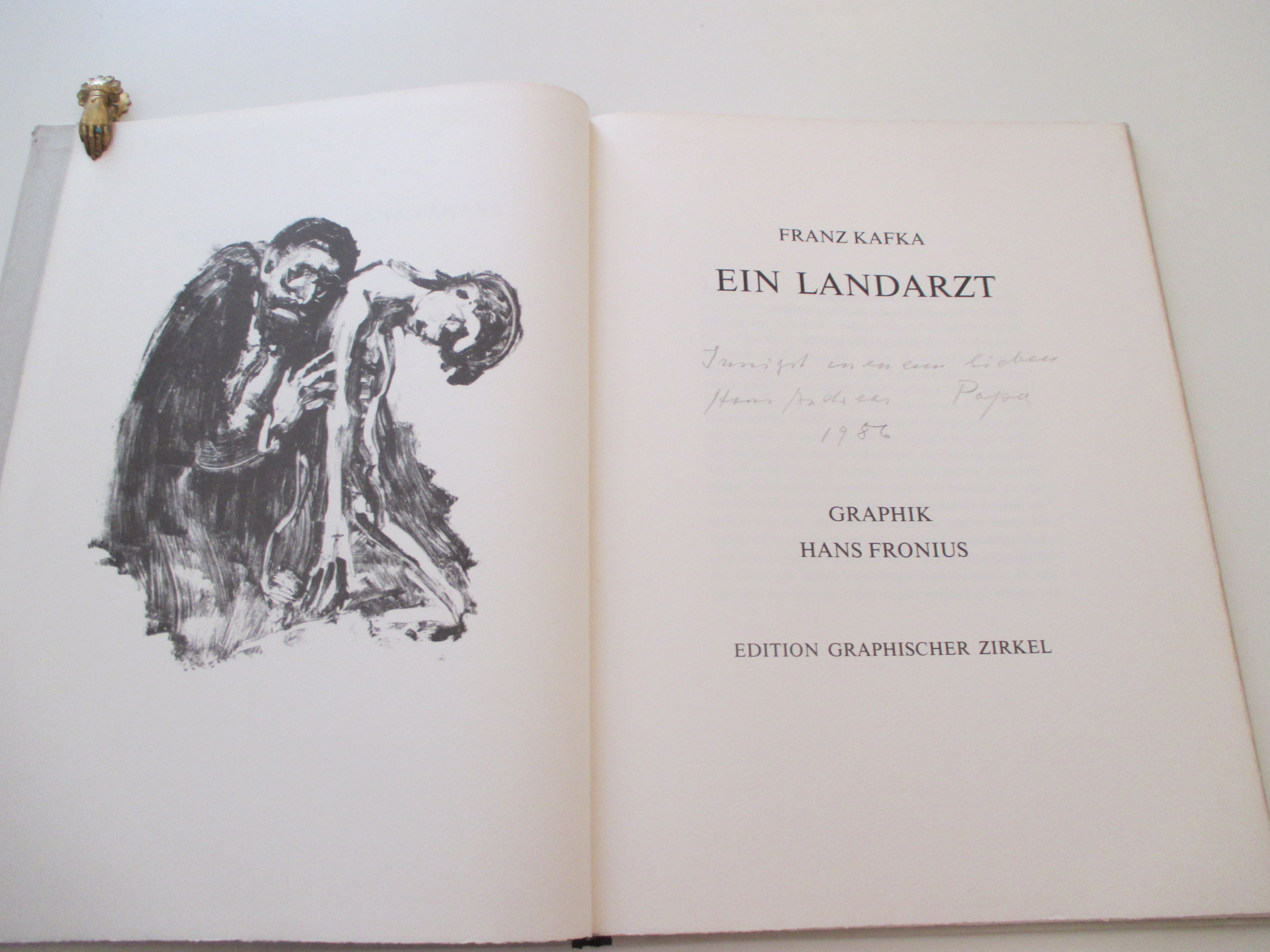
1984réf. 18317ABWien, Edition Graphischer Zirkel, 1984. 39,5 : 29 cm. 29 Seiten, 1 Blatt, 5 Graphiken von Hans Fronius. Illustrierter Original-Halbleinenband.
1984réf. 50837(Wien), Edition Graphischer Zirkel, (1984). Fol. Mit (inkl. Einband u. Frontispiz) 6 ganzs. Illustrationen von Hans Fronius. 29 S., 1 Bl., Illustr.-OHLwd.
1984réf. 63580(Wien), Edition Graphischer Zirkel, (1984). Fol. Mit (inkl. Einband u. Frontispiz) 6 ganzs. Illustrationen von Hans Fronius. 29 S., 1 Bl., Illustr.-OHLwd.
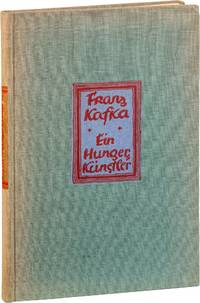
1924réf. 20345Munich: Kurt Wolff Verlag 1924. First editions. Hardcover. Orig. green cloth spine Art Deco decorated cloth with blue spine label printed in gilt. Fine. 189 69 86 pages respectively. 19.5 x 13.5 cm. The first two works published in a Limited edition one of 1000 copies. Only a few of Kafka's works were published during his lifetime: Ein Landarzt A Country Doctor is one He prepared Ein Hungerkünstler A Hunger Artist for print but it was not published until after his death thanks to Max Brod Kafka's friend and literary executor who ignored Kafka's request to destroy his unpublished work. Text in German. Bright clean and very fresh copy. Kurt Wolff Verlag hardcover books
1984réf. 19469AB1984. Vienna Edition Graphischer Zirkel 1984. 395 : 29 cm. 29 pages 1 leaf 5 original graphics by Hans Fronius. Illustrated Original-half-cloth. One of 250 copies.- On the title-page dedication from the artist for his son dated 1986 and signed Papa'. Imprint signed by the artist. - Twentieth book-publication of the edition Graphischer Zirkel Wien. - Rethi L 186 - 191. hardcover
réf. 3849548031.Ghardcover. Good. Access codes and supplements are not guaranteed with used items. May be an ex-library book. hardcover
réf. 375231575X.Gpaperback. Good. Access codes and supplements are not guaranteed with used items. May be an ex-library book. paperback
réf. 3752370092.Ghardcover. Good. Access codes and supplements are not guaranteed with used items. May be an ex-library book. hardcover
1924réf. 20345Munich: Kurt Wolff Verlag 1924. First editions. Hardcover. Orig. green cloth spine Art Deco decorated cloth with blue spine label printed in gilt. Fine. 189 69 86 pages respectively. 19.5 x 13.5 cm. The first two works published in a Limited edition one of 1000 copies. Only a few of Kafka's works were published during his lifetime: Ein Landarzt A Country Doctor is one He prepared Ein Hungerkünstler A Hunger Artist for print but it was not published until after his death thanks to Max Brod Kafka's friend and literary executor who ignored Kafka's request to destroy his unpublished work. Text in German. Bright clean and very fresh copy. Kurt Wolff Verlag hardcover
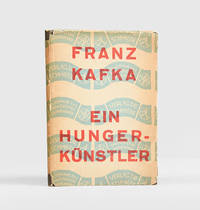
1924réf. 32166Berlin: Die Schmiede 1924. First edition. Publisher's brown striped boards printed cover and spine labels design by Georg Salter. A fine copy in the rare and fragile dust jacket with only minimal wear. Published shortly after Kafka's death in June 1924 it is the last book for which he corrected proofs. Dietz 66. Die Schmiede unknown books
1924réf. 1145Berlin: Verlag die Schmiede 1924. First Edition. in German The last collection of short stories to be finished before Kafka’s death though it was published posthumously. Original green cloth it was also published in paper boards spine and extremities faded front hinge starting but holding strong near fine. The title story was published 2 years earlier in Die Neue Rundschau magazine the other three appeared for the first time in this book. The four stories comprising Kafka's final collection "Ein Hungerkünstler" are a culmination of his literary preoccupations with artistic alienation and the futility of human endeavor. Reading these stories it is easy to see how they form a cohesive thematic quartet despite their disparate subjects each examining the relationship between the exceptional individual and an indifferent community. In "Josefine die Sängerin oder Das Volk der Mäuse" perhaps the most enigmatic of the four tales Kafka constructs a complex allegory of artistic exceptionalism through the figure of Josephine a mouse whose singing—which the narrator suggests may be nothing more than ordinary squeaking—commands unusual attention from her mouse community. The narrative's persistent ambiguity regarding the actual quality of Josephine's art creates a tension between the performer's self-perception and the community's response foregrounding questions about the social function of art. Unlike the hunger artist whose talent is measurable through his capacity to endure prolonged fasting Josephine's artistry remains fundamentally unverifiable existing primarily through collective acknowledgment rather than objective criteria. This unstable ontological status of the artistic performance destabilizes conventional hierarchies between artist and audience suggesting that artistic value emerges not from inherent qualities but from the complex social negotiations between performer and community. The story's final movement documenting Josephine's disappearance and rapid forgetting by her community offers Kafka's most poignant commentary on artistic legacy—the once-celebrated performer vanishes "like a legend dissolving into the ordinary" leaving no trace of her supposedly transformative art. Verlag die Schmiede unknown books
2013réf. BN588349Bucher Verlag GmbH 2013. 2013. Softcover. Ein Hungerkünstler Ein Hungerkünstler Franz Kafka Bucher Verlag GmbH paperback
1996réf. BN645008Martus Dieter 1996. 1996. Ein Hungerkünstler: Erzählungen Kleine Erzähler-Bibliothek Ein Hungerkünstler: Erzählungen Kleine Erzähler-Bibliothek Franz Kafka Martus, Dieter unknown
1924réf. 188798Berlin: Verlag die Schmiede 1924. His parting literary endeavour First edition boards issue in the dust jacket. Kafka worked on his final story collection during his last days. "When he finished the proofs - working on them must have been a tremendous psychological effort and a shattering intellectual reencounter with himself - tears rolled down his cheeks for a long time" cited in Unseld p. 273. Also issued in cloth the collection comprises the title story along with "Ersted Lied" "Eine kleine Frau" and "Josefine die Sängerin oder Das Volk der Mäuse". The cover art is by the influential German-American book artist George Salter 1897-1967. Among his other cover designs were Kafka's Der Prozess 1925 William Faulkner's Absalom Absalom! 1936 and Ayn Rand's Atlas Shrugged 1957. Loosely inserted is the publisher's promotional bookmark for their Novels of the 20th Century series. Octavo. Text in German. Original patterned boards blue paper label lettered in red on spine and front cover top edge blue. With dust jacket by George Salter. Ends and corners rubbed splash marks to top edge contents clean; jacket slightly chipped with loss to ends of unlettered spine discreet repairs to folds toning and faint damp stains issued without printed price: a very good copy in like jacket. Joachim Unseld Franz Kafka: A Writer's Life 1994. hardcover
1924réf. 1145Berlin: Verlag die Schmiede 1924. First Edition. in German The last collection of short stories to be finished before Kafka’s death though it was published posthumously. Original green cloth it was also published in paper boards spine and extremities faded front hinge starting but holding strong near fine. The title story was published 2 years earlier in Die Neue Rundschau magazine the other three appeared for the first time in this book. The four stories comprising Kafka's final collection "Ein Hungerkünstler" are a culmination of his literary preoccupations with artistic alienation and the futility of human endeavor. Reading these stories it is easy to see how they form a cohesive thematic quartet despite their disparate subjects each examining the relationship between the exceptional individual and an indifferent community. In "Josefine die Sängerin oder Das Volk der Mäuse" perhaps the most enigmatic of the four tales Kafka constructs a complex allegory of artistic exceptionalism through the figure of Josephine a mouse whose singing—which the narrator suggests may be nothing more than ordinary squeaking—commands unusual attention from her mouse community. The narrative's persistent ambiguity regarding the actual quality of Josephine's art creates a tension between the performer's self-perception and the community's response foregrounding questions about the social function of art. Unlike the hunger artist whose talent is measurable through his capacity to endure prolonged fasting Josephine's artistry remains fundamentally unverifiable existing primarily through collective acknowledgment rather than objective criteria. This unstable ontological status of the artistic performance destabilizes conventional hierarchies between artist and audience suggesting that artistic value emerges not from inherent qualities but from the complex social negotiations between performer and community. The story's final movement documenting Josephine's disappearance and rapid forgetting by her community offers Kafka's most poignant commentary on artistic legacy—the once-celebrated performer vanishes "like a legend dissolving into the ordinary" leaving no trace of her supposedly transformative art. Verlag die Schmiede unknown
1924réf. 32166Berlin: Die Schmiede 1924. First edition. Publisher's brown striped boards printed cover and spine labels design by Georg Salter. A fine copy in the rare and fragile dust jacket with only minimal wear. Published shortly after Kafka's death in June 1924 it is the last book for which he corrected proofs. Dietz 66. Die Schmiede unknown
1977réf. 63589Wien-München-Zürich, Molden Edition Graphische Kunst, (1977). Qu.-4°. Mit 7 Tafeln nach Holzschnitten von Hans Fronius. 31 (1) S., Illustr.-OPpbd. m. illustr. OUmschlag.
1996réf. R100088469Alibaba Verlag. 1996. In-4. Relié. Bon état, Couv. convenable, Dos satisfaisant, Intérieur frais. Non paginé, environ 32 pages - nombreux dessins en couleurs et en noir et blanc dans et hors texte - livre en allemand.. . . . Classification Dewey : 430-Langues germaniques. Allemand
1963réf. 2110502150410080Eiga Geijutsusha Co. Ltd. 1963. Soft Cover. Fine. Volume: 1 Eiga Geijutsusha Co., Ltd. paperback
1955réf. R320165420De Salamander. 1955. In-12. Cartonné. Etat d'usage, Couv. légèrement passée, Dos satisfaisant, Papier jauni. 198 pages - ouvrage en néerlandais - coins et tranches frottés - plats frottés.. . . . Classification Dewey : 430-Langues germaniques. Allemand
réf. 67395L'harmattan, 2014, 216 pp., broché, très bon état.
2020réf. x-3030431800Palgrave Macmillan 2020. Hardcover. New. 268 pages. 8.50x6.00x0.75 inches. Palgrave Macmillan hardcover
2021réf. x-3030431835Palgrave Macmillan 2021. Paperback. New. 284 pages. 8.27x5.83x0.64 inches. Palgrave Macmillan paperback