JOYCE, JamesABAA
2.568 resultados
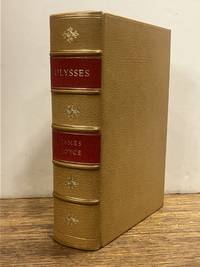
1934ref. 334890New York: Random House 1934. hardcover. fine. Thick 8vo handsomely rebound in full beige morocco red leather spine labels. New York: Random House 1934. First Authorized American Edition. Fine. Slocum & Cahoon 21. Random House unknown books
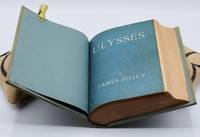
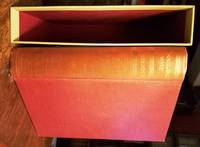
ref. ST15816-12Dublin: Lilliput Press 1997. No. 3 OF 100 SPECIAL COPIES of the "Illegal" First Dublin Edition bound in quarter leather and signed by Rose and Banville from a total edition of 1000 numbered and 26 lettered copies. 240 x 158 mm. 9 1/2 x 6 1/4". 4 p.l. v-lxxxiii 1 739 3 pp.Edited by Danis Rose. With a foreword by John Banville. Publisher's quarter blue morocco over navy cloth boards smooth spine with silver lettering. In a blue buckram slipcase. In mint condition. This is the first printing of Joyce's masterpiece actually to be done in Ireland--75 years after its initial publication. Generally recognized as the most important 20th-century novel in English Joyce's chronicle of Leopold Bloom's odyssey through Dublin excited much controversy upon publication in 1922 and was for years a target of censorship especially in the U.S. and U.K. The present edition also met with some animosity when it was discovered that the editor prominent Joyce scholar Danis Rose used some language from the original manuscripts without permission from Joyce's estate. A lawsuit for copyright infringement was issued and this work subsequently became known as the "Illegal Edition." Despite the unpleasant dispute Rose's "Ulysses" was lauded for its readability and was described by the Irish Times as "a landmark edition for first-time readers and life-time fans." Founded in 1984 and still in operation today the Lilliput Press has published more than 600 titles of Irish interest and is regarded as one of Ireland's most esteemed small publishers. This strictly limited edition of 100 rarely appears for sale: we could trace just one auction appearance at PBA Galleries in 2005 where a copy was sold for $1495 all in. Lilliput Press unknown books
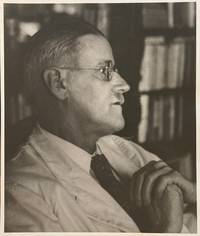
1937ref. 2884Paris: np 1937. Very Good. POWERFUL IMAGE OF JAMES JOYCE BY SURREALISTIC PHOTOGRAPHER JOSEF BREITENBACH. A remarkable set of circumstances had to come together to this photograph of James Joyce by German born photographer Josef Breitenbach to first exist and then to survive. Throughout the summer of 1937 as he experienced increasingly painful flashes in his right eye Joyce pored over early proofs of Finnegan's Wake then known only as "Work in Progress". Perhaps he was preoccupied with correcting the inevitable and myriad errors in his pun-flecked stream of consciousness prose or perhaps he was overcome with pain but we know from Breitenbach's pocket diary that Joyce canceled four times before the two exiled artists finally met. James Joyce's relationship with Ireland was famously complex and included self imposed exile. He and Nora Barnacle his future wife left Dublin in 1904 for mainland Europe never returning to his homeland after 1912. On the other hand photographer Josef Breitenbach was a Jewish German refugee who fled the rising Nazi's. Both his Jewish background and prior involvement with the short-lived revolution of 1918 made him an early target of the Brownshirts who knocked on his Munich studio door one day in 1932. Thinking on his feet Breitenbach was able to use his portrait of then Vice-Chancellor Papen whom he had photographed the year before together with a letter of thanks from Papen for his work in order to claim that he was under Papen's protection. Seizing the brief vacuum created by his subterfuge Breitenbach immediately packed his bags and within days departed for Paris. Once in Paris Breitenbach mingled with the Surrealists showing in gallery exhibitions alongside Man Ray Henri Cartier-Bresson and Brassai. Over time he developed a reputation for landscapes nudes and photo-journalism. By the time Breitenbach photographed James Joyce in July 1937 he had built a portfolio of portraits of artists such as Max Ernst Emile Bernard and Bertold Brecht. Studio portraits like this print of Joyce were often bathed in a soft seductive glow both flattering and intriguing. Here Joyce sits in profile with clasped hands behind him are blurred rows upon rows of bookshelves. The message is clear: despite failing vision Joyce remained a bright and vibrant writer. Meanwhile history marched on. Two years later in September 1939 Breitenbach was placed with other German and Jewish exiles in a French internment camp. His survival skills still intact he volunteered for a rural labor force that saved him from deportation to a concentration camp. With the help of friends in England and the United States Breitenbach once again fled the Nazi's arriving in New York in June 1941. To his enormous relief his entire oeuvre of photographic prints and negatives including the Joyce pictures had been smuggled out of Paris by another friend and sent to the States by way of Havana. As Breitenbach once again built a life for himself in a new country he turned to his pre-war work. Among the first negatives he developed were those of Joyce - an homage to the writer who had died months before at age 59 in Zurich. Silver gelatin photograph. Taken in 1937; printed later. With "Estate of Josef Breitenbach" stamp on verso. Very faint corner crease only noticeable on verso. Image approx 9x7 1/2 in / 23 x 19.2 cm; with margins 9 3/8 x 7 7/8 in / 23.8 x 19.9 cm. A beautiful evocative image. Rare. References: Michael Shnayerson Josef Breitenbach: James Joyce 9 Portraits. Dublin The Towers 2004. np unknown books
1916ref. 345922New York: B.W. Huebsch 1916. First edition. iv 299 1 pp. 1 vols. 8vo. Publisher's blue cloth stamped in gilt on spine and in blind on front cover. Some rubbing spine ends and slightly on corners one scratch to front cover near spine not affecting blind stamp; very clean internally. First edition. iv 299 1 pp. 1 vols. 8vo. First edition of Joyce's autobiographical novel recounting the schooldays and emerging artistic consciousness of his alter-ego Stephen Dedalus. The novel was refused by Grant Richards publisher of Dubliners Secker and Edward Garnett for Duckworth. Finally B.W. Huebsch agreed to take on the book if Harriet Weaver who had serialized the novel in The Egoist in 1914 would arrange for 750 copies to be published in London. It was published first in New York by Huebsch on 29 December 1916 and then in London on 22 January with the American sheets and a cancel Egoist title-page. Slocum & Cahoon A11 B.W. Huebsch unknown books
ref. 144207New York: Crosby Gaige 1928. With a preface by Padraic Colum. 12mo 7 x 4 3/4 inches. pp. xviii 61. Half-title. Original brown cloth spine lettered and decorated in gilt inverted gilt triangle device to front cover triple rule and dogtooth roll blocked in blind to covers top edge gilt fore and bottom edges uncut. FIRST EDITION LIMITED ISSUE. Number 690 of 800 copies signed by Joyce on the limitation page verso. Typography by Frederic Warde; distributed in America by Random House. The Gotham Book Mart dealer card laid in. Cloth bright and firm; light wear to spine extremities and corners. Text and limitation page clean; signature crisp and fully legible. A very good copy. Slocum & Cahoon A32. Anna Livia Plurabelle was the first separately published extract from the work Joyce then called "Work in Progress" which would not appear complete as Finnegans Wake until 1939. The chapter centered on the river Liffey and its washerwomen is among the most musical prose Joyce wrote and the one he revised and republished more times than any other. This American first edition precedes the Faber & Faber edition by two years. . unknown books
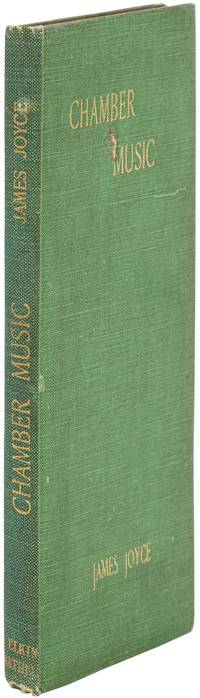
1907ref. 140946996London: Elkin Mathews 1907. First Edition. Near Fine. First edition of James Joyce's first trade book and one of 509 copies originally printed. Second issue with thick wove endsheets. Bound in publisher's green cloth stamped in gilt. Near Fine with slight fading to spine cloth foxing to endsheets and preliminary matter contents tanned. A beautiful copy of this collection of poems with the title being derived from the sound of urine hitting a chamber pot. Slocum & Cahoon 3. Elkin Mathews unknown books
1920ref. 021432Paris 24 November 1920. Letter. Close to Fine. Small 4-1/2" x 6-1/2" AUTOGRAPH LETTER SIGNED "James Joyce" to Madame Yasushi Tanaka Louise Gebhard Cann on blue paper integral with envelope which is addressed in Joyce's hand and postmarked on the verso. In full: "Dear Madam In reply to your letter I shall call on you on Sunday afternoon next as it seems to be the most convenient time for you. Sincerely yours James Joyce." Louise Gebhard Cann was a prominent writer and art critic in early 20th century France. At Ezra Pounds suggestion Cann wrote to Joyce requesting an interview with him for an article on writers in France set to appear in an upcoming issue of THE PACIFIC REVIEW. Following publication of the "Nausicaa" episode of ULYSSES in THE LITTLE REVIEW the previous year Joyces writing was deemed obscene. This particular issue of THE LITTLE REVIEW was effectively banned in the United States and it is believed that because of the controversy the editors then decided to omit any mention of Joyce from the finished article published in the March 1921 issue of THE PACIFIC REVIEW. Ellman JAMES JOYCE LETTERS III: 32. unknown books
1932ref. 69434New York: Berenice Abbott 1932. JOYCE James; ABBOTT Berenice. ABBOTT Berenice. Photographic Portrait of James Joyce by Berenice Abbott. New York: Bernice Abbott 1932. Full Description: JOYCE James. ABBOTT Berenice. Photographic Portrait of James Joyce by Berenice Abbott. New York: Berenice Abbott n.d. taken 1928. Original gelatin silver print portrait of Joyce taken by Abbott. Signed by the photographer in pencil in the lower right hand corner of the photograph. Mounted on stiff board. Abbott's stamp with her "50 Commerce Street NY" address on the verso of the mount. Image size: 13 x 10 1/8 inches; 330 x 260 mm. Some minor sunning around the perimeter of the photo. A tiny bit of scuffing to top and bottom edges. Otherwise about fine. This is the largest photo we can find of Joyce for the Commerce St. address. Swann Galleries who has had this photo before states "Circa 1932." This is a lovely and well-know portrait of author James Joyce. He is seated in Abbott's studio with a cane wearing a hat and his signature round-framed glasses. "Abbott photographed Joyce on two occasions the first in 1926 at his home in Paris and the second two years later in her studio. At the time of the sitting Joyce was struggling with teeth and eye problems and was struggling through completion of one of his best-known works Finnegan's Wake." "Berenice Alice Abbott July 17 1898 - December 9 1991 was an American photographer best known for her portraits of cultural figures of the interwar period New York City photographs of architecture and urban design of the 1930s and science interpretation of the 1940s to the 1960s." Wikipedia Abbott lived at 50 Commerce St. in NYC with her partner the influential art critic Elizabeth McCausland from 1935 to 1965. HBS 69434. $6000. Berenice Abbott unknown books
1922ref. 72310London: Egoist Press 1922. First UK edition. Printed in France from the plates of the original Shakespeare and Company edition just nine months after the first. Number 1299 of 2000 numbered copies. Finely re-bound in large 8vo gilt-stamped full blue leather with edges slightly trimmed by approximately 5 mm and the original paper covers bound in. The separately published 7-page errata that would have originally been laid in is not present here but facsimile copy is provided. Very good to near fine with original paper covers showing small amount of edge wear minor damp staining to bottom tips of several leaves and covers toned to light brown on spine and along edges. Slocum & Cahoon A18. Egoist Press unknown books
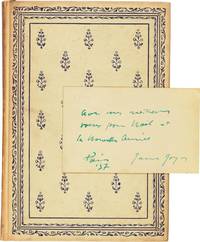
1936ref. 018988New York: The Black Sun Press 1936. First Edition. Hardcover. Partly unopened. Light soiling mostly to the rear; spine darkened. Near Fine. Small octavo 4-1/2" x 6-5/8" in publisher's cream-white boards spine lettered in blue front cover stamped in blue with floral ornaments. Frontispiece portrait by Augustus John. Copy #576 of 800 numbered copies. A Presentation copy with Joyce's engraved visiting-card INSCRIBED and SIGNED on the verso in green ink: "Avec mes meilleures/voeux pour Noël et/la Nouvelle Année. Paris '37 James Joyce." On the recto Joyce has scored through his name in green ink and there is a green ink blot in the upper left corner. The Black Sun Press hardcover books
1936ref. 72353London: John Lane the Bodley Head 1936. First UK edition to be printed in England and eighth edition overall. Number 317 of 900 copies from a total edition of 1000. Small 4to or tall 8vo green linen buckram with gilt-lettered spine and gilt-stamped bow design by Eric Gill on front; text on Japon vellum; top edges gilt; 766 pages including appendices. Near fine with light crease to base of spine minor rubbing to corners and hint of foxing to endpapers; in about very good dust jacket with internal archival-tape repair to spine ends and corners where old tape was removed from verso. Jacket shows a bit of rubbing rumpling and soiling but only minimal edge wear. Relatively scarce in dust jacket. Slocum & Cahoon A23. John Lane the Bodley Head unknown books
1929ref. 2621Paris: Shakespeare and Company 1929. First edition. 194 pp. Original printed wrappers with cover design by Sylvia Beach. Top edge uncut and unopened. Some slight overall soiling to the wrappers slight chipping to the lower edge of the spine. Chemised in a custom slipcase. One of 96 numbered copies on Verge d'Arches the numbered copies are twice as thick as the ordinary edition due to the paper used. Various tributes and studies of Joyce's Work in Progress which was published ten years later as Finnegans Wake. As Beach wrote "these were writers who had been watching Work in Progress from the beginning each seeing it from his own angle but interested in Joyce's experiment and friendly towards it." Beckett's first appearance in book form with texts by Marcel Brion Frank Budgen Stuart Gilbert Eugene Jolas Victor Llona Robert McAlmon Thomas McGreevy Elliot Paul John Rodker Robert Sage and William Carlos Williams. With letters of protest by G.V.L. Slingsby and Vladimir Dixon reputed to have been written by Joyce himself. Slocum & Cahoon B10. Federman & Fletcher 1. Wallace B11. Shakespeare and Company unknown books
1927ref. RJOYULY00tpmShakespeare and Co. Samuel Roth 1927 1929. Good. Joyce James. Ulysses. Paris NY: Shakespeare and Co. Samuel Roth 1927 1929. Unauthorized 1st U.S. printing. 735pp. 8vo. Greek blue wraps and deckle edges. Book condition: Good with bumped and chipped edges creased and cracked spine and faint soiling. An elusive copy of Joyce's Ulysses. Unauthorized printed and discreetly distributed by Samuel Roth in New York City and Philidelphia six years before before Ulysses' ban would be lifted in the U.S. Although Roth had formerly published Ulysses' serially in Two Worlds Monthly these full length copies made to pass as Shakespeare and Co.'s ninth printing would ulitmately place Roth in jail. Despite its disreputation it is nevertheless held by several special collections across the U.S. and is an essential character in the history of Ulysses and banned books in 20th century America. Shakespeare and Co. [Samuel Roth] paperback books
1996ref. UJOYLEA00sndLaura Geringer / Harper Colllins circa 1996. Very Good. Joyce William. The Leaf Men and the Brave Good Bugs. NY: Laura Geringer / Harper Colllins circa 1996. Illustrated. 4to. Glossy paper over boards. Book condition: Very good with some scuffing. Dust Jacket Condition: Very good. Panels scratched most noticeable on rear panel. Laura Geringer / Harper Colllins hardcover books
1922ref. 1263501922. Paris: John Rodker for the Egoist Press 1922. 4to 15 732 1pp. Later half black morocco gilt top backstrip richly gilt original Aegean blue printed wrappers bound in. A very good copy tastefully bound and preserving the iconic wrappers. § First UK edition number 715 of 2000 copies printed 500 were seized and burned by the U.S. customs upon arrival; with half-title and 7 pages of errata at the front. Long bookseller's note in pencil at back by John Howell-Books priced $75. Joyce's ground-breaking modernist novel was first serialized in the American journal The Little Review and was the target of the first of many censorship attempts soon after the publication of the Nausicaa episode. Despite being banned in the UK and suppressed in the US well into the 1930s the novel was recognized as a landmark in literature from its earliest reviews. "I hold this book to be the most important expression which the present age has found; it is a book to which we are all indebted and from which none of us can escape." - T.S. Eliot. Slocum & Cahoon A18. unknown books
ref. 302463New York: Vincent Fitzgerald & Co 1987. One of 50 numbered copies from a total edition of 65 including fifteen artist's proofs signed by Susan Weil and Marjorie Van Dyke. With illustrations by Susan Weil and Marjorie Van Dyke in various media: original etchings watercolors collages and decoupage. 1 vols. Folio 38 x 32.5 cm. Folded loose sheets laid into Japanese handmade silk over boards clamshell box with lightning bolt down upper cover mirror paper interiors by the Thistle Bindery. Internally fine some minor toning to spine and portions of the box else fine. One of 50 numbered copies from a total edition of 65 including fifteen artist's proofs signed by Susan Weil and Marjorie Van Dyke. With illustrations by Susan Weil and Marjorie Van Dyke in various media: original etchings watercolors collages and decoupage. 1 vols. Folio 38 x 32.5 cm. A stunning visual meditation upon the texts of Joyce's epiphanies executed in original etchings watercolors collages and hand-cut creations printed on various Japanese papers and on Moulin du Gue paper. The collages were executed by Vincent Fitzgerald and Zahra Partovi; the etchings were printed by Van Dyke and Maria Luisa Rojo at the Printmaking Workshop and the lithographs were printed by Van Dyke and Rhae Burden. The calligraphy was executed by Jerry Kelly and the letterpress printed by Dan Keleher and Bruce Chandler at Wild Carrot Letterpress. The texts of the forty epiphanies are printed in full and those selected for interpretation are assigned thematic divisions: "Planes" "Death" "Dreams" and "Games" with Weil undertaking the first two sections and Van Dyke the latter two. The thematic sectional titles to the divisions of the illustrative matter are keyed numerically to the relevant epiphanies in the text. A notable production singled out for notice in several key exhibitions including selective shows by Franklin Furnace and the Boston Athenaeum. Vincent Fitzgerald & Co unknown books
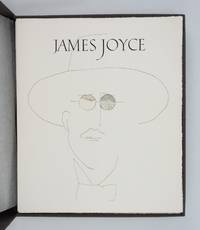
ref. ST21186New York: Vincent FitzGerald & Company 1987. No. 15 OF 50 COPIES for sale and 15 Artists' Proofs. 385 x 325 mm. 15 1/8 x 12 3/4". 2 p.l. 40 pp. 5 leaves. Unbound as issued in original wraps with a portrait of Joyce on front cover his round glasses cut out to reveal part of a collage on the opening leaf. Housed in a clamshell box by David Bourbeau of Thistle Bindery this covered in burgundy-flecked taupe Japanese handmade silk woven for this box upper cover with incised vertical line showing the profile of Joyce this with silver Japanese tea paper peeking through spine with silver "JJ." With a total of 62 etchings employing more than 150 plates original watercolors collage and hand cutting some of the pieces folded into multiple sections the artwork divided into four sections: "Dreams" "Games" "Planes" and "Death" each preceded by a title page also printed with the page numbers of the texts that inspired the art. Printed on Moulin du Gue paper; section title leaves for illustrations wrapped with Japanese paper. SIGNED in the colophon by Weil and Van Dyke. See: E. Brunazzi "Susan Weil's Art of Joycean Illumination" in James Joyce Quarterly Vol. 34 No. 1/2 Joyce's Women Fall 1996 - Winter 1997 pp. 121-34. In pristine condition. With a very strictly limited press run this collection of carefully crafted sketches by Joyce is offered here as an important artist's book honored as one of the best illustrated productions of its time. Compiled after Joyce's death and first published in 1956 the text here consists of 40 short but polished fragments in prose and poetry the author put together between 1901-04 and then drew on in the composition of his major works "Dubliners" "A Portrait of the Artist as a Young Man" "Ulysses" and Finnegans Wake." "Epiphanies" was an appropriate choice for the present striking production since our publisher Vincent FitzGerald aimed to produce deluxe publications in the mode of the French livres d'artiste by facilitating an artistic environment like that of Paris in 1920s. And so when he asked his friends Susan Weil and Marjorie Van Dyke what writer's work they would like to illustrate they immediately chose Joyce one of brightest lights of 1920s Paris. Weil was a longtime Joyce devotee and suggested his little-known "Epiphanies" for their first project since these notes and ideas provided material for some of his greatest books. As Weil said "'The Epiphanies' seemed so perfect. Words were released like a flock of birds to roost in Joyce's future works." Elizabeth Brunazzi tells us that "FitzGerald challenged Weil and Van Dyke to create an innovative relationship among the visual images responding to the verbal texts; to make them 'flow' one into the other rather than present them frame by frame as in an illustrated work; and thus to create a novel organic form for the visual text and a different interpretation of the 'artist's book' altogether." The result is a work where the "illustrations" are not static but are intended to be manipulated by the reader in order to fully reveal themselves. Weil and Van Dyke independently produced images for each of the 40 "Epiphanies" then began dividing the contributions into four themes: "Dreams" "Planes" "Games" and "Death." Both employed a variety of techniques including watercolor etching collage and paper cut-outs and worked with other artists to refine and produce their final works. Brunazzi says that the present production results in the reader beginning "to rediscover and explore the frontiers of textuality much as a child first encounters a book as a beloved physical object incorporating physical images both tactile and visual." The resulting book was chosen by the Independent Curators for the Franklin Furnace exhibition "Contemporary Illustrated Books" as one of the 50 best illustrated books from 1966-88 and was featured in the Boston Athenaeum exhibition "Artists of the Book 1988 A Facet of Modernism.". Vincent FitzGerald & Company unknown books
1939ref. 140947977London: Faber and Faber 1939. First Edition. Near Fine/Near Fine. First edition first printing. iv 628 pp. Bound in publisher's red cloth stamped in gilt on the spine yellow topstain. Near Fine with offsetting to fly-leaf and final page. In a Near Fine unclipped dust jacket with trivial toning to spine. Housed in a custom clamshell case black cloth over quarter black morocco titled in gilt. A beautiful copy of Joyce's famously complex and linguistically innovative novel scarce in this condition. One of an edition of 3400 copies of which 950 copies in sheets were destroyed. Slocum A48. Faber and Faber unknown books
1907ref. 514413London: Elkin Mathews 1907. Hardcover. Fine. First edition first issue. 16mo. 40pp. Light green cloth gilt. Contemporary owner name in blue pencil on front fly faint soil mark on front board the lettering on the spine is still bright thus near fine in a fine example of the publisher's unprinted glassine dust jacket. The very scarce first issue of James Joyce's first trade book preceded by two broadsides. This is the first binding variant according to Smoot and Cahoon A3: "First variant: Thick laid end papers with horizontal chain lines. 16.2 x 11 cm. Poems in signature C well centered on page." Published in a total edition of 509 copies. According to booksellers Bernard Quaritch Bulletin 19 1984 only "fifty or a hundred" copies of the first variant were bound and issued in 1907. Contemporary presentation copies appear in the first binding and it certainly seems plausible that due to low demand only a small number of copies were bound in 1907. Elkin Mathews hardcover books
1919ref. 029930Zurich: Rascher & Cie. 1919. The first German edition of Joyce's play Exiles and the first of his works to be published in translation in any language. One of 600 copies printed: Joyce was living in Zurich at the time and he paid for the publication of this book out of his own pocket. This copy is inscribed by the author: "To J.R. sic Watson Jun / with grateful regards / James Joyce / 8. ix. 1919." J.S. Watson Jr. was at the time the co-owner of the modernist literary journal The Dial which he bought from Martyn Johnson with his friend and fellow Harvard graduate Scofield Thayer. Watson became president of the magazine and Thayer became its editor. The "grateful regards" refers to a gift of $300 that Watson had sent Joyce earlier in the year at the urging of Thayer who had himself sent Joyce $700. These sums bailed Joyce out of dire financial straits allowed him to settle a court case against him and helped him support the theater group that he had associated with in Zurich the English Players. In 1920 The Dial published a piece by Joyce and in 1921 Thayer was one of his most ardent and influential supporters in the censorship case in New York against Ulysses and its publication in the Little Review. A notable association copy of Joyce's first translation. Slocum & Cahoon D44. Pages browned and acidified and covers strengthened at all the edges and spine with tape with a hole cut in the spine for the title to show through. The first blank on which the inscription appears is also strengthened at the edges with tape. Fragile and a candidate for de-acidification but a significant association copy from a critical point in Joyce's life and career. Unless otherwise noted our first editions are first printings. First Edition. Softcover. Good. Rascher & Cie. paperback books
1929ref. 22015Paris: Shakespeare And Company 1929. First edition. One of 96 numbered copies printed on Arches paper. Our Exagmination contains brief quotations from Work In Progress including a passage concerning Swift and blindness which was not later incorporated in Finnegans Wake. The ‘Letters of Protest' are reputed to have been written by Joyce himself. Slocum & Cahoon B10. Also includes Samuel Beckett's first appearance in print his essay on Joyce entitled "Dante Bruno Vico Joyce." The present copy belonged to Mogens Boisen the Danish translator of Ulysses and is inscribed to him by Sylvia Beach. It also includes two letters from him to a former owner explaining the circumstances whereby he was given the book. Small chip from rear wrapper front wrapper lightly creased otherwise a fine copy with two copies of the publication announcement preserved in a folding board box. 8vo original printed wrappers. Small chip from rear wrapper front wrapper lightly creased otherwise a fine copy with two copies of the publication announcement preserved in a folding board box. Shakespeare And Company unknown books
1929ref. 25938Paris: Shakespeare and Company Sylvia Beach 1929. First edition. 3-194 2 p. 191 x 140 mm. 7 1/2 x 5 1/2 in. Original printed paper wrappers. Copy no. 60 of 96 numbered copies printed on Arches paper. Mogens Boisen's copy the Danish translator of Ulysses inscribed to him by Sylvia Beach and with two letters from him to a former owner explaining the circumstances. Small chip from rear wrapper edge light creasing on front wrapper otherwise a fine copy. In a folding box with the announcement. "Dante.Bruno. Vico.Joyce" published here constitutes Samuel Beckett's first appearance in print. Shakespeare and Company, Sylvia Beach unknown books
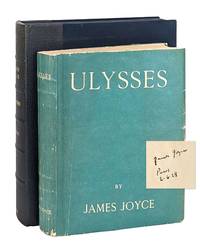
1927ref. 13715Paris: Shakespeare and Company 1927. Very Good. Paris: Shakespeare and Company 1927. Ninth printing. Large octavo; publisher's "Greek flag blue" wrappers lettered in white housed in half morocco slipcase lettered in gilt inner cloth chemise; 735pp. Wraps worn at extremities with very slight chipping to base of spine; spine creases with slight lean else sound. Overall Very Good. Extra leaf tipped in at front and signed "James Joyce Paris 2-6-28." The bound in leaf inserted by an unknown previous party coincides with Joyce living in Paris while Finnegan's Wake was being published serially under the title "fragments from Work in Progress." Slocum 17. Shakespeare and Company unknown books
1917ref. 463618New York: B.W. Huebsch 1917. Hardcover. Near Fine/Very Good. Second printing April 1917 of the American edition the first edition was published in December 1916 preceding the English edition. Octavo. 299pp. Blue cloth stamped in blind and gilt. Contemporary bookplate of Walter A. Donnelly on the front pastedown and his ownership signature on the front fly else very near fine in attractive very good or better second printing dustjacket with several old internal tape repairs mostly at the folds and not visible on the outside. The text of the second printing jacket appears to be identical to the text of the first printing although laid out slightly differently with "Second printing" overstamped in red on the front panel. Joyce's landmark first novel. Huebsch printed 1250 sets of sheets for the first edition selling 500 sets to England for the Egoist Press edition which was published later thus the true first edition in this case the American edition preceded the English was 750 copies. We are unaware of the number of copies in the second printing but it was likely to have been quite small perhaps as few as 500 copies. Although the first edition is rare in jacket we've at least seen a few jacketed copies. This is the first copy we've seen of the second printing in the appropriate jacket. B.W. Huebsch hardcover books
1939ref. 014569London/New York: Faber & Faber/Viking Press 1939. First Edition. Hardcover. Touch of wear to the heel of the spine which is mildly sunned. Lacking the original slipcase but with a custom-made slipcase in its place. Near Fine in a Fine custom slipcase. Original red buckram with gilt lettering on the spine. Copy #222 of 425 numbered copies printed on handmade paper and SIGNED by the author on the limitation page. One of the most important books of modern English fiction if not one of the more readable. "Joyce insisted that each word each sentence had several meanings and that the 'ideal lecteur' should devote his lifetime to it like the Koran" Connolly THE MODERN MOVEMENT 81; "The greatest failure in literature" Burgess 99 NOVELS: THE BEST IN ENGLISH SINCE 1939 page 25. Faber & Faber/Viking Press hardcover books