Doncaster, Carol,Sweeney, JoyceBiblio.com
18,417 results
2002ref. SBBIH-5RM4SQ5CGRNBCollins Educational 2002. paperback. Good. Our good condition books are generally good for reading but not for gifting or collecting. They could have imperfections such as creasing fanning inscriptions margin notes yellowing staining on edge or cover or pages bumps scuffs etc etc sometimes multiple of these. It's a wide category that encompasses anything that isn't almost-new down to anything that is slightly better than poor. We would NOT recommend gifting Good books - these should be considered reading copies. Our books are dispatched from a Yorkshire former cotton mill. We list via barcode/ISBN so please note that the images are stock images and may not be the exact copy you receive furthermore the details about edition and year might not be accurate as many publishers reuse the same ISBN for multiple editions and as we simply scan a barcode or enter an ISBN we do not check the validity of the edition data when listing. If you're looking for an exact edition please don't order at least not without checking with us first although we don't always have time to check. We aim to dispatch prompty the service used will depend on order value and book size. We can ship to most countries see our shipping policies. Payment is via Abe only. Collins Educational paperback
1975ref. SBBIH-SAZCYI6EQGDMNelson Thornes Ltd 1975. paperback. Good. Our good condition books are generally good for reading but not for gifting or collecting. They could have imperfections such as creasing fanning inscriptions margin notes yellowing staining on edge or cover or pages bumps scuffs etc etc sometimes multiple of these. It's a wide category that encompasses anything that isn't almost-new down to anything that is slightly better than poor. We would NOT recommend gifting Good books - these should be considered reading copies. Our books are dispatched from a Yorkshire former cotton mill. We list via barcode/ISBN so please note that the images are stock images and may not be the exact copy you receive furthermore the details about edition and year might not be accurate as many publishers reuse the same ISBN for multiple editions and as we simply scan a barcode or enter an ISBN we do not check the validity of the edition data when listing. If you're looking for an exact edition please don't order at least not without checking with us first although we don't always have time to check. We aim to dispatch prompty the service used will depend on order value and book size. We can ship to most countries see our shipping policies. Payment is via Abe only. Nelson Thornes Ltd paperback
1922ref. 5041London: Egoist Press 1922. First UK edition. 732 pp. 7.25 x 9 inches. Sewn signatures glued into printed paper covers. One of two thousand numbered copies on handmade paper. Accompanied by separate errata sheet folded twice to make eight pages. Printed by Maurice Darantiere in October 1922. Light soiling to covers and wear and chipping to edges with some creasing to spine and normal toning to pages otherwise a very good and unaltered copy and very uncommon thus. The uncut errata sheet has a light stain along the leading edge not affecting the text. Housed in a quarter-leather and cloth clamshell case with color cover label reproducing the front cover of the book; the case is clean and tight attractive despite a very faint stain on the top edge and a few stray marks on the back. The second printing and first British edition of Joyce's landmark novel printed for John Rodker in London eight months after the first printing for Shakespeare and Company in Paris by the same printer in Dijon France. With a new title page and front matter and the first appearance of the errata. A nice sound copy in the original and now iconic blue printed wrappers almost always found rebound and/or repaired and rarely with the scarce errata sheet. Egoist Press hardcover
1930ref. 187869Paris & New York: Henry Barbou and Jack Kahane; The Fountain Press 1930. A well-preserved copy of the delicate limited edition First edition number 90 of 100 copies signed by the author and printed on japon from a total edition of 685. Haveth Childers Everywhere was an early chapter of Joyce's "work in progress" that eventually became Finnegans Wake 1939 comprising pages 532-553 of the first edition. Large octavo. Original cream wrappers spine and front wrapper lettered in green and black edges untrimmed. With the glassine jacket and original slipcase. Glassine toned nicks and short closed tears to edges; slipcase neatly repaired: overall a near-fine copy. unknown
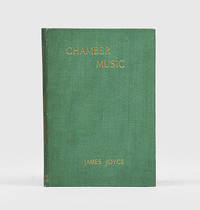
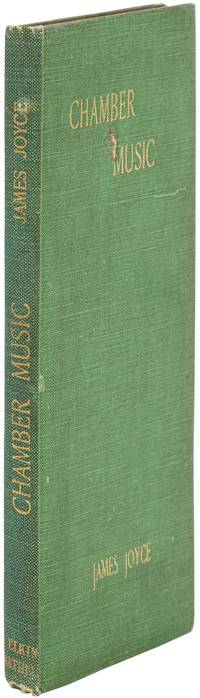
1907ref. 177849London: Elkin Mathews 1907. Love and laughter song-confessed / When the heart is heaviest First edition first issue of the author's first book prompting his resignation from his employment at a bank two months before publication. "These delicate lyrical verses were the work of the young poet of the college years and later" contrasting with the fiction which proved "a reversal of the earlier mood and view of the world" Costello p. 273. Publication took place on 10 May 1907 in a run of 509 copies which were not all bound at once. This first issue is slightly larger in size bound in a light green cloth with thick laid endpapers showing horizontal chain lines and it has the poems in signature C well-centred. The second and third variants were bound up in dark green cloth a few years later. They are both trimmed slightly smaller leaving the poems in signature C poorly centred. This copy is from the library of Geoffrey Arundel Whitworth CBE 1883-1951 the founder of the British Drama League who began working for the publisher Chatto & Windus in the same year Chamber Music was published. "Whitworth knew many writers established and new; through him the firm attracted works by such authors as G. K. Chesterton Lytton Strachey and Clive Bell". In 1934 George Bernard Shaw described Whitworth as "one of the most important people in the theatre today" ODNB. His ownership inscription is on the front free endpaper. Small octavo. Illustrated title page. Original light green cloth spine and front cover lettered in gilt. Housed in a dark green cloth chemise and gilt-decorated green morocco slipcase by Rene Patron of Hollywood. Cloth notably sharp notwithstanding mild rubbing and darkening of spine spots of soiling to a couple of leaves. A near-fine copy. Slocum & Cahoon A3 first variant. Peter Costello James Joyce: The Years of Growth 1992. hardcover
1935ref. 241728New York: Limited Editions Club 1935. Signed Limited Edition. Publisher's brown cloth decorated in gilt top edge speckled in glassine jacket housed in publisher's plain pale yellow slipcase spine titled in brown. Fine in toned and lightly chipped original glassine jacket in near fine publisher's slipcase. Illustrated by Henri Matisse in six etchings with accompanying preliminary sketches on blue and yellow transparent overlays. i-iii-xv 3 363 3pp. 12" x 9.5" NOT EVERY PICTURE TELLS THE STORY In October 1929 the stock market crashed and the twenty-nine year old George Macy 1900-1956 introduced the first book in his publishing venture The Limited Editions Club. Subscribers paid an affordable monthly price for editions de luxe of literary classics illustrated and signed by notable artists often designed by Macy in a limitation of 1500 copies. At the time the idea was groundbreaking and surprisingly well-received and Macy displayed an unflagging all-American spirit of purpose driven by risk-taking that would keep his publishing passion afloat through the Depression and onward. As its centenary approaches it appears that LECs have also survived the quirks and whims of book collectors thanks to Macy's unbridled instinct for matching artists with texts. Take for example the strangest marriage of them all Henri Matisse meets James Joyce's Ulysses the most valuable blunder in LEC history. An indignant Joyce finding out that Matisse had never read the book dropped out of the project at the eleventh hour signing only 250 copies sparking endless gossip and criticism and making it the most desirable of any of the LECs. Our copy may not have Joyce's imprimatur but it is otherwise complete and in spectacular condition making it a special offering from our Spring acquisitions. Limited to the standard 1500 signed and numbered copies of which this is number 364 signed by Matisse in pencil on the limitation page--preserved here in incredibly scarce original glassine. Slocum 22. Limited Editions Club unknown
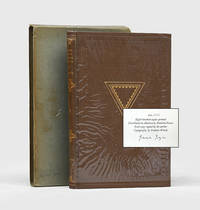
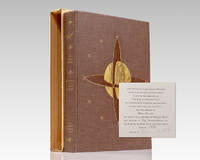
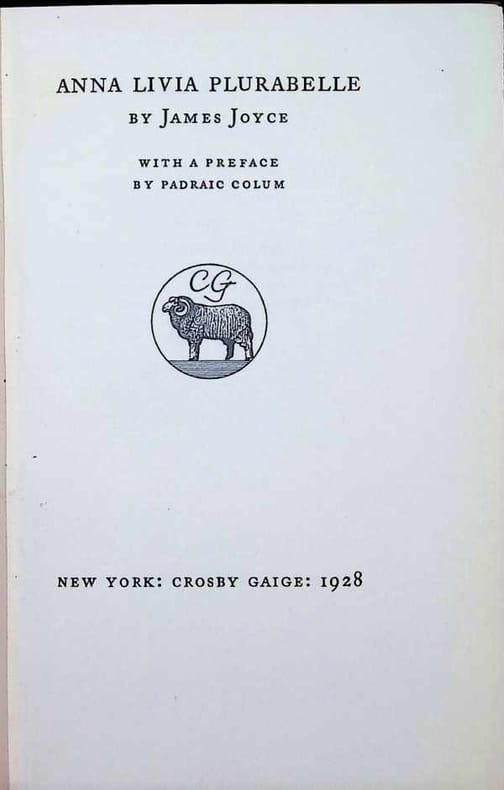
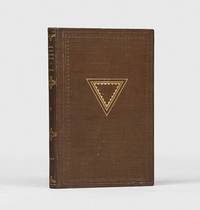
1928ref. 172029New York: Crosby Gaige 1928. A choice example of this predecessor to the Wake First edition signed limited issue number 666 of 800 copies signed by the author. Copies are rare in the publisher's glassine and slipcase which are unrecorded by the bibliographers Slocum & Cahoon. This edition which included a further 50 unsigned copies printed on green paper and bound in black cloth precedes the British edition by two years. Anna Livia Plurabelle is an early published chapter from Joyce's famous "Work in Progress" that eventually became Finnegans Wake 1939. T. S. Eliot thought it an excellent chapter to select for early publication writing that "this fantasy of the course of the river Liffey is the best-known part of Finnegans Wake and is the best introduction to it" p. 7. Duodecimo. Original brown cloth spine lettered and decorated in gilt blind rules and dog-tooth roll on covers front cover with gilt triangular centrepiece top edge gilt fore and bottom edges untrimmed. In publisher's glassine and original green card slipcase. Two later postcards with Joyce's portrait one by Man Ray loosely inserted. Spine head knocked bump to upper corners cloth bright and contents clean; glassine with tear to upper spine and fold ends with singular chip: a near-fine copy. Slocum & Cahoon A32. T. S. Eliot Introducing James Joyce: A Selection of Joyce's Prose 1942. hardcover
1919ref. 029930Zurich: Rascher & Cie. 1919. The first German edition of Joyce's play Exiles and the first of his works to be published in translation in any language. One of 600 copies printed: Joyce was living in Zurich at the time and he paid for the publication of this book out of his own pocket. This copy is inscribed by the author: "To J.R. sic Watson Jun / with grateful regards / James Joyce / 8. ix. 1919." J.S. Watson Jr. was at the time the co-owner of the modernist literary journal The Dial which he bought from Martyn Johnson with his friend and fellow Harvard graduate Scofield Thayer. Watson became president of the magazine and Thayer became its editor. The "grateful regards" refers to a gift of $300 that Watson had sent Joyce earlier in the year at the urging of Thayer who had himself sent Joyce $700. These sums bailed Joyce out of dire financial straits allowed him to settle a court case against him and helped him support the theater group that he had associated with in Zurich the English Players. In 1920 The Dial published a piece by Joyce and in 1921 Thayer was one of his most ardent and influential supporters in the censorship case in New York against Ulysses and its publication in the Little Review. A notable association copy of Joyce's first translation. Slocum & Cahoon D44. Pages browned and acidified and covers strengthened at all the edges and spine with tape with a hole cut in the spine for the title to show through. The first blank on which the inscription appears is also strengthened at the edges with tape. Fragile and a candidate for de-acidification but a significant association copy from a critical point in Joyce's life and career. Unless otherwise noted our first editions are first printings. First Edition. Softcover. Good. Rascher & Cie. paperback
1919ref. 029930Zurich: Rascher & Cie. 1919. The first German edition of Joyce's play Exiles and the first of his works to be published in translation in any language. One of 600 copies printed: Joyce was living in Zurich at the time and he paid for the publication of this book out of his own pocket. This copy is inscribed by the author: "To J.R. sic Watson Jun / with grateful regards / James Joyce / 8. ix. 1919." J.S. Watson Jr. was at the time the co-owner of the modernist literary journal The Dial which he bought from Martyn Johnson with his friend and fellow Harvard graduate Scofield Thayer. Watson became president of the magazine and Thayer became its editor. The "grateful regards" refers to a gift of $300 that Watson had sent Joyce earlier in the year at the urging of Thayer who had himself sent Joyce $700. These sums bailed Joyce out of dire financial straits allowed him to settle a court case against him and helped him support the theater group that he had associated with in Zurich the English Players. In 1920 The Dial published a piece by Joyce and in 1921 Thayer was one of his most ardent and influential supporters in the censorship case in New York against Ulysses and its publication in the Little Review. A notable association copy of Joyce's first translation. Slocum & Cahoon D44. Pages browned and acidified and covers strengthened at all the edges and spine with tape with a hole cut in the spine for the title to show through. The first blank on which the inscription appears is also strengthened at the edges with tape. Fragile and a candidate for de-acidification but a significant association copy from a critical point in Joyce's life and career. Unless otherwise noted our first editions are first printings. First Edition. Softcover. Good. Rascher & Cie. paperback books
1907ref. 514413London: Elkin Mathews 1907. Hardcover. Fine. First edition first issue. 16mo. 40pp. Light green cloth gilt. Contemporary owner name in blue pencil on front fly faint soil mark on front board the lettering on the spine is still bright thus near fine in a fine example of the publisher's unprinted glassine dust jacket. The very scarce first issue of James Joyce's first trade book preceded by two broadsides. This is the first binding variant according to Smoot and Cahoon A3: "First variant: Thick laid end papers with horizontal chain lines. 16.2 x 11 cm. Poems in signature C well centered on page." Published in a total edition of 509 copies. According to booksellers Bernard Quaritch Bulletin 19 1984 only "fifty or a hundred" copies of the first variant were bound and issued in 1907. Contemporary presentation copies appear in the first binding and it certainly seems plausible that due to low demand only a small number of copies were bound in 1907. Elkin Mathews hardcover
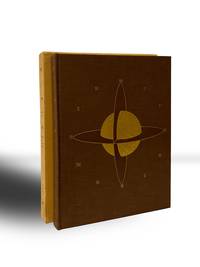
1935ref. 151736New York: The Limited Editions Club 1935. The Limited Editions Club signed limited edition of Joyce’s landmark Ulysses widely recognized as the first illustrated edition. Large quarto original gilt-stamped pictorial brown cloth with 26 illustrations. One of 1500 numbered copies this is number 1476. Boldly signed by Henri Matisse in pencil on the colophon page at the rear. In near fine condition. Introduction by Stuart Gilbert. Housed in the rare original board slipcase which is in good condition. One of the 20th-century’s most desirable illustrated books combining the work of two great modern artists. A nice example with the rare slipcase. One of the most arresting collaborations in 20th-century literature. "It was a great idea to bring them together; celebrities of the same generation of similar virtuosity" Wheeler 15. The 26 beautiful full-page illustrations by Matisse accompany the text of Joyce's Ulysses including six soft-ground etchings with reproductions of the sketches on blue and yellow paper. "One of the very few American livres de peintres issued before World War II. According to George Macy this work's designer who undertook this only American publication of Matisse's illustrations he asked the artist how many etchings the latter could provide for $5000. The artist chose to take six subjects from Homer's Odyssey. The preparatory drawings reproduced with the soft-ground etchings Matisse's only use of this medium record the evolution of the figures from vigorous sketches to closely knit compositions" Artist and the Book 197. The Limited Editions Club hardcover
1907ref. 514413London: Elkin Mathews 1907. Hardcover. Fine. First edition first issue. 16mo. 40pp. Light green cloth gilt. Contemporary owner name in blue pencil on front fly faint soil mark on front board the lettering on the spine is still bright thus near fine in a fine example of the publisher's unprinted glassine dust jacket. The very scarce first issue of James Joyce's first trade book preceded by two broadsides. This is the first binding variant according to Smoot and Cahoon A3: "First variant: Thick laid end papers with horizontal chain lines. 16.2 x 11 cm. Poems in signature C well centered on page." Published in a total edition of 509 copies. According to booksellers Bernard Quaritch Bulletin 19 1984 only "fifty or a hundred" copies of the first variant were bound and issued in 1907. Contemporary presentation copies appear in the first binding and it certainly seems plausible that due to low demand only a small number of copies were bound in 1907. Elkin Mathews hardcover books
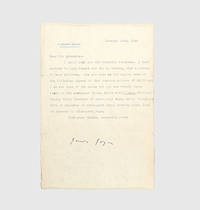
1930ref. 190805Paris: 1930. Lady Cunard. is sending over a person to hear Sullivan An unpublished letter sent to the future proprietor of the Ulysses Bookshop enlisting him in the promotion of the Irish tenor John O'Sullivan. Joyce first heard the singer perform in October 1929 and was immediately enthralled by his powerful voice. Upon meeting Joyce and O'Sullivan became friends and drinking companions and Joyce worked tirelessly to help O'Sullivan achieve success. In early 1930 Joyce was struggling against a creative slump in his work on Finnegans Wake. Furthering O'Sullivan's career became an alternative pursuit; Joyce was himself an amateur tenor and regarded the singer as "a kind of alter ego" Ellman p. xlv. He attended as many performances as possible always sitting in the front row and responding enthusiastically and encouraged his friends and admirers to do the same. He also attempted to get the tenor noticed by music critics and potential patrons such as Nancy Cunard's mother who he mentions in the present letter: "I have written to Lady Cunard and she is sending over a person to hear Sullivan". Ultimately few others were found who shared Joyce's enthusiasm for the singer but he was immortalized as the character "Jean Souslevin" i.e. "under the wine" in Finnegans Wake. Jacob Schwartz was "one of the first to recognize the market potential for letters and manuscripts of Joyce" Brockman p. 174. He met the writer in London in 1929 and shortly afterwards embarked on a journey to Dublin to purchase Joyce-related documents and memorabilia. The Ulysses Bookshop opened later in 1930. Single sheet of Joyce's printed letterhead 232 x 158 mm typed on one side. Housed in custom orange cloth chemise with acetate internal pocket. Short splits at ends of former folds two with small tape repairs to verso holding fast edges a little chipped and creased lightly toned. In very good condition. Richard Ellman ed. Letters of James Joyce Volume II 1966; William S. Brockman "Jacob Schwartz - 'The Fly in the Honey'" Joyce Studies Annual vol. 9 Summer 1998. hardcover
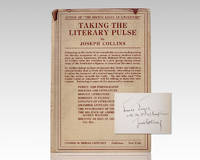
1924ref. 151436New York: George H. Doran Company 1924. First edition of this work analyzing modern authors and their literary characters through a psychological lens. Octavo original publisher's red cloth illustrated with tipped in plates. Association copy inscribed by the author to fellow writer James Joyce on the front free endpaper "James Joyce with the writers compliments Joseph Collins." The recipient James Joyce was an Irish modernist writer whose novel Ulysses 1922 is widely regarded as one of the most influential works of twentieth-century literature. Set in Dublin over the course of a single day the novel employs innovative narrative techniques—most notably stream of consciousness—to explore the inner lives of its characters while drawing structural parallels to Homer’s Odyssey. Joseph Collins was the first person to review Ulysses for the New York Times after Joyce lent Collins the Little Review installments of Ulysses. Collins groaned to Nutting the next day "I have in my files writing by the insane just as good as this" and gave a medical explanation of the deterioration of the artist's brain. Later on however he began to think better of the book. Joyce even had Molly Bloom memorialize Collins's manner in Ulysses: "Floey made me go to that dry old stick Dr Collins for womens diseases on Pembroke road. I wouldn't trust him too far to give me chloroform or God knows what else still I liked him when he sat down to write." Richard Ellman James Joyce page 516. Near fine in a very good dust jacket. An exceptional association. Dr. Joseph Collins 1866–1950 was an American neurologist author literary critic and medical educator known for his contributions to the study of nervous and mental disorders in the early twentieth century. A graduate of New York University Collins served as a professor of neurology and was actively involved in clinical practice and medical writing producing works that addressed both specialized neurological topics and broader issues of health and psychology. In addition to his scientific publications he wrote essays and books aimed at general audiences often exploring the relationship between mind and body as well as the social implications of medical knowledge. George H. Doran Company hardcover
1939ref. 140947977London: Faber and Faber 1939. First Edition. Near Fine/Near Fine. First edition first printing. iv 628 pp. Bound in publisher's red cloth stamped in gilt on the spine yellow topstain. Near Fine with offsetting to fly-leaf and final page. In a Near Fine unclipped dust jacket with trivial toning to spine. Housed in a custom clamshell case black cloth over quarter black morocco titled in gilt. A beautiful copy of Joyce's famously complex and linguistically innovative novel scarce in this condition. One of an edition of 3400 copies of which 950 copies in sheets were destroyed. Slocum A48. Faber and Faber unknown
1939ref. 140947977London: Faber and Faber 1939. First Edition. Near Fine/Near Fine. First edition first printing. iv 628 pp. Bound in publisher's red cloth stamped in gilt on the spine yellow topstain. Near Fine with offsetting to fly-leaf and final page. In a Near Fine unclipped dust jacket with trivial toning to spine. Housed in a custom clamshell case black cloth over quarter black morocco titled in gilt. A beautiful copy of Joyce's famously complex and linguistically innovative novel scarce in this condition. One of an edition of 3400 copies of which 950 copies in sheets were destroyed. Slocum A48. Faber and Faber unknown books
1928ref. 029919New York 1928 Crosby Gaige Hardcover 1st Edition Signed by Author
ref. 22066Préface de C. K. Ogden et portrait de l’auteur par C. BRANCUSI. P., The Black Sun Press, 1929, in-8, broché, couv. rempl., 58 p., sous chemise étui de l’éditeur papier vert et argent. Edition originale. Cette édition est due à Harry et Caresse Crosby qui dirigeaient une maison d'édition, The Black Sun Press, installée à Paris rue Cardinale. Elle comporte trois importants fragments de " Work in Progress " : The Mookse and the Gripes, The Muddest Thick that was Ever Heard Dump et The Ondt and the Gracehoper. En outre le recueil est illustré en frontispice du célèbre portrait " abstract " de Joyce par Brancusi constitué d'une spirale et de trois lignes verticales, dans lequel on reconnaît sans peine l'auteur d'Ulysses. Tirage à 650 exemplaires, celui-ci 1/100 de tête num sur Japon (thirty-four), signé à l'encre par Joyce page de faux-titre. Excellent état. Slocum & Cahoon, A 36.
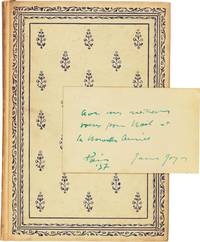
1936ref. 018988New York: The Black Sun Press 1936. First Edition. Hardcover. Partly unopened. Light soiling mostly to the rear; spine darkened. Near Fine. Small octavo 4-1/2" x 6-5/8" in publisher's cream-white boards spine lettered in blue front cover stamped in blue with floral ornaments. Frontispiece portrait by Augustus John. Copy #576 of 800 numbered copies. A Presentation copy with Joyce's engraved visiting-card INSCRIBED and SIGNED on the verso in green ink: "Avec mes meilleures/voeux pour Noël et/la Nouvelle Année. Paris '37 James Joyce." On the recto Joyce has scored through his name in green ink and there is a green ink blot in the upper left corner. The Black Sun Press hardcover
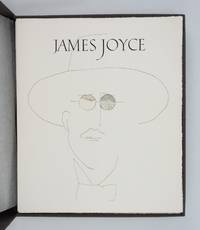
ref. ST21186New York: Vincent FitzGerald & Company 1987. No. 15 OF 50 COPIES for sale and 15 Artists' Proofs. 385 x 325 mm. 15 1/8 x 12 3/4". 2 p.l. 40 pp. 5 leaves. Unbound as issued in original wraps with a portrait of Joyce on front cover his round glasses cut out to reveal part of a collage on the opening leaf. Housed in a clamshell box by David Bourbeau of Thistle Bindery this covered in burgundy-flecked taupe Japanese handmade silk woven for this box upper cover with incised vertical line showing the profile of Joyce this with silver Japanese tea paper peeking through spine with silver "JJ." With a total of 62 etchings employing more than 150 plates original watercolors collage and hand cutting some of the pieces folded into multiple sections the artwork divided into four sections: "Dreams" "Games" "Planes" and "Death" each preceded by a title page also printed with the page numbers of the texts that inspired the art. Printed on Moulin du Gue paper; section title leaves for illustrations wrapped with Japanese paper. SIGNED in the colophon by Weil and Van Dyke. See: E. Brunazzi "Susan Weil's Art of Joycean Illumination" in James Joyce Quarterly Vol. 34 No. 1/2 Joyce's Women Fall 1996 - Winter 1997 pp. 121-34. In pristine condition. With a very strictly limited press run this collection of carefully crafted sketches by Joyce is offered here as an important artist's book honored as one of the best illustrated productions of its time. Compiled after Joyce's death and first published in 1956 the text here consists of 40 short but polished fragments in prose and poetry the author put together between 1901-04 and then drew on in the composition of his major works "Dubliners" "A Portrait of the Artist as a Young Man" "Ulysses" and Finnegans Wake." "Epiphanies" was an appropriate choice for the present striking production since our publisher Vincent FitzGerald aimed to produce deluxe publications in the mode of the French livres d'artiste by facilitating an artistic environment like that of Paris in 1920s. And so when he asked his friends Susan Weil and Marjorie Van Dyke what writer's work they would like to illustrate they immediately chose Joyce one of brightest lights of 1920s Paris. Weil was a longtime Joyce devotee and suggested his little-known "Epiphanies" for their first project since these notes and ideas provided material for some of his greatest books. As Weil said "'The Epiphanies' seemed so perfect. Words were released like a flock of birds to roost in Joyce's future works." Elizabeth Brunazzi tells us that "FitzGerald challenged Weil and Van Dyke to create an innovative relationship among the visual images responding to the verbal texts; to make them 'flow' one into the other rather than present them frame by frame as in an illustrated work; and thus to create a novel organic form for the visual text and a different interpretation of the 'artist's book' altogether." The result is a work where the "illustrations" are not static but are intended to be manipulated by the reader in order to fully reveal themselves. Weil and Van Dyke independently produced images for each of the 40 "Epiphanies" then began dividing the contributions into four themes: "Dreams" "Planes" "Games" and "Death." Both employed a variety of techniques including watercolor etching collage and paper cut-outs and worked with other artists to refine and produce their final works. Brunazzi says that the present production results in the reader beginning "to rediscover and explore the frontiers of textuality much as a child first encounters a book as a beloved physical object incorporating physical images both tactile and visual." The resulting book was chosen by the Independent Curators for the Franklin Furnace exhibition "Contemporary Illustrated Books" as one of the 50 best illustrated books from 1966-88 and was featured in the Boston Athenaeum exhibition "Artists of the Book 1988 A Facet of Modernism.". Vincent FitzGerald & Company unknown
ref. ST21186New York: Vincent FitzGerald & Company 1987. No. 15 OF 50 COPIES for sale and 15 Artists' Proofs. 385 x 325 mm. 15 1/8 x 12 3/4". 2 p.l. 40 pp. 5 leaves. Unbound as issued in original wraps with a portrait of Joyce on front cover his round glasses cut out to reveal part of a collage on the opening leaf. Housed in a clamshell box by David Bourbeau of Thistle Bindery this covered in burgundy-flecked taupe Japanese handmade silk woven for this box upper cover with incised vertical line showing the profile of Joyce this with silver Japanese tea paper peeking through spine with silver "JJ." With a total of 62 etchings employing more than 150 plates original watercolors collage and hand cutting some of the pieces folded into multiple sections the artwork divided into four sections: "Dreams" "Games" "Planes" and "Death" each preceded by a title page also printed with the page numbers of the texts that inspired the art. Printed on Moulin du Gue paper; section title leaves for illustrations wrapped with Japanese paper. SIGNED in the colophon by Weil and Van Dyke. See: E. Brunazzi "Susan Weil's Art of Joycean Illumination" in James Joyce Quarterly Vol. 34 No. 1/2 Joyce's Women Fall 1996 - Winter 1997 pp. 121-34. In pristine condition. With a very strictly limited press run this collection of carefully crafted sketches by Joyce is offered here as an important artist's book honored as one of the best illustrated productions of its time. Compiled after Joyce's death and first published in 1956 the text here consists of 40 short but polished fragments in prose and poetry the author put together between 1901-04 and then drew on in the composition of his major works "Dubliners" "A Portrait of the Artist as a Young Man" "Ulysses" and Finnegans Wake." "Epiphanies" was an appropriate choice for the present striking production since our publisher Vincent FitzGerald aimed to produce deluxe publications in the mode of the French livres d'artiste by facilitating an artistic environment like that of Paris in 1920s. And so when he asked his friends Susan Weil and Marjorie Van Dyke what writer's work they would like to illustrate they immediately chose Joyce one of brightest lights of 1920s Paris. Weil was a longtime Joyce devotee and suggested his little-known "Epiphanies" for their first project since these notes and ideas provided material for some of his greatest books. As Weil said "'The Epiphanies' seemed so perfect. Words were released like a flock of birds to roost in Joyce's future works." Elizabeth Brunazzi tells us that "FitzGerald challenged Weil and Van Dyke to create an innovative relationship among the visual images responding to the verbal texts; to make them 'flow' one into the other rather than present them frame by frame as in an illustrated work; and thus to create a novel organic form for the visual text and a different interpretation of the 'artist's book' altogether." The result is a work where the "illustrations" are not static but are intended to be manipulated by the reader in order to fully reveal themselves. Weil and Van Dyke independently produced images for each of the 40 "Epiphanies" then began dividing the contributions into four themes: "Dreams" "Planes" "Games" and "Death." Both employed a variety of techniques including watercolor etching collage and paper cut-outs and worked with other artists to refine and produce their final works. Brunazzi says that the present production results in the reader beginning "to rediscover and explore the frontiers of textuality much as a child first encounters a book as a beloved physical object incorporating physical images both tactile and visual." The resulting book was chosen by the Independent Curators for the Franklin Furnace exhibition "Contemporary Illustrated Books" as one of the 50 best illustrated books from 1966-88 and was featured in the Boston Athenaeum exhibition "Artists of the Book 1988 A Facet of Modernism.". Vincent FitzGerald & Company unknown books
1928ref. 169217New York: Crosby Gaige 1928. Anna was Livia is Plurabelle's to be First edition signed limited issue number 134 of 800 copies signed by the author preceding the British edition by two years. Anna Livia Plurabelle is an early published chapter from Joyce's famous "work in progress" that would eventually become Finnegans Wake. Duodecimo. Original brown cloth spine lettered in gilt spine and front cover decorated in gilt borders to covers in blind top edge gilt fore and bottom edges untrimmed. Housed in a custom brown cloth slipcase. Bookplate and ink ownership signature of one Dennis Hartman to front pastedown corresponding offsetting to front free endpaper. Spine ends lightly bumped a few tiny marks to cloth slight crease to preliminary blank. A near-fine copy. Slocum and Cahoon A32. hardcover
ref. 302463New York: Vincent Fitzgerald & Co 1987. One of 50 numbered copies from a total edition of 65 including fifteen artist's proofs signed by Susan Weil and Marjorie Van Dyke. With illustrations by Susan Weil and Marjorie Van Dyke in various media: original etchings watercolors collages and decoupage. 1 vols. Folio 38 x 32.5 cm. Folded loose sheets laid into Japanese handmade silk over boards clamshell box with lightning bolt down upper cover mirror paper interiors by the Thistle Bindery. Internally fine some minor toning to spine and portions of the box else fine. One of 50 numbered copies from a total edition of 65 including fifteen artist's proofs signed by Susan Weil and Marjorie Van Dyke. With illustrations by Susan Weil and Marjorie Van Dyke in various media: original etchings watercolors collages and decoupage. 1 vols. Folio 38 x 32.5 cm. A stunning visual meditation upon the texts of Joyce's epiphanies executed in original etchings watercolors collages and hand-cut creations printed on various Japanese papers and on Moulin du Gue paper. The collages were executed by Vincent Fitzgerald and Zahra Partovi; the etchings were printed by Van Dyke and Maria Luisa Rojo at the Printmaking Workshop and the lithographs were printed by Van Dyke and Rhae Burden. The calligraphy was executed by Jerry Kelly and the letterpress printed by Dan Keleher and Bruce Chandler at Wild Carrot Letterpress. The texts of the forty epiphanies are printed in full and those selected for interpretation are assigned thematic divisions: "Planes" "Death" "Dreams" and "Games" with Weil undertaking the first two sections and Van Dyke the latter two. The thematic sectional titles to the divisions of the illustrative matter are keyed numerically to the relevant epiphanies in the text. A notable production singled out for notice in several key exhibitions including selective shows by Franklin Furnace and the Boston Athenaeum. Vincent Fitzgerald & Co unknown
ref. 302463New York: Vincent Fitzgerald & Co 1987. One of 50 numbered copies from a total edition of 65 including fifteen artist's proofs signed by Susan Weil and Marjorie Van Dyke. With illustrations by Susan Weil and Marjorie Van Dyke in various media: original etchings watercolors collages and decoupage. 1 vols. Folio 38 x 32.5 cm. Folded loose sheets laid into Japanese handmade silk over boards clamshell box with lightning bolt down upper cover mirror paper interiors by the Thistle Bindery. Internally fine some minor toning to spine and portions of the box else fine. One of 50 numbered copies from a total edition of 65 including fifteen artist's proofs signed by Susan Weil and Marjorie Van Dyke. With illustrations by Susan Weil and Marjorie Van Dyke in various media: original etchings watercolors collages and decoupage. 1 vols. Folio 38 x 32.5 cm. A stunning visual meditation upon the texts of Joyce's epiphanies executed in original etchings watercolors collages and hand-cut creations printed on various Japanese papers and on Moulin du Gue paper. The collages were executed by Vincent Fitzgerald and Zahra Partovi; the etchings were printed by Van Dyke and Maria Luisa Rojo at the Printmaking Workshop and the lithographs were printed by Van Dyke and Rhae Burden. The calligraphy was executed by Jerry Kelly and the letterpress printed by Dan Keleher and Bruce Chandler at Wild Carrot Letterpress. The texts of the forty epiphanies are printed in full and those selected for interpretation are assigned thematic divisions: "Planes" "Death" "Dreams" and "Games" with Weil undertaking the first two sections and Van Dyke the latter two. The thematic sectional titles to the divisions of the illustrative matter are keyed numerically to the relevant epiphanies in the text. A notable production singled out for notice in several key exhibitions including selective shows by Franklin Furnace and the Boston Athenaeum. Vincent Fitzgerald & Co unknown books
1922ref. 1263501922. Paris: John Rodker for the Egoist Press 1922. 4to 15 732 1pp. Later half black morocco gilt top backstrip richly gilt original Aegean blue printed wrappers bound in. A very good copy tastefully bound and preserving the iconic wrappers. § First UK edition number 715 of 2000 copies printed 500 were seized and burned by the U.S. customs upon arrival; with half-title and 7 pages of errata at the front. Long bookseller's note in pencil at back by John Howell-Books priced $75. Joyce's ground-breaking modernist novel was first serialized in the American journal The Little Review and was the target of the first of many censorship attempts soon after the publication of the Nausicaa episode. Despite being banned in the UK and suppressed in the US well into the 1930s the novel was recognized as a landmark in literature from its earliest reviews. "I hold this book to be the most important expression which the present age has found; it is a book to which we are all indebted and from which none of us can escape." - T.S. Eliot. Slocum & Cahoon A18. unknown