Emile ZOLABiblio.com
6294 resultados
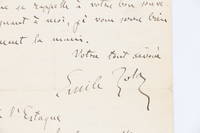
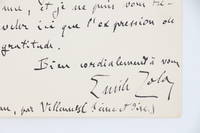
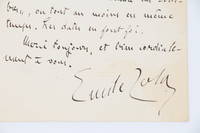
1888ref. 79098Paris 1888. Fine. Paris 11 février 1888 13.20 x 20.50 cm 2 pages sur un double feuillet Autograph letter signed by Emile Zola addressed to Henry Fouquier written in black ink on a bifolium. Usual folds from mailing. This letter was transcribed in the complete correspondence of Emile Zola published by the CNRS and the Presses de l'Université de Montréal. A fine letter evoking La Terre and Tolstoy's The Power of Darkness. Henry Fouquier 1838-1900 was a literary critic and columnist for numerous newspapers. A close friend of Guy de Maupassant he supported Emile Zolas candidacy for the Académie française. This letter was written to him the day after the performance of Tolstoy's The Power of Darkness at the Théâtre-Libre. We have not found evidence of an article in which the journalist explicitly drew a parallel between the Russian drama and Zolas La Terre but Zola here addresses his thanks: « Merci mon cher Fouquier de ce que vous voulez bien dire de « la Terre » si attaquée. J'en suis touché vivement et croyez à toute ma gratitude. » It must be said that the fifteenth volume of the Rougon-Macquart cycle was harshly received unleashing passions from the moment of its serial publication in Gil Blas. On 18 August 1887 even before the conclusion of the novel was revealed to the public Le Figaro published the Manifeste des Cinq written by Paul Bonnetain J.-H. Rosny Lucien Descaves Paul Margueritte and Gustave Guiches. These young authors issued a severe verdict: « La Terre a paru. La déception a été profonde et douloureuse. Non seulement l'observation est superficielle les trucs démodés la narration commune et dépourvue de caractéristiques mais la note ordurière est exacerbée encore descendue à des saletés si basses que par instants on se croirait devant un recueil de scatologie : le Maître est descendu au fond de l'immondice. . Nous répudions ces bonshommes de rhétorique zoliste ces silhouettes énormes surhumaines et biscornues dénuées de complication jetées brutalement en masses lourdes dans des milieux aperçus au hasard des portières d'express. De cette dernière uvre du grand cerveau qui lança L'Assommoir sur le monde de cette Terre bâtarde nous nous éloignons résolument mais non sans tristesse. Il nous poigne de repousser l'homme que nous avons trop fervemment aimé. » Zola who had been developing the idea of a peasant novel for a decade was deeply affected. Though he never responded publicly to these accusations his correspondence is strewn with clarifications about the work whose sheer brutality alone seemed to occupy readers minds: « Mais vous ajoutez que notre thèse à Tolstoï et à moi est la même et peut se résumer en ceci : le travail de la terre est corrupteur. Tolstoï il me semble protesterait bien haut et quant à moi je vous affirme que je n'ai jamais voulu prouver une telle chose radicalement fausse à mon avis. Ce que je pense c'est que la petite propriété telle qu'elle existe chez nous c'est que la suite de faits sociaux qui ont abouti à notre forme sociale nous ont donné notre paysan d'aujourd'hui avec ses qualités et ses vices. Notre paysan est le prisonnier de sa terre et non l'homme libre qu'il devrait être. Comment voulez-vous qu'il n'y étouffe pas dans son ignorance et sa passion unique Labourer est très sain mais à la condition qu'on sera le maître de son champ au lieu d'en être le forçat. Je me suis exténué à faire sortir cette vérité de mon livre si l'on ne m'a pas compris la faute en est sans doute à moi. » A remarkable letter from the master of Naturalism shedding new light on one of the most brutal volumes of the Rougon-Macquart series. unknown
1875ref. 83515Paris: Charpentier & Cie 1875. Fine. Charpentier & Cie Paris 1875 11 x 17.50 cm relié First edition of which no copies were printed on deluxe paper. Half red shagreen binding smooth spine decorated with triple gilt fillets gilt roll at foot marbled paper boards marbled paper endpapers and pastedowns rubbed corners contemporary binding. Some light foxing. A fine and very rare copy. Charpentier & Cie hardcover
1877ref. 79046L'Estaque - Marseille Marseille 1877. Fine. L'Estaque - Marseille Marseille 22 septembre 1877 13.30 x 20.80 cm 3 pages 1/2 sur un double feuillet Autograph letter signed by Emile Zola addressed to Louis-Edmond Duranty written in black ink on a double leaf. Some deletions and corrections; folds inherent to postal transmission. This letter has been transcribed in the complete correspondence of Emile Zola published by the CNRS and the Presses of the University of Montreal. Long letter evoking the heat wave at L'Estaque Une page d'amour and Edouard Manet. ""Il y a quatre mois que nous sommes ici et je vous avais promis de vous écrire. Mais j'ai tant travaillé et j'ai eu si chaud que vous m'excuserez de mon apparente paresse. Imaginez-vous que jusqu'au 15 août la température a été très agréable ; il faisait beaucoup moins chaud qu'à Paris et nous respirions chaque soir une brise de mer délicieuse. Puis voilà que brusquement lorsque je nous croyais hors de toutes mauvaises plaisanteries de la chaleur le thermomètre est monté à 40 degrés et s'y est maintenu nuit et jour. Nous avons ainsi passé deux semaines intolérables. Aujourd'hui la fraîcheur est revenue et nous allons rester jusqu'aux premiers jours de novembre pour jouir des charmes d'un bel automne."" ""We have been here for four months and I had promised to write to you. But I have worked so much and have been so hot that you will excuse my apparent laziness. Imagine that until August 15th the temperature was very pleasant; it was much less hot than in Paris and we breathed each evening a delicious sea breeze. Then suddenly when I thought we were safe from all the nasty tricks of the heat the thermometer rose to 40 degrees and stayed there night and day. We thus spent two unbearable weeks. Today the coolness has returned and we will stay until the first days of November to enjoy the charms of a beautiful autumn."" In this summer of 1877 Zola left the tumultuous capital for a five-month stay at L'Estaque ""banlieue de Marseille"" ""suburb of Marseille"" in the company of his wife Alexandrine and his mother Emilie Aubert. This long southern interlude reminded him of his youth in Aix: ""Je suis d'ailleurs enchanté de mon été. Les pays est splendide et me rappelle toute ma jeunesse."" ""I am moreover delighted with my summer. The country is splendid and reminds me of all my youth."" ""Pour finir avec moi j'ajouterai que j'ai travaillé vigoureusement à mon roman sans pourtant l'avancer autant que je l'aurais voulu. Ce roman doit paraître dans le Bien Public à partir du 14 novembre. J'en serai quitte pour donner encore un vigoureux coup de collier à Paris."" ""To finish with myself I will add that I have worked vigorously on my novel without however advancing it as much as I would have liked. This novel must appear in the Bien Public starting November 14th. I will have to give another vigorous push in Paris."" The new novel in question here is Une page d'amour whose plot and style contrast completely with the previous volume of the Rougon-Macquart: ""Je ne sais vraiment pas ce que vaut mon travail. J'ai voulu donner une note absolument opposée à celle de L'Assommoir ce qui me déroute parfois et me fait trouver mon roman bien gris. Mais je vais tout de même bravement mon chemin. Il faudra voir."" ""I really don't know what my work is worth. I wanted to give a note absolutely opposite to that of L'Assommoir which sometimes disconcerts me and makes me find my novel quite gray. But I am nonetheless bravely going my way. We will have to see."" But this ""page of love"" conceals another and during this stay in the Marseilles furnace Emile Zola was already thinking about the following volume: ""What is simmering in his southern pot is nothing less than a new bomb. Not Une page d'amour: 'it is a work too gentle to excite the public.' But Nana is already announced: 'I dream here of an extraordinary Nana. You will see that.' letter to Marguerite Charpentier of August 21 1877"" Henri Mitterrand Zola Even t unknown
1882ref. 79109Médan 1882. Fine. Médan 16 novembre 1882 13.60 x 21.40 cm 2 pages sur un double feuillet - enveloppe jointe Autograph letter signed by Emile Zola - apparently unpublished - addressed to Léon Carbonnaux written in black ink on a double sheet. Folds inherent to mailing. Envelope included. Important testimony to the colossal documentation work and the capital role of Emile Zola's informants in depicting his immense natural and social fresco. This letter was sent to Léon Carbonnaux department head at Bon Marché who transmitted precious information to Emile Zola for the creation of the eleventh volume of the Rougon-Macquart series: Au Bonheur des Dames. Only two letters from Léon Carbonnaux to Emile Zola are known: they can be consulted in the digitization of the preparatory file for Bonheur des Dames made available online by the Bibliothèque nationale de France. However we know thanks to this same file which contains a long section entitled ""Notes Carbonnaux"" that this department head at Bon Marché provided a significant amount of information to Zola particularly about employee customs and their remuneration. The two men undoubtedly met when Emile Zola eager for information about the functioning of department stores conducted field research in February and March 1882. ""J'ai pris l'inventaire comme cadre à un de mes chapitres. D'ailleurs je n'ai spécialement besoin que du travail dans le rayon des confections et dans le rayon des soieries. Il est inutile de me renseigner sur les autres rayons."" ""I have taken the inventory as the framework for one of my chapters. Moreover I specifically only need the work in the ready-to-wear department and in the silk department. It is unnecessary to inform me about the other departments."" Thanks to this important letter we understand that it was Léon Carbonnaux who provided the essential information to Emile Zola for writing his very beautiful eleventh chapter devoted to the inventory: ""Vous avez eu l'obligeance de me donner certains détails sur l'inventaire. Vous m'avez dit qu'on choisissait le premier dimanche d'août qu'on fermait les portes et que tous les employés s'y mettaient. On vide toutes les cases n'est-ce pas on jette les marchandises sur les comptoirs ou à terre et l'inventaire n'est terminé que lorsqu'il n'y a plus absolument rien en place."" ""You were kind enough to give me certain details about the inventory. You told me that the first Sunday in August was chosen that the doors were closed and all the employees set to work. All the compartments are emptied aren't they The merchandise is thrown onto the counters or on the ground and the inventory is only finished when there is absolutely nothing left in place.""The final version of Bonheur des Dames contains all the precious information provided by the department head of Bon Marché: ""Le premier dimanche d'août on faisait l'inventaire qui devait être terminé le soir même. Dès le matin comme un jour de semaine tous les employés étaient à leur poste et la besogne avait commencé les portes closes dans les magasins vides de clientes. . Neuf heures sonnaient. . Dans le magasin inondé de soleil par les grandes baies ouvertes le personnel enfermé venait de commencer l'inventaire. On avait retiré les boutons des portes des gens s'arrêtaient sur le trottoir regardant par les glaces étonnés de cette fermeture lorsqu'on distinguait à l'intérieur une activité extraordinaire. C'était d'un bout à l'autre des galeries du haut en bas des étages un piétinement d'employés des bras en l'air des paquets volant par-dessus les têtes ; et cela au milieu d'une tempête de cris de chiffres lancés dont la confusion montait et se brisait en un tapage assourdissant. Chacun des trente-neuf rayons faisait sa besogne à part sans s'inquiéter des rayons voisins. D'ailleurs on attaquait à peine les casiers il n'y avait encore par terre que quelques pièces d'étoffe. La machine devait s'échauffer si l'on voulait finir le soir même. unknown
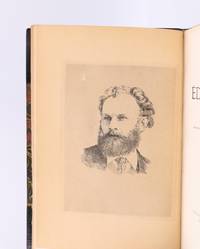
1866ref. 91980Paris: E. Dentu 1866. Fine. E. Dentu Paris 1866 15.5 x 24 cm Relié First edition illustrated with a frontispiece portrait of Edouard Manet by Bracquemond and an etching by Edouard Manet after ""Olympia"". Black half morocco over corners spine with five raised bands ruled in blind date gilt at foot marbled paper boards patterned endpapers and pastedowns original wrappers preserved binding signed by Stroobants. A rare and handsome copy attractively bound. Â E. Dentu hardcover
1888ref. 334721888. Fine. 1888 27 x 35 cm Panneau de bois Oil on wood signed lower right This original work was used to illustrate a scene from The Earth in the first illustrated edition of Emile Zola's work published by Marpon & Flammarion in 1889. unknown
1888ref. 334731888. Fine. 1888 27 x 35 cm Un panneau de bois Oil on wood signed lower right This original work was used to illustrate a scene from The Earth in the first illustrated edition of Emile Zola's work published by Marpon & Flammarion in 1889. unknown
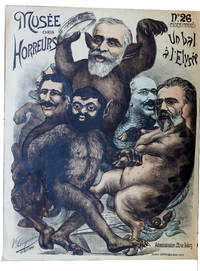
1900ref. 80343Paris: Imprimerie Lenepveu 1900. Fine. Imprimerie Lenepveu Paris s. d. mai 1900 49.80 x 65.20 cm une affiche Musée des horreurs Original colour lithographed poster n° 26 exceptionnel Un bal à l'Elysée Imprimerie Lenepveu Paris May 1900 498 x 652 cm one poster Original colour lithographed poster depicting Émile Loubet as a bear holding a tambourine marked Panama Émile Zola as a pig Dreyfus as a hydra Joseph Reinach as a monkey the rabbi Kadoc Kahn as a donkey and Georges Picquart as a dromedary. This imposing poster featuring several people already caricatured in the previous issues is a direct reference to the Panama Scandal. This large-scale corruption affair which saw the resignation of Émile Loubet then Minister of Finance is re-referred to here because of the Judaism of some of is protagonists. It is Drumont through his magazine La Libre Parole who revealed the Panama Scandal denouncing the alleged alliance between the secular Republic and the Jewish high bank and thus contributing to the strengthening of the stereotype of the Jew eager for money: The deputy Joseph Reinach cousin and son-in-law of the baron Jacques de Reinach compromised in the scandal focuses the hatred of the polemicist. A republican close to the business world a free thinker Reinach is undoubtedly with Alphonse de Rothschild the man most attacked by the anti-Semites of the time. His wealth the vast networks of influence available to him his early involvement with Gambetta the memory of his campaigns against Boulangism and his equivocal role in the Panama affair make him the man to slaughter in order to return France to the French. Grégoire Kauffmann Rothschild & Cie. La bourgeoisie juive vue par Édouard Drumont in Archives Juives 2009 As for Émile Zola his novel L'Argent published in 1891 denounces the misappropriation of this financial scandal but his support for Alfred Dreyfus earned him his place in this nightmarish animal circle. Circulated between October 1899 and December 1900 in a France set ablaze by the Dreyfus Affair these immense colour portraits are the work of Victor Lenepveu who announced the publication of 150 and then 200 drawings before finally producing only around fifty. Despite the 1881 law on the freedom of press allowing the dissemination of a politically subversive image the publication of this nightmarish pantheon was interrupted by order of the Ministry of the Interior. The fragility of the paper and the imposing size of these very violent posters as well as their almost immediate seizure by the police contributed to the disappearance of these caricatures which strongly left a mark on public opinion. These horreurs were widely promoted by anti-Semitic newspapers that announced a fantasised print of 300000 copies thus insinuating the success of anti-Semitic ideas in the population. On 1st October 1899 L'Intransigeant announced the publication of the Musée des horreurs in its columns: Un dessinateur de beaucoup d'esprit au coup de crayon d'un comique intense M. V. Lenepveu a eu l'heureuse idée d'inaugurer une série de portraits des vendus les plus célèbres de la tourbe dreyfusarde. Le titre de cette série « Musée des Horreurs » est suffisamment suggestif et indique bien ce qu'il promet. . C'est la maison Hayard qui mettra en vente à partir d'aujourd'hui le numéro 1 de cette désopilante série. An artist of great spirit with an intense comical pencil stroke M. V. Lenepveu had the happy idea of inaugurating a series of portraits of the most famous sellouts of the Dreyfusard rabble. The title of this series Musée des Horreurs is sufficiently suggestive and is a good indicator of what it promises. . It is Maison Hayard that will put up for sale from today issue number 1 of this hilarious series. First a peddler then a bookseller-publisher Napoléon Hayard known as Léon Hayard specialised in the marketing of anti-Dreyfusard and anti-Semitic ephemera and advertisem Imprimerie Lenepveu unknown
1887ref. 005300Paris: G. Charpentier Et Cie Editeurs 1887 1887. FIRST EDITION PRESENTATION COPY. 1 vol. 7-3/16" x 5-3/16" inscribed by the author on half title "a' Van Santen Kolff Sou divour' confrire Emile Zola" bound in 1/4 maroon calf raised bands gilt lettered spine bookplate of Ernst Magnus 1873-1942 to front pastedown housed in a green morocco backed slipcase raised bands gilt lettered spine. Slight toning to pages front hinge cracked but firm rear hinge rubbed head and foot of spine rubbed with loss a scarce title inscribed. According to RBH no inscribed copy of this title has never appeared at auction. Jacques van Santen Kolff and Emile Zola shared a notable correspondence and a close intellectual relationship as writer and admirer from 1878 to 1894. Van Santen Kolff was a Dutch art and literature critic who became a dedicated admirer and prospective biographer of the French novelist. Zola wrote dozens of letters and cards to Van Santen Kolff over a 16-year period in response to his persistent detailed questioning. Zola's letters to Van Santen Kolff offered deep insight into his creative process explaining the philosophical concepts themes character origins and hidden meanings behind his Rougon-Macquart novels. The letters sent by Zola to Van Santen Kolff were later compiled and published serving as an important resource for literary scholars studying Zola's work. Paris: G. Charpentier Et Cie Editeurs, 1887 hardcover
1880ref. 87792Benque & Cie | Paris s.d. (ca 1880) | 10.50 x 16.50 cm | une feuille
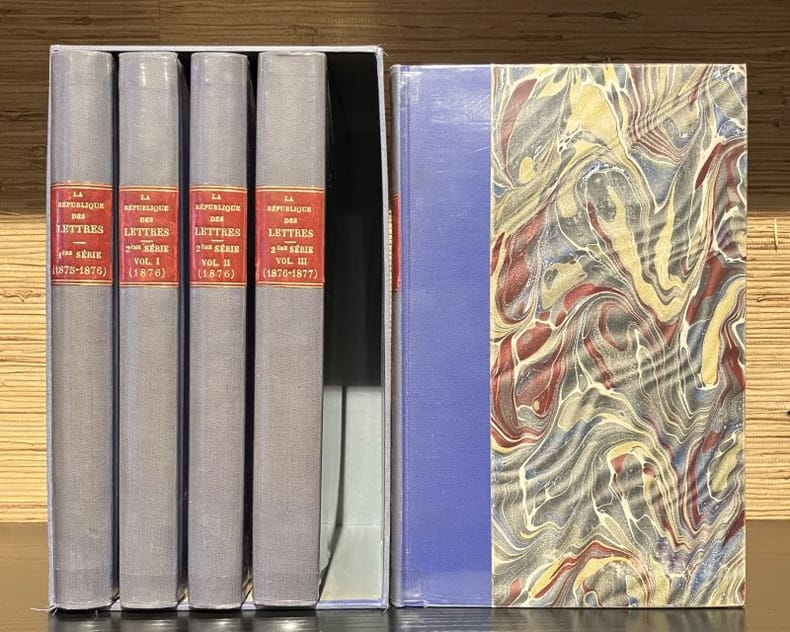
2018ref. 4482018 Paris, Alphonse Derenne puis Richard Lesclide, 20 décembre 1875-3 juin 1877 ; 55 num. en 5 vol. in-8, bradel demi-toile indigo, couvertures de livraison conservées, étui commun (reliures modernes).
ref. 23407Paris, A. Lacroix, 1871. In-8, 360 pp., maroquin rouge d'Huser, filets dorés en encadrement sur les plats, dos à nerfs orné de caissons dorés, doublure de maroquin gris à encadrement de maroquin rouge, gardes de soie moirée, tranches dorées, couverture conservée (couverture empoussiérée).
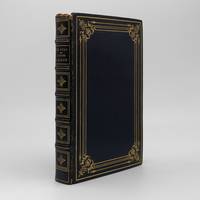
1891ref. 116382Paris Bibliothèque-Charpentier 1891 1 vol. relié in-12, demi-maroquin bleu nuit à coins bordé d'un filet doré, dos à nerfs soulignés de pointillés dorés, double filet doré en encadrement des caissons décorés d'entrelacs, guirlandes et fleurons dorés, tête dorée, couvertures et dos conservés, non rogné (Bernasconi), 445 + 14 pp. (extrait du catalogue de l'éditeur). Edition originale. Un des 250 exemplaires numérotés sur Hollande (n°248). En belle condition dans une parfaite reliure signée, avec trois ex-libris gravés (Richard Anacréon, J.C.F. Jacobi et A.B.).
1891ref. 116382Paris Bibliothèque-Charpentier 1891 1 vol. relié in-12, demi-maroquin bleu nuit à coins bordé d'un filet doré, dos à nerfs soulignés de pointillés dorés, double filet doré en encadrement des caissons décorés d'entrelacs, guirlandes et fleurons dorés, tête dorée, couvertures et dos conservés, non rogné (Bernasconi), 445 + 14 pp. (extrait du catalogue de l'éditeur). Edition originale. Un des 250 exemplaires numérotés sur Hollande (n°248). En belle condition dans une parfaite reliure signée, avec trois ex-libris gravés (Richard Anacréon, J.C.F. Jacobi et A.B.).
1864ref. 52158J. Hetzel & A. Lacroix | Paris 1864 | 11 x 18 cm | relié
1882ref. 84969Reliure maroquin janséniste grenat. Dos à nerfs. Date dorée au talon. Tête dorée. Double filet doré sur coiffes et coupes. Dentelle intérieure. Couvertures et dos conservés. Non rogné. Reliure signée Blanchetière.
1890ref. 87793Eugène Pirou | Paris s.d. (ca 1890) | 10.70 x 15.50 cm | une feuille
ref. 46858Paris Charpentier et Fasquelle 1899-1903 6 vol. relié 6 vol. in-8, demi-maroquin rouge à coins, dos à nerfs, têtes dorées, couvertures et dos conservés, non rognés (Durvand), 345-405, 329-338 et 381-367 pp. Édition originale du dernier cycle romanesque de Zola. Interrompue par la mort accidentelle de l'auteur en 1902 - la quatrième et dernière partie, Justice, étant restée à l'état d'ébauche, cette oeuvre est demeurée largement méconnue. Après les "Rougon-Macquart", analyse de la société sous le Second Empire, après les "Trois Villes", procès du catholicisme, Zola nous livre ses évangiles pour construire une société meilleure : une nécessaire natalité, le sauvetage de l'humanité laborieuse, l'instruction et la laïcité. L'ensemble, d'un optimisme qui peut sembler forcé, se lit comme un testament idéologique et rêveur. Zola confie : « Tout cela est bien utopique, mais que voulez-vous ? Voici quarante ans que je dissèque, il faut permettre à mes vieux jours de rêver un peu » (lettre à Octave Mirbeau). Chaque volume est l'un des exemplaires de tête numérotés sur Japon Impérial (50 pour le premier, 30 pour les suivants). Série complète, dans une très belle reliure signée de l'époque.
ref. 46858Paris Charpentier et Fasquelle 1899-1903 6 vol. relié 6 vol. in-8, demi-maroquin rouge à coins, dos à nerfs, têtes dorées, couvertures et dos conservés, non rognés (Durvand), 345-405, 329-338 et 381-367 pp. Édition originale du dernier cycle romanesque de Zola. Interrompue par la mort accidentelle de l'auteur en 1902 - la quatrième et dernière partie, Justice, étant restée à l'état d'ébauche, cette oeuvre est demeurée largement méconnue. Après les "Rougon-Macquart", analyse de la société sous le Second Empire, après les "Trois Villes", procès du catholicisme, Zola nous livre ses évangiles pour construire une société meilleure : une nécessaire natalité, le sauvetage de l'humanité laborieuse, l'instruction et la laïcité. L'ensemble, d'un optimisme qui peut sembler forcé, se lit comme un testament idéologique et rêveur. Zola confie : « Tout cela est bien utopique, mais que voulez-vous ? Voici quarante ans que je dissèque, il faut permettre à mes vieux jours de rêver un peu » (lettre à Octave Mirbeau). Chaque volume est l'un des exemplaires de tête numérotés sur Japon Impérial (50 pour le premier, 30 pour les suivants). Série complète, dans une très belle reliure signée de l'époque.
1867ref. 82102Paris:: E. Dentu 1867. First edition. handsome later half morocco and marbled sides t.e.g.; elaborately gilt spine. Some extremely light marginal foxing to the margins of the text; original etching of Olympia and the portrait fine; binding fine. . 8vo. Accompagnee d'un portrait d'Ed. Manet par Bracquemond et d'une eau-forte d'Ed. Manet d'apres Olympia. E. Dentu, unknown
1901ref. 005299Paris: Librairie Charpentier 1901 1901. FIRST EDITION PRESENTATION COPY. 1 vol. 7-5/8" x 5-3/8" inscribed by the author on half title "a' Eugine Semenoff sou ami Emile Zola" bound in 1/4 maroon calf raised bands gilt lettered spine original green printed wrappers bound in bookplate of Ernst Magnus 1873-1942 to front pastedown housed in a green morocco backed slipcase raised bands gilt lettered spine. Uncut as issued toning to pages hinges rubbed small chip to foot of spine a scarce title inscribed. According to RBH only one inscribed copy of this title has ever appeared at auction - in 1979. Semenoff was fully integrated into French intellectual life passing on his literary and artistic lineage. His son Marc Semenoff became a prominent French translator and scholar and his grandson Ivan Semenoff was a recognized 20th-century French composer and conductor. There is a direct historical and personal relationship between Eugene Semenoff and Emile Zola. Semenoff became a close personal friend and intellectual associate of Emile Zola. Their relationship is detailed through several specific historical connections. Semenoff was invited into Zola's intimate inner circle and frequently attended the famous Thursday evening literary and political salons Les jeudis d'Emile Zola hosted at Zola's home. Historical records and personal letters from Zola reveal that he kept in close contact with Semenoff explicitly counting the Russian journalist among the trusted allies who managed matters for him. The connection to Zola extended to the next generation of the Semenoff family. Eugene's son Marc Semenoff became a French writer and translator who actively preserved Zola's legacy notably publishing accounts surrounding the transfer of Emile Zola's ashes to the Pantheon in 1925. Paris: Librairie Charpentier, 1901 hardcover
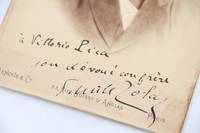
1880ref. 87792Paris: Benque & Cie 1880. Fine. Benque & Cie Paris s.d. ca 1880 10.50 x 16.50 cm une feuille Original dedicated photograph representing Emile Zola facing forward head slightly turned to the right. Vintage silver gelatin print. The photograph is mounted on cardboard. On verso studio stamp of Benque & Cie. Worming to verso of the photograph. Small stain in lower left margin of the photograph and a clear fingerprint stain in lower right margin. Autograph inscription signed by Emile Zola to the art critic and great friend of the Goncourt brothers Vittorio Pica. Art critic of Neapolitan origin Vittorio Pica took an early interest in French naturalist and symbolist movements: ""Curious about all avant-garde movements he first concerned himself with the naturalists - he maintained regular contact with Maupassant Huysmans and Zola - then he became interested in the symbolists particularly Mallarmé and Verlaine to whom he devoted studies of admirable accuracy"" Petralia Bibliographie de Rimbaud en Italie cit. p. 37. Contributor to the most prestigious national and international reviews of modernist tendency he was one of the first founders of the Venice Biennale of which he would be secretary general from 1920 to 1926. Benque & Cie unknown
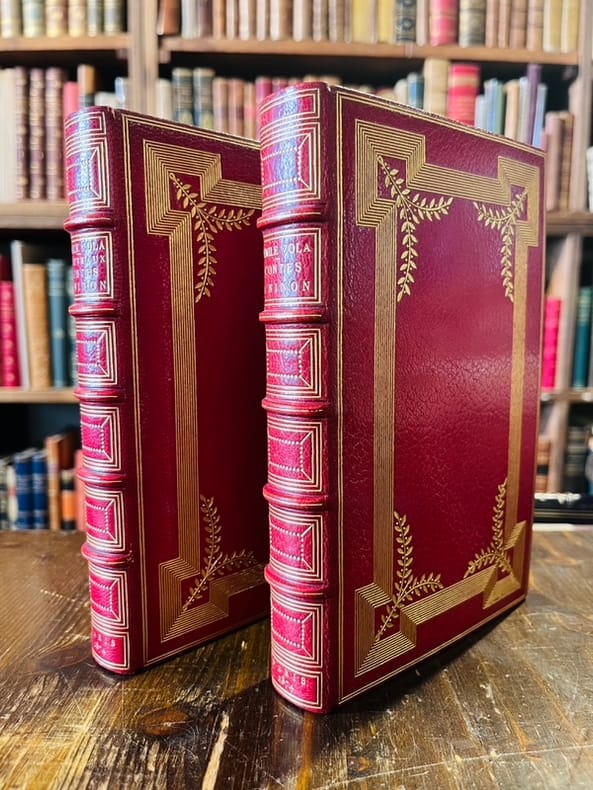
1874ref. 21948Paris, Charpentier et Cie, 1874. 2 volumes in-12, plein maroquin rouge cerise, dos à nerfs ornés de filets et points dorés, plats richement ornés d'un encadrement d'octuple filet doré, aux angles, double branches d'oliviers dorées et double filets dorés sur les coupes, plats doublés de maroquin bleu décoré de roulettes et fleurons dorés, gardes de tabis bleu, couvertures conservées, tranches dorées. Reliures signées par Lortic fils.
1864ref. 52158Paris: J. Hetzel & A. Lacroix 1864. Fine. J. Hetzel & A. Lacroix Paris 1864 11 x 18 cm relié The first edition of the author's first book. Contemporary half red shagreen over marbled paper boards spine in five compartments with gilt fillets and triple gilt frames marbled endpapers and pastedowns collector's blindstamp to head of one endpaper speckled edges. Handsome rare autograph inscription to this text from Emile Zola to a monsieur Boucher. Faint dampstain to the first 70 pages a little light foxing. There are very few inscribed copies of this text. J. Hetzel & A. Lacroix hardcover
1864ref. 374820Paris: J. Hetzel et A. Lacroix 1864. First edition of the author's first book. 4 320 pp. 1 vols. 8vo. Full blue morocco gilt marbled endpapers t.e.g. by Taffin with the original yellow printed wrappers bound in. Very good head rubbed slight toning to a few leaves. With loosely inserted calling card of the author. First edition of the author's first book. 4 320 pp. 1 vols. 8vo. Zola's first book INSCRIBED on the half-title to the distinguished literary critic and author Jules Levallois 1829 - 1903: "à M. Jules Levallois "temoignage du devouement et de la sympathie de l'auteur a testimony of the author's devotion and sympathy Emile Zola." Zola was 24 years old when Contes à Ninon was published. The calling card ca. 1890 is engraved "Emile Zola / rue de Bruxelles 21 bis" and inscribed in pen by Zola "Avec mes remerciements et l'expression de ma sympathie with my thanks and the expression of my sympathy." Carteret II p. 488 J. Hetzel et A. Lacroix unknown books