ZOLA (Emile)Livre Rare Book

6,953 results
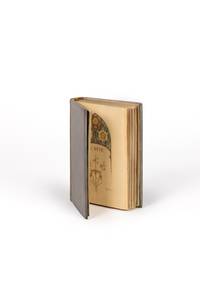
1888ref. 28517Enrichi de 14 dessins originaux Paris, Charpentier, 1888. 1 vol. (120 x 180 mm) de [2] f., 310 p. et 10 p. de catalogue. Bradel veau gris, dos lisse, titre doré, date en pied, tête dorée, premier plat orné d'un décor estampé à èfroid, couvertures et dos conservés, chemise à rabats, étui bordé (reliure signée de Buer - Drevet). Édition originale. Un des 250 exemplaires sur hollande (n° 177) - après 25 sur japon.
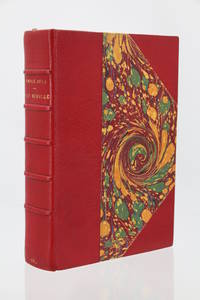
1878ref. 20819Paris Charpentier 1878 1 vol. Relié in-12, demi-maroquin rouge à coins bordé de filets à froid, dos plat à faux nerfs orné de deux caissons décorés de filets et guirlandes à froid avec cartouche central mosaïqué de maroquin vert, tête dorée, couvertures conservées, non rogné (René Kieffer), VII + 406 pp. Edition originale bien complète de l'arbre généalogique dépliant des Rougon-Macquart. Un des 100 exemplaires numérotés sur Hollande, seul tirage en grand papier (n°15), dans une agréable reliure signée d'inspiration art nouveau. Ex-libris Franchetti.
1878ref. 20819Paris Charpentier 1878 1 vol. Relié in-12, demi-maroquin rouge à coins bordé de filets à froid, dos plat à faux nerfs orné de deux caissons décorés de filets et guirlandes à froid avec cartouche central mosaïqué de maroquin vert, tête dorée, couvertures conservées, non rogné (René Kieffer), VII + 406 pp. Edition originale bien complète de l'arbre généalogique dépliant des Rougon-Macquart. Un des 100 exemplaires numérotés sur Hollande, seul tirage en grand papier (n°15), dans une agréable reliure signée d'inspiration art nouveau. Ex-libris Franchetti.
ref. 28517Paris Charpentier 1888. 1 vol. 120 x 180 mm de 2 f. 310 p. et 10 p. de catalogue. Bradel veau gris dos lisse titre doré date en pied tête dorée premier plat orné d'un décor estampé à èfroid couvertures et dos conservés chemise à rabats étui bordé reliure signée de Buer - Drevet. . Édition originale. Un des 250 exemplaires sur hollande n° 177 - après 25 sur japon. . Exemplaire enrichi de 29 compositions en couleurs par Henry Varade : 14 dessins à la plume en noir et or en fin de chapitre et 15 miniatures aquarellées en tête de chapitre. Montée en tête dessin en sanguine signé qui a servi à la plaque estampée du décor de la reliure. La reliure a été établie vers 1920 dans l'atelier du 58 rue Sala à Lyon qui fut par la suite l'atelier bien connu de Patrice Goy et Carine Vilaine Atelier Moura. Elle est ornée d'un singulier décor de Joannès Drevet peintre et graveur lyonnais issu d'une lignée de graveurs renommés composé en estampant directement le cuir. L'on a répertorié seulement quatre autres reliures signées de son association avec E. Buer - toutes avec des décors estampés - en majorité pour des exemplaires uniques enrichis d'aquarelles dont Henry Varade fut dans les années 1920 l'un des meilleurs représentants. Varade donna également plusieurs éditions illustrées de renom dont celle pour l'Ile au trésor de R. L. Stevenson. Quant au texte de Zola c'est le seizième titre du cycle des Rougon-Macquart : « je voudrais faire un livre qu'on n'attende pas de moi » méditait son auteur. L'époque était aux envolées mystiques et à la piété sulpicienne. Le naturalisme de Zola se trouva donc supplanté par ce que l'histoire littéraire appellera la « réaction idéaliste ». En composant son roman dans cette veine l'auteur devait en surprendre plus d'un. Quand le livre fut mis en vente le 15 octobre 1888 s'éleva parmi la critique la voix acerbe de Jules Lemaître qui résume assez bien ce qu'il avait d'imprévu n'est-ce-pas là ce que l'auteur voulait et de manqué : « Ceci est un conte bleu tout ce qu'il y a de bleu. . Seulement il fallait l'écrire comme un conte bleu. Oserai-je dire que ce n'est pas précisément ce qu'a fait M. Emile Zola . Lisez Le Rêve et vous verrez que ce conte ingénu sue l'impureté parfaitement ! Et que cette histoire irréelle est écrite dans le même style opaque et puissamment matériel et avec les mêmes procédés de composition et de développement que la Terre ou l'Assommoir. L'effet est ahurissant ». Et pour finir l'éreintement « l'auteur a bien tenu à marquer que ce conte bleu est un épisode de l'histoire des Rougon-Macquart. Il s'est cru obligé de rattacher sa petite vierge à cette horrible famille par quelque lien de parenté . ». Paris, Charpentier, 1888. 1 vol. (120 x 180 mm) de [2] f., 310 p. et 10 p. de catalogue. Bradel veau gris, dos lisse, titre dorà unknown
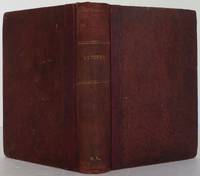
1871ref. 83990Reliure demi-maroquin bordeauxà coins. Dos à nerfs finement décoré avec date dorée au talon. Tête dorée. Couverture et dos conservés. Reliure signée H. BLANCHETIÈRE. Salissures et quelques tâches à la couverture. Rousseurs éparses.
1873ref. 90024Reliure demi-maroquin vermillon à coins. Dos à nerfs. Titre et date dorés. Tête dorée. Couverture montée sur onglet conservée. Reliure signée J. Lambert.
1882ref. 86096Charpentier | Paris 1882 | 12.50 x 19 cm | relié
1891ref. 85020Reliure demi-maroquin grenat à coins. Dos à nerfs. Date dorée au talon. Tête dorée. Couvertures conservées. Non rogné. Bien complet du catalogue Charpentier et du feuillet promotionnel La Nouvelle Collection. Fine reliure signée Semet [&] Plumelle.
1892ref. 85027Reliure demi-maroquin corail à coins. Dos lisse orné de quatre caissons à losanges et semés de points dorés, pièce de titre de maroquin noire. Tête dorée. Couvertures et dos conservés. Reliure signée Michel Richard. Ancienne bibliothèque Jean-Maurice de Montremy, ex-libris sur contreplat.
1874ref. 90166Reliure bradel demi-maroquin rouge à coins. Dos à nerfs avec fleurons dorés et date au talon. Tête dorée. Couverture conservée. Bel état du papier. Reliure signée LAMBERT.
1927ref. elala1677Paris: François Bernouard 1927-29. 1927. 50 Volumes. 8vo. with half-titles. contemporary half morocco t.e.g. original printed wrs. bound in spines sunned & a few with rubbing or small nicks on raised bands. One of 5000 numbered copies on Vergé dalfa. Paris: François Bernouard, [1927-29]. hardcover
1867ref. B-16-060011Ed Manet. With a wood engraving by Manet. Zola Emile. Dentu Paris 1867. With one etching "Portrait of Manet" by Bracquemond and a wood engraving after a drawing by Manet "Olympia" by Moller. Rebound with the original paper blue cover inside. In very good condition trace of moisture plates in very good condition without stains. More pictures on request Dentu paperback
1867ref. B-16-060011Ed Manet. With a wood engraving by Manet. Zola Emile. Dentu Paris 1867. With one etching "Portrait of Manet" by Bracquemond and a wood engraving after a drawing by Manet "Olympia" by Moller. Rebound with the original paper blue cover inside. In very good condition trace of moisture plates in very good condition without stains. More pictures on request Dentu paperback books
1887ref. 2507025G. Charpentier et Cie 1887. first. hardcover. very good. INSCRIBED by Zola on half-title page. First edition in French. Book very good edges of first page have been cut a little smaller minor rubbing and wear two small stains to bottom of rear paste-down. G. Charpentier et Cie unknown
1887ref. 2507025G. Charpentier et Cie 1887. first. hardcover. very good. INSCRIBED by Zola on half-title page. First edition in French. Book very good edges of first page have been cut a little smaller minor rubbing and wear two small stains to bottom of rear paste-down. G. Charpentier et Cie unknown books
1886ref. 75914Reliure postérieure demi-maroquin rouge à coins. Dos à nerfs et date dorée en queue. Tête dorée. Reliure signée DEVAUCHELLE. Couverture et dos conservés.
1887ref. 76672Reliure postérieure demi-maroquin rouge à coins. Dos à nerfs et date dorée en queue. Tête dorée. Couverture et dos conservés.
1885ref. 82293Reliure demi-maroquin long grain prune à coins. Dos à nerfs. Tête dorée. Couverture et dos conservés. Reliure signée C. Septier.
1891ref. 82291Reliure demi-maroquin bleu à coins. Dos lisse finement dorés de fleurs mosaïquées. Tête dorée. Couverture et dos conservés. Reliure signée Ch. LANOE. Non rogné.
1890ref. 85014Reliure demi-maroquin corail à coins. Dos lisse orné de quatre caissons à losanges et semés de points dorés, pièce de titre de maroquin noire. Tête dorée. Couvertures conservées. Reliure signée Michel Richard. Ancienne bibliothèque Jean-Maurice de Montremy, ex-libris sur contreplat.
1892ref. 85025Reliure demi-maroquin vermillon à coins. Dos à nerfs, caissons ornés, date et éditeur dorés au talon. Tête dorée. Exemplaire à grands témoins. Couvertures et dos conservés. Reliure signée Yseux sr de Thierry-Simier.
1875ref. 83515Charpentier & Cie | Paris 1875 | 11 x 17.50 cm | relié
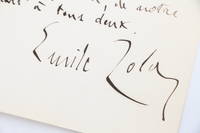
1901ref. 87263Paris 1901. Fine. ""I have finished my crushing task and I am going to rest a little because I am exhausted"" Paris 4 Mars 1901 13.50 x 20.50 cm deux pages sur un bifeuillet Autograph letter signed by Emile Zola addressed to Octave Mirbeau dated in his hand March 4 1901. Two pages in black ink on a bifolium. Horizontal fold mark inherent to postal delivery. Published in his Correspondence vol. X p. 242. Precious letter from Zola to his great supporter Octave Mirbeau who had paid his fine at the end of his second trial for ""J'accuse!"". Now amnestied the writer attempts - in vain - to recover the sum to reimburse him. After his historic cry from the heart in l'Aurore Zola was first condemned by the Seine jury on February 23 1898 to one year in prison and a three thousand franc fine. The judgment was overturned on appeal and the case was referred to the Versailles assizes which retained only three lines out of the eight hundred that make up ""J'accuse!"" as grounds for accusation. To avoid accepting such a stifling of the debates Zola's defense decided to default and the conviction was confirmed on July 18 - Zola left that very evening for London to avoid prison. The tribunal also demanded 7555 francs from him which Mirbeau spontaneously decided to pay from his own funds. It was also Octave Mirbeau who prevented the seizure of Zola's furniture by obtaining from Joseph Reinach the 40000 francs in damages that Zola had been condemned to pay to the three pseudo-experts in handwriting that he had ""defamed"" in J'accuse!. Following the amnesty law that ended judicial proceedings for ""all criminal or delictual acts connected to the Dreyfus affair"" Zola was acquitted but was not reimbursed. This letter attests to the writer's desire to compensate Mirbeau for his act of generosity: ""Labori his lawyer will attempt an approach to try to recover the seven thousand and some francs that you paid on my behalf for the Versailles affair. He simply wishes to have a letter from you in order to show it and thus be authorized to speak in your name. You certainly do not have down there the receipt that was issued to you. Perhaps you remember its terms. In any case if we must wait we will wait for nothing is urgent after all. The important thing today is only to test the ground to see if they will return the money to us"". However the prosecutor's office refused his request. Furious Zola wrote two days later a letter to Labori asking him to give up claiming the slightest cent - he published it in L'Aurore under the title ""Let them keep the money"": ""they torture the text of the law and the State too keeps the money. If the prosecutor's office persists in this interpretation it will be yet another monstrosity in the unworthy way they have refused me all justice . I do not want to be complicit by accepting anything whatsoever from their amnesty ."". According to Pierre Michel these unsuccessful recovery attempts of which this letter bears witness ""incited Zola to adopt an attitude that emphasizes even more his disinterestedness and that of his 'friend' who is not named in the L'Aurore article probably at Mirbeau's request."" Dreyfus's pardon and the amnesty of his supporters did not satisfy the writer but nevertheless marked the end of long years of struggle: ""I have finished my crushing task and I am going to rest a little because I am exhausted"". Struck down in full glory the following year he would not be able to witness Captain Dreyfus's rehabilitation. Beautiful lines from Zola to Mirbeau who gave him the means to continue his fight for justice. unknown
1882ref. 86096Paris: Charpentier 1882. Fine. Charpentier Paris 1882 12.50 x 19 cm relié First edition one of 250 numbered copies on Holland paper the only deluxe copies after a few rare China paper copies. Half red morocco binding with corners spine with five raised bands set with blind fillets marbled paper boards combed paper endpapers and pastedowns bookplate pasted on one pastedown original wrappers preserved top edge gilt on deckled edges signed binding Pétrus Ruban. Fine bookplate engraved by Provost-Blondel and pasted on one pastedown. It depicts a helmet adorned with a feather a medallion and a phylactery bearing the motto ""Toujours en face"". It would have belonged to Victor Coué second lieutenant killed in action during World War I. Handsome copy nicely bound. Charpentier hardcover
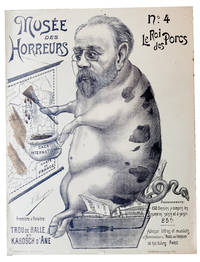
1899ref. 80330Paris: Imprimerie Lenepveu 1899. Fine. Imprimerie Lenepveu Paris s. d. novembre 1899 49.80 x 65.20 cm une affiche Musée des horreurs Original colour lithographed poster n° 4 Le Roi des Porcs Imprimerie Lenepveu Paris November 1898 498 x 652 cm one poster Original colour lithographed poster depicting Émile Zola in the shape of a pig sitting on a tub containing his fictional works and smearing international poop on the map of France. Transverse folds some tiny tears two small holes above Zola's head without affecting the image. The representation of Émile Zola as a pig does not date back to Lenepveu as Guillaume Doizy highlights in his article dedicated to pig caricatures Le porc dans la caricature politique 1870-1914: une polysémie contradictoire in Sociétés & Représentations n°27 2009: For the end of the 19th century we also think of the many caricatures of which Zola was the victim and which associate excrement symbols of naturalism with pigs. Dozens of images could be mentioned. In the 1880s Sapeck imagined the naturalist naked a vine leaf hiding his genitals a veiled reference to the supposed pornography of his writings sitting astride a pig feeding on his excrement a long-lasting symbol called to stigmatise the new literary school. In a caricature dated 1898 Alfred Le Petit shows a Zola-pig defecating on the tricolore flag. Barely a month after the publication of his famous J'accuse the writer defending the Dreyfusard cause is accused of defiling France and especially its Army by defending the traitor Dreyfus and Prussia considered the eternal enemy. The pig is dirty but above all it dirties defiles by the effect of its harmful will. The same year Caran d'Ache portrayed the weapons of the Dreyfusard press as a big pig sprawled in muck and covered with mud. . In his series Le Musée des horreurs the very right-handed Lenepveu violently attacks Zola. The writer is depicted as a piglet sitting on a box of waste containing his own works the fruit of his defecations prominently including La Terre and Nana. He soils a map of France with his international poop contained in a chamber pot that he spreads with a small brush. The artist is of course aiming at the Dreyfus defender through his famous J'accuse and Jewish cosmopolitanism smearing France with his support for treason. The soiling-pig association seems obvious and primordial. As for Napoleon III the pig's dirt reinforced here by the visible excrement stigmatises the target's political choices. Lenepveu defines Zola's ideas as works of unworthiness intestinal and dripping products. Although this is not the first porcine representation of Émile Zola the one that features prominently in Lenepveu's Musée is undeniably by its realism the most violent. Circulated between October 1899 and December 1900 in a France set ablaze by the Dreyfus Affair these immense colour portraits are the work of Victor Lenepveu who announced the publication of 150 and then 200 drawings before finally producing only around fifty. Despite the 1881 law on the freedom of press allowing the dissemination of a politically subversive image the publication of this nightmarish pantheon was interrupted by order of the Ministry of the Interior. The fragility of the paper and the imposing size of these very violent posters as well as their almost immediate seizure by the police contributed to the disappearance of these caricatures which strongly left a mark on public opinion. These horreurs were widely promoted by anti-Semitic newspapers that announced a fantasised print of 300000 copies thus insinuating the success of anti-Semitic ideas in the population. On 1st October 1899 L'Intransigeant announced the publication of the Musée des horreurs in its columns: Un dessinateur de beaucoup d'esprit au coup de crayon d'un comique intense M. V. Lenepveu a eu l'heureuse idée d'inaugurer une série de portraits des vendus les plus célèbres de la tourbe Imprimerie Lenepveu unknown