Zola,?Mile,Biblio.com

6397 risultati
rif. 50198287-nnew. unknown
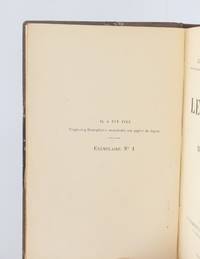
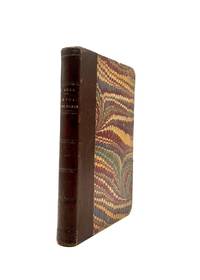
1888rif. 88481Paris: Charpentier 1888. Fine. Charpentier Paris 1888 13 x 19.5 cm Relié First edition this one the no. 1 of 25 numbered copies on Japon most limited deluxe issue. Bound in grey half morocco smooth spine marbled paper boards mould-made endpapers original wrappers preserved pastedown bookplate top edge gilt contemporary binding signed by L. Pouillet. A rare and handsome copy in an attractive contemporary binding. Â Charpentier hardcover
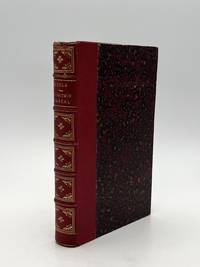
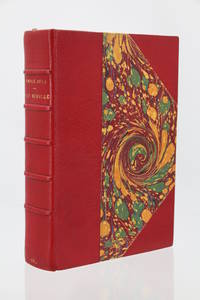
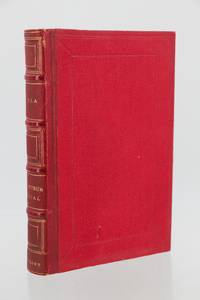
1893rif. 87311Paris: G. Charpentier & E. Fasquelle 1893. Fine. G. Charpentier & E. Fasquelle Paris 1893 11 x 18 cm relié First edition on ordinary paper. Genealogical tree of the Rougon-Macquart on a folding sheet. Contemporary half-shagreen binding in red. Spine with false raised bands decorated with compartments ornamented with 5 fleurons. Rubbing to headcap with a minor cut. One raised band also rubbed. Paper very fresh. G. Charpentier & E. Fasquelle hardcover
1905rif. 097832Berlin: Weichert 1905. ca. 1905; 408 S.; mit SW-Porträtfrontispiz; aus dem Französischen von Fritz Wohlfahrt durchgesehen und mit Einleitung versehen von Philipp Wanderer; Deckelbild identisch mit dem der Ausgabe des Globus-Verlags; Titelblatt verso mit Besitzervermerk Papier nachgedunkelt Rücken oben u. unten leicht fransig Ecken etwas gestaucht. Leinen. Befriedigend. 193 cm. Weichert Hardcover
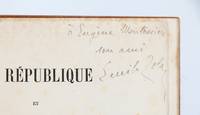
1879rif. 87597Paris: Charpentier 1879. Fine. Charpentier Paris 1879 14 x 23 cm relié First edition on ordinary paper. Full tawny morocco binding spine with four raised bands set with black fillets bearing small stains at foot gilt fillet frame on burgundy morocco pastedowns brown watered silk endpapers following endpapers of marbled paper original wrappers preserved all edges gilt elegant signed binding by Georges Cretté. Scattered foxing covers marginally and lightly faded. Autograph inscription signed by Emile Zola to the painter and photographer Eugène Montrosier at the head of the title page. Charpentier hardcover
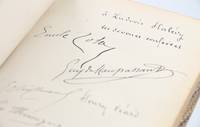
1880rif. 87614Paris: Charpentier 1880. Fine. The Manifesto of Naturalism Charpentier Paris 1880 12 x 19 cm relié First edition. Half blue morocco shagreen smooth spine gilt date at foot of spine marbled paper boards contemporary binding. Exceptionally inscribed by Emile Zola to the playwright and opera librettist Ludovic Halévy with the autograph signatures of Guy de Maupassant Joris-Karl Huysmans Léon Hennique Paul Alexis and Henri Céard on the first flyleaf. Provenances: from the libraries of Ludovic Halévy and Marcel Lecomte with their bookplates on front pastedown. Our copy also includes on a flyleaf an autograph note by Ludovic Halévy: ""See a letter by Guy de Maupassant at the end of the volume. L.H. Inscribed by the six authors of the volume. Ludovic Halévy."" Voir une lettre de Guy de Maupassant à la fin du volume. L.H. Envoi autographe des six auteurs du volume. Ludovic Halévy. The reproduction of the famous letter sent by Guy de Maupassant to Halévy in 1880 is pasted onto six additional leaves at the end of the volume. It bears Halévy's penned note at the beginning and end of the letter: ""Cette lettre est de 1880 / 1880."" Cette lettre est de 1880 / 1880. A fine and rare uncut copy of this manifesto of Naturalism signed and inscribed by Emile Zola with the signatures of the other five authors to their librettist colleague. Halévy notably co-wrote the libretto of Georges Bizet's Carmen. Charpentier hardcover
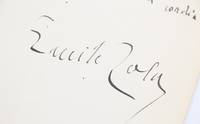
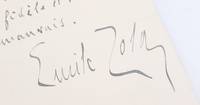
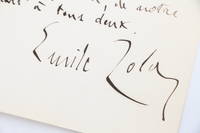
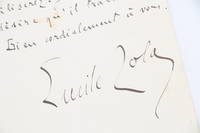
1893rif. 86093Paris 1893. Fine. An appointment with Gilles de La Tourette Paris 15 octobre 1893 13.50 x 20.50 cm une page 1/4 sur un bifeuillet Autograph letter dated and signed by Emile Zola addressed to his friend the physician Maurice de Fleury dated in his hand October 15 1893. 1 page 1/4 19 lines in black ink on a double sheet. Horinzontal and vertical folds due to mailing. Stain on verso not affecting the text. A most unusual invitation from the master of Naturalism who wishes to organize a luncheon with two eminent specialists in nervous diseases: ""Vous êtes bien aimable de m'inviter à déjeuner. Mais cela va vous faire perdre du temps et à moi aussi . pourquoi ne prendriez-vous pas un rendez-vous pour deux heures et demie par exemple avec M. Gille de la Tourette soit jeudi soit vendredi. Nous irions chez lui simplement ."" ""You are very kind to invite me to lunch. But this will make you lose time and me as well . why wouldn't you make an appointment for two-thirty for example with M. Gille de la Tourette either Thursday or Friday. We would go to his place simply ."" Zola relied on the expertise and scientific knowledge of Maurice de Fleury a student of Charcot to nourish his writing work on the Rougon-Macquart. De Fleury particularly shared publications from his library relating to heredity a subject at the heart of Zola's great social series of novels - most particularly the generational transmission of nervous diseases fits of violence and alcoholism. Maurice de Fleury is also famous for having made ten years after this letter a medico-psychological study of Zola himself through the prism of his working habits: ""De dix heures à midi Zola rédige encore - moins facilement et moins bien que pendant l'heure initiale - et c'est fini pour toute la journée il ne sera plus bon qu'à écrire des lettres. C'est là la puissance du plus puissant cerveau dans le domaine littéraire à la fin du siècle. Avec ce tout petit traintrain modeste trois heures par jour en deux séances cet homme dont l'attention est modique . trouve moyen de nous donner tous les dix mois un de ces livres où ne manquent ni la solidité de la charpente . ni rien de ce qui constitue la force créatrice le génie pour dire le mot"" ""From ten o'clock to noon Zola still writes - less easily and less well than during the initial hour - and it's finished for the whole day he will only be good for writing letters. This is the power of the most powerful brain in the literary domain at the end of the century. With this very modest little routine three hours a day in two sessions this man whose attention is modest . manages to give us every ten months one of those books which lack neither the solidity of the framework . nor anything that constitutes creative force genius to say the word"". ""Maurice de Fleury maintained close relations with Émile Zola and Joris-Karl Huysmans with whom he corresponded in the years 1880-1890. Fervent admirer of the author of the Rougon-Macquart Fleury advised Zola for ""Le Docteur Pascal"" 1893 and confided his admiration in an article in Le Figaro in 1896. Very 'fashionable' among the 'intellectuals' according to Victor Segalen the young physician also appears in the list of symbolist authors - alongside Paul Adam Henri de Régnier and Gustave Kahn - in an essay by André Barre in 1911"" Lola Kheyar Stibler Autograph letter dated and signed by Emile Zola addressed to his friend the physician Maurice de Fleury dated in his hand October 15 1893. 1 page 1/4 19 lines in black ink on a double sheet. Transverse folds inherent to mailing. unknown
1891rif. 86092Paris 1891. Fine. Paris 22 octobre 1891 13.30 x 20.50 cm une page sur un bifeuillet Autograph letter dated and signed by Emile Zola addressed to his friend the physician Maurice de Fleury dated in his hand October 22 1891. 16 lines in black ink on one page. ""Mon cher de Fleury je crois bien que j'ai trouvé quelque chose pour le supplément du Figaro. Venez donc causer entre cinq et dix heures . Si vous étiez au Théâtre libre samedi soir je songe que nous pourrions en causer dans un entr'acte ce qui vous éviterait de vous déranger ."" ""My dear de Fleury I do believe I have found something for the Figaro supplement. Do come to chat between five and ten o'clock . If you were at the Théâtre Libre Saturday evening I think we could discuss it during an intermission which would save you the trouble of making a special trip ."". Fleury indeed held the medical column at Le Figaro - it is perhaps following this letter and their ""conversations"" that Fleury writes these lines in the supplement of October 31 1891: ""toute l'école naturaliste ayant fait de la médecine les médecins logiquement ont fait de la littérature"" ""the entire naturalist school having practiced medicine doctors logically have practiced literature"". Zola relied on the expertise and scientific knowledge of Maurice de Fleury a student of Charcot to nourish his writing work on the Rougon-Macquart. De Fleury particularly shared publications from his library relating to heredity a subject at the heart of Zola's great social fresco - most particularly the generational transmission of nervous diseases fits of violence and alcoholism. Maurice de Fleury is also famous for having made ten years after this letter a medico-psychological study of Zola himself through the prism of his working habits: ""De dix heures à midi Zola rédige encore - moins facilement et moins bien que pendant l'heure initiale - et c'est fini pour toute la journée il ne sera plus bon qu'à écrire des lettres. C'est là la puissance du plus puissant cerveau dans le domaine littéraire à la fin du siècle. Avec ce tout petit traintrain modeste trois heures par jour en deux séances cet homme dont l'attention est modique . trouve moyen de nous donner tous les dix mois un de ces livres où ne manquent ni la solidité de la charpente . ni rien de ce qui constitue la force créatrice le génie pour dire le mot"" ""From ten o'clock to noon Zola still writes - less easily and less well than during the initial hour - and it's finished for the whole day he will only be good for writing letters. This is the power of the most powerful brain in the literary domain at the end of the century. With this very modest little routine three hours a day in two sessions this man whose attention is modest . manages to give us every ten months one of those books which lack neither the solidity of the framework . nor anything that constitutes creative force genius to say the word"". ""Maurice de Fleury entretient des relations étroites avec Émile Zola et Joris-Karl Huysmans avec lesquels il correspond dans les années 1880-1890. Fervent admirateur de l'auteur des Rougon-Macquart Fleury conseille Zola pour Le Docteur Pascal 1893 et confie son admiration dans un article du Figaro en 1896. Très « à la mode » parmi les « intellectuels » selon le mot de Victor Segalen le jeune médecin figure également dans la liste des auteurs symbolistes - aux côtés de Paul Adam Henri de Régnier et Gustave Kahn - dans un essai d'André Barre en 1911"" ""Maurice de Fleury maintains close relations with Émile Zola and Joris-Karl Huysmans with whom he corresponds in the years 1880-1890. Fervent admirer of the author of the Rougon-Macquart Fleury advises Zola for Le Docteur Pascal 1893 and confides his admiration in an article in Le Figaro in 1896. Very 'fashionable' among the 'intellectuals' according to Victor Segalen the young physician also appears in the list of symbolist authors - unknown
1882rif. 86096Paris: Charpentier 1882. Fine. Charpentier Paris 1882 12.50 x 19 cm relié First edition one of 250 numbered copies on Holland paper the only deluxe copies after a few rare China paper copies. Half red morocco binding with corners spine with five raised bands set with blind fillets marbled paper boards combed paper endpapers and pastedowns bookplate pasted on one pastedown original wrappers preserved top edge gilt on deckled edges signed binding Pétrus Ruban. Fine bookplate engraved by Provost-Blondel and pasted on one pastedown. It depicts a helmet adorned with a feather a medallion and a phylactery bearing the motto ""Toujours en face"". It would have belonged to Victor Coué second lieutenant killed in action during World War I. Handsome copy nicely bound. Charpentier hardcover
1903rif. 61261København Politikens Forlag 1903. 8vo. Indbundet i det originale komponerede shirtingsbind med forgyldt rygtitel. Forperm med forgyldt titel og florale dekorationer. Let slid ved ryg og kanter. Bogblok en smule skæv. Med Gustav Wieds daterede navnetræk 1905 samt noten 'Indf' på titelbladet. 24253 pp. unknown
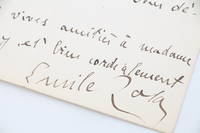
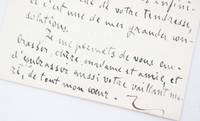
1898rif. 867501898. Fine. ""The nervous and passionate man that I am is not made for exile for resignation and silence"" 15 décembre 1898 13.50 x 20.50 cm quatre pages sur un bifeuillet Autograph letter initialed by Emile Zola dated in his hand April 10 1898. Four pages in black ink on a bifolium addressed to Octave Mirbeau's wife. Horizontal fold mark inherent to mailing very rare and discrete foxing on the first leaf. A particularity of this exile correspondence Zola chose to omit his signature in his letters - or as here to initial only protecting himself from censorship or police investigations. Published in his Complete Works vol. XXV ed. F. Bernouard 1927 p. 820. Heart-wrenching letter by Zola written in complete exile the most unknown retreat the most absolute silence. The justiciar writer is secluded in England forced to leave Paris after being condemned to the maximum penalty for having written ""J'accuse!"" during these cruel hours. After his historic cry from the heart in l'Aurore Zola was condemned a first time by the Seine jury on February 23 1898 to one year in prison and three thousand francs fine. The judgment was annulled on appeal and the case was referred to the Versailles assizes which retained only three lines out of the eight hundred that ""J'accuse!"" contains as the charge. To not accept such a stifling of the debates Zola's defense decided to default and the condemnation was confirmed. The very evening of his tumultuous exit from the Palace of Justice Clémenceau and his lawyer Labori advised him to leave the country before the judgment could become executable. The writer struggles to bear this voluntary exile so contrary to his character and opens his heart in this missive he addresses to Mirbeau's wife who was for him unconditional support alongside her husband. He does not hide the feeling of guilt that gnaws at him and exposes his strategy: ""Dear Madam and friend what a good and comforting letter you wrote to me! I confess that I needed this cordial somewhat for the nervous and passionate man that I am is not made for exile for resignation and silence. You perfectly guessed that my torture is to be sheltered in too much peace and security while others are fighting. And you know that my resolution was taken to say nothing to anyone and to return one fine morning. Now here you are writing to me and you are not the only one everyone writes to me that I must stay where I am under penalty of unleashing the worst catastrophes. I don't believe it I confess I remain convinced that my project was brave even useful and that we would have been victorious once more. But faced with unanimous opinion I must bow. As I write to Labori this is the greatest sacrifice I have yet made to the cause for one cannot imagine all that I suffer here morally intellectually in the powerlessness to act in which I find myself. And I do not speak of my poor heart torn from all that it loved. As for leaving this country I will not even attempt it. All my suffering would be renewed. I have reflected on it at length all good reasons are that I stay where I am even if the affair must last months more. It seems to me that this is better for it would only be lacking that I go amuse myself in the sun while others are fighting. You already guess the articles of the vile press France sold to Italy for the thirty pieces of silver of Judas. Tell your husband how much I love and admire him. There he is thrown into action too and he behaves superbly in it. Thanks also to both of you for the affection with which you surround my dear wife devoting yourselves to our interests ensuring that she is not alone in Paris in the midst of battle. I am infinitely touched by your tenderness and it is one of my great consolations. I take the liberty of embracing you dear madam and friend and of also embracing your valiant husband with all my heart."" While his own camp forces him into exile events unfold in Fran unknown
1898rif. 86837Weybridge 1898. Fine. In the midst of universal cowardice you wouldn't believe how moved I am to feel a few faithful people around me Weybridge 19 août 1898 13.50 x 20.50 cm quatre pages sur un bifeuillet Autograph letter signed by Emile Zola to Octave Mirbeau dated August 19 1898. Four pages in black ink on a bifolium written to Octave Mirbeau. Usual trace of horizontal fold. Published in Zola's uvres complètes t. XLIX ed. F. Bernouard 1927 p. 808. Exceptional testament of friendship and self-sacrifice from Emile Zola in exile after being sentenced to the maximum penalty for writing ""J'accuse!"" the most famous article proclaming Captain Dreyfus's innocence. After his historic article in L'Aurore Zola was sentenced a first time by a jury on February 23 1898 to one year's imprisonment and a fine of three thousand francs. The verdict was overturned and the case was referred back to the Versailles court of justice which upheld only three of the eight hundred lines in ""J'accuse!"" as a charge. Unwilling to accept such a stifling of the proceedings Zola's defense decided to default and the conviction was upheld. After his eventful exit from the courthouse Clémenceau and his lawyer Labori advised him to leave the country before the judgment could become enforceable. Zola left on the last train that evening with only a shirt hastily rolled up in newspaper as luggage. A month after his departure the writer writes this superb reply to a letter from his loyal supporter Octave Mirbeau who had written to him a few days earlier: ""We think only of you; there isn't a minute of our existence that you don't fill entirely"" August 14 1898. Settled in the London suburb of Weybridge he angrily receives the ""echoes of Paris"" and is enraged to see Esterhazy the true culprit of the Dreyfus Affair once again cleared - this time by civil courts. ""My dear friend Thank you for your kind letter . In the midst of universal cowardice you wouldn't believe how moved I am to feel a few faithful people around me. My existence here has become possible since I've been able to get back to work. Work has always comforted me saved me. But my poor hands are still trembling with a shiver that cannot end. You wouldn't believe the outrage I feel at the echoes from France that reach me. In the evening when daylight falls I think it's the end of the world. You think I should go back and make myself a prisoner without returning to Versailles. That would be too good to have the peace of prison and I don't think it's possible. I didn't set out to go back like that; our attitude would be neither logical nor beautiful. Rather I think I'm in indefinite exile unless I run the abominable risk of a new trial. Besides we won't be able to make up our minds until October. And by then who knows Although I'm counting on a miracle in which I have little faith. So let us be brave my friend and let our work be done! If I can keep working things won't be too bad yet. . I shake your hand my good friend the faithful and rare friend of bad days"". Poignant manuscript confession from Zola forced into exile. Death would strike him in the midst of his glory days without him ever knowing the outcome of the affair he had devoted so many years of struggle. unknown
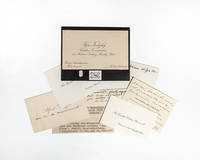
rif. 146844Rare collection of seven printed visiting cards. The collection includes: Alfred Dreyfus inscribed by him in ink "avec tous les remerciements" n.d. 2.25 inches by 3.8 inches; Colonel De Gaulle as Commandant le 507e Regiment de Chars inscribed by him in ink "Merci mon cher ami." n.d. but after December 1937 when he was promoted to Colonel 2.5 inches by 3.5 inches; Theodore Roosevelt at Sagamore Hill Oyster Bay L.I. inscribed by him in ink "Mr Roosevelt greatly regrets that he can not accede to your courteous request" n.d. 1.5 inches by 3 inches; Emile Zola at Rue de Bruxelles Paris inscribed by him in ink "Avec mon bien vifs remerciements" and dated in pencil in another hand "29 avril 1887" bearing collection label numbered '329' 2.5 inches by 4 inches; Mr. Theodore Delano Roosevelt at Forty-nine East Sixty-fifth Street n. d. 2 inches by 3.3 inches; Mrs. Franklin Delano Roosevelt Eleanor Roosevelt at the Executive Mansion n. d. 2.5 inches by 5 inches; Ilya Trotzky 'Redakteur-Correspondent der Moskauer Freitung 'Russkoje Slowo' at Berlin-Charlottenburg bearing collection label numbered '346' n.d. 2.6 inches by 4.3 inches. In near fine to fine condition with a closed tear to Theodore Roosevelt's inscribed card which has been expertly repaired slight scuffing to the top right corner of Dreyfus' card where it had been mounted by a previous owner. Accompanied by a typed information card about Ilya Trotzky's card. Visiting cards also called calling cards were small decorative cards carried by individuals to present themselves to others in the 18th and 19th centuries. It was a common practice among the upper classes to leave a visiting card when making a social call at their house or workplace. unknown
1901rif. 87263Paris 1901. Fine. ""I have finished my crushing task and I am going to rest a little because I am exhausted"" Paris 4 Mars 1901 13.50 x 20.50 cm deux pages sur un bifeuillet Autograph letter signed by Emile Zola addressed to Octave Mirbeau dated in his hand March 4 1901. Two pages in black ink on a bifolium. Horizontal fold mark inherent to postal delivery. Published in his Correspondence vol. X p. 242. Precious letter from Zola to his great supporter Octave Mirbeau who had paid his fine at the end of his second trial for ""J'accuse!"". Now amnestied the writer attempts - in vain - to recover the sum to reimburse him. After his historic cry from the heart in l'Aurore Zola was first condemned by the Seine jury on February 23 1898 to one year in prison and a three thousand franc fine. The judgment was overturned on appeal and the case was referred to the Versailles assizes which retained only three lines out of the eight hundred that make up ""J'accuse!"" as grounds for accusation. To avoid accepting such a stifling of the debates Zola's defense decided to default and the conviction was confirmed on July 18 - Zola left that very evening for London to avoid prison. The tribunal also demanded 7555 francs from him which Mirbeau spontaneously decided to pay from his own funds. It was also Octave Mirbeau who prevented the seizure of Zola's furniture by obtaining from Joseph Reinach the 40000 francs in damages that Zola had been condemned to pay to the three pseudo-experts in handwriting that he had ""defamed"" in J'accuse!. Following the amnesty law that ended judicial proceedings for ""all criminal or delictual acts connected to the Dreyfus affair"" Zola was acquitted but was not reimbursed. This letter attests to the writer's desire to compensate Mirbeau for his act of generosity: ""Labori his lawyer will attempt an approach to try to recover the seven thousand and some francs that you paid on my behalf for the Versailles affair. He simply wishes to have a letter from you in order to show it and thus be authorized to speak in your name. You certainly do not have down there the receipt that was issued to you. Perhaps you remember its terms. In any case if we must wait we will wait for nothing is urgent after all. The important thing today is only to test the ground to see if they will return the money to us"". However the prosecutor's office refused his request. Furious Zola wrote two days later a letter to Labori asking him to give up claiming the slightest cent - he published it in L'Aurore under the title ""Let them keep the money"": ""they torture the text of the law and the State too keeps the money. If the prosecutor's office persists in this interpretation it will be yet another monstrosity in the unworthy way they have refused me all justice . I do not want to be complicit by accepting anything whatsoever from their amnesty ."". According to Pierre Michel these unsuccessful recovery attempts of which this letter bears witness ""incited Zola to adopt an attitude that emphasizes even more his disinterestedness and that of his 'friend' who is not named in the L'Aurore article probably at Mirbeau's request."" Dreyfus's pardon and the amnesty of his supporters did not satisfy the writer but nevertheless marked the end of long years of struggle: ""I have finished my crushing task and I am going to rest a little because I am exhausted"". Struck down in full glory the following year he would not be able to witness Captain Dreyfus's rehabilitation. Beautiful lines from Zola to Mirbeau who gave him the means to continue his fight for justice. unknown
1893rif. 84893Paris 1893. Fine. Paris 5 Avril 1893 13.50 x 20.50 cm une page et demie Autograph letter dated and signed by Emile Zola 23 lines in black ink on a page and a half addressed to press baron Arthur Meyer Folds inherent to postal delivery. Emile Zola intervenes with Arthur Meyer proprietor of the high-circulation newspaper ""Le Gaulois"" on behalf of his friend Louis de Robert: ""Vous sentirez comme moi que c'est un garçon d'avenir et je suis convaincu que vous l'utiliserez. Je le connais et je désire qu'il travaille."" ""You will feel as I do that he is a young man with a future and I am convinced that you will make use of him. I know him and I want him to work."" in whom he recognizes a talented writer: ""Me permettrez-vous de vous recommander un de mes jeunes confrères Louis de Robert dont j'ai lu les chroniques charmantes. Je crois que vous devriez l'encourager le mettre à l'essai car vous trouveriez en lui un excellent rédacteur pour ""Le Gaulois""."" ""May I recommend to you one of my young colleagues Louis de Robert whose charming chronicles I have read. I believe you should encourage him put him to the test for you would find in him an excellent editor for 'Le Gaulois'."" unknown
2015rif. 1-3956976398Literaricon 2015. Paperback. New. 560 pages. German language. 8.27x5.83x1.27 inches. Literaricon paperback
2014rif. 1-3955634221Leseklassiker 2014. Paperback. New. 392 pages. German language. 8.27x5.83x0.89 inches. Leseklassiker paperback
2014rif. 1-3955634183Leseklassiker 2014. Paperback. New. 340 pages. German language. 8.27x5.83x0.77 inches. Leseklassiker paperback
2018rif. 1-3946635784MusketierVerlag 2018. Paperback. New. 392 pages. German language. 8.27x5.83x0.98 inches. MusketierVerlag paperback
2014rif. 1-3955634213Leseklassiker 2014. Paperback. New. 380 pages. German language. 8.27x5.83x0.86 inches. Leseklassiker paperback
2014rif. 1-395563423XLeseklassiker 2014. Paperback. New. 392 pages. German language. 8.27x5.83x0.89 inches. Leseklassiker paperback
2015rif. 1-3956976185Literaricon 2015. Paperback. New. 332 pages. German language. 8.27x5.83x0.75 inches. Literaricon paperback
1866rif. 85365Paris: Achille Faure 1866. Fine. Achille Faure Paris 1866 11 x 18 cm relié The rare first edition of this early novel by the author overshadowed by the Rougon-Macquart series but which prefigures naturalism and whose story is based on a news item. The novel is followed by Esquisses parisiennes a collection of 4 short stories. The second edition would not appear until 1889 with Charpentier. Contemporary half-brown shagreen binding. Smooth spine decorated with black fillets. Signs of rubbing and corners slightly bumped. Achille Faure unknown
1893rif. 85495Paris: Charpentier 1893. Fine. Charpentier Paris 1893 12 x 19 cm relié First edition on ordinary paper. The genealogical table is lacking in our copy. Half-red shagreen binding spine with four raised bands decorated with triple gilt compartments gilt name at foot blind-ruled frame on red paper boards pebbled paper endpapers and pastedowns contemporary binding. Charpentier hardcover
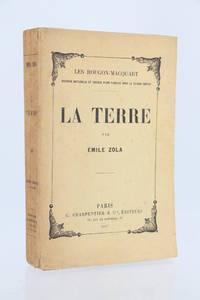
1887rif. 85323Paris: G. Charpentier & Cie 1887. Fine. G. Charpentier & Cie Paris 1887 12 x 19 cm broché First edition printed on ordinary paper. Heavy foxing primarily at the beginning and end of the volume. In original wrappers as issued. G. Charpentier & Cie unknown