Emile ZolaBiblio.com
6 747 résultats
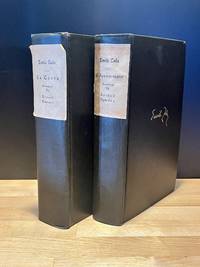
1924réf. 1795Boni and Liveright 1924. 1924. Hardcover. Very Good. Very good blue cloth 1924 Boni and Liveright hardcover editions with gilt signature and title plate pasted to spine and back pastedown. Clean copies with no markings. Some wear to pages including several closed tears in La terre front endpapers. Lights shelf and handling wear. Birdland Books is a small family-owned independent bookseller. Every book we list is in our store. We strive to provide accurate information for all books we list and the photos you see are of the actual book you will receive. Boni and Liveright hardcover
réf. 356325852X.Gpaperback. Good. Access codes and supplements are not guaranteed with used items. May be an ex-library book. paperback
réf. 3563256020.Gpaperback. Good. Access codes and supplements are not guaranteed with used items. May be an ex-library book. paperback
réf. 26932Médan 23 juillet 1882. 1 f. 135 x 215 mm de 2 p. encre noire. . « Mon cher confrère Je vous approuve vivement d'avoir renoncé pour votre journal au titre de Pot-Bouille qui ne signifiait rien …. Je me suis retiré de la presse je suis résolu à ne pas y rentrer ; dès lors pourquoi me poserais-je en donneur de conseils … Ce serait là jouer au personnage et je ne veux pas courir le risque de ce ridicule. Allez donc bravement de vous-même. Vous n'avez pas besoin de moi. Quand vous lanciez Pot-Bouille il fallait bien que Zola vous autorisât. Mais vous lancez Rabelais et Zola n'a ici que faire Rabelais étant de force à s'expliquer tout seul ». . Pot-Bouille paraît d'abord sous forme de feuilleton dans Le Gaulois entre le 23 janvier 18823 et le 14 avril 1882 aussitôt acclamé par Guy de Maupassant dans son article “ L'adultère ”. La publication en un volume chez Charpentier a lieu le 15 avril 1882 au moment où le feuilleton se termine : le public y découvre une critique au vitriol de la bourgeoisie logée chronologiquement au coeur du cycle et qui forme un diptyque avec Au bonheur des dames dont il partage le personnage central l'entreprenant Octave Mouret. Cette missive de juillet est adressée à Adrien Farge i.e. Joséphine Guéroult la directrice du Journal Le Rabelais publié à partir de cette année 1882 à Rouen. Maupassant y donnera deux textes Garçon un Bock ! et Au bois et citait volontiers ce journal dans ses lettres : “ en province c'est souvent dans les petits journaux qu'on trouve ainsi l'amour désintéressé des arts et l'audace qu'il faut pour entreprendre des oeuvres pieuses de cette nature qui ne rapporteront point d'argent ” écrira-t-il en 1883 quand Le Rabelais organisa une petite fête locale en l'honneur de Louis Bouilhet organisée à Cany sa ville natale. Médan, 23 juillet [18]82. 1 f. (135 x 215 mm) de 2 p., encre noire. unknown
réf. 3563253765.Gpaperback. Good. Access codes and supplements are not guaranteed with used items. May be an ex-library book. paperback
réf. 3563251878.Gpaperback. Good. Access codes and supplements are not guaranteed with used items. May be an ex-library book. paperback
réf. 3563258287.Gpaperback. Good. Access codes and supplements are not guaranteed with used items. May be an ex-library book. paperback
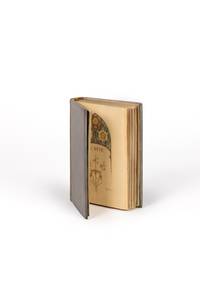
réf. 28517Paris Charpentier 1888. 1 vol. 120 x 180 mm de 2 f. 310 p. et 10 p. de catalogue. Bradel veau gris dos lisse titre doré date en pied tête dorée premier plat orné d'un décor estampé à èfroid couvertures et dos conservés chemise à rabats étui bordé reliure signée de Buer - Drevet. . Édition originale. Un des 250 exemplaires sur hollande n° 177 - après 25 sur japon. . Exemplaire enrichi de 29 compositions en couleurs par Henry Varade : 14 dessins à la plume en noir et or en fin de chapitre et 15 miniatures aquarellées en tête de chapitre. Montée en tête dessin en sanguine signé qui a servi à la plaque estampée du décor de la reliure. La reliure a été établie vers 1920 dans l'atelier du 58 rue Sala à Lyon qui fut par la suite l'atelier bien connu de Patrice Goy et Carine Vilaine Atelier Moura. Elle est ornée d'un singulier décor de Joannès Drevet peintre et graveur lyonnais issu d'une lignée de graveurs renommés composé en estampant directement le cuir. L'on a répertorié seulement quatre autres reliures signées de son association avec E. Buer - toutes avec des décors estampés - en majorité pour des exemplaires uniques enrichis d'aquarelles dont Henry Varade fut dans les années 1920 l'un des meilleurs représentants. Varade donna également plusieurs éditions illustrées de renom dont celle pour l'Ile au trésor de R. L. Stevenson. Quant au texte de Zola c'est le seizième titre du cycle des Rougon-Macquart : « je voudrais faire un livre qu'on n'attende pas de moi » méditait son auteur. L'époque était aux envolées mystiques et à la piété sulpicienne. Le naturalisme de Zola se trouva donc supplanté par ce que l'histoire littéraire appellera la « réaction idéaliste ». En composant son roman dans cette veine l'auteur devait en surprendre plus d'un. Quand le livre fut mis en vente le 15 octobre 1888 s'éleva parmi la critique la voix acerbe de Jules Lemaître qui résume assez bien ce qu'il avait d'imprévu n'est-ce-pas là ce que l'auteur voulait et de manqué : « Ceci est un conte bleu tout ce qu'il y a de bleu. . Seulement il fallait l'écrire comme un conte bleu. Oserai-je dire que ce n'est pas précisément ce qu'a fait M. Emile Zola . Lisez Le Rêve et vous verrez que ce conte ingénu sue l'impureté parfaitement ! Et que cette histoire irréelle est écrite dans le même style opaque et puissamment matériel et avec les mêmes procédés de composition et de développement que la Terre ou l'Assommoir. L'effet est ahurissant ». Et pour finir l'éreintement « l'auteur a bien tenu à marquer que ce conte bleu est un épisode de l'histoire des Rougon-Macquart. Il s'est cru obligé de rattacher sa petite vierge à cette horrible famille par quelque lien de parenté . ». Paris, Charpentier, 1888. 1 vol. (120 x 180 mm) de [2] f., 310 p. et 10 p. de catalogue. Bradel veau gris, dos lisse, titre dorà unknown
réf. 3-52721Paris Editions Littéraires de France senza data 1930-40 ca. 8° cm. 25 x 195 stupenda rilegatura artistica in mezzo marocchino giallo fascia centrale dei piatti e risguardi in cartoncino verde titoli a due colori al dorso e al piatto anteriore con l'inserto di tre capolettere in pelle colorata copertine originali illustrate a colori conservate all'interno pp. 103 interamente e splendidamente illustrate a colori ”au pochoir” da Hémard. Tiratura complessiva di 1550 esemplari tutti su carta “pur chiffon de Lana”. La nostra copia n. XXVI fa parte della tiratura di 50 “exemplaires de collaborateurs” contraddistinta dai numeri romani. Stato di conservazione eccellente. unknown
réf. 2-91110Milano Sonzogno 1883/1927 16mo cm. 165 x 11 rilegato in tutta tela pp. 96 pp. 110 pp. 93 pp. 90 pp. 103 pp. 95 pp. 88 Biblioteca Universale . Volume rilegato contenente 16 racconti di Zola Chateaubriand Sand Coppée Nodier editi da Sonzogno tra il 1883 e il 1927 e qui raccolti in un solo volume. unknown
1993réf. 052917010Oberon Books 1993. Paperback. New. /NEW BOOK/. Oberon Books paperback
réf. 2-52393Milano Treves 1898 due parti rilegate in un volume in-8vo piccolo mezza pelle bianca con titoli e fregi in nero al dorso pp. XVI-727 con una tavola in antiporta ritratto di Zola nove ritratti in tavole fuori testo e due facsimili ripiegati fuori testo unknown
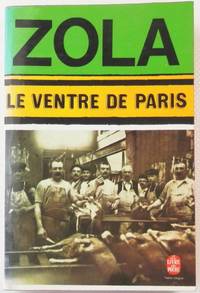
réf. 469092Le Livre de Poche. Paperback. Good. A vintage French language Le Livre de Poche paperback in good condition with the usual signs of ageing. Tanned pages creases and bumps and owner inscriptions. Le Livre de Poche paperback
1900réf. 43963192737834Ð—Ð¾Ð»Ñ Эмиль. ПлодовитоÑÑ‚ÑŒ. Пер. Ñ фр. Д. Ð. СеÑлавина. Киев — Харьков : Ф. Ð. ИоганÑон 1900. 453 Ñ. Твердый переплет обычный формат. Zola Emile. Fecundity Fécondité. Translated from French by D. N. Seslavin. Kyiv — Kharkov : F. A. Ioganson 1900. 453 pp. Hardcover standard format. This 1900 edition presents one of the most provocative and debated works of Emile Zola 1840–1902 published in Russia almost immediately after its original release in France. Fecundity is the first installment of Zola's final cycle The Four Gospels Les Quatre Évangiles. Moving away from the gritty naturalism of the Rougon-Macquart series Zola utilizes this novel as a social manifesto contrasting the virtues of a large rural family with the perceived moral decay and "depopulation" of urban French society. The translation by D. N. Seslavin captures the grand often biblical cadence Zola employed for this late-period work. The novel follows the protagonist Mathieu Froment as he builds a prosperous life centered on labor and the upbringing of numerous children serving as an ideological counterpoint to the Malthusian anxieties of the late 19th century. In Russia Zola's utopian vision of agrarian labor and traditional family values found a complex reception resonating with both the populist movements and the conservative social critics of the era. The book was published by F. A. Ioganson a prominent publisher active in both Kyiv and Kharkiv known for bringing contemporary European literature to the Imperial Russian provinces. This particular edition represents the first wave of Zola's influence in the Russian Empire where his works were often subject to intense scrutiny or censorship due to their bold social commentary. For collectors of 19th-century European literature scholars of Zola's late works and enthusiasts of pre-revolutionary Russian publishing this 1900 edition is a significant cultural artifact. It documents the rapid transmission of French literary thought into the Russian linguistic space at the turn of the century. F. A. Ioganson hardcover
réf. A9781494104382Paperback / softback. New. paperback
réf. A9781258903107Hardback. New. hardcover
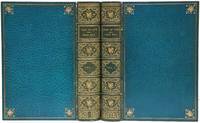
1897réf. 143835Philadelphia: George Barrie & Son 1897. Hardcover. Near fine. Edition Magnifique of Chefs-d'Oeuvre du Roman Contemporian Realists. Limited to five copies. viii 319; viii 361 pp. unpaginated plates. 2 Volumes. Octavo hardcover. Bound in full teal levant morocco leather boards designed with impressed gilt decorations double ruled in gilt. Spines with 5 raised bands each divided in six compartments decorated and lettered in gilt slightly darkened. All edges trimmed and gilt. Each volume with a vertical fore-edge painting. Inner side of the boards covered with terra cotta levant morocco doublures elaborately decorated impressed in gilt designed in green blue and white. Joints starting as usual to the fore-edge painting books. Pale blue moiré silked free endpapers; the majority of the blue silk has become detached and is laid-in in incomplete pieces. Free endpapers toned with light pencil notations. Small gallery labels to rear free endpapers recto. Illustrated with monochrome copper etchings each with a hand-coloured douplicate some guarded with tissue paper. Leaves bright and charming tight binding. Near fine condition. 2 volumes each with a fore-edge painting. vol. 1 depicting a couple standing together vol. 2 depicting a nude woman holding a child. Limited edition of five copies of which this is number one. Printed only for subscribers. Hammer Galleries typed letter signed on their stationary laid in dated March 1941 From the Estate of Randall J. Moskovitz MD Memphis Tennessee. 1897 George Barrie & Son hardcover
réf. 0586066527.Gpaperback. Good. Access codes and supplements are not guaranteed with used items. May be an ex-library book. paperback
réf. 8437605970.Gpaperback. Good. Access codes and supplements are not guaranteed with used items. May be an ex-library book. paperback
1902réf. 000526London: Chatto and Windus 1902. First UK Edition 1st Printing. Hardcover. Very Good/No Jacket. 12mo - over 6¾ - 7¾" tall. First printing in English. Edited with a preface by Ernest Alfred Vizetelly. BOOKPLATE OF JAMES HUNEKER WITH NUMEROUS PENCELLED ANNOTATIONS BY HIM. Incredibly interesting how writers view fellow writers. Spine slightly bumped and out of round internally fine with ads in front and back browned because of inferior paper. Chatto and Windus hardcover
1976réf. 104518Norwalk Connecticut: Easton Press 1976. First Edition; First Printing. Hardcover. Fine Leather Bound. Book accented in 22kt gold. Printed on archival paper with gilded edges. The endsheets are of moire fabric with a silk ribbon page marker. Smyth sewing and concealed muslin joints to ensure the highest quality binding. This book is in full leather with hubbed spines.; First Easton Press Edition.; 4to - over 9¾" - 12" tall. Easton Press hardcover
réf. 1930749341.Gpaperback. Good. Access codes and supplements are not guaranteed with used items. May be an ex-library book. paperback
réf. alb169d120c08731ee2Tula Book Publishing House 1955. You are welcome to reach out to us for a detailed description of the copies currently available. Delivery of this book may take longer than usual including extended processing and pre-shipping time no expedited shipping is available. Please advise us if you have a set date or a deadline to receive your order. SKUalb169d120c08731ee2 unknown
réf. 0982957998.Gpaperback. Good. Access codes and supplements are not guaranteed with used items. May be an ex-library book. paperback
réf. 0199538689.Gpaperback. Good. Access codes and supplements are not guaranteed with used items. May be an ex-library book. paperback