8 506 résultats
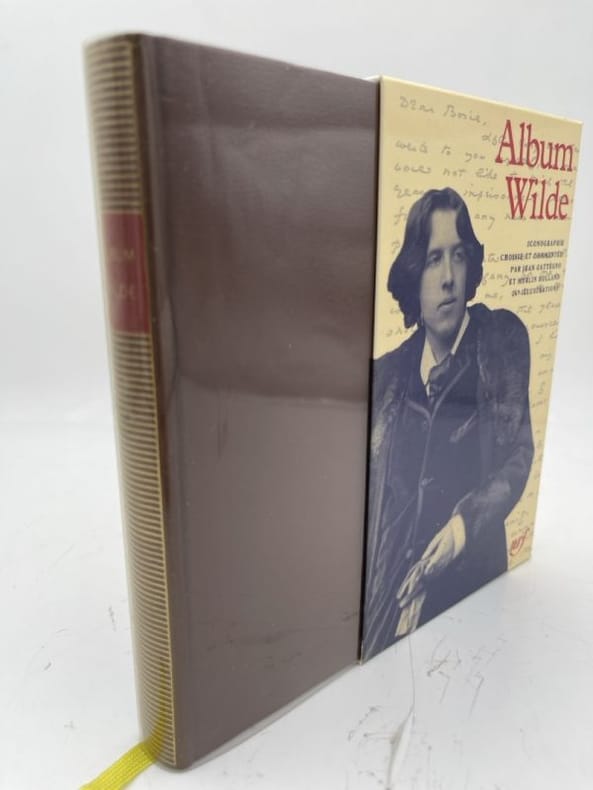
1996réf. 7478Gallimard 11 x 17,5 Paris 1996 N.R.F."Bibliothèque de la Pléïade". Iconographie choisie et commentée par Jean Gattégno et Merlin Holland. Reliure éditeur pleine peau souple sous rodhoïd et étui illustré, dos orné de filets dorés et titre doré sur fond rouge; signet jaune, 267 p., 267 illustrations, 35e volume de la collection. Etui blanc, reliure et intérieur en parfait état. Exemplaire à l'état neuf.(DromB25) Livre
1996réf. 15891Paris Gallimard, coll. "Bibliothèque de la Pléiade" 1996 1 vol. relié in-12, plein cuir éditeur, rhodoïd et étui illustré, 266 pp., 267 illustrations, index. A l'état de neuf.
réf. 11577Paris, N.R.F., 1975. In-12. Iconographie choisie et commentée par Jean Gattégno et Merlin Holland. Nombreuses illustrations. Reliure d'éditeur sous rhodoîd. Sans la jaquette et l'étui. En parfait état.
réf. 55007aafParis, NRF, La Pléiade, 1996, In-8° frontispice + 267 p. richement ill. (267 illustrations), rel. de l'éd. + rhodoid + étui ill. de portrait.
1996réf. 540841996 Editions Gallimard / NRF, collection "Bibliothèque de la Pléiade" - 1996 - In-12, reliure pleine peau de l'éditeur, dos lisse orné de titres et filets horizontaux dorés, signet jaune, sous jaquette rhodoïd, sous emboitage illustré de l'éditeur - 267 pages
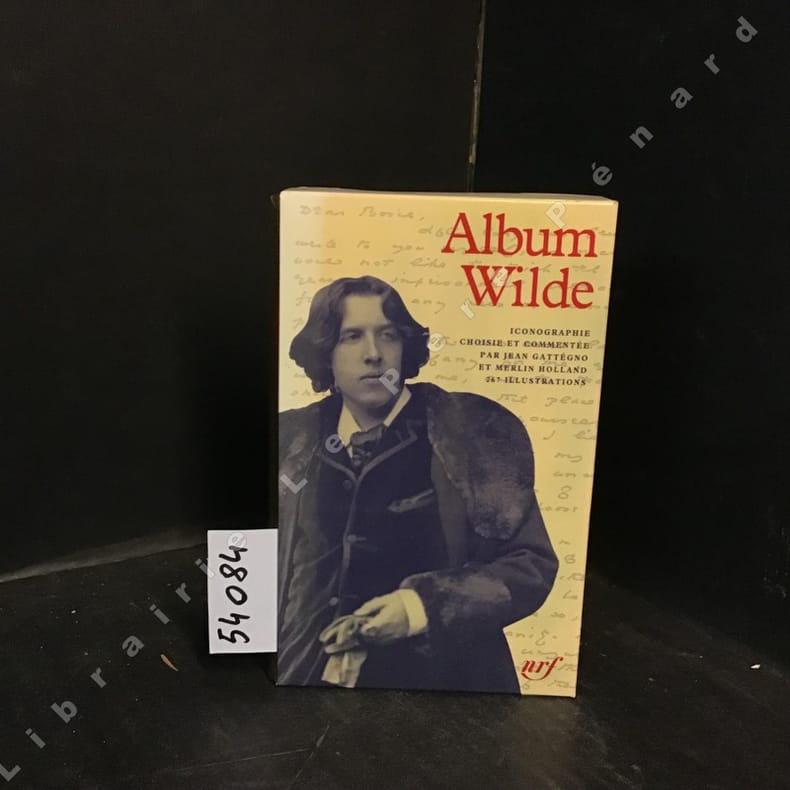
1996réf. 138805Gallimard Paris, Gallimard, 1996. Collection Bibliothèque de la Pléiade n° 35. In-12 pleine reliure éditeur, rhodoïd, étui illustré. 266 pages. Iconographie choisie et commentée par Jean Gattégno et Merlin Holland. 267 illustrations. Très bel exemplaire
1996réf. 193586Gallimard Paris, Gallimard, 1996. Collection Bibliothèque de la Pléiade n° 35. In-12 pleine reliure éditeur, rhodoïd, étui illustré. 266 pages. Iconographie choisie et commentée par Jean Gattégno et Merlin Holland. 267 illustrations. Très bel exemplaire
réf. 831392Gallimard NRF "Bibliothèque De La Pléiade" Paris 1996 In-12 ( 175 X 110 mm ) de 266 pages, pleine basane havane, dos lisse orné de filets dorés sous rhodoïd et étui illustré. ( Présentation de l'éditeur ). 249 illustrations en couleurs et en noir dans et hors texte, iconographie choisie et commentée par Jean GATTEGNO et Merlin HOLLAND. Tampon ex-libris, signature et date sur une garde, bel exemplaire.
réf. 957926Gallimard NRF "Bibliothèque De La Pléiade" Paris 1996 In-12 ( 175 X 110 mm ) de 266 pages, pleine basane havane, dos lisse orné de filets dorés sous rhodoïd et étui illustré. ( Présentation de l'éditeur ). 267 illustrations en couleurs et en noir dans et hors texte, iconographie choisie et commentée par Jean GATTEGNO et Merlin HOLLAND. Très bel exemplaire. µµµ
2025réf. x-1041148453Routledge 2025. Hardcover. New. 144 pages. 8.50x5.43x8.50 inches. Routledge hardcover
réf. 0666941866.Ghardcover. Good. Access codes and supplements are not guaranteed with used items. May be an ex-library book. hardcover
réf. 1385972785.Ghardcover. Good. Access codes and supplements are not guaranteed with used items. May be an ex-library book. hardcover
réf. 1332689523.Gpaperback. Good. Access codes and supplements are not guaranteed with used items. May be an ex-library book. paperback
2024réf. ABD-9789387160835Agrotech Press 2024. New. Agrotech Press unknown
2024réf. ABD-9789387160798Agrotech Press 2024. New. Agrotech Press unknown
2024réf. ABD-9789387160835Agrotech Press 2024. New. Agrotech Press unknown
2024réf. ABD-9789387160798Agrotech Press 2024. New. Agrotech Press unknown
2006réf. Q-1845972686Ryland Peters & Small 2006-08-01. Paperback. New. New. In shrink wrap. Looks like an interesting title! Ryland Peters & Small paperback
réf. 76151Editions mille et une nuits 1996 livre agenda 17,5*12,5 sp pages
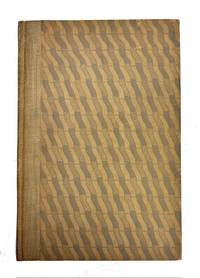
1921réf. 23766Westminster: Beaumont Press 1921. Limited edition. Hardcover. Near fine. Illustrated by Ethelbert White. Thin 8vo. 60pp. Cloth spine gilt. Patterned paper over boards. Finely printed letterpress on handmade paper. Woodcut cover and decorations by Ethelbert White. One of 400 numbered copies from a totla edition of 475 this is number 455. A near fine copy. "The letters included in this volume were written by Oscar Wilde to his friend Robert Ross during the summer of 1897. Wilde was released on Wednesday May 19th after completing his sentence of two years imprisonment and on that day he crossed with a friend to Dieppe where he was met by Robert Ross to whom he at once handed the manuscript of his prison letter no known as 'De Profundis'. . Beaumont Press hardcover books
1921réf. 96099Westminster a central borough in London: Beaumont Press 1921. Hardcover. Very Good. Ethelbert White. a few illustrations by Ethelbert White 59p. Originial cloth backed board. 22 cm. Moderate cover soiling. No jacket. Copy # 355 of 400 numbered 75-450 on handmade paper; 75 copies on Japanese vellum signed by the publisher and artist were also published. The 12th book published by the Beaumont Press. Beaumont Press hardcover books
1921réf. ST12330bWestminster: Beaumont Press 1921-22. FIRST EDITIONS. EACH ONE OF 75 COPIES ON JAPANESE VELLUM OF THE EDITION DE LUXE SIGNED BY THE PUBLISHER AND ARTIST of a total of 475 copies. 222 x 152 mm. 8 3/4 x 6". Two separately issued but companion volumes. Original vellum-backed decorative paper boards. Reading with vignette on title in orange and green two plates in the same colors one facsimile of writing in text device on final page stylized illustration of a tree on front and rear endpapers; "Berneval" with woodcuts of Naples and Paris printed in blue on the front and rear endpapers two-color title page woodcut one plate a facsimile of a Wilde letter and printer's woodcut device; our special deluxe version WITH THREE ADDITIONAL WOODCUTS at the back of each volume all the woodcuts as well as the cover design by Randolph Schwabe. Ransom p. 211; Tomkinson p. 17. ◆Berneval spine just a bit darkened otherwise FINE UNWORN COPIES that have obviously been little used as they open stiffly and are immaculate inside and out. Here "After Berneval" is offered with "After Reading" its earlier companion volume both of them in their deluxe form on Japanese vellum and including an extra suite of the illustrations. "Reading" comprises a set of letters also written to Ross by Wilde during the summer of 1897 after having just been released from two years' imprisonment in Reading Gaol. The preface to its sequel "After Berneval" says that the earlier collection "was unprocurable almost as soon as it was published." The letters in these volumes tell the story of a tragic literary figure who fell from a precipitous height. Oscar Wilde 1854-1900 was born and raised in Ireland studied classics at Trinity College Dublin and at Magdalen College Oxford before settling in London. There he became famous for his unmatched wit and infamous for his personal eccentricities--long hair décor at his lodgings that included peacock feathers and blue china and ultimately sexual behavior that was deemed both intolerable and criminal. During the first half of the 1890s he was enjoying remarkable social prominence and literary success with the staging of "Lady Windermere's Fan" 1892 "A Woman of No Importance" 1893 "An Ideal Husband" 1894 and the incomparable "The Importance of Being Earnest" 1895. But two months after the staging of this last play he brought a defamation suit against the Marquess of Queensbury the father of his intimate friend Lord Alfred Douglas. The suit backfired: in the course of the litigation Wilde was investigated by police and his homosexuality was exposed leaving his reputation destroyed. He was sentenced in May of 1895 to two years of hard labor spending part of his time behind bars at Reading Gaol where he produced his powerful poem "De Profundis." After release he moved to the Continent and died three years later in Paris of meningitis. As Day says "Among English men of letters only Byron and Shaw have surpassed Wilde in the craft of conscious posing and self-publicizing" a fact that has made succeeding generations suspicious of the reality behind the legend that the author helped to establish. But after a period when he was treated as a kind of martyr because of his suffering at the hands of squeamish Victorianism "it is at last possible to evaluate Wilde as the capable literary artist he actually was." In physical terms these are modest but nevertheless pleasing products of the Beaumont Press founded by Cyril W. Beaumont in 1917. A special feature of the Press is its patterned paper bindings each with a design created for one title only. Beaumont Press unknown books
1921réf. ST12330bWestminster: Beaumont Press 1921-22. FIRST EDITIONS. EACH ONE OF 75 COPIES ON JAPANESE VELLUM OF THE EDITION DE LUXE SIGNED BY THE PUBLISHER AND ARTIST of a total of 475 copies. 222 x 152 mm. 8 3/4 x 6". Two separately issued but companion volumes. Original vellum-backed decorative paper boards. Reading with vignette on title in orange and green two plates in the same colors one facsimile of writing in text device on final page stylized illustration of a tree on front and rear endpapers; "Berneval" with woodcuts of Naples and Paris printed in blue on the front and rear endpapers two-color title page woodcut one plate a facsimile of a Wilde letter and printer's woodcut device; our special deluxe version WITH THREE ADDITIONAL WOODCUTS at the back of each volume all the woodcuts as well as the cover design by Randolph Schwabe. Ransom p. 211; Tomkinson p. 17. ◆Berneval spine just a bit darkened otherwise FINE UNWORN COPIES that have obviously been little used as they open stiffly and are immaculate inside and out. Here "After Berneval" is offered with "After Reading" its earlier companion volume both of them in their deluxe form on Japanese vellum and including an extra suite of the illustrations. "Reading" comprises a set of letters also written to Ross by Wilde during the summer of 1897 after having just been released from two years' imprisonment in Reading Gaol. The preface to its sequel "After Berneval" says that the earlier collection "was unprocurable almost as soon as it was published." The letters in these volumes tell the story of a tragic literary figure who fell from a precipitous height. Oscar Wilde 1854-1900 was born and raised in Ireland studied classics at Trinity College Dublin and at Magdalen College Oxford before settling in London. There he became famous for his unmatched wit and infamous for his personal eccentricities--long hair décor at his lodgings that included peacock feathers and blue china and ultimately sexual behavior that was deemed both intolerable and criminal. During the first half of the 1890s he was enjoying remarkable social prominence and literary success with the staging of "Lady Windermere's Fan" 1892 "A Woman of No Importance" 1893 "An Ideal Husband" 1894 and the incomparable "The Importance of Being Earnest" 1895. But two months after the staging of this last play he brought a defamation suit against the Marquess of Queensbury the father of his intimate friend Lord Alfred Douglas. The suit backfired: in the course of the litigation Wilde was investigated by police and his homosexuality was exposed leaving his reputation destroyed. He was sentenced in May of 1895 to two years of hard labor spending part of his time behind bars at Reading Gaol where he produced his powerful poem "De Profundis." After release he moved to the Continent and died three years later in Paris of meningitis. As Day says "Among English men of letters only Byron and Shaw have surpassed Wilde in the craft of conscious posing and self-publicizing" a fact that has made succeeding generations suspicious of the reality behind the legend that the author helped to establish. But after a period when he was treated as a kind of martyr because of his suffering at the hands of squeamish Victorianism "it is at last possible to evaluate Wilde as the capable literary artist he actually was." In physical terms these are modest but nevertheless pleasing products of the Beaumont Press founded by Cyril W. Beaumont in 1917. A special feature of the Press is its patterned paper bindings each with a design created for one title only. Beaumont Press unknown