194 résultats
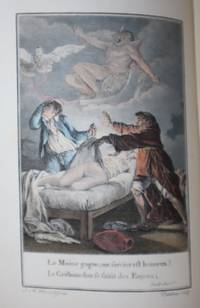
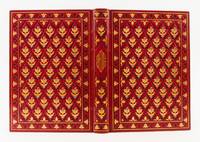
1799réf. ST17632cParis: de l'Imprimerie de Crapelet an VII 1799. 228 x 150 mm. 9 x 6". Two volumes. Very attractive 19th century red morocco by Capé stamp-signed in gilt on front turn-in French fillet border raised bands compartments with central quatrefoil surrounded by lacy gilt tooling gilt lettering gilt dentelles all edges gilt. Housed in a later marbled slipcase. WITH engraved frontispiece by Gaucher and 21 ENGRAVED PLATES after Marillier Monsiau and Ponce as called for AND EXTRA-ILLUSTRATED WITH 46 PLATES comprised of a suite of 20 small plates a suite of 21 large plates and five portraits. Verso of front free endpaper with the bookplate of Jacques Bastenet. Cohen-de Ricci 1035; Graesse VI 393. See also: Cohen-de Ricci 1047-48 for the plates by Moreau. ◆Two three-inch abrasions on one cover and a hint of wear to joints both very well disguised by refurbishment leather faintly soiled but the decorative bindings still lustrous and quite pleasing without any significant condition issues. Occasional mostly light foxing never serious and most of the plates clean but noticeable enough to be regrettable some of the smaller extra-illustrations slightly browned due to paper stock but still a book with considerable appeal inside and out with the engravings richly impressed. This printing of Voltaire's mock-heroic "Pucelle" a licentious burlesque based on the Joan of Arc story features the same beautiful engravings found in the Didot edition of 1795 but without the frames plus two additional suites of plates taken from other editions. The set of 20 small plates seem to be close copies of Gravelot's illustrations from the 1762 Geneva edition of "La Pucelle"; the set of 21 larger images are by Moreau all but two being before letters. The latter set probably comes from the suite of images for Voltaire's "Oeuvres" published by Renouard in 1802 of which there were just 40 copies before letters according to Cohen-de-Ricci. Capé was one of the most distinguished binders in France in the middle years of the 19th century being especially well known for the delicacy of his work as evidenced by our spines. He was the binder to the Empress Eugénie and Béraldi calls him "the Bozérian of the second Empire.". de l'Imprimerie de Crapelet unknown books
1764réf. 1322Londres 1764. 8vo. 190 x 120 mm. 7 ½ x 4 ½ inches. viii 344 1 pp. Bound with half-title in contemporary Dutch decorated paper boards vellum spine and corner tips. Frontispiece portrait of Hugo Grotius dated 1790 probably added when bound. Some contemporary manuscript notes in the text and on the rear free endpaper. Very nice copy. First edition. Voltaire’s Philosophical Dictionary organized alphabetically and containing his thoughts on European society beginning with a short essay on Abraham and a critique of the stories of the Bible. Voltaire’s Dictionnaire ends with the topic of Virtue where referring to theologians in the Catholic Church his final words are a petition to God. In his most sarcastic way he completes his book with the sentence “Mon Dieu donnez nous souvent de pareils fripons!” My God give us often such rogues as these!. Voltaire had this work published in Geneva by Gabriel Grasset who to keep the authors identity secret created a false imprint stating London as the place of printing. Included are 73 essays on subjects ranging from Baptism to Character Equality Fables History Liberty Religion Solomon and Tyranny to name a few. “Voltaire sought to create a text which would fit in one's pocket and be affordable because "revolutionary material must be small enough for people to carry with them". What he created is a text which educated and amused at the same time.” As you can see by the subjects of Voltaire’s essays the Catholic Church was the target of much of his rhetoric. He wanted to expose the hypocrisy of the Church and at the same time advocate for a more rational God one who allowed for free will and self-examination as a major tenant of his philosophy. There are numerous edition of Voltaire’s Dictionnaire Philosophique but the first is scarce in the market. This is a nice copy in a sound and not unattractive copy. Roger Pearson Voltaire Almighty 2005. . unknown books
1774réf. 02594THEATRE DE P. CORNEILLE AVEC COMMENTAIRES ET AUTRES MORCEAUX INTERESSANS Geneva 1774 the revised edition with augmentations 8 volumes complete occasional moisture stain sometimes quite obvious sometimes quite faint to the lower fore edge corner sections / tips of some of the leaves of several volumes never entering the text some wear to the corner tips and edges of the boards slight wear to some of the spine extremities some rubbing to the boards else a tight vg set bound in what appears to be an early 19th century binding of 1/2 leather and marbled / spotted boards with raised spines of 6 compartments 4 decorative and one each with red and black leather labels the red bearing the title with the black revealing the volume number. Pierre Corneille was a most important player in the history of French theater writing 32 plays between 1629 and 1684. These 8 volumes are also enhanced with 34 engraved plates by Hubert Gravelot. Text in French of course. N. A. hardcover books
1890réf. 271451Paris: Librairie des Bibliophiles 1890. hardcover. very good. 10 volumes. 12mo 3/4 tan morocco marbled boards ornately gilt spines 3 small repairs on spines.Paris: Bibliophiles 1890. Very good. A lovely set. Librairie des Bibliophiles unknown books
1731réf. 231308Paris: Josse 1731. First. hardcover. very good. Slim 8vo pp. xxix 3. 110 3 approbation and errata. Decorative copper engraved head-pieces a few contemporary ink annotations full gilt brown calf covers lightly warped and rubbed with a bright gilt heraldic crest on front and back red edges. Paris: J.F. Josse 1731. First Edition. Scarce. Very good. Josse unknown books
1764réf. 24563Londres: aux depens de la compagnie 1764. 8vo pp. xvi 384; engraved frontispiece and 20 engraved plates; 20th-century full crimson straight-grain morocco by Zaehnsdorf decorative gilt border on covers gilt-paneled spine and preserving the original blue printed wrappers which are bound in. First published without plates at Louvain in 1755. This is likely a 'variorum' edition probably Dutch based on the first authorized edition of 1762 Geneva with variant readings from earlier piracies. Bengesco 491. aux depens de la compagnie unknown books
1824réf. 23898Paris: Delangle Frères 1824. Later printing. Hardcover. fair. Octavo. Half leather over marbled paper covered boards with gold lettering on spines. marbled endpapers. Fascinating edition of the works of the most famous French Enlightenment writer essayist and philosopher of all times. It includes: Vol. 1 : Biographie. Vol.2 : Mémoires. Vol. 3-12 : Théâtre. Vol. 13 : La Henriade. Vol. 14 : La Pucelle. Vol. 15-18 : Poésie. Vol. 19-24 : Essai sur les moeurs. Vol. 25-27 : Le Siècle de Louis XIV. Vol. 28-29 : Le Siècle de Louis XV. Vol. 30 : Histoire de Charles XII. Vol. 31 : Histoire de Russie. Vol. 32-33 : Annales de l'Empire. Vol. 34 : Histoire du Parlement de Paris. Vol. 35-37 : Mélanges historiques. Vol. 38-40 : Politique et législation. Vol. 41-42 : Physique. Vol. 43-48 : Philosophie. Vol. 49-50 : Dialogues. Vol. 51-58 : Dictionnaire philosophique petite perte à la coiffe du volume 54. Vol. 59-60 : Romans. Vol. 61 : Facéties. Vol. 62-64 : Mélanges littéraires. Vol. 65-67 : Commentaires. Vol. 68-95 : Correspondance. Vol. 96-97 : Tableau analytique. Some edge wear on bindings with joints edges and corners partly rubbed. A few volumes have their head or tail of spine chipped. Volume 97 has a different binding and is from a different publisher Beaudouin Frères. Only volume 64 is in poor condition with its first 50 pages missing and heavy worming affecting text. Sporadic foxing throughout. Text in French. Bindings in overall fair to good interior in good condition. Delangle Frères hardcover books
1912réf. 328118Berlin: Paul Cassirer 1912. Limited. hardcover. near fine. Marcus Behmer. 40 exquisite tipped in etchings by Marcus Behmer. The etchings integrated with the text range widely in size and format from full page illustrations to historiated initials and vignettes. 77. 5 pages. Small folio original black-lettered mustard cloth Berlin: Paul Cassirer 1912. Limited edition -- Number 86 of 170 copies on "amerikanisches Japan" printed at the Pan Presse. A near fine copy of this scarce book. Voltaire: Zadig or Fate. An Oriental History. Behmer's wryly exquisite Beardsleyesque interpretation is the first of a sequence of Voltaire illustrations in modern German Pressbooks followed by editions of "Candide" by Klee Unold and Kubin. --Schauer II. 43. Paul Cassirer unknown books
1899réf. 007992London: The Lutetian Society 1899. First Edition Thus. Full Straight-Grained Morocco. Fine. An exceptional copy. No. 415 of 500 copies limitation. Also extra-illustrated with 23 hand-colored engraved plates 21 of which depict scenes from the play and are after J. M. Moreau and two portraits one of Joan of Arc the other of Voltaire. There are also 25 b/w engravings these proofs of plates done by Duplessis-Bertaux. Bound beautifully by R. Wallis for Robson & Co. a rare bookseller at the turn-of-the-twentieth century stated in full straight-grained morocco with five raised bands and gilt spine decoration gilt turn-ins and gilt edges. And plates are all printed on a luxuriant and thick vellum paper. 8vo. 22 by 16 cm. 406 pp. Pagination continuous between two volumes. Some of the Moreau plates are dated 1788 or 1789. We can assume all of the Moreau plates are from that time. They were created for an earlier French edition of the poem and most of them have two line captions quoting the poem. The Condition: Light rubbing evident on raised bands and spine extremities. Otherwise binding fresh tight. Overall a fine copy. The Lutetian Society unknown books
1901réf. 13129The Works of Voltaire / A Contemporary Version with notes / by Tobias Smollett revised and modernized; new translations by William F. Fleming and an introduction by Oliver H. G. Leigh ; a critique and biography by the Rt. Hon. John Morley E. R. Dumont 1901 42 volumes complete a vg to near fine set bound in half leather with raised spines with marbled boards and matching marbled end-papers. 1/100 sets so labeled as the Les Delices Edition. Profusely illustrated. Formerly the set owned by 19th century Grand Rapids Lumber Baron Henry G. Dykhouse with his bookplates pn the front paste-downs. E. R. Dumont hardcover books
réf. 6023vp: vp vd. First Editions of all works. Full contemporary 18th cent. calf. Very good; the plates for the Barrere are awkwardly cut down no loss; joints strained and chafed but still an appealing copy. 8vo I - xvi 1 - 235 236 - directions to the binder 25 folding engraved plates. NOTE: There is some mis-numbering of pages in the Turgot that has no effect on the text or collation.; II - 6 67 3 - privilege pp 2 folding engraved plates.; III - vii 1 - blank 1 - 131 1 - blank pp. An excellent sammelband of 18th century natural history that includes an important work of Voltaire. The Turgot Lyon 1758 is a book devoted to the explanation of how to successfully transport and preserve natural history specimens. The Voltaire Basle Geneva 1768 is an instance of his involvement with experimentation and the attempts to examine such questions as the nature of light formation of mountains human generation etc. The Barrere Paris 1746 essay is an inquiry into the formation and origin of fossil specimens. Casey - Wood p. 604; Bengescu #1766. vp unknown books
1738réf. 328432London 1738. hardcover. very good. Engraved copperplate portrait frontispiece of Isaac Neuton and 8 other plates including 1 folding 1 portrait of Voltaire engraved copperplate vignette on title page engraved and woodcut diagrams tables and illustrations in the text. Rubricated title page contemporary calf neatly re-cased with original gilt-decorated spine preserved; all edges gilt. London 1738. An internally fine copy in a worn but solid binding. unknown books
réf. MA07B-04499La Société Littéraire Typographique. Collectible - Very Good. Kehl Germany: La Société Littéraire Typographique 1785. No additional printings. 70-volume set with 69 of 70 volumes present. 8vo full-leather hardcovers in early mottled brown leather. A thin blind-stamped line outlines each board and the board edges are decorated with a thin gilt line. Five raised bands to spine recorated with small vertical lines. Gilt devices of flora enclosed in a box to the first fourth fifth and sixth compartments. Author and series volume number gilt stamped in a gilt box on a brown leather label to second compartment. Work title and part gilt stamped in a gilt box on red leather label to third compartment. These labels have been reversed on Volume 30 with the author and volume on red in the second compartment and title and part number on brown in the third compartment. Page edges speckled and endpapers marbled with swirls of pink blue yellow and white. French. A frontispiece engraving in volume one after the painting by Nicolas de Largillière depicting Voltaire at 24 years old; another in volume 16 after the portrait by Maurice Quentin de La Tour; a frontis diagram of a battlefield in volume 24; 14 pages of plates at the rear of volume 31; frontis engraving of a marble bust to volume 32. Very good. Volume 28 lacking. Spine tips slightly worn on many volumes and corners gently bumped and rubbed; the leather has been eroded very slightly at some corners and a few volumes are rather more edgeworn with scrapes to board edges. Top fore-corner of volume 50 front board worn. Spines a bit rubbed and creased with some volumes clearly better loved than others; the high points of the raised bands have been somewhat more rubbed in a few spots. The volume number label has been detached from volume 7 and laid in and the work title label has been chipped on volume 2 detached from volume 24 and laid in and lost from volume 32. Some joints have very small cracks at the tips but the leather remains firm and supple. Volume 35 front joint cracked. A few volumes have suffered some scrapes to the boards a gouge to the front of volume 25 and there is a very small spot of worming each to the front board of volume 17 and the rear of volume 18 but the leather is otherwise smooth. Page edges slightly toned; dampstaining and spotting to the edges of several volumes. Volume 70 spine cracked and pages 165-172 loose but don't appear ever to have been sewn in. Some very occasional isolated spots of foxing throughout but interiors are clean bright and very near fine. The attached rubbon bookmarks are present and intact in almost all volumes and although the exposed tips have faded that portion of the ribbon inside of the books remains a vibrant salmon pink. The gilt too is bright and has been rubbed away only partially on the raised bands; it remains fully present everywhere else. The bindings are tight and hinges firm and a few pages remain unopened. An incredible copy of the famous unexpurgated Kehl Voltaire printed in Germany in order to escape the censorship of pre-revolutionary France. Inquire if you need further information. NOT AVAILABLE FOR SHIPMENT OUTSIDE OF THE UNITED STATES. La Société Littéraire Typographique hardcover books
1738réf. 000010155Amsterdam: Etienne Ledet & Compagnie 1738. First edition. Hardcover. Very Good. 8vo. 5 4-399 3 pp. Full contemporary calf with the spine in six compartments spine lettered and decorated in gilt; all edges decoratively stained red. A blue silk-ribbon bookmark bound in. Title page printed in red and black with the publisher's device engraved on it. Illustrated with two frontispieces six plates a folding table a full-page chart in-text engravings and diagrams and engraved head and tailpieces quite elaborate ones. Babson 59-60. Bengesco 1570. Gray 33. PMM 97. SEP Barbara Becker "Émilie du Châtelet". The first state as the Desbordes imprint is generally recognized as the later state. With the pagination error on p. 271. Voltaire is credited with having spread Newton's revolutionary contributions to science across the European continent. He dedicated this work to his romantic and scientific partner the Marquise du Chatelet herself an accomplished scientist. The Marquise completed the first translation of Newton's Principia into French. Voltaire acknowledged her significant contributions to the production of this work an exposition of Newtonian Physics. This book was widely read and quite influential in spreading and popularizing Newton's groundbreaking ideas. Newton's work would replace Descartes' physical system and remained the standard in physics for two hundred years until the discovery of the Theory of Relativity and Quantum Mechanics in the early twentieth century. A brilliant piece of print history and a cornerstone work in the history of science. A Very Good example with the front joint expertly strengthened the bottom corners and spine tips show very minor loss; the rear decorative endpaper has a tiny chip to its corner page 231 is bound in upside down. Etienne Ledet & Compagnie hardcover books
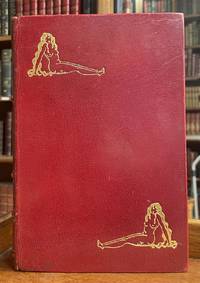
1927réf. 315984New York: Bennett Libraries 1927. hardcover. fine. Clara Tice. 8vo 10 colored etchings by Clara Tice with captioned tissue guards rubricated title page publisher's burgundy morocco by Whitman Bennett and designed by Tice with nudes to spine and front cover in gilt inner dentelles marbled endpapers top edge gilt others untrimmed. New York: The Bennett Libraries 1927. A fine copy. First Tice edition limited issue. Number 155 of 250 copies on Pannekoek paper this copy additionally signed by Tice though uncalled for in the limitation. This copy is unique as it is from the personal library of Clara Tice with her charming bookplate on the fly-leaf. Bennett Libraries unknown books
1928réf. 311598New York: Random House 1928. Limited. hardcover. fine. Kent Rockwell. Extensively illustrated throughout by Rockwell Kent with each drawing hand-colored. 112 pages. Short slim 4to handsomely rebound in 1/2 brown morocco and beige cloth boards. New York: Random House 1928. A fine copy of the special limited printing with color images printed by Elmer Adler's Pynston Printers. From a total of 1470 copies signed by Rockwell Kent this is one of only 95 hand-coloured in the studio of the artist This copy is un-numbered. A splendid production issued to celebrate the inauguration of Bennett Cerf's new company Random House. The logo for Random House used to this day comes from the final illustration in the book -- an idealized country home filled with the ideas of the Enlightenment. Random House unknown books
1767réf. 140947325London: Printed for J. Almon 1767. First Edition. Near Fine. First English-language edition of Cesare Bonesana di Beccaria's treatise on criminal justice reform with an added commentary by Voltaire. xii 179 lxxix pp. Bound in full contemporary mottled calf laced in boards. Morocco title label gilt tooling to spine and board edges all edges speckled red. Near Fine with light wear to covers boards slightly splayed joints worn but sound. Light toning and scattered foxing throughout more pronounced in first and last few pages. Discoloration from binder's glue to endpapers author's name penciled to front pastedown math equation penciled to back pastedown. A beautiful copy of the influential Enlightenment classic from the collection of scholar and bibliophile Arnold Meadowcroft Muirhead with his bookplate on the front pastedown. Rare. Printed for J. Almon unknown books
1893réf. ST17884Paris: Imprimé pour Les Amis de Livres par Chamerot et Renouard 1893. No. 55 OF 115 COPIES printed for M. Van der Vrecken de Bormans. 275 x 190 mm. 10 3/4 x 7 1/2". 4 p.l. 159 3. DAZZLING CONTEMPORARY SCARLET MOROCCO VERY ORNATELY DECORATED IN GILT SILVER AND BLACK AS WELL AS INLAID BY MARIUS MICHEL stamp-signed on front doublure covers elaborately embellished with a floral frame enclosing a large central panel filled with diapered compartments formed by gently curving black leaves each compartment containing a floral sprig tooled in silver and gold flat spine with similarly decorated ogival compartments and gilt titling OLIVE BROWN MOROCCO DOUBLURES filled with rows of inlaid red carnations with dark green pedicels leather hinges jacquard silk endleaves in pink blue and green pattern marbled flyleaves all edges gilt. Original white textured paper wrappers bound in. In a slightly worn brown morocco-trimmed marbled paper slipcase. With eight pleasing color engravings by Rops 4 Robaudi 2 and Garnier 2 depicting scenes from the story accompanied by 29 proofs in red yellow cyan and black & white as called for in the colophon. A Large Paper Copy. Front flyleaf with INK INSCRIPTION SIGNED BY MARIUS MICHEL and dated Mai 1920 noting that he had bound this copy for M. Van der Vrecken de Bormans in 1896 for a very substantial price of 600 francs. Carteret IV 407; Vicaire I 47. Three blank front flyleaves with narrow faint brown horizontal blemish across most of the page apparently a tape shadow; in all other ways A BEAUTIFUL COPY clean fresh and bright internally IN A PRISTINE BINDING. This ravishing object is a bibliophile's treasure: an illustrated luxury edition in Large Paper format of Voltaire's philosophical novel offered in a binding from a pre-eminent Parisian atelier. The impressive binding stands out not only because of its remarkable condition but also because of the variety and unerring execution of its decorative elements--from the vigorous use of black gold and silver on the cover and spine to the particularly animated inlaid morocco doublures. Considered the best binder of his generation as well as the founder of modern French bookbinding Henri Marius Michel 1846-1925 began his career in the workshop established by his father Jean in Paris in 1849 where they produced distinguished bindings in the prevailing historical styles for two decades. After the father's death in 1890 the firm came to even greater prominence when Henri began producing bindings in a completely new and original style that did nothing less than change the course of modern bookbinding in France. According to Duncan & De Bartha Henri believed passionately "that bookbinding needed a new vocabulary of ornamentation in order to express the mood and spirit of contemporary authors." The "vocabulary of ornamentation" he developed was based on nature the revolutionary "La Flore Ornamentale" style that he unveiled at the 1878 International Exposition. His favored floral forms dominate the present binding both as inlays and as silver and gold tooling. Our binding was commissioned by Paul Van der Vrecken Baron de Bormans an attaché at the Belgian Embassy in Paris and a bibliophile who belonged to "La société du livre contemporain" as well as the "Cercle Parisien du livre." The 600 francs the binding cost would have bought a very great deal in France at the end of the 19th century. Another copy of this work with the same special features and also bound in inlaid morocco by Marius Michel sold at Sotheby's in 1995 for the hammer price equivalent of $31200. Imprimé pour Les Amis de Livres par Chamerot et Renouard unknown books
1759réf. 752Genève Geneva: Cramer 1759. First Edition. 3 vols. in one 12mo 164 x 100mm pp. 2 291 1; 133 1 35 1. First printing of the great 18th century philosophical narrative with all the points correct. Including the 3 usual cancels the right title page ornament repeated pages 193 and 266 the misprints of “que ce ce fut” page 103 line 4 and “précisément” page 125 line 4 the correction removing a paragraph break page 31 the rewritten lines about the Lisbon earthquake page 41 etc. Contemporary full calf red calf label rebacked with the original spine saved and laid down recornered marbled endpapers gilt rubbed inner paper hinges strengthened old ink signatures on the endpaper and front blank tiny signature on the title page one tissue strengthened tear at the bottom of A2 touching the last 3 lines of text without any loss otherwise internally quite nice clean and very good. Bound without N7 a blank and N8 a notice to the binder as is usual agreeing in all respects to what you would have received if you had purchased a copy in sheets on publication day then bought the sequels and then handed them over to the most local Swiss bindery. Ref: PMM 204. There were 18 editions of Candide in 1759. It took 221 years for a clear and convincing bibliography to first sort them out and then got accepted and once accepted our real 1st edition was confirmed as rare. In the last 15 years however that bibliographical data has been more widely circulated and several 1st editions that weren’t on the original 22–copy census have come into market. It is still scarce more so in a contemporary binding. Candide bides as the epitomic philosophical fable of the French Enlightenment and the genotype of irony without exaggeration and though it’s laced with more salt than the postwar streets of Carthage it repeatedly tolls a reminder that light hearts live long. Most importantly Candide remains remarkably relevant when examined through contemporary frameworks functioning as an incisive proto-postcolonial text that anticipates modern discourse on global inequality systems of oppression and the limitations of Enlightenment rationality. The novel's scathing portrayal of slavery conquest and religious persecution resonates with intersectional analyses that recognize how power structures interlock across racial gender and economic dimensions. The savage irony throughout the text dismantles not just philosophical optimism but also European exceptionalism exposing the hypocrisy of colonial enterprises and religious institutions alike. The narrative's episodic structure—with its global movements between Europe South America and the Ottoman Empire—invites discussions of transnationalism and diasporic experience while Candide's concluding retreat to cultivate his garden has been reinterpreted by ecocritical scholars as both an acknowledgment of environmental interdependence and a potentially problematic withdrawal from systems-level political engagement. “Do you believe” said Candide “that men have always massacred each other as they do to-day that they have always been liars cheats traitors ingrates brigands idiots thieves scoundrels gluttons drunkards misers envious ambitious bloody–minded calumniators debauchees fanatics hypocrites and fools” “Do you believe” said Martin “that hawks have always eaten pigeons when they have found them” –Voltaire Candide. Cramer unknown books