Hoffmann, Karl-HeinzBiblio.com

12 759 résultats
2004réf. DADAX354021612XSpringer 2004-05-03. 2004. hardcover. New. 6.30x0.40x9.40. Buy with confidence. Excellent Customer Service & Return policy. Springer hardcover
1995réf. UJune2019-133391930-359Pearson 1995-01-29. Paperback. Good. 0x8x10. Textbook May Have Highlights Notes and/or Underlining BOOK ONLY-NO ACCESS CODE NO CD Ships with Emailed Tracking Pearson paperback
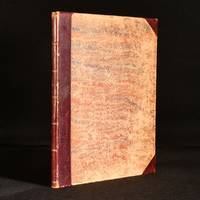
1860réf. 880P36Not Stated: Not Stated c1860. Leather. Good. 10" by 7.5". Not Stated. A Victorian hand-coloured edition of the popular Struwwelpeter rebound in a half calf binding. 'Struwwelpeter' is a popular collection of children's tales written to teach children about the consequences when they misbehave in certain ways. This books includes the cautionary poems 'Shock-Headed Peter' 'The Story of Cruel Frederick' 'The Dreadful Story about Harriet and the Matches' and more.Illustrated with twenty-four hand-coloured plates. By Heinrich Hoffman.Bound without title page.Undated dated from Jisc from similarly hand-coloured editions. In a half calf binding with marbled paper to the boards. Externally rubbed. Light bumping to the extremities. Spine is a little faded. Front hinge is starting but firm. Internally firmly bound. Pages are lightly age-toned and generally clean with the occasional spot and handling mark. Light edge wear to the text block. Chip to the bottom edge of pages 2 and 3. Closed tear to the head of the first few pages. Repaired closed tear to page 6. Good Not Stated hardcover
2024réf. CBS-9780729544436Elsevier Np 2024. New. Elsevier (Np) unknown
2024réf. CBS-9780729544436Elsevier Np 2024. New. Elsevier (Np) unknown
réf. 6372865John Wiley & Sons . Hardback. New. pp. xix 490 John Wiley & Sons hardcover
réf. M14500Very rare first edition. 2 parts bound in one volume. Verlag der Grosseschen Buchhandlung Clausthal 1864. First edition. In-8. Part 1: xv & 315 pages. Part 2: 101 pages. Modern half-leather a very nice copy. Ex-library with stamp on title page of part 1. From the library of German scholar Hans-Jürgen Jordan HJJ. Language: German/Deutsch. This book ships from Europe shipping costs will be updated accordingly BCI. Relevant subjects: Greece & Aegean. unknown
2002réf. Adhya-9780789011497T&F/ROUTLEDGE 2002. PB. New. T&F/ROUTLEDGE paperback
2002réf. Adhya-9780789011497T&F/ROUTLEDGE 2002. PB. New. T&F/ROUTLEDGE paperback
2006réf. __3110184478Walter De Gruyter Inc 2006. Hardcover. New. reprint 2012 ed. edition. 417 pages. German language. 9.00x6.25x1.00 inches. Walter De Gruyter Inc hardcover
1976réf. __3110059177De Gruyter 1976. Hardcover. New. reprint edition. 224 pages. German language. 9.61x6.69x0.56 inches. De Gruyter hardcover
2003réf. __3110176319Walter De Gruyter Inc 2003. Hardcover. New. 400 pages. German language. 9.00x6.25x0.75 inches. Walter De Gruyter Inc hardcover
1971réf. __3110018241De Gruyter 1971. Hardcover. New. reprint edition. 366 pages. German language. 9.61x6.69x0.88 inches. De Gruyter hardcover
réf. 33568224-nnew. unknown
1963réf. 4iiiDi0027Wiesbaden Germany: Emil Vollmer Verlag 1963. Book. Very Good. Hardcover. Sondersausgabe Die Tempel-Klassiker. 8vo or 8° Medium Octavo: 7¾" x 9¾" tall. 699 967 726 724 pp. Text in German. Four volume set. For individual volumes please enquire. Solidly bound copy and dj with moderate external wear crisp pages and clean text. Djs have multiple rips/tears along bottom and top edges. Light foxing on page edges. Emil Vollmer Verlag Hardcover
réf. om93Venice 1737 Balleoniana. Not in Morton although several other works by him are. Morton writes 'Hoffman was first to perceive pathology as an aspect of physiology' and 'was the most important of theIatromechanists. He believed an ether-like vital fluid to be present in the nervous system and to act upon the muscles. ' In Latin. Sm.4to. xii 547pp. double column full vellum. Good some minor wear and tear on the cover a few pages lightly browned a few ink spots on page ends. Pictures available on request. . hardcover
1938réf. 27685Munchen: Verlag Heinrich Hoffmann c1938. fair. 112 wraps profusely illus. covers worn and soiled. This type of item is increasingly rare. Text is in German. Verlag Heinrich Hoffmann paperback
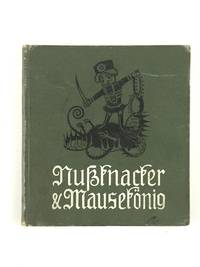
1909réf. 3062Wien: Gerlach und Wiedling 1909. First edition. First edition. Original gray-green cloth with cover pictorial design stamped in black white lettering. Color plates throughout by Otto Bauriedl and Ernst Kutzer. In the famous Judendtil series by Gerlach. Some light cover wear very good. Gerlach und Wiedling unknown
1904réf. 3297The three full pages illustrations in the book are intact as is the original tissue over the frontispiece. There is some darkening to the covers while the interior of the book is in good condition. The binding is tight and all pages are intact. Chatto & Windus; publisher hardcover
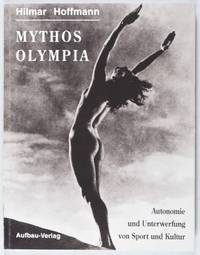
1993réf. 37680Berlin: Aufbau-Verlag 1993. First edition. Paperback. g to vg. Quarto. 214pp. Original photo-illustrated wrappers. Striking study on the 1936 "Nazi Olympics" as deciphered through the images of Leni Riefenstahl's "Olympia." For two weeks in August 1936 Adolf Hitler's Nazi dictatorship camouflaged its racist militaristic character while hosting the Summer Olympics. Softpedaling its antisemitic agenda and plans for territorial expansion the regime exploited the Games to bedazzle many foreign spectators and journalists with an image of a peaceful tolerant Germany. Having rejected a proposed boycott of the 1936 Olympics the United States and other western democracies missed the opportunity to take a stand that - some observers at the time claimed - might have given Hitler pause and bolstered international resistance to Nazi tyranny. With the conclusion of the Games Germany's expansionist policies and the persecution of Jews and other "enemies of the state" accelerated culminating in World War II and the Holocaust. Leni Riefenstahl's "Olympia" was divided into two parts: Olympia Part I: Festival of the Nations and Part II: Festival of Beauty both released in 1938. The movies represent a tremendous aesthetic and technical cinematic achievement. Through a compilation of sporting images "Olympia" subtly underlined a tenet of all authoritarian regimes: that individuals must be turned into machines that act as required but do not think. At no point do the sportsmen and women in Olympia speak. After the war Riefenstahl - who hoped her films would continue to be shown - claimed that the Nazi government had no influence on "Olympia." This was untrue. The Nazi government commissioned and financed the films. Propaganda minister Joseph Goebbels' diaries indicate that he was in contact with Riefenstahl about their progress though not always positively. "It is impossible to work with this wild woman" he wrote on one occasion. Wild though she may have been the films are utterly compliant. The fact that "Olympia" depicts such moments as the field hockey final in which India defeated Germany is sometimes mistaken by Riefenstahl's defenders as evidence of her editorial independence. It is the opposite. Riefenstahl's inclusion of the occasional German defeat fits squarely with Goebbels' instructions to the German press during the Games which were to create an impression of Nazi fairmindedness by reporting foreign as well as German victories. The Nazi obsession with race is constantly restated. "Two black runners against the strongest of the white race" muses "Olympia"'s commentator as he surveys the field for the men's 800m. On that occasion the black runners the US's John Woodruff and Canada's Phil Edwards took gold and bronze respectively. The most exhilarating section of the first "Olympia" film is the long-jump final in which black American athlete Jesse Owens faces the white German champion Luz Long. In the last of three jumps Long hits 7.87m: a new European record. The crowd is ecstatic as is Hitler himself who is shown applauding his champion. Then it is Owens's last jump. He composes himself. Sprints. Flies. Lands lightly in the sand. It's 8.06m a new Olympic record Owens already held the world record having jumped 8.13m in 1935. Tactfully Riefenstahl does not show Hitler's reaction to Owens's spectacular achievement. According to Albert Speer the Führer was "highly annoyed" but rationalised Owens's success within the terms of his pseudoscientific race theories. "People whose antecedents came from the jungle were primitive Hitler said with a shrug; their physiques were stronger than civilized whites." Moderate shelf wear along edges of wrappers. Text in German. Wrappers in overall good interior in very good condition. Aufbau-Verlag paperback
1909réf. 3062Wien: Gerlach und Wiedling 1909. First edition. First edition. Original gray-green cloth with cover pictorial design stamped in black white lettering. Color plates throughout by Otto Bauriedl and Ernst Kutzer. In the famous Judendtil series by Gerlach. Some light cover wear very good. Gerlach und Wiedling unknown books
1993réf. 37680Berlin: Aufbau-Verlag 1993. First edition. Paperback. g to vg. Quarto. 214pp. Original photo-illustrated wrappers. Striking study on the 1936 "Nazi Olympics" as deciphered through the images of Leni Riefenstahl's "Olympia." For two weeks in August 1936 Adolf Hitler's Nazi dictatorship camouflaged its racist militaristic character while hosting the Summer Olympics. Softpedaling its antisemitic agenda and plans for territorial expansion the regime exploited the Games to bedazzle many foreign spectators and journalists with an image of a peaceful tolerant Germany. Having rejected a proposed boycott of the 1936 Olympics the United States and other western democracies missed the opportunity to take a stand that - some observers at the time claimed - might have given Hitler pause and bolstered international resistance to Nazi tyranny. With the conclusion of the Games Germany's expansionist policies and the persecution of Jews and other "enemies of the state" accelerated culminating in World War II and the Holocaust. Leni Riefenstahl's "Olympia" was divided into two parts: Olympia Part I: Festival of the Nations and Part II: Festival of Beauty both released in 1938. The movies represent a tremendous aesthetic and technical cinematic achievement. Through a compilation of sporting images "Olympia" subtly underlined a tenet of all authoritarian regimes: that individuals must be turned into machines that act as required but do not think. At no point do the sportsmen and women in Olympia speak. After the war Riefenstahl - who hoped her films would continue to be shown - claimed that the Nazi government had no influence on "Olympia." This was untrue. The Nazi government commissioned and financed the films. Propaganda minister Joseph Goebbels' diaries indicate that he was in contact with Riefenstahl about their progress though not always positively. "It is impossible to work with this wild woman" he wrote on one occasion. Wild though she may have been the films are utterly compliant. The fact that "Olympia" depicts such moments as the field hockey final in which India defeated Germany is sometimes mistaken by Riefenstahl's defenders as evidence of her editorial independence. It is the opposite. Riefenstahl's inclusion of the occasional German defeat fits squarely with Goebbels' instructions to the German press during the Games which were to create an impression of Nazi fairmindedness by reporting foreign as well as German victories. The Nazi obsession with race is constantly restated. "Two black runners against the strongest of the white race" muses "Olympia"'s commentator as he surveys the field for the men's 800m. On that occasion the black runners the US's John Woodruff and Canada's Phil Edwards took gold and bronze respectively. The most exhilarating section of the first "Olympia" film is the long-jump final in which black American athlete Jesse Owens faces the white German champion Luz Long. In the last of three jumps Long hits 7.87m: a new European record. The crowd is ecstatic as is Hitler himself who is shown applauding his champion. Then it is Owens's last jump. He composes himself. Sprints. Flies. Lands lightly in the sand. It's 8.06m a new Olympic record Owens already held the world record having jumped 8.13m in 1935. Tactfully Riefenstahl does not show Hitler's reaction to Owens's spectacular achievement. According to Albert Speer the Führer was "highly annoyed" but rationalised Owens's success within the terms of his pseudoscientific race theories. "People whose antecedents came from the jungle were primitive Hitler said with a shrug; their physiques were stronger than civilized whites." Moderate shelf wear along edges of wrappers. Text in German. Wrappers in overall good interior in very good condition. Aufbau-Verlag paperback books
2021réf. __0198868065Oxford Univ Pr 2021. Hardcover. New. 464 pages. 9.96x7.01x1.18 inches. Oxford Univ Pr hardcover
1933réf. 151684to. Orig. full cloth. XI,686,56 pp. Very richly illustr. with plates and textillustr.