12.655 resultados
1971ref. __3110018241De Gruyter 1971. Hardcover. New. reprint edition. 366 pages. German language. 9.61x6.69x0.88 inches. De Gruyter hardcover
ref. 33568224-nnew. unknown
1963ref. 4iiiDi0027Wiesbaden Germany: Emil Vollmer Verlag 1963. Book. Very Good. Hardcover. Sondersausgabe Die Tempel-Klassiker. 8vo or 8° Medium Octavo: 7¾" x 9¾" tall. 699 967 726 724 pp. Text in German. Four volume set. For individual volumes please enquire. Solidly bound copy and dj with moderate external wear crisp pages and clean text. Djs have multiple rips/tears along bottom and top edges. Light foxing on page edges. Emil Vollmer Verlag Hardcover
ref. om93Venice 1737 Balleoniana. Not in Morton although several other works by him are. Morton writes 'Hoffman was first to perceive pathology as an aspect of physiology' and 'was the most important of theIatromechanists. He believed an ether-like vital fluid to be present in the nervous system and to act upon the muscles. ' In Latin. Sm.4to. xii 547pp. double column full vellum. Good some minor wear and tear on the cover a few pages lightly browned a few ink spots on page ends. Pictures available on request. . hardcover
1938ref. 27685Munchen: Verlag Heinrich Hoffmann c1938. fair. 112 wraps profusely illus. covers worn and soiled. This type of item is increasingly rare. Text is in German. Verlag Heinrich Hoffmann paperback
1909ref. 3062Wien: Gerlach und Wiedling 1909. First edition. First edition. Original gray-green cloth with cover pictorial design stamped in black white lettering. Color plates throughout by Otto Bauriedl and Ernst Kutzer. In the famous Judendtil series by Gerlach. Some light cover wear very good. Gerlach und Wiedling unknown
1904ref. 3297The three full pages illustrations in the book are intact as is the original tissue over the frontispiece. There is some darkening to the covers while the interior of the book is in good condition. The binding is tight and all pages are intact. Chatto & Windus; publisher hardcover
1993ref. 37680Berlin: Aufbau-Verlag 1993. First edition. Paperback. g to vg. Quarto. 214pp. Original photo-illustrated wrappers. Striking study on the 1936 "Nazi Olympics" as deciphered through the images of Leni Riefenstahl's "Olympia." For two weeks in August 1936 Adolf Hitler's Nazi dictatorship camouflaged its racist militaristic character while hosting the Summer Olympics. Softpedaling its antisemitic agenda and plans for territorial expansion the regime exploited the Games to bedazzle many foreign spectators and journalists with an image of a peaceful tolerant Germany. Having rejected a proposed boycott of the 1936 Olympics the United States and other western democracies missed the opportunity to take a stand that - some observers at the time claimed - might have given Hitler pause and bolstered international resistance to Nazi tyranny. With the conclusion of the Games Germany's expansionist policies and the persecution of Jews and other "enemies of the state" accelerated culminating in World War II and the Holocaust. Leni Riefenstahl's "Olympia" was divided into two parts: Olympia Part I: Festival of the Nations and Part II: Festival of Beauty both released in 1938. The movies represent a tremendous aesthetic and technical cinematic achievement. Through a compilation of sporting images "Olympia" subtly underlined a tenet of all authoritarian regimes: that individuals must be turned into machines that act as required but do not think. At no point do the sportsmen and women in Olympia speak. After the war Riefenstahl - who hoped her films would continue to be shown - claimed that the Nazi government had no influence on "Olympia." This was untrue. The Nazi government commissioned and financed the films. Propaganda minister Joseph Goebbels' diaries indicate that he was in contact with Riefenstahl about their progress though not always positively. "It is impossible to work with this wild woman" he wrote on one occasion. Wild though she may have been the films are utterly compliant. The fact that "Olympia" depicts such moments as the field hockey final in which India defeated Germany is sometimes mistaken by Riefenstahl's defenders as evidence of her editorial independence. It is the opposite. Riefenstahl's inclusion of the occasional German defeat fits squarely with Goebbels' instructions to the German press during the Games which were to create an impression of Nazi fairmindedness by reporting foreign as well as German victories. The Nazi obsession with race is constantly restated. "Two black runners against the strongest of the white race" muses "Olympia"'s commentator as he surveys the field for the men's 800m. On that occasion the black runners the US's John Woodruff and Canada's Phil Edwards took gold and bronze respectively. The most exhilarating section of the first "Olympia" film is the long-jump final in which black American athlete Jesse Owens faces the white German champion Luz Long. In the last of three jumps Long hits 7.87m: a new European record. The crowd is ecstatic as is Hitler himself who is shown applauding his champion. Then it is Owens's last jump. He composes himself. Sprints. Flies. Lands lightly in the sand. It's 8.06m a new Olympic record Owens already held the world record having jumped 8.13m in 1935. Tactfully Riefenstahl does not show Hitler's reaction to Owens's spectacular achievement. According to Albert Speer the Führer was "highly annoyed" but rationalised Owens's success within the terms of his pseudoscientific race theories. "People whose antecedents came from the jungle were primitive Hitler said with a shrug; their physiques were stronger than civilized whites." Moderate shelf wear along edges of wrappers. Text in German. Wrappers in overall good interior in very good condition. Aufbau-Verlag paperback
1909ref. 3062Wien: Gerlach und Wiedling 1909. First edition. First edition. Original gray-green cloth with cover pictorial design stamped in black white lettering. Color plates throughout by Otto Bauriedl and Ernst Kutzer. In the famous Judendtil series by Gerlach. Some light cover wear very good. Gerlach und Wiedling unknown books
1993ref. 37680Berlin: Aufbau-Verlag 1993. First edition. Paperback. g to vg. Quarto. 214pp. Original photo-illustrated wrappers. Striking study on the 1936 "Nazi Olympics" as deciphered through the images of Leni Riefenstahl's "Olympia." For two weeks in August 1936 Adolf Hitler's Nazi dictatorship camouflaged its racist militaristic character while hosting the Summer Olympics. Softpedaling its antisemitic agenda and plans for territorial expansion the regime exploited the Games to bedazzle many foreign spectators and journalists with an image of a peaceful tolerant Germany. Having rejected a proposed boycott of the 1936 Olympics the United States and other western democracies missed the opportunity to take a stand that - some observers at the time claimed - might have given Hitler pause and bolstered international resistance to Nazi tyranny. With the conclusion of the Games Germany's expansionist policies and the persecution of Jews and other "enemies of the state" accelerated culminating in World War II and the Holocaust. Leni Riefenstahl's "Olympia" was divided into two parts: Olympia Part I: Festival of the Nations and Part II: Festival of Beauty both released in 1938. The movies represent a tremendous aesthetic and technical cinematic achievement. Through a compilation of sporting images "Olympia" subtly underlined a tenet of all authoritarian regimes: that individuals must be turned into machines that act as required but do not think. At no point do the sportsmen and women in Olympia speak. After the war Riefenstahl - who hoped her films would continue to be shown - claimed that the Nazi government had no influence on "Olympia." This was untrue. The Nazi government commissioned and financed the films. Propaganda minister Joseph Goebbels' diaries indicate that he was in contact with Riefenstahl about their progress though not always positively. "It is impossible to work with this wild woman" he wrote on one occasion. Wild though she may have been the films are utterly compliant. The fact that "Olympia" depicts such moments as the field hockey final in which India defeated Germany is sometimes mistaken by Riefenstahl's defenders as evidence of her editorial independence. It is the opposite. Riefenstahl's inclusion of the occasional German defeat fits squarely with Goebbels' instructions to the German press during the Games which were to create an impression of Nazi fairmindedness by reporting foreign as well as German victories. The Nazi obsession with race is constantly restated. "Two black runners against the strongest of the white race" muses "Olympia"'s commentator as he surveys the field for the men's 800m. On that occasion the black runners the US's John Woodruff and Canada's Phil Edwards took gold and bronze respectively. The most exhilarating section of the first "Olympia" film is the long-jump final in which black American athlete Jesse Owens faces the white German champion Luz Long. In the last of three jumps Long hits 7.87m: a new European record. The crowd is ecstatic as is Hitler himself who is shown applauding his champion. Then it is Owens's last jump. He composes himself. Sprints. Flies. Lands lightly in the sand. It's 8.06m a new Olympic record Owens already held the world record having jumped 8.13m in 1935. Tactfully Riefenstahl does not show Hitler's reaction to Owens's spectacular achievement. According to Albert Speer the Führer was "highly annoyed" but rationalised Owens's success within the terms of his pseudoscientific race theories. "People whose antecedents came from the jungle were primitive Hitler said with a shrug; their physiques were stronger than civilized whites." Moderate shelf wear along edges of wrappers. Text in German. Wrappers in overall good interior in very good condition. Aufbau-Verlag paperback books
2007ref. x-0739116894Lexington Books 2007. Hardcover. New. 231 pages. 9.00x6.25x1.00 inches. Lexington Books hardcover
2021ref. __0198868065Oxford Univ Pr 2021. Hardcover. New. 464 pages. 9.96x7.01x1.18 inches. Oxford Univ Pr hardcover
1933ref. 151684to. Orig. full cloth. XI,686,56 pp. Very richly illustr. with plates and textillustr.
1933ref. 151684to. Orig. full cloth. XI68656 pp. Very richly illustr. with plates and textillustr. This volume contains also "Die V. Triennale Mailand 1933 und das neue Bauen in Italien" = pp. 391-454. hardcover
ref. SONG3484177012Used: Good unknown
ref. DADAX0810828502Scarecrow Press 0000-00-00. hardcover. New. 6.05x1.94x8.91. Buy with confidence. Excellent Customer Service & Return policy. Scarecrow Press hardcover
1925ref. 015711Vienne Commission éxecutive. 1925 In-8 carré Broché
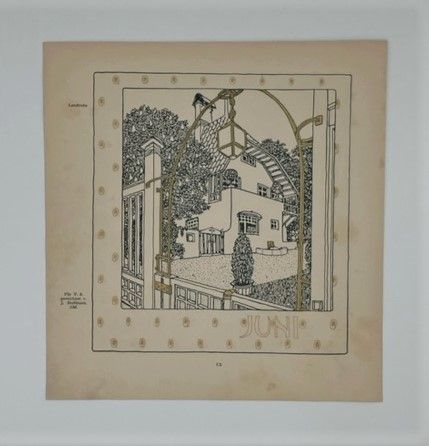
1901ref. 65380(Wien, Druck von Adolf Holzhausen, 1. Januar 1901). Blattgröße 24,4 x 23 cm.
1784ref. 61403Ohne Ort [Wien], Gedruckt an der schlesischen Gränze [Hartl], 1784. Kl.-8°. 8 Bll., 168 S., Ldr. d. Zt. m. Rückenverg. u. goldgepr. Rückenschild.
1843ref. 58344Charpentier | Paris 1843 | 11.50 x 18.50 cm | relié
ref. 218701 volume in-8° relié demi-basane marron, dos lisse, titre doré et fleurons dorés style rocaille, tampon ex-libris avers de monnaie en page de titre et faux titre, XIX + 522 p. Illustrations de Gavarni 10 en hors-texte le reste en vignettes dans le texte. Tampon ex-libris avers de monnaieTrès bon état d'ensemble.
ref. 18367Paris, édition d'art H. Piazza, 1932. In-8, 207 pp., demi-maroquin à coins rouge, dos à un nerf orné d'un fleuron doré et mosaïqué de peau rose, tête dorée, couverture conservée (dos très légèrement éclairci).
1924ref. Y120904Paris, G. & R. Briffaut 1924 247pp., illustré de 21 eaux-fortes (sous serpentes) et titre par André Lambert, avec des letrines et ornements gravés, dans la série "Le Livre du Bibliophile" volume 7, tirage numéroté et limité à 500 excemplaires : ceci porte le no.380 (un des 421 exx. sur vélin d'arches contenant un état des eaux-fortes), 31x22cm., brochure originale (peu de rousseurs, dos peu restauré aux bouts), texte et intérieur sont frais et en très bon état, poids: 1.5 kg., Y120904
1924ref. 3441924 in4 reliure cartonnée, dos toilé, 385pp, nombreuses photos nb, plans, qq planches couleurs. Certains bâtiments sont Art Déco