12.373 resultados
ref. 51-7121Berlin: circa 1923. Original silver print. 30 x 21.5cm. Signed and titled verso in pencil by the photographer who was also the cinematographer of the fil. .Carl Hoffmann's cinematography profoundly shaped German Expressionism particularly through his innovative use of lighting and composition in films like F.W. Murnau's Faust 1926 where he crafted atmospheric visuals blending stark shadows and ethereal effects to evoke supernatural themes. His techniques also influenced epic filmmaking during the Weimar Republic emphasizing dynamic camera movements and visual storytelling that prioritized mood over realism. Following World War II these Expressionist methods were carried to Hollywood by émigré filmmakers impacting the stylistic development of American genre films including film noir and fantasy productions.Posthumously his work has been acknowledged in key film scholarship such as Lotte H. Eisner's The Haunted Screen: Expressionism in the German Cinema 1952 which praises the technical prowess of Expressionist cinematographers like Hoffmann for advancing cinematic aesthetics. Contemporary recognition includes the restoration and screening of his silent films at festivals underscoring his enduring influence on visual narrative techniques.He alos orked as a film and theater photographer. Lucie Mannheim was a principal actress of the Berlin Theatre until expelled by the Nazis. She sang "Lili Marleen" a anti-Hitler version for BBC in 1943 in G.reat Britain. Lucie Mannheim was married to Marius Goring until her death. .Mannheim was born in Berlin–Köpenick where she studied drama and quickly became a popular figure appearing on stage in plays and musicals. Among other roles she played Nora in Ibsen's A Doll's House Marie in Büchner's Woyzeck and Juliet in Shakespeare's Romeo and Juliet. She also began a film career in 1923 appearing in several silent and sound films including Atlantik 1929 – the first of many versions of the story of the ill-fated RMS Titanic. The composer Walter Goetze wrote his operetta Die göttliche Jette 1931 especially for Mannheim. However as a Jew she was obliged to stop acting in 1933 when her contract at the State Theatre was cancelled. She promptly left Germany first to Czechoslovakia then to Britain. She appeared in several films there notably as the doomed spy Annabella Smith in Alfred Hitchcock's 1935 version of The 39 Steps.During World War II she appeared in several films as well as broadcasting propaganda to Germany – including performing an anti-Hitler version of Lili Marleen in 1943. In 1941 she married the actor Marius Goring.She returned to Germany in 1948 and resumed her career as an actress on stage and in film. In 1955 she joined the cast of the British television series The Adventures of the Scarlet Pimpernel as Countess La Valliere. She made her final English-language film appearance in the 1965 film "Bunny Lake Is Missing." Her last appearance was in a 1970 TV movie. She died in the German spa town Braunlage.Provenance: Estate of Lucie Mannheim Berlin: circa 1923 unknown
ref. 51-7122Berlin: circa 1923. Original silver print. 30 x 23.5cm. Signed recto in pencil by the photographer who was also the cinematographer of the fil. .Carl Hoffmann's cinematography profoundly shaped German Expressionism particularly through his innovative use of lighting and composition in films like F.W. Murnau's Faust 1926 where he crafted atmospheric visuals blending stark shadows and ethereal effects to evoke supernatural themes. His techniques also influenced epic filmmaking during the Weimar Republic emphasizing dynamic camera movements and visual storytelling that prioritized mood over realism. Following World War II these Expressionist methods were carried to Hollywood by émigré filmmakers impacting the stylistic development of American genre films including film noir and fantasy productions.Posthumously his work has been acknowledged in key film scholarship such as Lotte H. Eisner's The Haunted Screen: Expressionism in the German Cinema 1952 which praises the technical prowess of Expressionist cinematographers like Hoffmann for advancing cinematic aesthetics. Contemporary recognition includes the restoration and screening of his silent films at festivals underscoring his enduring influence on visual narrative techniques.He alos orked as a film and theater photographer. Lucie Mannheim was a principal actress of the Berlin Theatre until expelled by the Nazis. She sang "Lili Marleen" a anti-Hitler version for BBC in 1943 in G.reat Britain. Lucie Mannheim was married to Marius Goring until her death. .Mannheim was born in Berlin–Köpenick where she studied drama and quickly became a popular figure appearing on stage in plays and musicals. Among other roles she played Nora in Ibsen's A Doll's House Marie in Büchner's Woyzeck and Juliet in Shakespeare's Romeo and Juliet. She also began a film career in 1923 appearing in several silent and sound films including Atlantik 1929 – the first of many versions of the story of the ill-fated RMS Titanic. The composer Walter Goetze wrote his operetta Die göttliche Jette 1931 especially for Mannheim. However as a Jew she was obliged to stop acting in 1933 when her contract at the State Theatre was cancelled. She promptly left Germany first to Czechoslovakia then to Britain. She appeared in several films there notably as the doomed spy Annabella Smith in Alfred Hitchcock's 1935 version of The 39 Steps.During World War II she appeared in several films as well as broadcasting propaganda to Germany – including performing an anti-Hitler version of Lili Marleen in 1943. In 1941 she married the actor Marius Goring.She returned to Germany in 1948 and resumed her career as an actress on stage and in film. In 1955 she joined the cast of the British television series The Adventures of the Scarlet Pimpernel as Countess La Valliere. She made her final English-language film appearance in the 1965 film "Bunny Lake Is Missing." Her last appearance was in a 1970 TV movie. She died in the German spa town Braunlage.Provenance: Estate of Lucie Mannheim Berlin: circa 1923 unknown
ref. 75-6255NY NY: Potter 1971 . 4to. Hard cover. 258pp. B&W plates. Very good.Provenance: From the library of Pasquale Iannetti. NY, NY: Potter, 1971 hardcover
ref. 68-8109Paris France: Librarie de la Faculte des Sciences 1986. Science Journal. 8vo. Pp. 1209-1838 Soft covers. B&W plates. Good with small tears to covers else Very Good. En Francais & Latin.1986 reprint of 1958 original. Paris, France: Librarie de la Faculte des Sciences, 1986. paperback
ref. 75-2603London: Institute of Contemporary Arts 2005. 4to. Soft cover Very Good fold out 8 pp. Color plates. London: Institute of Contemporary Arts, 2005 paperback
ref. 75-2802Sao Paulo Brazil: Galeria Luisa Strina 2014. 4to. Hard cover Very good 134 pp. Color and B&W plates Sao Paulo, Brazil: Galeria Luisa Strina, 2014 hardcover
ref. 75-2808London: Institute of Contemporary Arts 2006. 4to. Hard cover Very good 134 pp. Color and B&W plates London: Institute of Contemporary Arts, 2006 hardcover
ref. 75-2967Wolfsburg Germany: Tamiko Thiel 2022. 8vo. Soft cover. Very good note from artist included as insert 28 pp. Color plates. Wolfsburg, Germany: Tamiko Thiel, 2022 paperback
ref. 75-3198Mexico DF: kurimanzutto 2010. 8vo. Soft Cover 102 pp. Very good. Color Plates. Mexico, DF: kurimanzutto, 2010 paperback
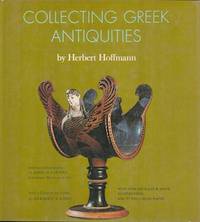
ref. 0805769870.Ghardcover. Good. Access codes and supplements are not guaranteed with used items. May be an ex-library book. hardcover
ref. 0918393728.Gpaperback. Good. Access codes and supplements are not guaranteed with used items. May be an ex-library book. paperback
ref. 0984652353.Gpaperback. Good. Access codes and supplements are not guaranteed with used items. May be an ex-library book. paperback
ref. 73-7197Berlin: Gebr. Mann 1983. 8vo. 395 pp. Very good. Hard cover with dust jacket. Black and white plates. Heavy item. Berlin: Gebr. Mann, 1983 hardcover
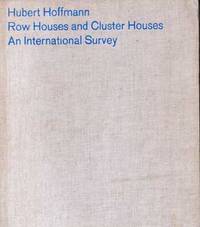
ref. 73-7193New York: Frederick A. Praeger 1967. 4to. 172 pp. Very good. Hard cover. Black and white. Heavy item may cost extra for shipping. New York: Frederick A. Praeger, 1967 hardcover
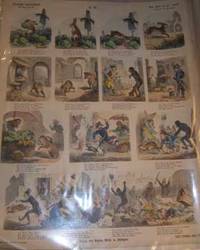
ref. 73-5214Stuttgart: C. Hoffmann circa 1800s. 44x35 cm. Hand colored engraving. Very Good. Text in German. Stuttgart: C. Hoffmann, [circa 1800s] unknown
ref. 73-5213Stuttgart: C. Hoffmann circa 1800s. 44x35 cm. Hand colored engraving. Very Good. Text in German. Stuttgart: C. Hoffmann, [circa 1800s] unknown
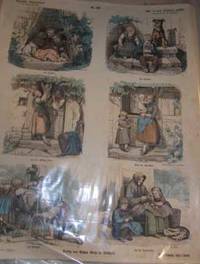
ref. 73-5219Stuttgart: C. Hoffmann circa 1800s. 44x35 cm. Hand colored engraving. Fair. Tears and folds on all sides bottom and right side. Text in German. Stuttgart: C. Hoffmann, [circa 1800s] unknown
ref. 16-5488Leipzig und Wien: verlage "Hohe Warte" and R. Voigtländers Verlag 1904-1908. 3 vols. bound in contemporary red cloth One cover with waterstains. 4to. 23.7 x 29cm. 3 of the 4 Jahrgangs-Jahregaenge are present. Jahrgang 1 with 416 VI pages; Jahrgang 2 with VI 318 pages; Jahrgang 4 with VIII 376 48 pages. Very rare.OCLC Number 648828960. Joseph August Lux was a modernist architectural critic founder and editor of the journal Das Interieur in 1900 and Hohe Warte in 1904 co-founder of the German Werkbund and author of biographies on Josef Hoffmann and Otto Wagner.He grew up in Vienna where he studied art history and philology. He travelled to Germany France and England and returned to Vienna in 1900. there he worked for art magazines. From 1905 to 1908 he published "Die hohe Warte". He was influenced by John Ruskin and William Morris and a strong supporter of Jugendstil and of the Wiener Werkstätte.From 1907 to 1910 he lived in Dresden where he managed a school for arts and crafts. In 1910 he settled in Munich and earned his living as an author. From 1919 to 1921 he published "Die weißen Hefte". In 1921 he converted to Catholicism. From 1926 onwards he lived in Anif near Salzburg. Leipzig und Wien: verlage "Hohe Warte" and R. Voigtländers Verlag, 1904-1908 hardcover
ref. 71-1762Hamburg Germany: Galerie Rudolf Hoffmann 1959. folio. 16 pp. Soft Cover. Black and white plates throughout. Text in German. Good minor wear and soiling to covers toning along cover edges interior sheet edges lightly toned otherwise clean and intact.From the Collection of the Art Historian Peter Selz. [Hamburg, Germany: Galerie Rudolf Hoffmann, 1959]. paperback
ref. 16-4680France: Editions Pierre Hautot circa 1920 or later. . Color etching 32 x 45 cm. on rag paper. Titled in the plate and signed in pencil. Color etching.From the collection of Frederic Gale Ruffner Jr. the founder of Gale Research Detroit. France: Editions Pierre Hautot, circa 1920 or later. unknown
ref. 71-0850New York: Council for Creative Projects University of Pennsylvania Press 1993. 8vo. Oblong. 79 pp. Soft Cover. Stapled Wraps. Black and white illustrations throughout. Very Good. Minor shelf wear. Light rubs and creases to covers.Provenance: Collection of UC Berkeley Art Professor Peter Selz. New York: Council for Creative Projects, University of Pennsylvania Press, 1993. paperback
ref. 68-1229Paris France: Librarie de la Faculte des Sciences 1950. 8vo. Soft Covers Very Good. 486 pp. B&W plates.Text En Francais & Latin. Paris, France: Librarie de la Faculte des Sciences, 1950. paperback
ref. 68-1230Paris France: Librarie de la Faculte des Sciences 1986. 8vo. Soft Covers Very Good. Pp. 487 - 1208. B&W plates.Text En Francais & Latin. Paris, France: Librarie de la Faculte des Sciences, 1986. paperback
ref. 68-1225Paris France: Paul Lechevalier 1945. 8vo. Soft Covers Good with tears to covers spine taped pages sunned. Most pages uncut. 184 pp. B&W plates.Text En Francais & Latin. Paris, France: Paul Lechevalier, 1945. paperback
ref. A9781119809913Hardback. New. hardcover