Hoffmann, LudwigBiblio.com
12 759 résultats
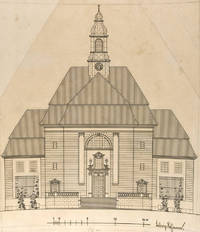
1909réf. 31997Berlin: NP 1909. Softcover. g to vg. Plans & drawings in various sizes all printed on light card stock some plans mounted. Seven of the ten are numbered. 5 plans/drawings annotated by Hoffmann 2 drawings signed by him 5 signed by Stadtbauinspektor / Magistrats-Baurat Tietze. Printed by "Gisaldruck v. Bogdan Gisevius Berlin." not numbered: 1 Large 46 1/2" x 59" Lageplan ground plan of the hospital also showing surrounding streets. Plan titled "Neubau des IV. Städt. Krankenhauses - Lageplan." Rudolf Virchow handwritten in blue crayon below title. Parts of folds as well as sporadic tears repaired with tape. Parts of edges chipped some closed tears along folds no missing pieces. 2 Drawing 13 3/4 x 16" showing the facade of the hospital mounted on 17 1/4 x 25" card stock. Signed by Ludwig Hoffmann with some of his annotations. 3 Drawing 16" x 21 1/2" of the "Operationshaus" mounted on 23 1/2" x 28 1/2" card stock. Signed by Hoffmann with his annotations. Numbered plans: # 4 - # 7 with original signature of Stadtbauinspektor Tietze dated 6. Januar 1909. Also with printed signature of the on-site architect Bietz Signatures accompanied with text: a "Revidiert und festgestellt: Berlin den 6. Januar 1909. Der Stadtbauinspektor: original signature "Tietze" Magistrats-Baurat. b "Die Richtigkeit und Uebereinstimmung mit der Ausführung bescheinigt: Berlin den 1sten Dezember 1908. Der Bauleitende printed signature of "Bietz" Architekt. 4 Blatt 1: 22" x 30" revised plan showing the foundation Revisionszeichnung Fundamente of the Doppeloperationshaus surgery building. With many handwritten annotations by the architect. Small number stamp on lower left margin. 5 Blatt 2: 26" x 30" revised plan showing the basement Revisionszeichnung Kellergeschoss of the Doppeloperationshaus. With architects handwritten annotations. Five-inch closed tear on upper left corner. 6 Blatt 3: 18" x 25" plan of the basement of the Doppel-Operationshaus. Lists rooms Raumbezeichnung and furniture Mobiliarbezeichnung. Small number stamp on lower left margin. 7 Blatt 4: 30" x 26 3/4" revised drawing of the ground floor of the Doppel-Operationshaus. Two-inch closed tear on right upper edge. 8 Blatt 5: 27" x 31" drawing of the attic Dachgeschoß of the Doppel-Operationshaus. Top left corner with closed tear almost detached. Bottom left corner creased. 9 Blatt 7: 25" x 26 3/4" drawing showing the facade Vorder-Ansicht cross- and longitudinal sections Quer- und Längsschnitt as well as details of the main cornice Hauptgesims and roof turret Dachreiter. 1/2" closed tear on bottom right corner. 10 Not numbered 16 1/4" x 22" drawing mounted on 28 1/4" x 23" card stock showing the facade longitudinal section main cornice and roof turret. Few annotations by architect. Two-inch closed tear on bottom edge. Unique collection of architectural plans & drawings by Berlin architect and Stadtbaurat Ludwig Ernst Emil Hoffmann. The architect attended the Kunstakademie in Kassel and the Bauakademie in Berlin where his teachers included Richard Lucae and Johann Heinrich Strack. After becoming a licensed government architect in 1884 he won a competition for the revised design of the Reichsgerichtgebäude in Leipzig. Hoffmann and Peter Dybwad worked on the monumental neo-classicist building from 1887-1895. A year later Hoffmann was elected city architect of Berlin being responsible for all types of public buildings in the city. Notable examples include the Märkisches Museum various public baths such as the Volksbadeanstalt Baerwaldstraße Berlin-Kreuzberg Volksbadeanstalt Dennewitsstraße Schöneberg Volksbadeanstalt Oderberger Straße Berlin-Prenzlauer Berg several bridges & fountains the Altes Stadthaus the Rudolf-Virchow-Krankenhaus and many others. On the initiative of Rudolf Virchow the fourth major city hospital was built between 1898 and 1906. Virchow was a German doctor anthropologist pathologist and politician known for his advancement of public health. He is considered as one of the founders of social medicine. The Virchow Krankenhaus was the last hospital that was built in the so-called "Pavillonstil." At the time the construction of the building cost 19 million Reichsmark. 57 separate buildings with 2000 beds were built on an area of 2906255 square feet. The staff buildings housed approx. 1000 employees doctors nurses and other personnel. Impeccable landscaping trees large green patches flower beds and benches gave the hospital grounds a park-like feel. Unique piece of Berlin architectural history by one of the most important German architects of the late 19th and early 20th century. NP unknown
1993réf. 37680Berlin: Aufbau-Verlag 1993. First edition. Paperback. g to vg. Quarto. 214pp. Original photo-illustrated wrappers. Striking study on the 1936 "Nazi Olympics" as deciphered through the images of Leni Riefenstahl's "Olympia." For two weeks in August 1936 Adolf Hitler's Nazi dictatorship camouflaged its racist militaristic character while hosting the Summer Olympics. Softpedaling its antisemitic agenda and plans for territorial expansion the regime exploited the Games to bedazzle many foreign spectators and journalists with an image of a peaceful tolerant Germany. Having rejected a proposed boycott of the 1936 Olympics the United States and other western democracies missed the opportunity to take a stand that - some observers at the time claimed - might have given Hitler pause and bolstered international resistance to Nazi tyranny. With the conclusion of the Games Germany's expansionist policies and the persecution of Jews and other "enemies of the state" accelerated culminating in World War II and the Holocaust. Leni Riefenstahl's "Olympia" was divided into two parts: Olympia Part I: Festival of the Nations and Part II: Festival of Beauty both released in 1938. The movies represent a tremendous aesthetic and technical cinematic achievement. Through a compilation of sporting images "Olympia" subtly underlined a tenet of all authoritarian regimes: that individuals must be turned into machines that act as required but do not think. At no point do the sportsmen and women in Olympia speak. After the war Riefenstahl - who hoped her films would continue to be shown - claimed that the Nazi government had no influence on "Olympia." This was untrue. The Nazi government commissioned and financed the films. Propaganda minister Joseph Goebbels' diaries indicate that he was in contact with Riefenstahl about their progress though not always positively. "It is impossible to work with this wild woman" he wrote on one occasion. Wild though she may have been the films are utterly compliant. The fact that "Olympia" depicts such moments as the field hockey final in which India defeated Germany is sometimes mistaken by Riefenstahl's defenders as evidence of her editorial independence. It is the opposite. Riefenstahl's inclusion of the occasional German defeat fits squarely with Goebbels' instructions to the German press during the Games which were to create an impression of Nazi fairmindedness by reporting foreign as well as German victories. The Nazi obsession with race is constantly restated. "Two black runners against the strongest of the white race" muses "Olympia"'s commentator as he surveys the field for the men's 800m. On that occasion the black runners the US's John Woodruff and Canada's Phil Edwards took gold and bronze respectively. The most exhilarating section of the first "Olympia" film is the long-jump final in which black American athlete Jesse Owens faces the white German champion Luz Long. In the last of three jumps Long hits 7.87m: a new European record. The crowd is ecstatic as is Hitler himself who is shown applauding his champion. Then it is Owens's last jump. He composes himself. Sprints. Flies. Lands lightly in the sand. It's 8.06m a new Olympic record Owens already held the world record having jumped 8.13m in 1935. Tactfully Riefenstahl does not show Hitler's reaction to Owens's spectacular achievement. According to Albert Speer the Führer was "highly annoyed" but rationalised Owens's success within the terms of his pseudoscientific race theories. "People whose antecedents came from the jungle were primitive Hitler said with a shrug; their physiques were stronger than civilized whites." Moderate shelf wear along edges of wrappers. Text in German. Wrappers in overall good interior in very good condition. Aufbau-Verlag paperback
1942réf. 34941München: Zentralverlag der NSDAP Franz Eher Nachf. GmbH 1942. First edition. Hardcover. g to vg. Quarto. 702pp. Original gold-stamped orange cloth with Nazi eagle holding a swastika on front cover. Color frontispiece portrait of Hitler after a painting by Horn-Stauffer. Publisher's logo on title page. The Bavarian capital of Munich held a special place in the Nazi pantheon. It was the "Hauptstadt der Bewegung" - the Capital of the Movement - the birthplace of the Nazi Party. Throughout the Third Reich period Munich remained the spiritual capital of the Nazi movement with headquarters buildings museums to house the forms of artworks approved by Adolf Hitler and shrines to the attempted Nazi putsch in November 1923. These sites were used as the scenes of lavish annual memorial ceremonies and swearing-in ceremonies for new SS members. Illustrated with 20 photographic reproductions including 4 in full-color the buildings featured in this work are: - The "Brown House" the NSDAP's headquarters building in Munich. - The Königsplatz where in 1935 two "Honor Temples" were erected for the remains of the sixteen Nazis who died in the 1923 Beer Hall Putsch. - The "Führerbau" a major party office building. Hitler's office in the "Führerbau." - The two "Honor Temple" structures. - The "Verwaltungsbau der NSDAP" The Nazi party's administration building Very minor and sporadic staining on binding. Text in German. Binding in overall good to very good interior in very good condition. Zentralverlag der NSDAP, Franz Eher Nachf., GmbH hardcover
1939réf. 30844München: Amt fur Kommunalpolitik des Traditionsgaues Munchen-Oberbayern 1939. First edition. Hardcover. vg. Large quarto. 84pp. Original tan cloth with red lettering and illustration on front cover. Scarce propaganda book on the NSDAP community works in the district of Munich-Upper Bavaria profusely illustrated with numerous b/w and color photographic reproductions of nazis building bridges roads working in the fields etc. Minor age wear on binding with slight soiling on covers and lower corners bumped not affecting pages throughout. Previous owner's inscription on free front endpaper and dated 7.7.1940. Text in German gothic script. Binding in overall good interior in very good condition. Amt fur Kommunalpolitik des Traditionsgaues Munchen-Oberbayern hardcover
1939réf. 24973München: Amt fur Kommunalpolitik des Traditionsgaues Munchen-Oberbayern 1939. First edition. Hardcover. vg. Small folio. 84pp. Original pictorial wrappers over cloth with red lettering and illustration on front cover. Scarce propaganda book on the NSDAP community works in the district of Munich-Upper Bavaria profusely illustrated with numerous b/w and color photographic reproductions of nazis building bridges roads working in the fields etc. Some chipping at head and tail of spine and along edges of wrappers. Dj slightly soiled. Minor age-toning along edges of binding. Endpapers slightly foxed. Text in German gothic script. Wrappers in overall fair to good binding in good to very good interior in near to fine condition. Amt fur Kommunalpolitik des Traditionsgaues Munchen-Oberbayern hardcover
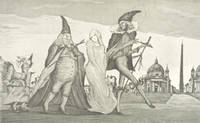
1920réf. 24429Leipzig: W. Drugulin 1920. Vorzugsausgabe. Limited numbered edition. Hardcover. vg. 1/120. Elephant folio. VIII 1032pp. & 13 unnumbered illustration pages. Gold-stamped full green calf with gold lettering on cover and spine in original dust wrapper and sturdy paper-covered green clamshell box. Gold-lined raised bands. All deckled edges. Inside of front and back board stamped with double gold borders. Binding designed by R. Hadl handcrafted by A. Köllner. Elaborate deluxe edition of Hoffmann's novel "Signor Formica". E. T. A. Hoffmann 1776-1822 was a German author composer draftsman caricaturist jurist and music critic. He was one of the major authors of the Romantic movement. Signor Formica was first published in 1820 and a year later was included in the forth volume of Hoffmann's work "Serapionsbrüder." His few literary works are stories in which supernatural and sinister characters appear in people's lives revealing grotesque and often tragic sides in human nature. This deluxe edition is illustrated with original artwork by the Hungarian sculptor and etcher Richard Hadl. The illustrations consist of one original signed full-page pencil drawing as well as 12 full-page- and 7 in-text drawings in aquatinta-manier. Additional signature of illustrator on limitation page. "Dieses Buch wurde im Jahre neunzehnhundert und zwanzig in der Offizin W. Drugulin in Leipzig gedruckt. Die Auflage beträgt einhundert und zwanzig numerierte Exemplare auf van Gelder-Zonen-Bütten. Nach Beendigung des Druckes wurden die Platten vernichtet. Dieses Exemplar ist Nr. XXXIV und wurde gedruckt für Freiherrn Erich von Goldschmidt-Rothschild. Durchgesehen: signed Richard Hadl." Printed on handmade van Gelder-Zonen paper. Foreword by Hadl. Text in German. This particular copy was printed exclusively for Erich von Goldschmidt-Rothschild 1899-1987 of the famous Rothschild lineage. Goldschmidt-Rothschild was also well-known for his extensive rare book collection. Slip with information on binding laid-in as issued. Very slight rubbing on head and tail of spine. Minor creasing on spine of dust wrapper. Slight scuffing on clamshell box tiny tear on top section on spine of box. 10mm offsetting from interior leather-lining on outer edges of front and rear free endpaper. Dust wrapper and clamshell box protected by modern mylar. Exceptional copy in a stunning binding. Fine condition. Scarce with dust wrapper. W. Drugulin hardcover
1923réf. 13359Berlin: Verlag für Kunstwissenschaft 1923. First edition. Hardcover. g. 1/1000. 8vo. 150pp. Gilt decorated vellum spine over paper covered illustrated boards. Age wearing throughout binding. Corners bumped and worn. Some scuffing and minor abrasions to boards and spine. Fore page edge untrimmed. Illustrated title page. Hoffmann wrote this 3 act opera in 1799. Includes musical score. Text in German. Binding in fair interior in very good condition. Verlag für Kunstwissenschaft hardcover
réf. 18655New York: Galerie Metropol ND. Softcover. vg. Sm. 4to. 164pp. Illustrated wrappers in original matching dust jacket. Slight creasing to parts of edges on wraps. Minor rubbing and few tiny closed tears on dj. Signed by previous owner on inside of front wrapper. Profusely illustrated with b/w reproductions of photographs drawings and plans of the Sanatorium in Purkersdorf Austria. Text in English and German. Overall very good condition. The Sanatorium Purkersdorf was built in 1904-05 by the Austrian architect Josef Hoffmann 1870-1956. Hoffmann was a disciple of Otto Koloman Wagner 1841-1918 the founder and leader of modern architecture in Austria. It is an example of architecture from the "Wiener Sezession" Vienna Secession and paved the way for modern architecture. Galerie Metropol unknown
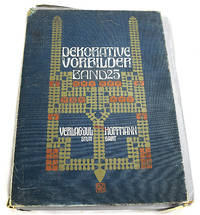
1914réf. 2606300196Stuttgart Hoffmann 1914. Hardcover. Good. Volume 25. Folio derivative cloth graphic try color portfolio box. Green paint on flaps of portfolio box. Spray to spine head. 66 color plates. Catalog for European artists and craftsmen featuring Art Nouveau Jugendstil and Secessionist patterns heraldic motifs architectural details and decorative nature studies. Early signature on front cover. Stuttgart, Hoffmann hardcover
réf. 45166850like new. unknown
réf. 46326984like new. unknown
réf. 0854881972.Gpaperback. Good. Access codes and supplements are not guaranteed with used items. May be an ex-library book. paperback
1984réf. 1869318074Wendell Hoffman 1984. Revised Edition. Hardcover. Good. Pages can have notes/highlighting. Spine may show signs of wear. ~ ThriftBooks: Read More Spend Less.Revised edition. Shelf and handling wear to cover and binding with general signs of previous use. Wear commensurate with age and use. Clean unmarked copy. Light bumping visible to corners of boards and ends of spine strip. Light scuffing and smudging to boards and spine strip. Secure packaging for safe delivery.Dust jacket quality is not guaranteed. Wendell Hoffman hardcover
réf. 19855278like new. unknown
réf. 9378719708.Ghardcover. Good. Access codes and supplements are not guaranteed with used items. May be an ex-library book. hardcover
réf. 3752550295.Ghardcover. Good. Access codes and supplements are not guaranteed with used items. May be an ex-library book. hardcover
réf. 3743639254.Gpaperback. Good. Access codes and supplements are not guaranteed with used items. May be an ex-library book. paperback
réf. 3743649152.Gpaperback. Good. Access codes and supplements are not guaranteed with used items. May be an ex-library book. paperback
réf. 3957003334.Gpaperback. Good. Access codes and supplements are not guaranteed with used items. May be an ex-library book. paperback
réf. 3744617718.Gpaperback. Good. Access codes and supplements are not guaranteed with used items. May be an ex-library book. paperback
réf. 3743639270.Gpaperback. Good. Access codes and supplements are not guaranteed with used items. May be an ex-library book. paperback
réf. 3744617742.Gpaperback. Good. Access codes and supplements are not guaranteed with used items. May be an ex-library book. paperback
réf. 3668099790.Gpaperback. Good. Access codes and supplements are not guaranteed with used items. May be an ex-library book. paperback