Hoffmann, JohannBiblio.com

réf. 1018208151.Ghardcover. Good. Access codes and supplements are not guaranteed with used items. May be an ex-library book. hardcover
2001réf. Q-8121207630Gyan Pub. House 2001-11-30. Hardcover. New. In shrink wrap. Looks like an interesting title! Gyan Pub. House hardcover
2000réf. 37599MOEWIG ARTHUR 02/05/2000. 1. softcover. Thoregon: 5 Die Solare Residenz Zanecchi / Mautsch / La-Pharoke / Atlan / Ronald Tekener / Zeiban Vit-Terous Kommentar: ESTARTU und ES II! Glossar: Dubensys / Hohamcka / Koridecc / Kriegsfloß / M'Hauny / Puxtor-Organ / Sorrmo / Ronald Tekener / Tytoa Ramos! DIE GRÖßTE WELTRAUMSERIE! MOEWIG, ARTHUR paperback
2016réf. 123908DOM Publishers. New. Hardcover. FREE UPGRADE to Courier/Priority Shipping Upon Request - IN STOCK AND IMMEDIATELY AVAILABLE FOR SHIPMENT - Flawless copy brand new pristine never opened – with a bonus offer-- . 2016. 3869222174 . DOM Publishers hardcover
2016réf. __3955532925Detail 2016. Hardcover. New. 415 pages. German language. 11.34x9.17x1.22 inches. Detail hardcover
réf. 166506241X.GaudioCD. Good. Access codes and supplements are not guaranteed with used items. May be an ex-library book. unknown
réf. 1665062401.GaudioCD. Good. Access codes and supplements are not guaranteed with used items. May be an ex-library book. unknown
réf. 1019551062.Ghardcover. Good. Access codes and supplements are not guaranteed with used items. May be an ex-library book. hardcover
réf. 3640653041.Gpaperback. Good. Access codes and supplements are not guaranteed with used items. May be an ex-library book. paperback
réf. 3668879559.Gpaperback. Good. Access codes and supplements are not guaranteed with used items. May be an ex-library book. paperback
réf. 0428639941.Ghardcover. Good. Access codes and supplements are not guaranteed with used items. May be an ex-library book. hardcover
réf. 1334537534.Gpaperback. Good. Access codes and supplements are not guaranteed with used items. May be an ex-library book. paperback
1974réf. 19303VEB DEUTSCHER VERLAG 1974. 2. hardcover. VEB DEUTSCHER VERLAG hardcover
2016réf. x-9402402314Springer Verlag 2016. Paperback. New. 189 pages. 9.00x6.00x0.75 inches. Springer Verlag paperback
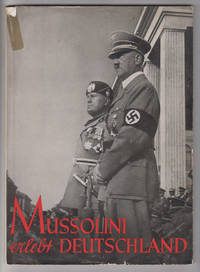
1937réf. 61-1139Munchen:: Heinrich Hoffmann 1937. 1937. 99p. b/w photos Large wraps. Near Fine Copy. Paperback. Near Fine. Heinrich Hoffmann, 1937. Paperback
réf. 1007-18Mchn. Vlg. Heinrich Hoffmann 1937. 4°. 99 1 S. Mit 1 Titelportr. u. 180 Taf. m. photogr. Abb. OBrosch. m. OU. dieser randrissig. Mchn., Vlg. Heinrich Hoffmann (1937). unknown
réf. 3753425788.Gpaperback. Good. Access codes and supplements are not guaranteed with used items. May be an ex-library book. paperback
réf. 3863473663.Gpaperback. Good. Access codes and supplements are not guaranteed with used items. May be an ex-library book. paperback
2002réf. Q-0373612559Harlequin 2002-11-01. Paperback. New. New. In shrink wrap. Looks like an interesting title! Harlequin paperback
2010réf. DADAX1160750653Kessinger Publishing 2010-03-19. paperback. New. 6.00x0.76x9.00. Buy with confidence. Excellent Customer Service & Return policy. Kessinger Publishing paperback
réf. 1160750653.Gpaperback. Good. Access codes and supplements are not guaranteed with used items. May be an ex-library book. paperback
réf. 1168116031.Gpaperback. Good. Access codes and supplements are not guaranteed with used items. May be an ex-library book. paperback
réf. 3743453533.Gpaperback. Good. Access codes and supplements are not guaranteed with used items. May be an ex-library book. paperback
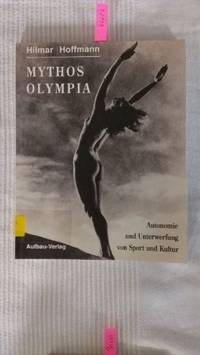
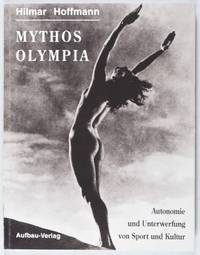
1993réf. BN50792Berlin Weimar: Aufbau-Verl. 1993. Erstauflage EA. Kulturgeschichte Völkerkunde Volkskunde Berlin, Weimar: Aufbau-Verl. unknown
1993réf. 37680Berlin: Aufbau-Verlag 1993. First edition. Paperback. g to vg. Quarto. 214pp. Original photo-illustrated wrappers. Striking study on the 1936 "Nazi Olympics" as deciphered through the images of Leni Riefenstahl's "Olympia." For two weeks in August 1936 Adolf Hitler's Nazi dictatorship camouflaged its racist militaristic character while hosting the Summer Olympics. Softpedaling its antisemitic agenda and plans for territorial expansion the regime exploited the Games to bedazzle many foreign spectators and journalists with an image of a peaceful tolerant Germany. Having rejected a proposed boycott of the 1936 Olympics the United States and other western democracies missed the opportunity to take a stand that - some observers at the time claimed - might have given Hitler pause and bolstered international resistance to Nazi tyranny. With the conclusion of the Games Germany's expansionist policies and the persecution of Jews and other "enemies of the state" accelerated culminating in World War II and the Holocaust. Leni Riefenstahl's "Olympia" was divided into two parts: Olympia Part I: Festival of the Nations and Part II: Festival of Beauty both released in 1938. The movies represent a tremendous aesthetic and technical cinematic achievement. Through a compilation of sporting images "Olympia" subtly underlined a tenet of all authoritarian regimes: that individuals must be turned into machines that act as required but do not think. At no point do the sportsmen and women in Olympia speak. After the war Riefenstahl - who hoped her films would continue to be shown - claimed that the Nazi government had no influence on "Olympia." This was untrue. The Nazi government commissioned and financed the films. Propaganda minister Joseph Goebbels' diaries indicate that he was in contact with Riefenstahl about their progress though not always positively. "It is impossible to work with this wild woman" he wrote on one occasion. Wild though she may have been the films are utterly compliant. The fact that "Olympia" depicts such moments as the field hockey final in which India defeated Germany is sometimes mistaken by Riefenstahl's defenders as evidence of her editorial independence. It is the opposite. Riefenstahl's inclusion of the occasional German defeat fits squarely with Goebbels' instructions to the German press during the Games which were to create an impression of Nazi fairmindedness by reporting foreign as well as German victories. The Nazi obsession with race is constantly restated. "Two black runners against the strongest of the white race" muses "Olympia"'s commentator as he surveys the field for the men's 800m. On that occasion the black runners the US's John Woodruff and Canada's Phil Edwards took gold and bronze respectively. The most exhilarating section of the first "Olympia" film is the long-jump final in which black American athlete Jesse Owens faces the white German champion Luz Long. In the last of three jumps Long hits 7.87m: a new European record. The crowd is ecstatic as is Hitler himself who is shown applauding his champion. Then it is Owens's last jump. He composes himself. Sprints. Flies. Lands lightly in the sand. It's 8.06m a new Olympic record Owens already held the world record having jumped 8.13m in 1935. Tactfully Riefenstahl does not show Hitler's reaction to Owens's spectacular achievement. According to Albert Speer the Führer was "highly annoyed" but rationalised Owens's success within the terms of his pseudoscientific race theories. "People whose antecedents came from the jungle were primitive Hitler said with a shrug; their physiques were stronger than civilized whites." Moderate shelf wear along edges of wrappers. Text in German. Wrappers in overall good interior in very good condition. Aufbau-Verlag paperback