Richard L Hoffmann H Wermuth M FischerBiblio.com

12.804 risultati
1990rif. __3110122340Walter de Gruyter 1990. Hardcover. New. 528 pages. German language. 9.50x6.90x1.10 inches. Walter de Gruyter hardcover
1990rif. 10226Walter de Gruyter 1990. 1st Edition . Hardcover. Near Fine. Cloth hardcover English language xv 512 pages NOT ex-library. Weight 1135g. Interior is clean and bright throughout untanned with unmarked text free of inscriptions and stamps firmly bound. Limited signs of minor wear. Boards show faint fingermarks. Issued without a dust jacket. -- An in-depth study of the Myriapoda specifically the Polydesmida order and Oxydesmidae family. This volume part of "The Animal Kingdom" series presents a comprehensive characterization and classification of these arthropods. It includes detailed descriptions of their morphology behavior habitat and evolutionary history serving as an essential resource for zoologists entomologists and researchers in related fields. -- Contents: Systematic Index; Part I. General Introduction: A.Preface B. Historical Summary C. Methodology 1. Procedural Considerations 2. Technical Methods 3. Type Specimens 4. Sources of Material 5. Acknowledgements D.Observations on Oxydesmid Evolution E. Affinities F. Taxonomic Characters 1. Peripheral Nonsexual Characters 2. Secondary Sexual Character Systems in Males 3. Secondary Sexual Characters of Females; Part II. Taxonomy: Subfamily Orodesminae -- Subfamily Plagiodesminae -- Subfamily Oxydesminae; Part III. Phylogeny and Distribution: 1. Present Distributional Patterns 2. Occurrence of Generalized and Derived Taxa 3. Former Climatic and Ecological Patterns in Africa 4. Provisional Inferences on Phylogeny; Bibliography: 1. References to Oxydesmidae 2. Non-oxydesmid References; Alphabetic Index Walter de Gruyter hardcover
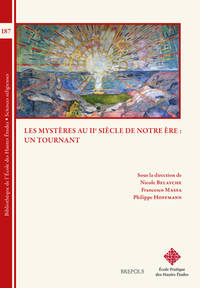
rif. 65310, Brepols - Ecole Pratique des Hautes Etudes, 2021 Paperback, 592 pages, Size:156 x 234 mm, Illustrations:29 b/w, Language(s):French, English. ISBN 9782503594590.
rif. BN385376mystères au IIe siècle de notre ère : un tournant mystères au IIe siècle de notre ère : un tournant Nicole Belayche Francesco Massa Philippe Hoffmann eds unknown
rif. 65310Brepols - Ecole Pratique des Hautes Etudes 2021. Paperback 592 pages Size:156 x 234 mm Illustrations:29 b/w Languages:French English. ISBN 9782503594590. Summary Cet ouvrage enquête sur ce que nous proposons d'appeler une « mystérisation » des discours et des pratiques au IIe siècle de notre ère dans l'empire romain - c'est-à-dire une multiplication diversification et intensification des références aux cultes à « mystères » dans des contextes variés mais cohérents et dans les différents groupes religieux présents dans l'empire païens juifs et chrétiens. Ce « tournant » mystérique affecte non seulement des pratiques rituelles et les discours qui les entourent mais au-delà de nombreux domaines du savoir qui comme Platon en son temps se mettent à mobiliser le vocabulaire et l'imagerie des mystères. L'enquête se déploie donc à la fois sur le terrain des rituels « mystériques » - dans des cultes qui se diffusent comme ceux d'Isis ou de Mater Magna parallèlement à la continuation des mystères grecs à Éleusis et Samothrace - et sur celui de la construction des savoirs de tous ordres qui s'élabore alors médecine philosophie rhétorique littérature et où se banalise l'emploi d'un lexique mystérique. Elle réunit donc des collègues spécialistes de champs disciplinaires variés - historiens historiens des religions archéologues philologues et bien sûr philosophes - et de systèmes religieux différents - polythéisme judaïsme et christianisme. TABLE OF CONTENTS Nicole BELAYCHE Francesco MASSA Introduction PARTIE 1. APPROCHER DES RITUELS MYSTÉRIQUES AU IIe SIÈCLE : UN ÉTAT DES 'LIEUX' Nicole BELAYCHE Paris Percer la loi du silence Les « nuits illuminantes » à Éleusis au IIe siècle Sandra BLAKELY Emory GA A cosmological turn in an architectural setting: Roman approaches to Samothrace into the second century CE Francesco D'ANDRIA Lecce Des « mystères » à Hiérapolis de Phrygie Beatriz PAÑEDA MURCIA Madrid-Paris Les cultes isiaques au IIe siècle de notre ère : entre « égyptianisation » et « mystérisation » Jennifer LARSON Kent Ohio The Cognitive Anatomy of a Mystery Cult PARTIE 2. UNE « MYSTÉRISATION » DANS LA LITTÉRATURE DU IIe SIÈCLE Antoine PIETROBELLI Reims Galien et les mystères de la médecine Georgia PETRIDOU Liverpool Mapping Medicine onto Mysteries in Aelius Aristides' Hieroi Logoi Jordi PIÀ-COMELLA Paris IUF 'Mystery' in Imperial Stoicism Mauro BONAZZI Utrecht Plutarch and the mysteries of philosophy Andrei TIMOTIN Bucarest Théon de Smyrne et la transposition platonicienne des mystères éleusiniens Anne-France MORAND Laval Les mystères dans les Hymnes orphiques : continuité ou rupture Geoffrey HERMAN Paris On the Term 'Mystery' in the Classical Rabbinic Literature Partie 3. DES EFFETS DE LA « MYSTÉRISATION » Françoise VAN HAEPEREN Louvain Mystères phrygiens et tauroboles au IIe siècle Charles DELATTRE Lille Mythographie et mystériographie. Fragments de discours dans et autour des mystères Romain BRETHES Paris Romans grecs romans à mystères Un état des lieux Marie-Odile BOULNOIS Paris « Les mystères véritables » : Origène en confrontation dans le Contre Celse et les nouvelles Homélies sur les Psaumes Thomas GALOPPIN Toulouse « Ô bienheureux myste de la magie sacrée ! » Mystères et teletai dans les papyrus « magiques » grecs Florian AUDUREAU Paris : Rituel d'initiation ou « mystérisation » du discours : la fonction du dans la lettre de Néphotès PGM IV 154-285 Philippe HOFFMANN Paris : En forme de conclusion Bibliographie sélective Index des sources Index rerum Les auteurs Résumés des contributions Brepols - Ecole Pratique des Hautes Etudes 2021 paperback
1610rif. 72551610 Francoforti, Nic. Hoffmanni1610 [16]-678-[2 bl.] pp. 237 gravures sur bois d'après Virgil Solis (1514-1562). Marque de gravure sur bois sur le titre. Imprimé en 2 col. avec les textes grecs et latins. Reliure en parchemin illustré d'un manuscrit d'époque avec enluminures !!! tres beau à regretter un petit manque sur la première de couverture, dos bon état , quatrième de couverture bon état . Première édition, "Wichtigste Anthologie der humanistischen und nachhumanistischen Sammlungen und Neuentdeckungen, mit einem umfangreichen Anmerkungsapparat des Neveletus ("Notae") in fünf Abschnitten als Anhang, in denen ausser den Fabeln des Abstemius jede Sammlung einzeln kommentiert wird." (Bodemann). (Bodemann). Neveletus est à l'origine de cette édition réimprimé la collection d'Accursius, qu'il enrichira de 136 fables . La Fontaine y puisera son univers ...
1993rif. BN50792Berlin Weimar: Aufbau-Verl. 1993. Erstauflage EA. Kulturgeschichte Völkerkunde Volkskunde Berlin, Weimar: Aufbau-Verl. unknown
1993rif. 37680Berlin: Aufbau-Verlag 1993. First edition. Paperback. g to vg. Quarto. 214pp. Original photo-illustrated wrappers. Striking study on the 1936 "Nazi Olympics" as deciphered through the images of Leni Riefenstahl's "Olympia." For two weeks in August 1936 Adolf Hitler's Nazi dictatorship camouflaged its racist militaristic character while hosting the Summer Olympics. Softpedaling its antisemitic agenda and plans for territorial expansion the regime exploited the Games to bedazzle many foreign spectators and journalists with an image of a peaceful tolerant Germany. Having rejected a proposed boycott of the 1936 Olympics the United States and other western democracies missed the opportunity to take a stand that - some observers at the time claimed - might have given Hitler pause and bolstered international resistance to Nazi tyranny. With the conclusion of the Games Germany's expansionist policies and the persecution of Jews and other "enemies of the state" accelerated culminating in World War II and the Holocaust. Leni Riefenstahl's "Olympia" was divided into two parts: Olympia Part I: Festival of the Nations and Part II: Festival of Beauty both released in 1938. The movies represent a tremendous aesthetic and technical cinematic achievement. Through a compilation of sporting images "Olympia" subtly underlined a tenet of all authoritarian regimes: that individuals must be turned into machines that act as required but do not think. At no point do the sportsmen and women in Olympia speak. After the war Riefenstahl - who hoped her films would continue to be shown - claimed that the Nazi government had no influence on "Olympia." This was untrue. The Nazi government commissioned and financed the films. Propaganda minister Joseph Goebbels' diaries indicate that he was in contact with Riefenstahl about their progress though not always positively. "It is impossible to work with this wild woman" he wrote on one occasion. Wild though she may have been the films are utterly compliant. The fact that "Olympia" depicts such moments as the field hockey final in which India defeated Germany is sometimes mistaken by Riefenstahl's defenders as evidence of her editorial independence. It is the opposite. Riefenstahl's inclusion of the occasional German defeat fits squarely with Goebbels' instructions to the German press during the Games which were to create an impression of Nazi fairmindedness by reporting foreign as well as German victories. The Nazi obsession with race is constantly restated. "Two black runners against the strongest of the white race" muses "Olympia"'s commentator as he surveys the field for the men's 800m. On that occasion the black runners the US's John Woodruff and Canada's Phil Edwards took gold and bronze respectively. The most exhilarating section of the first "Olympia" film is the long-jump final in which black American athlete Jesse Owens faces the white German champion Luz Long. In the last of three jumps Long hits 7.87m: a new European record. The crowd is ecstatic as is Hitler himself who is shown applauding his champion. Then it is Owens's last jump. He composes himself. Sprints. Flies. Lands lightly in the sand. It's 8.06m a new Olympic record Owens already held the world record having jumped 8.13m in 1935. Tactfully Riefenstahl does not show Hitler's reaction to Owens's spectacular achievement. According to Albert Speer the Führer was "highly annoyed" but rationalised Owens's success within the terms of his pseudoscientific race theories. "People whose antecedents came from the jungle were primitive Hitler said with a shrug; their physiques were stronger than civilized whites." Moderate shelf wear along edges of wrappers. Text in German. Wrappers in overall good interior in very good condition. Aufbau-Verlag paperback
1993rif. 37680Berlin: Aufbau-Verlag 1993. First edition. Paperback. g to vg. Quarto. 214pp. Original photo-illustrated wrappers. Striking study on the 1936 "Nazi Olympics" as deciphered through the images of Leni Riefenstahl's "Olympia." For two weeks in August 1936 Adolf Hitler's Nazi dictatorship camouflaged its racist militaristic character while hosting the Summer Olympics. Softpedaling its antisemitic agenda and plans for territorial expansion the regime exploited the Games to bedazzle many foreign spectators and journalists with an image of a peaceful tolerant Germany. Having rejected a proposed boycott of the 1936 Olympics the United States and other western democracies missed the opportunity to take a stand that - some observers at the time claimed - might have given Hitler pause and bolstered international resistance to Nazi tyranny. With the conclusion of the Games Germany's expansionist policies and the persecution of Jews and other "enemies of the state" accelerated culminating in World War II and the Holocaust. Leni Riefenstahl's "Olympia" was divided into two parts: Olympia Part I: Festival of the Nations and Part II: Festival of Beauty both released in 1938. The movies represent a tremendous aesthetic and technical cinematic achievement. Through a compilation of sporting images "Olympia" subtly underlined a tenet of all authoritarian regimes: that individuals must be turned into machines that act as required but do not think. At no point do the sportsmen and women in Olympia speak. After the war Riefenstahl - who hoped her films would continue to be shown - claimed that the Nazi government had no influence on "Olympia." This was untrue. The Nazi government commissioned and financed the films. Propaganda minister Joseph Goebbels' diaries indicate that he was in contact with Riefenstahl about their progress though not always positively. "It is impossible to work with this wild woman" he wrote on one occasion. Wild though she may have been the films are utterly compliant. The fact that "Olympia" depicts such moments as the field hockey final in which India defeated Germany is sometimes mistaken by Riefenstahl's defenders as evidence of her editorial independence. It is the opposite. Riefenstahl's inclusion of the occasional German defeat fits squarely with Goebbels' instructions to the German press during the Games which were to create an impression of Nazi fairmindedness by reporting foreign as well as German victories. The Nazi obsession with race is constantly restated. "Two black runners against the strongest of the white race" muses "Olympia"'s commentator as he surveys the field for the men's 800m. On that occasion the black runners the US's John Woodruff and Canada's Phil Edwards took gold and bronze respectively. The most exhilarating section of the first "Olympia" film is the long-jump final in which black American athlete Jesse Owens faces the white German champion Luz Long. In the last of three jumps Long hits 7.87m: a new European record. The crowd is ecstatic as is Hitler himself who is shown applauding his champion. Then it is Owens's last jump. He composes himself. Sprints. Flies. Lands lightly in the sand. It's 8.06m a new Olympic record Owens already held the world record having jumped 8.13m in 1935. Tactfully Riefenstahl does not show Hitler's reaction to Owens's spectacular achievement. According to Albert Speer the Führer was "highly annoyed" but rationalised Owens's success within the terms of his pseudoscientific race theories. "People whose antecedents came from the jungle were primitive Hitler said with a shrug; their physiques were stronger than civilized whites." Moderate shelf wear along edges of wrappers. Text in German. Wrappers in overall good interior in very good condition. Aufbau-Verlag paperback books
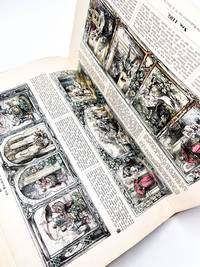
1898rif. 31334München Munich: Braun & Schneider 1898. Near fine. Delightful and bizarre anthology of stories presented in broadsides in a comic-like format including a cameo by STRUWWELPETER. The MÜNCHENER BILDERBOGEN were "important documents in the development of comic strips and cartooning" Hansen and over their 50 year run influenced Europe's visual culture with their humor and caricature. Contributors to the series included Lothar Meggendorfer Wilhelm Busch and Adolf Oberlander. This issue number 50 features broadsides 1177-1200 including a delightful glimpse of the year 1900 featuring futuristic trains motorcars and a sky full of balloons by Arpad Schmidhamer who would go on to illustrate the iconic "Totentanz der Politik" comic. 13.25'' x 8.75''. Original hand-colored pictorial boards. Illustrated with hand-colored panels. 96 pages printed one side only. Binding with mild edgewear and a bit of soil. Interior clean and bright. Braun & Schneider unknown books
1811rif. 35270MOEWIG ARTHUR 18/11/1997. 1. softcover. Thoregon: 2 Die Heliotischen Bollwerke Siebenton / Walyon / Koliwan / Hentele / Tseekz MIT RISSZEICHNUNG! Computer: Horror! DIE GRÖßTE WELTRAUMSERIE! MOEWIG, ARTHUR paperback
rif. 79592St. Gallen Buchhandlung der Evangelischen Gesellschaft 1919. Seide gebunden; weinroter goldgeprägter Einband Farbschnitt floral gemustertes Vorsatzpapier Lesebändchen Fraktursatz / Anz. Seiten: 302 / 13 x 183 cm / Buchschmuck von Dora F. Rittmeyer / Zustand: sehr gut geringe Gebrauchsspuren; Einband leicht wellig Papier gebräunt Besitzereinträge auf und gegenüber der Titelseite St. Gallen, Buchhandlung der Evangelischen Gesellschaft, 1919 unknown
rif. 2b116798. Auflage Schreiter Berlin um 1890 248 Seiten mit einigen Abbildungen Leineneinband gering berieben/ etwas fleckig/ innengelenk im Vorsatz leicht eingerissen. unknown
rif. 21187Vaduz Liechtenstein Verlag 1947. 432 S. mit Ill. von Alfred Kubin. Ln. mit Schutzumschl. EA der Illustrationen Horowitz 55a - Erstausgabe W/G 66 W. Bergengruen unknown
1985rif. BN660187Phaidon 1985. 1985. Märchen . In der Reihe: Werke und Schriften Erster Band. Herausgegeben von Rainer Schönhaar. Märchen . In der Reihe: Werke und Schriften Erster Band. Herausgegeben von Rainer Schönhaar. E. T. A. Hoffmann Phaidon unknown
rif. 1788BOROWSKY. 1. hardcover. Märchen Sirmkovrilo! BOROWSKY hardcover
rif. 48915Düsseldorf - Köln Eugen Diederichs Verlag 1965 Auflage: 1. Leder gebunden; blauer Einband Rückengoldprägung Kopfgoldschnitt Lesebändchen mit Cellophan-Schutzumschlag / Anz. Seiten: 253 / 125 x 195 cm / Zustand: sehr gut geringe Gebrauchsspuren; einige Seiten mit verfärbtem Abdruck obere Schnittkante etwas bestossen Schutzumschlag leicht berieben und hinten ca. 2 cm eingerissen Aus der Reihe: "Die Märchen der Weltliteratur" herausgegeben von Friedrich von der Leyen Düsseldorf - Köln, Eugen Diederichs Verlag, 1965, Auflage: 1. unknown
1922rif. 62543Berlin, Verlag Neufeld&Henius, 1922. 5 Pappbändchen, kl.8°, 226/243/267/236/234 Seiten.
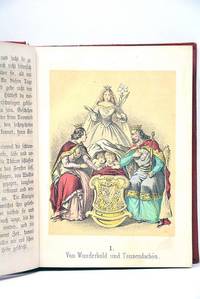
rif. 122372Stuttgart Verlag von Schmidt & Spring 1867. Frontispice. 320 pages. 15 illustrations en couleurs hors-texte. 145 x 115 Cm. Pleine toile rouge. Titre doré au centre d'encadrements à froid au premier plat. Tranches marbrées bleu.Coins et coiffes émoussés. Quelques taches. Franz Hoffmann était un libraire et écrivain allemand spécialisé dans la littérature pour la jeunesse ayant produit près de 250 uvres durant sa carrière de quarante ans. Son recueil "Märchen und Fabeln pour Kleine Kinder" publié en 1867 par Schmidt & Spring à Stuttgart s'adresse aux jeunes enfants et intègre seize images colorées pour illustrer les contes et fables. Taches et rousseurs. Stuttgart, Verlag von Schmidt & Spring, 1867. unknown
1980rif. 28081AUFBAU-VERLAG 1980. 4. hardcover. BIBLIOTHEK DER WELTLITERATUR AUFBAU-VERLAG hardcover
1965rif. 21324Berlin, Weimar: Aufbau-Verlag, 1965. 665 Seiten , 20 cm Gewebeeinband
1965rif. 227857BBHbg., Standart, 1965. 789, 1 S. OLwd. - Gesammelte Werke, Bd. 2. - Gutes Ex.
rif. 1017353425.Ghardcover. Good. Access codes and supplements are not guaranteed with used items. May be an ex-library book. hardcover
rif. 0332718050.Ghardcover. Good. Access codes and supplements are not guaranteed with used items. May be an ex-library book. hardcover
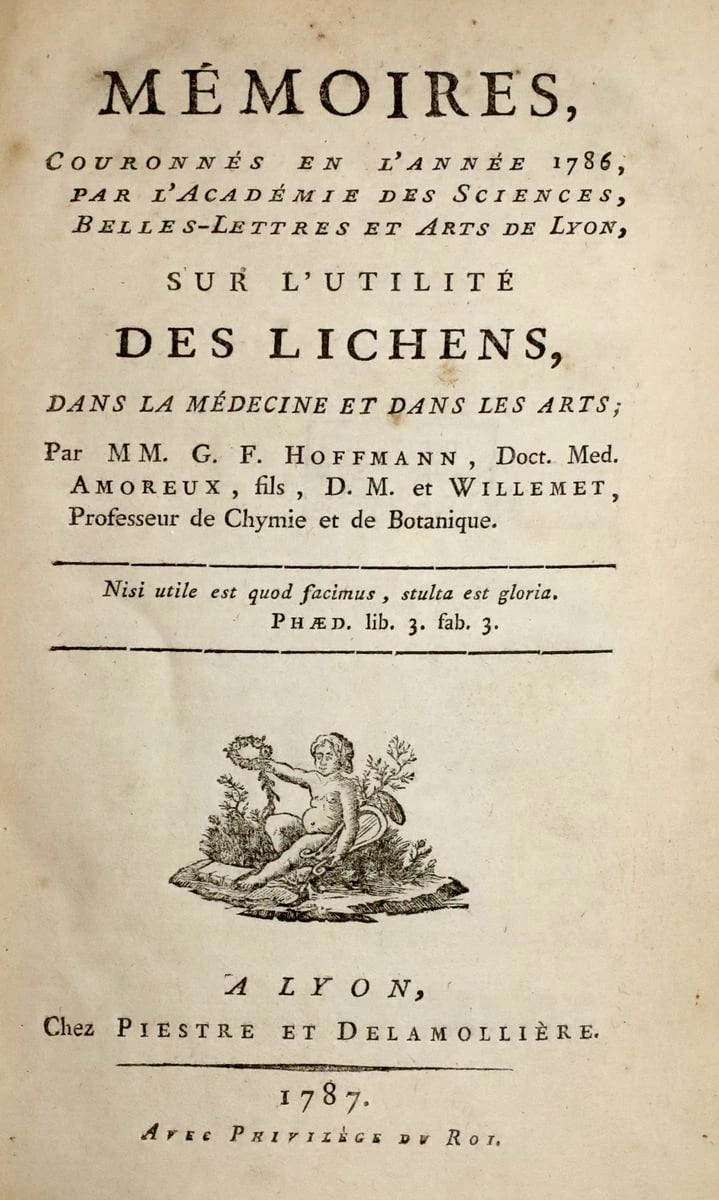
1787rif. 101080Lyon, Piestre et Delamollière, 1787, in-8, 3 mémoires en 1 vol. : [4]-XXXVI pp. liminaires; [2]-48 pp.; [2]-103 pp.; [2]-68 pp. et [2] pp, 8 pl, Demi-veau moderne, Rarissime recueil des trois mémoires présentés par Pierre Joseph Amoreux (1741-1824), Georg Franz Hoffmann (1761-1826) et Rémi Willemet (1735-1807), pour le concours d'histoire naturelle proposé par l'Académie des sciences de Lyon. En réponse à la question "Quelles sont les diverses espèces de lichens, dont on peut faire usage en médecine et dans les arts?", les recherches de Hoffmann remportèrent le premier prix, tandis que les travaux de Willemet et Amoreux furent récompensés respectivement par l'accessit et le second prix. Les mémoires gagnants sont reliés dans l'ordre suivant : - WILLEMET, Lichénographie économique, ou Histoire des lichens utiles dans ma médecine et dans les arts; l'auteur, pharmacien et chimiste, insiste ici sur l'importance socio-économique des lichens. - AMOREUX, Recherches et expérience sur les divers lichens, dont on peut faire usage en médecine et dans les arts; Amoreux, médecin de Montpellier, démontre ici l'emploi des lichens dans la médecine, dans l'alimentation du bétail et de l'homme ("lichens économiques") et présente ses expériences dans la teinturerie. - HOFFMANN, Commentatio de vario lichenum usu. Ce mémoire gagnant, rédigé en latin, est particulièrement remarquable pour les huit planches coloriées à la main, qui reproduisent des échantillons de draps de laine teints avec divers lichens : le nom des nuances y est traduit en français selon les dénominations- pour le moins poétiques! - des teinturiers. Soixante-dix-sept tons bruns, gris, ocres et violets se déclinent ainsi en ventre de biche blanc ou nourri, noisette rouge à verdâtre, poil de veau et de boeuf, ou encore en gris de chameau commun et ventre de vieux crapaud. L'auteur était professeur à Göttingen et à Moscou. Bel exemplaire. Cachets de l'Institut catholique de Paris. Bibliotheca Tinctoria n° 0002, 0037, 0536 et 1120. Pritzel n°144 (Amoreux). Couverture rigide