BOCTHOR (Ellious), CAUSSIN de PERCEVAL (Armand Pierre)Livre Rare Book
1475 risultati
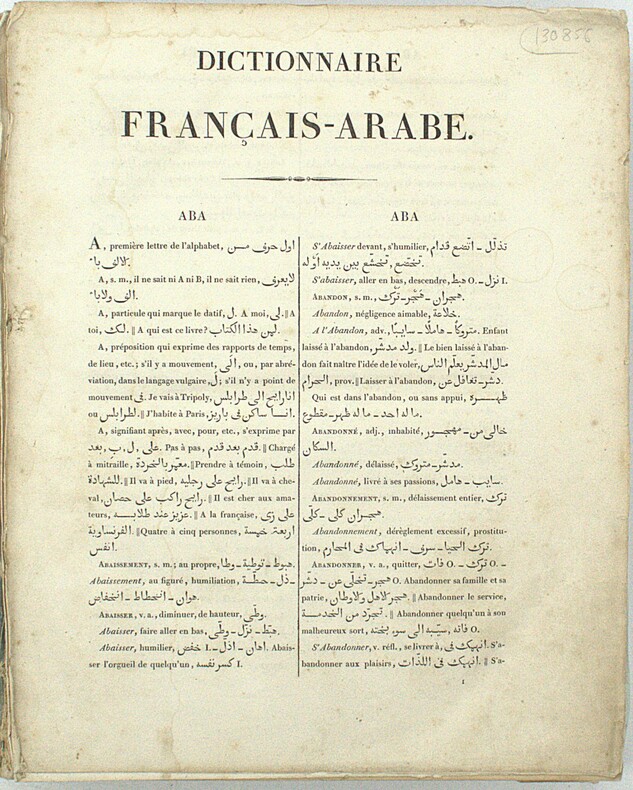
1828rif. PHO-1950Paris, Firmin Didot, 1828, 2 tome en 1 volume in-4, VII-461pp.-435pp., sans couverture, manque les pages de titres (copie), quelques rousseurs.
1758rif. 25397Constantinople [Paris] 1758 3 vol. in-16 basane fauve granitée, dos lisses cloisonnés et fleuronnés, pièces de titre et de tomaison cerise et bouteille, tranches rouges [Rel. de l'époque], manque de cuir à une coiffe inférieure, coins abîmés
rif. 104966aafLeide (Leiden) Typis Raphelengianis, 1619, kl. in-4to, 8 Bl. (Titelbl. mit hs. Eintragung - Praefatio: A2 kl. Randausriss ohne Textverlust - ein wenig Text durchgestrichen) + 178 S. + 1 Bl. (Inscriptiones), kleiner Stempel unten am Titelblatt ‘Ex Testam ‘Rimmi Olivera’, flexibler Pergament-Einband d. Zeit.
1955Very Good Turkish Original silver gelatin photographic print mounted on cardboard. 53x42 cm (Photo size: 38x30 cm). Signed by Yildiz Moran. Yildiz (Vahid) Moran Arun was born on 24 July 1932, in Istanbul. She is the youngest of three children born to Nemide Moran and Ahmet Vahid Moran. Her father, Ahmet Vahid Moran, was a military officer who served in important positions both at home and abroad. He was the writer of Turkey's very first English-Turkish dictionary printed in Latin script in 1924. In 1950, Yildiz Moran quit her high school education during her final year at Robert College and, following the guidance of her uncle, the art historian Mazhar Sevket Ipsiroglu, went to Great Britain to study photography. After completing her education at Bloomsbury Technical College (1950-52) and Ealing Broadway Technical College, she began to work for John Vickers, the acclaimed photographer of The Old Vic. Moran combined her technical and theoretical knowledge with the practical experience she gained at the studio and stage shoots. She had the opportunity to meet famous artists of the time. The exhibitions and works she saw during her time in Great Britain helped her develop her photographic vision. Following her internship period, she began to make a living taking portrait and lobby photographs. She opened her first exhibition in 1953 in Cambridge. In 1954, she held four more exhibitions in London. All these shows attracted much attention. In her first exhibition, her entire collection was sold. She went traveling in Europe. After making a photo book on Spain and Portugal, she returned to Turkey in 1954. Between 1955 and 1962, she held five solo exhibitions. In 1963, she married Özdemir Asaf (Halit Özdemir Arun) and gave birth to three children in four years. She dedicated the rest of her life to her children. She opened her last exhibition in 1970, in Istanbul. After that, she only took part in retrospective exhibitions. She quit her professional photography career and began to work as a translator and dictionary writer. Between 1981 and 1987, she prepared the complete works of Özdemir Asaf for publication and translated some of his poetry and prose into English. In 1982, the Istanbul State Academy of Fine Arts Photography Institute awarded her honorary membership on account of her contributions to the art of photography. Lyrically conveying a universal language through her own perspective, Moran became a school in herself with her "timeless" photographs. Turkey's first academically-trained photographer, Yildiz Moran is renowned for the new vision and aesthetic she introduced into photography and is considered to be one of the best photographers of all time. Masterfully combining the tradition of the East with the aesthetic of the West, she left behind a legacy of black and white photographs beautifully composed to capture the world of light and shadow reflecting on people and lands. Considering the conditions in the world of photography in the 1950s and 1960s, it is a great achievement that she defined the age of 20 her passion for photography as the foundation of her life, became the first academically-trained woman photographer in her country, acquired in-depth knowledge of the discipline and combined this knowledge with her talent and hard work. "The camera must be like an extension of your being so that it doesn't create an obstruction between you and your subjects. Anything that has poetry in it is the subject of photography. My only intention has always been to photograph what was universal while staying true to the concept embodied by my subject." Besides her portraits, landscapes, and abstract details, she is also known for her photographs reflecting the lives of the Anatolian people. As a woman photographer traveling in Anatolia, she accessed otherwise inaccessible environments, moments, and perspectives; and, with profound respect, she conveyed the purity of the people she met there and allowed us... (Biography: Merih Akogul).
1833rif. PHO-614Paris, Firmin Didot frères, 1833. In-8, VII-365pp. Relié plein veau marron époque,liseré fleuri sur les plats, dos orné avec pièce de titre et auteur en maroquin dos orné , plat détaché, cachet de bibliothèque.
rif. 17158Paris, Michel Lévy frères, 1863. In-8, 474 pp., demi-maroquin vert à coins, l'initiale R entourée d'un serpent dorée sur le premier plat, dos à nerfs orné de fleurons dorés, tranches dorées (petite insolation, quelques épidermures
1697rif. 1831Paris : La Compagnie des Libraires 1697 1 In-folio, 382 x 246 Basane fauve, dos à nerfs orné, tranches mouchetées (reliure pastiche du XIXe ou XXe siècle). (16 ff.), 1059 pp.
rif. ORD-8996Together with an Account of its Agriculture, Forestry, Arts and Commerce. From Travels and Researches undertaken at the Cost of the Prussian Government. With forty-four illustrations and tree maps. London. Hodder and Stoughton. 1889. Gd in-8 (168 x 249mm, dimensions intérieures) cartonnage de l'éditeur illustré or dans un style japonisant (reliure habilement remontée, très décorative), XII, 570 pages, 23 planches hors texte dont 10 en couleurs (la planche VII manque), 3 cartes dépliantes et 20 gravures sur bois dans le texte. La planche XIV a déteint sur la page opposée, pâles rousseurs éventuelles, sinon très bel exemplaire de cet indispensable ouvrage concernant l'art du Japon. Ex-libris d'un contre amiral.
1627PART OF WORDS, IN THESE NINE LANGUAGES, VIZ. 1. ENGLISH. 2. LOW DUTCH. 3. HIGH DUTCH. 4. FRENCH. 5. ITALIAN. 6. SPANISH. 7. LATINE. 8. GREEKE. 9. HEBREW, &C. ... BY THE INDUSTRIE, STUDIE, LABOUR, AND AT THE CHARGES OF IOHN MINSHEU PUBLISHED AND PRINTED. 22o. IULY, ANNO 1625. SECOND EDITION. 2nd edition, revised. Later Cloth, folio (26 x 40 cm), [1], 760 double-columns [ie 380 pages]. Title page is within an ornamental border. Printed i Black, Roman, Italic and Greek and Hebrew letters with side notations (printed margin notations). Includes three ornate woodcut headpieces and initials. This is the 2nd and most thorough edition of Minsheu's polyglot dictionary with "The Reasons and Derivations of all or the most part of words" in English, Dutch, German, French, Italian, Spanish, Latin, Greek, and Hebrew, along with historical explanations and usage samples. This edition includes proper names "of the Bible...Countries, Cities, Townes, Hilles, Rivers, Flouds, Promontaries, Ports, Creekes, Islands, Seas, Men, Women, Gods, Peoples, and other things of note" as well as an "Exposition of the Termes of the Lawes of this Land...with the description of the Magistracies, Offices and Officers" which was evidently aiming for the growing market in legal texts. The work serves for scholars today as s a dictionary of day to day English at the start of the 17th Century, and is of immense help in understanding the speech in the works of Johnson and Shakespeare. We also learn here that the word 'nicotine' is from Jean Nicot who in 1560 brought tobacco to France. Lowndes IV 1570: "Minsheu's guide is a very important work and has furnished great assistance to subsequent lexicographers. Todd...This edition is by some prefered for its additions and corrections." Alden 627/76; "An etymological dictionary with definitions and sources for numerous words relating to the Americas (617/93). Alston II 107. c.v. F. B. Williams "Scholarly Publications in Shakespeare's Day." Name of previous owner [John Hammiher (?) Major] on title, beautiful clean paper with good margins and strong binding, Very Good Condition in modern binding, a very nice copy. (AC-23-1)
rif. 7483Paris, Fasquelle & Le Vasseur, 1905. 16 volumes in-8 (220 x 141 mm). Demi-chagrin rouge, dos lisse orné, tête dorée, non rogné, d'infimes traces d'eau sur quelques feuillets, des défauts de papier et quelques traces sur quelques plats mais qui ne touchent pas les dos, un manque de carton sur un volume (reliure de l'époque).
1770rif. PHO-1193Paris: Chez N.M. Tilliard, 1770. in-4 , (24x20) , cxliv-474pp-1ff , illustré de 4 planches , relié demi cuir époque , pièce de titre (petit manque) , papier des plats refait , tranches rouges , vieille mouillure ,début de fente, coiffe de pied courte , 2 planches détachées.
1955Very Good Turkish Original silver gelatin photographic print mounted on cardboard. 53x42 cm (Photo size: 38x30 cm). Signed by Yildiz Moran. Yildiz (Vahid) Moran Arun was born on 24 July 1932, in Istanbul. She is the youngest of three children born to Nemide Moran and Ahmet Vahid Moran. Her father, Ahmet Vahid Moran, was a military officer who served in important positions both at home and abroad. He was the writer of Turkey's very first English-Turkish dictionary printed in Latin script in 1924. In 1950, Yildiz Moran quit her high school education during her final year at Robert College and, following the guidance of her uncle, the art historian Mazhar Sevket Ipsiroglu, went to Great Britain to study photography. After completing her education at Bloomsbury Technical College (1950-52) and Ealing Broadway Technical College, she began to work for John Vickers, the acclaimed photographer of The Old Vic. Moran combined her technical and theoretical knowledge with the practical experience she gained at the studio and stage shoots. She had the opportunity to meet famous artists of the time. The exhibitions and works she saw during her time in Great Britain helped her develop her photographic vision. Following her internship period, she began to make a living taking portrait and lobby photographs. She opened her first exhibition in 1953 in Cambridge. In 1954, she held four more exhibitions in London. All these shows attracted much attention. In her first exhibition, her entire collection was sold. She went traveling in Europe. After making a photo book on Spain and Portugal, she returned to Turkey in 1954. Between 1955 and 1962, she held five solo exhibitions. In 1963, she married Özdemir Asaf (Halit Özdemir Arun) and gave birth to three children in four years. She dedicated the rest of her life to her children. She opened her last exhibition in 1970, in Istanbul. After that, she only took part in retrospective exhibitions. She quit her professional photography career and began to work as a translator and dictionary writer. Between 1981 and 1987, she prepared the complete works of Özdemir Asaf for publication and translated some of his poetry and prose into English. In 1982, the Istanbul State Academy of Fine Arts Photography Institute awarded her with honorary membership on account of her contributions to the art of photography. Lyrically conveying a universal language through her own perspective, Moran became a school in herself with her "timeless" photographs. Turkey's first academically-trained photographer, Yildiz Moran is renowned for the new vision and aesthetic she introduced into photography and considered to be one of the best photographers of all time. Masterfully combining the tradition of the East with the aesthetic of the West, she left behind a legacy of black and white photographs beautifully composed to capture the world of light and shadow reflecting on people and lands. Considering the conditions in the world of photography in the 1950s and 1960s, it is a great achievement that she defined at the age of 20 her passion for photography as the foundation of her life, became the first academically-trained woman photographer in her country, acquired in-depth knowledge of the discipline and combined this knowledge with her talent and hard work. "The camera must be like an extension of your being so that it doesn't create an obstruction between you and your subjects. Anything that has poetry in it is the subject of photography. My only intention has always been to photograph what was universal while staying true to the concept embodied by my subject." Besides her portraits, landscapes, and abstract details, she is also known for her photographs reflecting the lives of the Anatolian people. As a woman photographer traveling in Anatolia, she accessed otherwise inaccessible environments, moments, and perspectives; and, with profound respect, she conveyed the purity of the people she met there and allowed us... (Biography: Merih Akogul).
1955Very Good Turkish Original silver gelatin photographic print mounted on cardboard. 53x42 cm (Photo size: 38x30 cm). Signed by Yildiz Moran. Yildiz (Vahid) Moran Arun was born on 24 July 1932, in Istanbul. She is the youngest of three children born to Nemide Moran and Ahmet Vahid Moran. Her father, Ahmet Vahid Moran, was a military officer who served in important positions both at home and abroad. He was the writer of Turkey's very first English-Turkish dictionary printed in Latin script in 1924. In 1950, Yildiz Moran quit her high school education during her final year at Robert College and, following the guidance of her uncle, the art historian Mazhar Sevket Ipsiroglu, went to Great Britain to study photography. After completing her education at Bloomsbury Technical College (1950-52) and Ealing Broadway Technical College, she began to work for John Vickers, the acclaimed photographer of The Old Vic. Moran combined her technical and theoretical knowledge with the practical experience she gained at the studio and stage shoots. She had the opportunity to meet famous artists of the time. The exhibitions and works she saw during her time in Great Britain helped her develop her photographic vision. Following her internship period, she began to make a living taking portrait and lobby photographs. She opened her first exhibition in 1953 in Cambridge. In 1954, she held four more exhibitions in London. All these shows attracted much attention. In her first exhibition, her entire collection was sold. She went traveling in Europe. After making a photo book on Spain and Portugal, she returned to Turkey in 1954. Between 1955 and 1962, she held five solo exhibitions. In 1963, she married Özdemir Asaf (Halit Özdemir Arun) and gave birth to three children in four years. She dedicated the rest of her life to her children. She opened her last exhibition in 1970, in Istanbul. After that, she only took part in retrospective exhibitions. She quit her professional photography career and began to work as a translator and dictionary writer. Between 1981 and 1987, she prepared the complete works of Özdemir Asaf for publication and translated some of his poetry and prose into English. In 1982, the Istanbul State Academy of Fine Arts Photography Institute awarded her honorary membership on account of her contributions to the art of photography. Lyrically conveying a universal language through her own perspective, Moran became a school in herself with her "timeless" photographs. Turkey's first academically-trained photographer, Yildiz Moran is renowned for the new vision and aesthetic she introduced into photography and is considered to be one of the best photographers of all time. Masterfully combining the tradition of the East with the aesthetic of the West, she left behind a legacy of black and white photographs beautifully composed to capture the world of light and shadow reflecting on people and lands. Considering the conditions in the world of photography in the 1950s and 1960s, it is a great achievement that she defined the age of 20 her passion for photography as the foundation of her life, became the first academically-trained woman photographer in her country, acquired in-depth knowledge of the discipline and combined this knowledge with her talent and hard work. "The camera must be like an extension of your being so that it doesn't create an obstruction between you and your subjects. Anything that has poetry in it is the subject of photography. My only intention has always been to photograph what was universal while staying true to the concept embodied by my subject." Besides her portraits, landscapes, and abstract details, she is also known for her photographs reflecting the lives of the Anatolian people. As a woman photographer traveling in Anatolia, she accessed otherwise inaccessible environments, moments, and perspectives; and, with profound respect, she conveyed the purity of the people she met there and allowed us... (Biography: Merih Akogul).
1926rif. 1820PARIS. PIAZZA. 1926-1932. 12 VOLUMES IN-4 BROCHES (23,5 X 31 CM ENVIRON), SOUS COUVERTURE REMPLIEE. ILLUSTRE DE 144 AQUARELLES HORS TEXTE DE LEON CARRE REPRODUITES EN COULEURS ET EN DORE, SOUS SERPENTE, ET DE 85 COMPOSITIONS DECORATIVES EN COULEURS DE RACIM MOHAMMED. PREMIER TIRAGE LIMITE A 2500 EXEMPLAIRES NUMEROTES. UN DES 250 SUR JAPON IMPERIAL NUMEROTES DE 51 A 300 CONTENANT UNE SUITE EN NOIR DES ILLUSTRATIONS, CELUI-CI PORTANT LE NUMERO 272. «BELLE PUBLICATION TRES RECHERCHEE ET COTEE». (CARTERET. IV. 281). AVEC 11/12 SUITES, IL MANQUE LA SUITE DU TOME 9. DEFAUTS SUR LES CHEMISES CARTONNEES CONTENANT LES SUITES, SINON TRES BEL EXEMPLAIRE, INTERIEUR TRES FRAIS.
1770In-4° (cm. 25), legatura coeva in piena bazzana con titolo in oro su tassello, dorso a cinque nervi con fregi floreali in oro ai comparti (lievissimi segni d'usura e integrazione alla cuffia di piede), tagli rossi e risguardi marmorizzati; pp. [4] CXLIV 474 [2] in ottimo stato con 4 tavole illustrative ripiegate fuori testo in fine; sporadiche e lievi fioriture. Un classico del confucianesimo basato sul manoscritto francese inviato da Pechino dal padre missionario gesuita Antoine Gaubil, ma curato dal De Guignes. Prima traduzione in lingua occidentale. Cfr. De Backer-Sommervogel III, 1259; Walravens 136. Ottimo esemplare conservato in custodia marmorizzata con interno felpato. (SO3)
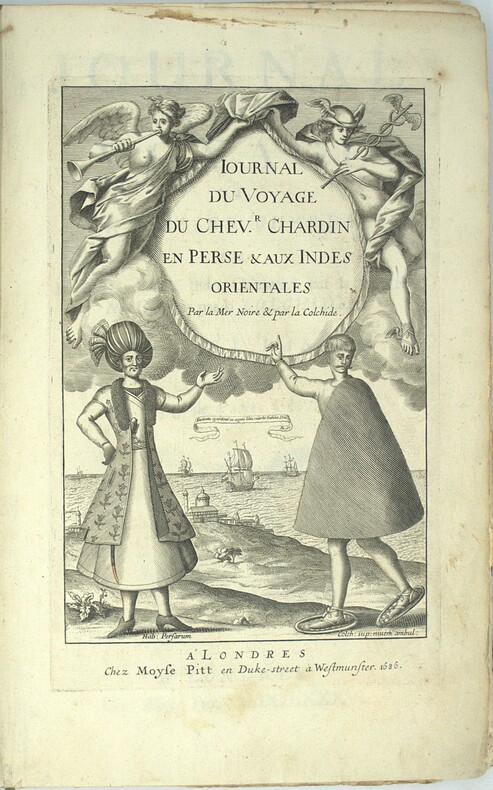
1686rif. PHO-2117Londres, chez PITT, 1686, in-folio (32x21cm), 8ff. - 349pp.-3ff., illustré de 17 gravures, la plupart dépliantes, manque le portrait de l’auteur, relié plein cuir époque, défauts de reliure avec manque de matière mais corps solide, 2 planches détachées, déchirures sans manque, manque en marge à la carte, traces de réparation à quelques planches, traces d’oxydation (adhésif).
rif. 19918Paris, Michel Lévy frères, 1863. In-8, 474 pp., demi-maroquin à coins brun de V. Champs, dos à nerfs, couverture conservée (2 petites restaurations aux angles du premier plat de couverture).
rif. 16241Paris, L. Carteret, 1925. In-4, 228 pp. 22 pl., maroquin bleu de France signé de E. Maylander, filets dorés en encadrement sur les plats, dos à nerfs orné de caissons dorés, auteur, titre, lieu et date dorés au dos, doublure de tissu bleu côtelé, encadrement de maroquin orné de filets et frises dorés, garde de tissu côtelé bleu, tranches dorées, couverture conservée, étui bordé de maroquin bleu (dos et étui insolés, légères décharges).
1902rif. 3834PARIS. L’EDITION D’ART. H. PIAZZA, EDITEUR. 1902. IN-8 (17,5 X 23,5 X 3 CENTIMETRES ENVIRON) DE 175 ET (5) PAGES, RELIURE D’EPOQUE 1/2 MAROQUIN HAVANE A COINS, DOS LISSE ORNE D’UN DECOR MOSAIQUE, TITRE DORE SUR ETIQUETTE MAROQUIN VERT, TETE DOREE, COUVERTURE ILLUSTREE EN COULEURS CONSERVEE (KAUFFMANN-HORCLOIS RELIEUR). ILLUSTRE DE 52 COMPOSITIONS EN OR ET EN COULEURS, DONT 6 A PLEINE PAGE. CHAQUE PAGE DE TEXTE ENCADREE D’UN DECOR GEOMETRIQUE EN NOIR OU EN COULEURS. PREMIER TIRAGE LIMITE A 300 EXEMPLAIRES NUMEROTES. UN DES 260 SUR PAPIER VELIN A LA CUVE, CELUI-CI HORS COMMERCE, IMPRIME POUR M. E. GRENINGAIRE. “LE PLUS RARE DES OUVRAGES DE DINET” (CARTERET. IV. 141). EX-LIBRIS GRAVE “E. BRUELL”. TRES BEL EXEMPLAIRE.
1811rif. PHO-2107Paris, Le Normant, 1811. Folio (51 x 34 cm), f. de faux-titre, frontispice, f. de titre et 82 planches sur 64 feuilles dont la grande carte par Lapie. Relié demi veau, dos lisse avec titre, coiffes usés, coins usés, début de fente, papiers des plats défraichis, mouillures.
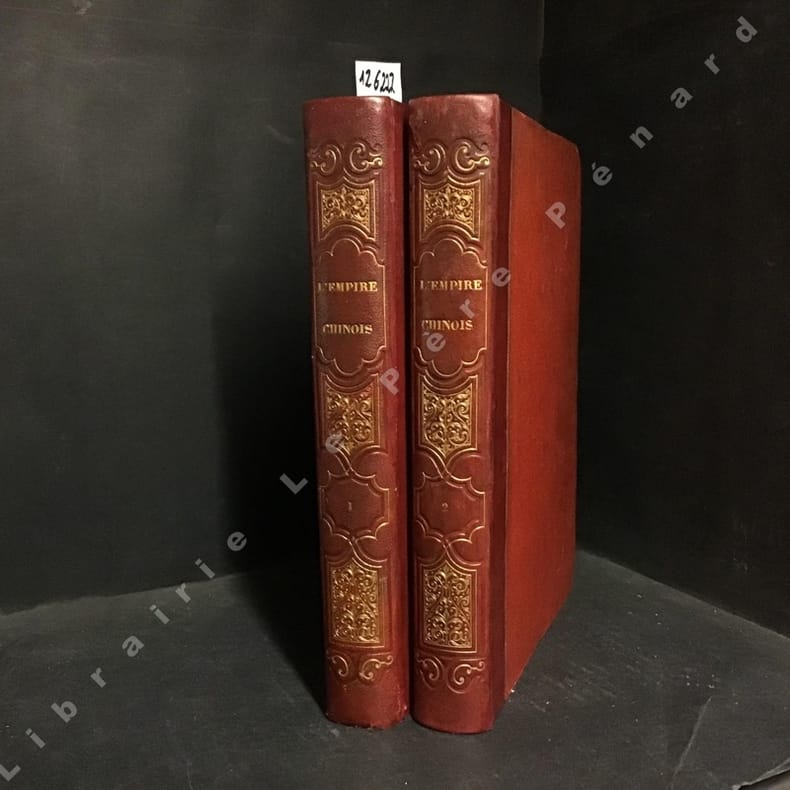
rif. 126222sd (XIXe) Fisher, Fils, et Cie, Londres; Paris - Sans date (XIXe siècle) - Complet de ses 4 tomes reliés en 2 volumes, demi-chagrin rouge, dos lisse portant titre et décors à froid et en doré, plats percaline rouge, frontispice - 68 + 76 + 74 + 73 pages Liste des gravures manquantes et ajoutés selon la table de chaque partie : Tome I : "Macao, vu des Forts à Heang-Shan"; "Le Kin-Shan, ou Ile Dorée"; "Les Bateleurs" sont manquantes."Dames de la famille d'un mandarin jouant aux cartes"; "Montre des poupées à Lin-sin-choo" n'apparaissent pas sur la Table des gravures mais sont présentes dans l'ouvrageTome II : "Ville de Ning-po, vue de la rivière" (frontispice, présent dans le tome III), "Bateliers de Canton faisant battre des cailles", sont manquantes"Les montagnes de Woo-Tang", "Bateliers de Canton faisant battre des cailles" n'apparaissent pas sur la Table des gravures mais sont présentes dans l'ouvrageTome III : "Le jeu du cerf volant à Hae-kwan, au neuvieme jour de la neuvième lune", "Le temple de Polo à Tai-hou", "Chargement des jonques à thé, à Tseen-tang" (présente dans le tome IV) sont manquantes"Ville de Ning-po, vue de la rivière", "Etouffement de la chrysalide et dévidage du cocon", "Débarcadère et entrée du temple d'Honan à Canton", "Le rocher à l'épreuve de l'épée, Hoo-kew-shan" n'apparaissent pas sur la Table des gravures mais sont présentes dans l'ouvrageTome IV : "Cascade de Ting-hoo", "Régatta chinois", "Joueurs de dés, près d'Amoy" sont manquantes"Chargement des jonques à thé, à Tseen-tang", "Fête du bateau du dragon, 5ème jour de la 5ème lune" n'apparaissent pas sur la Table des gravures mais sont présentes dans l'ouvrage
rif. 77908Piazza Paris 1906 Petit in-4 carré ( 235 X 180 mm ) de 222 pages, plein maroquin tango signé AFFLOTER, dos à nerfs orné de caissons dorés, double filet doré encadrant un décor géométrique aux croissants de lune mosaïqués en écoinçons, double filet doré sur coupes, large guirlande aux arabesque intérieure, gardes doublées de soie multicolore, doubles gardes de papier marbré, couverture illustrée de l'éditeur et dos conservés, tranches dorées, étui bordé ( étui frotté ). EDITION ORIGINALE. Beau livre illustré de 54 compositions en couleurs dont 12 à pleine page par Étienne DINET. Tirage limité à 400 exemplaires ( N°381 ) sur papier vélin à la cuve. Dos légèrement "ombré", très bel exemplaire aux superbes illustrations par DINET magistralement relié par AFFOLTER.
1657rif. PHO-1458A Troyes, par Nicolas Oudot, et se vendent à Paris: Chez François Clousier, 1657. in-4; [6ff. (sur 7: feuillet de dédicace en fac-simile), dont titre, portrait légendé de La Boullaye, préface], 558p., [5ff. Table, fautes, privilège du 12 février 1657]; 33 illustrations sur bois dans le texte dont 16 à pleine page. Reliure d'époque en basane brune, dos à nerfs avec titre , coupes , coiffes et coins usés , frottements. un coin déchiré au titre sans atteinte au texte. Mouillure angulaire au premier portrait P. 73 déchirée avec manque de papier ,sans atteinte au texte. P. 165: manque en coin avec perte de qq mots; PP. 173 et 175: déchirures sans perte de texte; P. 234: manque de papier en pied avec perte de quelques mots; taches d'encre pp. 264 ; pp. 460 à 485: petites galeries de vers marginales en pied. Ex-libris manuscrit Dominium Antonium Biguet. Seconde édition
1842Very Good Turkish, Ottoman (1500-1928) In original 1/4 leather bdg. 4to. (29 x 20 cm). In Ottoman script. Text with 'derkenar'. [4], 396 p. Minor fading on papers. Hegira: 1258 = Gregorian: 1842. First Edition. Mîrkhwând also spelled Mirkhond, byname of Mu?ammad Ibn Khâvandshâh Ibn Mahmûd (Born, 1433, Balkh [now in Afghanistan] Afghanistan, died June 22, 1498, Herât), one of the most important Persian chroniclers of Iran under the Timurid dynasty, (15th century). He was a member of an old family of sayyids (those who claim descent from the Prophet Muhammad) established in Bukhara. Spending most of his life in Herât in the court of the last Timurid sultan, Husayn-Bayqara' (Husayn Bayqarah), (1469-1506), Mîrkhwând enjoyed the protection of ?usayn's renowned minister. 'Ali-Shir-Navai' (Alî Shîr Navâ'î), a celebrated patron of literature and himself a writer of great distinction. At the request of his patron, he began about 1474 his general history. Rowzat os-safâ' (Eng. trans. begun as History of the Early Kings of Persia, 1832 continued as The Rauzat-us-Safa; or, Garden of Purity, the work is composed of seven large volumes and a geographic appendix, sometimes considered the eighth volume. The history begins with the age of the pre-Islamic Persian kings and surveys the major Muslim rulers of Iran up to the events of 1523. The seventh volume may have been finished by Mîrkhwând's grandson, the historian Khwândamîr (Khondamir), and in the 19th century, Rezâ Qolî Khân Hedâyat wrote a supplement to the work. Mîrkhwând is often criticized for his highly embellished and bombastic style and for his uncritical approach to the sources, but his history preserves sections from earlier works that have since been lost. Volumes 5 and 6 are particularly reliable, for they utilize the abundant historiographic materials of the Mongol and Timurid periods and furnish independent information on the events that are contemporary or nearly contemporary with the author's lifetime. (Source: Encyclopædia Britannica). This is the first and early Ottoman Turkish Edition. Özege 20653.
1735rif. PHO-674Paris, Charles J.-B. Delespine fils, 1735.T1(4), xvi, (2), 470 pp., ( 22) .T2(3), 521 pp., (14) .T3(6), 558 pp., (17).T4(6), 572 pp., (16).T5 (5), 613 pp., (15). T6 (4) 615 pp., (17) 6 volumes in-12, veau moucheté, dos à nerfs orné avec pièce de titre et tomaison, tranches marbrées (Reliure de l'époque), défauts d’usage, manque au dos , charnières fendues , coiffes arasées .