1 551 résultats
2009New English Paperback. 4to. (29 x 24 cm). Edition in Turkish. 335 p., color ills. Turkish edition of this exhibition catalogue of "Ten thousand years of Iranian civilization, two thousand years of common heritage. [Exhibition catalogue]. Topkapi Palace Museum, Imperial Stables, December 2, 2009 - February 5, 2010." "The exhibition featured nearly 300 artifacts from Topkapi Palace Museum and National Museum of Iran as well as collections from Istanbul Archeology Museum, Sadberk Hanim Museum and the Military Museum of Istanbul. Within the scope of this exhibition, Turkey-Iran relations were assessed with references to political, economic and cultural contexts. This exhibition revealed collections pertaining to Iranian civilization which were not exhibited in Turkey ever before.".
2017New French Paperback. Roy. 8vo. (24 x 17 cm). In French. 238 p., ills. Les Turqueries ou autrement dit le thème turc a joué un grand rôle dans la littérature et les arts (la peinture, la musique, le ballet, les objets décoratifs etc...) en France. Si les croisades ont mis en contact l'Orient musulman et l'Occident chrétien, la prise de Constantinople et la montée en puissance de l'Empire ottoman ont fait des Turcs ottomans le principal représentant de l'Orient en Occident. Pour les écrivains français le thème turc représentait l'altérité par excellence. Peu importait la véracité de l'image, la fiction française s'était emparée du Turc. Georges de Scudéry relate l'histoire du célèbre Ibrahim, vizir du sultan Soliman le magnifique dans Ibrahim ou l'illustre Bassa. Le grand Racine, si respectueux des règles classiques, ose contourner la tradition des sujets antiques en prétendant que "l'éloignement des pays répare en quelque sorte la trop grande proximité des temps" et crée sa tragédie intitulée Bajazet d'après le prince ottoman du même nom. A ne pas confondre avec le héros de l'opéra de Vivaldi, un autre Bajazet, le sultan vaincu par Tamerlan. Bien avant Molière, Rotrou fait parler ses personnages en turc dans sa pièce intitulée La Sour. Molière reprendra ce procédé avec le succès que l'on connaît dans Le Bourgeois gentilhomme qui est la turquerie par excellence du 17ème siècle et qui combine non seulement des personnages turcs mais aussi la musique de Lully directement inspirée des sonorités turques, sans parler des costumes et des pas de danse à la turque. Ainsi, la mode est lancée par Molière pour se moquer des Turcs. D'autre part, grâce à la Bibliothèque orientale d'Herbelot l'érudition passe également par les Turqueries. Au 18ème siècle le thème turc se mêle de critique et de philosophie. Voltaire rapporte les paroles du vieux Turc d'Istanbul, il faut cultiver son jardin, sans cesser de condamner le fanatisme musulman. Les Turqueries se mêlent également de littérature licencieuse voire érotique. Au 19ème siècle les Turqueries se fondent dans l'Orientalisme et prennent des accents politiques. Peut-on dire que de nos jours la tradition des Turqueries continue, après avoir subi certes une certaine transformation ? Peut-on considérer La Pasión turca d'Antonio Gala ou Le Turquetto de Metin Arditi comme des turqueries contemporaines ?
1999Fine English Original creme bdg. 4to. (32 x 23 cm). In English and Turkish. 317, [1] p., color and b/w ills. Portraits of Ottoman Empire's sultans.= Padisah portreleri. OTTOMANIA Ottoman Sultans Turkish art of painting History of art Portrait Orientalism.
1984DISPONIBILITÀ GARANTITA AL 99%; SPEDIZIONE ENTRO 12 ORE DALL'ORDINE. RIMANENZA DI MAGAZZINO PARI AL NUOVO. MAI SFOGLIATO, LIEVISSIMI SEGNI DEL TEMPO. In questo volume sono raccolti alcuni dei saggi dedicati da questo studioso tra i massimi esperti della storia dell'arte medievale dei nostri tempi, al cruciale tema dell'arte medievale europea e alle sue radici nel mondo a oriente del Mediterraneo: a Bisanzio, in Siria e in Persia, regioni a loro volta profondamente intercorrelate nella dinamica degli eventi artistici. L'autore analizza in dettaglio e nello stesso tempo dilata panoramicamente la sua ricerca su oggetti d'arte di particolare rilievo per la dimostrazione di questo assunto: per esempio la cassetta eburnea di Troyes o la brocca smaltata di St. Maurice d'Agaune, dove l'apporto delle civiltà persiana, islamica, bizantina si fondono in una forma artistica carica anche di precisi messaggi simbolici o, comunque, in un'espressione di altissimo livello qualitativo. Nel suo saggio sull'arte siriaca, l'autore ha tracciato un pionieristico disegno del ruolo svolto da questa civiltà figurativa tanto sul mondo bizantino strettamente inteso, quanto soprattutto sul Medioevo europeo. A questo saggio si richiama l'ultimo di quelli qui raccolti dove l'autore traccia una preziosa sintesi dell'apporto siriaco al mondo medievale. Essenziale apertura alla comprensione della civiltà medievale, ancor oggi troppo disinvoltamente incompresa all'ombra di pregiudiziali impostazioni critiche misurate sulla gloria della successiva pittura e arte toscana fra 200 e 300, questi testi segnano una tappa fondamentale della ricerca storico-artistica sul Medioevo figurativo europeo e, nel contempo, italiano. Integrazione essenziale del volume è l'apparato illustrativo, ricco di oltre 200 tavole con più di 300 fotografie, che costituiscono un'eccezionale visualizzazione dei fenomeni artistici presi in esame e di tutte le loro implicazioni storiche. Descrizione bibliografica Titolo: Persia, Siria e Bisanzio nel Medioevo artistico europeo Autore: Géza De Francovich Curatore: Valentino Pace Editore: Napoli: Liguori, 1984 Lunghezza: 208 pagine; 22 cm; illustrato ISBN: 8820711672, 9788820711672 Collana: Volume 25 di Nuovo Medioevo, Biblioteca Soggetti: Movimenti e stili artistici, Arte bizantina e medievale dal 500 d.C., arte medievale europea, Bisanzio, Influssi, Oriente, Orientalismo, Occidente, Costantinopoli-Ravenna-Roma, Relazioni internazionali, Cultura, Persia sasanide, Est, Asia, Impero romano, Islam, Storia antica, Archeologia, Siria, Syria, Nicea, Costantinopoli, Pittura, Mosaici, Arte miniatoria, Troyes, Budapest, Saint-Maurice, Bema, Regalità, Macedonia, Cassetta eburnea, Corona, Costantino IX, Monomonaco, Brocca d'oro, Reperti archeologici, Tesori, Agaune, Tessuti, Iconoclastia, Fotografie, Bibliografia, Arte sasanide, achemenide, Ravennate, Palatium di Teodorico, Frigia, Scultura
2004réf. 117527Place des Victoires 2004 In-4 relié 31,7 cm sur 27,1. 360 pages. Jaquette légèrement effrangée en bon état. Bon état d’occasion.
1950réf. 61172Imprimerie Nationale de France, impr. Imprimerie Nationale de France, coll. « Collection Nationale des Classiques Français » 1950 4 tomes. In-12 14 x 19 cm. Reliures de l’éditeur pleine toile verte, 387 - 362 - 364 - 388 pp. Exemplaires en très bon état. Avant-propos, par René Groos. Gérard de Nerval et le Voyage en Orient, par Gilbert Rouger.
1924réf. 9912Éditions René Kieffer Relieur d'Art 1924 163 pages IN4. 1924. Broché couverture rempliée. 163 pages.
2002réf. 64560Alger, Zaki Bouzid , CPS éditions 2002 In-4 à l’italienne, reliure de l’éditeur, sous jaquette et étui illustrés, 191 pp., entièrement illustré en couleurs. Exemplaire à l’état neuf.
1994réf. 64367Institut du Monde Arabe, Flammarion 1994 In-4 24 x 32 cm. Reliure de l’éditeur pleine toile bleu ciel sous jaquette en couleurs, 238 pp., plus de 160 illustrations, la plupart en couleurs. Exemplaire en très bon état.
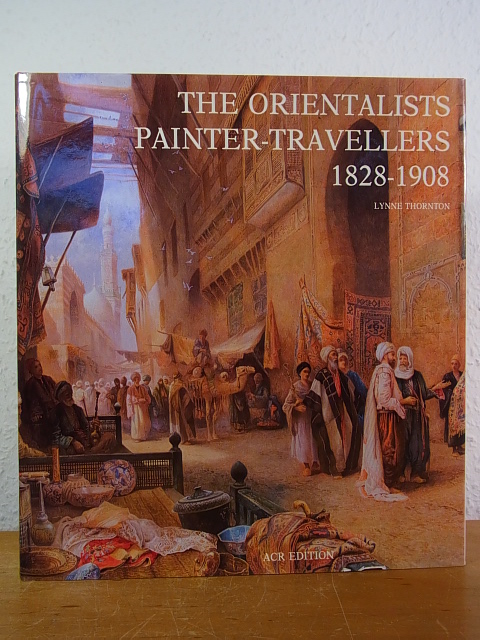
1983réf. 126639ACR Edition Internationale, Paris, 1983. 272 S. ; 28,5 x 25,5 cm ; Leinen.
réf. SONG1912165392Used: Good unknown
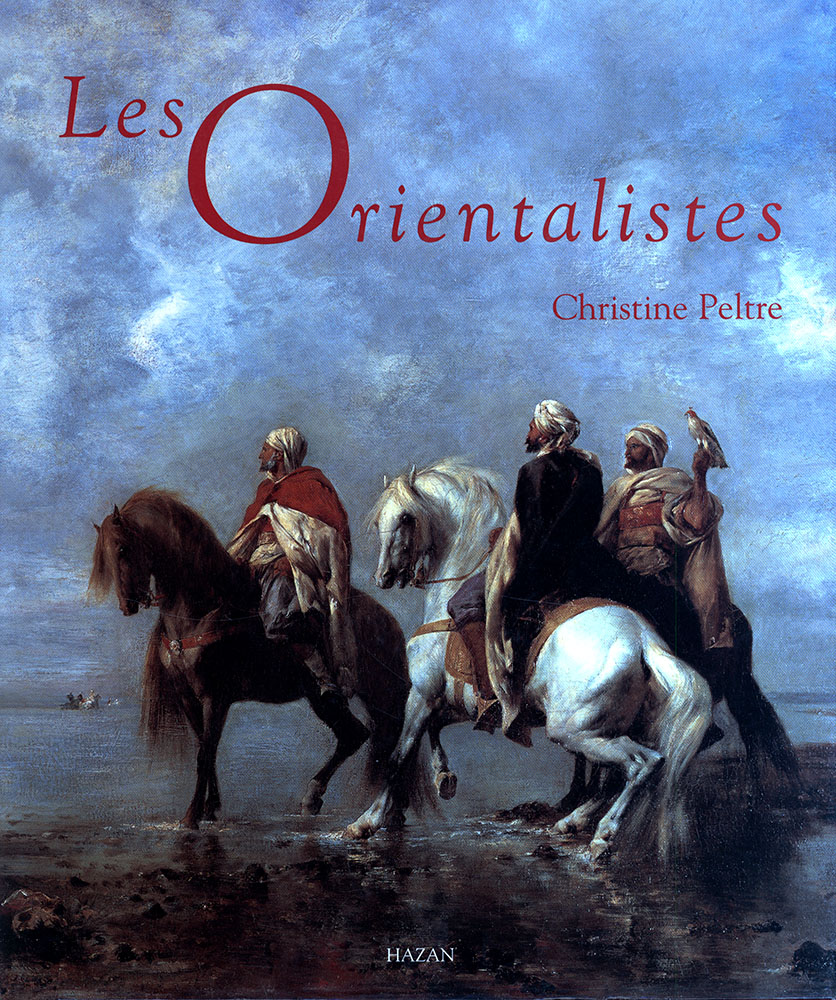
2003réf. 62560CBParis, Editions Hazan, 2003. Groß-4°. 35 x 30 cm. 293 (2) Seiten. Gebundener Original-Pappband mit Original-Schutzumschlag im Original-Pappschuber.
2021réf. 1269422021 Editions Les Arts Décoratifs, Paris / Dallas Museum of Art - 2021 - In-4 relié, cartonnage illustré - 315 pages - Très nombreuses illustrations en N&B et en couleurs, in et hors texte, dans l'ouvrage
2014New English Paperback. Pbo. 4to. (30 x 24 cm). In English and Turkish. 360 p., color and b/w ills. The exhibition highlights the orientalist trend in Polish painting, as well as drawings and graphic arts. The works in the exhibition cover a wide period from the 17th to the early 19th centuries. Among others, the exhibition includes drawings by Christian Kamsetzer of his Turkish travels, as well as oriental scenes by artists like Zmurko and Brandt. The artworks exemplify topics related to the Ottoman world, and to a lesser extent, the Near East and North African regions. One section of the exhibition is dedicated to Stanislaw Chlebowski, the court artist of Sultan Abdülaziz. Works by other artists who had visited Turkey, among them Jan Matejko, Waclaw Pawliszak, Jan Ciaglinski, and Jacek Malczewski, are also included. Selected from the collections of Polish institutions ranging from the National Museums in Warsaw, Kraków, Poznan, and Wroclaw, the University Library in Warsaw, to Lazienki Palace Museum, the exhibition brings together approximately 190 works. The apogee of Orientalism, which refers to a cultural current in Europe centred on an interest in the cultures of the East manifesting itself in art, architecture, music, literature, and the theatre, arrived in the 19th century, when a distinct Orientalist current sprang forth from academic painting, inspired first and foremost by the cultures of the Islamic countries of the Middle East and North Africa, as well as of Moorish Spain. In the specific case of Poland, interest in the Orient goes back to medieval times; a natural result of her geographic location, which rendered Poland particularly susceptible to influences from the East. To a large extent, this period in Polish history was defined by successive wars with the Ottomans, and it left an indelible trace in culture. A variety of equestrian types, generic skirmishes and great historic battles were depicted many times by various skilled artists, as well as Oriental characters, landscapes, and genre scenes -first and foremost of the harem. The latter subject matter, popular among audiences, was often taken up by painters who had never been to the East themselves. Exhibition catalogue presents works by the artists among them Jan Matejko, Waclaw Pawliszak, Jan Ciaglinski, Jacek Malczewski, and especially Stanislaw Chlebowski, the court artist of Sultan Abdülaziz, are included, and also sheds light on the artistic influences of Poland's cultural interaction with the East, different from the Western Orientalist approach, through history, diplomacy, battles and travellers.
réf. 138155aafFribourg Academic Press / Göttingen, Vandenhoeck & Ruprecht., 2013, gr. in-8vo, VI + 238 S. + 46 Tafeln, Hellblauer Original-Pappband, / orig. Hardcover.
réf. 104987aafKobenhavn, Andr. Fred Host & Son, 1928, gr. in-8vo, brochures originales.
réf. 138136aafFribourg, Academic Press / Bibel + Orient Museum, 2010, in-4to, 224 S, reich illustriert, hs. Widmung auf Vorsatz, ill. Original-Pappband. / ill. Softcover.
réf. 89512aafFribourg, Musée Bible+Orient, 2003, in-4to, 104 p., rich. illustr. avec des photogr. en couleurs, cartonnage original illustr.
réf. 138165aafFribourg Academic Press / Göttingen, Vandenhoeck & Ruprecht., 1999, gr. in-8vo, XII + 361 p., hellblauer Original-Pappband, / orig. hardcover.
réf. 138146aafFribourg Academic Press / Göttingen, Vandenhoeck & Ruprecht., 2006, gr. in-8vo, X II + 265 S., hellblauer Original-Pappband, / orig. hardcover.
réf. 138113aafFribourg, Academic Press / Göttingen, Vandenhoeck & Ruprecht, 2014, gr. in-8vo, VIII + 312 p.+ 4 ff., orig. publisher’s harvound copy.
réf. 138274aafLondon, Secker and Warburg, 1938, in-8vo, XII + 367 p., ill., red owner stamp on half-title, orig. publisher’s illustrated red cloth. Spines sunned, else a fine set.
réf. 138163aafFribourg Academic Press / Göttingen, Vandenhoeck & Ruprecht., 2003, gr. in-8vo, XVI + 113 p. + 33 Tafeln, hellblauer Original-Pappband, / orig. hardcover.
réf. 92231aafParis, A. & J. Picard, 1947-1948, in-8vo, 560 p. / 636 p., richement illustré (cartes), pages non rognées, brochures originales.
réf. 91374aafParis, Librairie Orientaliste Paul Geuthner, 1930, in-8vo, 605 p., cartonnage original. / Softcover fine.