1 915 résultats
1902réf. 212735Westminster: Archibald Constable & Co. Ltd 1902. 2nd Edition . Hardcover. Good. 332 pages plus advertising in very good condition; edges yellowed. Previous owner's name on the half title page. Free front endpaper missing. Red hardcovers with gilt titles on the spine. Spine darkened and worn. Corners bumped covers a little scuffed. Scarce. GOOD Archibald Constable & Co. Ltd hardcover
1930réf. 208492Oxford: The Clarendon Press 1930. First U.K. . Hardcover. VG. 179 pages in very good condition; edges slightly yellowed. Previous owner's name on the ffep. Many maps in the text and one large fold-out map at the back. Blue cloth with gilt titles and emblem on the spine. Corners lightly bumped. Top edge of the upper cover is rubbed. Binding good and tight. Scarce book. VG The Clarendon Press hardcover
1966réf. 333709Baltimore: Johns Hopkins Press 1966. Hardcover. Good/No Dust Jacket. 6x0x8. Set of six hardcover books covering the complete Faerie Queene Books 1-7 including the Cantos of Mutability. Copyright 1932 these are 4th printings 1966 by Johns Hopkins Press. Bindings are tight sturdy and square. Markings scattered throughout the volumes moderate shelfwear including some minor bumping to corners. Book 6 has clear contact paper over the bottom edge of the boards Book 3 has clear contact paper on bottom edge of back cover bottom. No DJs don't know if they ever had them. From a private home collection NOT ex-lib. Ships same or next business day from Dinkytown in Minneapolis Minnesota. Not available for priority/expedited shipping. Due to the size/weight of this set extra charges may be requested for international shipping. Johns Hopkins Press hardcover
1798réf. 142573London: Printed and Published for the Author by George Cawthorn British Library No. 132 Strand 1798. 40pp. Narrow octavo 140 mm x 230 mm. Paper wrappers with black text and a small engraving to the front. String-tied. Some soiling along the edges of the wrappers as well as edgewear and a few closed tears that have been professionally repaired. A very good copy of an incredibly scarce item. Written by Edmund Spenser "the Younger"--not the Spenser who wrote the great allegorical epic poem "The Faerie Queen" in 1590. This play is based off of the seventeenth issue of the serial The Spectator; this serial devoted numerous issues to the topic of so-called "Ugly Clubs" a social club who would apparently only admit members with unappealing facial features. This play is very scarce with no other copies listed for sale at the time this one was catalogued nor any relevant auction records. Printed and Published for the Author by George Cawthorn, British Library, No. 132, Strand unknown
réf. 102614809X.Gpaperback. Good. Access codes and supplements are not guaranteed with used items. May be an ex-library book. paperback
1758réf. 000012233London: Printed for J. and R. Tonson in the Strand 1758. Later edition. Hardcover. Very Good. 2 vol. 8vo. 5 vi-xxxviii 2 1-527 1; 2 3-496 pp. Contemporary full calf with the spines in six compartments compartments ruled in gold with recent green morocco labels lettered in gold on each spine; all edges sprinkled blue. Each volume illustrated with a frontispiece volume one with four plates volume two with three plates. The volumes also have one in-text illustration. With a glossary explaining the old and obscure words. Carpenter 116. Lowndes 2477. Oxford DNB "Spenser Edmund 1552-1599". According to Lowndes this is the first Tonson edition of Spenser's epic poem. Carpenter states this edition is based on that of Hughes. Includes a biography of Edmund Spenser. An attractive edition of Spenser's poem concerned with knights dragons queens noble ladies Greek gods and goddesses and warriors. The poem itself was dedicated to Queen Elisabeth I with whom Spenser had an audience before the publication of his poem in 1590 to Sir Walter Raleigh and to numerous other noble English people of the late sixteenth century. Spenser's poetic style was revolutionary to English literature: it combined classical and native English themes motifs and stories. Chaucer and Aristotle's Nichomachean Ethics were hugely influential to Spenser's work. The poem centers around six knights and their quests with each knight representative of a specific virtue. A work central to English literature. Each front joint discreetly strengthened the crown and foot of each spine worn away; a small contemporary name on each title page. Printed for J. and R. Tonson in the Strand hardcover
1953réf. 01129459New York: The Heritage Press 1953. Red titles on peach cloth over pictorial paper-covered boards. 992pp. Slipcase has some edge wear but remains solid. Glue bleed-through on inside of slipcase not visible from without. Later Printing. Hard Cover. Very Good/No Jacket. Illus. by John Austen and Agnes Miller Parker. Quarto. In Slipcase. The Heritage Press Hardcover
réf. 0557723515.Ghardcover. Good. Access codes and supplements are not guaranteed with used items. May be an ex-library book. hardcover
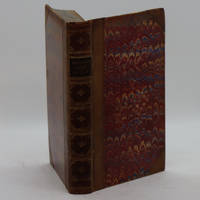
1868réf. FB940 /str shlfTan calf binding with red and blue marbled boards. Black title plate with gilt lettering banding and decoration on the spine. From the Chandos Classics Library published circa 1868. The Faery Queene is an English epic poem by Edmund Spenser. Books I–III were first published in 1590 then republished in 1596 together with books IV–VI. The Faerie Queene is notable for its form: at over 36000 lines and over 4000 stanzas it is one of the longest poems in the English language; it is also the work in which Spenser invented the verse form known as the Spenserian stanza. On a literal level the poem follows several knights as a means to examine different virtues and though the text is primarily an allegorical work it can be read on several levels of allegory including as praise or later criticism of Queen Elizabeth I. In Spenser's "Letter of the Authors" he states that the entire epic poem is "cloudily enwrapped in Allegorical devices" and that the aim of publishing The Faerie Queene was to "fashion a gentleman or noble person in virtuous and gentle discipline". Spenser presented the first three books of The Faerie Queene to Elizabeth I in 1589 probably sponsored by Sir Walter Raleigh. The poem was a clear effort to gain court favour and as a reward Elizabeth granted Spenser a pension for life amounting to £50 a year though there is no further evidence that Elizabeth I ever read any of the poem. This royal patronage elevated the poem to a level of success that made it Spenser's defining work. Edmund Spenser 1552/1553 – 13 January 1599 was an English poet best known for The Faerie Queene an epic poem and fantastical allegory celebrating the Tudor dynasty and Elizabeth I. He is recognized as one of the premier craftsmen of nascent Modern English verse and is often considered one of the greatest poets in the English language. Though Spenser was well-read in classical literature scholars have noted that his poetry does not rehash tradition but rather is distinctly his. This individuality may have resulted to some extent from a lack of comprehension of the classics. Spenser strove to emulate such ancient Roman poets as Virgil and Ovid whom he studied during his schooling but many of his best-known works are notably divergent from those of his predecessors. The language of his poetry is purposely archaic reminiscent of earlier works such as The Canterbury Tales of Geoffrey Chaucer and Il Canzoniere of Francesco Petrarca whom Spenser greatly admired. An Anglican and a devotee of the Protestant Queen Elizabeth Spenser was particularly offended by the anti-Elizabethan propaganda that some Catholics circulated. Like most Protestants near the time of the Reformation Spenser saw a Catholic church full of corruption and he determined that it was not only the wrong religion but the anti-religion. This sentiment is an important backdrop for the battles of The Faerie Queene. Spenser was called "the Poet's Poet" by Charles Lamb and was admired by John Milton William Blake William Wordsworth John Keats Lord Byron Alfred Tennyson and others. Among his contemporaries Walter Raleigh wrote a commendatory poem to The Faerie Queene in 1590 in which he claims to admire and value Spenser's work more so than any other in the English language. John Milton in his Areopagitica mentions "our sage and serious poet Spenser whom I dare be known to think a better teacher than Scotus or Aquinas". In the eighteenth century Alexander Pope compared Spenser to "a mistress whose faults we see but love her with them all." Frederick Warne & Co. hardcover
réf. 12454152like new. unknown
réf. 1417972831.Gpaperback. Good. Access codes and supplements are not guaranteed with used items. May be an ex-library book. paperback
réf. 1357919492.Ghardcover. Good. Access codes and supplements are not guaranteed with used items. May be an ex-library book. hardcover
réf. 1356795676.Ghardcover. Good. Access codes and supplements are not guaranteed with used items. May be an ex-library book. hardcover
réf. 1347810773.Ghardcover. Good. Access codes and supplements are not guaranteed with used items. May be an ex-library book. hardcover
réf. 1347850236.Ghardcover. Good. Access codes and supplements are not guaranteed with used items. May be an ex-library book. hardcover
1912réf. 087108London England: Henry Frowde/Oxford University Press London 1912. The Poetical Works of Edmund Spenser Edited with Critical Notes By J.C. Smithand E.de Selincourt Oxford spenserand a glossar black calf cloth like leather gilt title" marbled endpapers portrait fronts. lxvii facsimile title 736pp. all edges gilt Spenser on gilt on cover. Foxing almost wholly confined to endpapers blanks; some extremely minor discoloration at boards and endpaper margins. light wear. A sound Tight copy. We carry a wide selection of titles in The Arts Theology History Politics Social and Physical Sciences. academic and scholarly books and Modern First Editions and all types of Academic Literature. . First Thus. Leather. Very Good. 8vo - over 7¾" - 9¾" tall. Hardback. Henry Frowde/Oxford University Press, London Paperback
réf. 1241507627.Gpaperback. Good. Access codes and supplements are not guaranteed with used items. May be an ex-library book. paperback
réf. 1241446229.Gpaperback. Good. Access codes and supplements are not guaranteed with used items. May be an ex-library book. paperback
1998réf. 5728Seattle Londonn: University of Washington Press in Association with the Museum of Flight 1998. First edition. Hardcover. Near Fine/near fine. The story of four men Igor Sikorsky Frank Piasecki Arthur Young Stanley Hiller Jr. in the United States who were pioneers in solving the problems of technology and created the conditions for America to succeed in bringing helicopters to volume production. Tight binding. No chips tears creases or written inscriptions on pages. Dust jacket is NOT price-clipped. Illustrated with numerous black and white photographic illustrations. Appendices - "Early Military Helicopter Use" and "Early Commercial Helicopter Use". Gift inscription sticker on front pastedown endpaper from Piasecki Aircraft Corporation to Dr. Jerzy Bulik. Front bottom right corner bumped. Size: Sm 4to 9" to 11". 497 pp. University of Washington Press in Association with the Museum of Flight hardcover
réf. 139642203X.Ghardcover. Good. Access codes and supplements are not guaranteed with used items. May be an ex-library book. hardcover
réf. 1396388125.Ghardcover. Good. Access codes and supplements are not guaranteed with used items. May be an ex-library book. hardcover
réf. 1025400828.Gpaperback. Good. Access codes and supplements are not guaranteed with used items. May be an ex-library book. paperback
2003réf. Q-159244265XWipf and Stock 2003-06-12. paperback. New. In shrink wrap. Looks like an interesting title! Wipf and Stock paperback
réf. 0469834056.Ghardcover. Good. Access codes and supplements are not guaranteed with used items. May be an ex-library book. hardcover
1999réf. Q-1885767390Canon Press 1999-01-01. Paperback. New. In shrink wrap. Looks like an interesting title! Canon Press paperback