Edmund SpenserBiblio.com
1 305 résultats
réf. 1334380678.Gpaperback. Good. Access codes and supplements are not guaranteed with used items. May be an ex-library book. paperback
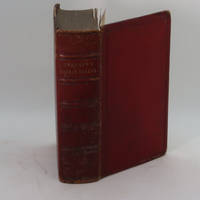
1859réf. FB197 /Str shlfRed leather binding with gilt lettering and raised banding on the spine. All edges gilt. This book also has "Epithalamion" added. The Faery Queene is an English epic poem by Edmund Spenser. Books I–III were first published in 1590 then republished in 1596 together with books IV–VI. The Faerie Queene is notable for its form: at over 36000 lines and over 4000 stanzas it is one of the longest poems in the English language; it is also the work in which Spenser invented the verse form known as the Spenserian stanza. On a literal level the poem follows several knights as a means to examine different virtues and though the text is primarily an allegorical work it can be read on several levels of allegory including as praise or later criticism of Queen Elizabeth I. In Spenser's "Letter of the Authors" he states that the entire epic poem is "cloudily enwrapped in Allegorical devices" and that the aim of publishing The Faerie Queene was to "fashion a gentleman or noble person in virtuous and gentle discipline". Spenser presented the first three books of The Faerie Queene to Elizabeth I in 1589 probably sponsored by Sir Walter Raleigh. The poem was a clear effort to gain court favour and as a reward Elizabeth granted Spenser a pension for life amounting to £50 a year though there is no further evidence that Elizabeth I ever read any of the poem. This royal patronage elevated the poem to a level of success that made it Spenser's defining work. Edmund Spenser 1552/1553 – 13 January 1599 was an English poet best known for The Faerie Queene an epic poem and fantastical allegory celebrating the Tudor dynasty and Elizabeth I. He is recognized as one of the premier craftsmen of nascent Modern English verse and is often considered one of the greatest poets in the English language. Though Spenser was well-read in classical literature scholars have noted that his poetry does not rehash tradition but rather is distinctly his. This individuality may have resulted to some extent from a lack of comprehension of the classics. Spenser strove to emulate such ancient Roman poets as Virgil and Ovid whom he studied during his schooling but many of his best-known works are notably divergent from those of his predecessors. The language of his poetry is purposely archaic reminiscent of earlier works such as The Canterbury Tales of Geoffrey Chaucer and Il Canzoniere of Francesco Petrarca whom Spenser greatly admired. An Anglican and a devotee of the Protestant Queen Elizabeth Spenser was particularly offended by the anti-Elizabethan propaganda that some Catholics circulated. Like most Protestants near the time of the Reformation Spenser saw a Catholic church full of corruption and he determined that it was not only the wrong religion but the anti-religion. This sentiment is an important backdrop for the battles of The Faerie Queene. Spenser was called "the Poet's Poet" by Charles Lamb and was admired by John Milton William Blake William Wordsworth John Keats Lord Byron Alfred Tennyson and others. Among his contemporaries Walter Raleigh wrote a commendatory poem to The Faerie Queene in 1590 in which he claims to admire and value Spenser's work more so than any other in the English language. John Milton in his Areopagitica mentions "our sage and serious poet Spenser whom I dare be known to think a better teacher than Scotus or Aquinas". In the eighteenth century Alexander Pope compared Spenser to "a mistress whose faults we see but love her with them all." Routedge Warnes. hardcover
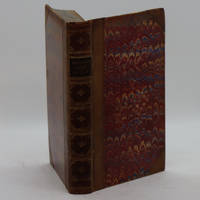
1868réf. FB940 /str shlfTan calf binding with red and blue marbled boards. Black title plate with gilt lettering banding and decoration on the spine. From the Chandos Classics Library published circa 1868. The Faery Queene is an English epic poem by Edmund Spenser. Books I–III were first published in 1590 then republished in 1596 together with books IV–VI. The Faerie Queene is notable for its form: at over 36000 lines and over 4000 stanzas it is one of the longest poems in the English language; it is also the work in which Spenser invented the verse form known as the Spenserian stanza. On a literal level the poem follows several knights as a means to examine different virtues and though the text is primarily an allegorical work it can be read on several levels of allegory including as praise or later criticism of Queen Elizabeth I. In Spenser's "Letter of the Authors" he states that the entire epic poem is "cloudily enwrapped in Allegorical devices" and that the aim of publishing The Faerie Queene was to "fashion a gentleman or noble person in virtuous and gentle discipline". Spenser presented the first three books of The Faerie Queene to Elizabeth I in 1589 probably sponsored by Sir Walter Raleigh. The poem was a clear effort to gain court favour and as a reward Elizabeth granted Spenser a pension for life amounting to £50 a year though there is no further evidence that Elizabeth I ever read any of the poem. This royal patronage elevated the poem to a level of success that made it Spenser's defining work. Edmund Spenser 1552/1553 – 13 January 1599 was an English poet best known for The Faerie Queene an epic poem and fantastical allegory celebrating the Tudor dynasty and Elizabeth I. He is recognized as one of the premier craftsmen of nascent Modern English verse and is often considered one of the greatest poets in the English language. Though Spenser was well-read in classical literature scholars have noted that his poetry does not rehash tradition but rather is distinctly his. This individuality may have resulted to some extent from a lack of comprehension of the classics. Spenser strove to emulate such ancient Roman poets as Virgil and Ovid whom he studied during his schooling but many of his best-known works are notably divergent from those of his predecessors. The language of his poetry is purposely archaic reminiscent of earlier works such as The Canterbury Tales of Geoffrey Chaucer and Il Canzoniere of Francesco Petrarca whom Spenser greatly admired. An Anglican and a devotee of the Protestant Queen Elizabeth Spenser was particularly offended by the anti-Elizabethan propaganda that some Catholics circulated. Like most Protestants near the time of the Reformation Spenser saw a Catholic church full of corruption and he determined that it was not only the wrong religion but the anti-religion. This sentiment is an important backdrop for the battles of The Faerie Queene. Spenser was called "the Poet's Poet" by Charles Lamb and was admired by John Milton William Blake William Wordsworth John Keats Lord Byron Alfred Tennyson and others. Among his contemporaries Walter Raleigh wrote a commendatory poem to The Faerie Queene in 1590 in which he claims to admire and value Spenser's work more so than any other in the English language. John Milton in his Areopagitica mentions "our sage and serious poet Spenser whom I dare be known to think a better teacher than Scotus or Aquinas". In the eighteenth century Alexander Pope compared Spenser to "a mistress whose faults we see but love her with them all." Frederick Warne & Co. hardcover
1959réf. 324078Oxford: Clarendon Press 1959. First Edition; Sixth Printing. Hardcover. Very Good in boards. Light foxing on front panel.; From the personal collection of notable photojournalist Ted Spiegel known for his work with National Geographic and his portrait of John F. Kennedy. Clarendon Press hardcover
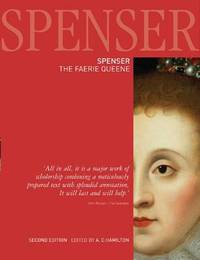
2006réf. ANAIS-1405832819Longman 2006-08-21. 2nd. paperback. Good. 9.5X6.5X1.5. Buy with confidence. Excellent Customer Service & Return policy. Longman paperback
2006réf. SKU0625726Longman 2006-08-21. paperback. New. 7x1x9. New Textbook Ships with Tracking Longman paperback
2006réf. DADAX1405832819Routledge 2006-08-21. 2nd. paperback. New. 7.44x1.84x9.69. Buy with confidence. Excellent Customer Service & Return policy. Routledge paperback
2006réf. SONG1405832819Routledge 2006-08-21. 2nd. paperback. Used: Good. 7.44x1.84x9.69. Buy with confidence. Excellent Customer Service & Return policy. Routledge paperback
réf. 033252745X.Ghardcover. Good. Access codes and supplements are not guaranteed with used items. May be an ex-library book. hardcover
réf. 697801637Cambridge University Press CUP . Papeback. New. pp. 240 Cambridge University Press CUP unknown
réf. 1332575919.Gpaperback. Good. Access codes and supplements are not guaranteed with used items. May be an ex-library book. paperback
réf. 0266198902.Ghardcover. Good. Access codes and supplements are not guaranteed with used items. May be an ex-library book. hardcover
réf. 0332010996.Ghardcover. Good. Access codes and supplements are not guaranteed with used items. May be an ex-library book. hardcover
réf. 0259563587.Gpaperback. Good. Access codes and supplements are not guaranteed with used items. May be an ex-library book. paperback
réf. 0364188529.Ghardcover. Good. Access codes and supplements are not guaranteed with used items. May be an ex-library book. hardcover
réf. ria9781024864144_inpHardcover. New. New Book; Fast Shipping from UK; Not signed; Not First Edition; This is Volume 1 of the complete works of Edmund Spenser encompassing both verse and prose. A cornerstone of English Renaissance literature Spenser's works are presented here in a comprehensive collection offering readers a deep dive hardcover
réf. 1397193301.Gpaperback. Good. Access codes and supplements are not guaranteed with used items. May be an ex-library book. paperback
réf. 139719331X.Ghardcover. Good. Access codes and supplements are not guaranteed with used items. May be an ex-library book. hardcover
réf. B9781016125468Paperback / softback. New. paperback
1908réf. 46021Boston: Houghton Mifflin Company / Riverside Press 1908. Very Good . Boston: Houghton Mifflin Company / Riverside Press 1908. Cambridge Edition. Octavo 21cm; contemporary three-quarter green calf over marbled paper-covered boards two green gilt-lettered morocco spine labels spine in six compartments ruled in gilt top edge gilt marbled endpapers; 852pp.; portrait frontispiece. Brief scuffing to leather margins spine very slightly sunned ownership inscription dated 1914 to front flyleaf else a Very Good or better example. Forms part of the Cambridge Edition of the Poets. Houghton Mifflin Company / Riverside Press unknown
réf. 0365287288.Ghardcover. Good. Access codes and supplements are not guaranteed with used items. May be an ex-library book. hardcover
réf. ria9781016120616_inpHardcover. New. New Book; Fast Shipping from UK; Not signed; Not First Edition; This work has been selected by scholars as being culturally important and is part of the knowledge base of civilization as we know it.This work is in the "public domain in the United States of America and possibly other nations. Withi hardcover