Edmund SpenserBiblio.com
1949 resultados
ref. 0267597312.Ghardcover. Good. Access codes and supplements are not guaranteed with used items. May be an ex-library book. hardcover
ref. 0282047662.Gpaperback. Good. Access codes and supplements are not guaranteed with used items. May be an ex-library book. paperback
ref. 0282575421.Gpaperback. Good. Access codes and supplements are not guaranteed with used items. May be an ex-library book. paperback
ref. 0365456454.Ghardcover. Good. Access codes and supplements are not guaranteed with used items. May be an ex-library book. hardcover
ref. 0656199156.Ghardcover. Good. Access codes and supplements are not guaranteed with used items. May be an ex-library book. hardcover
ref. 0666597936.Ghardcover. Good. Access codes and supplements are not guaranteed with used items. May be an ex-library book. hardcover
ref. 1334380678.Gpaperback. Good. Access codes and supplements are not guaranteed with used items. May be an ex-library book. paperback
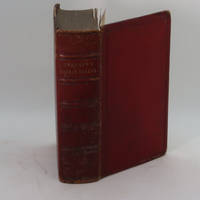
1859ref. FB197 /Str shlfRed leather binding with gilt lettering and raised banding on the spine. All edges gilt. This book also has "Epithalamion" added. The Faery Queene is an English epic poem by Edmund Spenser. Books I–III were first published in 1590 then republished in 1596 together with books IV–VI. The Faerie Queene is notable for its form: at over 36000 lines and over 4000 stanzas it is one of the longest poems in the English language; it is also the work in which Spenser invented the verse form known as the Spenserian stanza. On a literal level the poem follows several knights as a means to examine different virtues and though the text is primarily an allegorical work it can be read on several levels of allegory including as praise or later criticism of Queen Elizabeth I. In Spenser's "Letter of the Authors" he states that the entire epic poem is "cloudily enwrapped in Allegorical devices" and that the aim of publishing The Faerie Queene was to "fashion a gentleman or noble person in virtuous and gentle discipline". Spenser presented the first three books of The Faerie Queene to Elizabeth I in 1589 probably sponsored by Sir Walter Raleigh. The poem was a clear effort to gain court favour and as a reward Elizabeth granted Spenser a pension for life amounting to £50 a year though there is no further evidence that Elizabeth I ever read any of the poem. This royal patronage elevated the poem to a level of success that made it Spenser's defining work. Edmund Spenser 1552/1553 – 13 January 1599 was an English poet best known for The Faerie Queene an epic poem and fantastical allegory celebrating the Tudor dynasty and Elizabeth I. He is recognized as one of the premier craftsmen of nascent Modern English verse and is often considered one of the greatest poets in the English language. Though Spenser was well-read in classical literature scholars have noted that his poetry does not rehash tradition but rather is distinctly his. This individuality may have resulted to some extent from a lack of comprehension of the classics. Spenser strove to emulate such ancient Roman poets as Virgil and Ovid whom he studied during his schooling but many of his best-known works are notably divergent from those of his predecessors. The language of his poetry is purposely archaic reminiscent of earlier works such as The Canterbury Tales of Geoffrey Chaucer and Il Canzoniere of Francesco Petrarca whom Spenser greatly admired. An Anglican and a devotee of the Protestant Queen Elizabeth Spenser was particularly offended by the anti-Elizabethan propaganda that some Catholics circulated. Like most Protestants near the time of the Reformation Spenser saw a Catholic church full of corruption and he determined that it was not only the wrong religion but the anti-religion. This sentiment is an important backdrop for the battles of The Faerie Queene. Spenser was called "the Poet's Poet" by Charles Lamb and was admired by John Milton William Blake William Wordsworth John Keats Lord Byron Alfred Tennyson and others. Among his contemporaries Walter Raleigh wrote a commendatory poem to The Faerie Queene in 1590 in which he claims to admire and value Spenser's work more so than any other in the English language. John Milton in his Areopagitica mentions "our sage and serious poet Spenser whom I dare be known to think a better teacher than Scotus or Aquinas". In the eighteenth century Alexander Pope compared Spenser to "a mistress whose faults we see but love her with them all." Routedge Warnes. hardcover
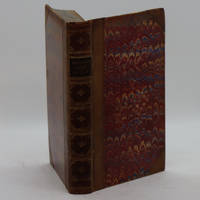
1868ref. FB940 /str shlfTan calf binding with red and blue marbled boards. Black title plate with gilt lettering banding and decoration on the spine. From the Chandos Classics Library published circa 1868. The Faery Queene is an English epic poem by Edmund Spenser. Books I–III were first published in 1590 then republished in 1596 together with books IV–VI. The Faerie Queene is notable for its form: at over 36000 lines and over 4000 stanzas it is one of the longest poems in the English language; it is also the work in which Spenser invented the verse form known as the Spenserian stanza. On a literal level the poem follows several knights as a means to examine different virtues and though the text is primarily an allegorical work it can be read on several levels of allegory including as praise or later criticism of Queen Elizabeth I. In Spenser's "Letter of the Authors" he states that the entire epic poem is "cloudily enwrapped in Allegorical devices" and that the aim of publishing The Faerie Queene was to "fashion a gentleman or noble person in virtuous and gentle discipline". Spenser presented the first three books of The Faerie Queene to Elizabeth I in 1589 probably sponsored by Sir Walter Raleigh. The poem was a clear effort to gain court favour and as a reward Elizabeth granted Spenser a pension for life amounting to £50 a year though there is no further evidence that Elizabeth I ever read any of the poem. This royal patronage elevated the poem to a level of success that made it Spenser's defining work. Edmund Spenser 1552/1553 – 13 January 1599 was an English poet best known for The Faerie Queene an epic poem and fantastical allegory celebrating the Tudor dynasty and Elizabeth I. He is recognized as one of the premier craftsmen of nascent Modern English verse and is often considered one of the greatest poets in the English language. Though Spenser was well-read in classical literature scholars have noted that his poetry does not rehash tradition but rather is distinctly his. This individuality may have resulted to some extent from a lack of comprehension of the classics. Spenser strove to emulate such ancient Roman poets as Virgil and Ovid whom he studied during his schooling but many of his best-known works are notably divergent from those of his predecessors. The language of his poetry is purposely archaic reminiscent of earlier works such as The Canterbury Tales of Geoffrey Chaucer and Il Canzoniere of Francesco Petrarca whom Spenser greatly admired. An Anglican and a devotee of the Protestant Queen Elizabeth Spenser was particularly offended by the anti-Elizabethan propaganda that some Catholics circulated. Like most Protestants near the time of the Reformation Spenser saw a Catholic church full of corruption and he determined that it was not only the wrong religion but the anti-religion. This sentiment is an important backdrop for the battles of The Faerie Queene. Spenser was called "the Poet's Poet" by Charles Lamb and was admired by John Milton William Blake William Wordsworth John Keats Lord Byron Alfred Tennyson and others. Among his contemporaries Walter Raleigh wrote a commendatory poem to The Faerie Queene in 1590 in which he claims to admire and value Spenser's work more so than any other in the English language. John Milton in his Areopagitica mentions "our sage and serious poet Spenser whom I dare be known to think a better teacher than Scotus or Aquinas". In the eighteenth century Alexander Pope compared Spenser to "a mistress whose faults we see but love her with them all." Frederick Warne & Co. hardcover
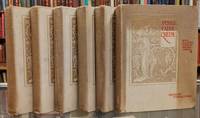
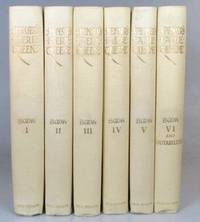
1897ref. 102598George Allen 1897. Hardcover. Very good/No jacket. Walter Crane. The original 19 parts published between 1894 through 1896 with illustrations by Walter Crane bound into six volumes with the original wraps. Limited to 1000 copies. Bound in white cloth covers are darkened in places with a couple water stained on the spine though no damage seen on the text block. George Allen hardcover
ref. 0266504043.Ghardcover. Good. Access codes and supplements are not guaranteed with used items. May be an ex-library book. hardcover
ref. A9781344738866Hardback. New. hardcover
ref. A9781346336794Hardback. New. hardcover
2009ref. Q-098175984XSimple Fish Company 2009-12-09. Hardcover. New. In shrink wrap. Looks like an interesting title! Simple Fish Company hardcover
ref. 188407Clarendon Press Oxford University Press 1909. 1st edn. 2 vols. 8vo. Original gilt lettered blue cloth boards lightly dicoloured - otherwise VG no dustwrappers. Pp. xxii 518 & 519 half title of vol I loose; prelims lightly toned; previous owner's annotations in margins and on rear paste-down of vol I. Clarendon Press Oxford University Press, 1909 unknown
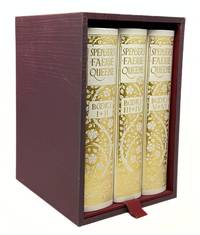
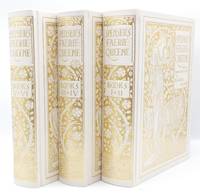
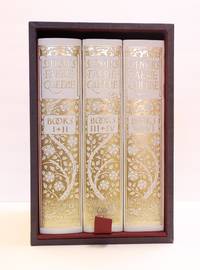
ref. 10640London: The Folio Society 2011. Limited Facsimile Edition of which 1000 were printed this being No. 600. Illustrated throughout in black and white by Walter Crane. Beautifully bound in cream-colored full Nigerian goatskin blocked with a design based on Walter Crane's original in gilt on cover and spine. Top edge of textblock gilt with white ribbon marker sewn in to each volume. Housed in a textured maroon silk-covered wooden slipcase with a sliding tray as issued. Two small nicks to rear of slipcase along with five small nicks to the bottom. Fine in a Near Fine slipcase. A gorgeous facsimile copy of the edited version by Thomas J. Wise with illustrations by Walter Crane originally issued in 1894-7 in unbound fascicules. Stunning illustrations in an equally stunning binding. The Folio Society unknown
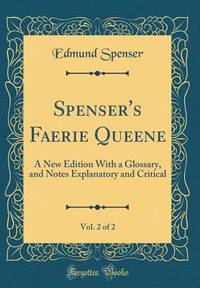
2026ref. LRB11002833Paris: Editions Recreasoft 2026 Language: English. Approximately 540 pages. Volume 2 of a multi-volume work. English : Print-on-demand reprint. Original edition : 1909. A selection from Edmund Spenser's The Faerie Queene offering a representative presentation of one of the great works of English Renaissance poetry. The volume will appeal to readers interested in allegorical literature early modern English verse and the literary tradition surrounding Spenser's imaginative epic. Book images are non-contractual. Editions Recreasoft. Softcover. New. Editions Recreasoft paperback
2026ref. LRB25034318Paris: Editions Recreasoft 2026 Language: English. Approximately 784 pages. English : Print-on-demand reprint. Original edition : 1758. This modern reproduction of cet ouvrage by Auteur non identifié makes an old or rare text available for consultation bibliographic research and specialized collections. Book images are non-contractual. Editions Recreasoft. Softcover. New. Editions Recreasoft paperback
2026ref. LRB50005513Paris: Editions Recreasoft 2026 Language: English. Approximately 572 pages. English: Print-on-demand reprint. Original edition : 1910. Text in English. This volume presents a collection of Edmund Spenser's minor poems including 'The Shepheardes Calender' 'Complaints' 'Daphnaida' 'Colin Clovts Come Home Again' 'Amoretti and Epithalamion' 'Fowre Hymnes' 'Prothalamion' and various miscellaneous sonnets. The edition features an introduction a list of editions an appendix notes and an index of first lines providing a comprehensive overview of Spenser's lesser-known poetic works. Book images are non-contractual. Editions Recreasoft. Softcover. New. Editions Recreasoft paperback
2011ref. UTS1GLTCRM09London: Folio Society 2011. Hardbacks bound in cream goatskin blocked in gilt with designs based on crane's originals edges gilt. 3 volume set. 28.5cm x 23cm. Pp. lxxxvii 5 527 1; viii 529-1044; viii 1045-1546. Numerous illustrations throughout by Walter Crane. From a limited edition of only 1000 copies. Facsimile edition Books I-VI in three volumes lacking the slipcase. LACKS the title page to the first volume and the folio society copyright and limitation pages to all volumes which have been cut out. Corners of boards a little grubby otherwise an excellent clean set. A very heavy set around 8kg additional postage will be required for orders outside the UK. uts1. Limited. Hard Cover. Good. Illus. by Crane Walter. Folio Society Hardcover
ref. 1419034London: Folio Society 2011. Facsimile Limited Edition #368/1000. Hardcover. Quarto three volumes. In Very Good Condition. Housed in a Very Good minus condition solid wood slipcase covered with maroon crushed silk with staining on rear bottom of back board and light wear throughout. All volumes bound in full white leather with gilt ornamentation and sunken textblocks and lightly cocked spines. Boards have light rubbing wear to edges with volume I having heavier rubbing to top edge of front board. Light bumping to corners and edges of boards with volume III having heavier bumping to front hinge. Textblocks have white silk page ribbons and light shelf wear. All volumes have gilt to top edges. CONTENTS: VOL I: Contains books I and II Ixxxvii 9 527 1 pages;-- VOL II: Contains books III and IV viii 529-1044 pages;-- VOL III: Contains books V and VI viii 1045-1546 8 pages. Includes 88 full page plates and in-text illustrations throughout. Shelved above Case 3. 1419034. Shelved Dupont Bookstore. Folio Society hardcover
ref. 102614809X.Gpaperback. Good. Access codes and supplements are not guaranteed with used items. May be an ex-library book. paperback
1897ref. 52214London: George Allen 1897. Six volumes one of 1000 sets 4to. Numerous full page illustrations as well as head and tail pieces original wrappers bound in light browning to endpapers only attractive contemporary inscription to a front blank in volume I. Original gilt and red decorated cream buckram t.e.g. the volumes still with their plain d.w.'s with holes in the spines to enable the titles to be read these with some wear and loss and with half of the wrapper to volume II absent but as a result the set is in excellent condition and is still held in the original green cloth box this with some staining and wear to the fold-down front. A remarkable survival. London: George Allen unknown
ref. 102485759X.Ghardcover. Good. Access codes and supplements are not guaranteed with used items. May be an ex-library book. hardcover
1909ref. 1400327Oxford: Clarendon Press 1909. Hardcover. Octavo Two volumes. In Good minus condition with Fair dust jackets. Spines are tan with black print. Dust jackets have edgewear with short tears at spine ends and flap corners toning to spine peripheral toning. Price clipped. Boards in blue cloth; light wear to spine caps and corners. Text blocks have deckle edges; bookplate on front pastedown light amount of penciled marginal notation intermittent spine breaks. Illustrated: each volume includes facsimile of 1596 title page. CONTENTS: Vol. 1. Books I-III xxii 518 pages — Vol. 2. Books IV-VII vi 519 pages. Oversized books. Additional postage necessary for expedited/international orders. Economy International shipping unavailable due to size/weight restrictions. For international/expedited customers please inquire for rates. NOTE: Shelved in Netdesk Column S. 1400327. FP New Rockville Stock. Clarendon Press hardcover