Spenser, EdmundBiblio.com

1 916 résultats
réf. 1019966459.Ghardcover. Good. Access codes and supplements are not guaranteed with used items. May be an ex-library book. hardcover
réf. 1021517054.Gpaperback. Good. Access codes and supplements are not guaranteed with used items. May be an ex-library book. paperback
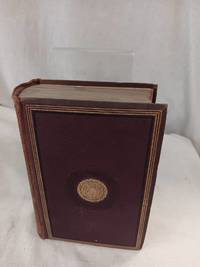
1888réf. 000420London and New York: Frederick warne & Co. 1888. No Edition Stated. . Hardcover. Good/No Jacket as Issued. 7 1/4" X 5 1/4 . No. 72 of the Chandos Classics as listed fep's. Preface by Chandos editors. Memoir of Spenser7 pp. A letter of the Author's to Sir Walter Raleigh dated 23 January 1589." The Faery Queen Disposed into Twelve Books Fashioning XII Moral Virtues" 406 pp. plus: Glossary Advertisements. Buckram covered boards feature ornate details gilt and green. ffep is loose but present. Bookseller's Inventory # 1230420. Frederick warne & Co. hardcover
réf. 1346536619.Ghardcover. Good. Access codes and supplements are not guaranteed with used items. May be an ex-library book. hardcover
réf. 1347784748.Ghardcover. Good. Access codes and supplements are not guaranteed with used items. May be an ex-library book. hardcover
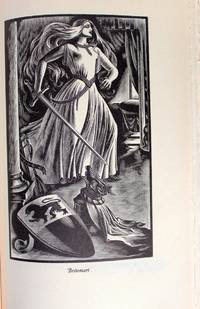
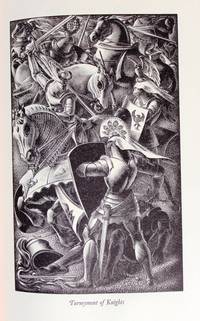
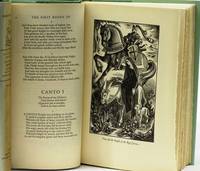
1953réf. 102118NY:: Heritage Press. Very Good. 1953. Hardcover. Introduction by John Hayward. Decorations by John Austen and wood engravings by Agnes Miller Parker. A reprint edition. Starting to show separation at the rear hinge but still firmly attached else very good in a very good slipcase. . Heritage Press, hardcover books
1953réf. 019927Oxford: Limited Editions Club 1953. Hardcover. Near Fine in slightly foxed Very Good dustwrappers with sunned spines and chipping at the tips in a Very Good slipcase. Agnes Miller Parker. Two large quarto volumes 7-3/4" x 11-3/4" bound in gilt-decorated green cloth and illustrated with pen decorations by John Austen and wood engravings by Agnes Miller Parker. Copy #323 of 1500 SIGNED by Parker on the colophon page. A nicely printed set retaining Spenser's original English and beautifully illustrated. One of the underrated books of the press. Limited Editions Club hardcover books
1953réf. 017393Oxford: Limited Editions Club 1953. Hardcover. The spines of the dustwrappers slightly darkened with some chipping to the tips and the typical foxing to the side panels. Near Fine in Very Good dustwrappers and a Near Fine intact slipcase with foxing to the paper spine label. Agnes Miller Parker. Two large quarto volumes 7-3/4" x 11-3/4" bound in gilt-decorated green cloth and illustrated with pen decorations by John Austen and wood engravings by Agnes Miller Parker. Copy #916 of 1500 SIGNED by Parker on the colophon page. A nicely printed set retaining Spenser's original English and beautifully illustrated. The uncommon dustwrappers are present as is the slipcase. One of the underrated books of the press. Limited Editions Club hardcover books
1953réf. 014490Oxford: Limited Editions Club 1953. Hardcover. Spines of the dustwrappers are a bit darkened but with none of the foxing on the panels usually found with this title. The slipcase is near pristine. Fine in Near Fine dustwrappers and a Fine slipcase. Agnes Miller Parker. Two large quarto volumes 7-3/4" x 11-3/4" bound in gilt-decorated green cloth and illustrated with pen decorations by John Austen and wood engravings by Agnes Miller Parker. Copy #325 of 1500 SIGNED by Parker on the colophon page. A nicely printed set retaining Spenser's original English and beautifully illustrated. The uncommon dustwrappers are present as is the slipcase. A lovely set of this one of the underrated books of the press. Monthly Letter laid in. Limited Editions Club hardcover books
réf. RO40248084J. M. Dent & Co - E. P. Dutton & Co. Non daté. In-12. Relié. Etat passable, Plats abîmés, Dos satisfaisant, Mouillures. 480 pages. Motifs ornementaux noirs en frontispice et en page de titre. Titre et motifs dorés sur le dos. Tranche de tête grise. Etiquette de code sur la couverture. Quelques tampons de bibliothèque.. . . . Classification Dewey : 420-Langue anglaise. Anglo-saxon
1921réf. RO80275480J.M.Dent & Sons Ltd. 1919-1921. In-12. Cartonné. Etat d'usage, Coins frottés, Dos abîmé, Papier jauni. XXI + 500 pages + VII + 480 pages - livre en anglais - annotation sur la page de garde des deux volumes - 1er plat et dos désolidarisé sur le volume 2.. . . . Classification Dewey : 420-Langue anglaise. Anglo-saxon
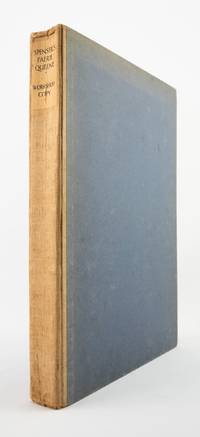
1923réf. ST21078Chelsea: Ashendene Press 1923. ST JOHN HORNBY'S WORKSHOP COPY there were 180 paper copies 150 of them for sale and 12 vellum copies of this edition. 440 x 307 mm. 17 1/4 x 12". 2 p.l. 406 2 pp. Original holland-backed blue paper boards flat spine with paper title label identifying this as a workshop copy. Housed in a fine modern drop-back box of blue cloth backed with holland paper labels on spine. Printer's device in colophon. Printed in red black and blue. Front pastedown with bookplate of St John Hornby and ex-libris of David Godine. Hornby 32; Franklin pp. 144-46 240-41. Covers with fading along the top a bit of foxing and extensive though light gray discoloration ends of spine lightly bumped and lower edges of bottom corners slightly rubbed both as expected but the volume completely solid and miles away from what one would imagine for a hefty book like this that would have been expected to incur uncareful use. Isolated very pale foxing and the most trivial signs of use internally. A REMARKABLE COPY the text in beautiful condition soundly protected in its unique binding. With its companion volume "Minor Poems" by Spenser this in Franklin's eyes is the "masterpiece" among the Ashendene folios; and the present distinctive--and presumably unique--copy comes from Charles Harry St John Hornby's own printer's workshop. Unlike most other copies which are typically found in the publisher's calf-backed vellum binding this copy is in the inexpensive and less substantial holland-backed boards that are now less and less commonly seen in large part because they have not stood up well over the years. The present copy somehow has done quite the opposite. In addition to the original Ashendene "Workshop Copy" designation on the spine label scattered finger smudges--perhaps those of Hornby himself--suggest its use in the printer's studio. In our experience this particular designation is extremely rare in connection with private press books in general and certainly for Ashendene volumes. Founded in 1895 by Hornby 1867-1946 the Ashendene Press issued 40 books plus additional minor pieces for four decades. Less elaborate in appearance and design than William Morris' Kelmscott volumes but more ornamental than the products of Cobden-Sanderson's Doves Press the Ashendene volumes have long been considered the most satisfying of English private press books. This volume was formerly in the collection of David R. Godine who founded the Godine Press in 1970 after training with printmaker Leonard Baskin and master printer Harold McGrath. Ashendene Press unknown books
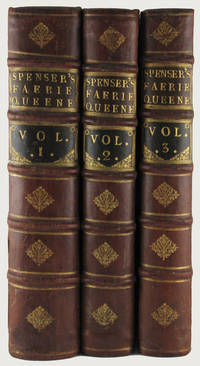
1751réf. 44948London: printed for J. Brindley 1751. 3 volumes 4to; pp. 4 xxxvii 1 lxv 1 453; 2 450; 2 440 2 errata; 32 engraved plates after William Kent; woodcut head- and tailpieces; volume I bound in recent quarter tan calf antique maroon morocco label on spine; vols. II-III bound in full contemporary calf red and black morocco labels on gilt-decorated spines; joints barely cracked; very neat facsimile restoration in the fore-margin of b4 in vol. I with facsimile lettering touching the beginning or end of a total of 14 words; mild to moderate dampstain enters the foremargins of many pages throughout; textblock is otherwise very good and clean for the most part. One of the most splendid editions of Spenser's masterpiece with useful bibliographical information on the collation of the 1590 and 1596 quartos. The glossary occupies 13 pages of the preliminaries if vol. I. Ebert 21601; Lowndes III 2477. printed for J. Brindley unknown books
1987réf. RO60107828Penguin Books. 1987. In-8. Broché. Etat d'usage, Couv. légèrement pliée, Dos satisfaisant, Intérieur acceptable. 1246 pages. Annotations au dos du 1er plat (ex-libris). Quelques annotations au crayon dans le texte.. . . . Classification Dewey : 420-Langue anglaise. Anglo-saxon
1909réf. 53839Cambridge: University Press 1909. Limited Edition. Hardcover. Very good condition. 89/300. Small Folio. 6 543 1 6 493 1pp. Original beige half cloth over light brown paper-covered boards with black lettering on paper label of spines; protected by modern mylar. Engraved emblem on title page. Decorative endpieces. Printed in Cambridge type on handmade paper with 350 copies printed of which three hundred numbered copies are for sale in England and America. This is copye 89. The text here given of Books I to VI of The Faerie Queene is that of the edition of 1596 in two volumes quarto. Of these two volumes the first contains the second edition of Books I to III which had already appeared in 1590. Books IV to VI were printed for the first time in 1596. The fragment of Book VII is from the folio edition of 1609. The Letter to Sir Walter Raleigh and the verses addressed to and by Spenser are from the edition of 1590. A few misprints have been corrected as listed on final tow pages of volume one. Bottom and foredges uncut. Light wear along edges of covers. Paper label of volume one with chips some loss of lettering volume two minor w/o loss of lettering. Two small square dicolorations on front covers of both volumes tape residue. Back cover of volume one with small scuff. Some light damp-staining on free endpapers minimal in volume two. University Press hardcover books
1909réf. 199448Cambridge England: University Press 1909. Copies 173 of 350. Hardcover. Good Boards are edgeworn/scuffed/smudged; inner hinges are cracked; textblock edges are toned/scuffed/smudged; interior is clean with the occasional smudging and foxing; inner hinges of volume one has been reinforced with tape that is coming loose; textblocks appear solid. Half-bound beige boards; 2 volumes; 544 494 pp. unopened. "Of this edition printed in the Cambridge type upon hand-made paper three hundred & fifty coies have been printed of which three hundred numbered -- are for sale in England and America and the type has been distributed." The text of Books I to VI is that of the edition of 1596; the fragment of Book VII is from the folio edition of 1609. The letter to Sir Walter Raleigh and the prefatory verses are from the edition of 1590. -- inside book. University Press hardcover books
1903réf. 364712New York: Thomas Y. Crowell 1903. Hardcover. Near Fine/Near Fine. The Gladstone Edition. Introduction by William P. Trent. Award of merit label on front pastedown fine i about very good printed dustwrapper with a chip on the front panel and tears along a couple of the folds. Scarce in jacket. Thomas Y. Crowell hardcover books
1897réf. 4803London George Allen 1897 Très bel exemplaire de la première édition. Six volumes. Édité par Thomas J. Wise et avec les fabuleuses illustrations art nouveau de Walter Crane. Un des 1000 exemplaires non numérotés sur papier fait main imprimés par Charles Whittingham & Co. à la presse de Chiswick. Les couvertures souples originales des parties ont été conservées et reliées à l'arrière. Récemment réparé / ré-épinglé en cuir rouge avec les planches d'origine en cuir rouge. Certaines planches présentent quelques taches, mais dans l'ensemble elles sont en très bon état. A l'intérieur, les livres sont sains, mais les bords sont légèrement assombris. Un bon exemplaire. lxxxvii, 1-248 [i], [couvertures], viii, 251-528, [couvertures], viii, 529-806, [couvertures], viii, 807-1044, [couvertures], viii, 1045-1276, [couvertures], viii, 1277-1546, [8], [couvertures].
1897réf. 2945London: J.M. Dent 1897. Chivers bindings. Fine. STUNNING CHIVERS VELLUCENT BINDINGS. One of 100 large-paper copies illustrated by Louis Fairfax Muckley. The three thick quarto volumes are elegantly printed on handmade paper and illustrated throughout with images and designs by the British artist and illustrator Louis Fairfax Muckley. The illustrations are magnificent and feature the plates in two states red and black. The bindings by Chivers however are the star of the show and perfectly complement the text. For the front boards Muckley has created an intricate design featuring a knight and lady on galloping horses surrounded by decorative borders and gilt titling. Each spine depicts a lady emerging from a colorful background while each rear board has a stylized dragon seemingly jumping out from the binding. While the outlines of the designs are the same on each volume they are each painted with different colors creating a unique look and mood for each. On Cedric Chivers’s “vellucent” bindings: Chivers created a masterful binding technique in the late 19th century he called “vellucent” – a portmanteau combining “vellum” and “translucent”. The process was arduous but the results were stunning with artwork seeming to glow under a layer of thin protective vellum. His process began with a decorative design—in the case of these volumes artwork by Louis Fairfax Murray – created on paper or thin parchment. The artwork was then placed underneath a sheet of vellum that was extremely thin and specially treated to be translucent allowing the colors to almost shine like a stained glass window. The final step was particularly tricky – since vellum is not particularly flexible it required expert craftsmanship to lay it smoothly over the book's boards and spine without wrinkles or bubbles. The result is a binding that doubles as a work of fine art. The bindings are stamped “Bound by Cedric Chivers” in gilt on the rear dentelles and decoratively written on the rear endpaper of volume 1 likely by Chivers is the note: “THIS BOOK IS BOUND BY / CEDRIC CHIVERS BATH / 2 COPIES ONLY WITH THIS DESIGN / THIS IS NO 1”. Anecdotally however we are aware of three copies that have been bound with this design although without the written limitation. Provenance: There is a note in pencil in the first volume that these are from the Robert Hoe collection but we have not been able to confirm this. London: J.M. Dent 1897. Thick octavos 258 x 197 mm vellucent bindings by Chivers. Text nearly pristine. A touch of bowing to bindings. AN OUTSTANDING EXAMPLE OF CHIVERS BINDINGS IN UNUSUALLY FINE CONDITION. J.M. Dent unknown books
1613réf. 4533London: By Humphrey Lownes for Mathew Lownes 1611- 1613. FIRST COLLECTED EDITION second issue see below for issue points. Hardcover. Fine. Bound in 19th c. sprinkled calfskin gilt hinges discreetly repaired mild wear to corners and extremities. The boards are ruled in gold with shell ornaments at the corners and a gilt arabesque at the center. The text itself is in very nice condition lightly pressed with a few trivial blemishes and small rust holes to four leaves F3 X1-2 C6. The main title page is framed by a fine ornamental woodcut border McKerrow & Ferguson 212. Every canto of the “Faerie Queene” is introduced by an elaborate four-part woodcut frame and concludes with a historiated tail-piece. The “Shepheard's Calendar” is illustrated with twelve woodcut vignettes one for each month. The first issue of Spenser’s collected works appeared in 1611. In the earliest copies the publisher Mathew Lownes used the remaining sheets from his 1609 folio edition of the “Faerie Queene” together with a new title page and dedicatory leaf. Spenser’s other works were then printed in the same format to complete the collected edition. In 1612 the 1609 “Faerie Queene” sheets having run out the poem was re-set and printed anew with the t.p. to the second part dated 1612 and its colophon dated "16012" as in this copy. This issue also includes “Mother Hubberd’s Tale” which had been omitted in the first issue in order not to offend William Cecil whose father Lord Burghley Spenser had satirized in that poem. “Since Cecil died in 1612 the last objection to the republication of that work was removed and so copies of it were separately printed and inserted in those copies of the 1611 works that remained on hand.”Pforzheimer 972 The Omission of ‘Mother Hubberd’s Tale” from the 1611 Collected Works of Spenser: “Two years after Matthew Lownes had issued the first folio edition of the ‘Faerie Queen’ he decided to issue a collected edition of Spenser’s works. Having a number of unsold copies of the 1609 ‘Faerie Queen’ still on hand he determined to use those copies by including them in the collected edition in lieu of a 1611 reprint of the same. In order to effect this end he printed a general title and dedicatory leaf on a single sheet unsigned and so was enabled thus to make-up copies of a collected edition by cancelling the title of the 1609 edition and adding a 1611 edition of the remaining parts. “The 1591 edition of Spenser’s ‘Complaints’ having been officially suppressed on account of the attack on lord Burghley contained in the ‘Mother Hubberd’s Tale’ and in certain passages of the ‘Ruines of Time’ Lownes was not free to include the contents of that volume in this collected edition without obtaining official permission. By 1611 the matter had long blown over and Burghley the object of the satire was now dead but in deference to Sir Robert Cecil his son it was considered advisable to omit the offending satire and to revise the objectionable passages in the ‘Ruines of Time’. Therefore some copies e.g. the present of the 161 edition that were sold soon after publication did not contain the ‘Mother Hubberd’s Tale’ but since Cecil died in 1612 the last objection to the re-publication of that work was removed and so copies of it were separately printed and inserted in those copies that remained on hand.”Pforzheimer 972. By H[umphrey] L[ownes] for Mathew Lownes, 1611- hardcover books
1923réf. ST21078Chelsea: Ashendene Press 1923. ST JOHN HORNBY'S WORKSHOP COPY there were 180 paper copies 150 of them for sale and 12 vellum copies of this edition. 440 x 307 mm. 17 1/4 x 12". 2 p.l. 406 2 pp. Original holland-backed blue paper boards flat spine with paper title label identifying this as a workshop copy. Housed in a fine modern drop-back box of blue cloth backed with holland paper labels on spine. Printer's device in colophon. Printed in red black and blue. Front pastedown with bookplate of St John Hornby and ex-libris of David Godine. Hornby 32; Franklin pp. 144-46 240-41. Covers with fading along the top a bit of foxing and extensive though light gray discoloration ends of spine lightly bumped and lower edges of bottom corners slightly rubbed both as expected but the volume completely solid and miles away from what one would imagine for a hefty book like this that would have been expected to incur uncareful use. Isolated very pale foxing and the most trivial signs of use internally. A REMARKABLE COPY the text in beautiful condition soundly protected in its unique binding. With its companion volume "Minor Poems" by Spenser this in Franklin's eyes is the "masterpiece" among the Ashendene folios; and the present distinctive--and presumably unique--copy comes from Charles Harry St John Hornby's own printer's workshop. Unlike most other copies which are typically found in the publisher's calf-backed vellum binding this copy is in the inexpensive and less substantial holland-backed boards that are now less and less commonly seen in large part because they have not stood up well over the years. The present copy somehow has done quite the opposite. In addition to the original Ashendene "Workshop Copy" designation on the spine label scattered finger smudges--perhaps those of Hornby himself--suggest its use in the printer's studio. In our experience this particular designation is extremely rare in connection with private press books in general and certainly for Ashendene volumes. Founded in 1895 by Hornby 1867-1946 the Ashendene Press issued 40 books plus additional minor pieces for four decades. Less elaborate in appearance and design than William Morris' Kelmscott volumes but more ornamental than the products of Cobden-Sanderson's Doves Press the Ashendene volumes have long been considered the most satisfying of English private press books. This volume was formerly in the collection of David R. Godine who founded the Godine Press in 1970 after training with printmaker Leonard Baskin and master printer Harold McGrath. Ashendene Press unknown
1751réf. 33225London: for J. Brindley in New Bond-Street and S. Wright Clerk of his Majesty's Works. 1751. 3 volumes. Very Scarce First Printing of the Edition. A copy with pleasing provenance coming from the library and with the bookplate of John Templer who was educated at Westminster School and Trinity College Cambridge graduating in 1836. He was admitted to the Inner Temple in 1837. Templer became a close friend of James Brooke through his elder brother James Lethbridge Templer 1811–1845 of the East India Company Merchant Navy. Templer acted as Brooke's legal counsel. In 1853 Templer was called to the bar and from 1854 he was one of the Masters of the Court of Exchequer Illustrated with 32 very finely engraved full-page copper plates and engraved head and tailpieces and initials throughout. Large thick quartos in very fine contemporary polished calf the spines with raised bands gilt ruled two compartments with fine contrasting maroon and black morocco lettering labels gilt the remaining compartments with central gilt tooling original endleaves. 2 lxiii xxxvii 453 2; 2 450; 2 440 pp An unusually fine handsome and beautifully bound set. The bindings are in excellent condition and these are crisp clean copies especially so. Very rarely are such fine copies encountered in the marketplace. TRULY FINE COPIES OF THIS BEAUTIFUL PRINTING OF SPENSER'S FAIRIE QUEENE ONE OF THE GREATEST WORKS IN THE ENGLISH LANGUAGE. Edmund Spenser stands with William Shakespeare and John Milton in the history of English poetry and litereature. He is recognized as one of the premier craftsmen of modern English verse from its infancy and one of the greatest poets in the language. Spenser was known to his contemporaries as "the prince of poets” and was said by them to be "as great in English as Virgil in Latin”. He was greatly preferred over Shakespeare by Queen Elizabeth and many others of the day. He left behind his masterful essays in every genre of poetry from pastoral and elegy to epithalamion and epic. A century later John Milton would call Spenser "a better teacher than Aquinas” and was greatly influenced by him. Since then generations of readers have admired his subtle use of language his imagination his immense classical and religious learning and "his unerring ability to synthesize and ultimately to delight”. THE FAERIE QUEEN is Spenser’s best known work and arguably his best. It is especially notable for its form: it was the first work written in what is now called Spenserian stanza and is also one of the longest poems in the English language. An allegorical work written in praise of Queen Elizabeth I it is largely symbolic the poem follows several knights in an examination of several virtues. It found not surprisingly great political favour with Elizabeth I and was such a public success that it quickly became Spenser's defining work. The last six books of the twelve Spenser intended were never written though two cantos noted as the Seventh and Eighth Bookes appear here. for J. Brindley, in New Bond-Street and S. Wright, Clerk of his Majesty's Works.... hardcover
réf. 475460london routledge and sons. Hardcover. Good. The book is bound in warm burgundy cloth with black and gilt framing and titles on cover and spine. The page edges are full gilt all-round. There are a number of charming engravings as illustrations dispersed throughout the book. london routledge and sons hardcover
réf. B9781013825903Hardback. New. hardcover
réf. 1391597362.Gpaperback. Good. Access codes and supplements are not guaranteed with used items. May be an ex-library book. paperback