4157 resultados
ref. 01079Paris: Le Rayon d'Or/Librairie Gallimard 1952. A Spectacular Copy in a Stunning Binding Signed by the Author with an ALs by the Artist DUHAYON Henri binder. BOFA Gus illustrator. ROMAINS Jules. Les Coupains. Avec douze aquarelles par Gus Bofa. N.p. Paris: Le Rayon d'Or 1952. First edition illustrated by Bofa limited to 3500 numbered copies sur vélin blanc des Papeteries de Lana this being copy 3152. Octavo 8 1/4 x 6 1/8 in; 208 x 153 mm. 200 1 1 blank 3 table 1 blank 1 colophon 1 blank pp. Twelve aquarelle plates one of which has been inscribed by the artist to the owner. In a stunning contemporary binding by Henri Duhayon of Nice stamp signed in gilt to inside front turn in in full crushed cordovan morocco with large hand painted panel to upper and lower sides. Gilt lettered spine. Top edge gilt. Custom endpapers. A flawless copy in binder's leather edged slipcase. Signed and dated Nov. 1958 by the author with a tipped in ALs by the artist an inscription by French novelist and playwright Georges Duhamel dated Septembre 1958 and a TLs by the owner Jean Francesche with his blindstamped signed ex libris on inside front cover turn in. The eighth volume in Librairie Galimard's illustrated collection Le Rayon d'or a reissue of Romain's celebrated novel of 1913. Renowned artist Gus Bofa b. Gustave Blanchot 1883-1968 was an illustrator for Rire and Sourire a costume and set designer a celebrated poster artist and illustrator for the literary journal Crapouillot. He soon became one of the most in demand illustrators of editions of Swift La Fontaine Cervantes etc. ultimately with one hundred and seventeen volumes to his credit. Ref. gusbofa.com. French novelist poet dramatist and essayist Jules Romains pseud. of Louis Farigoule 1885-1972 was "early in his career.associated with a short-lived artistic community the Groupe de 'Abbaye which published his poems La Vie unanime in 1908. These poems wnad much of his later verse and prose were influence by Unanimist theories of social groups and collective psychology. Before the war in 1914 he published more collections of poetry a verse play.and two novels Mort de quelqu'un 1911 and the farcial Les Copains The Pals" New Oxford Companion to Literature in French p. 707. Georges Duhamel's 1884-1966 experience as a surgeon during World War I produced Vie des martyrs 1917 tr. The New Book of Martyrs 1918 and Civilisation 1918 tr. 1919. These collections of sketches are noted for their compassionate accounts of human suffering. He was successful as a dramatist; his Dans l'ombre des statues was performed in 1912 tr. In the Shadow of Statues 1914 and L'oeuvre des athlètes in 1920. His fiction includes two cycles of novels—Cycle de Salavin 1920-32 tr. 1936 about a sensitive eccentric and Chronique des Pasquiers 1933-45 tr. 1937-46 about a bourgeois Parisian family. Essays in Scènes de la vie future 1930 tr. America: the Menace 1931 and other collections reflect Duhamel's aversion to overindustrialization" Columbia Enclyclopedia. He wrote passionately against war and its atrocities and against the rise of Naziism. He was elected to the Académie Français in 1935. Though now largely forgotten he is perhaps best remembered for his timeless epigram: "It is always brave to say what everyone thinks" The TLs by owner Jean Francesche reads: "The owner of this copy had read a book by Jules Romains edited in 1958 by the Fayard Publishing House. It was the fourth book from the collection 'The Forty: MEMORIES AND SECRETS OF A WRITER.' "Page 128: 'In THE PALS what part of the book is autobiographical and contains actual events' "Page 129: 'It is not impossible to find a resemblance between the cheeks and glasses of Huchon with those of Duhamel just as it is not impossible to find a certain pretentiousness in the future author of DESERT OF BIEVRES when Huchon prepares the veal stew as no one else can to be more precise it was more like something between a stew and a roast' "This revelation has led me to question the author's childhood friend on this detail and Georges Duhamel who like the author has been made a member of the French Academy was kind enough to write his answer on the half-title of this edition which is illustrated by Gus Bofa. "I was also intrigued by the drawing where the artist had brought together 'THE PALS' and in which I told him it appeared that one of the characters had lost his head or at least his cranium. "I asked him to please complete the drawing with a skillful stroke of his pencil. "He returned the drawing to me with an inscription as well as a curious letter which follows:. "I think that all of this adds to the interest of this charming volume signed Jean Franceche" Bofa's ALs response reads: Mr. N.D. des Champs Lundi 24 Novembre 88 Cher Monsieur Votre lettre soulève un cas de conscience ! Votre «copain sans visage » n'a pas perdu la tête - il n'en a jamais eu - Jules Romain l'a voulu ainsi - lui dans le même temps mettait hors des soins a une grande tendresse a portraiturer les autres copains. Bien loin de vouloir ajouter a ce bonhomme le coup de crayon que vous me demandez je devrais plutôt regretter de lui déjà supposé un peu de menton de bouche et de crâne sans y être autorisé par le contexte. Avec mes deux mains bien sympatiques signature Gus Bofa Mr. N.D. des Champs Monday November 24 ‘88 Dear Sir Your letter stirs up a question of conscience! Your "pal without a face" has not lost his head - he never had one - Jules Romain wanted it like this and at the same time he got a lot of tenderness into the process of drawing the other friends. Far from wanting to add the stroke of pencil to this man that you have asked me to I regret that I cannot give him the supposed bit of chin mouth and head not being authorized to do so in this context. "With my two sympathetic hands signature Gus Bofa Duhamel's inscription reads: LES COPAINS Je n'ai aucune qualité pour poser ma signature sur le livre d'un ami de ma jeunesse; mais je dois dire que ma spécialité culinaire était alors le ragoût de moutons & non le ragoût de veau. -signature G Duhamel Septembre 1958 THE PALS I have no authority to put my signature on the book of my childhood friend; but I must say that my culinary specialty was lamb stew not veal stew. -signature G. Duhamel September 1958 Monod 9851. Paris: Le Rayon d'Or/Librairie Gallimard, 1952 unknown books
ref. 01079Paris: Le Rayon d'Or/Librairie Gallimard 1952. A Spectacular Copy in a Unique Artist's Binding Inscribed by Jules Romains with Inscriptions by Georges Duhamel and Gus Bofa With an Original Drawing Autograph Letter and Provenance Note A Singular Enriched Association Copy of Les Copains DUHAYON Henri binder. BOFA Gus illustrator. ROMAINS Jules. Les Copains. Avec douze aquarelles par Gus Bofa. N.p. Paris: Le Rayon d'Or 1952. First edition illustrated by Bofa limited to 3500 numbered copies sur vélin blanc des Papeteries de Lana this being copy 3152. Octavo 8 1/4 x 6 1/8 in; 208 x 153 mm. 200 1 1 blank 3 table 1 blank 1 colophon 1 blank pp. Twelve full-page aquarelle illustrations one of which has been inscribed by the artist to the owner. A striking abstract painted binding by Henri Duhayon of Nice signed in gilt on the inside front turn-in: "Relié H. Duhayon Nice." Full crushed cordovan morocco spine lettered in gilt with vividly hand-painted lacquered paper boards in a modernist all-over composition of black yellow orange blue and red brushstrokes and grid patterns reflecting the anarchic spirit of the text. Top edge gilt. Custom painted endpapers. A superb and very fine copy in a matching leather-edged slipcase. With the following additions: An original ink and watercolor drawing by Gus Bofa showing the riotous group of copains with their characteristic red cheeks - annotated and inscribed to the owner at foot: "Mr. Jean Francesche cordialement Gus Bofa." An autograph letter signed ALS by Bofa dated 24 November 1958 addressed to the owner Jean Francesche explaining the curious omission of a head in one of the illustrated characters: "Votre 'copain sans visage' n'a pas perdu la tête - il n'en a jamais eu. Jules Romains l'a voulu ainsi." A tipped-in typed letter signed TLS by the owner Jean Francesche explaining how he assembled this copy after reading Romains's Souvenirs et confidences d'un écrivain tracing the culinary reference to Duhamel contacting him for clarification and engaging Bofa in a whimsical debate over the incomplete drawing. Francesche's commentary includes typed quotes from Souvenirs and his note concludes: "Je pense que tout cela augmente l'intérêt de ce charmant volume." Francesche's signed ex-libris is blindstamped to the inside front cover turn-in. A remarkable object of literary friendship bibliophilic playfulness and aesthetic invention. First published in 1913 Les Copains is a comic and subversive novel about a group of friends - eccentric idealistic and absurd - who form a loosely anarchic brotherhood and perform theatrical stunts and pranks across provincial France. It stands as an early literary expression of unanimism a theory of collective consciousness developed by Romains in the 1900s. As the New Oxford Companion to French Literature notes: "Before the war in 1914 Romains published. two novels Mort de quelqu'un 1911 and the farcical Les Copains influenced by Unanimist theories of social groups and collective psychology." This edition published nearly 40 years later by Le Rayon d'Or Gallimard's deluxe illustrated imprint pairs Romains's youthful anti-establishment text with twelve brilliant plates by Gus Bofa one of France's most original illustrators and caricaturists. Bofa celebrated for his sardonic wit and visual improvisation was a regular contributor to Le Rire and Crapouillot and illustrated classic texts by Swift Cervantes and La Fontaine. Renowned artist Gus Bofa b. Gustave Blanchot 1883-1968 was an illustrator for Rire and Sourire a costume and set designer a celebrated poster artist and illustrator for the literary journal Crapouillot. He soon became one of the most in demand illustrators of editions of Swift La Fontaine Cervantes etc. ultimately with one hundred and seventeen volumes to his credit. French novelist poet dramatist and essayist Jules Romains pseud. of Louis Farigoule 1885-1972 was "early in his career.associated with a short-lived artistic community the Groupe de 'Abbaye which published his poems La Vie unanime in 1908. These poems and much of his later verse and prose were influenced by Unanimist theories of social groups and collective psychology. Before the war in 1914 he published more collections of poetry a verse play.and two novels Mort de quelqu'un 1911 and the farcial Les Copains The Pals" New Oxford Companion to Literature in French p. 707. Georges Duhamel's 1884-1966 experience as a surgeon during World War I produced Vie des martyrs 1917 tr. The New Book of Martyrs 1918 and Civilisation 1918 tr. 1919. These collections of sketches are noted for their compassionate accounts of human suffering. He was successful as a dramatist; his Dans l'ombre des statues was performed in 1912 tr. In the Shadow of Statues 1914 and L'oeuvre des athlètes in 1920. His fiction includes two cycles of novels-Cycle de Salavin 1920-32 tr. 1936 about a sensitive eccentric and Chronique des Pasquiers 1933-45 tr. 1937-46 about a bourgeois Parisian family. Essays in Scènes de la vie future 1930 tr. America: the Menace 1931 and other collections reflect Duhamel's aversion to overindustrialization" Columbia Enclyclopedia. He wrote passionately against war and its atrocities and against the rise of Naziism. He was elected to the Académie Français in 1935. Though now largely forgotten he is perhaps best remembered for his timeless epigram: "It is always brave to say what everyone thinks" Monod 9851. Paris: Le Rayon d'Or/Librairie Gallimard, 1952 unknown
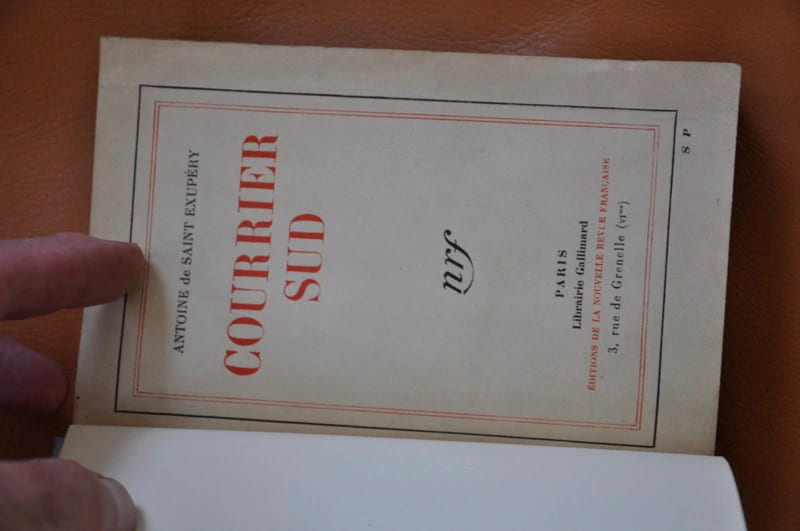
ref. 7481NRF, Paris , Gallimard , 30 avril 1929
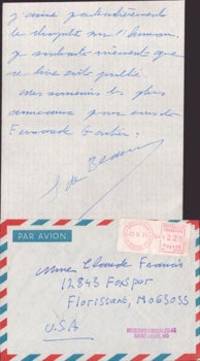
ref. 16-5588Paris: 1976-1979; 1985-1986. Audio archives: 2 audio cassettes and 9 CDs of interviews with Simone de Beauvoir for projected Gallimard publications. .Unpublished audio interviews to prepare the books: 2 audio cassettes and 2 CDs: interviews of Simone de Beauvoir with Claude Francis in 1976 June 9 and June 22. Plus 7 CDs of interviews with Simone de Beauvoir in 1985-1986. These recordings are accompanied by documents: the publishing contract with Gallimard photocopy; 2 L.S. by Robert Gallimard to the two authors January 6 1978 and May 30 1980; 2 autograph sheets signed by Simone de Beauvoir authorizing Claude Francis to make photocopies and copies of various documents; a contract with Einaudi.Set of preparatory documents for "Les Écrits de Simone de Beauvoir " by Claude Francis and Dr. Fernande Gontier a scholar who received her PhD in French from the University of Virginia in 1973. She has many iworks in collaboration with Claude Francis--on French literary figures including Colette and Simone de Beauvoir. A copy of the book "Les Écrits de Simone de Beauvoir" Paris Gallimard 1979 in-8 paperback with a mailing from Fernande Gontier February 1980. Following her refusal to print the Postscript to the Second Sex Beauvoir agreed to let her editors publish texts following her bibliography in preparation since 1975. These writings include many original texts published for the first time in book form including the first two chapters of the novel L'Invitée Brigitte Bardot et le syndrome Lolita the first French-language edition of this essay published in English in Esquire . Provenance: Aristophil Collection Paris. Paris: 1976-1979; 1985-1986 paperback
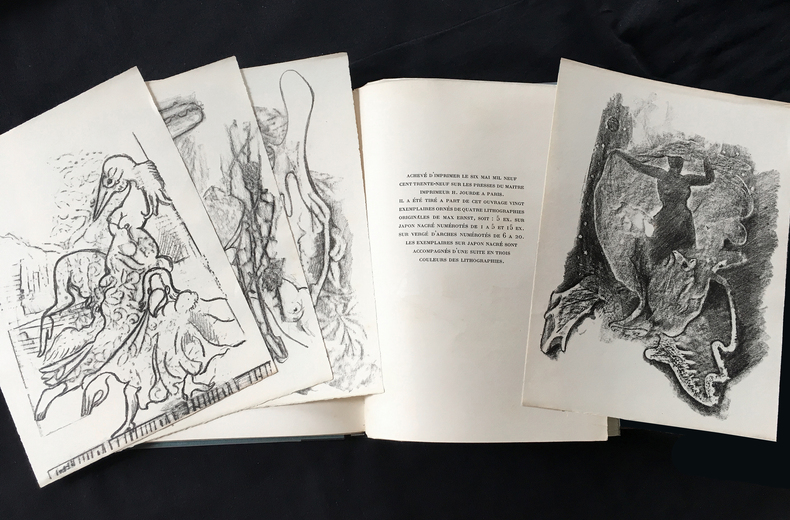
1939ref. 1435-2Paris, NRF, Gallimard, 1939. in-4 broché, 70 pages, couverture imprimée. ÉDITION ORIGINALE de ce recueil contenant : "Trois chevaux aigus. Nous sommes. Nulle rupture. À l'ombre de ma porte. Poème perpétuel. L'or et l'eau froide. Trois poèmes inachevés. Les vainqueurs d'hier périront". Tirage : 5 Japon nacré et 15 vergé d'Arches numérotés et signés + les exemplaires non numérotés sur vélin du Marais (tirage probable à 500 ex.). Le notre, sur vélin du Marais est accompagné DES 4 SUPERBES LITHOGRAPHIES ORIGINALES DE MAX ERNST TIRÉES EN NOIR À PLEINE PAGE SUR VERGÉ DE HOLLANDE (seuls les 20 premiers exemplaires en grand papier contiennent ces lithographies). - Note bibliographique et historique : Max Ernst avait prévu une série de douze lithographies, mais seules quatre d’entre elles furent publiées dans l’édition de luxe à petit nombre. Un an plus tôt, en 1938, désapprouvant ses positions trotskystes, Éluard avait rompu avec Breton : À sa suite Max Ernst quitte le groupe surréaliste outré d’avoir à subir l’exigence de « saboter la poésie de Paul Éluard par tous les moyens » (in Centre Georges Pompidou, Paul Éluard et ses amis peintres, 1982, p.109).
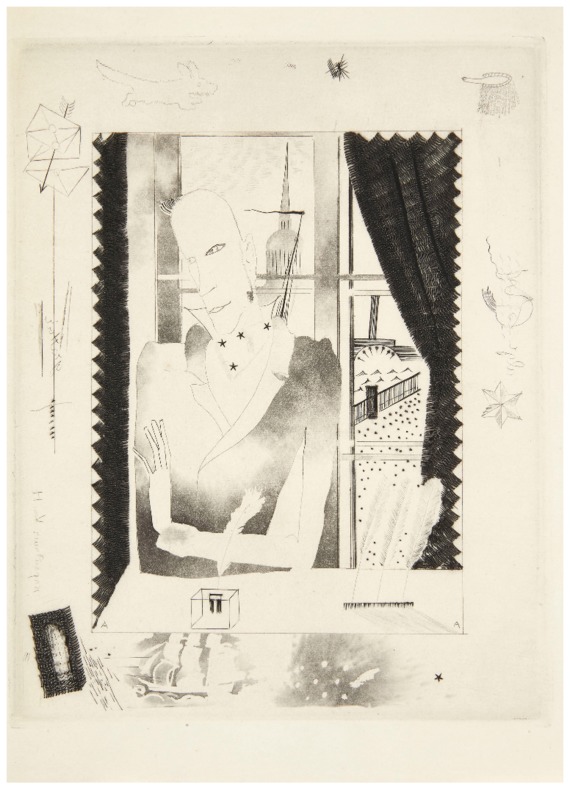
1927ref. 1652Paris, Éditions de La Pléiade, 1927. Un volume grand in-8° (245 x 180 mm), relié. Plein maroquin havane janséniste, dos à quatre nerfs, tête dorée, couverture et dos conservés, étui bordé (J.Van West). 21 GRAVURES ORIGINALES À L'AQUATINTE ET À L'EAU-FORTE PAR ALEXANDRE ALEXEIEFF. Tirage : 266 ex. Celui-ci l'un des 15 exemplaires de tête sur japon impérial, numéroté et paraphé par l'éditeur (n°11), comprenant une suite complète des gravures en premier état avec remarques sur japon mince, une suite complète en état définitif sur vélin et 2 gravures inédites avec remarques. Les suites sont judicieusement reliées en fin de volume (Bendazzi, Alexeieff, itinéraire d’un maître, 2001, pp. 98-115).
1939ref. 1435Paris, NRF, Gallimard, 1939. in-4 (260 x 200 mm) broché, toutes marges, 70 pages, couverture imprimée rempliée. ÉDITION ORIGINALE TRÈS RARE de ce recueil contenant : "Trois chevaux aigus. Nous sommes. Nulle rupture. À l'ombre de ma porte. Poème perpétuel. L'or et l'eau froide. Trois poèmes inachevés. Les vainqueurs d'hier périront". Tirage : 5 Japon nacré + 15 vergé d'Arches. Celui-ci l' un des 15 ex. numérotés sur vergé d'Arches (n°12), SIGNÉ PAR PAUL ÉLUARD ET MAX ERNST, ACCOMPAGNÉ DE 4 SUPERBES LITHOGRAPHIES ORIGINALES À PLEINE PAGE TIRÉES EN NOIR SUR VERGÉ DE HOLLANDE DE MAX ERNST (seuls les 20 premiers exemplaires en grand papier contiennent ces lithographies). - Note bibliographique et historique : Max Ernst avait prévu une série de douze lithographies, mais seules quatre d’entre elles furent publiées dans l’édition de luxe à petit nombre. Un an plus tôt, en 1938, désapprouvant ses positions trotskystes, Éluard avait rompu avec Breton : À sa suite Max Ernst quitte le groupe surréaliste outré d’avoir à subir l’exigence de « saboter la poésie de Paul Éluard par tous les moyens » (in Centre Georges Pompidou, Paul Éluard et ses amis peintres, 1982, p.109).