Steinbeck, JohnBiblio.com
4,077 results
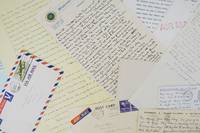
1966ref. 140946326Various places: No Publisher 1966. A vast archive of correspondence featuring approximately 395 letters postcards and correspondences from the iconic American author John Steinbeck sent to family members over the course of twenty-nine years. The scope is incredible spanning from the publication of his masterpiece Of Mice and Men to two years before his death. Provenance: from the estate of John's sister Mary Dekker Steinbeck. The bulk of John's correspondence over 300 letters is written to his younger and much-adored sister Mary. These letters span a sweeping twenty-eight year period beginning in 1937 and continue until right before Mary's death in 1965. The remainder of John's letters are written to other family members primarily his sisters Beth and Esther Mary's daughter Joan and her husband David Heyler. These letters continue up until 1966. The majority of the letters and postcards are autograph though roughly 93 are typed or typed and signed; including roughly 14 typed and sent in triplicate by John to his three sisters. The vast majority of John's letters are accompanied by their original transmittal envelopes-over the years postmarks come from various locations such as New York City Sag Harbor California Mexico the Virgin Islands Europe and more detailing John's life by location. The condition varies but most range from Near Fine to Very Good. A spreadsheet of the contents can be provided upon request. A partial transcription is available as well serious inquiries only. The archive additionally includes 165 pieces of communication from other family members mostly sent within the family and a small assortment of ephemera. The majority of these peripheral letters were sent by John's second wife Gwyn Conger Steinbeck m. 1943-1948 and third Elaine Steinbeck m. 1950-1968 to Mary. These correspondences begin in 1940 when William Bill Dekker a World War I pilot sends his wife Mary a letter home. Bill would disappear in action over Italy in July 1943 and John would detail attempts he made overseas with his military correspondent connections to locate Bill in letters he sent Mary. The family letters stretch onward until 1997 nearly 30 years after John died with letters from Elaine written to Joan and David. Included in the assorted ephemera is a note from Mary to John's editor and friend Pat Covici on the necessity of the title East of Eden notes two typescripts seven snapshot photographs depicting John and several others on a boat and one depicting John in a yard being greeted by a dog. Several telegrams are present; including the one John sent to Mary relaying the news of the birth of his second son John IV June 12 1946: "A BOY BOTH FINE 5 POUNDS 4 OUNCES. LOVE= JOHN". These letters portray a sweeping and intimate look at Steinbeck's life as told in his own words and the words of those closest to him through deeply personal letters covering his private and professional life during his most artistically productive years. He ranges over countless topics from the mundane minutia of daily life such as stockpiling meat in his new deep freeze to save a few pennies per pound should meat prices raise to the profound-childhood memories the births of his sons the collapse of his marriage to Gwyn his grappling with depression mortality and much more. Despite John's worldwide acclaim and success winning both the Pulitzer and Nobel Prizes his nostalgic thoughts often drift back to a green cliff overlooking the Carmel River of his youth. He writes at length of his professional life his work and milestones from being a war correspondent to novelist and playwright. He expounds on the ups and downs of his writing process-from research to starting new work becoming frustrated and throwing work out finishing work and starting again. Collections of this magnitude and breadth regarding such a major American author are virtually unobtainable in the marketplace with most material already held by institutions. Because this correspondence comes from family members it offers a much more intimate and private look into the life of John Steinbeck than otherwise available. Despite his prolificacy he never wrote an autobiography and these intimate letters offer insights available no other way. [No Publisher] unknown
1966ref. 140946326Various places: No Publisher 1966. A vast archive of correspondence featuring approximately 395 letters postcards and correspondences from the iconic American author John Steinbeck sent to family members over the course of twenty-nine years. The scope is incredible spanning from the publication of his masterpiece Of Mice and Men to two years before his death. Provenance: from the estate of John's sister Mary Dekker Steinbeck. The bulk of John's correspondence over 300 letters is written to his younger and much-adored sister Mary. These letters span a sweeping twenty-eight year period beginning in 1937 and continue until right before Mary's death in 1965. The remainder of John's letters are written to other family members primarily his sisters Beth and Esther Mary's daughter Joan and her husband David Heyler. These letters continue up until 1966. The majority of the letters and postcards are autograph though roughly 93 are typed or typed and signed; including roughly 14 typed and sent in triplicate by John to his three sisters. The vast majority of John's letters are accompanied by their original transmittal envelopes-over the years postmarks come from various locations such as New York City Sag Harbor California Mexico the Virgin Islands Europe and more detailing John's life by location. The condition varies but most range from Near Fine to Very Good. A spreadsheet of the contents can be provided upon request. A partial transcription is available as well serious inquiries only. The archive additionally includes 165 pieces of communication from other family members mostly sent within the family and a small assortment of ephemera. The majority of these peripheral letters were sent by John's second wife Gwyn Conger Steinbeck m. 1943-1948 and third Elaine Steinbeck m. 1950-1968 to Mary. These correspondences begin in 1940 when William Bill Dekker a World War I pilot sends his wife Mary a letter home. Bill would disappear in action over Italy in July 1943 and John would detail attempts he made overseas with his military correspondent connections to locate Bill in letters he sent Mary. The family letters stretch onward until 1997 nearly 30 years after John died with letters from Elaine written to Joan and David. Included in the assorted ephemera is a note from Mary to John's editor and friend Pat Covici on the necessity of the title East of Eden notes two typescripts seven snapshot photographs depicting John and several others on a boat and one depicting John in a yard being greeted by a dog. Several telegrams are present; including the one John sent to Mary relaying the news of the birth of his second son John IV June 12 1946: "A BOY BOTH FINE 5 POUNDS 4 OUNCES. LOVE= JOHN". These letters portray a sweeping and intimate look at Steinbeck's life as told in his own words and the words of those closest to him through deeply personal letters covering his private and professional life during his most artistically productive years. He ranges over countless topics from the mundane minutia of daily life such as stockpiling meat in his new deep freeze to save a few pennies per pound should meat prices raise to the profound-childhood memories the births of his sons the collapse of his marriage to Gwyn his grappling with depression mortality and much more. Despite John's worldwide acclaim and success winning both the Pulitzer and Nobel Prizes his nostalgic thoughts often drift back to a green cliff overlooking the Carmel River of his youth. He writes at length of his professional life his work and milestones from being a war correspondent to novelist and playwright. He expounds on the ups and downs of his writing process-from research to starting new work becoming frustrated and throwing work out finishing work and starting again. Collections of this magnitude and breadth regarding such a major American author are virtually unobtainable in the marketplace with most material already held by institutions. Because this correspondence comes from family members it offers a much more intimate and private look into the life of John Steinbeck than otherwise available. Despite his prolificacy he never wrote an autobiography and these intimate letters offer insights available no other way. [No Publisher] unknown books