1787réf. 79001Venetiis Venice: J. Remondini / A. Zatta 1787-1788. 39x26 cm half leather bindings with gilt decorations on the spines title labels and marbled paper-covered boards. Complete in 15 volumes bound in 6 physical tomes. Illustrated with some engravings in the text 7 plates and 5 folding engravings. Text in Latin. Bindings show small signs of wear labels on spines. with some rubbing on the corners and edges. Some volumes have some minor occasional stains and browning. Few pages with larger old waterstains not affecting the text. Although the set is in very good condition. Rare. See pictures. Contents: Volume 1 Tomi I-II: half-title portrait lxxxviii 363 folding engraving iv 380 pages. Volume 2 Tomi III-IV: iv 440 iv 476 pages. Volume 3 Tomi V-VII: 212 viii 2071 with 2 ill. in the text 7 plates and 4 folding engravings xii 215 1 pages. Volume 4 Tomi VIII-X: xx 240 iv 227 1 xii 284 pages. Volume 5 Tomi XI-XII: xx 218 iv 258 pages. Volume 6 Tomi XIII-XV: xii 246 ii 211 viii 158 pages. J. Remondini / A. Zatta hardcover
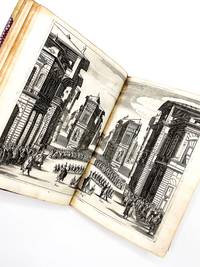
1620réf. 50700Firenze Florence: Pietro Cecconcelli 1620. Second state. Very good. First edition of this landmark neoclassical tragedy - the first documented performance using moveable scenes - with exquisite double-page etchings of the stage by an influential innovator of the form. First performed in Florence in 1619 IL SOLIMANO was a turning point in modern European theater. Bonarelli not only rejected the chorus format of the long-established ancient Greek model but made use of extravagant set design to tell his political-historical drama. Bonarelli based the tragedy loosely on Suleiman the Magnificent the famed Turkish sultan of the 16th century under whose rule the Ottoman Empire experienced a Golden Age of the arts. The story of a tyrant who puts to death his eldest son IL SOLIMANO culminates in the awe-inspiring destruction of the city by fire. Otto Benesch calls the moveable scenes created for the performance "the first in the history of theatre" 17 and notes that despite the ostensibly Turkish setting these sets depict early modern Florence. A mixture of neoclassicism and orientalism IL SOLIMANO captured the imagination of Europe going through multiple editions over the century and inspiring further plays and operas. This first edition remains highly sought for its Callot plates that not only depict the innovative set but show many of the subtleties of style and technique that Callot pioneered under the patronage of the Medicis. His well-known mastery of stoppings out for example is evident in the final plate of the city in flames where tendrils of smoke and individual bursts of fire cross the scene in a variety of depth light and shade. An important work in both the history of theater and of the graphic arts. Quarto 8.75'' x 6.45''. Later half parchment with marbled boards gilt-ruled spine red goatskin spine label. Complete with six plates by Callot engraved title page and 5 double-page etchings. Engraved title with Callot's name in bottom left. 10 162 2 pages. Repairs in gutters of a number of leaves including reinforcements or new stubs to engraved spreads. Light scattered foxing spot of browning to title page gutter. Engravings crisp. Pietro Cecconcelli unknown
1936réf. 200120Lima: Antonio Lulli 1936. Paperback. Good Wraps are toned/edgeworn/scuffed/smudged; bookplate of former owner ifc; interior is toned with occasional smudging and foxing; binding is solid. Grey stapled wraps with black lettering and design; 24 pp.; richly illustrated. Text in Spanish. [Antonio Lulli] paperback
1591réf. 942P35Venetiis: Franciscis Senensem 1591. First edition. Hardback. Good Only. 10" by 7". Not Stated. The first edition of this important work on Egyptian medicine by Prosper Alpini a very scarce work. The very scarce first edition. Title page is in the second state with the correct "scarificationes" and lines seven and eight ending "chyrurgi-" and "apud" respectively. In the original Latin.Illustrated with seven woodcuts two of which are full-paged.Register runs as: a-c4 A-S8 T6.Collated bound without the index which was printed to V-X4 Aa4 and Bb6.'De Medicina Aegyptiorum' is considered to be the first important work on the history of Egyptian medicine and one of the first European studies on non-Western medicine. A pioneering and important text.This work contains the first known description of the coffee plant published in Europe as well as descriptions of moxibustion which Alpini introduced to European medicine. Additionally this text introduces a number of plant species previously unknown to Europe such as Abrus Abelmoschus Lablab Melochia and the Baobab tree. Alpini wrote this work based on his observations made during a three year sojourn in Egypt. He was a physician and botanist from Venice and set off on his travels to Egypt in 1580. In the original boards. Externally worn. Boards are discoloured with handling marks. A small amount of loss to the spine and with lifting to the head. Ink to the spine. Hinges are tender. Internally binding is tender in places. Pages are lightly age-toned and generally clean with scattered spots and handling marks. The occasional small patch of worming to the textblock though with no loss to the text. Good Only Franciscis Senensem hardcover
1687réf. 123752Daniel Horthemels 1687 1687. leather_bound. Good. 9x7x2. Daniel Horthemels 1687 9" x 13" leather bound front board detached. Tiny bit of pencil to text. Light foxing. Illustrated. Text is in Latin. Please email for photos. Daniel Horthemels, 1687 hardcover
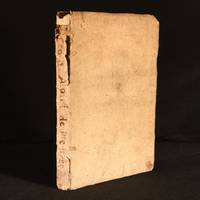
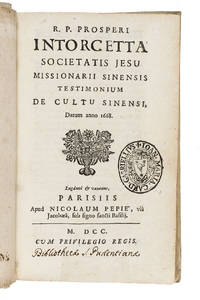
1700réf. ABC_47581Paris 1700. 8vo. Nicolas Pepié Contemporary vellum with the manuscript title on the spine blue sprinkled edges. With a small woodcut ornamental vignette on the title page and some head- and tail-pieces built up from typographical ornaments 2 318 10 pp. This particular account on Chinese cults known as the De cultu sinensis was authored in 1668 and published posthumously. It was written by Prosper Intorcetta 1625-1696 who embarked on a journey to China in 1656 alongside Father Martini and a group of fifteen other priests who were engaged in missionary work in the province of Jiangxi. Intorcetta who assumed the Chinese name of In-to-tsé and the nickname of Koi-ssé was imprisoned in Canton in 1664. After his initial release he managed to travel to Rome in 1671 to witness the fate of his fellow missionaries before being arrested again in 1690. Alongside his work on the translation and study of Confucius' classics for which he proposed a complete translation the present work played a crucial role in the establishment of the subject of sinology in Europe as it dates back to the early years of missionary presence in China. Furthermore it contributed to enhancing understanding of the Chinese language. The De cultu sinensis was a response to the concerns raised by Domenico Navarette a Spanish Dominican archbishop and missionary who served in Mexico the Philippines and later in China. Navarette strongly opposed certain Chinese rituals and Intorcetta's book addresses this contentious issue.With the large oval black owner's stamp of Cardinal Jean-Marie Gabriel on the title-page and page 5 a manuscript owner's inscription in brown ink "Bibliotheca J. Pudentiana" on the title page and with a small manuscript annotation "J. Pud." on the front board. With some offsetting from the manuscript owner's incription in the first free flyleaf and a small paper repair to the bottom margin of the title-page without affecting the text. Slightly browned throughout otherwise in very good condition.l Cordier Sinica 884; Sommervogel IV 642 no.6; WorldCat 18792180 12 copies. hardcover