Prospero LambertiniBiblio.com
315 risultati
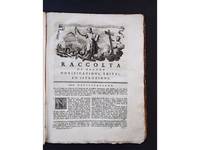
1770rif. 262195Venezia: Francesco Pitteri 1770. prima edizione. nachgebunden Wasserflecken Seiten wellig Francesco Pitteri unknown
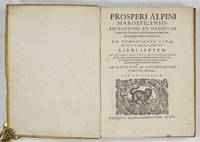
1733rif. 379773Leyden: Isaac Severini 1733. Second Leyden edition whose text has been revised amended suplplemented and the cited places of Hippocrates have bee revised amended.by Hieron. Dav. Gaubius. With engraved folding portrait of Alpini. 20 568 46pp. Small 4to. Contemporary vellum. Second Leyden edition whose text has been revised amended suplplemented and the cited places of Hippocrates have bee revised amended.by Hieron. Dav. Gaubius. With engraved folding portrait of Alpini. 20 568 46pp. Small 4to. Seven books on predicting the life and deayj of patients. In which the entire Hippocratic art of predicting the various outcomes of diseases in poatients both the dogmas of the ancient physicians and from long and accurate observation shines forth by a new method. With a prefacew by Herman Boerhaave. GM 2194; Heirs of Hippocrates 386 for the First Edition 1601 Isaac Severini unknown
1912rif. 84830London: William Rider & Son 1912. First U.K. Edition. Octavo. 19cm. Publisher's deep blue embossed cloth titled in gilt to spine and front board. 299pp. 16pp publisher's ads to rear. Minor scuffing and bumping to spine ends and corners a little discoloration of the cloth in places very slight lean; internally clean with some marginal foxing to the prelims and page edges. A very good strong copy. A bizarre and often rather unwieldy time travel romp involving the discover of a modern revolver and a handful of sovereigns in an ancient Armenian tomb during an archaeological dig. It transpires that the tomb of the Biblical King Balthazar contains papyri suggesting that he was a time travelling student of the occult who also summoned a number of Egyptian gods witnessed the birth of Christ and took part in the Trojan War oh and he also rescues Helen of Troy from Hades and then marries her. One can only assume that those early 20th century British chaps were made of sterner stuff. A typically eccentric piece of rompery from Frederick Rolfe who laid claim to writing 95% of it with Pirie-Gordon adding flavor who never saw a convention literary or otherwise that he didn't want to overturn. William Rider & Son unknown
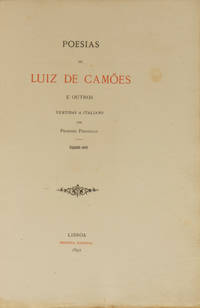
rif. 2505PG001E outros. Vertidas a italiano por Prospero Peragallo. Segunda serie. Imprensa Nacional. Lisboa. 1892.De 286x20 cm. Com ii 144 págs. Magnífica encadernação artística da época inteira de marroquim vermelho com nervos e ferros a ouro em casas fechadas título com ferros a ouro na segunda casa e a data no pé da lombada. Pastas com esquadrias constituídas por dois filetes a seco e três filetes a ouro que enquadram molduras com elaborados ferros a ouro com motivos vegetalistas similares aos dos cabeções e vinhetas do livro que cobrem também as seixas. Cortes das folhas dourados à cabeça e por aparar nos restantes cortes. Folhas de guarda em papel de seda moirée.Exemplar n.º 123 da tiragem de apenas 150 impresso em papel de linho branco. Tem a folha com o colofon na frente e o verso em branco encadernada no início e não no fim como devia ser.Muito rara. Não existem exemplares nas principais bibliotecas de Portugal com a excepção da BNP que possui 4.Edição esplêndida comemorativa do décimo segundo aniversário do Tricentenário de Camões que foi patrocinada por António Augusto Carvalho Monteiro a quem o autor dedica a sua obra. Bela e nítida impressão em caracteres redondos com a letra inicial de cada poema a vermelho cabeções no início do prefácio nas duas páginas do início do episódio dos Lusíadas e vinhetas de remate no fim de todas as poesias.Edição bilingue com os textos originais em português impressos nas páginas da esquerda e as respectivas traduções em italiano nas páginas da direita.As páginas 1 a 10 compreendem a folha de anterrosto com a justificação da tiragem na página 2 a folha de rosto com a 4 em branco a página 5 apresenta a dedicatória impressa do autor a A. A. de Carvalho Monteiro possuidor de uma magnífica biblioteca camoniana página 6 em branco página 7 com o prefácio datado de 28 de Março de 1892 a página 8 em branco. Na página 9 Começa o texto com o título da primeira peça até à página 141. Página 142 em branco e as páginas 143 a 144 com o índice.Inclui o episódio da Batalha do Salado dos Lusíadas Canto III 101-117; 29 sonetos; a Ode III Se do meu pensamento; a Canção XVII A vida já passei assás contente; e três Redondilhas. A partir da página 126 até à página 141 inclui as seguintes poesias camonianas de outros poetas: Soneto de Bocage em louvor de Camões; Soneto à Fonte dos Amores de um anónimo e outro de Elpino Duriense; poesia à Fonte das Lágrimas de Garret; e poesia à Fonte dos Amores de Soares de Passos.Prospero Luigi Peragallo Génova 1823 - Génova 1916 Estudou na escola do Seminário Arquiepiscopal de Génova e no noviciado dos Franciscanos Reformados na mesma cidade onde mudou o seu nome de Luigi para Prospero que passou a usar toda a vida. Foi ordenado sacerdote em 19 de Setembro de 1846 e incardinado no clero secular da diocese de Génova em 1858. Na sua cidade natal foi professor do ensino secundário. Chegou a Lisboa em Agosto de 1865 para prencher o munus de pároco e Reitor da Igreja do Loreto em Lisboa que desempenhou até Julho de 1896 data em que voltou para a sua terra natal. Foi um dos sócios fundadores da Sociedade de Geografia. Dedicou um grande interesse à figura de Cristóvão Colombo e à literatura portuguesa que divulgou em Itália mediante numerosas traduções e estudos de escritores portugueses.Brito Aranha continuador do Dicionário Bibliográfico de Inocêncio elenca 34 obras de Peragallo até 1904 tendo consciência que não as conhecia todas.Escreveu obras de caracter didáctico e religioso em italiano enquanto viveu em Génova. Depois de vir para Portugal escreveu obras sobre Cristóvão Colombo sobre italianos que viveram em Portugal nomeadamente influindo nos descobrimentos e um Manual do Christianismo para a Missa Confissão e Comunhão com pelo menos 10 edições a partir de 1881 além de ter muito colaboração dispersa por diversas publicações periódicas nomeadamente sobre música no períódico A Arte Musical onde publicou 16 artigos. Mas destacou-se especialmente pelas suas numerosas traduções para italiano de muitos poetas portugueses em especial de Camões publicadas em revistas jornais obras colectivas e em livro as quais elencamos a seguir:O soneto de Luiz de Camões: Alma minha gentil Traduzido em verso italiano Lisboa. Casa Portuguesa. 1884 e 1903; Sonetos escolhidos de Luiz de Camões traduzidos em sonetos italianos . Lisboa. Empreza Editora de Francisco Arthur da Silva. Lisboa typ. Elzeveriana. 1885; Poesias de Luiz de Camões e outras vertidas a italiano . Lisboa imprensa Nacional. 1890; O gigante Adamastor. Episodio dos Lusiadas de Luís de Camões com a traducção em versos italianos de Prospero Peragallo e um prefacio de Xavier da Cunha. Lisboa typ. Castro Irmão 1898; Due episodi del poema I Lusiadi di Camões: ed altri poeme stranieri colla traduzione in versi italiani per Prospero Peragallo. Genova: Stab. Tipografico Ved. Papini & Figlio 1905.EN 28.6x20 cm. ii 144 pages. Magnificent contemporary artistic binding in full red morocco with raised bands and gilt tools at spine title in the second panel and the date at the foot of the spine. Covers with frames made up of two blind fillets and three gold fillets with elaborate gilt work with plant motifs similar to those of the book's headpieces and vignettes which also cover the panels. Trimmed gilt top untrimmed in the remaining edges. Moirée silk endpapers.Copy no. 123 of a print run of only 150 printed on white linen paper. It has the colophon on the front with blank back bound at the beginning and not at the end as it should be.Very rare. There are no copies in the main libraries in Portugal with the exception of the National Library which has four.A splendid edition commemorating the twelfth anniversary of the Camões Tricentenary sponsored by António Augusto Carvalho Monteiro to whom the author dedicates his work. Beautiful clear printing in round characters with the initial letter of each poem in red headpieces at the beginning of the preface on the two pages at the beginning of the episode of the Lusiads and closing vignettes at the end of all the poems.Bilingual edition with the original texts in Portuguese printed on the left-hand pages and the respective Italian translations on the right-hand pages.Pages 1 to 10 comprise the title page with the justification for the print run on page 2 the title page with page 4 blank page 5 with the author's printed dedication to A. A. de Carvalho Monteiro possessor of a magnificent Camonian library page 6 blank page 7 with the preface dated 28 March 1892 page 8 blank. Page 9 begins with the title of the first play until page 141. Page 142 blank and pages 143 to 144 with the table of contents.It includes the episode of the Battle of Salado from the Lusiads Canto III 101-117; 29 sonnets; Ode III Se do meu pensamento; Song XVII A vida já passei assás contente; and three Redondilhas. From page 126 to page 141 it includes the following Camonian poetry by other poets: Soneto de Bocage in praise of Camões; Soneto à Fonte dos Amores by an anonymous author and another by Elpino Duriense; poesia à Fonte das Lágrimas by Garret; and poesia à Fonte dos Amores by Soares de Passos.Prospero Luigi Peragallo Genoa 1823 - Genoa 1916 studied at the school of the Archiepiscopal Seminary of Genoa and at the novitiate of the Reformed Franciscans in the same city where he changed his name from Luigi to Prospero which he used all his life. He was ordained a priest on 19 September 1846 and incardinated into the secular clergy of the diocese of Genoa in 1858. In his hometown he was a secondary school teacher. He arrived in Lisbon in August 1865 to take up the post of parish priest and Rector of the Church of Loreto in Lisbon which he held until July 1896 when he returned to his homeland. He was one of the founding members of the Geographical Society. He took a great interest in the figure of Christopher Columbus and in Portuguese literature which he publicised in Italy through numerous translations and studies of Portuguese writers.Brito Aranha continuator of Inocêncio's Bibliographical Dictionary lists 34 works by Peragallo up to 1904 realising that he didn't know them all.He wrote didactic and religious works in Italian while living in Genoa. After coming to Portugal he wrote works on Christopher Columbus on Italians who lived in Portugal namely influencing the discoveries and a Manual do Christianismo para a Missa Confissão e Comunhão with at least 10 editions from 1881 onwards as well as his many collaborations in various periodicals particularly on music in the periodical A Arte Musical where he published 16 articles. But he stood out especially for his numerous translations into Italian of many Portuguese poets especially Camões published in magazines newspapers collective works and books which we list below:Luiz de Camões somnet: Alma minha gentil Translated into Italian verse Lisboa. Casa Portuguesa. 1884 e 1903; Selected sonnets by Luiz de Camões translated into Italian sonnets . Lisboa. Empreza Editora de Francisco Arthur da Silva. Lisboa typ. Elzeveriana. 1885; Poems by Luiz de Camões and others translated into Italian . Lisboa imprensa Nacional. 1890; The giant Adamastor. Episode from the Lusiadas by Luís de Camões with the Italian verse translation by Prospero Peragallo and a preface by Xavier da Cunha. Lisboa typ. Castro Irmão 1898; Due episodi del poema I Lusiadi di Camões: ed altri poeme stranieri colla traduzione in versi italiani per Prospero Peragallo. Genova: Stab. Tipografico Ved. Papini & Figlio 1905.Referências/References:Pe. Sérgio Filippi - Monsignor Prospero Peragallo. Fábrica da Igreja Italiana do Loreto. Lisboa. 2017 212 e 280.Vitor Aguiar e Silva - Dicionário de Luís de Camões. Caminho. Lisboa. 20 p. 1321.Inocêncio XVIII 12-15 pág. 14 n.º 17José do Canto - Colecção Camoniana. Imprensa Nacional. Lisboa. 1895. Edição fac-similada 1972 n.º 231 exemplar n.º 25. M-11-C-78 hardcover
rif. 2309PA142Auspice il Ministero Della Publica Istruione. Roma. MDCCCXCIIII 1894.De 36x275 cm. Com 46 págs. Encadernação com lombada em percalina com ferros a ouro. Com folhas de guarda em papel decorativo. Preservas as capas de brochura. Ilustrado no texto com cabeções e iniciais com motivos vegetalistas.Exemplar com danos nos cantos das pastas e etiqueta da Livraria Olisipo no verso da pasta anterior. I-141A-F-35 hardcover
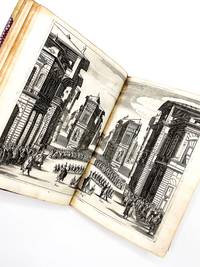
1620rif. 50700Firenze Florence: Pietro Cecconcelli 1620. Second state. Very good. First edition of this landmark neoclassical tragedy - the first documented performance using moveable scenes - with exquisite double-page etchings of the stage by an influential innovator of the form. First performed in Florence in 1619 IL SOLIMANO was a turning point in modern European theater. Bonarelli not only rejected the chorus format of the long-established ancient Greek model but made use of extravagant set design to tell his political-historical drama. Bonarelli based the tragedy loosely on Suleiman the Magnificent the famed Turkish sultan of the 16th century under whose rule the Ottoman Empire experienced a Golden Age of the arts. The story of a tyrant who puts to death his eldest son IL SOLIMANO culminates in the awe-inspiring destruction of the city by fire. Otto Benesch calls the moveable scenes created for the performance "the first in the history of theatre" 17 and notes that despite the ostensibly Turkish setting these sets depict early modern Florence. A mixture of neoclassicism and orientalism IL SOLIMANO captured the imagination of Europe going through multiple editions over the century and inspiring further plays and operas. This first edition remains highly sought for its Callot plates that not only depict the innovative set but show many of the subtleties of style and technique that Callot pioneered under the patronage of the Medicis. His well-known mastery of stoppings out for example is evident in the final plate of the city in flames where tendrils of smoke and individual bursts of fire cross the scene in a variety of depth light and shade. An important work in both the history of theater and of the graphic arts. Quarto 8.75'' x 6.45''. Later half parchment with marbled boards gilt-ruled spine red goatskin spine label. Complete with six plates by Callot engraved title page and 5 double-page etchings. Engraved title with Callot's name in bottom left. 10 162 2 pages. Repairs in gutters of a number of leaves including reinforcements or new stubs to engraved spreads. Light scattered foxing spot of browning to title page gutter. Engravings crisp. Pietro Cecconcelli unknown
2022rif. BN192283Outlook Verlag 2022. 2022. Hardcover. Los condes de Barcelona vindicados Los condes de Barcelona vindicados de Bofarull y Mascaró D. Próspero Outlook Verlag hardcover
1742rif. 81728Lovanii: Typis Martini van Overbeke 1742. 20 x 12 cm full leather 344 pages Text in Latin leather spine slightly damaged piece cut-out of endpaper stamp paper aged toned although condition still very good see picture. Typis Martini van Overbeke hardcover
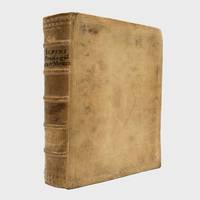
1601rif. 699231601. Venetiis : Apud haeredes Melchioris Sessae 1601 4° 8 163 1 17 leafs contemporary vellum inked titles on spine; small chip to fore-edge of upper cover fine copy. Rare First Edition! With "H.F. Norman M.D." bookplate on front paste-down. A classical work on prognosis. Prosper Alpini 1553-1617 was well acquainted with the works of both Hippocrates and Galen and could have easily written full length studies of each physician. However he chose instead to write this classic treatise on prognosis based on Hippocrates' writings. A comprehensive study of prognostics Alpini placed special emphasis on the patient's mental well being and its relationship to health and included the usual physical and diagnostic signs. In addition to its appearance at Venice the book was also published the same year at Frankfurt by Jonas Rhodius. Garrison-Morton 2194; Osler 1801 1735 ed.; Waller 371 1733 ed. hardcover
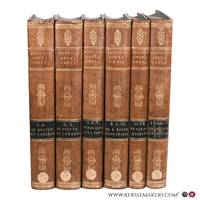
1787rif. 79001Venetiis Venice: J. Remondini / A. Zatta 1787-1788. 39x26 cm half leather bindings with gilt decorations on the spines title labels and marbled paper-covered boards. Complete in 15 volumes bound in 6 physical tomes. Illustrated with some engravings in the text 7 plates and 5 folding engravings. Text in Latin. Bindings show small signs of wear labels on spines. with some rubbing on the corners and edges. Some volumes have some minor occasional stains and browning. Few pages with larger old waterstains not affecting the text. Although the set is in very good condition. Rare. See pictures. Contents: Volume 1 Tomi I-II: half-title portrait lxxxviii 363 folding engraving iv 380 pages. Volume 2 Tomi III-IV: iv 440 iv 476 pages. Volume 3 Tomi V-VII: 212 viii 2071 with 2 ill. in the text 7 plates and 4 folding engravings xii 215 1 pages. Volume 4 Tomi VIII-X: xx 240 iv 227 1 xii 284 pages. Volume 5 Tomi XI-XII: xx 218 iv 258 pages. Volume 6 Tomi XIII-XV: xii 246 ii 211 viii 158 pages. J. Remondini / A. Zatta hardcover
2023rif. x-1032189630Routledge 2023. Hardcover. New. 264 pages. Spanish language. 9.19x6.13x0.87 inches. Routledge hardcover
2023rif. x-1032189649Routledge 2023. Paperback. New. 264 pages. Spanish language. 9.19x6.13x0.59 inches. Routledge paperback
1754rif. 512371754. Frankfurt & Leipzig Fleischer 1754 4° Portrait 18 559 3 pp. Halbledereinband der Zeit; Rücken erneuert. Prosperi Alpini . De Praesagienda Vita Et Morte Aegrotantium : Libri Septem ; In Quibus Ars Tota Hippocratia Praedicendi in Aegrotis Varios Morborum Evantus Cum Ex Veterum Medicorum dogmatibus . Nova Methodo Elucesit / Cum Praefatione Hermanni Boerhaave. Iuxta Editionem Alterum Leidensem Cuius Textum Recensuit Passim Emendavit Supplevit; Citata Hippocratis Loca Accuravit Hieron. Dav. Gaubius . A Classical Work in Medical Prognosis edited by Hieronymus David Gaub 1705-1780 with a foreword of Herman Boerhaave 1668-1738. Prospero Alpino 1553-1616 professor at Padua travelled through Egypt Crete and Greec from 1580 to 1583. He was the first European writer to mention the coffee plant which he saw at Cairo. Alpinus classifies here the morbid phenomena into genera and discusses their prognostic value. The book is also quoted by Weinberger for its references to dentistry. The passages of Life and Death in diseases concentrates on the patient's mental state and its bearing on health as well as the usual physical and diagnostic signs. See Garrison & Morton No. 2073 1st.Ed. 1601; Lindeboom 533; Hertzberger 238 Boerhaave unknown
1745rif. 357481745. Lugduni Batavorum apud Gerardum Potvliet 1745 4° 11 Bl. 325 45 pp. 2 pp.73-258 2 8 Kupferstichtafeln Kalbsledereinband der Zeit mit reichlicher Rückenvergoldung; Gelenke angeborchen aber fest ein feines Exemplar. Alpini 1553-1617 was an Italian physician and botanist who graduated from Padua and traveled through Greece Crete and Egypt from 1580 to 1583.First printed in 1591 this work on Egyptian medicine gives the first European recognition of the medicinal value of coffee. The second work by Jacob de Bondt is an important work on diseases of the East Indies. It includes the first modern descriptions of cholera tropical dysentery yaws and beri-beri. unknown
rif. 46260607like new. unknown
1912rif. ROLFEFRE015836William Rider London. 1912. First edition. Octavo. pp xxii 299. 16-page publisher's catalogue at rear. Original blue buckram covers decorated in blind and lettered in gilt. A fantasy novel. Corvo wrote in a letter: ''I wrote nine tenths of that book to Pirie-Gordon's one tenth & we were to share profits half & half''. On page 14 of the advertisements at the rear of the book Rolfe is given sole credit for the book. Laid in are parts of the scarce and extremely friable dustwrapper: most of the front and rear panels and the flaps.Small ownership inscription in top corner of front free endpaper. Some spotting to edges. Very good indeed in chipped and nicked dustwrapper which is a bit tanned at the spine and almost entirely present but with long closed tears especially along the joint folds and a postage stamp sized chip at bottom edge of rear panel which is repaired on the reverse. William Rider, London. hardcover
1845rif. 38653Typographia Aldina Prati 1845. 1st edition. Hardback. Half vellum over cloth VG. 4 volumes in 2 x722564pp 530552pp indices to both volumes foxed & with a ecclesiastical smell to both volumes cloth rubbed and faded with the vellum yellowed & with a few small nicks to the green morocco lettering pieces with a larger piece missing from that on the first volume a nice set Ex Library St Augustine's Monastery Ramsgate with their bookplates to the pastedowns & ink stamp to the title & occasionally to the text margins printed in double column. The spine labels refer to these volumes as being volume 8 & 9 of a larger incomplete works of Pope Benedict XIV where as the half titles refer to them as volumes 15 16 & 17 of the Works. The Papal Bulls part of a larger collection but complete in themselves issued under the Papacy of Pope Benedict XIV who was Pope 1740 - 1758. Typographia Aldina, Prati hardcover
1775rif. 35783Jo Manfrè Ferrariæ Ferrara 1775. reprint. Hardback. Later half calf over pebble grained cloth. G. xxviii540pp bound with approx 25 blank leaves at the rear upper board detached & 2 thirds of the spine likewise endpapers yellowed occasional marginalia old ownership signatures to the half title & endpaper of John Rock Irish College Rome dated 1875 Ink stamp of Clonard Monastery Belfast a working copy. The first volume of Pope Benedict XIV' most renowned work - De Synodo Dioecesana which has been called 'the best work on diocesan synods' Catholic Encyclopaedia. De Synodo Dioecesana a classic work first published in 1748 after Lambertini's elevation to the papacy is an adaptation to diocesan administration of general ecclesiastical law. Augustin Joseph Schulte in the Catholic Encyclopaedia called it 'one of the most important if not the most important modern work on canon law' Jo Manfrè, Ferrariæ [ Ferrara ] hardcover
2017rif. 1-3639660714Editorial Académica Española 2017. Paperback. New. 96 pages. Spanish language. 8.66x5.91x0.22 inches. Editorial Académica Española paperback
1860rif. 1020AG1860. O.J. um 1860. Lithographie von Santarelli nach R. Leante Brustbild. Bildgrösse: 11 x 11 cm. Blattgrösse: 34 x 235 cm. Leicht stockfleckig. unknown
1754rif. 40299DB1754. Frankfurt Fleischer 1754. Kl.-4°. 8 Bl. 559 recte 558 S. 21 Bl. Index. Mit gestochenem Porträt als Frontispiz. Lederband aus der Zeit mit blindgeprägtem rotem Rückenschild. Hirsch-H. I 101. Blake 12. Frankfurter Nachdruckausgabe nach der zweiten in Leiden erschienenen von Gaub herausgegebenen und mit einem Vorwort von Boerhaaven versehenen Ausgabe. Ein klassisches Werk zur Prognostik das erstmals 1601 erschienen war. Papier stellenweise leicht gebräunt. Einband berieben und bestossen. unknown
1774rif. 42661Bassani 1774. Sed Prostant Venetiis Remondini. 4to. Contemp. hcalf richly gilt spine titlelabel with gilt lettering. Top of spine worn. Slightly rubbed. Engraved portrait as frontispiece. XVI286 pp. a. Addenda 231 pp. Addenda with separate tilepage. A few scattered brownspots. Internally fine. A classic work on prognosis Editio tertia."Alpini's interest in medicine was expressed in several books of which the most importent were "De Medicina Aegyptiorum" 1591 and "De praesagienda vita" 1601 the third edition offered here.Alpini was sufficiently impressed by novel therapeutic practices to introduce the technique of "moxa" into European medicine. The "De praesagienda vita" is a detailed study of prognosticss in which attention is devoted to the patient's mental state and its bearing on health as well as to he usual physical and diagnostic signs."DSB I p. 125. - Waller: 372. - Wellcome II: 36 but not this edition. - Garrison & Morton: 2194. unknown
rif. DADAX0472064304New unknown
1771rif. 35615in Venezia Venice: Presso Antonio Zatta 1771. Fine. Presso Antonio Zatta in Venezia Venice 1771 19.50 x 26 cm 2 volumes brochés New edition the first edition appears to have been published in 1733. Illustrated with two large engraved title head-pieces by Zatta. Miniature printing in double columns. Contemporary grey temporary boards. Tear at foot of volume II. Prospero Lambertini was elected Pope in 1740 under the name Benedict XIV. He died in 1758. He was a learned Pope nourished by science and open to the Enlightenment and attempted to soften the rigour of the church and dogma. Presso Antonio Zatta hardcover
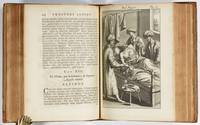
1591rif. 942P35Venetiis: Franciscis Senensem 1591. First edition. Hardback. Good Only. 10" by 7". Not Stated. The first edition of this important work on Egyptian medicine by Prosper Alpini a very scarce work. The very scarce first edition. Title page is in the second state with the correct "scarificationes" and lines seven and eight ending "chyrurgi-" and "apud" respectively. In the original Latin.Illustrated with seven woodcuts two of which are full-paged.Register runs as: a-c4 A-S8 T6.Collated bound without the index which was printed to V-X4 Aa4 and Bb6.'De Medicina Aegyptiorum' is considered to be the first important work on the history of Egyptian medicine and one of the first European studies on non-Western medicine. A pioneering and important text.This work contains the first known description of the coffee plant published in Europe as well as descriptions of moxibustion which Alpini introduced to European medicine. Additionally this text introduces a number of plant species previously unknown to Europe such as Abrus Abelmoschus Lablab Melochia and the Baobab tree. Alpini wrote this work based on his observations made during a three year sojourn in Egypt. He was a physician and botanist from Venice and set off on his travels to Egypt in 1580. In the original boards. Externally worn. Boards are discoloured with handling marks. A small amount of loss to the spine and with lifting to the head. Ink to the spine. Hinges are tender. Internally binding is tender in places. Pages are lightly age-toned and generally clean with scattered spots and handling marks. The occasional small patch of worming to the textblock though with no loss to the text. Good Only Franciscis Senensem hardcover