3403 risultati
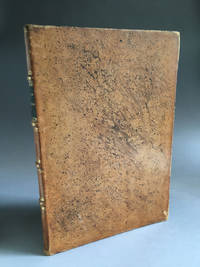
1792rif. 003484Madrid: en la imprenta de Manuel Gonzalez 1792. First Spanish translation from the French edition of 1786. Full Tree Calf. Very Good at least. 114 pp. frontispiece vi 1-21 plates # 1-44 pp 22-42 plates # 1-21. The "Apéndice" follows after page 21 with a new title page page numbers run continuously but plate numbers reset. 29 cm. Small folio. Later binding in full tree calf with five raised bands decorated in gilt to spine; black Morocco spine label with title in gilt. End papers in heavy marbled stock. Binding and covers in near fine condition with a superficial scuffing and mild wear at the tips. Small tide mark affecting 2-3% area of engraving's upper left quadrant for the first 15 plates growing more faint on each plate until it disappears entirely. Sporadic light foxing throughout two leaves with closed tears PO signature w/ date in fine contemporary hand to blank verso of last plate. In Spanish. A lovely copy. Antiquarian. A seminal work of architectural first principles. The first edition of this book was published in 1593 after which time the engravings for the plates were hidden away; this Spanish translation of 1792 is the first edition which utilized those original engravings after almost 200 years. The spectacular copper engraved frontispiece is present. It features a fine portrait of Vignola in the form of a marble bust which is surrounded by an adoring gang flock of Putti flying around wielding various drafting tools. en la imprenta de Manuel Gonzalez unknown
1949rif. 151408Santander: Instituto de Estudios Asturianos 1949. 1st ed. Paperback. Used; Like New. 8vo 355p. wrps photo plates covers slightly soiled. Pola de Siero is an ancient town founded in the 12th Century just outside Oviedo Asturias. This book while not all that rare is only found at the Biblioteca Nacional de España. Instituto de Estudios Asturianos paperback
191416 pages. Features: Supportive comments inside from cover; Who Provoked the War? - incidents showing the historical progress of events toward the inevitable clash; Has France a Title to Alsace-Lorraine? - extracts of a letter by Thomas Carlyle to the London Times during the Franco-German War; The American Press and the War, by Dr. A.B. Faust; Ernst Haeckel and Rudolph Eucken Rally to the Flag; Supportive letter from William C. Fox, Ex-American Minister to Ecuador; We and the World - poem by Hanns Heinz Ewers; Brief piece about the 'Loquacious" German Ambassador Count Bernstorff; A call for Americans of German and Austro-Hungarian blood to organize; Full-page image depicting Germany as the defender of civilization against the Barbarian Host; News the New York Times would like to suppress; Poem entitled "For All We Have and Are" by Frederick H. Martens; We Poles in Austria, by an Austrian Pole; The German-American and the President's Neutrality Proclamation, by Prof. Julius Goebel; The War Situation - latest news of WWI; and more. Average wear. Binding intact. Unmarked. Cover holding by one staple otherwise a sound copy. Magazine
191516 pages. Features: The Significance of German Raids on England; Would Americans fight against England if forced to declare their indepence of England for a third time?; "Lese Majesty" - the plain facts; A (long) list of the nations/peoples Germany is presently fighting; The United States Needs No Apologist - a review of the American Administration's untenable position regarding the violation of neutrality laws in the interest of the Allies; Non-Political City Administration, by Frank Koester; Military Strategy and the Enemy's Industry, by Dr. Hugo Schweitzer; Professor A. De Lapradelle's misconception about the Fatherland; The Case of Ferne Rogers; Count Zepellin; Logic in History; Japan's Short Memory - a 1905 letter from Marshal Yamagato to Major Gen. von Meckel is contrasted with Japan's present fight against Germany; Supportive words for Germany and German-Americans from the Albany Times-Union; Freedom's New Champion - poem by James C. Hickey; London-Made News; Admiral Ingersoll Un-Neutral; Advertising Talks #4 - persuading advertisers to support this publication; The Great Conspiracy - a recent pamphlet by Alexander Szarski and Faust C. DeWalsh regarding the gigantic conspiracy to crush German influence throughout the world; Nice ad on back cover for F.S. Neydhart illustrations of 12 German Heroes; and more. Unmarked. Average wear. Covers loose but present. A worthy copy. Magazine
191536 pages. Special extra-long issue. Features: The Iron Chancellor, by George Sylvester Viereck; Bismarck The Great Progressive, by Dr. Bernhard Dernberg; Bismarck's Service to his Country, by Prof. William R. Shepherd; An Episode in the Career of the Iron Chancellor, John W. Burgess; Bismarck and the Present, by W.S. McNeill; Bismarck's Termperament, by Prof. William M. Sloane; Bismarck and the German-Americans, by Herman Ridder; Bismarck, by Thomas C. Hall; Bismarck and Militarism; Could Bismarck Have Hindered the War?, by Ferdinand Schevill; Bismarck and the EMS Dispatch, by A. Wilhelm Boesche; Bismarck, the German, by Dr. C.J. Hexamer; Bismarck and the Modern State, by Hermann Schoenfeld; Bismarck and To-Day, by Hugo Muensterberg; The Lesson of the Falaba; Mrs. Sinclair's Husband Explains; Bismarck in Granite, by Frederick F. Schrader; The Parcels Post and the Allies; Murder as a Fine Art; Romantic Belgium; Be Neutral, Mr. Lorimer; The Embargo on Arms - What is the Law?, by Dr. Edmund von Mach; The Military Situation; Bismarck and Modern Germany, by Prof. Albert B. Faust; In Memoriam, by O.J. Merkel; Dennis A. Spellissy; Patrick R. Griffin - Mayor of Hoboken; Joseph Frey; Rudolph Hering; Jeremiah A. O'Leary; Michael P. O'Connor; Bismarck and Universal Suffrage; David M. Neuberger; James Everard; Dudley Field Malone; Two-Color ad for Kaffee Hag coffee on back cover; and more. Unmarked. Average wear. Covers detached but present. A worthy copy. Magazine
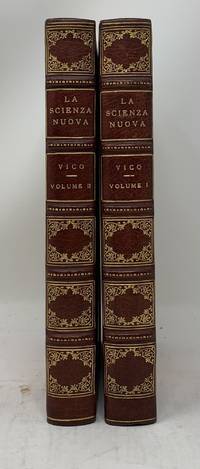
1928rif. 2053571Bari: G. Laterza & figli 1928. Hardcover. Very Good. 2 volumes. 385 365 pp. Folding table.Text in Italian. Finely bound in three quarter red leather over marbled boards; top edges felt. Minor rubbing to binding; internals clean and clear. A handsome copy. G. Laterza & figli hardcover
rif. KS0082-00BBari Gius. Laterza & Figli 1928. Oktav. Zeitgenössisches goldgepr. Halbleinen mit marmorierten Bezügen Rücken etwas aufgehellt. Band 1: 2 Bll. 385 1 S. mit einer Abbildung Wiedergabe des Frontispizes der Erstausgabe und einer ausfaltbaren chronologischen Tafel; 2 Bll. 365 1 S. insgesamt gutes Exemplar. =Scrittori d'Italia. G. B. Vico: Opere IV-1 & IV-2. - Durch Angabe korrepondierender Seitenzahlen zitierfähiger Wiederabdruck der dritten und maßgeblichen Ausgabe eines der Gründungswerke der Kulturwissenschaften hier herausgegeben von dem mit zahlreichen Schriften zu Vico hervorgetretenen Historiker Nicolini der zugleich die Gesamtreihe initiierte. - PROVENANCE: The book offered comes from the library of the world-famous Karl-Sudhoff-Institute for the History of Medicine and Sciences of the Leipzig University which was dispersed by sale by the end of 2018. The institute was the first of its kind in the world when it was founded in 1906 and through its existence it gained much considerable relevance for the international emergence of a modern history of science and the source-based cultural studies. The institute was overseen by Karl Sudhoff the most important historian of medicine of the 20th century as was the annexed library that contained a high number of volumes sent and sometimes even dedicated to him personally. After Sudhoff's death in 1938 the institute was renamed to Karl-Sudhoff-Institut in honour of his achievements. All books from this library offered by us about 2.500 were properly withdrawn from the Leipzig University Libraries holdings and bear corresponding marks such as handwritten signatures on spines stamps on titlepages or fly leaves. In general these were added to the volumes in a very careful manner and do not or only to a very small or neglectable degree affect the aesthetical appearance of the books. - =Scrittori d'Italia. G. B. Vico: Opere IV-1 & IV-2. - Durch Angabe korrepondierender Seitenzahlen zitierfähiger Wiederabdruck der dritten und maßgeblichen Ausgabe eines der Gründungswerke der Kulturwissenschaften hier herausgegeben von dem mit zahlreichen Schriften zu Vico hervorgetretenen Historiker Nicolini der zugleich die Gesamtreihe initiierte. - PROVENANCE: The book offered comes from the library of the world-famous Karl-Sudhoff-Institute for the History of Medicine and Sciences of the Leipzig University which was dispersed by sale by the end of 2018. The institute was the first of its kind in the world when it was founded in 1906 and through its existence it gained much considerable relevance for the international emergence of a modern history of science and the source-based cultural studies. The institute was overseen by Karl Sudhoff the most important historian of medicine of the 20th century as was the annexed library that contained a high number of volumes sent and sometimes even dedicated to him personally. After Sudhoff's death in 1938 the institute was renamed to Karl-Sudhoff-Institut in honour of his achievements. All books from this library offered by us about 2.500 were properly withdrawn from the Leipzig University Libraries holdings and bear corresponding marks such as handwritten signatures on spines stamps on titlepages or fly leaves. In general these were added to the volumes in a very careful manner and do not or only to a very small or neglectable degree affect the aesthetical appearance of the books. - =Scrittori d'Italia. G. B. Vico: Opere IV-1 & IV-2. - Durch Angabe korrepondierender Seitenzahlen zitierfähiger Wiederabdruck der dritten und maßgeblichen Ausgabe eines der Gründungswerke der Kulturwissenschaften hier herausgegeben von dem mit zahlreichen Schriften zu Vico hervorgetretenen Historiker Nicolini der zugleich die Gesamtreihe initiierte. - PROVENANCE: The book offered comes from the library of the world-famous Karl-Sudhoff-Institute for the History of Medicine and Sciences of the Leipzig University which was dispersed by sale by the end of 2018. The institute was the first of its kind in the world when it was founded in 1906 and through its existence it gained much considerable relevance for the international emergence of a modern history of science and the source-based cultural studies. The institute was overseen by Karl Sudhoff the most important historian of medicine of the 20th century as was the annexed library that contained a high number of volumes sent and sometimes even dedicated to him personally. After Sudhoff's death in 1938 the institute was renamed to Karl-Sudhoff-Institut in honour of his achievements. All books from this library offered by us about 2.500 were properly withdrawn from the Leipzig University Libraries holdings and bear corresponding marks such as handwritten signatures on spines stamps on titlepages or fly leaves. In general these were added to the volumes in a very careful manner and do not or only to a very small or neglectable degree affect the aesthetical appearance of the books. - Bari, Gius. Laterza & Figli, 1928. unknown
1985rif. bing636BIb067University of Pennsylvania P 1985. Hardcover. good. 5x1x9. Prompt shipment with tracking. we ship in CLEAN SECURE NEW boxes Business & EconomicsGood condition some wear to edges and dustjacket minor wear to spine minor tear in dustjacket on spine prompt shipping with tracking University of Pennsylvania P hardcover
1985rif. DADAX0333363450MACMILLAN 1985-05-02. 1985. hardcover. New. 5.50x0.63x8.50. Buy with confidence. Excellent Customer Service & Return policy. MACMILLAN hardcover
1985rif. 79153Philadelphia:: University of Pennsylvania Press. Near Fine in Near Fine dust jacket. 1985. Hardcover. 0812279492 . First edition thus. About fine in like dust jacket. . University of Pennsylvania Press, hardcover books
rif. 29354A cura di Fausto Nicolini - Bari : Laterza, 1911-1913 - 2 volumes in-8 brochés sous couvertures imprimées, LXXIX, 710 pages - bon état - texte en italien -
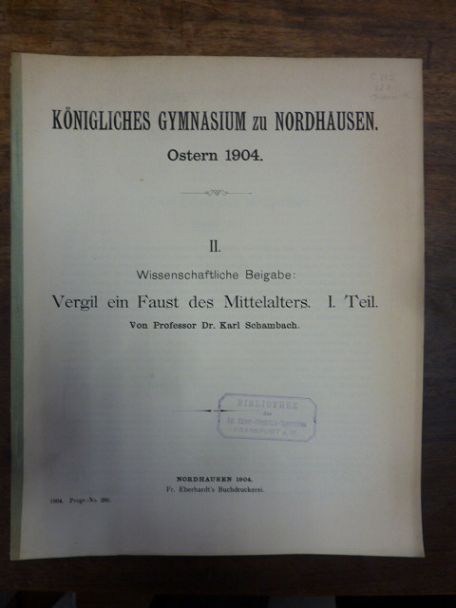
1904rif. 223CBNordhausen, Fr. Eberhardt (= Progr. Nr. 290), 1904. kl.4°, 32 S., original Heft mit Papierrückenstreifen, Erstausgabe alter schöner Stempel der Lehrerbibliothek eines alteingesessenen Frankfurter Gymnasiums auf Titelseite, schöne, kaum altersspurige Broschur (Li1, Ordner15)
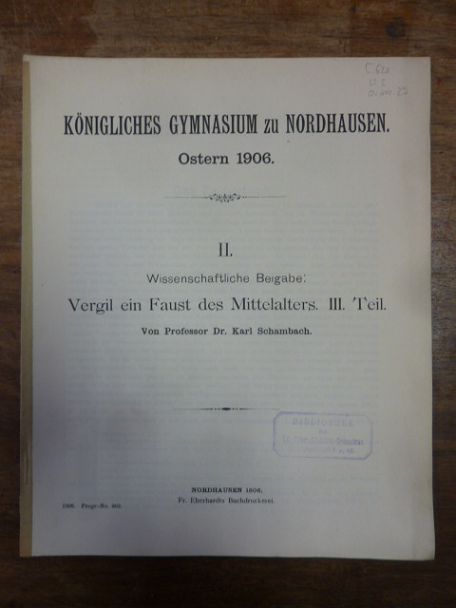
1906rif. 620CBNordhausen, Fr. Eberhardts Buchdruckerei (= Programm Nummer 291), 1906. gr.8°, 46 S., original Heft mit Papierrückenstreifen, Erstausgabe schöner alter Stempel der Lehrerbibliothek eines alteingesessenen Frankfurter Gymnasiums auf Titelblatt, sonst sehr schönes, kaum altersspuriges Exemplar (Li 2 Ordner 29)
1995Mm 125x195 Prima edizione - Volume in copertina rigida con sovraccoperta figurata a colori, 257 pagine. Opera in perfette condizioni. SPEDIZIONE IN 24 ORE DALLA CONFERMA DELL'ORDINE.
2019br. «Il grande airone ha chiuso le ali» scrisse Orio Vergani alla morte di Fausto Coppi, conscio che con il ciclista - che Vergani aveva narrato per vent'anni seguendolo sulle strade del Giro e del Tour - scompariva anche un simbolo dell'Italia di quegli anni. Questo libro racconta quel paese e quell'uomo, il campione più forte, il più iellato, attraverso gli articoli di Vergani senior e le testimonianze, le polemiche, i retroscena che, due decenni dopo, il figlio Guido ha raccolto nelle parole di antagonisti, meccanici, tifosi, cronisti e di Giulia Occhini, la Dama bianca. Padre e figlio offrono in queste pagine la biografia, raccontata «in diretta e in differita», del campione più amato che, con il suo andare vittorioso, regalò consolazione, forza e orgoglio nel misero dopoguerra e nel decennio della ricostruzione.
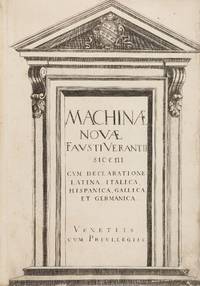
rif. 50561Venice: self-published between 1595 and 1616. Folio 37.3 × 25 cm. Contemporary full vellum; engraved title within architectural border; 49 numbered double-page copperplate engravings 19 1 18 2 20 19 1 19 1 pp. letterpress-printed text in Italian German French Spanish and Latin each with a vignette headpiece at the head of the section. Binding with repairs and somewhat distended; occasional light soil and foxing; small paper repairs to first few leaves and one plate with larger repair slightly affecting the image; else about very good and an apparently unresized copy with wide margins retaining all five text parts. First edition of this important survey of mechanical architectural and technological designs and projects the magnum opus of Fausto Veranzio 1551-1617 a Croatian polymath diplomat and priest who was born in Šibenik on the Adriatic Coast then part of the Republic of Venice. There are two known versions of this print: a Latin-Italian one with Tuscan privilege and our version with an engraved Venetian title page and additional translations of the texts into German French and Spanish. In a reprint of the book published 1965 Friedrich Klemm writes in his introduction: "In the late Renaissance and early Baroque periods we encounter excellently illustrated works of technical literature which were generally intended for aristocratic circles. . Of all these works that of Fausto Veranzio is the rarest. Compared to some of the other mechanical engineering illustrated works of the time Veranzio primarily presents his own designs some of which still reveal the objective spirit of the Renaissance or images of devices he had encountered on his travels. The books on mechanical and military technology of the Cinquecento such as those by Ramelli Lorini and Francesco de' Marchi as well as classical literature were certainly familiar to him the learned author who was active as a philologist philosopher historian administrator fortress commander mechanical engineer and churchman. The influence of Leonardo da Vinci also seems to be evident in Verancio's book." Veranzio attended school in Venice and studied law engineering mechanics and physics at Padua before entering the services of Rudolf II in Prague as whose secretary he is thought to have conversed with Johannes Kepler and Tycho Brahe. He also published works of lexicography and logic. Following the death of his wife he relocated to Venice where he joined the Barnabite Order and devoted his remaining years to the study of science and engineering. The large plates depict designs for flotation devices a bridge using suspension cables oil and wine presses a rotary printing press a universal clock various types of mills including a design that was used for one of New York's earliest tide mills fountains as well as the famous image showing a man gliding safely from the Campanile di San Marco in Venice likely inspired by Veranzio's familiarity with da Vinci's drafts for a parachute. "It is difficult to determine with certainty whether Veranzio saw Leonardo's notes. Regardless he certainly shared Leonardo's Renaissance spirit. They were both self-taught lovers of learning across different fields including philosophy and history. Like Leonardo Veranzio also harbored a passion for hydraulics and spent 2 years in Rome trying to regulate the flow of the Tiber. Back home in Venice he maintained the wells and water supplies" Innicenzi The Innovators Behind Leonardo p. 69." Veranzio's book also proposes various means to harness solar and hydraulic power. One of the plates shows the church in his birthplace Šibenik. In addition to the most famous illustration "Homo Volans" this magnificent volume contains numerous innovations that were sometimes far ahead of their time and secured Veranzio a place in the history of technology. One example is the iron carriage spring without which modern means of transport would be inconceivable cf. Friedrich Kluge Etymologisches Wörterbuch Berlin 1960 p. 188. Veranzio writes about his invention: "The suspended carriages are necessarily hung with ropes chains or double leather straps so that the passengers do not sit hard. But I wanted to put iron springs underneath them which open and close like the bows of crossbows." Another example is the first use of a gear mechanism in the manufacture of ropes cf. Jürgen Eichhoff in: Die Sprache des niederdeutschen Reepschlägerhandwerks. Cologne and Graz 1968 Low German Studies 16 p. 1041. But his bronze bridge the "Pons Æreus" shown in copperplate engraving no. 33 points furthest into the future. Because the first metal bridge was not built until 1773 over the Savern in England. Equally remarkable is Veranzio's iron bridge "Pons Ferrevs" on the following copperplate engraving which is apparently the first depiction of a chain bridge in Europe. See Nikola Roßbach. Poiesis der Maschine: Barocke Konfigurationen von Technik Literatur und Theater Berlin 2020 p. 99ff. When Veranzio was working on his "Machinae novae" he concerned himself with water regulation in the cities of Rome and Venice which were regularly threatened by the rivers and the sea. The elaborately crafted volume was not intended to enable the machines and architecture shown in it to be replicated but rather to showcase the achievements to educated and wealthy laymen such as potential clients and patrons. This explains the small print run. Veranzio sent the prints primarily to cardinals and generals who ultimately spread his name across the continent. See ibid. Veranzio's work is undated but based on several notes of thanks by friends from July 1616 was presumably printed in or around that year; occasionally it is dated as early as 1595. It has also been suggested that it was financed by the author and thus issued in small installments over a longer period of time. Complete copies are very scarce. Most copies in the market over the last decades have also either lacked one or more of the plates or one or more of the language sections. This copy includes all five versions known to have been issued: Italian German French Spanish and Latin as well as all plates. Copies with some colored plates are also known. Poggendorf vol. II no. 1194; Hausmann and Kapp vol. I no. 1138. As of November 2025 KVK and OCLC locate six copies in North America 2 other copies are marked as incomplete because they are missing several or all of the plates. unknown
1954rif. 36529München 1954. Faksimilie d.Ausg. v.1615/16 in Venedig. Guter Zustand. Rückenschild Heinz Moos Verlag 4°. Ln. Varia unknown
rif. 0366802305.Gpaperback. Good. Access codes and supplements are not guaranteed with used items. May be an ex-library book. paperback
1965rif. 36410Munich: Moos 1965. hardcover. near fine. Folio linen. Muenchen: Moos 1965. Complete facsimile of the richly illustrated Venice 1615-16 edition; with brief text by Adolf Wissner. Moos unknown
1983In-8 (cm. 28.10), brossura con sovracoperta, sovracoperta editoriale trasparente, custodia, pp. 12, (4), 18, 20, con numerose illustrazioni in bianco e nero fuori testo. Prefazione di Mario Schiavone. Testo originale multilungue. Anastatica stampata su carta vergata avorio a bordi intonsi Magnani di Pescia. Edizione di 1000 esemplari. Aloni ad un piatto e minime tracce d’uso ai tagli, sempre della custodia; peraltro, volume in ottimo stato (nice copy).
rif. 36410Folio linen. Muenchen: Moos 1965. Complete facsimile of the richly illustrated Venice 1615-16 edition; with brief text by Adolf Wissner. unknown books
1971rif. 3463Zagreb: Liber Izdanja instituta za znamost o knjizevnosti 1971. Facsimile Edition. Hardcover. Near Fine. 8vo. Pp. 135. Illustrated endpapers. Bound in cream-colored cloth stamped with a woodblock print in facsimile black lettering stamped on spine. With a reprint of Vrancic's Hrvatsko-Latin dictionary 71pp. stapled in the rear linen pocket as issued. Very slight soiling on rear cover else Fine. A superb copy quite fresh. Scarce. Liber Izdanja instituta za znamost o knjizevnosti hardcover
1923Piano music with lyrics for some songs. Songs include: Roses of Picardy; Little Grey Home in the West; Marcheta; Dear Love, My Love; A Kiss in the Dark; Phryne; J'aime Mon Amour; Laura (The beggar student); Faust; Je T'Aime. Above-average wear. Minimal markings. Binding intact. A worthy working copy. Book
rif. 16759853-nnew. unknown
rif. 16759853like new. unknown