Avraham FaustBiblio.com

ref. A9781845534561Paperback / softback. New. This study of ethnicity in the emergence of Israel in Canaan is wholeheartedly archaeological in scope using the Bible only as a secondary source of information. paperback
ref. 61325016Equinox Publishing Limited . Papeback. New. pp. 289 Equinox Publishing Limited unknown
ref. B9781589837256Hardback. New. hardcover
ref. 698098861Society of Biblical Literature . Hardback. New. pp. 318 Society of Biblical Literature hardcover
ref. 697015908Society of Biblical Literature . Papeback. New. pp. 318 Society of Biblical Literature unknown
2010ref. x-1575061791Eisenbrauns 2010. Hardcover. New. 350 pages. 10.30x7.10x1.10 inches. Eisenbrauns hardcover
ref. B9781575061795Hardback. New. Referring to several important introductory books written about the archaeology of the land of Israel William Dever once stated: "However adequate these may be as introductions to the basic data none makes any attempt to organize the data in terms of social structure. . . . This is a serious deficiency in Syro-Palestinian and biblical archaeology when one considers that the general field of archaeology has been moving toward social archaeology for 20 years or more. Dever "Social Structure in Palestine in the Iron Age II Period on the Eve of Destruction" in The Archaeology of Society in the Holy Land ed. T. E. Levy London 1995 p. 416. Lack of discussion of social questions has characterized the archaeology of the land of Israel for some time even though around the world these questions constitute an important component of archaeological research see for instance the work of Renfrew Flannery Gibbon Blanton Dark Bahn Hodder Trigger and many others. The Archaeology of Israelite Society in Iron Age II fills this gap and analyzes the structure of society in the ancient kingdoms of Israel and Judah from an archaeological viewpoint. It also applies models and theories from the field of social and cognitive archaeology using the tools of various social-science disciplines anthropology sociology economics geography and so on. Due to his ability to use what is probably the largest archaeological data set in the world-hundreds of planned excavations thousands of salvage excavations and extensive surveys all from the small region that was ancient Israel-Avi Faust contributes not only to the study of ancient Israelite society but to the most fundamental questions about ancient societies. These questions include the identification of socioeconomic stratification in the archaeological record the study of family and community organization the significance of pottery small finds and architecture as indicators of wealth and more. This groundbreaking monograph is one of the first attempts at a large-scale study of Israelite society based primarily on the archaeological evidence. The following acknowledgments were inadvertently omitted from the front matter of the volume: Amihai Mazar: figure 31 Amnon Ben-Tor: figures 40 41 Israel Antiquities Authority: figures 21 24 25 26 29 30. 32 33 36 and Photo 5 Israel Exploration Society: figures 11 13 15 17 18 19 27 42 Israel Finkelstein: figure 28 Izhak Beit Arieh: figures 34 35 Shimon Dar: figures 22 23 The Institute of Archaeology Tel Aviv University: figures 7 8 The Institute of Archaeology the Hebrew University: figures 40 41 Zeev Herzog: figures 6 9 10 12 14 16 20 hardcover
2010ref. 658615810Eisenbrauns Incorporated May-2010. Hardback. New. pp. 350 Eisenbrauns Incorporated hardcover
ref. B9781009526333Hardback. New. This book argues that the Jewish kingdom of the Bible was real as were its first three kings Saul David and Solomon – even if the biblical stories distort their actions to glorify them. Combining fresh archaeological evidence with astute readings of key texts the authors offer a compelling reconstruction of this fascinating ancient polity. hardcover
2025ref. __1009526332Cambridge University Press 2025. Hardcover. New. 350 pages. 9.02x5.98x0.50 inches. Cambridge University Press hardcover
2025ref. x-1009526332Cambridge University Press 2025. Hardcover. New. 350 pages. 9.02x5.98x0.50 inches. Cambridge University Press hardcover
ref. 31310133like new. unknown
ref. 31310133-nnew. unknown
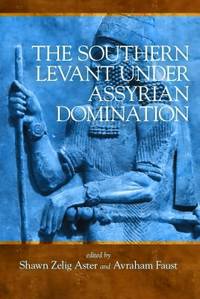
ref. A9781575067971Hardback. New. Presents a series of studies that address various aspects of Assyrian rule in the southern Levant and its consequences as well as life under Assyrian hegemony and the sources available for such studies. hardcover
1885ref. 1195111Danzig, Franz Axt, 1885. 100 S. Hlwdbd d. Zeit (Papier gebräunt).
1926ref. 1195096Stuttgart, Union Deutsche Verlagsgesellschaft, (1926). 8, 223, (1) S. OLwd (etwas braunfleckig, wenige Anstreichungen m. Bleistift).
1926ref. 1221882Union Deutsche Verlagsgesellschaft; Stgt., Berlin, Leipzig, 1926. VI; 223 S.; 19,5 cm. Originalleinen.
1960ref. 1194858München, C. Hanser, (1960). 350 S., 1 Bl. OLwdbd m. OUmschl. (geringe Gebrauchsspuren).
1954ref. 10577511954. 58 S. Hlwd (etwas braunfl., St. a. d. T.).
ref. 59-2151Bergamo Italy: Galleria Ceribelli 1998. 8vo. wraps. 96 pp. Ital./Eng. Ill. 30 color plates. Exhib. 14 Nov - 30 Dec 1998. Minor wear; VG. Bergamo, Italy: Galleria Ceribelli, 1998. paperback
ref. 71-7155Rome: Edizioni Abete 1988. 4to. 237 pp. Hard Cover. With Dust Jacket. Color and black and white plates throughout. 3 fold-out pages. Text in Italian. Very Good minor scuffs to dust jacket short tear to dust jacket at upper spine.Heavy book shipping may cost extra. Rome: Edizioni Abete, 1988. hardcover
2009ref. 101559Edizioni Polistampa. New. Paperback. FREE UPGRADE to Courier/Priority Shipping Upon Request - IN STOCK AND IMMEDIATELY AVAILABLE FOR SHIPMENT - Flawless copy brand new pristine never opened -- Text in Italian. 312 pages. -- with a bonus offer--; English summary: This guide to the museum of natural history of the University of Florence reconstructs the historical context of the museum's late 18th-century foundation illustrating how it became an important research center while introducing the reader to the museum's different themes and collections. Italian text. Italian description: Il volume ricostruisce il contesto illuministico di acculturazione popolare in cui il Granduca Pietro Leopoldo fondo l'Imperiale e Reale Museo di Fisica e Storia Naturale. Ne affido la direzione a Felice Fontana 1730-1805 con il compito di organizzare le collezioni naturalistiche e gli strumenti scientifici dell'Accademia del Cimento fino ad allora conservati nella Galleria degli Uffizi. L'apertura al pubblico nel 1775 costitui un evento senza precedenti nel panorama dei musei di storia naturale e nel giro di pochi anni il Museo divenne il maggior centro italiano di ricerca fisica e naturalistica e le sue collezioni ebbero un incremento tale da essere considerate tra le piu importanti d'Europa. A cio contribui anche la creazione dell'officina ceroplastica che produceva fedeli quanto spettacolari modelli anatomici umani in cera. Nel 1780 fu anche portata a termine l'edificazione del torrino con l'osservatorio astronomico ulteriore passo verso il compimento dell'idea di riunire in un'unica sede tutte le discipline scientifiche. La pubblicazione costituisce una guida alle Sezioni di Zoologia La Specola di Antropologia ed Etnologia di Botanica di Geologia e Paleontologia di Mineralogia e Litologia dell'Orto Botanico. Per ciascuna area tematica sono forniti cenni storici e introduttivi la piantina e numerose illustrazioni delle collezioni esposte. . 2009. 8859606799 . Edizioni Polistampa paperback
1932ref. 1312804Schwerin, P. Christiansen, 1932. 31, (1) S., 1 Bildnis. OKart. (leichte Gebrauchsspuren).
2017ref. x-0815369107Taylor & Francis 2017. Paperback. New. 176 pages. 9.21x6.14x0.55 inches. Taylor & Francis paperback
ref. 29948224-nnew. unknown