A Canadian RomanceBiblio.com

réf. 1332718191.Gpaperback. Good. Access codes and supplements are not guaranteed with used items. May be an ex-library book. paperback
réf. 1334321620.Gpaperback. Good. Access codes and supplements are not guaranteed with used items. May be an ex-library book. paperback
réf. 0266005829.Gpaperback. Good. Access codes and supplements are not guaranteed with used items. May be an ex-library book. paperback
1936réf. 63389London: Ivor Nicholson and Watson Ltd. 1936. Thick 8vo. vii 1 330 pp. Colour frontisp. numerous photo plates. Green cloth printed paper spine label extra label inserted at rear pastedown minor bumping to couple corners shelfwear light foxing to fore-edges slightly cocked w/ d.j. portrait of Madame Glyn minor shelfwear toning to spine still VG/VG copy. First edition 2nd printing July 1936 1 month after June 1st printing of this outspoken frank and often humorous author whose shocking “Three Weeks” 1907 bestseller titillated and attracted readers with her heroine seducing a younger man to conceive a child on a tiger skin rug; or her flapper era screenplay “It” which offered up Clara Bow as the quintessential sexually powerful Jazz Age heroine in 1927. She writes of defying her family as a young woman spurning suitors who were too old too fat or just didn’t appeal to her before they forced her exiled to Jersey where she would write columns on fashion and design clothing with her sister Lucy Duff-Gordon. The original British editions are surprisingly scarce and even more so in the original dustjacket predating the 1937 Dutton American edition. See: Erin Blakemore Before There Was ‘50 Shades’ . . . There Was Elinor Glyn’s ‘It” JSTOR Daily Feb. 20 2015; Denise Cummings & Annette Kuhn Elinor Glyn Women Film Pioneers Project 2013. Ivor Nicholson and Watson, Ltd,. hardcover
1968réf. 7606United States of America: William Morrow and Company 1968. First edition. 8vo. 223pp. Yellow cloth board with black in on spine pages toned bookplate pasted to ffep signed by author on ffep very good. In illustrated jacket spine toned with some small tears price clipped very good. William Morrow and Company unknown
réf. 202502047Paris, Hugo, 2025 ; in-8, 419 pp., br. Avec jaquette.
réf. 217590Japan.: No publication details. Colour woodblock folding map 37.3 x 50cm. Some occasional worming some staining at upper corners else in good bright condition. Colour woodblock pictorial map showing the castle of Zhuge Liang famed statesman military comander and strategist well known to those familiar with The Romance of the Three Kingdoms. The map shows cannons around the castle. The lengths of both the outer and the inner wall are also given. . No publication details. unknown
1930réf. 58329New York: Jacobsen Publishing Co. Inc. 1930. 8vo. 335 5 pp. Tan cloth black Art Deco lettering black ruling uniform interior toning as usual w/ d.j. Art Deco fadeaway cover art of woman in print dress on red background artist initial “H” minor edgewear creasing still VG/VG copy. First American edition of this Flapper Era romance novel set against the backdrop of contrived marriages land swindles and more in the new British suburbs. Wilson 1878-1965 wrote over 30 romance novels following World War I through World War II most under the name “Diana Patrick” and is perhaps best remembered as mother of Romilly Cavan Isabel Wilson who published her debut novel Heron at 21 years old. Jacobsen Publishing Co., Inc., hardcover
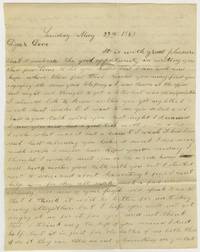
1858réf. BK0145N.p. 1858. Two autograph letters unsigned 4 pp. on two leaves with two accompanying stamped and postmarked envelopes. May letter measuring 7 ½ x 9 ½ inches; June letter measuring 6 x 7 inches. Original folds light wear and scattered spotting and staining more pronounced to the June letter and envelopes. Very good. Two affectionate letters to "Dear Dave" addressed on the accompanying envelopes to David Summer possibly Sumner of Williamsport Washington County Maryland describing a relationship pursued despite opposition from his family or household. The unidentified writer expresses a desire to kiss Dave explains that hostility from his "people" has interfered with plans to help with harvesting and arranges a meeting after dark to avoid recognition. Neither letter establishes the writer's gender or explains the reason for the opposition. Writing on May 23 after a disappointing visit to the post office the correspondent describes dreaming of a conversation with Dave and recalls their recent encounter: "O I want to see you so bad and have a good talk with you last night I dreamed I saw you and had a good talk with you . O I wish it had been real last Saturday you looked so sweet I did very much wish I could have kissed you." Plans to spend time together through work have become difficult although the writer insists that the relationship will continue: "and about harvesting I fear I cant help you for they all make such a fuss now already and none of your people will speak to me so that I think it will be better for me to stay away altogether . they can talk me out of harvesting for you but they can never talk me out of loving you for love you I do and love you I will as long as breth warms my body" Troubled by reports that suggest the attachment may be hopeless the writer asks for reassurance directly from Dave: "I want to hear something from your lips before I believe it." Work prevents setting a definite time for another meeting with the additional observation that "the nights are to light now anyhow." The letter closes "from your friend and lover." Five weeks later the June 27 letter proposes a Friday evening rendezvous at an established meeting place: "I write these few lines to let you know that I will meet you on next friday evening if nothing happens at the old place I will be there as soon as it is dark enough that persons wont know us . for I can hardly wait till I can have a talk with you" The writer explains that an earlier evening would have been preferable but Dave's infrequent visits to town might have delayed receipt of the letter. He is instructed to reply only if unable to attend; otherwise the meeting will be understood as confirmed. A final request gives a more particular sense of the conversation the writer hopes to have: "try and be there in good time and try and keep yourself sober for I want to have a sensible talk with you. I will now haft to stop leving the rest for a good talk with you on friday evening" The letter closes "nothing more at present but ever remain yours farewell my dearest dear." . unknown books
1858réf. BK0145N.p. 1858. Two autograph letters unsigned 4 pp. on two leaves with two accompanying stamped and postmarked envelopes. May letter measuring 7 ½ x 9 ½ inches; June letter measuring 6 x 7 inches. Original folds light wear and scattered spotting and staining more pronounced to the June letter and envelopes. Very good. Two affectionate letters to "Dear Dave" addressed on the accompanying envelopes to David Summer possibly Sumner of Williamsport Washington County Maryland describing a relationship pursued despite opposition from his family or household. The unidentified writer expresses a desire to kiss Dave explains that hostility from his "people" has interfered with plans to help with harvesting and arranges a meeting after dark to avoid recognition. Neither letter establishes the writer's gender or explains the reason for the opposition. Writing on May 23 after a disappointing visit to the post office the correspondent describes dreaming of a conversation with Dave and recalls their recent encounter: "O I want to see you so bad and have a good talk with you last night I dreamed I saw you and had a good talk with you . O I wish it had been real last Saturday you looked so sweet I did very much wish I could have kissed you." Plans to spend time together through work have become difficult although the writer insists that the relationship will continue: "and about harvesting I fear I cant help you for they all make such a fuss now already and none of your people will speak to me so that I think it will be better for me to stay away altogether . they can talk me out of harvesting for you but they can never talk me out of loving you for love you I do and love you I will as long as breth warms my body" Troubled by reports that suggest the attachment may be hopeless the writer asks for reassurance directly from Dave: "I want to hear something from your lips before I believe it." Work prevents setting a definite time for another meeting with the additional observation that "the nights are to light now anyhow." The letter closes "from your friend and lover." Five weeks later the June 27 letter proposes a Friday evening rendezvous at an established meeting place: "I write these few lines to let you know that I will meet you on next friday evening if nothing happens at the old place I will be there as soon as it is dark enough that persons wont know us . for I can hardly wait till I can have a talk with you" The writer explains that an earlier evening would have been preferable but Dave's infrequent visits to town might have delayed receipt of the letter. He is instructed to reply only if unable to attend; otherwise the meeting will be understood as confirmed. A final request gives a more particular sense of the conversation the writer hopes to have: "try and be there in good time and try and keep yourself sober for I want to have a sensible talk with you. I will now haft to stop leving the rest for a good talk with you on friday evening" The letter closes "nothing more at present but ever remain yours farewell my dearest dear." . unknown
1789réf. 17001789 Couverture rigide Londres [Paris], [Cazin], 1789. Deux volumes in-18 (12,5 x 8 cm), reliure plein veau fauve de l'époque, pièce de titre en maroquin olive, dos lisses ornés de fleurons dorés, triple filet d'encadrement sur les plats, filet doré sur les coupes, roulette dorée aux contreplats, tranches dorées, signet, petit manque à la coiffe supérieure du tome I, quelques frottements marginaux et épidermures sur les plats, coins légèrement émoussés, petite galerie de vers aux dos. Tome I : frontispice, 248 pages ; tome 2 : frontispice, 252 pages ; les 2 frontispices gravés sont signés Duponchel, petit renfort de scotch en pied à la page de titre du tome I intérieur du 1er volume légèrement jauni avec quelques brunissures sur les premiers feuillets au coin supérieur (sans atteinte au texte), intérieur frais pour le tome 2 . Après une première édition par Cazin en 1784 en un volume unique, une seconde vit le jour en 1789, en deux tomes, et avec les 2 gravures de l'édition de 1784 en frontispice de chaque volume (manuel du cazinophile, LXXII bis, p.126). En 1765, Sterne voyage à travers la France et l'Italie, poussant jusqu'à Naples et, à son retour, décide de décrire son voyage dans une optique "sentimentale". Le roman jouit d'un très grand succès et d'une très grande influence et contribua à faire du récit de voyage un des genres dominants de la seconde moitié du 18ème siècle. Traduction française par Frénais. Bon exemplaire.
18608vo., Second Edition, with an engraved frontispiece, illustrated title in red and black, 6 fine wood-engraved plates FINELY COLOURED BY HAND and 26 engraved illustrations in the text, wanting front free endpaper, frontispiece and title lightly spotted; original pictorial red coarse-grain cloth, upper board elaborately blocked with multiple frame border in gilt and blind enclosing jester and title all in gilt, gilt back, gilt edges, bevelled boards, yellow endpapers, covers moderately age-soiled, corners scuffed, joints somewhat rubbed with one short tear, gathering cracked at F6-7 (but binding wholly sound) else a firm, tight copy. With Westley's binder's ticket on rear paste-down. Mackenzie's version of the German mediaeval classic was first published in 1860 as a Christmas volume, but stocks were swiftly exhausted and a second edition prepared to meet continuing demand. Mackenzie produced a lengthy additional preface to this second edition, attributing the success of the venture partly to 'the generous and unanimous verdict of the press' but also, surely, to the wonderful illustrations by 'Alfred Crowquill' (A.H. Forrester). Many would-be Christmas readers must have been disappointed for Mazkenzie dates his preface Christmas Eve, but scholars of mediaeval romance and fantasy will find this a most useful edition replete with extensive historical preface and bibliographical and other scholarly appendices. The US edition (T&F of Boston) of the same year is the first American edition of the tale in English. Scarce.
1927In 8, pp.XX + 143. (Francese e trad. in italiano). Br. ed. ill (xilografia di N. F. Pestarino ai piatti e al frontesp.). Dorso rifatto. Intonso.
1981réf. 2110502150415333Sutairu-sha 1981. Soft Cover. Fine. Volume: 1 Sutairu-sha paperback
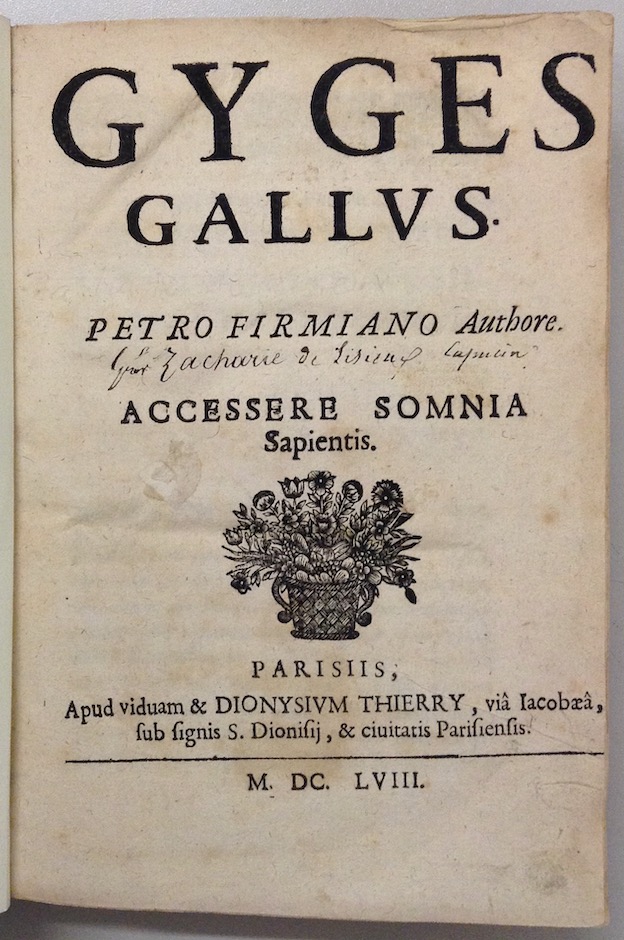
1658réf. 621021Paris, D. Thierry, 1658. 4to. 8 Bl., 561 S., 1 Bl. Moderner Pappband.
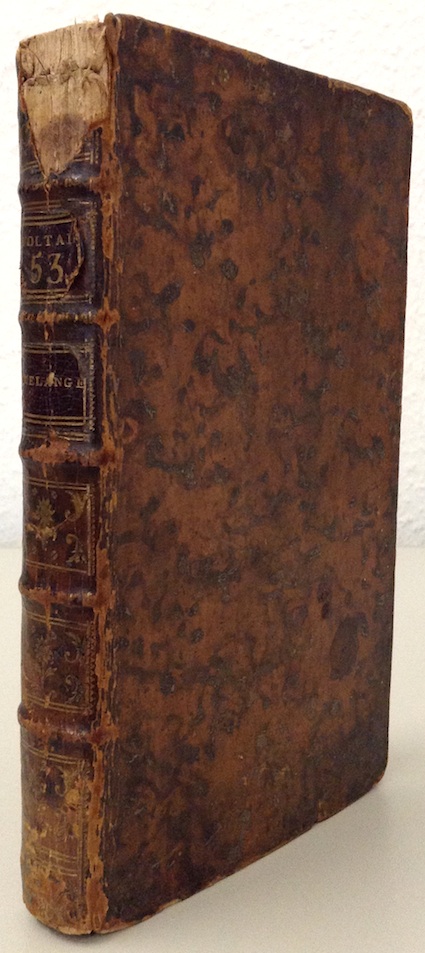
réf. 621174Verschiedene Druckorte u. Verlage. Leder d. Zeit mit 2 Rückenschildern "Voltaire 53" u. "Mélanges" (berieben u. bestoßen, Rücken am Kopf mit großer Fehlstelle). [3 Warenabbildungen]
1857réf. 1312723Paris, J. Tardieu, 1856 - 1857. 16 S. (Extraits des journaux), 2 Bl., 204 S.; 1 Bl., 228 S. Roter Lwdbd d. Zeit m. Gold- u. Blindprägung u. allseitigem Goldschnitt (Einbd u. Vorsätze leicht fleckig).
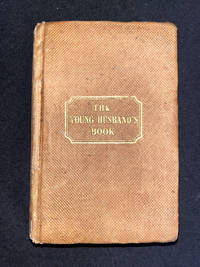
1836réf. 004867Philadelphia: Carey Lea & Blanchard 1836. 1st Edition . Hardcover. Good. Cooney Barbara. 288pp. Brown cloth gilt lettering engraved frontispiece and title page. Corners rubbed light wear and soiling contents are lightly foxed former owners' names on front endpapers. Early 19th century advice to recently married men regarding their duties and responsibilities of marriage. Carey, Lea & Blanchard hardcover
1787réf. 1310040Venedig, Zatta, 1787. 4 Bl., 280 S. m. 14 gestochenen Vignetten (Parnaso Italiano 27). Hldr d. Zeit m. Rückenvergoldung, 2 schwarzen Rückenschildchen u. allseitigem Farbschnitt (etwas beschabt, Vorsätze leimschattig, kaum braunfleckig, streckenweise oben gering nässerandig).
1676réf. 1317824O.O. o. Vlg (iuxta exemplar Coloniae Ubiorum impressum), 1676. Gestoch. Titelporträt, illustr. Kupfertitel, 6 Bl., 352 S., 8 Bl. Schweinsldrbd d. Zeit auf Holzdeckeln mit Blindprägung u. 2 Schließen (Einbd mit Wasserschaden, hinterer Deckel gebrochen u. Lederbezug gelöst, durchgehend etwas feuchtwellig u. mit schwachem Nässerand, Titel mit altem Besitzvermerk u. Stempel auf Rückseite).
réf. 1247618250.Gpaperback. Good. Access codes and supplements are not guaranteed with used items. May be an ex-library book. paperback
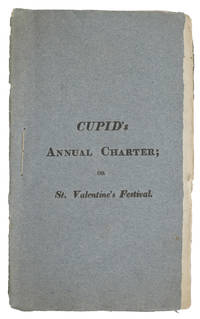
1820réf. 7617London: Published by W. Perks 1820. SOLE EDITION 12mo pp. 24 hand-coloured frontispiece. Partly unopened and stitched as issued in original blue paper wrappers front wrapper printed in black. A little light soiling slight creasing to title-page. Wrappers split at spine. A scarce little collection of verse mostly in address-and-answer format between ‘Valentine’ and various types: faithless lover gentleman miser coquette old batchelor etc. Various catalogues guess a date between 1798 and 1830 but BBTI puts the publisher’s active period at 1820-1826 and the printer George Smeeton at 139 St Martin’s Lane between 1808 and 1839. The Yale catalogue attributes the frontispiece to Isaac Cruikshank. Published by W. Perks unknown
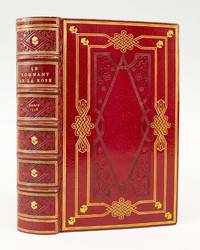
1538réf. ST14933Paris: Jehan Masse Jean Macé 1538. Fourth Edition. 182 x 91 mm. 6 3/8 x 3 3/4". 8 p.l. ccciii 1 blank leaves.Edited by Clément Marot. ELEGANT SCARLET MOROCCO BY LORTIC stamp-signed on front turn-in covers tooled in gilt and blind in a Grolieresque strapwork design raised bands spine compartments with central gilt rose surrounded by blind tooling gilt titling turn-ins richly gilt marbled endpapers all edges gilt. With title page vignette and 49 impressions of 26 CHARMING WOODCUTS in the text. Front pastedown with engraved bookplate of P. Grandsire. Brunet III 1175; Bourdillon "Early Editions of the Roman de la Rose" the "S" version pp. 62-63. ◆Leaves lightly washed and pressed following the bibliophilic fashion at the time of binding occasional mild browning or small marginal stains but still A LOVELY COPY clean and still crisp IN A SPARKLING BINDING. Beautifully bound this is a most attractive copy of the last early edition of this classic of courtly love perhaps the most influential work in Medieval French literature. An allegorical love poem that unfolds as a dream vision the "Romance of the Rose" is the work of two authors Guillaume de Lorris who composed the first 4000 or so lines around 1230 and Jean de Meun who contributed an additional 18000 lines 40 years later. Our version was edited by the poet Clément Marot 1496-1544 to make the language more accessible to 16th century French readers and his efforts contributed to a renewed popularity for the tale. Marot did four recensions of the text; this is the final one. After our printing no other edition appeared until 1735. According to Bourdillon the woodcuts here are copied from the "very pretty" series in the 1529 edition. The scenes are impressive in the level of detail especially considering their diminutive size. Pierre Marcellin Lortic 1822-92 was one of the great binders of 19th century Paris known for his superb interpretations of traditional styles as in the present binding. According to Flety "at once artisan and artiste intelligent and conscientious an expert and a lover of his metier he knew how to give his work the finish the brilliance that very few practitioners of his time could attain." Our copy comes from the library of French bibliophile Paul Grandsire of Nogenten-Bassigny Haute-Marne whose notable collection of French imprints from the 15th to the 18th centuries was sold in 1930. All early versions of the "Romance of the Rose" are sought after and this is especially true of well-preserved copies of those editions with charming illustrations and in fine bindings favored by discriminating bibliophiles. Jehan Masse [Jean Macé] books
1538réf. ST14933Paris: Jehan Masse Jean Macé 1538. Fourth Edition. 182 x 91 mm. 6 3/8 x 3 3/4". 8 p.l. ccciii 1 blank leaves.Edited by Clément Marot. ELEGANT SCARLET MOROCCO BY LORTIC stamp-signed on front turn-in covers tooled in gilt and blind in a Grolieresque strapwork design raised bands spine compartments with central gilt rose surrounded by blind tooling gilt titling turn-ins richly gilt marbled endpapers all edges gilt. With title page vignette and 49 impressions of 26 CHARMING WOODCUTS in the text. Front pastedown with engraved bookplate of P. Grandsire. Brunet III 1175; Bourdillon "Early Editions of the Roman de la Rose" the "S" version pp. 62-63. ◆Leaves lightly washed and pressed following the bibliophilic fashion at the time of binding occasional mild browning or small marginal stains but still A LOVELY COPY clean and still crisp IN A SPARKLING BINDING. Beautifully bound this is a most attractive copy of the last early edition of this classic of courtly love perhaps the most influential work in Medieval French literature. An allegorical love poem that unfolds as a dream vision the "Romance of the Rose" is the work of two authors Guillaume de Lorris who composed the first 4000 or so lines around 1230 and Jean de Meun who contributed an additional 18000 lines 40 years later. Our version was edited by the poet Clément Marot 1496-1544 to make the language more accessible to 16th century French readers and his efforts contributed to a renewed popularity for the tale. Marot did four recensions of the text; this is the final one. After our printing no other edition appeared until 1735. According to Bourdillon the woodcuts here are copied from the "very pretty" series in the 1529 edition. The scenes are impressive in the level of detail especially considering their diminutive size. Pierre Marcellin Lortic 1822-92 was one of the great binders of 19th century Paris known for his superb interpretations of traditional styles as in the present binding. According to Flety "at once artisan and artiste intelligent and conscientious an expert and a lover of his metier he knew how to give his work the finish the brilliance that very few practitioners of his time could attain." Our copy comes from the library of French bibliophile Paul Grandsire of Nogenten-Bassigny Haute-Marne whose notable collection of French imprints from the 15th to the 18th centuries was sold in 1930. All early versions of the "Romance of the Rose" are sought after and this is especially true of well-preserved copies of those editions with charming illustrations and in fine bindings favored by discriminating bibliophiles. Jehan Masse [Jean Macé]
1793réf. 1300568Rom, G. Nave, 1793. Gestochener, handkolorierter Titel, 174 S., 1 Bl. auf stärkerem Papier. Broschur der Zeit (Umschl. berieben, Rücken m. altem Papier überklebt, unbeschnitten, durchgehend etwas braunfleckig).