727 results
1865ref. mon0000078264Groombridge and Sons London 1865-01-01. Hardcover. Good. 0.0000 in x 0.0000 in x 0.0000 in. 1865 leather bound edition volume VI of the Intectual Observer libris plate to end paper ILLUSTRATED WITH PLATES IN COLOURS AND TINTS AND NUMEROUS ENGRAVINGS ON WOOD Groombridge and Sons, London hardcover
1975ref. 28574AB1975. New York Hastings House Publishers Inc. 1975. Folio. c. 400 unnumbered pages with 515 graphical contributions from various artists in colour as well as in black-and-white. Original Hardcover with original unclipped illustrated dustjacket in protective Mylar. Cover Art dustjacket and pastedwon art by Fred Otnes. Absolutely excellent FINE condition. hardcover
1971ref. 28575AB1971. New York Hastings House Publishers Inc. 1971. Folio. c. 400 unnumbered pages with 504 graphical contributions from various artists in colour as well as in black-and-white. Including an Index. Original Hardcover with original unclipped illustrated dustjacket in protective Mylar. Cover Art dustjacket and pastedwon art by Bernie Fuchs. Absolutely excellent FINE condition. hardcover
1971ref. 28576AB1971. New York Hastings House Publishers Inc. 1971. Folio. c. 400 unnumbered pages with 485 graphical contributions from various artists in colour as well as in black-and-white. Including an Index. Original Hardcover with original unclipped illustrated dustjacket in protective Mylar. Cover Art cover dustjacket and pastedwon art by AKM. Excellent Near FINE condition. hardcover
1955ref. 47191New York: Harcourt Brace and World 1955. Hardcover. Very Good in a Good dust jacket. Thumb sized chip to mid spine some edge wear.; 8vo 8" - 9" tall. Harcourt Brace and World hardcover
1940ref. 19330John C. Winston Company. Very Good in Good dust jacket. First Edition; First Printing. Hardcover. Blue blindstamped decorated cover has wear to corners and caps but is clean bright and in very good condition. Boards and spine are straight. Binding is tight. Illustrated end sheets and paste downs clean and very good with former owner's name on blank side. Pages are clean and near pristine. Dust jacket has . Wear to the extremities with a couple of short tears and soiling to back panel but bright and in good condition. DJ corners clipped. DJ protected by a brand new clear acid-free mylar cover. We add mylar covers to all books with DJs to preserve the DJs and add luster to magnify their beauty. If pictured shown without the mylar cover for an accurate representation of dust jacket. ; 280 pages . 1940. John C. Winston Company hardcover
1900ref. 15109New York: R. H. Russell. Fair. Hardcover. Green cover with arts & crafts style illustration has light wear along the extremities hinges are cracked with 1" chips to the spine caps and clear scotch tape has been crudely added to hold the backstrip. Boards and spine are straight. Although binding is is in need of repair the individual signatures are still intact. Lacking frontispiece and title page otherwise complete with mostly b&w in the style of the arts & crafts era in which the book was created and many color illustrations. Pages are lightly toned with modest thumbing. . . 1900. R. H. Russell hardcover
2010ref. 11657Ringling College of Art & Design. Fine. Paperback. Book is rubbed at corners otherwise pristine. Book has ever been cracked open. .; 30 pages . c. 2010. Ringling College of Art & Design paperback
ref. 0603075010.Ghardcover. Good. Access codes and supplements are not guaranteed with used items. May be an ex-library book. hardcover
2008ref. G0061374407I5N10Harper Paperbacks 2008. Paperback. Acceptable. Former library book; Readable copy. Pages may have considerable notes/highlighting. ~ ThriftBooks: Read More Spend Less.Dust jacket quality is not guaranteed. Harper Paperbacks paperback
ref. 68512850-75Used - Very Good. Pages intact with possible writing/highlighting. Binding strong with minor wear. Dust jackets/supplements may not be included. Stock photo provided. Product includes identifying sticker. Better World Books: Buy Books. Do Good. unknown
2008ref. G0061374407I4N00Harper Design 2008. Paperback. Very Good. Disclaimer:A copy that has been read but remains in excellent condition. Pages are intact and are not marred by notes or highlighting but may contain a neat previous owner name. The spine remains undamaged. At ThriftBooks our motto is: Read More Spend Less.Dust jacket quality is not guaranteed. Harper Design paperback
ref. SKU1092829Librairie Marpon et Flammarion. hardcover. Good. 0x0x0. No date listed circa 1892; blue cloth over boards with brown leather corners and spine; heavy rubbing to leather; boards are marked; no jacket; interior hinges are cracking; discoloration to endpapers from leather corners on boards; pages are toned; text in French; illustrated including an illustrated title page in color; 335 pages; 4to - over 9 3/4" - 12" Tall; Additional shipping charges may be required for International and Expedited orders Librairie Marpon et Flammarion hardcover
ref. 011477New York: Playmore Inc Dean & Sons Pictorial hardcover binding clean square and tight - interior clean and tight. 176 pages. No date listed. Beautifully illustrated. Size: 48mo - over 3" - 4" tall. Illus. by Grahame Johnstone Janet and Anne. Hardcover. Very Good/har. Playmore Inc (Dean & Sons) Hardcover
ref. 18877911-nnew. unknown
ref. DADAX0942604091Brand: Robert Silver Assoc 0000-00-00. First Edition. hardcover. New. 0.00x0.00x0.00. Buy with confidence. Excellent Customer Service & Return policy. Brand: Robert Silver Assoc hardcover
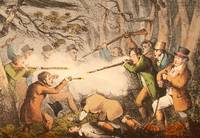
ref. 06228London: Printed by W. Lewis. for Thomas McLean 1822. First and only edition of a rare and valuable magazine" Schwerdt ALKEN Henry and BARENGER James illustrators. The Sporting Repository containing Horse-Racing Hunting Coursing Shooting Archery Trotting and Tandem Matches Cocking Pedestrianism and Pugilism. anecdotes on sporting subjects interspersed with essays tales and a great variety of miscellaneous articles. London: Printed by W. Lewis. for Thomas McLean 15 January-15 June 1822. First and only edition. Octavo 9 1/8 x 5 3/4 inches; 233 x 146 mm. viii 1-80; 81-176; 177-268; 269-356; 357-448; 449-540 pp. Hand-colored aquatint frontispiece and eighteen hand-colored aquatint plates after H. Alken and J. Barenger engraved by G. and T. Hunt. All plates with tissue guards. Handsomely bound by Rivière & Son ca. 1920. Full red morocco covers decoratively ruled in gilt spine with five raised bands elaborately tooled and lettered in gilt gilt board edges & turn-ins dark green silk liners and endleaves all edges gilt. A spectacular example the hand-colored plates bright and fresh. Loosely inserted at end are the original front and rear wrappers for part II "15th of February 1822". This publication stands out for its vivid illustrations some of the finest sporting aquatints of the period and for its documentation of early 19th-century British sporting culture. Though it was planned as a continuing series only six monthly parts were published making complete sets rare. Published in six monthly parts from January to June this is the "First and only edition of a rare and valuable magazine." Schwerdt. The Sporting Repository contains anecdotes and illustrations on many sporting subjects including 'Horse Racing Hunting Coursing Shooting Archery Trotting and Tandem Matches Cocking Pedestrianism and Pugilism'. This 'rare and valuable magazine' is an unashamed celebration of popular sports and a mine of interesting information. Mellon/Podeschi A13. Schwerdt II p. 212. Tooley 467. London: Printed by W. Lewis... for Thomas McLean, 1822 unknown
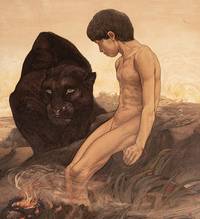
ref. 06188London: Macmillan & Co. Limited 1903. Beauty That Hath Terror in It" The Detmold Brothers' Sublime and Unsettling Vision of The Jungle Book The Magnificent Original 1903 Folio Portfolio with Sixteen Superb Color Plates KIPLING Rudyard. DETMOLD Maurice & Edward J. illustrators. Sixteen Illustrations of Subjects from Kipling's "Jungle Book" by Messrs. Maurice & Edward Detmold. London: Macmillan & Co. Limited 1903. First edition. Reportedly limited to 500 copies for England and America. Folio 21 3/8 x 15 1/2 inches; 543 x 394 mm. Title-page contents leaf and sixteen magnificent color plates tipped onto white boards within gray window mounts each accompanied by a protective cover sheet bearing the title and a short extract from Kipling's text. Title-page and list of illustrations expertly repaired at folds; second plate description with short marginal tear; some light foxing to text leaves and mounts only. The plates themselves are remarkably clean fresh and beautifully preserved. Original publisher's green cloth portfolio front cover decoratively stamped and lettered in gilt retaining one of the two original green silk ties. An excellent example of one of the most magnificent and celebrated achievements of Edwardian book illustration exceptionally scarce complete with all sixteen plates. Published in 1903 when the extraordinary twin brothers Maurice and Edward Julius Detmold were just twenty years old this monumental portfolio represents the culmination of their artistic collaboration and one of the finest visual interpretations of Rudyard Kipling's The Jungle Book ever produced. The sixteen superb compositions reveal an astonishing maturity of conception and execution. Combining meticulous natural history observation with an intensely personal decorative imagination the Detmolds created a world at once beautiful mysterious and faintly menacing in which the distinction between the natural and the supernatural seems perpetually uncertain. Animals are rendered with extraordinary anatomical precision their musculature fur scales and movement observed with almost scientific exactitude. Yet these are far more than zoological studies. Wolves possess an almost monumental dignity; panthers move with a sinister effortless grace; serpents coil with hypnotic inevitability; and the great tiger Shere Khan emerges as an embodiment of majestic and terrifying power. The brothers' remarkable understanding of animal character is matched by their sensitivity to atmosphere and composition. Their creatures appear not merely as participants in Kipling's narratives but as independent beings endowed with intelligence memory and an almost human consciousness. Particularly striking are the representations of Mowgli whose slender youthful figure is repeatedly contrasted with the formidable creatures surrounding him. His vulnerability is balanced by a quiet assurance suggesting his extraordinary position between the human and animal worlds. The Detmolds avoid the sentimentality often associated with illustrations of childhood instead emphasizing Mowgli's intimate identification with the jungle and its inhabitants. In the celebrated scenes depicting Bagheera Baloo Akela and the Monkey People the artists achieve an extraordinary balance between narrative drama and decorative design. The Monkey People particularly in their ruined architectural surroundings are among the most unsettling creations in the series their restless gestures and grotesque attitudes suggesting a strange parody of human society. Equally remarkable is the brothers' use of color. Their sumptuous yet carefully controlled palette of burnished browns smoky grays subdued greens and golden ochres lends the compositions an almost dreamlike quality. Subtle gradations of tone together with intricate patterns of foliage fur and stone produce a richness and unity of design seldom equaled in contemporary illustration. The original large-format plates possess a depth delicacy and painterly quality that cannot be fully appreciated in the considerably reduced reproductions of the later book edition of 1908. Presented individually within their original window mounts they have the presence and visual authority of original watercolors. Indeed so successful were these images as independent works of art that many portfolios were subsequently broken up their individual plates removed for framing. The survival of a complete portfolio particularly one retaining its original publisher's cloth case and with the plates in such fresh condition is consequently especially desirable. The contemporary critical reception was enthusiastic. Reviewing the London exhibition of the original paintings the Manchester Guardian of November 5 1903 declared that the brothers: "are able to prevent their work from ever sinking to the level of mere illustration". The reviewer particularly admired the depiction of the Monkey People in the Cold Lairs describing it as: "full of character subtle observation and invention". Of the representation of Bagheera in Mowgli and the Red Flower the reviewer memorably observed that it possessed: "something of that beauty which hath terror in it". The same review praised the convincing and engaging portrayals of Baloo Nag Kaa and Akela recognizing in the Detmolds' work an extraordinary fusion of imaginative invention and naturalistic observation. A report published in the New York Times on December 5 1903 stated that the edition was strictly limited to 500 copies for England and America emphasizing the exclusivity of this magnificent production from the outset. The portfolio is particularly significant in the history of the Detmold brothers' careers. Born in 1883 Maurice and Edward developed their exceptional artistic talents together displaying an early and remarkable aptitude for the representation of birds animals and the natural world. Their close collaboration produced some of the most distinctive illustrated publications of the opening years of the twentieth century. Tragically Maurice took his own life in 1908 bringing their artistic partnership to a premature end. Edward continued to enjoy a distinguished career as an illustrator but the works produced jointly by the brothers retain a unique place in the history of British illustration. As Richard Dalby observed the paintings were admired for their realistic detail and decorative arrangement while Diana Johnson identified the extraordinary tension between their scientific naturalism and ornamental imagination a combination capable of producing images both fanciful and profoundly disturbing. A masterpiece of the Golden Age of Illustration this spectacular portfolio stands among the finest achievements of the Detmold brothers and one of the most beautiful and psychologically compelling interpretations of Kipling's immortal jungle stories. Complete examples of the original 1903 folio portfolio are increasingly difficult to obtain and the present copy with all sixteen plates clean and fresh and preserved in its original gilt-decorated publisher's portfolio is an especially attractive survival. London: Macmillan & Co., Limited, 1903 unknown
2013ref. DADAX0062222600Brand: Harper Design 2013-03-12. Annual. paperback. New. 7.88x1.14x9.76. Buy with confidence. Excellent Customer Service & Return policy. Brand: Harper Design paperback
1950ref. 85256New York: Little Golden Book Simon and Schuster 1950. FIRST EDITION NAP. Very Good Minus. First Edition with the "A" on final page. A little shelf-wear especially on the golden paper strip over the spine which is where the Little Golden Books tend to go first. SIGNED by Howdy Doody and Buffalo Bob Smith. Smith -- aka Robert Emil Schmidt 1917-19980 was a radio and television personality from yes! Buffalo who through a series of events found himself at the helm of an enormously popular children's television show which unlike other kids' shows was not designed as a teaching device but only to please the children. "Hey Kids What Time Is It It's Howdy Doody Time! and the song the words and music of which constitutes the last page of this book would be sung in unison -- LOUD! Story of Howdy Doody the Cowboy rodeo star back home after a busy season with the whole summer stretched out before him. He and his friends decide to start their own circus so they take off on a plane for Africa and recruit all the happy animals including the Octopus which Howdy scoops up in a net while hanging from the plane. Little Golden Book (Simon and Schuster) unknown
1951ref. 445955New York: The Limited Editions Club 1951. Hardcover. Fine/Good. Three volume set in red paper-covered slipcase with printed paper spine label. Limited edition. Copy no. 873 of 2000. Small folios. Each volume with color illustrations. All three are fine in glassine jackets. The jacket on Pandora's Box is torn on the front lower right corner else very good overall. The box is near fine with a few small nicks and tears. All three volumes are Signed by Jean Hersholt. The set consists of the following three separate works: The Tale of King Midas and The Golden Touch. As told by Nathaniel Hawthorne. Illustrated with color lithographs by Fritz Eichenberg; Pandora's Box By Nathaniel Hawthorne. Illustrated by Rafaello Busoni; The Emperor's New Clothes By Hans Christian Andersen. Translated by Jean Hersholt. Illustrated by Ervine Metzl. A handsome set. The Limited Editions Club hardcover
2012ref. SONG006212336XHarper Design 2012-02-14. Annual. paperback. Used: Good. 8.00x1.25x10.00. Buy with confidence. Excellent Customer Service & Return policy. Harper Design paperback
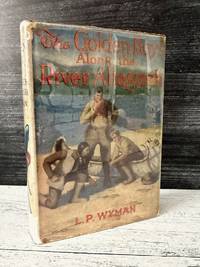
1923ref. C4Gg-A072726A11New York: A. L. Burt Company 1923. First Edition; First Printing. Hardcover. Good/Acceptable. 5.25 x 7.75. G/AC. First Edition; First Printing. 1923. A. L. Burt Company NY. Previous owner name on front flyleaf else unmarked. Hardcover. Good light blue cloth boards w/ black cover illustration & lettering; fading to spine discoloration around edges edge & corner wear minor edge rubbing. Chip & light fray to cloth edges; soiling & rubbing to back cover. Moderate even toning to text block edges. Scattered light foxing. Glossy b&w frontispiece by Phil Schaeffer. Acceptable dust jacket w/ several chips and missing pieces front and back interior flaps missing moderate tanning light soiling & shelf wear; missing piece to spine heel small chips & closed tears along top & bottom edges. 247 pp. 5.25x7.75". Seventh volume in L. P. Wyman's Golden Boys juvenile wilderness series following brothers Bob & Jack Golden Rex Dale & Penobscot guide Kernertok on a canoe trip along the Allagash River in northern Maine. Ships in box from the USA quickly & w/care. _____________________________________________________________________________________________________________________________ SYNOPSIS & HISTORY: Published by the A. L. Burt Company in 1923 The Golden Boys Along the River Allagash represents the seventh installment in L. P. Wyman's ten-volume juvenile wilderness adventure series. Set along the remote Allagash River waterway in northern Maine the narrative follows brothers Bob and Jack Golden their companion Rex Dale and Penobscot guide Kernertok as they embark on a canoe expedition through the backcountry. Their mission centers on tracking a fugitive named Stebbins to recover stolen funds vital to Rex's family while navigating river rapids timber camp rivalries and wilderness survival challenges. Presented in publisher-designed light blue cloth boards featuring a black-stamped pine forest and canoeing cover illustration the volume includes a glossy black-and-white frontispiece plate illustrated by Phil Schaeffer. Bibliographical analysis confirms this printing as a First Printing identified by the interior copyright page catalog listing The Golden Boys Along the River Allagash as the seventh and final title published in the series to date. Authored by Levi Parker Wyman Ph.D. Dean of Pennsylvania Military College the Golden Boys series served as a forerunner to the outdoor boy-detective genre popularized later in the decade. Drawing on Wyman's personal knowledge of the Maine woods the text incorporates authentic details of canoeing logistics Penobscot guide tradecraft and regional Allagash geography. With its original pictorial dust jacket this volume serves as a scarce physical record of early 1920s American youth fiction and regional wilderness publishing. A. L. Burt Company hardcover
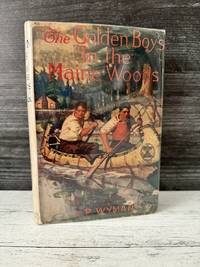
1923ref. C4VGvg-A072726A10New York: A. L. Burt Company 1923. First with early print jacket. Hardcover. Very Good/Very Good. 5.25 x 7.75. Married Pair. First Print book w/ early print jacket 1923 copyright. VG/VG. Hardcover. A. L. Burt Company NY. Previous owner name short inscription on front flyleaf w/ small sticker else unmarked. Nice bright yellow cloth boards w/ black cover illustration & lettering; edge & corner wear light fray to cloth edges. Small stain outer text block does not affect interior text or margins. Glossy frontispiece. Very Good dust jacket nice color light tanning & soiling nicks and small edge tears. Book lists to itself. Front jacket flap to Haunted Camp. 247 pp. 5.25x7.75". Third volume in L. P. Wyman's Golden Boys juvenile wilderness series following brothers Bob & Jack Golden in the Maine woods. P. Wyman's Golden Boys juvenile wilderness series following brothers Bob & Jack Golden Rex Dale & Penobscot guide Kernertok on a canoe trip along the Allagash River in northern Maine. Ships in box from the USA quickly & w/care. _____________________________________________________________________________________________________________________________ SYNOPSIS & HISTORY: Published by A. L. Burt Company The Golden Boys in the Maine Woods represents the third installment in L. P. Wyman's classic 1920s juvenile adventure series. Set in the dense pine forests and waterways surrounding Moosehead Lake the story follows teenage brothers Bob and Jack Golden as a wilderness retreat at their father's lumber camp transforms into an action-packed outdoor mystery involving stolen motorcycles a coded treasure map hidden moonshiners and wilderness survival. The volume features publisher-designed yellow cloth covers decorated with black and red stamped title lettering and a full-front cover illustration depicting two wilderness adventurers on snowshoes. The text block is equipped with a glossy paper frontispiece illustration by American Golden Age artist Mead Schaeffer who also provided the full-color jacket art. Dr. Levi Parker Wyman a Maine native and Dean of Pennsylvania Military College drew upon his academic background and military academy experience to craft wholesome instructive adventure fiction for high school-aged readers. Published during the golden era of American series fiction prior to the dominance of syndicate-driven pseudonyms this work stands as an authentic historical record of early twentieth-century juvenile publishing and 1920s outdoor adventure literature. Original paper dust jackets from 1920s A. L. Burt series titles suffer from an exceptionally high historical attrition rate with few surviving the passage of time. A. L. Burt Company hardcover
1915ref. C4G-ES072726A4New York: The Macmillan Company 1915. 1st American Ed; 1st Thus. Hardcover. Good. 5.5 x 7.75. Good. First American Edition; First Thus. 1915. The Macmillan Company NY. Unmarked. Hardcover. Starting front inner hinge mull showing back cover loose hinge all pages secure. edge & shelf wear bumped corners minor cloth fraying to spine extremities. Good green cloth covers & spine w/ gold lettering gold star circular border decoration & A.U. initials to front cover. Even tanning. Very light scattered foxing to endpapers & title page; even light tanning to interior pages. No dust jacket. 5.5 x 7.75". 358 pp. Concluding volume of Blackwood's Uncle Paul spiritual trilogy following three children and their Uncle Felix into a hidden intercalary day where ordinary time ceases. Ships from the USA quickly & w/care. _____________________________________________________________________________________________________________________________ SYNOPSIS & HISTORY: An antiquarian hardcover first American edition Algernon Blackwood's The Extra Day explores the transcendent mysticism and pantheistic wonder of the Edwardian era. The narrative follows three children Judy Tim and Maria who guided by their whimsical Uncle Felix discover a hidden magical intercalary day where standard time ceases to exist. Within this temporal anomaly the natural world awakens into conscious supernatural vitality allowing the protagonists to experience the universe free from the constraints of adult routine and structured reality. Algernon Blackwood stands among the influential figures of early twentieth-century supernatural fiction actively bridging the transition from Victorian ghost stories to modern cosmic horror and nature mysticism. The novel serves as the concluding installment in a thematic spiritual trilogy that began with The Education of Uncle Paul and A Prisoner in Fairyland. Blackwood infuses the text with his own deeply held animistic beliefs challenging linear Western concepts of time and portraying nature as an immense conscious entity capable of interacting with the innocent human mind. Manufactured by The Macmillan Company in New York the physical volume features dark green cloth boards and a gold-stamped circular star border on the front cover. The lower right corner displays the gold-stamped initials A. U. signifying Author of Uncle Paul which serves as the primary bibliographical marker identifying this exact binding as the true first American printing. The copyright page explicitly states the September 1915 publication date solidifying its place as a verified primary source of Edwardian fantasy literature. The Macmillan Company hardcover