1283 risultati
rif. 686284to. 265 pp. 23-24 & 173-174 missing 11 pages unused page 71 repeated i.e. 251 of 300 numbered pages employed for the manuscript minutes of board meetings and for occasional other purposes; several typed pages or notes laid in or affixed to a page. Minutes in pen and pencil in the hands of recording secretaries Harry Hartmeir Frank Piaget John Connolly and others. Founded in 1895 as the Paterson Golf Club and incorporated as the North Jersey Country Club in 1897 this minute book covers an important period in club history as plans to build roads through the Paterson location occasioned a move to Wayne in 1917 the purchase of the 327 acre Greenbrook Farm in 1921 and the building of a new club house there in 1922; the construction of its new golf course designed by Walter Travis began the same year opening in 1923. The club and course continue today. Contemporary notebook half-leather and black pebbled cloth very worn leather spine gone leather corners mostly gone edges bumped and worn; interior very good and quite legible. unknown books
1950rif. 67809Hakone Ito and Kawasaki Japan: The clubs 1950. Golf scorecards each a bi-folium 4 7/8 x 3 inches the inner pages with the scorecard local rules in both Japanese and English on the verso of the integral leaf. The first has been completed 90 100 and 108 for three golfers the other two unused. Each decorated wrappers rubbed. Very good lot. For the three The clubs unknown books
rif. 14266White House Presidential Seal golf gift set produced as a presentation object associated with the presidency and described as a gift presented to visiting dignitaries and friends. Its combination of presidential insignia and golf accessories places it within the material culture of White House gift giving where objects bearing official emblems could mark personal diplomatic or ceremonial encounters. White House Presidential Seal Gift Box Golf Set. The fitted set contains one divot tool and one ball marker each bearing a diecast Presidential Seal together with three golf tees. The components are housed in a presentation box displaying the Presidential Seal. The supplied description identifies these sets as presidential gifts to visiting dignitaries and friends; no accompanying documentation establishing a particular recipient presentation date or presidential administration is present. Unused and in mint condition. The intact boxed presentation preserves the complete grouping of presidential golf accessories and its original gift format. unknown books
1910rif. 200811910. Women's competitive golf archive 1910s to 1930s documents women golfers in practice tournament and club settings during the formative decades of organized women's golf in the United States. The group provides visual evidence of women's athletic participation in a sport long associated with country-club respectability social access and gendered expectations about dress leisure and competition. The U.S. Women's Amateur Championship began in 1895 as one of the USGA's first three championships and the USGA identifies it as marking the beginning of women's competitive golf in the United States; these photographs and postcard show how that competitive culture appeared in everyday and press imagery in the decades that followed. The archive consists of seven items dated between the 1910s and 1930s: six silver gelatin photographs and one brightly illustrated postcard measuring from approximately 1.75 x 2.75 inches to 7.25 x 9 inches. The photographs include a 1934 press image of golfer Barbara Stoddard in a swing position; a 1935 lineup from the Annual Women's St. Valentine Golf Tournament identifying Helen Waring Sarah Fownes Wadsworth Myrom W. Marr and W.C. Fownes Jr.; three small circa 1928 photographs of women positioned with clubs on a golf range; and an early 1930s image of two women posed with a man at a country club the women holding several clubs with one woman wearing trousers. The illustrated postcard from the early twentieth century shows a woman swinging a club in an athletic outfit still shaped by long-skirted fashion rather than later sportswear. Across the group recurring details include golf clubs held as markers of athletic identity posed swings tournament lineup conventions country-club settings and changing women's clothing from long skirts to less restrictive dress. The archive records women's golf as both competitive sport and social performance making visible the relationship between athletic skill class-coded club culture and evolving public ideas about women's physical capability. Its strongest research value lies in the mix of press photographs vernacular practice images tournament documentation and illustrated popular culture allowing comparison between women as actual competitors and women as stylized sporting subjects. Light handling wear minor edge wear and typical surface wear to photographs and postcard; images remain clear and identifiable; overall very good. Cohesive women's sports archive documenting early twentieth-century women golfers as competitors club participants and subjects of changing athletic representation. unknown books
rif. 8888Dunlop. Presidential Seal Golf Ball documents the use of presidential insignia on informal White House and executive-associated material culture. As a recreational object marked with the presidential seal it connects the public symbolism of the office with golf a sport closely associated with twentieth-century presidential leisure diplomacy and informal political sociability. Dunlop. Presidential Seal Golf Ball. N.p.: Dunlop n.d. White golf ball printed with blue presidential seal. The object combines a standard sporting form with official-style executive iconography making it a compact example of presidential presentation souvenir or recreational ephemera. Presidential golf objects belong to a broader category of White House-associated memorabilia in which leisure access and political symbolism intersect. No visible wear near fine. Concise example of presidential recreational ephemera linking executive imagery with golf culture. unknown books
rif. 12130Clinton era Air Force One golf ball circa 1993-2001 is a piece of presidential commemorative material bearing the visual identity of the executive office and presidential air transport during Bill Clinton's administration. Air Force One serves as the call sign for a U.S. Air Force aircraft while the president is aboard and the two VC-25A aircraft used for presidential transport became among the most recognizable symbols of the modern presidency. The golf ball consequently belongs to the material culture surrounding presidential travel executive symbolism and the informal commemorative objects associated with the White House and Air Force One. Dunlop Air Force One commemorative golf ball. Clinton era circa 1993-2001. White golf ball manufactured by Dunlop and printed in full color with the Presidential Seal. Surrounding the seal is the inscription "Seal of the President of the United States / Air Force One." The design combines two immediately recognizable symbols of presidential authority: the official seal and the name associated with presidential air transport. No additional inscriptions presentation case or provenance information are noted in the supplied description. During Clinton's presidency presidential air transportation centered on two specially configured Boeing 747-200B aircraft designated VC-25A which served both practical and symbolic roles in the public presentation of the presidency. As an object rather than a document of a specific flight or event the golf ball is most useful for the study of presidential memorabilia executive branding and the informal material culture associated with Air Force One. No specific defects are noted in the supplied description. Near fine. A compact Clinton-era presidential souvenir combining the iconography of the Presidency with one of its most recognizable instruments of official travel. unknown books
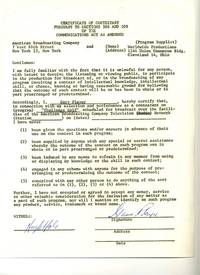
1950rif. 71531950. Player Gary. Signed contestant consent form for Challenge Golf documents the broadcast standards governing American television game shows through the participation of one of the twentieth century's most accomplished professional golfers. Winner of nine major championships and one of only five golfers to achieve the career Grand Slam Player frequently appeared on television as the popularity of televised sports expanded during the postwar decades. The document records the procedural safeguards employed by the American Broadcasting Company to ensure compliance with game show regulations demonstrating how contestants certified the fairness of televised competitions and providing primary-source evidence for the study of broadcast administration television production practices and the intersection of professional sports with entertainment programming. Player Gary. Contestant consent form for Challenge Golf. American Broadcasting Company. One page. Approximately 8 by 11 inches. Signed in blue ink "Gary Player." The printed form includes the statement in part ".I have never 1 been given the questions and/or answers in advance of their use on the contest in such program." requiring the participant to affirm that no advance knowledge of the program had been provided. Through its printed declarations and Player's signature the document illustrates the mechanisms by which television producers documented compliance with industry standards adopted following the game show quiz-show scandals of the late 1950s. The supplied information does not identify the broadcast date or Player's appearance on the program. The consent form reflects the heightened emphasis on transparency and fairness that became standard practice in American television after congressional investigations and public controversy over manipulated quiz programs reshaped network procedures. Signed by one of golf's most internationally recognized competitors it combines the history of professional sport with the institutional processes behind network television production. Two punch holes at the upper margin; otherwise very good condition. A substantial broadcast document revealing the contractual and regulatory framework governing televised competition through the participation of Hall of Fame golfer Gary Player. unknown books
1950rif. 71591950. Player Gary. Signed contestant consent form for Challenge Golf documents the broadcast standards governing American television game shows through the participation of one of the twentieth century's most accomplished professional golfers. Winner of nine major championships and one of only five golfers to achieve the career Grand Slam Player frequently appeared on television as the popularity of televised sports expanded during the postwar decades. The document records the procedural safeguards employed by the American Broadcasting Company to ensure compliance with game show regulations demonstrating how contestants certified the fairness of televised competitions and providing primary-source evidence for the study of broadcast administration television production practices and the intersection of professional sports with entertainment programming. Player Gary. Contestant consent form for Challenge Golf. American Broadcasting Company. One page. Approximately 8 by 11 inches. Signed in blue ink "Gary Player." The printed form includes the statement in part ".I have never 1 been given the questions and/or answers in advance of their use on the contest in such program." requiring the participant to affirm that no advance knowledge of the program had been provided. Through its printed declarations and Player's signature the document illustrates the mechanisms by which television producers documented compliance with industry standards adopted following the game show quiz-show scandals of the late 1950s. The supplied information does not identify the broadcast date or Player's appearance on the program. The consent form reflects the heightened emphasis on transparency and fairness that became standard practice in American television after congressional investigations and public controversy over manipulated quiz programs reshaped network procedures. Signed by one of golf's most internationally recognized competitors it combines the history of professional sport with the institutional processes behind network television production. Two punch holes at the upper margin; otherwise very good condition. A substantial broadcast document revealing the contractual and regulatory framework governing televised competition through the participation of Hall of Fame golfer Gary Player. unknown books
1950rif. 71641950. Player Gary. Signed contestant consent form for Challenge Golf documents the broadcast standards governing American television game shows through the participation of one of the twentieth century's most accomplished professional golfers. Winner of nine major championships and one of only five golfers to achieve the career Grand Slam Player frequently appeared on television as the popularity of televised sports expanded during the postwar decades. The document records the procedural safeguards employed by the American Broadcasting Company to ensure compliance with game show regulations demonstrating how contestants certified the fairness of televised competitions and providing primary-source evidence for the study of broadcast administration television production practices and the intersection of professional sports with entertainment programming. Player Gary. Contestant consent form for Challenge Golf. American Broadcasting Company. One page. Approximately 8 by 11 inches. Signed in blue ink "Gary Player." The printed form includes the statement in part ".I have never 1 been given the questions and/or answers in advance of their use on the contest in such program." requiring the participant to affirm that no advance knowledge of the program had been provided. Through its printed declarations and Player's signature the document illustrates the mechanisms by which television producers documented compliance with industry standards adopted following the game show quiz-show scandals of the late 1950s. The supplied information does not identify the broadcast date or Player's appearance on the program. The consent form reflects the heightened emphasis on transparency and fairness that became standard practice in American television after congressional investigations and public controversy over manipulated quiz programs reshaped network procedures. Signed by one of golf's most internationally recognized competitors it combines the history of professional sport with the institutional processes behind network television production. Two punch holes at the upper margin; otherwise very good condition. A substantial broadcast document revealing the contractual and regulatory framework governing televised competition through the participation of Hall of Fame golfer Gary Player. unknown books
1950rif. 71631950. Player Gary. Signed contestant consent form for Challenge Golf documents the broadcast standards governing American television game shows through the participation of one of the twentieth century's most accomplished professional golfers. Winner of nine major championships and one of only five golfers to achieve the career Grand Slam Player frequently appeared on television as the popularity of televised sports expanded during the postwar decades. The document records the procedural safeguards employed by the American Broadcasting Company to ensure compliance with game show regulations demonstrating how contestants certified the fairness of televised competitions and providing primary-source evidence for the study of broadcast administration television production practices and the intersection of professional sports with entertainment programming. Player Gary. Contestant consent form for Challenge Golf. American Broadcasting Company. One page. Approximately 8 by 11 inches. Signed in blue ink "Gary Player." The printed form includes the statement in part ".I have never 1 been given the questions and/or answers in advance of their use on the contest in such program." requiring the participant to affirm that no advance knowledge of the program had been provided. Through its printed declarations and Player's signature the document illustrates the mechanisms by which television producers documented compliance with industry standards adopted following the game show quiz-show scandals of the late 1950s. The supplied information does not identify the broadcast date or Player's appearance on the program. The consent form reflects the heightened emphasis on transparency and fairness that became standard practice in American television after congressional investigations and public controversy over manipulated quiz programs reshaped network procedures. Signed by one of golf's most internationally recognized competitors it combines the history of professional sport with the institutional processes behind network television production. Two punch holes at the upper margin; otherwise very good condition. A substantial broadcast document revealing the contractual and regulatory framework governing televised competition through the participation of Hall of Fame golfer Gary Player. unknown books
1950rif. 71621950. Player Gary. Signed contestant consent form for Challenge Golf documents the broadcast standards governing American television game shows through the participation of one of the twentieth century's most accomplished professional golfers. Winner of nine major championships and one of only five golfers to achieve the career Grand Slam Player frequently appeared on television as the popularity of televised sports expanded during the postwar decades. The document records the procedural safeguards employed by the American Broadcasting Company to ensure compliance with game show regulations demonstrating how contestants certified the fairness of televised competitions and providing primary-source evidence for the study of broadcast administration television production practices and the intersection of professional sports with entertainment programming. Player Gary. Contestant consent form for Challenge Golf. American Broadcasting Company. One page. Approximately 8 by 11 inches. Signed in blue ink "Gary Player." The printed form includes the statement in part ".I have never 1 been given the questions and/or answers in advance of their use on the contest in such program." requiring the participant to affirm that no advance knowledge of the program had been provided. Through its printed declarations and Player's signature the document illustrates the mechanisms by which television producers documented compliance with industry standards adopted following the game show quiz-show scandals of the late 1950s. The supplied information does not identify the broadcast date or Player's appearance on the program. The consent form reflects the heightened emphasis on transparency and fairness that became standard practice in American television after congressional investigations and public controversy over manipulated quiz programs reshaped network procedures. Signed by one of golf's most internationally recognized competitors it combines the history of professional sport with the institutional processes behind network television production. Two punch holes at the upper margin; otherwise very good condition. A substantial broadcast document revealing the contractual and regulatory framework governing televised competition through the participation of Hall of Fame golfer Gary Player. unknown books
1950rif. 71571950. Player Gary. Signed contestant consent form for Challenge Golf documents the broadcast standards governing American television game shows through the participation of one of the twentieth century's most accomplished professional golfers. Winner of nine major championships and one of only five golfers to achieve the career Grand Slam Player frequently appeared on television as the popularity of televised sports expanded during the postwar decades. The document records the procedural safeguards employed by the American Broadcasting Company to ensure compliance with game show regulations demonstrating how contestants certified the fairness of televised competitions and providing primary-source evidence for the study of broadcast administration television production practices and the intersection of professional sports with entertainment programming. Player Gary. Contestant consent form for Challenge Golf. American Broadcasting Company. One page. Approximately 8 by 11 inches. Signed in blue ink "Gary Player." The printed form includes the statement in part ".I have never 1 been given the questions and/or answers in advance of their use on the contest in such program." requiring the participant to affirm that no advance knowledge of the program had been provided. Through its printed declarations and Player's signature the document illustrates the mechanisms by which television producers documented compliance with industry standards adopted following the game show quiz-show scandals of the late 1950s. The supplied information does not identify the broadcast date or Player's appearance on the program. The consent form reflects the heightened emphasis on transparency and fairness that became standard practice in American television after congressional investigations and public controversy over manipulated quiz programs reshaped network procedures. Signed by one of golf's most internationally recognized competitors it combines the history of professional sport with the institutional processes behind network television production. Two punch holes at the upper margin; otherwise very good condition. A substantial broadcast document revealing the contractual and regulatory framework governing televised competition through the participation of Hall of Fame golfer Gary Player. unknown books
1950rif. 71611950. Player Gary. Signed contestant consent form for Challenge Golf documents the broadcast standards governing American television game shows through the participation of one of the twentieth century's most accomplished professional golfers. Winner of nine major championships and one of only five golfers to achieve the career Grand Slam Player frequently appeared on television as the popularity of televised sports expanded during the postwar decades. The document records the procedural safeguards employed by the American Broadcasting Company to ensure compliance with game show regulations demonstrating how contestants certified the fairness of televised competitions and providing primary-source evidence for the study of broadcast administration television production practices and the intersection of professional sports with entertainment programming. Player Gary. Contestant consent form for Challenge Golf. American Broadcasting Company. One page. Approximately 8 by 11 inches. Signed in blue ink "Gary Player." The printed form includes the statement in part ".I have never 1 been given the questions and/or answers in advance of their use on the contest in such program." requiring the participant to affirm that no advance knowledge of the program had been provided. Through its printed declarations and Player's signature the document illustrates the mechanisms by which television producers documented compliance with industry standards adopted following the game show quiz-show scandals of the late 1950s. The supplied information does not identify the broadcast date or Player's appearance on the program. The consent form reflects the heightened emphasis on transparency and fairness that became standard practice in American television after congressional investigations and public controversy over manipulated quiz programs reshaped network procedures. Signed by one of golf's most internationally recognized competitors it combines the history of professional sport with the institutional processes behind network television production. Two punch holes at the upper margin; otherwise very good condition. A substantial broadcast document revealing the contractual and regulatory framework governing televised competition through the participation of Hall of Fame golfer Gary Player. unknown books
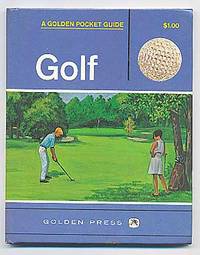
1968rif. 87134New York: Golden Press 1968. Hardcover. Fine. First edition. Illustrated by James J. Hulley. Some minor rubbing else a fine copy in pictorial boards. Golden Press hardcover books
rif. 375468Pine Valley Clementon County of Camden NJ: Pine Valley Golf Club. Club Seal stamped in blind and signed in print by B.B. Reath Secretary and J. Mathews Brown President. Printed by Security Banknote Company. Oblong folio. Old fold. about fine. Club Seal stamped in blind and signed in print by B.B. Reath Secretary and J. Mathews Brown President. Printed by Security Banknote Company. Oblong folio. Pine Valley Golf Club unknown books
1920rif. 252588New York 1920. Vintage gelatin silver print mounted on card. 13-3/4 x 10-3/4 in. Fine. Vintage gelatin silver print mounted on card. 13-3/4 x 10-3/4 in. A great candid shot of "Long Jim" Barnes who won the first US PGA Championship in 1916 wrote several books on golf technique and was one of the great early stars of the game. unknown books
1905rif. 245773New York: Doubleday Page 1905. First edition. With 42 illustrations by A.B. Frost. 346 pp. 1 vols. 8vo. Cloth with inset paper label of Golfer on upper cover. Gift inscription on front flyleaf. Owner blindstamp on rear flyleaf. Very good. Frost A.B. First edition. With 42 illustrations by A.B. Frost. 346 pp. 1 vols. 8vo. Donovan & Murdoch 4850 Doubleday, Page unknown books
rif. 31713n.p. n.d. turn-of-the-century. 1 vols. Image 18 x 10 inches; matted and framed. Framed and glazed. 1 vols. Image 18 x 10 inches; matted and framed. A charming professonal rendering in colors of a handsome trio of Gibson-type Girls one of whom is evidently an early devotee of golf. Possibly done for a poster or a magazine cover. UNIQUE AND HISTORIC. unknown books
1939rif. 29148n.p. 1939. 1 vols. Image 12 x 12 inches. 1 vols. Image 12 x 12 inches. One hole does not a champion make. Collier a talented illustrator did the pictures for Charlie Gaal's Your Golf 1949. unknown books
1931rif. 24317n.p.: The Central Press Association 1931. The cartoon shows three young men one with golf clubs renting rooms next door to a pretty girl. 1 vols. 10-1/2 x 10-1/2 inches. The cartoon shows three young men one with golf clubs renting rooms next door to a pretty girl. 1 vols. 10-1/2 x 10-1/2 inches. A vintage cartoon by the artist who later created the popular comic strip "Skeets". The Central Press Association unknown books
1939rif. 29146n.p. 1939. 1 vols. Image 12 x 12 inches. 1 vols. Image 12 x 12 inches. A slight disagreement over the score. Collier a talented illustrator did the pictures for Charlie Gaal's Your Golf 1949. unknown books
rif. 40517Pen and ink on paper. 7-1/4 x 6-1/4 inches. Fine. Pen and ink on paper. 7-1/4 x 6-1/4 inches. The pipe-smoking artist is shown in caricature adressing the ball while an athletic figure labeled "Alfred" snaps him from afar. unknown books
1915rif. 6646New York: Garden City 1915. First Edition. orig. publisher's dec. cloth. A very good copy; some light wear to the top of the spine. 8vo. There are several inserted plates. An excellent compilation of golf stories. This copy is an association and was offered as a prize to William Gettinger of the Tampa Golf Club; it is also signed on the endpaper in 1916 by ten members of the club. The book has an illus. presentation leaf inserted before the text. Garden City hardcover books
rif. 7151Player Gary. Challenge Golf consent form documenting the broadcast-control procedures applied to televised competition featuring one of international golf's leading champions. The American Broadcasting Company form required Player to affirm that he had not received contest questions or answers before their use revealing how television producers formalized participant eligibility and program integrity through signed representations. The document records broadcast compliance through a contestant consent agreement demonstrating the mechanisms by which ABC sought to protect a competition program from undisclosed advance information and providing primary-source evidence for the study of sports television network regulation and performer participation. Player a South African professional rather than a United States golfer won the 1965 U.S. Open and became the first non-American to complete the modern career Grand Slam. Player Gary. Consent form for Challenge Golf. American Broadcasting Company n.d. One page. 8 by 11 inches. Headed "American Broadcasting Company" the document states in part "I have never 1 been given the questions and/or answers in advance of their use on the contest in such program." Player signed in blue ink "Gary Player." The quoted provision shows that the form addressed the integrity of competition programming rather than merely authorizing Player's appearance or use of his likeness. Two punch holes appear along the upper edge. Challenge Golf was an ABC television series built around matches involving Player and Arnold Palmer against other professional golfers; surviving program descriptions identify its 1963 broadcasts as combining competitive play commentary and prominent courses including Pebble Beach and Riviera. The present consent form illustrates how televised sport could be administered through the same disclosure and fairness procedures associated with other contest programming even when athletic play formed the principal attraction. Two punch holes at top; blue-ink signature remains clear and legible with no other defects reported. Very good. A revealing signed document connecting Gary Player's championship career with the regulatory and contractual framework of early televised golf. unknown books
1983rif. 75708n.p. 1983. Paperback. Very Good. photos 60p. Wrapper. 28cm. Minor wear. Name and phone number in pencil on cover. Organization founded in 1954 of golf clubs organized by African Americans in California and other Western states. According to their 2022 website about 27 clubs including three asterisked as "predominantly female" clubs were members of this organization. paperback books