Air Force One Golf BallBiblio.com

1348 resultados
ref. 12130Clinton era Air Force One golf ball circa 1993-2001 is a piece of presidential commemorative material bearing the visual identity of the executive office and presidential air transport during Bill Clinton's administration. Air Force One serves as the call sign for a U.S. Air Force aircraft while the president is aboard and the two VC-25A aircraft used for presidential transport became among the most recognizable symbols of the modern presidency. The golf ball consequently belongs to the material culture surrounding presidential travel executive symbolism and the informal commemorative objects associated with the White House and Air Force One. Dunlop Air Force One commemorative golf ball. Clinton era circa 1993-2001. White golf ball manufactured by Dunlop and printed in full color with the Presidential Seal. Surrounding the seal is the inscription "Seal of the President of the United States / Air Force One." The design combines two immediately recognizable symbols of presidential authority: the official seal and the name associated with presidential air transport. No additional inscriptions presentation case or provenance information are noted in the supplied description. During Clinton's presidency presidential air transportation centered on two specially configured Boeing 747-200B aircraft designated VC-25A which served both practical and symbolic roles in the public presentation of the presidency. As an object rather than a document of a specific flight or event the golf ball is most useful for the study of presidential memorabilia executive branding and the informal material culture associated with Air Force One. No specific defects are noted in the supplied description. Near fine. A compact Clinton-era presidential souvenir combining the iconography of the Presidency with one of its most recognizable instruments of official travel. unknown
ref. 12130Clinton era Air Force One golf ball circa 1993-2001 is a piece of presidential commemorative material bearing the visual identity of the executive office and presidential air transport during Bill Clinton's administration. Air Force One serves as the call sign for a U.S. Air Force aircraft while the president is aboard and the two VC-25A aircraft used for presidential transport became among the most recognizable symbols of the modern presidency. The golf ball consequently belongs to the material culture surrounding presidential travel executive symbolism and the informal commemorative objects associated with the White House and Air Force One. Dunlop Air Force One commemorative golf ball. Clinton era circa 1993-2001. White golf ball manufactured by Dunlop and printed in full color with the Presidential Seal. Surrounding the seal is the inscription "Seal of the President of the United States / Air Force One." The design combines two immediately recognizable symbols of presidential authority: the official seal and the name associated with presidential air transport. No additional inscriptions presentation case or provenance information are noted in the supplied description. During Clinton's presidency presidential air transportation centered on two specially configured Boeing 747-200B aircraft designated VC-25A which served both practical and symbolic roles in the public presentation of the presidency. As an object rather than a document of a specific flight or event the golf ball is most useful for the study of presidential memorabilia executive branding and the informal material culture associated with Air Force One. No specific defects are noted in the supplied description. Near fine. A compact Clinton-era presidential souvenir combining the iconography of the Presidency with one of its most recognizable instruments of official travel. unknown books
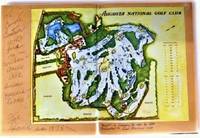
1978ref. 76031aozThe Augusta National Golf Club 1978. imitation_leather. Good/Missing. 0x0x0. Signed by Other. Signed and isncribed by golf course designer Fred Sparks. Oversized green hardbound without dust jacket. Apart from the inscription no text markings noted. The Augusta National Golf Club hardcover
1972ref. biblio820Joseph Seifter Finger a landscape architect and golf course designer is the son of Joseph Finger 1887–1953 an Austrian-born architect most active in Texas in the 1930s and 1940s and responsible for a number of Houston Art Deco landmarks. See Table of Contents for book's content. Joseph S. Finger and Associates, Inc. paperback
ref. 8888Dunlop. Presidential Seal Golf Ball documents the use of presidential insignia on informal White House and executive-associated material culture. As a recreational object marked with the presidential seal it connects the public symbolism of the office with golf a sport closely associated with twentieth-century presidential leisure diplomacy and informal political sociability. Dunlop. Presidential Seal Golf Ball. N.p.: Dunlop n.d. White golf ball printed with blue presidential seal. The object combines a standard sporting form with official-style executive iconography making it a compact example of presidential presentation souvenir or recreational ephemera. Presidential golf objects belong to a broader category of White House-associated memorabilia in which leisure access and political symbolism intersect. No visible wear near fine. Concise example of presidential recreational ephemera linking executive imagery with golf culture. unknown
ref. 8888Dunlop. Presidential Seal Golf Ball documents the use of presidential insignia on informal White House and executive-associated material culture. As a recreational object marked with the presidential seal it connects the public symbolism of the office with golf a sport closely associated with twentieth-century presidential leisure diplomacy and informal political sociability. Dunlop. Presidential Seal Golf Ball. N.p.: Dunlop n.d. White golf ball printed with blue presidential seal. The object combines a standard sporting form with official-style executive iconography making it a compact example of presidential presentation souvenir or recreational ephemera. Presidential golf objects belong to a broader category of White House-associated memorabilia in which leisure access and political symbolism intersect. No visible wear near fine. Concise example of presidential recreational ephemera linking executive imagery with golf culture. unknown books
1997No marks or inscriptions. No creasing to covers or to spine. A lovely clean very tight copy with bright unmarked boards and no bumping to corners. 155pp. .The story of Stockport Golf Club, the events, playing the course at Torkington and the players and the winners. Well illustrated. Very scarce.
1978ref. 319669Cobram: Cobram Barooga Golf Club Limited 1978. 1st edition. Nice copy. small quarto. orig. dec. cloth 87pp. col. & b/w pls. plans Limited edition to 800 copies. Signed presentation copy to Mr. Eric McCutchan by Ken Napier Cobram Barooga Golf Club Limited hardcover
1983ref. 17103Athen, Karavias, 1983. Reprint der Ausgabe Mercy 1976. 1 separate farb Karte und 2 separate Tafeln. Kl.-4°. OKart. (Gebrssprn., gering fleckig und gebräunt).
ref. 1845136799.Ghardcover. Good. Access codes and supplements are not guaranteed with used items. May be an ex-library book. hardcover
1930ref. 7267ALondon, ca. 1930. 53 farbige Karten, 6 x 9 cm und 16-seitiges Regelheft. In OPappschachtel.
1984ref. 129171Elyria OH: Worthington Golf Inc. 1984. Limited Edition. Hardcover. Near Fine/No Jacket as issued. 12 x 8 x 3. Hardcover. Book Condition: Near Fine. Jacket Condition: No Jacket as issued. Worthington Golf Inc. Elyria OH 1984. Limited Edition. 4 pages. Nice Firm Clean copy ! 4 pages of explanation. With 12 collectible balls. Size: 12 x 8 x 3. A short while ago during a renovation at the plant of the world's largest manufacturers of golf balls the Director of Production noticed in a mound of equipment being discarded a number of golf ball molds dating back to 1899. Believing them to have museum value as historic memorabilia he rescued them for the purpose of having them sent to the Goll Hall of Fame. However when the news got around a number of golf buffs inquired if it was possible to buy balls made from these molds for mementos. 'An Anthology of the Golf Ball' is lhe result of those requests. It contains 12 'antique' balls made from the original molds current between 1899 and 1949 - but with modem construction.They are for Collectors' cabinets - or play. Golf balls: 1899 Bramble 1914 Ace 1915 Whoopee 1916 WBC 1920 Wonder 1921 Allied 1923 Blue Bird 1923 P. G. A. 1928 Black Diamond 1928 Worthington 1938 Dice 1949 Sweetshot. Sports::Golf 6238L 6238L Worthington Golf Inc. hardcover
20198vo., First Edition thus, with coloured frontispiece, numerous monochrome illustrations in the text and pictorial endpapers; pictorial boards, green cloth back lettered in silver, a near fine copy in publisher's board slip-case.
ref. 0883633728New. hardcover. New. Satisfaction Guaranteed or your money back. hardcover
ref. 0883635003New. hardcover. New. Satisfaction Guaranteed or your money back. hardcover
1930ref. WB17568USA: Palmer Products 1930. First Edition. Paperback. Very Good. Original brown wraps lettered in red. 143 pp. With numerous illustrations throughout. Light edgewear but a nice copy overall of a scarce golf book. Sold with no guarantees that you can or will break 80 after purchase. Palmer Products paperback
1938ref. 54228New York: Hillman-Curl Inc. 1938. 8vo. 188 pp. Tan cloth red lettering on front cover & spine minor chipping foot of spine former date stamps on rear endpaper minor soiling still G copy. Second edition of this scarce golf mystery included as part of the Clue Club Mystery series which was published between 1936 and 1939. Hillman-Curl, Inc., hardcover
1985ref. 2090502113706395Not Available 1985. Soft Cover. Fine. The book is in fine condition. Not Available paperback
1950ref. 71531950. Player Gary. Signed contestant consent form for Challenge Golf documents the broadcast standards governing American television game shows through the participation of one of the twentieth century's most accomplished professional golfers. Winner of nine major championships and one of only five golfers to achieve the career Grand Slam Player frequently appeared on television as the popularity of televised sports expanded during the postwar decades. The document records the procedural safeguards employed by the American Broadcasting Company to ensure compliance with game show regulations demonstrating how contestants certified the fairness of televised competitions and providing primary-source evidence for the study of broadcast administration television production practices and the intersection of professional sports with entertainment programming. Player Gary. Contestant consent form for Challenge Golf. American Broadcasting Company. One page. Approximately 8 by 11 inches. Signed in blue ink "Gary Player." The printed form includes the statement in part ".I have never 1 been given the questions and/or answers in advance of their use on the contest in such program." requiring the participant to affirm that no advance knowledge of the program had been provided. Through its printed declarations and Player's signature the document illustrates the mechanisms by which television producers documented compliance with industry standards adopted following the game show quiz-show scandals of the late 1950s. The supplied information does not identify the broadcast date or Player's appearance on the program. The consent form reflects the heightened emphasis on transparency and fairness that became standard practice in American television after congressional investigations and public controversy over manipulated quiz programs reshaped network procedures. Signed by one of golf's most internationally recognized competitors it combines the history of professional sport with the institutional processes behind network television production. Two punch holes at the upper margin; otherwise very good condition. A substantial broadcast document revealing the contractual and regulatory framework governing televised competition through the participation of Hall of Fame golfer Gary Player. unknown
1950ref. 71591950. Player Gary. Signed contestant consent form for Challenge Golf documents the broadcast standards governing American television game shows through the participation of one of the twentieth century's most accomplished professional golfers. Winner of nine major championships and one of only five golfers to achieve the career Grand Slam Player frequently appeared on television as the popularity of televised sports expanded during the postwar decades. The document records the procedural safeguards employed by the American Broadcasting Company to ensure compliance with game show regulations demonstrating how contestants certified the fairness of televised competitions and providing primary-source evidence for the study of broadcast administration television production practices and the intersection of professional sports with entertainment programming. Player Gary. Contestant consent form for Challenge Golf. American Broadcasting Company. One page. Approximately 8 by 11 inches. Signed in blue ink "Gary Player." The printed form includes the statement in part ".I have never 1 been given the questions and/or answers in advance of their use on the contest in such program." requiring the participant to affirm that no advance knowledge of the program had been provided. Through its printed declarations and Player's signature the document illustrates the mechanisms by which television producers documented compliance with industry standards adopted following the game show quiz-show scandals of the late 1950s. The supplied information does not identify the broadcast date or Player's appearance on the program. The consent form reflects the heightened emphasis on transparency and fairness that became standard practice in American television after congressional investigations and public controversy over manipulated quiz programs reshaped network procedures. Signed by one of golf's most internationally recognized competitors it combines the history of professional sport with the institutional processes behind network television production. Two punch holes at the upper margin; otherwise very good condition. A substantial broadcast document revealing the contractual and regulatory framework governing televised competition through the participation of Hall of Fame golfer Gary Player. unknown
1950ref. 71641950. Player Gary. Signed contestant consent form for Challenge Golf documents the broadcast standards governing American television game shows through the participation of one of the twentieth century's most accomplished professional golfers. Winner of nine major championships and one of only five golfers to achieve the career Grand Slam Player frequently appeared on television as the popularity of televised sports expanded during the postwar decades. The document records the procedural safeguards employed by the American Broadcasting Company to ensure compliance with game show regulations demonstrating how contestants certified the fairness of televised competitions and providing primary-source evidence for the study of broadcast administration television production practices and the intersection of professional sports with entertainment programming. Player Gary. Contestant consent form for Challenge Golf. American Broadcasting Company. One page. Approximately 8 by 11 inches. Signed in blue ink "Gary Player." The printed form includes the statement in part ".I have never 1 been given the questions and/or answers in advance of their use on the contest in such program." requiring the participant to affirm that no advance knowledge of the program had been provided. Through its printed declarations and Player's signature the document illustrates the mechanisms by which television producers documented compliance with industry standards adopted following the game show quiz-show scandals of the late 1950s. The supplied information does not identify the broadcast date or Player's appearance on the program. The consent form reflects the heightened emphasis on transparency and fairness that became standard practice in American television after congressional investigations and public controversy over manipulated quiz programs reshaped network procedures. Signed by one of golf's most internationally recognized competitors it combines the history of professional sport with the institutional processes behind network television production. Two punch holes at the upper margin; otherwise very good condition. A substantial broadcast document revealing the contractual and regulatory framework governing televised competition through the participation of Hall of Fame golfer Gary Player. unknown
1950ref. 71631950. Player Gary. Signed contestant consent form for Challenge Golf documents the broadcast standards governing American television game shows through the participation of one of the twentieth century's most accomplished professional golfers. Winner of nine major championships and one of only five golfers to achieve the career Grand Slam Player frequently appeared on television as the popularity of televised sports expanded during the postwar decades. The document records the procedural safeguards employed by the American Broadcasting Company to ensure compliance with game show regulations demonstrating how contestants certified the fairness of televised competitions and providing primary-source evidence for the study of broadcast administration television production practices and the intersection of professional sports with entertainment programming. Player Gary. Contestant consent form for Challenge Golf. American Broadcasting Company. One page. Approximately 8 by 11 inches. Signed in blue ink "Gary Player." The printed form includes the statement in part ".I have never 1 been given the questions and/or answers in advance of their use on the contest in such program." requiring the participant to affirm that no advance knowledge of the program had been provided. Through its printed declarations and Player's signature the document illustrates the mechanisms by which television producers documented compliance with industry standards adopted following the game show quiz-show scandals of the late 1950s. The supplied information does not identify the broadcast date or Player's appearance on the program. The consent form reflects the heightened emphasis on transparency and fairness that became standard practice in American television after congressional investigations and public controversy over manipulated quiz programs reshaped network procedures. Signed by one of golf's most internationally recognized competitors it combines the history of professional sport with the institutional processes behind network television production. Two punch holes at the upper margin; otherwise very good condition. A substantial broadcast document revealing the contractual and regulatory framework governing televised competition through the participation of Hall of Fame golfer Gary Player. unknown
1950ref. 71621950. Player Gary. Signed contestant consent form for Challenge Golf documents the broadcast standards governing American television game shows through the participation of one of the twentieth century's most accomplished professional golfers. Winner of nine major championships and one of only five golfers to achieve the career Grand Slam Player frequently appeared on television as the popularity of televised sports expanded during the postwar decades. The document records the procedural safeguards employed by the American Broadcasting Company to ensure compliance with game show regulations demonstrating how contestants certified the fairness of televised competitions and providing primary-source evidence for the study of broadcast administration television production practices and the intersection of professional sports with entertainment programming. Player Gary. Contestant consent form for Challenge Golf. American Broadcasting Company. One page. Approximately 8 by 11 inches. Signed in blue ink "Gary Player." The printed form includes the statement in part ".I have never 1 been given the questions and/or answers in advance of their use on the contest in such program." requiring the participant to affirm that no advance knowledge of the program had been provided. Through its printed declarations and Player's signature the document illustrates the mechanisms by which television producers documented compliance with industry standards adopted following the game show quiz-show scandals of the late 1950s. The supplied information does not identify the broadcast date or Player's appearance on the program. The consent form reflects the heightened emphasis on transparency and fairness that became standard practice in American television after congressional investigations and public controversy over manipulated quiz programs reshaped network procedures. Signed by one of golf's most internationally recognized competitors it combines the history of professional sport with the institutional processes behind network television production. Two punch holes at the upper margin; otherwise very good condition. A substantial broadcast document revealing the contractual and regulatory framework governing televised competition through the participation of Hall of Fame golfer Gary Player. unknown
1950ref. 71571950. Player Gary. Signed contestant consent form for Challenge Golf documents the broadcast standards governing American television game shows through the participation of one of the twentieth century's most accomplished professional golfers. Winner of nine major championships and one of only five golfers to achieve the career Grand Slam Player frequently appeared on television as the popularity of televised sports expanded during the postwar decades. The document records the procedural safeguards employed by the American Broadcasting Company to ensure compliance with game show regulations demonstrating how contestants certified the fairness of televised competitions and providing primary-source evidence for the study of broadcast administration television production practices and the intersection of professional sports with entertainment programming. Player Gary. Contestant consent form for Challenge Golf. American Broadcasting Company. One page. Approximately 8 by 11 inches. Signed in blue ink "Gary Player." The printed form includes the statement in part ".I have never 1 been given the questions and/or answers in advance of their use on the contest in such program." requiring the participant to affirm that no advance knowledge of the program had been provided. Through its printed declarations and Player's signature the document illustrates the mechanisms by which television producers documented compliance with industry standards adopted following the game show quiz-show scandals of the late 1950s. The supplied information does not identify the broadcast date or Player's appearance on the program. The consent form reflects the heightened emphasis on transparency and fairness that became standard practice in American television after congressional investigations and public controversy over manipulated quiz programs reshaped network procedures. Signed by one of golf's most internationally recognized competitors it combines the history of professional sport with the institutional processes behind network television production. Two punch holes at the upper margin; otherwise very good condition. A substantial broadcast document revealing the contractual and regulatory framework governing televised competition through the participation of Hall of Fame golfer Gary Player. unknown
1950ref. 71611950. Player Gary. Signed contestant consent form for Challenge Golf documents the broadcast standards governing American television game shows through the participation of one of the twentieth century's most accomplished professional golfers. Winner of nine major championships and one of only five golfers to achieve the career Grand Slam Player frequently appeared on television as the popularity of televised sports expanded during the postwar decades. The document records the procedural safeguards employed by the American Broadcasting Company to ensure compliance with game show regulations demonstrating how contestants certified the fairness of televised competitions and providing primary-source evidence for the study of broadcast administration television production practices and the intersection of professional sports with entertainment programming. Player Gary. Contestant consent form for Challenge Golf. American Broadcasting Company. One page. Approximately 8 by 11 inches. Signed in blue ink "Gary Player." The printed form includes the statement in part ".I have never 1 been given the questions and/or answers in advance of their use on the contest in such program." requiring the participant to affirm that no advance knowledge of the program had been provided. Through its printed declarations and Player's signature the document illustrates the mechanisms by which television producers documented compliance with industry standards adopted following the game show quiz-show scandals of the late 1950s. The supplied information does not identify the broadcast date or Player's appearance on the program. The consent form reflects the heightened emphasis on transparency and fairness that became standard practice in American television after congressional investigations and public controversy over manipulated quiz programs reshaped network procedures. Signed by one of golf's most internationally recognized competitors it combines the history of professional sport with the institutional processes behind network television production. Two punch holes at the upper margin; otherwise very good condition. A substantial broadcast document revealing the contractual and regulatory framework governing televised competition through the participation of Hall of Fame golfer Gary Player. unknown