1,360 results
ref. ria9781119823346_inpHardback. New. New Book; Fast Shipping from UK; Not signed; Not First Edition; N/A hardcover
2012ref. 1-1618930265Golf Magazine 2012. Hardcover. New. hardback/dvd edition. 191 pages. 9.75x9.75x0.75 inches. Golf Magazine hardcover
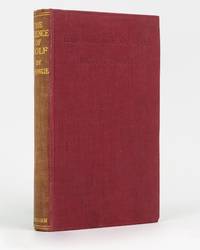
1936ref. 38688Hodder & Stoughton 1936. 8vo. Fifteenth Edition with portrait frontispiece and plates some very light and scattered spotting; olive cloth upper board and backstrip framed and lettered in green uncut a very good bright clean copy in unclipped dustwrapper. Mitchell's golfing classic was first published in 1927. SCARCE IN THIS CONDITION. Hodder & Stoughton, hardcover
ref. 63672Berkshire:: Eaton Crane & Pike Co. no date. enclosed in publisher's two-part box illustrated in color with printed wraparound bands around envelopes and notepaper. Contents fine. Minor repairs to the joints of the illustrated box top which is a little sunned and dust-soiled. The unprinted box bottom has had several voids neatly supplied in facsimile. Box size 5-1/2 x 8-1/2 x 1 inch. Four color scenes of pairs of children playing golf in Victorian attire are illustrated on the box top; present here are three of those four illustrating 12 folded sheets of notepaper initialed by the artist W. C. O. with envelopes. Eaton, Crane & Pike Co., unknown
1909ref. 26468Mills & Boon 1909. 8vo. First Edition Sole Edition with frontispiece and 14 plates; half-title and title lightly spotted; original green cloth upper board and backstrip lettered in black covers mildly age-marked top lightly dust-soiled else a very good clean copy. EXTREMELY SCARCE Mills & Boon, hardcover
ref. ING9781579652371Workman Pub Co. New. Special order direct from the distributor Workman Pub Co unknown
1948ref. 23816Collins 1948. 8vo. First Edition front endpapers lightly spotted neat contemporary inscription on front free endpaper; sand cloth gilt back a very good bright clean copy in unclipped dustwrapper the latter lightly spotted on predominantly white rear panel. Collins, hardcover
1952ref. 20583Country Life 1952. 8vo. First Edition with title-vignette and very numerous photographs throughout; green cloth upper board and backstrip lettered in gilt red top a near fine copy in unclipped dustwrapper the latter very lightly browned on predominantly white rear panel. Scarce in this condition. Country Life, hardcover
1910ref. 200811910. Women's competitive golf archive 1910s to 1930s documents women golfers in practice tournament and club settings during the formative decades of organized women's golf in the United States. The group provides visual evidence of women's athletic participation in a sport long associated with country-club respectability social access and gendered expectations about dress leisure and competition. The U.S. Women's Amateur Championship began in 1895 as one of the USGA's first three championships and the USGA identifies it as marking the beginning of women's competitive golf in the United States; these photographs and postcard show how that competitive culture appeared in everyday and press imagery in the decades that followed. The archive consists of seven items dated between the 1910s and 1930s: six silver gelatin photographs and one brightly illustrated postcard measuring from approximately 1.75 x 2.75 inches to 7.25 x 9 inches. The photographs include a 1934 press image of golfer Barbara Stoddard in a swing position; a 1935 lineup from the Annual Women's St. Valentine Golf Tournament identifying Helen Waring Sarah Fownes Wadsworth Myrom W. Marr and W.C. Fownes Jr.; three small circa 1928 photographs of women positioned with clubs on a golf range; and an early 1930s image of two women posed with a man at a country club the women holding several clubs with one woman wearing trousers. The illustrated postcard from the early twentieth century shows a woman swinging a club in an athletic outfit still shaped by long-skirted fashion rather than later sportswear. Across the group recurring details include golf clubs held as markers of athletic identity posed swings tournament lineup conventions country-club settings and changing women's clothing from long skirts to less restrictive dress. The archive records women's golf as both competitive sport and social performance making visible the relationship between athletic skill class-coded club culture and evolving public ideas about women's physical capability. Its strongest research value lies in the mix of press photographs vernacular practice images tournament documentation and illustrated popular culture allowing comparison between women as actual competitors and women as stylized sporting subjects. Light handling wear minor edge wear and typical surface wear to photographs and postcard; images remain clear and identifiable; overall very good. Cohesive women's sports archive documenting early twentieth-century women golfers as competitors club participants and subjects of changing athletic representation. unknown
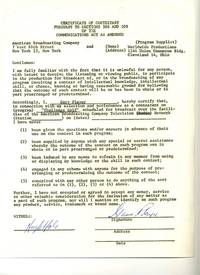
1950ref. 71531950. Player Gary. Signed contestant consent form for Challenge Golf documents the broadcast standards governing American television game shows through the participation of one of the twentieth century's most accomplished professional golfers. Winner of nine major championships and one of only five golfers to achieve the career Grand Slam Player frequently appeared on television as the popularity of televised sports expanded during the postwar decades. The document records the procedural safeguards employed by the American Broadcasting Company to ensure compliance with game show regulations demonstrating how contestants certified the fairness of televised competitions and providing primary-source evidence for the study of broadcast administration television production practices and the intersection of professional sports with entertainment programming. Player Gary. Contestant consent form for Challenge Golf. American Broadcasting Company. One page. Approximately 8 by 11 inches. Signed in blue ink "Gary Player." The printed form includes the statement in part ".I have never 1 been given the questions and/or answers in advance of their use on the contest in such program." requiring the participant to affirm that no advance knowledge of the program had been provided. Through its printed declarations and Player's signature the document illustrates the mechanisms by which television producers documented compliance with industry standards adopted following the game show quiz-show scandals of the late 1950s. The supplied information does not identify the broadcast date or Player's appearance on the program. The consent form reflects the heightened emphasis on transparency and fairness that became standard practice in American television after congressional investigations and public controversy over manipulated quiz programs reshaped network procedures. Signed by one of golf's most internationally recognized competitors it combines the history of professional sport with the institutional processes behind network television production. Two punch holes at the upper margin; otherwise very good condition. A substantial broadcast document revealing the contractual and regulatory framework governing televised competition through the participation of Hall of Fame golfer Gary Player. unknown
ref. 7151Player Gary. Challenge Golf consent form documenting the broadcast-control procedures applied to televised competition featuring one of international golf's leading champions. The American Broadcasting Company form required Player to affirm that he had not received contest questions or answers before their use revealing how television producers formalized participant eligibility and program integrity through signed representations. The document records broadcast compliance through a contestant consent agreement demonstrating the mechanisms by which ABC sought to protect a competition program from undisclosed advance information and providing primary-source evidence for the study of sports television network regulation and performer participation. Player a South African professional rather than a United States golfer won the 1965 U.S. Open and became the first non-American to complete the modern career Grand Slam. Player Gary. Consent form for Challenge Golf. American Broadcasting Company n.d. One page. 8 by 11 inches. Headed "American Broadcasting Company" the document states in part "I have never 1 been given the questions and/or answers in advance of their use on the contest in such program." Player signed in blue ink "Gary Player." The quoted provision shows that the form addressed the integrity of competition programming rather than merely authorizing Player's appearance or use of his likeness. Two punch holes appear along the upper edge. Challenge Golf was an ABC television series built around matches involving Player and Arnold Palmer against other professional golfers; surviving program descriptions identify its 1963 broadcasts as combining competitive play commentary and prominent courses including Pebble Beach and Riviera. The present consent form illustrates how televised sport could be administered through the same disclosure and fairness procedures associated with other contest programming even when athletic play formed the principal attraction. Two punch holes at top; blue-ink signature remains clear and legible with no other defects reported. Very good. A revealing signed document connecting Gary Player's championship career with the regulatory and contractual framework of early televised golf. unknown
1950ref. 71591950. Player Gary. Signed contestant consent form for Challenge Golf documents the broadcast standards governing American television game shows through the participation of one of the twentieth century's most accomplished professional golfers. Winner of nine major championships and one of only five golfers to achieve the career Grand Slam Player frequently appeared on television as the popularity of televised sports expanded during the postwar decades. The document records the procedural safeguards employed by the American Broadcasting Company to ensure compliance with game show regulations demonstrating how contestants certified the fairness of televised competitions and providing primary-source evidence for the study of broadcast administration television production practices and the intersection of professional sports with entertainment programming. Player Gary. Contestant consent form for Challenge Golf. American Broadcasting Company. One page. Approximately 8 by 11 inches. Signed in blue ink "Gary Player." The printed form includes the statement in part ".I have never 1 been given the questions and/or answers in advance of their use on the contest in such program." requiring the participant to affirm that no advance knowledge of the program had been provided. Through its printed declarations and Player's signature the document illustrates the mechanisms by which television producers documented compliance with industry standards adopted following the game show quiz-show scandals of the late 1950s. The supplied information does not identify the broadcast date or Player's appearance on the program. The consent form reflects the heightened emphasis on transparency and fairness that became standard practice in American television after congressional investigations and public controversy over manipulated quiz programs reshaped network procedures. Signed by one of golf's most internationally recognized competitors it combines the history of professional sport with the institutional processes behind network television production. Two punch holes at the upper margin; otherwise very good condition. A substantial broadcast document revealing the contractual and regulatory framework governing televised competition through the participation of Hall of Fame golfer Gary Player. unknown
1950ref. 71641950. Player Gary. Signed contestant consent form for Challenge Golf documents the broadcast standards governing American television game shows through the participation of one of the twentieth century's most accomplished professional golfers. Winner of nine major championships and one of only five golfers to achieve the career Grand Slam Player frequently appeared on television as the popularity of televised sports expanded during the postwar decades. The document records the procedural safeguards employed by the American Broadcasting Company to ensure compliance with game show regulations demonstrating how contestants certified the fairness of televised competitions and providing primary-source evidence for the study of broadcast administration television production practices and the intersection of professional sports with entertainment programming. Player Gary. Contestant consent form for Challenge Golf. American Broadcasting Company. One page. Approximately 8 by 11 inches. Signed in blue ink "Gary Player." The printed form includes the statement in part ".I have never 1 been given the questions and/or answers in advance of their use on the contest in such program." requiring the participant to affirm that no advance knowledge of the program had been provided. Through its printed declarations and Player's signature the document illustrates the mechanisms by which television producers documented compliance with industry standards adopted following the game show quiz-show scandals of the late 1950s. The supplied information does not identify the broadcast date or Player's appearance on the program. The consent form reflects the heightened emphasis on transparency and fairness that became standard practice in American television after congressional investigations and public controversy over manipulated quiz programs reshaped network procedures. Signed by one of golf's most internationally recognized competitors it combines the history of professional sport with the institutional processes behind network television production. Two punch holes at the upper margin; otherwise very good condition. A substantial broadcast document revealing the contractual and regulatory framework governing televised competition through the participation of Hall of Fame golfer Gary Player. unknown
1950ref. 71631950. Player Gary. Signed contestant consent form for Challenge Golf documents the broadcast standards governing American television game shows through the participation of one of the twentieth century's most accomplished professional golfers. Winner of nine major championships and one of only five golfers to achieve the career Grand Slam Player frequently appeared on television as the popularity of televised sports expanded during the postwar decades. The document records the procedural safeguards employed by the American Broadcasting Company to ensure compliance with game show regulations demonstrating how contestants certified the fairness of televised competitions and providing primary-source evidence for the study of broadcast administration television production practices and the intersection of professional sports with entertainment programming. Player Gary. Contestant consent form for Challenge Golf. American Broadcasting Company. One page. Approximately 8 by 11 inches. Signed in blue ink "Gary Player." The printed form includes the statement in part ".I have never 1 been given the questions and/or answers in advance of their use on the contest in such program." requiring the participant to affirm that no advance knowledge of the program had been provided. Through its printed declarations and Player's signature the document illustrates the mechanisms by which television producers documented compliance with industry standards adopted following the game show quiz-show scandals of the late 1950s. The supplied information does not identify the broadcast date or Player's appearance on the program. The consent form reflects the heightened emphasis on transparency and fairness that became standard practice in American television after congressional investigations and public controversy over manipulated quiz programs reshaped network procedures. Signed by one of golf's most internationally recognized competitors it combines the history of professional sport with the institutional processes behind network television production. Two punch holes at the upper margin; otherwise very good condition. A substantial broadcast document revealing the contractual and regulatory framework governing televised competition through the participation of Hall of Fame golfer Gary Player. unknown
1950ref. 71621950. Player Gary. Signed contestant consent form for Challenge Golf documents the broadcast standards governing American television game shows through the participation of one of the twentieth century's most accomplished professional golfers. Winner of nine major championships and one of only five golfers to achieve the career Grand Slam Player frequently appeared on television as the popularity of televised sports expanded during the postwar decades. The document records the procedural safeguards employed by the American Broadcasting Company to ensure compliance with game show regulations demonstrating how contestants certified the fairness of televised competitions and providing primary-source evidence for the study of broadcast administration television production practices and the intersection of professional sports with entertainment programming. Player Gary. Contestant consent form for Challenge Golf. American Broadcasting Company. One page. Approximately 8 by 11 inches. Signed in blue ink "Gary Player." The printed form includes the statement in part ".I have never 1 been given the questions and/or answers in advance of their use on the contest in such program." requiring the participant to affirm that no advance knowledge of the program had been provided. Through its printed declarations and Player's signature the document illustrates the mechanisms by which television producers documented compliance with industry standards adopted following the game show quiz-show scandals of the late 1950s. The supplied information does not identify the broadcast date or Player's appearance on the program. The consent form reflects the heightened emphasis on transparency and fairness that became standard practice in American television after congressional investigations and public controversy over manipulated quiz programs reshaped network procedures. Signed by one of golf's most internationally recognized competitors it combines the history of professional sport with the institutional processes behind network television production. Two punch holes at the upper margin; otherwise very good condition. A substantial broadcast document revealing the contractual and regulatory framework governing televised competition through the participation of Hall of Fame golfer Gary Player. unknown
1950ref. 71571950. Player Gary. Signed contestant consent form for Challenge Golf documents the broadcast standards governing American television game shows through the participation of one of the twentieth century's most accomplished professional golfers. Winner of nine major championships and one of only five golfers to achieve the career Grand Slam Player frequently appeared on television as the popularity of televised sports expanded during the postwar decades. The document records the procedural safeguards employed by the American Broadcasting Company to ensure compliance with game show regulations demonstrating how contestants certified the fairness of televised competitions and providing primary-source evidence for the study of broadcast administration television production practices and the intersection of professional sports with entertainment programming. Player Gary. Contestant consent form for Challenge Golf. American Broadcasting Company. One page. Approximately 8 by 11 inches. Signed in blue ink "Gary Player." The printed form includes the statement in part ".I have never 1 been given the questions and/or answers in advance of their use on the contest in such program." requiring the participant to affirm that no advance knowledge of the program had been provided. Through its printed declarations and Player's signature the document illustrates the mechanisms by which television producers documented compliance with industry standards adopted following the game show quiz-show scandals of the late 1950s. The supplied information does not identify the broadcast date or Player's appearance on the program. The consent form reflects the heightened emphasis on transparency and fairness that became standard practice in American television after congressional investigations and public controversy over manipulated quiz programs reshaped network procedures. Signed by one of golf's most internationally recognized competitors it combines the history of professional sport with the institutional processes behind network television production. Two punch holes at the upper margin; otherwise very good condition. A substantial broadcast document revealing the contractual and regulatory framework governing televised competition through the participation of Hall of Fame golfer Gary Player. unknown
1950ref. 71611950. Player Gary. Signed contestant consent form for Challenge Golf documents the broadcast standards governing American television game shows through the participation of one of the twentieth century's most accomplished professional golfers. Winner of nine major championships and one of only five golfers to achieve the career Grand Slam Player frequently appeared on television as the popularity of televised sports expanded during the postwar decades. The document records the procedural safeguards employed by the American Broadcasting Company to ensure compliance with game show regulations demonstrating how contestants certified the fairness of televised competitions and providing primary-source evidence for the study of broadcast administration television production practices and the intersection of professional sports with entertainment programming. Player Gary. Contestant consent form for Challenge Golf. American Broadcasting Company. One page. Approximately 8 by 11 inches. Signed in blue ink "Gary Player." The printed form includes the statement in part ".I have never 1 been given the questions and/or answers in advance of their use on the contest in such program." requiring the participant to affirm that no advance knowledge of the program had been provided. Through its printed declarations and Player's signature the document illustrates the mechanisms by which television producers documented compliance with industry standards adopted following the game show quiz-show scandals of the late 1950s. The supplied information does not identify the broadcast date or Player's appearance on the program. The consent form reflects the heightened emphasis on transparency and fairness that became standard practice in American television after congressional investigations and public controversy over manipulated quiz programs reshaped network procedures. Signed by one of golf's most internationally recognized competitors it combines the history of professional sport with the institutional processes behind network television production. Two punch holes at the upper margin; otherwise very good condition. A substantial broadcast document revealing the contractual and regulatory framework governing televised competition through the participation of Hall of Fame golfer Gary Player. unknown
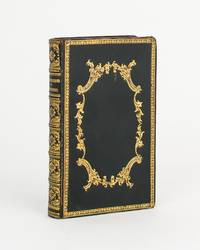
1838ref. 111804Cupar: G.S. Tullis and St Andrews Melville Fletcher Printed by G.S. Tullis Printer to the University of St Andrews 1838. 3rd Edition. Hardcover. Very Good. Cupar G.S. Tullis and St Andrews Melville Fletcher Printed by G.S. Tullis Printer to the University of St Andrews 1838 third edition/ 1807. Duodecimo xii last blank 264 pages with several tables plus 12 full-page engraved plates including an additional title page. Early gilt-decorated polished black calf all edges gilt endpapers marbled; top corners a little bumped with the extremities a little rubbed; light stain to the blank bottom corner of the last 40 leaves gradually reducing in extent from the rear and not affecting the printed surfaces; early ownership signature James Astle at the head of the engraved title page slightly cropped; a very good copy. Not least 'The Company of Golfers' pages 237-247. G.S. Tullis, and St Andrews, Melville Fletcher (Printed by G.S. Tullis, Printer to the University of St Andrews) hardcover
1983ref. 75708n.p. 1983. Paperback. Very Good. photos 60p. Wrapper. 28cm. Minor wear. Name and phone number in pencil on cover. Organization founded in 1954 of golf clubs organized by African Americans in California and other Western states. According to their 2022 website about 27 clubs including three asterisked as "predominantly female" clubs were members of this organization. paperback
1922ref. 74414London: Methuen 1922. First Edition. Hardcover. Very Good. London Methuen 1922. Octavo xii 128 8 publisher's catalogue pages plus a frontispiece and 7 pages of plates. Cloth lightly bumped on the front bottom edge; spine sunned and a little rubbed; endpapers lightly offset; inner margin of the title leaf and the adjacent leaf a little glue discoloured with trifling adhesion blemishes to the inner margin of the frontispiece and title page; a very good copy. Methuen hardcover
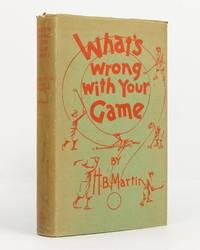
1930ref. 142034London: John Lane The Bodley Head Limited 1930. First Edition. Hardcover. Near fine/Good. London John Lane The Bodley Head Limited 1930. Octavo viii 240 8 publisher's list pages with numerous line illustrations by the author. Green cloth lettered and decorated in red; top edge dyed green; endpapers unevenly tanned; a near-fine copy with the very good dustwrapper the spine sunned marked and a little chipped. The 'main feature of the book is its constructive advice to golfers on their personal faults in playing the game' dustwrapper blurb. John Lane The Bodley Head Limited hardcover
1942ref. b24975New York 1942. First Edition . Soft cover. Near Fine. Near fine in original wrappers. paperback
1911ref. 75830Edinburgh: R. and R. Clark 1911. First Edition. Hardcover. Very Good. Edinburgh R. and R. Clark 1911. Octavo viii 150 pages plus 2 plates. Original blue cloth slightly rubbed at the extremities and lightly marked; tiny bump to the leading edge of the front cover; bottom corner of the rear board cracked creating a ripple in the cloth along the fracture and cracking the pastedown but the corner is firm and stable; edges endpapers and first and last pages foxed; a very good copy. Inscribed and dated 26 December 1913 by the author. R. and R. Clark hardcover
1969ref. SBBIH-PVUZQ3C2NM3KPelham Books 1969. hardcover. Acceptable. Please see the condition note after this for details if this is missing please consider Acceptable to mean poor quality that could include major staining water damage writing missing dustjacket etc etc. Our books are dispatched from a Yorkshire former cotton mill. We list via barcode/ISBN so please note that the images are stock images and may not be the exact copy you receive furthermore the details about edition and year might not be accurate as many publishers reuse the same ISBN for multiple editions and as we simply scan a barcode or enter an ISBN we do not check the validity of the edition data when listing. If you're looking for an exact edition please don't order at least not without checking with us first although we don't always have time to check. We aim to dispatch prompty the service used will depend on order value and book size. We can ship to most countries see our shipping policies. Payment is via Abe only. Pelham Books hardcover
ref. 69055860-75TI Inc. Books. Used - Very Good. Pages intact with possible writing/highlighting. Binding strong with minor wear. Dust jackets/supplements may not be included. Stock photo provided. Product includes identifying sticker. Better World Books: Buy Books. Do Good. TI Inc. Books unknown