Mullins, Eustace Clarence (Signed)Biblio.com
131 711 résultats
1952réf. 327a2087New York: Kasper and Horton. Good. 1952. First Edition. Paperback. Stellar provenance for this signed first printing example inscribed by Mullins 1923-2010 to dedicatee of a subsequent printing George Stimpson upon title page. Also signed by Stimpson inside front cover. In the Foreword to the 1991 printing of this title Mullins paid tribute to Stimpson by saying he and Ezra Pound were "two of the finest scholars of the twentieth century who generously gave of their vast knowledge to a young writer to guide him in this field which he could not have managed alone. The research for this book at the Library of Congress was directed and reviewed daily by George Stimpson whom the New York Times on September 28 1952 called 'A highly regarded reference source in the capital'". The first nationally circulated revelation of the secret meetings of the international bankers at Jekyll Island Georgia 1907-1910 where the draft of the Federal Reserve Act of 1913 was written. "Has the honor of being among the first books burned by the freedom-loving Allies in Germany after World War II had bailed out the bankers once again." - Robert H. Weems in 'A Populist Bibliography'. Average wear and soiling. Binding intact. A truly extraordinary signed first printing example of what is quite possibly the king of conspiracy titles. Singerman 0865. 8.7 x 5.5" ; 8vo - over 7¾" - 9¾" tall; Mullins on the Federal Reserve Bank the Fed Privately Owned Central Bank President Woodrow Wilson Colonel Mandell House Jekyll Island meetings Rothschild Rockefeller Paul Warburg; Signed by Authors . Kasper and Horton paperback
1906réf. 60282Madrid, 1906. Folio oblong. Bound in a splendid recent full longgrained burgundy morocco binding in pastiche style, with four raised bands to beautifully gilt spine. Boards with gilt ornamental borders and gilt centre-piece. Gilt line to edges of boards and inner gilt dentelles. Marbled end-papers. All leaves re-hinged. Occasional light brownspotting, but overall very nice. Title-page (the version with the second line (beginning ""Colección de Ochenta...) in lower case), 2 pp. of text (dated 1863) + 80 engraved plates (on fine, laid paper measuring 23,4x32 cm.). Plates 17 and 77 have been misbound (the numbers 1 and 7 look almost the same - Harris II:201: ""In some sets this plate has been bound out of order where the number hs been read as 77"""" II:288: ""In some sets this plate has been bound out of order where the number has been read as 17).
1947réf. 0008116Jerusalem Israel British Mandated Palestine. Good. 1947. On offer is a unique historically significant journal handwritten during the final days of British Mandated Palestine most entries made immediately prior to the Declaration of Independence. This is a one-year page a day journal for the Jewish year of 5708 September 1947 to October 1948 has about 50 entries with most entries made between September 1947 and December 1947 and few brief records scattered over the next few months - the last one is dated June 7. It measures 7' by 5' the hardcover is slightly soiled but otherwise the journal is in very good condition. The text is in Hebrew the handwriting is mostly legible. Author's name is not identified but there is a note on the front page: "Vaad Hakehilla. Hanala Klalit" Local Community Council. General Management. It is clear from this note and from the context that the journal was kept by a member of the Hebrew Community Council in Jerusalem the body that was established in 1917 and coordinated and represented different groups of Jerusalem Jews during the British Mandate. Vaad Hakehila was responsible for different aspects of Jewish life in the city including economic and social assistance to the residents. It had a social services department and a society of assistance to kindergartens issues related to them are mentioned in the journal several times. Most entries are the minutes of the Council meetings. Some entries deal with organizational and financial matters taxes elections complaints dispute settlement work of social services purchase of fire engines but most meetings reflect increasingly tense situation in the city and concern food and fuel supply food rationing security and organizing Mishmar ha'am National Guard - unit of volunteers established in September 1947 in Jerusalem for maintenance of public order. The Council was constantly in contact with the state authorities political and religious leaders various Jewish organizations trying to solve various problems facing Jewish community in the city. Among the names mentioned in the journal are Yitzhak Ben-Zvi David-Zvi Pinkas a Zionist activist politician a signatory of the Declaration of independence and a future minister Mordechai Shatner a signatory of the Declaration activist and politician one of the founders of Yad Va-Shem who then was a member of the Jewish National Council Ben-Zion Meir Hai Uziel the Sephardi chief rabbi of Mandatory Palestine who appeared before the Mandatory government as representatives of the Jewish community and on missions on its behalf Itzhak HaLevi Herzog the first Chief Rabbi of Ireland and then the Ashkenazi Chief Rabbi of Mandatory Palestine and of Israel Menashe Elassar a noted Jerusalem businessman and many other. The first entry is dated September 15 and mentions a meeting with Mr. Ben-Zvi who had been the President and a member of the Vaad Haleumi the National Council a post in which he served as the chief representative of the Jewish community vis-a-vis the mandatory authorities. His name is mentioned several times throughout the journal in relation to various matters. A council meeting on September 17 dealt with several issues including social work and house confiscation order of the Babayoff family: "Military Commander refused a request to postpone confiscation order for the Babayoff's House till after the holidays . Chief Rabbi Uziel was asked to speak with the commissioner about postponement of the confiscation order. Rabbi Herzog was also asked to speak with the Military Commander regarding the same matter". Many entries mention searches conducted by the British Army in Jewish neighbourhoods one of such searches on Yom Kippur Eve finished with desecration of a synagogue: "Search in Nachlat Zvi Jerusalem neighbourhood. After we received information regarding the desecration of the synagogue by the army during their search R' Nattan and I went to check if the information was correct. We reached the location after the search had finished and the army left the place. All the synagogue benches the tables chairs and pillows were upside down. All of the study books Mishnayot Zohar Gemaras were scattered on the floor. The holy ark was open and the Torah scrolls were open ." Some of the entries refer to property damage caused by bombings that the council members were assessing: "After the two nights that passed in Jerusalem Shabbat night and Motzei Shabbat when tens of thousands of bullets were shot towards the all the Jewish areas of the city I got up early . to visit the places that were the primary targets of the bullets of the police and soldiers. The primary target was again the homes near the police dormitory in the hospital of the English Mission. The view of the horrifying sight of the destruction caused to these homes and the miracle that nobody's life was taken . testimonies were collected from dozens of people."Nov. 16. One of the constant subjects was ensuring food and fuel supply in the city: "Meeting of the supply committee with bakery owners to ensure sufficient flour supply in case of emergency" ".To bring all wholesalers and demand from them to increase supplies in Jerusalem." they meet with members of the Jewish National Council JNC and devote many meetings to this matter. As part of their activity they meet with mukhtars heads of Arabic neighbourhoods. Va'ad had limited means to cope with the worsening situation and in December the Jerusalem Emergency Committee was set up that took upon itself civil administration of Jewish Jerusalem which explains why there are almost no entries after November. Though it includes only about 50 entries of varying length the journal provides a lot of details from the months preceding the Declaration of Independence and contains names of many people who played an important role in creation of the Israeli State. Overall it's a fascinating document of the life of Jewish community in Jerusalem during the last months of the British Mandate and activity of the Jewish Community Council in Jerusalem.; Manuscript; 12mo - over 6¾" - 7¾" tall; KEYWORDS: HISTORY OF 20TH CENTURY 1940s POST-WW2 ERA MIDDLE EAST ISRAEL JERUSALEM JEWISH QUARTER CREATION OF ISRAEL JEWS OF JERUSALEM BRITISH MANDATE DECLARATION OF INDEPENDENCE MANDATORY PALESTINE BATTLE OF JERUSALEM 1947 BOMBINGS IN JERUSALEM JEWISH SELF-GOVERNING BODIES IN MANDATORY PALESTINE MISHMAR HA'AM NATIONAL GUARD IN JERUSALEM LOCAL COMMUNITY COUNCIL IN JERUSALEM VA'AD HAKEHILA VAAD HAKEHILA JERUSALEM LOCAL AUTHORITIES LEADERS OF JEWISH COMMUNITY OLD CITY PARTITION BRITISH ARMY IN MANDATORY PALESTINE SOCIAL SERVICES DURING THE BRITISH MANDATE ISRAEL BEFORE INDEPENDENCE SELF-GOVERNMENT OF JEWS IN JERUSALEM JEWISH COOPERATION WITH BRITISH ADMINISTRATION IN PALESTINE YITZHAK BEN-ZVI DAVID-ZVI PINKAS MORDECHAI SHATNER END OF THE BRITISH MANDATE FOOD RATIONING IN JERUSALEM FOOD SUPPLY TO JERUSALEM ZIONISM ZIONIST ACTIVISTS JEWISH NATIONAL COUNCIL JNC VAAD HALEUMI 1947 JERUSALEM RIOTS JERUSALEM RELIGIOUS LEADERS HEBRAICA JEWISH HISTORY HANDWRITTEN MANUSCRIPT DOCUMENT LETTER AUTOGRAPH WRITER HAND WRITTEN DOCUMENTS SIGNED LETTERS MANUSCRIPTS DIARY DIARIES JOURNALS PERSONAL HISTORY SOCIAL HISTORY HISTORICAL HOLOGRAPH WRITERS AUTOGRAPHS PERSONAL MEMOIR MEMORIAL ANTIQUITÉ CONTRAT VÉLIN DOCUMENT MANUSCRIT PAPIER ANTIKE BRIEF PERGAMENT DOKUMENT MANUSKRIPT PAPIER OGGETTO D'ANTIQUARIATO ATTO VELINA DOCUMENTO MANOSCRITTO CARTA ANTIGÜEDAD HECHO VITELA DOCUMENTO MANUSCRITO PAPEL . hardcover
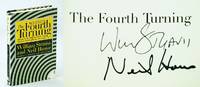
1997réf. 541H2157New York: Broadway Books. Good in Very Good dust jacket. 1997. First Printing. Hardcover. 055306682X . Signed without inscription by both authors upon half-title page. "Offers an utterly persuasive prophecy about a new American era that will begin just after the millennium." - dust jacket. xiv 382 pages. Footnotes. Index. Light overall wear. Binding tight. Yellow high-lighting to eight pages. Dust jacket now in glossy new archival protection. A rare double-signed first printing example of this most extraordinary work. ; 8vo - over 7¾" - 9¾" tall; United States History Cycles Forecasts Future Signed Twenty-First Century Strauss-Howe generational Theory Steve Stephen Bannon Donald Trump Presidential Campaign 2016; Signed by Authors . Broadway Books hardcover
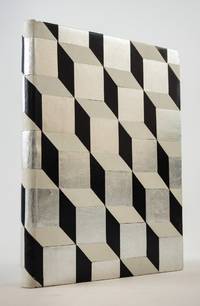
1912réf. ST20811Paris: Eugène Figuière et Cie 1912. FIRST EDITION. PRESENTATION COPY. 240 x 185 mm. 9 1/2 x 7 1/2". 44 pp. 2 leaves. STRIKING 3-D OPTICAL ILLUSION BINDING BY A. CONTRERAS stamp-signed on front turn-in WITH AN ALL-OVER DESIGN OF CUBES rendered in black white and silver morocco smooth spine. In older probably original brown woodgrain drop-back box backed with black buckram. With 26 black & white photographic reproductions of works by Cézanne Picasso Derain Braque Metzinger Laurencin Gleizes Léger Duchamp Picabia and original owner Juan Gris printed on glossy white paper. WITH A HALF TITLE INSCRIPTION in French OF GREAT IMPORTANCE FROM ONE OF THE CO-AUTHORS translated as: "To the painter Juan Gris with all my best wishes J Metzinger." Occasional underlinings in blue pencil. Text leaves with overall light browning and occasional foxing due to paper stock lower corner of half title restored and fore edge with minor chipping otherwise a fine copy the plates clean and bright and the binding unworn. Penned by two Cubist artists this is a highly resonant association copy of the first major treatise on the Cubism movement presented to noted Cubist painter Juan Gris and later put into an illusionistic binding composed of variably colored cubes that seem to jump off the surface. Albert Gleizes 1881-1953 and Jean Metzinger 1883-1956 had painted in both Post-Impressionist and Fauvist styles before their interest in exploring form and structure as well as light and color led them to the style that would become Cubism. Influenced by Cézanne's "brick-by-brick" technique and Poincaré's writings on space and time the new movement sought to examine objects from a mobile perspective and to depict multiple views of a subject in one painting. In "On Cubism" they explain: "An object has not one absolute form; it has many. It has as many as there are planes in the region of perception." The work features black & white illustrations of Cubist paintings by the authors and by fellow pioneers Picasso Braque Derain and Juan Gris to whom this copy was presented by Metzinger. Born in Madrid as José Victoriano González-Pérez 1887-1927 Gris studied engineering before moving to Paris to pursue art. First working as an illustrator for periodicals he was inspired by Metzinger to begin painting seriously. His training in engineering helped him appreciate the importance of mathematics in painting a realization triggered according to art historian John Richardson by Metzinger's painting "Le Goûter Tea Time" exhibited at the Salon d'Automne in 1911. Our volume was later in the collection of and probably bound for Chilean architect and collector Carlos Alberto Cruz 1939-2022. We have been unable to find more information on our binder "A. Contreras" but it seems possible that he was also Chilean as the Valparaiso-based Cruz owned a number of bindings signed with that name. Eugène Figuière et Cie unknown
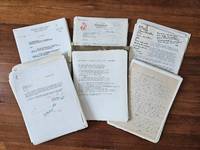
1969réf. Cat340United States and England 1969. 453 letters with twenty pieces of other material. Of the letters to WBAI: Fourteen letters from 1968; 245 from January 1969; sixty-four from February 1969; five from March and April 1969; eighty-six undated. With thirty-nine sent to the FCC these are copies sent to WBAI. Conditions vary; generally very good. Julius Lester 1939-2018 was a Black academic author civil rights activist photographer and musician. He taught at the New School for several years and then at UMass Amherst from 1971 until his retirement. In his highly decorated career he authored over forty books including a guide to the twelve-string guitar written with Pete Seeger; released several folk-blues albums; exhibited photographs including at the Smithsonian Institution; and won numerous teaching awards.1 From 1968 to 1975 Lester hosted Uncle Tom's Cabin on WBAI an independent New York City radio station. Early in the show's tenure during the 1968 teachers' strike over the firing of a number of mostly Jewish teachers from the majority Black Ocean Hill-Brownsville school district Lester's show aired a poem written by a young Black student at an unidentified New York City high school. The poem was dedicated to the striking United Federation of Teachers' president Albert Shanker and opens: "Hew jew boy with that yamaka on your head / You pale faced jew boy / I wish you were dead / I can see you jew boy /naw you cant hide / I got a scoop on you yeah / you gonna die." Lester-who incidentally converted to Judaism in 1982-defended the poem and its airing provoking backlash from listeners and from the Anti-Defamation League which called for his resignation and picketed the station. Offered here is a large archive of listener mail responding to this broadcast and to the later broadcast of a letter from a Black Queens College graduate. This letter also concerned anti-Semitism in the Black community albeit with a much different tone than the student poem: the writer explains that "until quite recently" they had felt significant anti-Jewish sentiment because having grown up in a Jewish neighborhood they used to conceive of all white people as Jewish-and that listening to WBAI "was very instrumental not only in helping me to recognize my anti-Semitism but in tracing its roots". The original copy of this letter is contained in the archive; as a manuscript note on it remarks it "started a second wave of complaint and precipitated the complaint from Shanker to the FCC". The letter was broadcast on Larry Josephson's In the Beginning and much of the mail is addressed to him. A tally on a filing folder totals the "hate" letters at 728 and "love" letters at 341; however in this collection the response is mostly positive. Moreover within the positive response to the broadcasts are only a handful of openly anti-Semitic ones "Good luck in your fight against the Jewish financial interests of New York City". Nonetheless the "hate" contingent is well-represented: besides threats "Don't walk alone cock-sucker and don't take this lightly - we have pledged to get you and we mean it!"; "'He who lives by the sword will die by the sword.' And you will get yours you may be sure" a number of writers sent in poems of their own usually riffs on the original poem and generally containing abundant racial slurs and stereotypes about crime welfare and police brutality. Occasionally a rationale is offered: the station had defended its broadcasts on the basis of free speech and therefore should air these poems as well. In fact the better part of the supportive letters including ones from listeners who vehemently disagreed with the broadcast content also cite the importance of free speech as a reason for their continued support; for instance Adele Lawrence writes: "I am a subscriber and a Jew. Negro anti-semitism has upset me too. But I support the station's policy 100%. Lets hear what black people are saying. Lets search our souls to find out why. And lets do something about it - instead of all this self-righteous over-reaction." Like Lawrence most listeners felt the need to include some demographic information about themselves. It seems that the broadcasts had prompted listeners to introspect on their own identities and to write in with their experiences often in surprisingly thoughtful ways. A number had fled Nazi Germany such as Liz Frankel who writes: "Who am I to talk I came out of Germany in 1939 at the age of 17. My father was in a concentration camp but was miraculously released. His health was broken though and he died in this country in 1945. I personally have severe psychological scars left from my experiences in Germany that is one reason why I can understand the black man's terrible life in this country. Why other refugees from Nazi Germany cannot is beyond me." Kurt Obernbreit describes his reaction to the broadcasts and how his views changed: "On January 17 I wrote you a letter regarding the now famous Julius Lester/Leslie Campbell program in which I voiced a negative reaction. I did not hear the program but got all my information from the press at that time. Meanwhile you had the courtesy of sending me a copy of your report I heard you on the Barry Gray show and some more material appeared in the press including the Village Voice. I have now a much clearer picture of what actually occured sic and I must compliment you on the clarity of your report. I admit I reacted emotionally and I admit that I am very sensitive maybe overly sensitive to expressions of Anti-Semitism as I am myself a graduate of the real Mc Coy namely the Hitlerian variety which I experienced personally. . I want to withdraw my criticism." One affecting ambivalent letter from an Orthodox Jewish college student reflects on the poem and letter and on her and Josephson's Jewish identity. She writes in part: "You talk about being Jewish but you must realize that my whole life is Jewish and I happen to think that its great and I am very proud of that. I think its because I feel like this that I can understand how a person of any race or ethnic group feels and thats why I respect him. Since I did grow up in this community and went to the schools that I did go to unfortunately for myself I did not come in contact with any black people or even people from any other religious groups. . I can't see anything wrong with the poem and I still don't after all you've got the right to read anything over the air that you want. . my father said to me 'did you hear about the poem that they read over that homo-sexual station that you listen to' . well with my father I'm sometimes able to reason so I said 'so what' . Now thats crazy if we're going to start punishing people for saying what they want then we might as well start having a secret police if we don't already and the whole thing. . Larry I couldn't write an anti-black poem if I wanted to or an anti any other group of people because they've never done anything to me. . I know the reading of the poem over the air can do no harm but further free speech which we need alot more of. But I am really afraid that it did something to me when you were talking this morning I felt you were directing your anger at me as a Jew and I kept on asking why . Unlike the black girl who wrote you who seemed to have found her answer all I have are thousands of questions." Another writer Esther Aronson discusses her historical experiences of Black-Jewish relations in the city: "In the early 1930s my family lived in the Bronx. The scene was in the early depths of the depression. No one that I knew had as much as a spare dime. But there were enough families in this Bronx Jewish ghetto who could afford a day worker. The WASP communities were using white maids . the Jewish people for many obvious reasons used the negroes. And I must say in passing that it is probable that the Jews were the only people as a group who did hire negroes. . And the slave mart shaped up each Friday morning on certain corners in the community. The Jewish women came to the slave block to haggle about the price to test the strength select for whatever characteristic the most desirable their particular day worker. By 8 or 9 A.M. the scene broke up. The Jewish women taking home their particular catch and the unhired negroes returning to Harlem minus 10¢ carfare. I don't mean to imply that the Jewish women alone made the scene. The negro women came willingly to the slave block. These were the only people that would hire them. But then the most sordid bit of this scene developed. Even though I'm sure it wasn't universally true it was true enough to have reached my ears. . 1. Move the clock back so that an extra hour or two could be gleaned from the negro. 2. Cut the wage at the end of the day. 3. Pay part of the wage in old clothes. 4. Humiliate the negro by talking deprecatingly about the lazy stinking schwarter in broken English as if the negro was not there and listening etc. etc. . So the Jewish community has become the first area of vengeance. They were and are most intimately visible. But the police force was equally visible and much more violent and deadly in the negro experience. . So I imagine what may be operating is a transfer of latent all American WASP anti-semitism into the issue." A number write in with their own experiences of ethnic prejudice. The writers are sometimes Jewish: "my son who as a kid in the heart of Manhattan was beaten up by other white kids only because he admitted that he attended afternoon classes in Hebrew school. I was screamed at and insulted in the very same area when I was seen putting posters of the American Jewish Congress in store windows" and sometimes not like Gerhard Weber a German immigrant who "couldn't get away from that epithet 'nazi'"; and Shirly Niebanck whose "son goes to public school and has been in this WASP minority constantly . he is being punished because he's Gentile." Many writers discuss WASP-hood; interestingly there is a noticeable split between writers who identify Jewish people including themselves as distinct from white people versus as "white and Jewish." Several letters also came in from NYC teachers who were in some way invested in the strike. Harriet Haberstroh writes in support: "I . taught in P.S. 144 in Ocean Hill last school year. The strong anti-black sentiment was detectable among some of the Jewish teachers. As a former U.F.T. member I cannot back Al Shanker in his claims of anti-semitism and favoritism of the black side. The UFT was given time." Rita Mandelman writes with a more equivocal tone: "I am a subscriber: white Jewish middle class and a teacher a deadly combination. I voted for and supported the first 2 strikes. I voted against but reluctantly supported the third strike. I have written to you before criticizing WBAI's heavily one-sided coverage of the strike and its repercussions. . WBAI will not be living up to my ideal of 'free speech radio' until I start hearing some genuine discussion of the issues--some confrontations of opposing viewpoints. . You say that you have afforded the teacher's Union many invitations that have not been accepted. I find this difficult to believe but I must accept your word on it. I have written Mr. Shanker to ask why. You are in error when you say that the Union has opposed the experiment in Ocean Hill from the beginning. The U.F.T. was instrumental in setting up the district. Only when things started running badly and Union people were critical of some of the leadership or lack of it did the hostilities erupt. You say the Union's position has been 'extensively reported' in the media implying that this relieves you of the responsibility of airing these views. Certainly the Ocean Hill position has been as extensively reported and supported in the press so something is faulty in your logic. The only place the Union's position is supported is in its own Newspaper and very often highly critical letters are printed there. There is no lack of opposition to Mr. Shanker within the Union as you have so often implied. It is as close to being a democratically run large organization as any I have ever seen." One writer "Eva" a former nurse reflects on her Jewish identity and the parallels between the teachers' strike and the 1959 hospital workers' strike: "Black people hate the Jews because of the Jewish Teachers Union or better because of Shanker who symbolizes it. Nobody loves the Jews because of Local '1199' and its Jewish president Leon Davis. This man 'has laid down his life on the line' to use your words to upgrade the Black and Puerto Rican workers of the hospitals. . I was one of the few white hospital rank and filers who 'laid down her life' to help Black Hospital workers out of their misery. For the last 9 years I have considered this to be the main purpose of my living. For the last 9 years my bosses conducted an extermination campaign against me for my anger hatred of them and my fanatical activity. As a result not only am I out of my job but confined to my bed with an incurable illness. While being in the very same hospital as a patient recently I was treated with bitter hatred by one of the nurses for absolutely no reason at all. The only reason was that she is Black and I am Jewish and I was much too ill to defend myself. . When my son was 9 years old he was beaten up and thrown into the snow by white Americans because he is a Jew. I was cursed and insulted by white Americans because of the same reason. . Well the American Nazi party must be delighted about the way things are turning out in the Black community. . Also all the Nazis in Germany and Austria are jubilant about the way things are developing in this country. My mother was murdered by a German Nazi I and my son will be murdered by an American Negro! Wonderful!" Overall the archive is dense with personal stories and reflections about identity-Jewish and otherwise-in New York City and the contentious relationship between the city's Black and Jewish populations. Of interest to scholars of the city's ethnic tensions at the time the 1960s counterculture and especially the social construction of race. Provenance: From the estate of Rabbi A. Bruce Goldman who hosted Up Against the Wailing Wall on WBAI in the 1970s. 1 Margalit Fox "Julius Lester Chronicler of Black America Is Dead at 78" The New York Times January 19 2018.
1956réf. 63207Warsaw, March (27th) 1956. 8vo. Original printed wrappers. With ""Wylacznie do uzytku organizacji partyjnych"" (""Exclusively for inner-party use"") printed to top of front wrapper. Stamped serial number to front wrapper: 3083. Light sunning to outer margins of wrappers and a few small tears (no loss) to spine. Capitals with tiny loss. A very nice copy indeed. 72 pp.
1956réf. 1125558196Montreal : Published for the McGill Poetry Series by Contact Press 1956. Book. Near Fine. Hardcover. 1st Edition. 8vo - over 7¾ - 9¾" tall. black cloth silver spine lettersdust jacket79 pages illustrated five full page line drawings by Freda Guttman with some minor wear to dust jacket at top of spine with very small loss and at top corners of d.j.very slight tone to spine of d.j in protective mylar jacket. a fine example of the author's first book of which approximately 400 copies were printed. part of the McGill Poetry Series operated by Louis Dudek.First published in 1956 when he was twenty-two years old Let Us Compare Mythologies is Leonard Cohen's first collection of poetry. It is an accomplished and passionate collection which demonstrates Cohen's remarkably assured voice even as a young man. An unprecedented debut published to immediate acclaim. [Published for the McGill Poetry Series by Contact Press] Hardcover
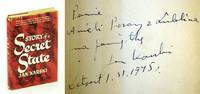
1944réf. 864H4484Boston: Houghton Mifflin Company. Good in Good dust jacket. 1944. First Edition. Hardcover. Signed and inscribed by Jan Karski upon front free endpaper. Karski 1914-2000 recounts his experiences when his homeland of Poland was rent asunder by the joint Nazi and Soviet invasion of 1939 and his harrowing subsequent life as a member of the Polish underground during which he was captured by the Gestapo and severely tortured. Provides a ghastly eyewitness account of life in the Warsaw ghetto into which Karski was smuggled so his observations could be reported to the outside world. Firearms advocates will cringe at Karski's account of what happened after he and a large group of Polish soldiers handed over their weapons to their 'comrades' from the Soviet Union. In 2012 Karski was posthumously awarded America's highest civilan honor the Presidential Medal of Freedom by President Obama. 391 pages. Moderate wear to publisher's red cloth. Dust jacket now preserved in archival-grade Brodart. Binding intact. A sound copy of this truly unforgettable WWII narrative. Laska 672 Kehr & Langmaid 5407 Weiner Library Catalogue Seven 997 Enser p.343.; 8vo - over 7¾" - 9¾" tall; Polish Underground - World War 1939-1945 Gestapo Torture Warsaw Ghetto Poland Resistance Espionage Polska Holocaust; Signed by Authors . Houghton Mifflin Company hardcover
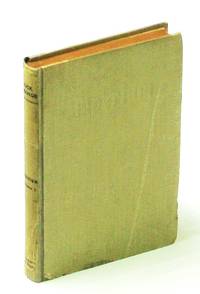
1948réf. 566h5692London: Westropa Press. Good with no dust jacket. 1948. First Edition. Hardcover. "This book is different from other books. First of all it is only in form a book at all. In reality it is a part of the life of action. It is a turning-point in European history a late turning-point but a real one. This book is itself the first blow in the gigantic war for the liberation of Europe. The prime enemy is the traitor within Europe who alone makes possible the starving and looting of Europe by the outer forces. He is the symbol of Chaos and Death. Between him and the spirit of the twentieth century is unremitting war." - Foreword. "The spectacle of Yockey 1917-1960 being persecuted framed and driven to his death simply because he wrote this book is not one we would expect to see in the Twentieth Century in the land of the free and the home of the brave." - Willis Carto. 10 iv 4-405 3 pp. Average wear and soiling to publisher's khaki cloth. Title embossed atop front board. Black lettering upon professionally restored backstrip. Modicum of moisture-induced rippling near fore-edge of back board. Binding sound. Contents tanned at periphery. Foxing to free endpapers. Publisher's address lightly penciled upon copyright page otherwise unmarked. No dust jacket. A sound copy. 7.25" x 5". Singerman 757; 12mo - over 6¾ - 7¾" tall; Francis Parker Yockey Imperium history . Westropa Press hardcover
1962réf. 2409180259xbvkJamaica, Island Worcester [and Things] - Ceramics, 1962. Material: Ceramic / Total height (Pot with lid): ca. 39 cm; diameter at foot: ca. 15 cm, largest diameter (open top of 'pot'): ca. 24 cm. / Colour: lightbrown-rosé with white partly gilt-lined embossments and partly gilt inscriptions; foot and pineapple-top: white. / Weight: ca. 3 kg.
1939réf. 222j2678London: Longman's Green and Co. Good with no dust jacket. 1939. First Edition. Hardcover. "This is a very long book but it has to be long. Since the real history of Palestine for two decades has been kept hidden from the public it is in a sense necessary here to recreate those lost twenty years in as much of their detail as possible. Half the facts I have to give have never been mentioned at all many of the documents have never been quoted. There was no Palestine Question nor ever would have been one if certain statesmen had not created it. The book deals primarily with the story of how Palestine was placed under Mandatory government in order to establish the 'Jewish National Home' which later - it was intended - should become a Jewish State. Under no circumstances can it be sustained that because of the prophecies of the Old Testament the Jews have a permit to return to Palestine arbitrarily and wrongfully. To do so would provide an example never before seen of Scripture being quoted for the devil's purpose." - Introduction. J. M. N. Jeffries 18801960 was a British war correspondent historian and author. Between 1914 and 1933 he wrote for the Daily Mail serving as a war correspondent as head of the Paris bureau during World War I. In 1922 he travelled with the owner of the Daily Mail Viscount Northcliffe to Mandatory Palestine." - Wikipedia. vi-xxiv 728 p. Index. Bibliography. Foldout map of Syria 1916 indicating "reserved area" and of Zionist Holdings in Palestine. Former library copy with usual markings and average wear in tight contemporary quarter-leather library binding. A quite uncommon and sound example. Multiple online sources suggest much of the original print run was destroyed by a German bomb during WWII. A 2016 Christie's auction listing mentioned the possibility that the scarcity of this title stemmed from the Jewish Agency buying and destroying as many copies as it could. ; 8vo . Longman's, Green and Co. hardcover
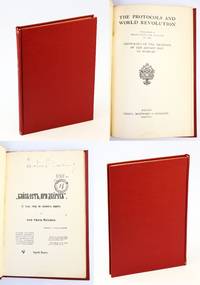
1920réf. 426j1799Boston: Small Maynard & Company Publishers. Good with No dust jacket as issued. 1920. First American Edition. Hardcover. A first American edition example of what are now more commonly known as the Protocols of the Learned Elders of Zion. 6 149 p. Part One inclues an eight-page introductory statement with a three-page summary of the Protocols followed by the XXIV Protocols. Part Two begins on page 74 and provides evidence as to the origin and authenticity of the Protocols with an examination of parallelism between the actual policies of the Bolsheviki and the Protocols and an examination of parellelism between the Protocols and Jewish writings. Professionally rebound in dark candy apple red buckram with silver titling and decoration upon backstrip. Prior owner's name atop facsimile of title page of a Russian edition otherwise tight and unmarked with moderate wear. Small faint moisture mark to bottom edge of first eight leaves. No dust jacket as issued. A sound example of this ever-contentious work. Singerman 0109. 9.2 x 6.2 inches. ; 8vo . Small, Maynard & Company Publishers hardcover
1938réf. 426j1629Asheville North Carolina: Pelley Publishers. Very Good. 1938. First Edition. Hardcover. "Elmhurst has assembled and produced the data in a readable story which shows irrefutably that Communism is not merely a crackpot program for undermining the Christian governments of the world with unworkable socialistic theories carried into practice. The young man has scoured up the data in enthralling biographical form attesting that communism is world Jewry in action! I pride myself that I know something about Jews and Communism. In 1918 I found myself in Siberian Russia. I traveled 700 versts in that stricken country while Communism was 'coming in'. After coming home from Russia I spent five years in the fleshpots of Hollywood making moving pictures shoulder to shoulder with Jews. I served a stiff apprenticeship in Jewish psychology and temperament. I read the complete manuscript of this book in one evening - at one sitting - because it held my interest convincingly unflaggingly till the last page had been reached. The author and his co-helper Miss Theresa Holm scoured the libraries of the world and compiled therefrom the devasting sic data out of the mouths of the Sons of Jacob themselves. Good Christians seem to forget that Christ was the world's outstanding Jew-Baiter and that the sons of Jacob slew him for His Naziism!" - Introduction. "A major American work on the Jewish inspiration and support of communism." - Singerman 0476. 4 230 pp. Index of individuals. General index and bibliography. Errata slip bound in at page 202. Bright gilt lettering upon original red cloth. Clean tight and unmarked with light wear. No dust jacket presumably as issued. A rare and very well-preserved first edition example. 7 x 5.75" ; 12mo . Pelley Publishers hardcover
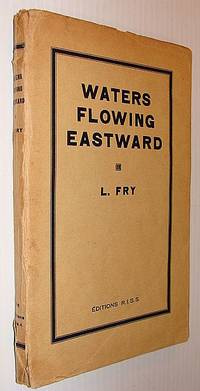
1931réf. 328c6774Paris: Editions R.I.S.S. 1931. First Edition. Paperback. Fair. 225 pages. "Beneath the great westward flow of our civilization there are undercurrents moving eastward. These are impelled by a spirit which looks back to the east to the days of tyrant and slave of luxury and misery and incidentally to the suppression of western culture. The following pages are designed to cast light on these eastern undercurrents which have undermined western states." - Preface. Black and white photographic portrait of Sergius A. Nilus who "published the first complete version of the Protocols of the Elders of Zion in Russia in 1905." - Wikipedia. In this work "the genesis of the Protocols is traced to Asher Ginzberg better known by his Hebrew pen name Ahad ha-Am who supposedly wrote the Protocols in Hebrew in 1880 while in Odessa." - Singerman 0221. Erratum list affixed inside front cover. Unmarked. Above-average wear. Age-yellowing to card covers and contents. Covers nearly detached. Binding tender.; 8vo - over 7¾" - 9¾" tall; Protocols of the Learned Elders of Zion Zionism Israel Balfour Declaration Jacob Brafmann Russia Asher Ginzberg Political Zionism Ahad ha-Am . Editions R.I.S.S. paperback
1988réf. 655j2566London: Kegan Paul International. 1988. First Edition. Hardcover. 0710300530 . Signed and inscribed by Uri Davis upon front free endpaper. "Outlines the legal and political history of the Jewish National Fund since its founding including its activities in the territories Israel has occupied since 1967. The Fund was establshed in 1901 as one of the instruments of the World Zionist Organization in implementing its objective - the establishment in Palestine of a Jewish state. The role of the Fund in this enterprise was the acquisition and development of territory for Jewish colonization. The Fund has been virtually ignored in the voluminous literature on the conflict over Palestine. Of the few book-length studies available all are the Fund's own productions. To date this is the only detailed study of the Fund by independent researchers." - dust jacket. "The JNF has faced numerous criticisms for its role in the displacement of Palestinian Bedouins the construction of Israeli military installations the construction of Israeli settlements in the West Bank - considered illegal under international law - and its refusal to lease to non-Jews." - Wikipedia. In 2024 the Canada Revenue Agency revoked the charitable status of the JNF Canada. Born a Palestinian Jew Uri Davis b. 1943 is an academic and civil rights activist who has written numerous books and articles on the question of Palestine. xx 390 p. Index. Extensive bibliography and footnotes. Facsimiles of documents. Book clean tight and unmarked with light wear. Light wear to unclipped dust jacket now in glossy new archival-grade protection. A quality example of this important and rare exposé all the more signed. ; 8vo; Signed by Author . Kegan Paul International hardcover
1939réf. 237H1210London: Hurst & Blackett Ltd. Good in Fair dust jacket. 1939. Second Printing. Hardcove. 223 16 ads pp. Index. "The problem of the Jews in Britain and the power they wield in public affairs is a matter of the most absorbing interest in these days when propaganda has clouded the issue and made it almost impossible for the ordinary man to see the subject in its true perspective. This book is a critical but strictly impartial analysis written by a well-known Fleet Street journalist who has studied the whole problem for a number of years in the light of events since the Great War." - from dust jacket. Unmarked with moderate wear to publisher's orange cloth. Binding intact. Small contemporary Buenos Aires bookseller's sticker inside front board. Above-average wear to dust jacket now preserved in archival-grade Brodart. A sound copy. Singerman 494.; 12mo - over 6¾" - 7¾" tall; Britain's Jewish Problem Question Anti-Semitism Palestine Problem Trade Monopolies Gold Commercial Morality Public Morals Communism . Hurst & Blackett, Ltd. unknown
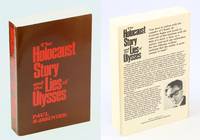
1978réf. 426j3027USA: The Institute for Historical Review I.H.R. Very Good No dust jacket as issued. First English Edition. Paperback. "Although his health was broken in Hitler's concentration camps Paul Rassinier 1906-1967 French socialist pacifist and highly decorated member of the resistance would not bear false witness against his captors by exaggerating their crimes. Neither could Rassinier keep silent about the lies of fellow survivors who fabricated gas chambers and other atrocity stories in the fevered postwar atmosphere. His devotion to the truth even about his former enemies led him to undertake the first systematic study of the alleged Nazi 'Holocaust' from a skeptical standpoint. His training as a historian and his experience in the camps enabled Rassinier to formulate a devastating critique of concentration camp 'eyewitnesses' and 'Holocaust' historians alike. The half-dozen books which Rassinier completed before his untimely death in 1967 have earned him the title of 'Father of Holocaust Revisionism'. This book combines the major portions of his most important writings on the camps and the 'Holocaust.' Here is the unvarnished account of the author's time at Buchenwald and Dora his searching analysis of the most important literature on the concentration camps and his debunking of the most systematic presentation of the Exterminationist case ever made Raul Hilberg's Destruction of the European Jews." - back cover. "The only authorized edition available in the English language." - Publisher's Note. "In a 1964 article entitled 'Zionist Fraud' in The American Mercury American historian Harry Elmer Barnes wrote 'The courageous author Rassinier lays the chief blame for misrepresentation on those whom we must call the swindlers of the crematoria the Israeli politicians who derive billions of marks from nonexistent mythical and imaginary cadavers whose numbers have been reckoned in an unusually distorted and dishonest manner." - Wikipedia. Includes the major portions of Le Passage de la ligne Le Mensonge d'Ulysse Ulysse trahi par les siens and Le Drame des Juifs europeens in a single volume. xviii 447 p. Index. Tight square and unmarked with moderate wear. A rare and sound example. Singerman 1324.; 8vo . 1978. 0939484269 . The Institute for Historical Review (I.H.R.) paperback
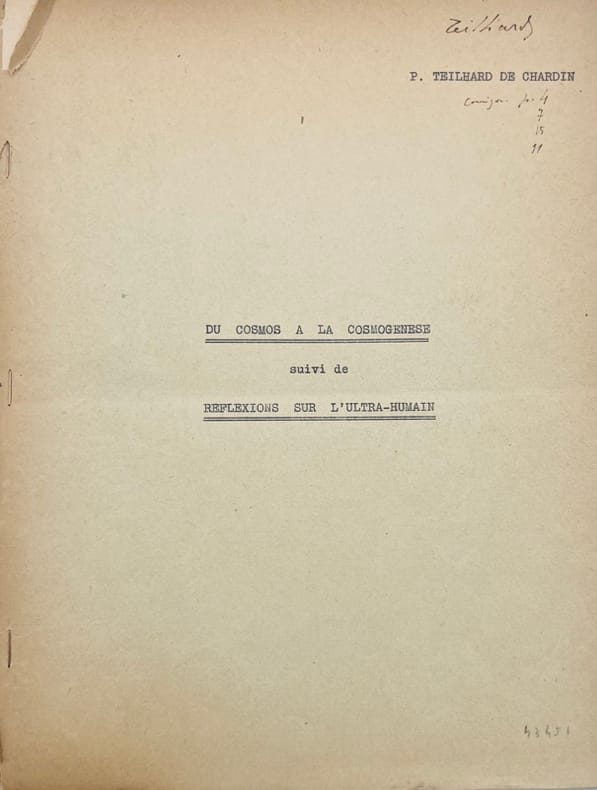
1951réf. 43451Paris, , 1951. In-4 agraphé (265 x 210 mm) de 16 pp., couverture tapuscrite.
1965réf. 047125Military Publisher of the Defense Ministry of the USSR 1965. Hardcover. Very Good. VOLUMES 1-4 PUBLISHED IN 1961 VOLUME 5 PUBLISHED IN 1963 VOLUME 6 PUBLISHED IN 1965. TEXTS ARE UNMARKED EXCEPT FOR SMALL STAMP STATING PRINTED IN USSR OR PRINTED IN SOVIET UNION. DUST JACKETS ON VOLUMES 2 AND 3 LOOK DIFFERENT THAN THE OTHER 4 VOLUMES. GREEN BOARDS WITH GILT LETTERING AND DESIGNS WITH AN EMBOSSED DESIGN ON FRONT. TEXT IN RUSSIAN. NOT EX-LIBRARY. ALL VOLUMES IN CARDBOARD SLICASES WITH VOLUME 2 SLIPCASE COMING APART EXTREMELY SCARCE. MANY FOLD-OUT MAPS BLACK AND WHITE PHOTOGRAPHS. PICTURES AVAILABLE. Military Publisher of the Defense Ministry of the USSR hardcover
1923réf. 000435Berlin: Propyläen-Verlag. Very Good with no dust jacket. 1923. Leather Spine Tips. A MASTERPIECE OF BOOK DESIGN ONE OF THE MOST BEAUTIFUL FINE PRESS BOOKS AND A HIGH POINT OF GERMAN AND FRENCH LITERARY AND ARTISTIC TRADITIONS Number 117 of 400. No copies in 30 years in the American auction records. 17 Original Lithographs signed twice by Max Liebermann and numbered. Book: HEINE Heinrich. DER RABBI VON BACHERACH. Propyläen-Verlag Berlin 1923. Folio. With 17 ORIGINAL Lithographs by Max Liebermann. 1/2 Black Morocco and boards. This copy SIGNED TWICE as usual on limitation and additionally not in all copies on frontispiece lithograph. Minor spotting and soiling to beige boards otherwise a HANDSOME AND FINE COPY and internally clean. This book is a wonderful combination of two Jews one who brought to France German literary tendencies and the other who brought to the Germans French artistic tendencies. Heinrich Heine has been called 'the first modern intellectual' and became one of the greatest and most respected writers of the 19th century. Leibermann was the Great German artist that led the Berlin secession group and introduced French impressionism to Germany. This fine press book a magnificent combination of typography design and illustration is often lauded as among the most beautiful of Jewish fine press books if not all fine press books. Liebermann demonstrates a refined sensitivity in his artwork that parallels the emotive text. The Rabbi of Bacherach includes a lovely and romantic description of a Passover- the earliest and most expressive of the essence of the festival in modern Jewish literature. The story here recounts that in trans. and referring to the Haggadah " It was an old heirloom with ancient wine stains. It had come down from the days of her grandfather. The book contained many boldly and brightly colored pictures. As a little girl she had often looked at it so eagerly on Passover evenings." ; German Language; Folio - over 12" - 15" tall; JUDAISM HEBREW LANGUAGE Jewish Literature Kabbalah Judaica Jewish Studies Hebrew Talmud ; Signed by Illustrator . Propyläen-Verlag hardcover
1943réf. 60182London, New York, Melbourne (printed in Great Britain), Published on behalf of the Polish Ministry of Foreign Affairs, (1943). 8vo. Stapled as issued. Title-page printed in red. Stapels with rust, slightly affecting surrounding paper. A very fine, near mint, copy. 16 pp.
1943réf. 60436London, New York, Melbourne (printed in Great Britain), Published on behalf of the Polish Ministry of Foreign Affairs, (1943). 8vo. Stapled as issued. Title-page printed in red. Stapels with rust, slightly affecting surrounding paper. A very fine, near mint, copy. 16 pp.
1912réf. 5925ABStuttgart, Ferdinand Enke, 1912-1943. 8°. Zahlr. Illustr.. Orig.-Ln. + Wichtig: Für unsere Kunden in der EU erfolgt der Versand alle 14 Tage verzollt ab Deutschland / Postbank-Konto in Deutschland vorhanden + Bd 1-65 (Bde 5, 29 u. 55 fehlen).
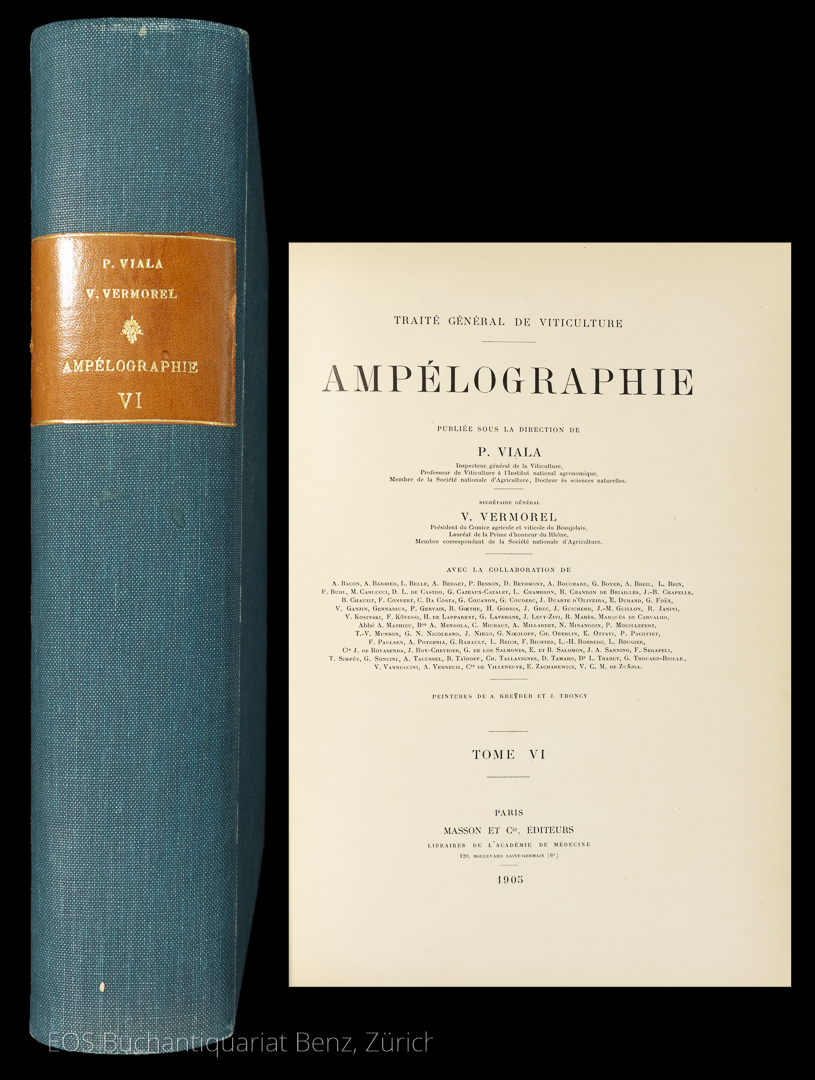
1901réf. 4624CBParis, 1901?1910. 4°. Mehr als 3100 Seiten mit 570 (davon 500 farbigen) ganzseitigen Lithographien und 820 Illustrationen im Text. Leinenbände mit roten Rückenschildchen. + Wichtig: Für unsere Kunden in der EU erfolgt der Versand alle 14 Tage verzollt ab Deutschland / Postbank-Konto in Deutschland vorhanden +, 4624CB|4624CB_2 7 Bände. [2 Warenabbildungen]